Can I Leave Plant Pots Outside in Winter?
Learn which plant pots can stay outside in winter, which materials crack in freezes, and how to protect planted pots, empty containers, roots, and drainage.
The short answer: Some can stay outside, but not by default
Yes, you can leave some plant pots outside in winter, but the answer depends on two separate things: whether the container can handle wet freezing weather and whether the plant’s roots can survive the exposure. A sturdy planter may remain structurally sound while the plant inside freezes; a hardy plant may survive while its waterlogged terracotta pot cracks.
Start by sorting containers into two groups. Empty pots mainly need protection from trapped water and freeze-thaw damage. Planted pots need a plan for the root ball as well as the container, because roots in a pot lack the insulating soil around in-ground plants. The University of Nevada, Reno Extension’s container-overwintering guidance treats plant hardiness, container material, pot size, and shelter as separate parts of that decision.
Why winter puts both pots and roots at risk
When water held in a porous pot or trapped in a drainage area freezes, it expands. Repeated freezing and thawing can stress clay, ceramic, concrete, and other materials with small cracks or water-holding pores. The risk is greatest when a container stays wet, freezes, thaws, and freezes again; a single cold night does not tell you as much as the material, drainage, and pattern of winter weather.
Roots face a different problem. In the ground, soil surrounds them and changes temperature more slowly; in a container, the root ball is exposed to cold from the sides and below. The RHS notes that exposed container roots may need winter protection, particularly in cold or exposed sites, while the University of Nevada, Reno Extension recommends sheltering small or thin-walled pots when their roots could become too cold. A pot can therefore be “winter-safe” for storage and still be a poor place to leave a vulnerable plant.
Four checks that make the decision
Before hauling a heavy planter indoors or leaving it beside the door, check the plant, the soil, the container, and the site. These four checks are more reliable than judging by a pot’s weight or assuming that every plastic or concrete container is frost-proof.
Check 1: Plant hardiness and pot size
Look up the plant’s hardiness rating and compare it with your local conditions, but treat the USDA zone as a starting point rather than a promise. The University of Nevada, Reno Extension explains that a zone reflects average annual minimum temperatures, not the coldest temperature a particular yard will ever experience. Wind exposure, a balcony above ground, and a small pot can make a normally hardy plant less secure than the same species in a sheltered garden bed.
As a conservative screen, that extension guidance suggests leaving plants outdoors only when they are hardy to at least one zone colder than the local zone and are growing in a large, winter-tough container. Even then, “hardy” does not mean immune to every freeze. If the plant is marginally hardy, recently planted, or in a small pot, move it to a protected place or insulate the container before severe cold arrives. The Gardening Know How guide to overwintering container plants likewise notes that smaller pots cool faster and give roots less protection from outdoor temperatures.
Check 2: Moisture and drainage
Winter rain and snowmelt can keep potting mix wet long after the plant stops actively growing. Confirm that drainage holes are open, remove saucers that could hold water beneath the pot, and raise containers on stable pot feet or bricks when doing so will not make them tip. The RHS winter container advice recommends removing saucers in winter and moving plants under temporary cover during very wet periods if compost becomes sodden.
Aim for soil that is not bone-dry or saturated. Dormant deciduous plants usually use little water; evergreens under a roof or eave may still need an occasional check because rainfall cannot reach them. Check moisture during a thaw, water only if the root ball is drying, and avoid watering when frost is forecast. Keeping drainage open matters more than adding extra water before a freeze.
Check 3: Container material and construction
Identify the actual material and look for a manufacturer’s frost-proof or outdoor-use rating. “Ceramic,” “stone,” and “resin” cover a range of finishes and constructions: a glazed pot can still have a vulnerable base, while a frost-rated clay pot may tolerate weather that ordinary porous terracotta cannot. Hairline cracks, a missing liner, or a drainage hole that holds water can change the risk.
If the pot is valuable, decorative, or difficult to replace, take the cautious route when its rating is unknown. Move it under cover, empty it if it is not planted, and let it dry before storing it. The RHS guide to winter containers also recommends raising pots to improve drainage and choosing containers specifically rated for frost where winter exposure is expected.
Check 4: Exposure and freeze-thaw
The same pot can fare differently on a sheltered patio and an exposed rooftop. Cold wind, repeated daytime thawing followed by nighttime freezes, runoff from a roof, and standing water at the base all raise the stress on the container and its roots. A wall can provide some shelter, but do not place the pot where it will be hit by concentrated roof runoff or block a walkway where ice creates a hazard.
If a container must stay outside, cluster pots in a sheltered spot near the house and keep them out of wind tunnels. The University of Nevada, Reno Extension and the RHS container-maintenance guide both recommend grouping containers near a house wall to reduce cold exposure. Shelter helps; it does not make a tender plant suitable for freezing weather.
Pay attention to the pattern of your winter, not only the lowest forecast. In a wet climate with frequent thaws and refreezes, keeping porous containers dry and drainage clear may matter more than a single short frost. Where cold stays severe for long stretches, a sheltered wall can still be too cold for roots in a small pot, so move those plants to a protected space rather than relying on the microclimate alone.
Which container materials tolerate winter best?
Use the table as a practical first pass, not a guarantee. Wall thickness, drainage, glaze, manufacturing, and the length and wetness of a freeze all matter.
| Container | Typical winter concern | Practical choice |
|---|---|---|
| Unglazed terracotta or porous earthenware | Absorbs moisture; repeated freezing can crack it | Store empty and dry under cover, or move a planted pot to shelter |
| Ceramic or glazed pottery | Glaze does not protect every base, crack, or water pocket | Leave outside only when the pot is explicitly frost-rated and drains freely |
| Plastic, resin, or fiberglass | Often flexes better than porous clay, but thin or brittle products may split; walls insulate roots poorly | Check the product rating and protect the plant separately |
| Concrete or stone | Heavy, hard to move, and not automatically immune to freeze-thaw damage | Confirm outdoor rating, keep drainage open, and avoid trapped water |
| Wood or metal | Construction and lining determine durability; thin metal offers little insulation | Keep water from pooling and protect roots even if the container itself is weather-tolerant |
The University of Nevada, Reno Extension identifies terracotta, earthenware, and ceramic as materials needing extra care, and lists concrete, wood, plastic, and metal as more weather-tolerant options while noting that plastic and metal provide little root insulation. The RHS similarly distinguishes frost-proof containers from ordinary pots and recommends pot feet for drainage. Treat those descriptions as tendencies: an outdoor rating from the maker is more useful than a broad claim that one material can “withstand anything.”
If the pot is planted, protect the root zone
Do not empty a pot that is holding a living perennial just because the container material is vulnerable. Instead, decide whether the plant should stay outside, move to a cool protected space, or come indoors. Keep the plant’s needs in view: a hardy dormant perennial, a tender tropical, and an evergreen shrub do not share the same winter routine.
Keep hardy pots outdoors with a shelter plan
For a plant suited to your winters, choose the largest practical container with open drainage. Group pots together in a sheltered location, raise them slightly on stable feet, and move them away from prevailing wind and roof runoff. The soil mass in a larger pot buffers temperature changes better than a small amount of mix, but no pot size guarantees survival in every climate.
When grouping several containers, set the smallest and least cold-tolerant pots toward the center, with larger, sturdier pots on the exposed side. Keep enough space to inspect the bases and allow water to drain; a tight cluster that traps wet leaves or hides standing water creates a different winter problem. Gardening Know How also recommends centering smaller containers within a protected group when outdoor conditions are mild enough for that approach.
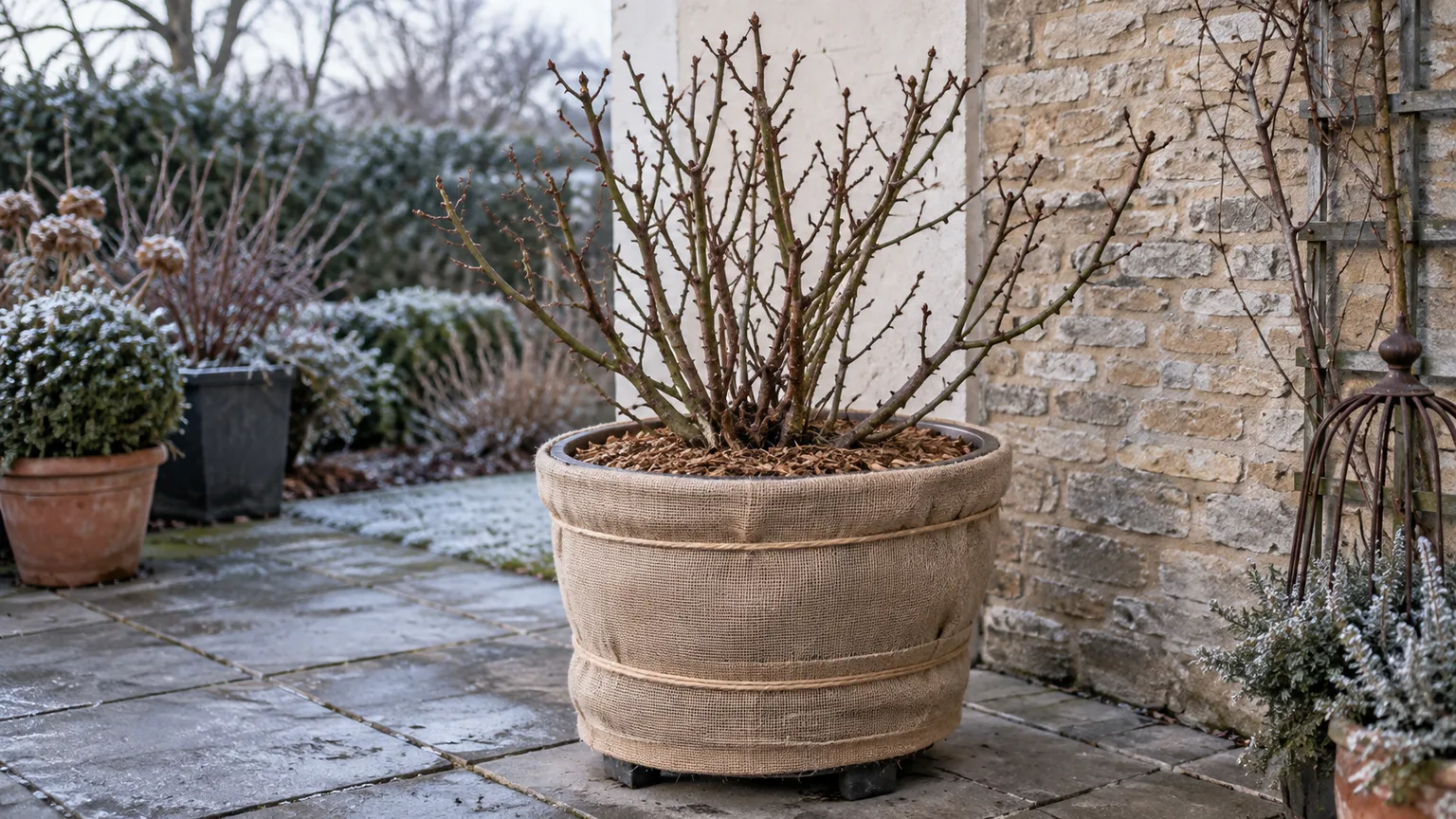
If the roots are borderline hardy, insulate the container walls with burlap, horticultural fleece, or a purpose-made pot wrap, leaving drainage holes clear. A layer of mulch over the soil can buffer temperature swings, but do not pile it tightly against stems or crowns. The RHS guide to trees grown in containers notes that roots near the pot edge are vulnerable in exposed gardens and recommends wrapping the container; Epic Gardening’s winter-container tips also describe grouping and insulating pots as ways to protect roots.
For a pot that is too awkward to wrap or move, use a larger, weather-tolerant tub as an insulating sleeve. Set the planted pot inside it and pack the gap around the sides with dry leaves or mulch, while keeping the inner pot’s drainage path open and the outer tub from collecting water. Epic Gardening describes this pot-within-a-larger-container method; check it after storms because leaves settle and wet packing material insulates less effectively.
Move tender plants before cold reaches their limit
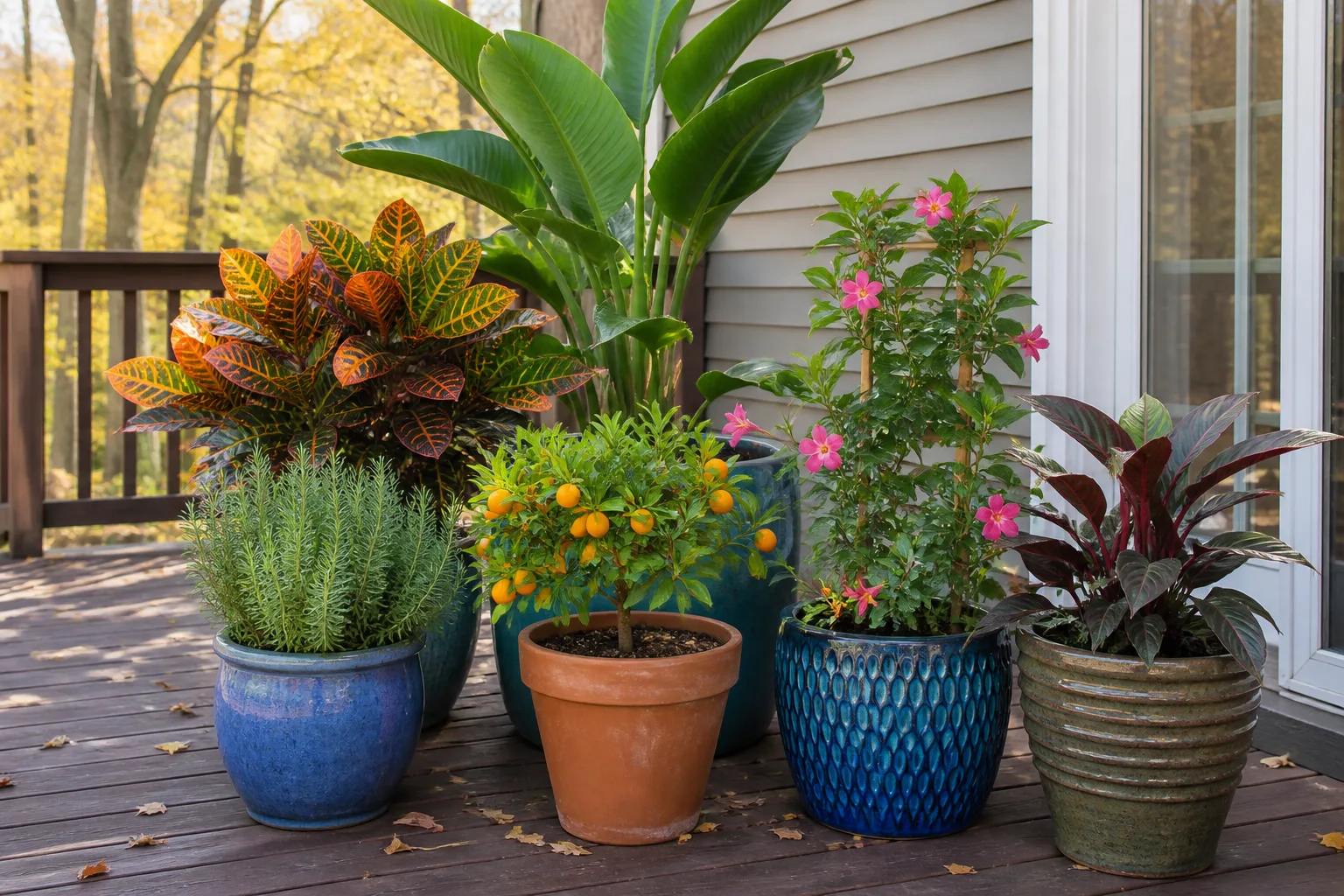
Bring frost-tender plants to a suitable indoor or frost-free location before a damaging freeze, rather than waiting for visible injury. Tropical foliage plants, citrus, tender herbs, and plants sold as summer annuals are common candidates, but the plant label and local climate should guide the decision. A sunny room, cool greenhouse, or unheated garage are not interchangeable: choose light and temperature to match whether the plant stays active or goes dormant.
For a large plant that cannot be carried easily, use a stable plant caddy before the pot becomes waterlogged or frozen. If it must remain outside, first confirm that its species can take the likely low temperatures, then add shelter and root insulation; wrapping alone cannot turn a tender tropical into a hardy outdoor plant. The RHS guidance on overwintering tender plants recommends protection when plants cannot be moved, while still making the plant’s cold tolerance the deciding factor.
How to store empty pots
For empty pots, remove old mix and plant debris, clean off soil, and let the container dry. Store porous terracotta and ceramic in a garage, shed, or other covered place where rain and snow cannot collect inside them. If you stack pots, separate them so rims do not wedge together or chip when the material contracts in cold weather.
If indoor storage is impossible, turn empty pots upside down or set them at an angle so water cannot pool, and raise them off wet ground. A loose, water-shedding cover can help, but do not wrap a pot airtight in plastic: trapped condensation can leave it wet, and a cover that sags can hold water against the rim. Keep drainage holes clear, especially on large containers that cannot be moved.
Let pots dry before nesting them. Put a small spacer between rims if the containers fit tightly, and avoid leaving a saucer or smaller pot wedged inside where meltwater can freeze them together. If you cannot lift a large empty planter, empty it in place and check after rain that water is not collecting at the bottom or beneath a cover.
For a heavy empty planter that must remain in place, remove the soil, protect the opening from direct rain without sealing it, and check that water can escape from the base. For a planted pot, leave the root ball in place and use the outdoor-protection steps above. Empty-pot storage and overwintering a live plant are different jobs.
A winter preparation sequence for pots and plants
Use this order before the first sustained freeze. It catches the high-consequence problems early and avoids moving heavy, wet containers in a rush.
- Identify the plant and pot. Check the plant’s hardiness, the container material, and any frost-proof rating.
- Choose a destination. Leave hardy plants outdoors only if the site and pot suit them; move tender plants to an appropriate protected space.
- Fix drainage. Clear holes, remove saucers, raise stable pots, and redirect roof runoff.
- Reduce exposure. Group outdoor containers beside a sheltered wall and protect vulnerable roots with a breathable wrap or mulch.
- Store empty containers dry. Empty, clean, dry, and cover vulnerable pots before wet freezing weather sets in.
- Recheck through winter. During a thaw, look for standing water, loose wraps, new cracks, and dry root balls under cover.
Mistakes that cause avoidable winter damage
The most common mistake is treating the pot and plant as one problem. A frost-proof planter does not protect a tender root system, and wrapping an unsuitable plant does not remove the need to move it. Make the plant decision first, then choose a container-protection method that still lets water drain.
Another avoidable error is leaving a saucer full of water under an outdoor pot or covering a container so tightly that moisture is trapped. Both can keep the base wet through a freeze. Do not assume “heavy” means frost-proof, either: a concrete planter can be hard to move and still be damaged by poor drainage or repeated temperature swings.
Finally, avoid watering by calendar or by summer habit. Dormant deciduous plants use little water, while covered evergreens may need occasional moisture; neither should sit in saturated mix. Check the soil on a frost-free day and skip watering when a freeze is imminent, following the RHS winter-care guidance.
What to do after a hard freeze
Once temperatures rise above freezing, inspect the pot rather than trying to move it while it is frozen. Look for new cracks, bulging, water trapped in the saucer or base, and wraps that have slipped. If a pot has cracked through, do not rely on it to hold a heavy root ball safely; move the plant after the mix has thawed and the container can be handled without forcing it.
Check the soil moisture and drainage before adding water. A frozen surface can hide a wet root ball below, and an evergreen under cover may instead be drying out. Clear blocked holes, empty any saucer, and adjust the shelter for the next cold spell; repeated winter checks are more useful than one large watering or a sealed cover.
Conclusion
You can leave some plant pots outside in winter when the container is rated for the conditions, water drains freely, and the plant can tolerate the cold in an exposed root zone. Porous terracotta and ceramic deserve the most caution; plastic, resin, concrete, wood, and metal still need to be judged by construction, drainage, and the manufacturer’s rating.
For planted pots, decide where the plant can safely spend winter before deciding where the pot should sit. Group and insulate hardy outdoor containers, move tender plants in time, and store empty vulnerable pots clean and dry. That distinction protects both the planter you want to reuse and the plant you hope to see again in spring.