When Is It Too Late to Plant Spring Bulbs?
When is it too late to plant spring bulbs? Use soil condition, bulb type, climate, and a late-planting plan to decide what to do today.
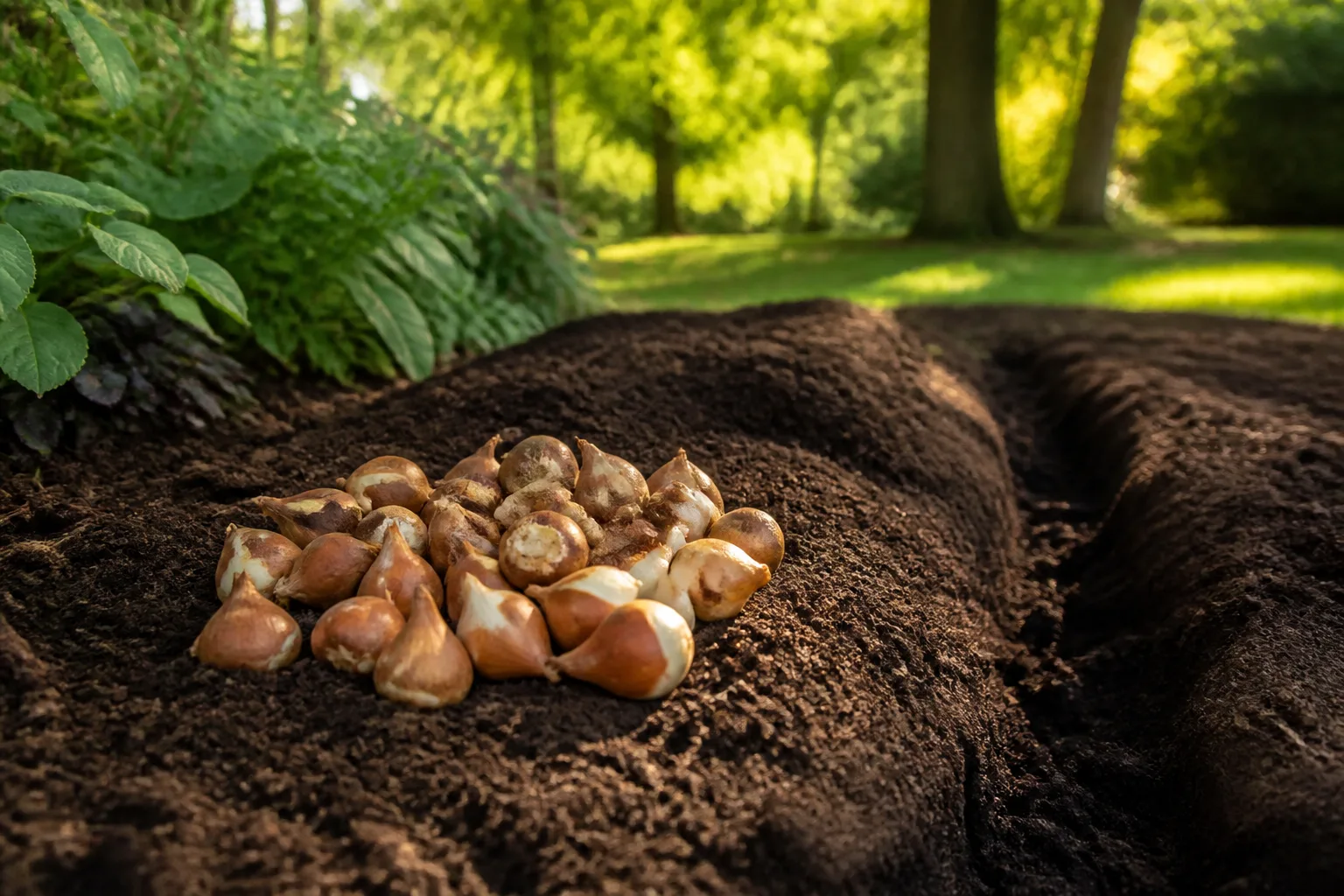
If a bag of tulips, daffodils, or crocuses is still sitting in the garage, you probably want one simple answer: plant them now or wait until fall? In most cases, plant them during the next workable window. There is no universal date when every spring bulb suddenly becomes useless, but the odds of a first-season flower fall as the bulb loses time for root growth and chilling.
The real cutoff is a combination of soil condition, bulb type, climate, and the condition of the bulb itself. If you can dig to the recommended depth in soil that is cool, well drained, and not frozen solid, planting is usually a better bet than storing the bulbs for many months. If the bed is frozen or waterlogged, wait for a short thaw or move the bulbs into a container-and-chilling plan rather than forcing them into bad soil.
The short answer: plant while the soil is workable
For hardy spring-flowering bulbs, “too late” usually means the ground is no longer workable for the depth the bulb needs, the soil is staying saturated, or spring growth is already so far along that the bulb has missed its natural root-and-chill sequence. A late planting can still succeed after the usual fall window, but it may flower late, produce fewer flowers, or wait until the following spring.
Purdue Extension gives a useful practical threshold: bulbs can continue root development when soil is above about 40°F, and planting is preferable to holding bulbs over winter. That is not a magic number for every species. Use it with the physical test: if a trowel can make a clean hole without pounding through ice or smearing wet clay, the bed may be ready.
A calendar date matters less than soil condition
Hardiness zones help you estimate the season, but they do not tell you whether your particular bed is frozen, flooded, or still workable. A sunny raised bed may be plantable while a shaded clay border remains frozen, and a mild winter can extend the planting window in one year without changing the bulb’s biological needs.
As a broad planning rule, many spring bulbs go in six to eight weeks before the ground freezes, a timing window also described by Crocus and Longfield Gardens. Tulips are commonly planted later than daffodils and some other bulbs because cool soil reduces pressure from certain bulb diseases. That is why “late” is not the same thing as “wrong”: the correct date depends on what is in the bag and what the soil is doing.
Why spring bulbs need time before they bloom
A dormant bulb is not an empty seed. It already contains a growing point and stored energy, but it still needs a functioning root system and, for many hardy spring bulbs, a long period of cold exposure before it can flower normally. Late planting shortens the time available for those jobs.
Roots come before shoots, and chilling shapes flowering
The first priority after planting is root growth. Roots anchor the bulb, absorb water and minerals, and help the plant cope when leaves and flowers appear. If the bulb shoots before it has rooted well, it can have enough energy to make leaves but not enough support for a strong flower.
Cold is the second piece. Purdue Extension reports that many spring-flowering bulbs need roughly 10 to 13 weeks below 40°F to initiate flowers, while Longfield Gardens describes a similar prolonged chill range. The exact requirement varies by species, cultivar, and climate, so treat the number as a useful explanation rather than a promise that counting refrigerator weeks will reproduce an outdoor season perfectly.
This is why spring planting often disappoints. A bulb planted after winter may grow leaves but skip the flower, bloom later than normal, or wait until the next season after it has experienced the missing cold period. That outcome is not necessarily failure; the bulb may be reallocating its stored energy and establishing itself for the following year.
Use this late-planting decision tree
Before you dig, make four quick observations: Is the bulb firm? Is the soil workable? Does water drain away rather than sit? Is the bulb a hardy spring bloomer or a tender summer bulb? Those answers are more useful than a rule such as “never plant after November.”
If the soil is workable, cool, and well drained
Plant healthy bulbs as soon as you can. Choose the depth on the package or use the general rule of planting the bulb two to three times its height, or roughly three to four times its width depending on the bulb and local guidance. Measure cover from the bulb’s base to the soil surface, and remember that mulch is an additional protective layer unless you are using a documented top-planting method.
Planting now gives the bulb at least some chance to root and experience natural cold. Water once to settle the soil if the bed is dry, then let drainage and weather do the work. Do not keep adding water to a cold, wet bed; bulbs need oxygen around their roots as much as they need moisture.
If the ground is frozen or waterlogged
Do not chip a deep hole through solid frozen soil just to meet a calendar deadline. You can damage the basal plate where roots emerge, leave the bulb perched in an air pocket, or create a muddy pocket that rots it when the thaw arrives. Wait for a thaw that lets you prepare a real planting hole, even if the result is a later bloom.
Waterlogged soil is a no-go for the same reason. Purdue Extension and Wisconsin Extension both emphasize drainage because bulbs sitting in saturated soil are prone to rot. If the bed drains slowly, choose a better location, improve the bed before planting, or use a container with drainage holes rather than burying a bulb in a cold swamp.
If you have tulips and the upper soil can be loosened but the lower bed is difficult to dig, the top-planting method below may be an option. It is not a universal prescription for every frozen garden. If the entire planting area is hard ice, keep the bulbs cool and dry while you wait for workable soil.
Which spring bulbs handle a late start best?
No bulb gets a guaranteed pass, but some tolerate a missed fall deadline better than others. A late planting also means something different in a cold continental climate than in a warm-winter region where chilling is the main challenge.
Tulips are often the most forgiving late planting
Tulips are the classic “plant them anyway” bulb. They are commonly planted in late autumn or early winter, and cool soil can be an advantage because some fungal problems are more active in warmer, damp conditions. Current guidance from Gardens Illustrated and Crocus notes that tulips can still flower after unusually late planting when the bulbs are healthy and the ground is workable.
That does not mean every January or February tulip will bloom on schedule. Late tulips may flower later, produce shorter stems, or behave as a one-season display. If the bulbs are firm and the soil is plantable, the likely downside of trying is a disappointing first season; the likely downside of waiting until fall is that the bulbs dry out, sprout, or rot in storage.
Daffodils, crocuses, hyacinths, and alliums need more nuance
Daffodils generally benefit from earlier planting because they can begin making roots before other bulbs. A late-planted daffodil may still flower, but the first display may be delayed or sparse. Daffodils are also a sensible choice for areas with browsing pressure because their bulbs are less attractive to many rodents than tulips, although pets and people should never eat them.
Crocuses, hyacinths, alliums, snowdrops, and related bulbs have their own timing and chilling preferences. Early bloomers often need enough time for roots before the soil turns hard, while some woodland bulbs prefer cool, humus-rich conditions. Use the named bulb’s label when it conflicts with a general rule, and do not assume that a successful late tulip schedule applies to every small corm or delicate bulb.
Extension guidance also matters in warm regions. NC State Cooperative Extension notes that many spring bulbs need a long chill and that gardeners in the South should choose cultivars suited to warm winters or provide the chilling the supplier recommends. A bulb can be perfectly healthy and still fail to flower if its climate never supplies the required cold.
Tender bulbs are a different category
Gladiolus, caladiums, callas, dahlias, and other tender bulbs are not simply late versions of tulips. Many are planted in spring after the risk of frost and freezing temperatures has passed. If you are holding a tender bulb, do not bury it in frozen winter soil because a spring-bulb article says “plant now.” Check the species’ frost and storage requirements instead.
The same distinction applies to bulbs sold for summer or autumn flowering. Their natural schedule may call for warm soil rather than winter chilling. Correct identification is the first step when the package is damaged or the bulbs were mixed together.
How to plant late bulbs in the ground
Late planting rewards restraint. Give the bulb a clean, well-drained bed, follow its depth guidance, and protect the planting from the two problems that become more severe when roots have little time: drying out and being heaved by repeated freezing and thawing.
Inspect the bulbs, set the depth, and protect the bed
Start with firm bulbs that feel heavy for their size. Discard bulbs that are soft, leaking, deeply bruised, or covered in spreading mold. Dan Cooper Garden and Longfield Gardens both recommend firm, healthy bulbs and short-term cool, dry, ventilated storage. A small dry skin blemish is not the same as a bulb that collapses when pressed; the latter has lost the structure it needs to survive.
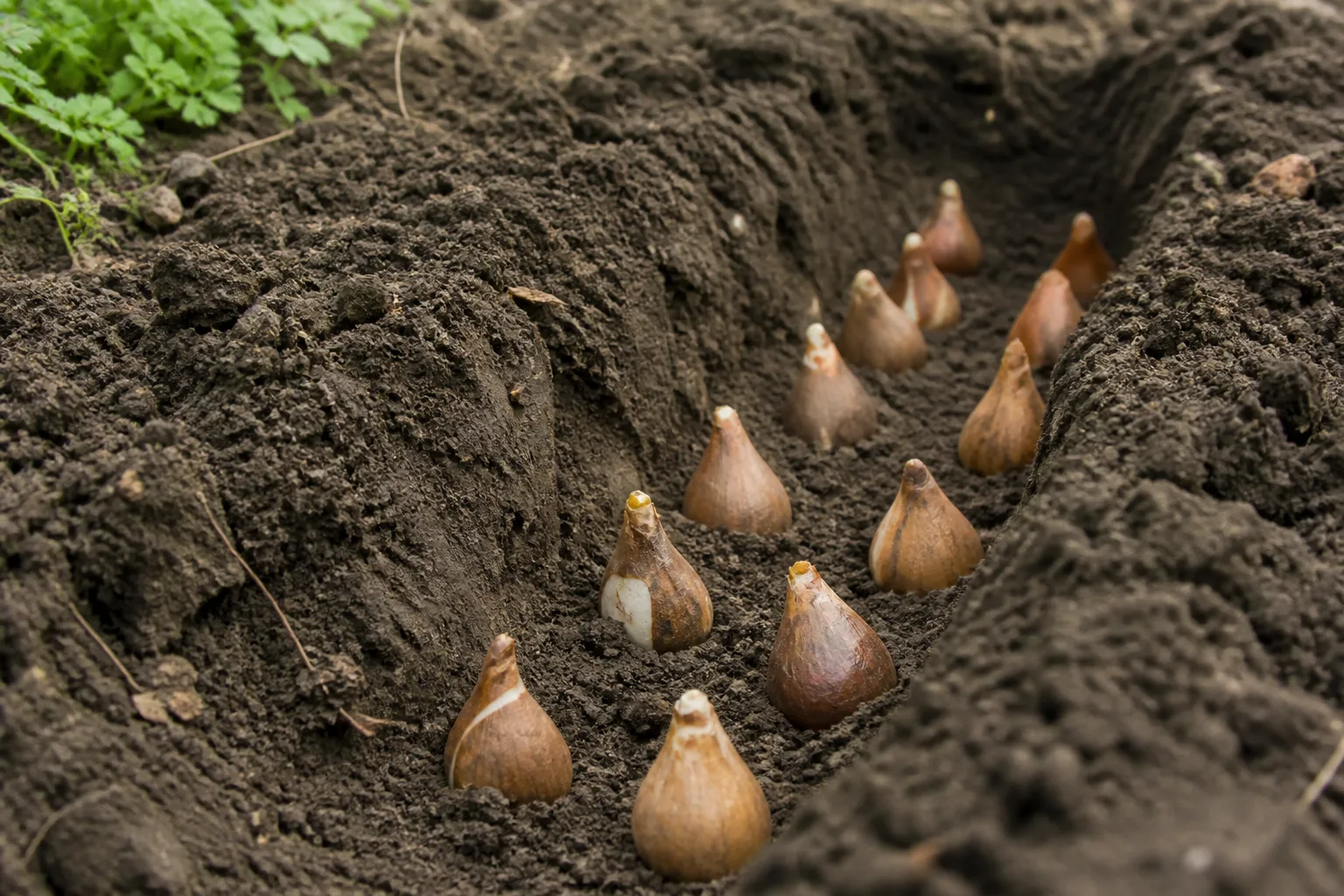
Prepare the soil so water can drain away, then plant the pointed nose upward and the basal plate downward. If you lose track of orientation, do not panic: the shoot can often find its way, but placing the bulb correctly makes its first push easier. Use the label’s depth when available. Otherwise, start with roughly two to three times the bulb’s height and adjust for the soil, species, and local recommendations.
Backfill with the soil you removed and firm it gently rather than compacting it hard. Water only if the ground is dry enough to accept it. Finish with a loose, even layer of aged mulch or finished compost to buffer freeze-thaw swings and reduce the chance that bulbs heave upward, but avoid a thick wet blanket that holds water against the bulb.
Mark the planting spot. Late bulbs may remain invisible for weeks, and it is easy to dig into them while cleaning up the bed. If squirrels or other animals excavate newly disturbed soil, lay poultry wire or similar mesh just below the surface and remove or adjust it as shoots emerge.
The frozen-ground workaround: top-planting tulips
Cornell’s Flower Bulb Research Program tested a labor-saving method called top-planting or “drop and cover” with tulips. The process is to loosen several inches of soil, place the bulbs on the prepared surface without pressing them into the basal plate, and cover them with about two to four inches of aged mulch or well-rotted compost. In Cornell’s report, two tulip cultivars continued flowering through the third spring, while plots covered with six inches of mulch performed less well.
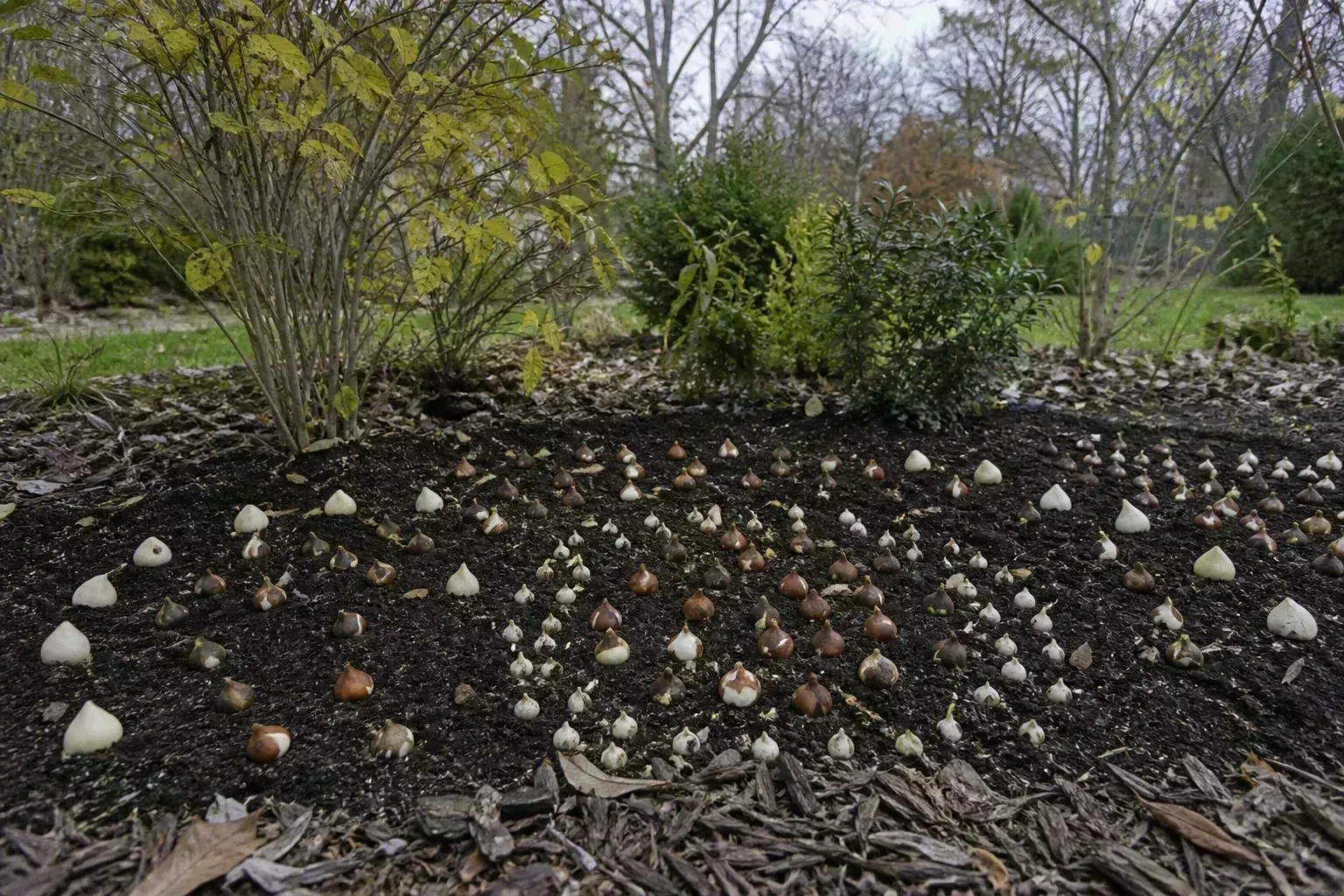
This method is useful when ordinary digging is difficult, especially across a large bed or heavy soil. It should not be confused with placing bulbs on top of a frozen lawn and hoping a pile of mulch solves everything. The soil beneath the bulbs still needs to be loosened enough for roots to enter, the bed must drain, and the mulch layer must be thick enough to hold and insulate the bulbs without becoming a saturated mat.
Use top-planting primarily for tulips and treat it as a technique with evidence and limits, not a guarantee for daffodils, crocuses, or every cultivar. If your soil is frozen solid, wait for a thaw. If you use the method during a workable late-season window, spread the bulbs over loosened soil, keep the basal plate undamaged, cover evenly, and protect the bed from squirrels.
Containers and indoor forcing when digging is impossible
A container can buy you time when the garden is frozen, the bed is waterlogged, or you need to keep bulbs separate from a crowded border. Use a pot with drainage holes and a well-drained potting mix. Plant at the label’s depth, keep the mix lightly moist rather than saturated, and place the pot somewhere cold enough for the species’ chilling requirement.
Container growing is not a loophole that removes the need for cold. A pot left in a warm living room may produce leaves without the flower initiation that a hardy bulb needs. Containers also freeze faster than garden soil, so protect them from extreme temperature swings and do not let the mix stay wet in a frozen pot. Dan Cooper Garden notes that containers offer more timing flexibility, but still require excellent drainage.
For a deliberate indoor display, Purdue Extension describes forcing bulbs in pots with the tips slightly above the soil, moistening the mix, and chilling the pots near 40°F for as long as about 13 weeks before bringing them to a cool indoor space. After chilling, flowers may open in roughly one to two weeks, depending on the bulb and conditions. This is a separate project from restoring a late outdoor bed: the reward is an indoor bloom, not necessarily a long-term landscape planting.
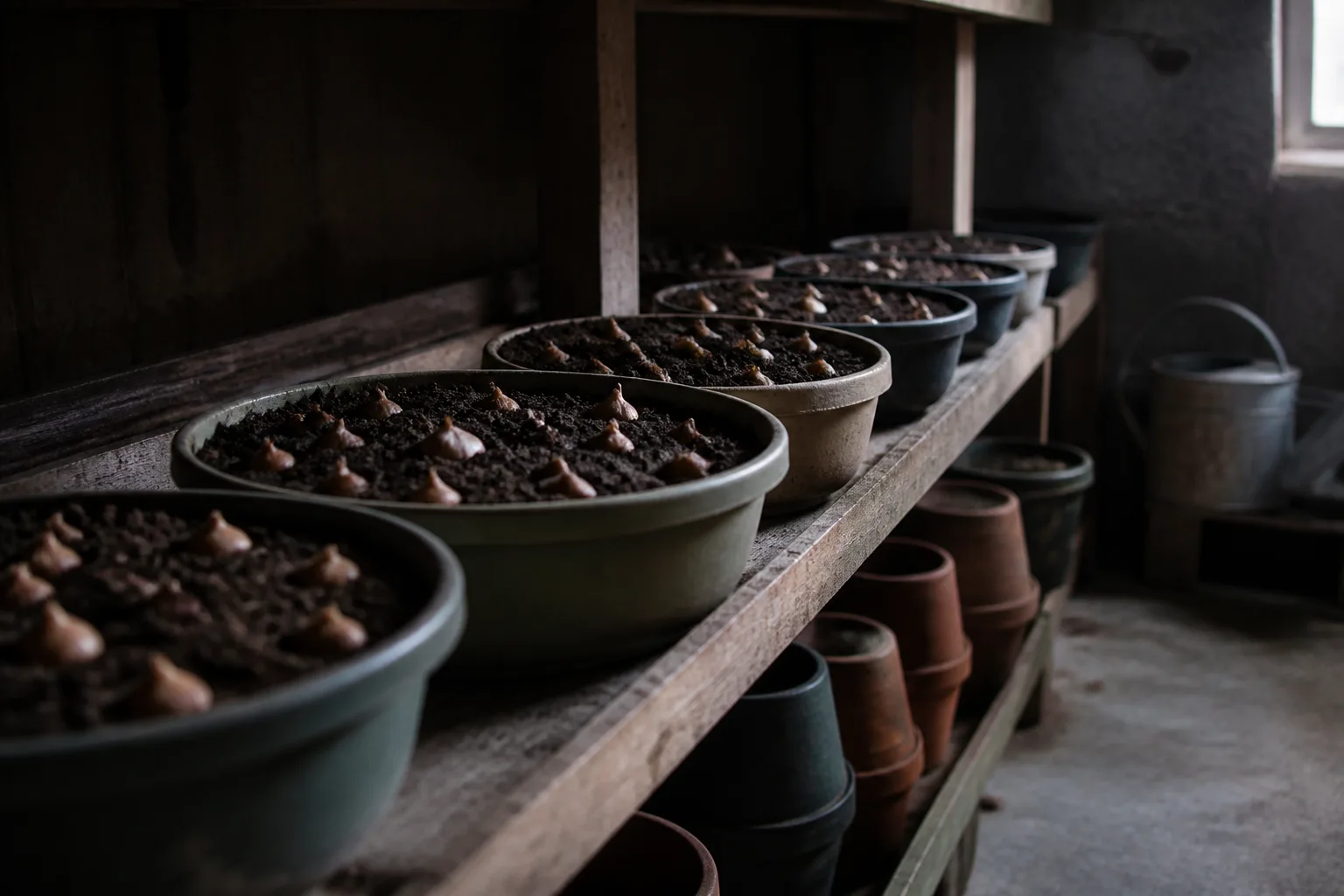
If the bulbs are already sprouting, potting them may still be worthwhile, but handle the emerging growth gently and reduce expectations. Do not seal dormant bulbs in an unventilated plastic bag while you wait. Keep them cool, dark, dry, and ventilated for the shortest possible period, and plant when the ground or container plan is ready.
What to expect after a late planting
The most useful late-planting promise is not “you will get flowers.” It is “you have a reasonable chance if you act while conditions are suitable, and you will know how to interpret the result.” Healthy bulbs may surprise you, while a perfect planting date cannot repair a bulb that was already desiccated or rotten.
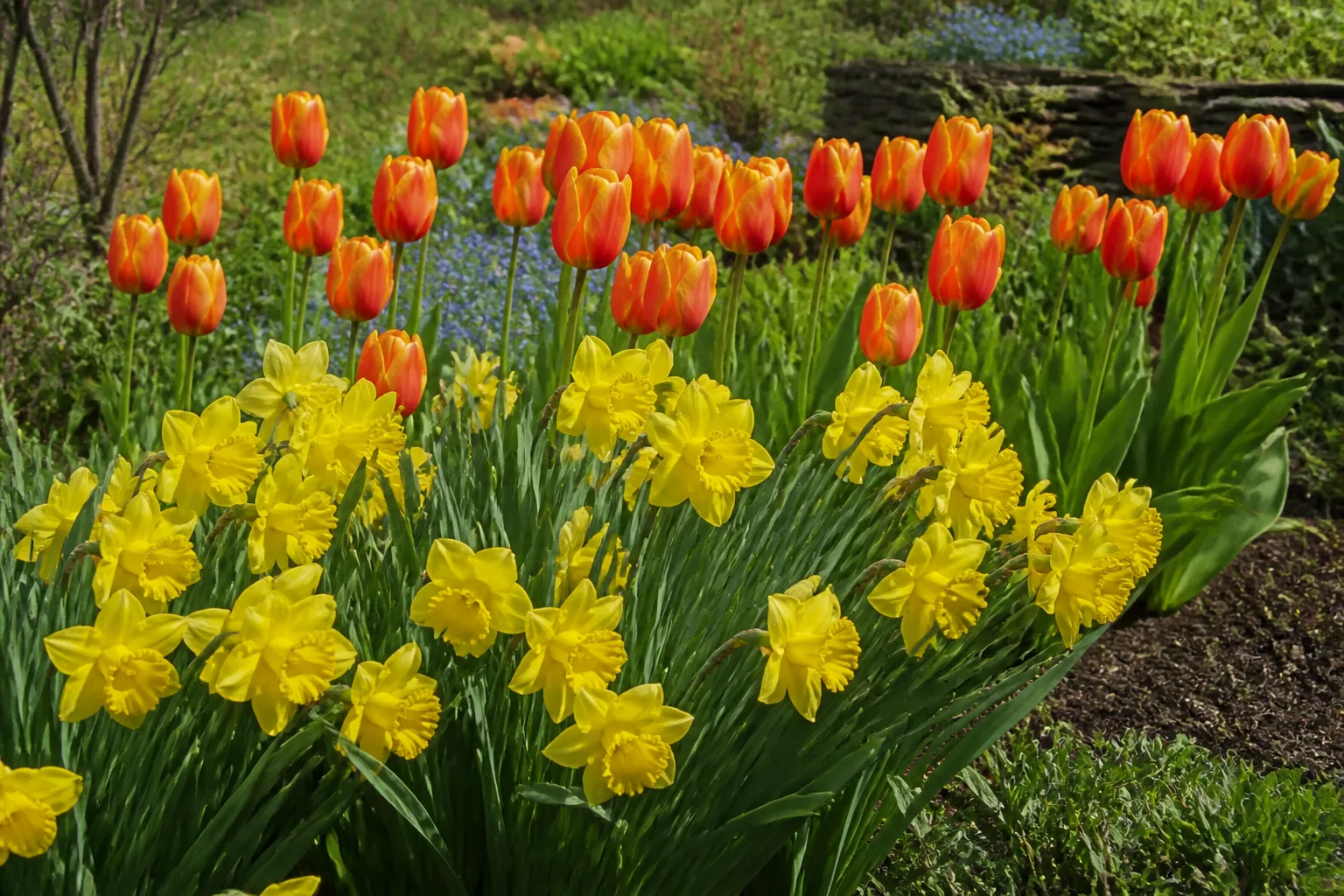
Late bulbs may flower later than the rest of the garden, make a smaller display, or skip the first bloom and return the following year. A delayed or absent flower does not automatically mean the bulb is dead. Give it a chance to make leaves and roots, then judge it over the next season rather than digging it up immediately because it missed an early-spring date.
After bloom, remove spent flowers if you want to prevent seed production, but leave the green foliage until it yellows and dies back naturally. Those leaves recharge the bulb. Do not braid, knot, or cut healthy leaves early just to tidy the bed; Wisconsin Extension and NC State Cooperative Extension both emphasize that post-bloom foliage is part of the bulb’s long-term energy budget.
Mistakes that reduce your odds
The most common mistake is treating a printed month as more important than the soil. Planting into saturated clay because the calendar says “now” creates a rot problem, while waiting a week for a workable thaw can preserve the bulb’s chance. The second is storing healthy bulbs until the following fall without a genuinely cool, dry, ventilated place; bulbs lose moisture and stored reserves, and many home storage spots are warm enough to trigger sprouting.
Other avoidable mistakes include choosing the wrong depth, placing bulbs in deep shade, adding too much fertilizer to a dormant bulb, and piling mulch so thickly that it stays wet. Do not add extra depth just because the planting is late unless the bulb’s instructions support it. Depth protects from temperature swings, but an overly deep or poorly drained hole can delay emergence and increase rot risk.
Finally, do not assume every “bulb” has the same needs. A tulip, a daffodil, a crocus corm, a snowdrop, and a summer dahlia may look like versions of the same job in a garden center, but their seasons and chilling requirements differ. Read the label, inspect the planting site, and choose the action that gives the living bulb the best conditions available now.
Conclusion
When is it too late to plant spring bulbs? Usually later than you think, as long as the bulb is firm and the soil is workable, cool, and well drained. Planting a month or two beyond the ideal window can still produce flowers, while waiting until next fall risks losing the bulbs in storage. The trade-off is that late bulbs may bloom later, sparsely, or not at all during the first season.
If the ground is frozen, wait for a thaw rather than forcing a deep hole. If a tulip bed can be loosened but not conventionally dug, Cornell-style top-planting with a controlled mulch layer is a reasonable option. If spring has already arrived, plant healthy bulbs anyway or use a container-and-chilling plan, then let foliage mature and judge the bulb’s recovery over the following season.