38 Christmas Tree Ribbon Ideas for Any Style
Find the best Christmas tree ribbon ideas for your tree, including how to choose wired ribbon, build cascades, mix colors, and finish the tails.

Ribbon can make a Christmas tree look finished before you hang a single ornament—but only if it has a job. Use it to pull a color through the branches, create a vertical line, soften a sparse section, or give a collection of mismatched ornaments one visual thread. The best Christmas tree ribbon ideas are not just pretty colors; they solve a decorating problem.
The easiest way to avoid a tree that looks overwrapped is to choose one main movement first. A vertical waterfall makes a tree feel taller, a loose horizontal garland makes it feel wider, and short bows add charm without covering much of the greenery. Start with one of those structures, then use the 38 ideas below to decide what the ribbon should look and feel like.
Before You Buy Ribbon, Decide What It Must Do
Match ribbon structure to your decorating method
Wired ribbon is the most forgiving choice for a waterfall, a curved cascade, or a large topper because the edge holds a bend after you pinch it. Better Homes & Gardens’ practical tuck, loop, tuck, tail approach uses those bends to create movement, then hides the anchor points inside the branches. (Better Homes & Gardens’ ribbon method)
Unwired velvet, satin, cotton, or linen is better when you want relaxed tails, small bows, or ribbon-tied ornaments. It drapes naturally, but it will not hold a sculpted loop on its own. Use the branch tips, a small piece of green floral wire, or discreet clips to keep it from sliding.
Scale width and texture to your tree
Think about your tree’s height and branch density before choosing a spool. On a small tabletop tree, a 1- to 2-inch ribbon can look delicate; on a full 7- or 8-foot tree, a 2.5- to 3-inch ribbon is easier to see. Very wide ribbon can look dramatic on a tall, open tree, but it can swallow ornaments on a narrow tree.
Texture matters as much as width. Velvet absorbs light and adds depth, satin reflects it, mesh creates volume, burlap introduces a dry rustic note, and sheer ribbon keeps the branches visible. If your ornaments already have glitter, glass, and metallic finishes, a quieter linen or matte velvet may create a better backdrop than another sparkly surface.
How to Put Ribbon on a Christmas Tree
Waterfall and vertical ribbon
For a waterfall, anchor the ribbon near the top on an interior branch, bring it forward into a soft loop, then tuck it back into the tree. Repeat that rhythm as you move down, keeping the loops slightly irregular so the result looks airy instead of machine-made. A gentle diagonal is usually more flattering than perfectly straight columns because it gives the eye a path through the branches.
You can work with one long strand, but cut sections are easier to control. Short lengths let you change direction, correct a bad fold, and place the ribbon only where the tree needs it. Country Living also recommends vertical strands for a fuller look, with the upper ends secured near the top and the lower sections tucked to create folds. (Country Living’s vertical ribbon approach)
Horizontal garland and swags
For a traditional wrapped look, begin near the top and travel around the tree in a loose spiral, dipping the ribbon in and out of the branches. Keep the spacing generous: a few broad swags usually look more intentional than many tight, equal rings. If the tree is against a wall, spend ribbon on the visible front and sides instead of forcing a full 360-degree wrap.
A horizontal method works especially well with wide satin, burlap, metallic mesh, or a ribbon that repeats the color of the tree skirt. Let the line bend naturally with the branch tiers, and tuck it at the back of each swag so the visible section floats forward rather than lying flat against the needles.
Bows, ties, and ornament hangers
Short ribbon pieces are the fastest way to decorate a tree that is already full of sentimental ornaments. Tie loose knots or simple two-loop bows on outer branches, then vary the tail length so the tree does not look like a row of identical gift packages. Thin ribbon can also replace metal hooks on lightweight ornaments, adding softness and making the ribbon part of the design.
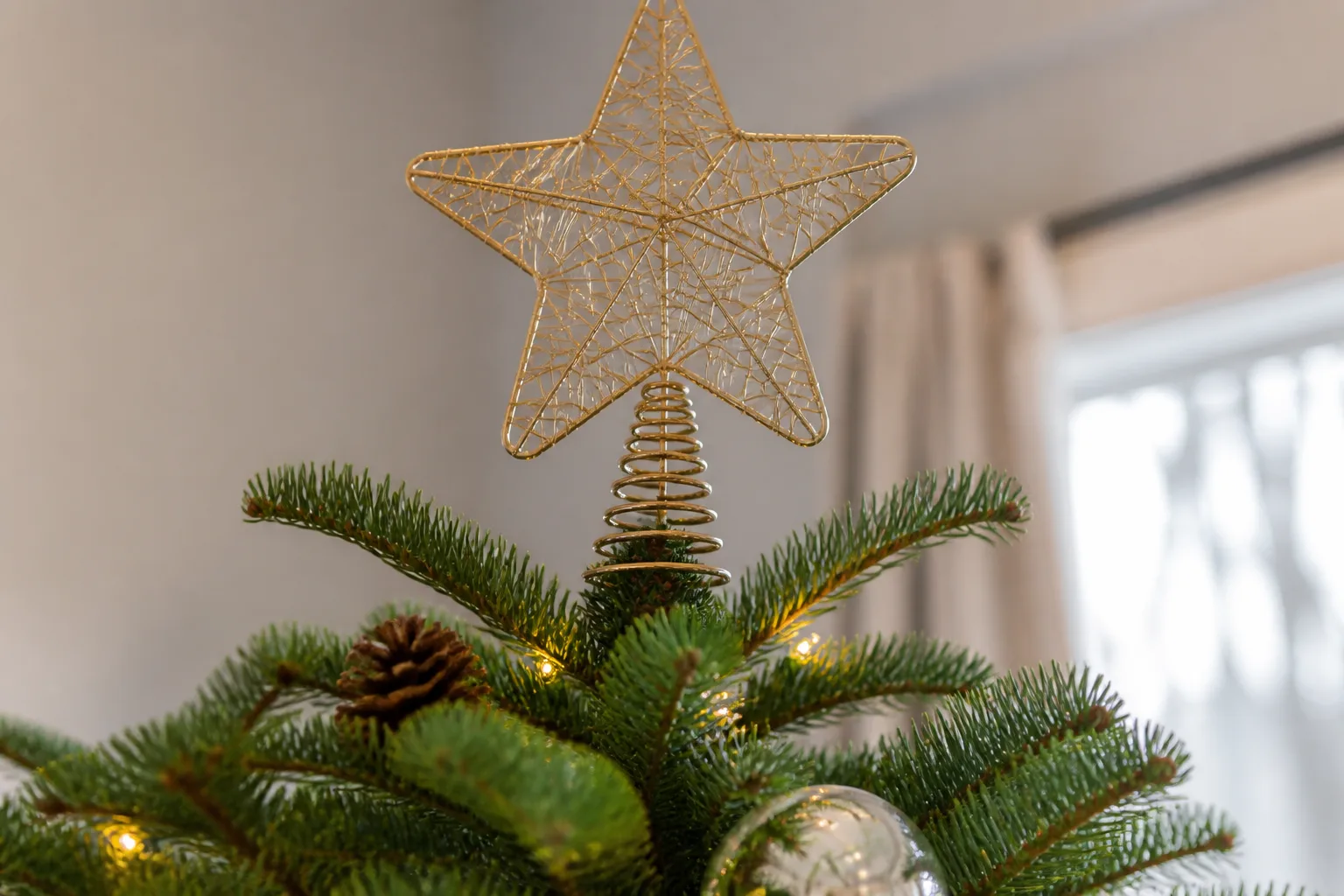
For a topper, make one large bow with wired ribbon or layer several smaller bows at the crown. Keep the center secure and the tails long enough to reach into the upper third of the tree. If you do not enjoy bow-making, a pair of single loops with long dovetail tails can look more modern and takes much less shaping.
38 Christmas Tree Ribbon Ideas
These ideas are grouped by the visual job they perform. Pick one dominant idea, then borrow a secondary texture or color from another group rather than trying to use all 38 at once.
Classic and traditional ribbon ideas
1. Deep red velvet waterfall. Run burgundy or true red velvet in loose vertical cascades down a green tree. The matte pile makes warm lights look richer and gives traditional ornaments a strong, quiet background.
2. Evergreen striped wired ribbon. Choose green ribbon with a narrow stripe or metallic edge when you want the ribbon to blend into the tree while still giving the branches structure. It is especially useful on a tree with bright silver or white ornaments.
3. Red-and-white Scandinavian braid. A wide woven stripe gives a cozy Nordic feeling without requiring many extra decorations. Keep the rest of the palette simple—wood, white, red, and soft lights—so the pattern remains the focal point.
4. Plaid bow clusters. Cut several plaid pieces and tie loose bows at the ends of branches instead of wrapping the full tree. Place them in uneven groups of two or three to make a traditional tree feel collected rather than perfectly matched.
5. Ribbon-tied ornaments. Replace the hooks on lightweight baubles with narrow velvet or satin. Let the tails show below the ornament, then repeat the same ribbon at a few different heights to create a subtle vertical rhythm.
6. Cream satin with a gold edge. A warm ivory ribbon edged in gold bridges colorful ornaments and a neutral room. Use it in soft horizontal swags, with the gold edge turned toward the lights so it catches small highlights.
7. Vintage printed ribbon. Ribbon printed with tiny greetings, stars, or old-fashioned motifs supplies pattern without adding another type of ornament. Use it sparingly on a narrow tree, or make it the unifying thread on a maximalist tree.
8. Thin gray velvet on a flocked tree. Pale gray ribbon creates a soft transition between white flocking and darker ornaments. Keep the strands narrow and lightly draped so the snowy texture stays visible.
9. Red-and-gold vertical ladders. Place several short red strands from the crown toward the lower branches, then add gold ornaments beside—not directly on top of—the ribbon. This arrangement makes a tall tree look orderly without boxing it in.
10. Slim ribbon tree topper. Use two or three narrow satin ribbons in complementary colors, tie them at the top, and let the tails fall in different lengths. This is a graceful option for a small bedroom tree that does not need a giant bow.
Rustic and natural ribbon ideas
11. Linen as a gap filler. Undyed linen ribbon disappears into the branches just enough to soften empty areas. Frayed edges are useful here; they make the tree feel handmade and keep the ribbon from competing with pinecones, wood, or paper ornaments.
12. Neutral burlap to calm a colorful tree. A broad burlap ribbon can visually edit a rainbow or multicolored ornament collection. Use only a few wide diagonal sections so the neutral material connects the colors without covering them.
13. Striped jute cascades. Jute or upholstery webbing gives a rustic tree a stronger line than soft linen. Let each strip fall nearly the full height of the tree, then tuck it at two or three points to create a relaxed cascade.
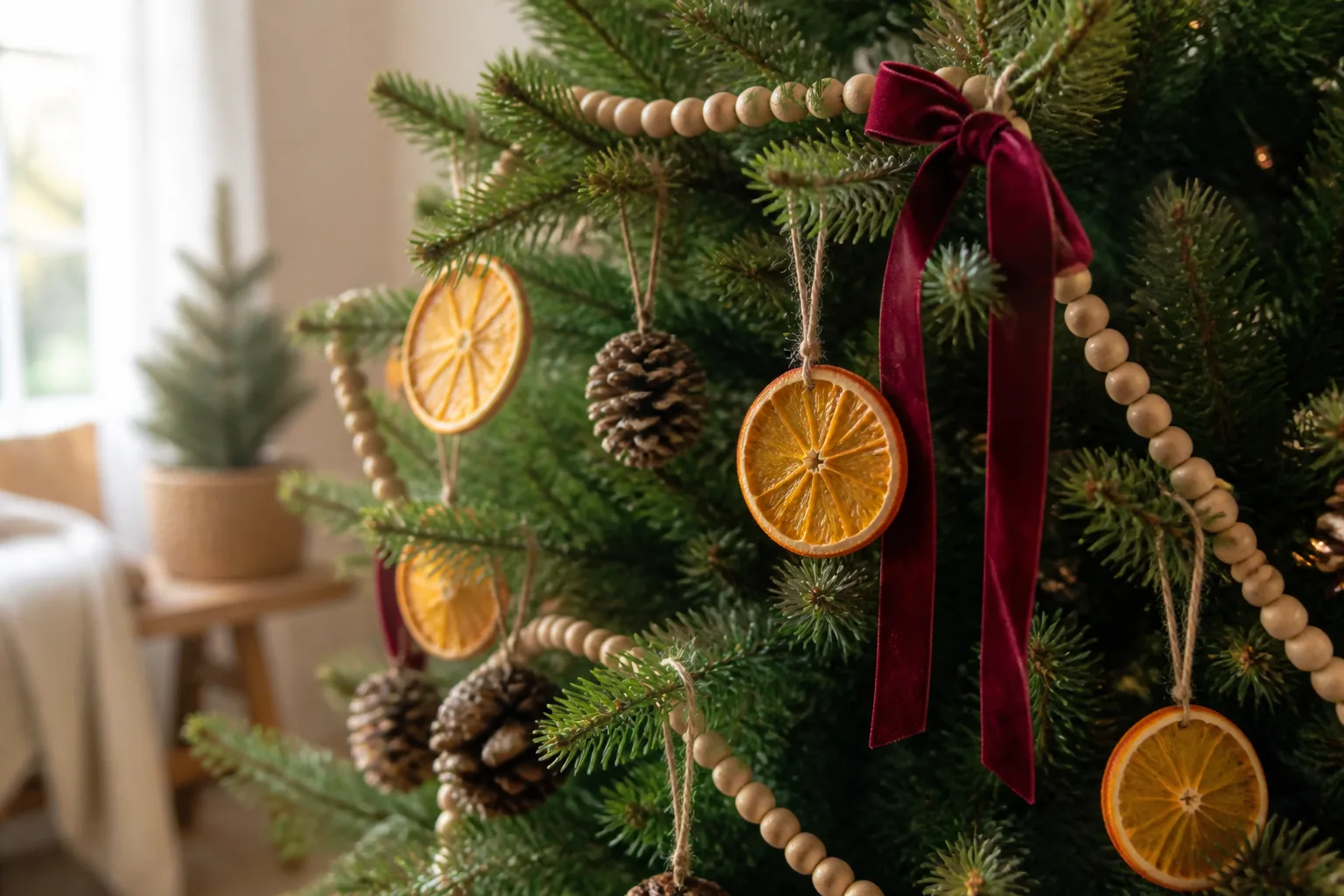
14. Velvet with dried orange. Pair a narrow burgundy or rust velvet ribbon with dried citrus slices and pinecones. The contrast between plush fabric and crisp natural materials makes a small tree look layered without needing many baubles.
15. Earth-tone double ribbon. Layer sage, cocoa, camel, or olive ribbons in one broad swag. Keep the color values close and let the textures differ—matte linen with velvet, for example—so the look feels dimensional rather than busy.
16. Copper satin with loose tails. Tie copper satin directly to a few branches and leave the tails imperfect. This works well with a woodland palette because the shine supplies just enough polish without turning the tree into a formal display.
17. Ribbon with pinecone knots. Tie narrow ribbon around the stems of small pinecones, then place those bundles at the tips of branches. It is a practical way to add ribbon when a full garland would hide a sparse tree’s natural shape.
18. Brown metallic ribbon. A bronze or brown metallic ribbon looks surprisingly calm against antique brass, cream, and wood. Use it in shallow horizontal loops so the shimmer reads as a warm accent instead of a glitter wall.
19. Red-and-black gingham. Flannel-like gingham creates a cabin or lodge mood immediately. Balance the bold checks with plain wood, matte black, or soft white ornaments, and avoid adding a second large-scale pattern.
Metallic, glam, and cool-toned ribbon ideas
20. Gold mesh for sculpted bows. Metallic mesh has enough body to build a large bow or a structured side cascade. Pinch the center firmly and keep the loops open so the mesh adds air rather than a dense metallic block.
21. Platinum velvet for a winter look. Silver-gray velvet works beautifully with white lights and clear or mirrored ornaments. The fabric keeps the cool palette from feeling harsh because its surface is soft rather than shiny.
22. Pink mesh with matching accents. Blush or hot pink mesh makes a modern tree feel celebratory. Repeat the pink in just a few ornaments or in the tree skirt; matching every accessory can make the palette look staged.
23. Rose-gold ribbon strands. Use several slim rose-gold strands instead of one thick piece when you want sparkle with more negative space. Place the strands at different angles and keep the ornaments mostly matte.
24. Gilded snowflake ribbon. An embossed or printed snowflake pattern gives a white or pale tree a clear winter story. Tuck it deeply enough that the motif appears in glimpses, like snow moving through the branches.
25. Perforated silver horizontal ribbon. A cutout or open-weave silver ribbon adds a graphic line while allowing green needles and lights to show through. Use broad, low swags on a full tree and let ornaments break up the pattern.
26. Champagne and ivory layering. Combine a champagne metallic ribbon with a wider ivory satin or velvet. Keep both in the same warm family, then use clear glass ornaments to add light without introducing a third strong color.
27. Black ribbon with gold edging. Black-and-gold ribbon is dramatic on a green or flocked tree, especially when the room already has dark furniture. Use it as a narrow accent over a wider neutral ribbon instead of covering the tree in black.
28. Blue ombre waterfall. A blue-green ombre ribbon gives a coastal or icy look without needing a themed ornament collection. Start the darkest section near the top or bottom, depending on where you want visual weight.
29. Two-tone furry mesh. A soft white-and-gold or silver-and-cream mesh adds volume to a flocked tree. Break it into short tucked pieces rather than one continuous spiral, which keeps the texture fluffy and prevents it from flattening.
Modern, playful, and unexpected ribbon ideas
30. Candy-cane gauze. Red-and-white striped gauze is lighter than traditional wired ribbon and looks cheerful when loosely woven through the front of the tree. Pair it with simple ornaments so the stripes do not compete with every surface.
31. Multicolored velvet ties. Cut equal lengths of jewel-toned velvet, tie small bows, and scatter them across the branch tips. Using one fabric in several colors gives variety while preserving a deliberate visual rule.
32. Greek-key graphic ribbon. A geometric border turns ribbon into a design element rather than a conventional holiday motif. Use one strong strip with plain metallic ornaments, or layer it over a solid black or cream ribbon.
33. Black-and-white awning stripe. Wide awning stripes make a colorful tree feel more editorial. Keep the stripe on the outer branches and repeat one of its colors in the topper or tree collar for balance.
34. Oversized hot-pink bow. A huge bow can be playful on a small tree or a maximalist statement on a tall one. Let the tails fall down one side rather than trying to make both sides identical.
35. Mini bows in one color. Use many tiny bows in one bright color when you want the feeling of a decorated tree without a heavy garland. This is a good choice for a child’s tree, a kitchen tree, or a tree crowded with family ornaments.
36. Ribbon-only minimalist tree. Skip most ornaments and use one beautiful ribbon in a single vertical line, a few horizontal swags, or one top bow. The restraint puts the tree’s silhouette and the ribbon’s material on display.
37. Serape or multicolor woven ribbon. A bold woven pattern can connect a room with colorful textiles, handmade ornaments, or a travel-inspired collection. Use it in short loops so the tree still has calm areas for the eye to rest.
38. DIY fabric bow topper. Turn leftover fabric, a scarf, or a curtain sample into a no-sew bow with long tails. Choose a fabric that has enough body to hold its shape, reinforce the center, and secure it to the trunk—not just the flimsiest tip branch.
How Much Ribbon to Buy and How to Cut It
There is no single correct yardage because a tight spiral, a vertical waterfall, and scattered bows use ribbon very differently. As a starting point, buy more than the visible measurement of the tree: a full wrap needs extra length for dips and tucks, while cut waterfalls need enough for overlap and trimming. A 6-foot tree might use a few short spools for accents or several dozen feet for a dense garland, depending on how much greenery you want covered.
Measure one test section before cutting the whole spool. Make the loop or swag you want, mark the length from anchor to anchor, and multiply that by the number of sections that will fit around the visible face. This prevents the common mistake of cutting every piece too short for a graceful tail.
Cut dovetails by folding the ribbon lengthwise and snipping from the folded edge toward the open edge. For a sharper modern look, cut a clean angle; for a soft rustic look, leave the edge straight or let linen fray. Keep a little extra at first—trimming the tail is easier than hiding a missing inch.
Layer Ribbon With Lights, Ornaments, and Toppers
Fluff an artificial tree or let a fresh tree settle before decorating. Then check the silhouette from the doorway, because the best ribbon placement is usually designed from the main viewing angle rather than from arm’s length. A ribbon that looks evenly spaced up close can become a crowded stripe pattern from across the room.
Put lights on first, then ribbon, then larger ornaments, smaller ornaments, special keepsakes, and the topper. The sequence keeps ribbon from being buried and lets you use its tuck points as natural places for ornaments or floral picks. For a layered look, put large ornaments deeper inside the branches and keep the smaller, lighter pieces near the tips.
If you mix ribbons, choose one color driver, one supporting solid, and—only if the tree needs it—a third texture. House Beautiful’s broad range of ribbon trees shows why contrast works best when the rest of the decoration gives it room: velvet against metallic mesh, a graphic stripe against a plain tree, or a soft neutral against bright ornaments. (House Beautiful ribbon inspiration)
Treat the topper as the punctuation mark, not a fourth competing focal point. A large bow needs quieter ribbon below it; a star or sculptural topper may pair better with narrow vertical strands. Step back every few minutes and remove one element if the tree no longer has visible breathing room.
Solve the Five Ribbon Problems That Make a Tree Look Messy
The ribbon forms a tight barber-pole spiral. Loosen the tension and shorten the visible sections. Tuck more deeply at the back of each curve, then bring only the middle of the ribbon forward; this creates swags instead of a continuous stripe.
The loops droop immediately. The ribbon may be too soft for the shape, the loop may be too large for the branch, or the anchor may be sitting on a weak tip. Switch to wired ribbon, make smaller bends, and secure the pinch farther inside the branch structure.
The ribbon disappears behind ornaments. Move it forward at the tuck points and reserve the outer tips for smaller ornaments. You can also remove one ribbon layer; a single visible line is more useful than three buried ones.
The tree looks busy but not full. Busy usually means the colors or patterns are competing, not that the tree lacks decoration. Keep one pattern, one solid, and one texture, then fill true gaps with foliage or a few larger ornaments rather than adding another spool.
The tails look unfinished. Trim them to different lengths, turn the face of the ribbon toward the room, and choose a consistent finish: dovetail for tailored, angled for modern, or straight and frayed for casual. If a tail falls toward a walkway or pet’s reach, tuck it in or shorten it.
Keep Ribbon and Lights Safe on a Live or Artificial Tree
Ribbon is fabric or paper, so treat it as a decorative material that should not sit against a heat source. Keep any ribbon, bow, dried material, or paper ornament away from open flames, hot bulbs, fireplaces, radiators, heat vents, and space heaters. For a live tree, moisture and placement matter more than any decorating trick: the CPSC advises watering live trees and choosing an artificial tree labeled fire resistant. (CPSC holiday safety guidance)
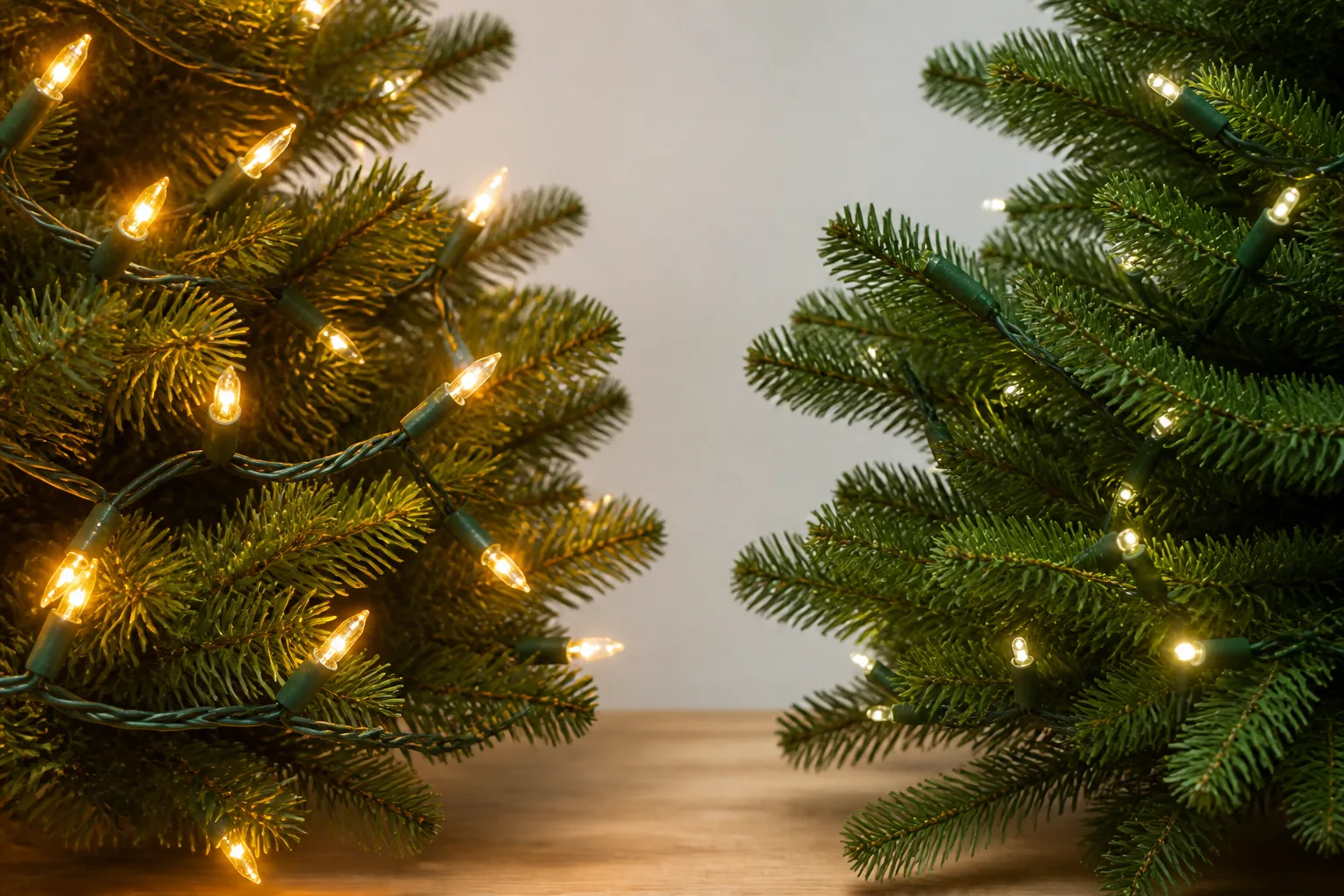
Inspect light strands before placing ribbon over or around them. The U.S. Fire Administration recommends discarding lights with frayed or pinched wires, following the manufacturer’s limit for connected strands, watering a live tree daily, keeping the tree at least 3 feet from heat sources, and removing it when it becomes dry. (U.S. Fire Administration holiday fire safety)
Do not use ribbon to hide a damaged cord, a hot connection, or an overloaded outlet. On a real tree, keep the fabric loose enough to inspect the lights and needles, and avoid candles on or immediately beside the branches. A pretty tree is not worth creating a hidden heat or electrical problem.
Conclusion
The most successful Christmas tree ribbon ideas start with a decision, not a spool: do you need height, width, softness, color control, or a focal point? Choose the method that answers that need, match the ribbon’s structure to the shape you want, and keep the rest of the decoration simple enough for the ribbon to remain visible.
For a dependable first attempt, use 2.5- to 3-inch wired ribbon, cut it into manageable sections, and build a loose tuck-loop-tuck waterfall. Once the movement feels right, add ornaments at the anchors, finish with a topper that does not compete, and step back before adding more. That small pause is often what turns a crowded tree into a considered one.