47 Christmas Tree Themes for a Polished, Personal Look
Choose a Christmas tree theme that fits your room, budget, and household with 47 practical ideas for color, texture, ribbon, keepsakes, and small spaces.
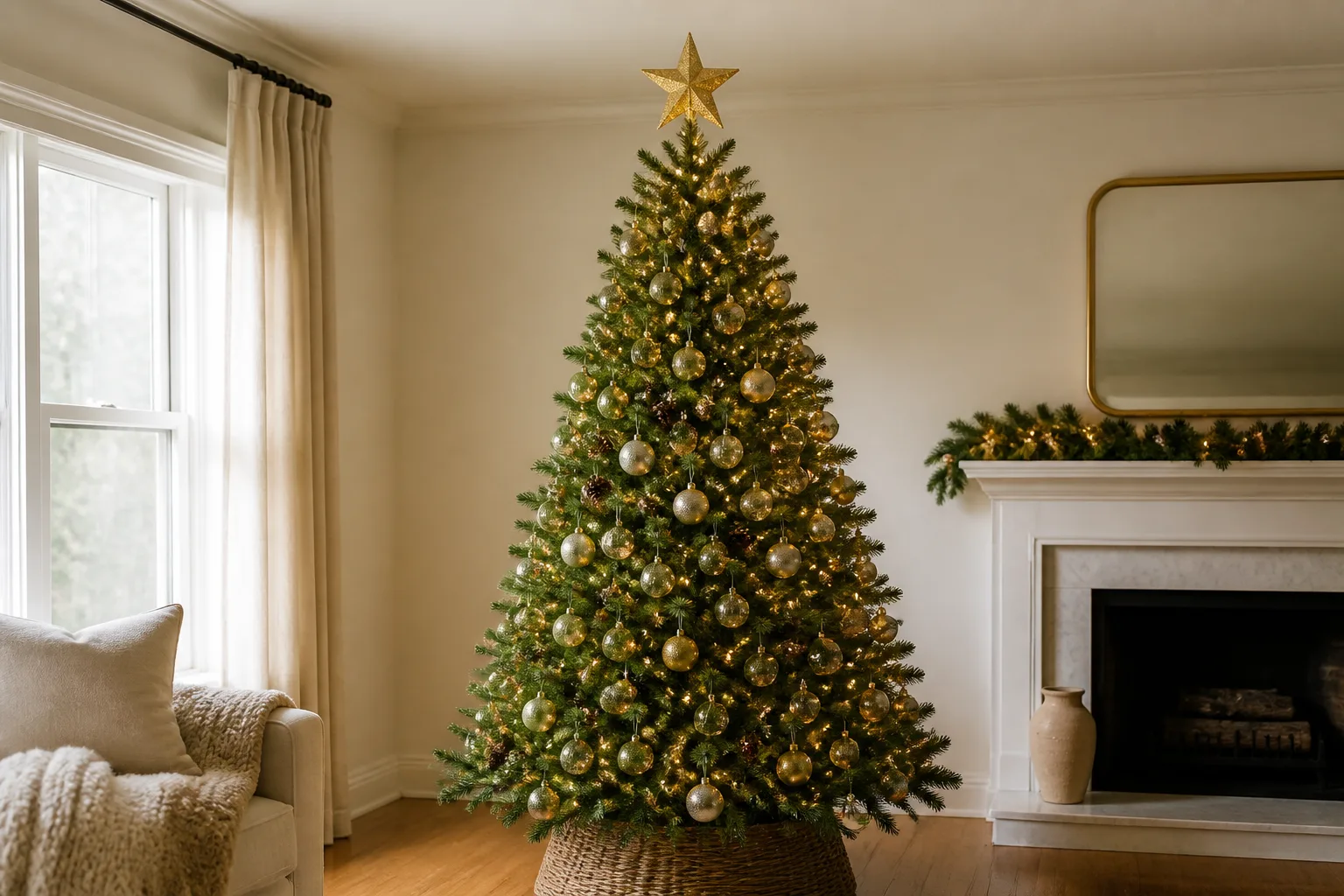
The best Christmas tree theme is not the one with the most ornaments. It is the one that gives every decision a job: a limited palette creates calm, repeated shapes create rhythm, and one or two personal details keep the tree from looking like a showroom display. Start with the feeling you want guests to have when they walk in, then choose decorations that support it.
Start With a Decorating Brief, Not a Shopping Cart
Before you buy ribbon or open the ornament bins, write a one-sentence brief: “warm and collected,” “bright and playful,” “quiet and natural,” or “glamorous but restrained.” Add the room’s existing colors and one practical limit, such as a curious toddler, a cat, a narrow apartment corner, or a real tree that needs to stay away from a radiator.
Then choose one dominant idea, not five competing ones. A tree can be red and green, handmade, woodland, and family-friendly at the same time because those are different layers. It becomes chaotic when every ornament is a different color, scale, and story with no repeated visual language.
If you already own years of decorations, do a quick edit before shopping. Pull out the pieces you would be disappointed to lose, the pieces that repeat a color in your room, and the pieces that are sturdy enough for the tree’s lower branches. Build the new theme around those anchors; a cohesive tree is usually a thoughtful edit of what you own, not a total replacement.
The Four-Layer Formula Behind a Polished Tree
Use this formula to turn any of the ideas below into a finished look:
- Structure: The tree shape, lights, topper, and base establish the silhouette.
- Color: Choose one dominant color, one supporting color, and an optional metallic or wood neutral.
- Texture: Mix at least two surfaces, such as velvet with glass, paper with greenery, or wool with shiny baubles.
- Story: Add keepsakes, handmade ornaments, place-inspired details, or one unexpected motif.
The most reliable ratio is a dominant color on roughly half of the visible decorations, a secondary color on about a third, and a small accent used sparingly. Those are not decorating laws; they are a way to prevent the accent from becoming the entire tree. Repeat the same shape at three different sizes, and let a few branch tips remain visible so the tree can breathe.
Color-Led Christmas Tree Themes
Color is the easiest entry point when the room already has a strong palette. Match undertones rather than chasing exact shades: warm white works with brass and camel, while cool white suits silver, blue, and crisp black.
1. Classic red, green, and gold. Use warm white lights, red ornaments, dark green ribbon, and a small amount of brass or gold. Keep the gold in one finish family so a timeless palette does not become visually noisy.
2. Black-and-white with gold. Let the tree carry the contrast while the gold softens it. White paper ornaments, black velvet ribbon, and a few gold globes look modern; keep the ornaments lightweight if the branches are narrow.
3. Blue-and-white. Porcelain-looking white ornaments, navy ribbon, pale blue glass, and silver bells bring a collected coastal or traditional feel. Add one warm material, such as wood or linen, if the room begins to feel icy.
4. Frosty blue, silver, and white. Use translucent ornaments, icy blue picks, silver ribbon, and cool white lights for a snow-globe mood. This works best with a warm rug or wood furniture nearby to keep the room from feeling sterile.
5. Solid gold. A monochromatic gold tree can look luxurious when finishes vary: brushed, matte, hammered, and glassy. Limit the shapes to two or three families and let the green branches provide the contrast.
6. Blush pink and champagne. Pair dusty pink, champagne, and soft ivory rather than a single loud pink. Velvet ribbon gives the palette weight, while clear glass ornaments keep it light enough for a living room.
7. Muted salmon and pistachio. This is a softer alternative to red and green. Use dusty coral, pale green, cream, and aged brass, then repeat the two colors in both ornaments and wrapped gifts so the theme travels beyond the tree.
8. Ombre in one favorite shade. Move from pale to deep versions of one color from the top down or in loose vertical sweeps. The trick is to keep ornament shapes consistent so the color change reads as intentional rather than rainbow-like.
9. Gradient rainbow. Arrange ornaments from one hue to the next around the tree, keeping the finish and size families consistent. A rainbow theme feels elevated when the gradient is controlled and the ribbon is neutral.
10. Earth-toned bronze. Bronze, tobacco, olive, cream, and warm wood make a sophisticated tree for a room with leather or walnut. Use a metallic-brown ribbon as the visual bridge and skip bright red unless it is a tiny accent.
11. Emerald, navy, and cool metallics. Deep green and navy feel rich against a neutral room, especially with silver or pewter. Use fewer but larger ornaments so the dark colors do not disappear into dense branches.
12. White tree with primary-color ornaments. A white artificial tree makes red, blue, and yellow ornaments look graphic and playful. Keep the rest of the room simple; the tree is already the strongest pattern in the space.
Texture and Material Christmas Tree Themes
Material-based themes are useful when you want the tree to feel tactile in daylight, not only sparkly at night. Choose a sturdy base layer, then add one soft material and one reflective material for contrast.
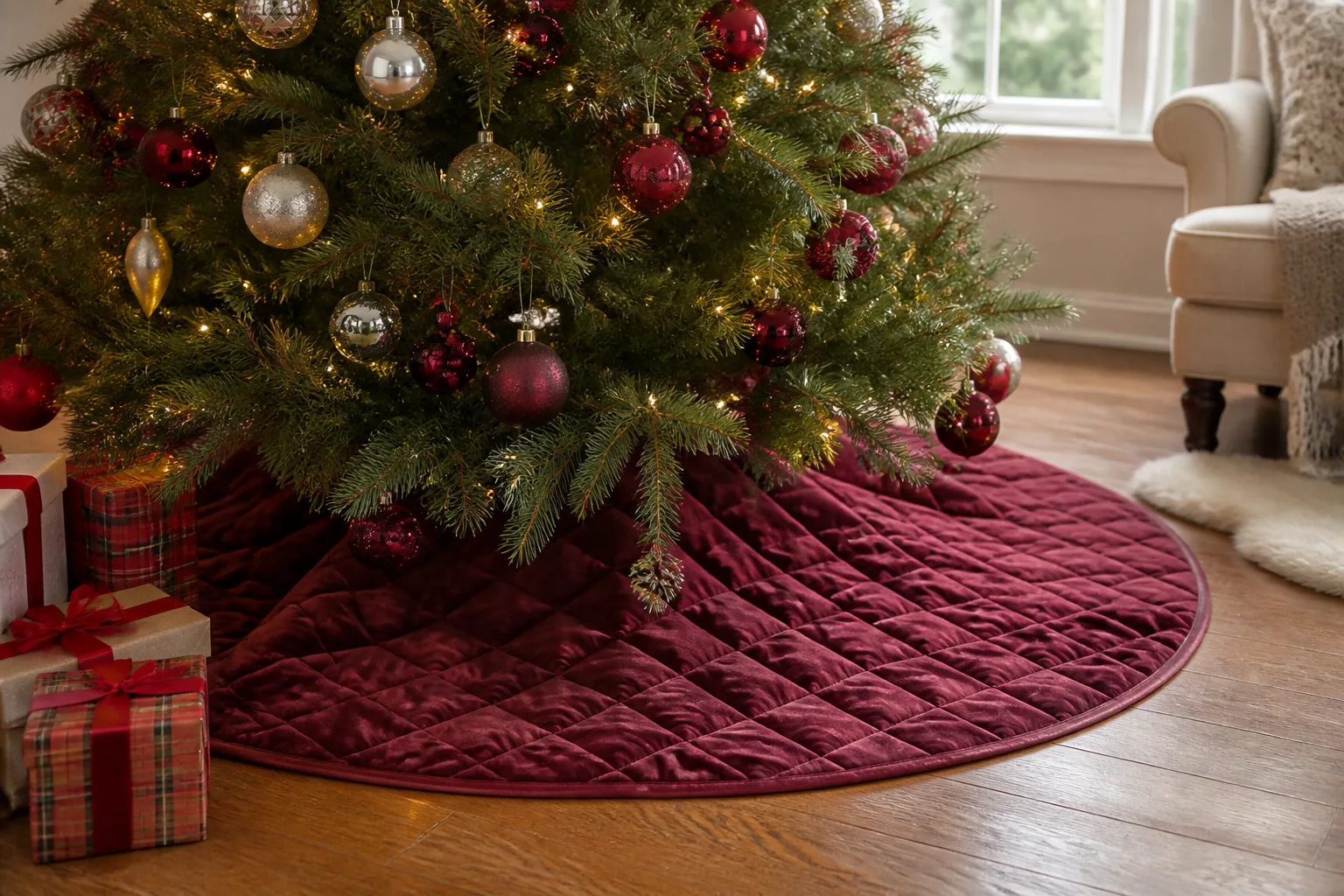
13. Velvet ribbon statement. Make wide velvet ribbon the main event, then use simple ornaments in two colors. Pinch and tuck the ribbon in loose vertical waves instead of winding it tightly around every branch; the open folds look more generous and use less material.
14. Cozy knit tree. Chunky yarn, knitted ornaments, felt balls, and warm lights create a sweater-like effect. Use a few hard ornaments for sparkle and keep heavy knit pieces close to the trunk so the branches do not sag.
15. Wood bead and clay DIY. Combine wood bead garland with air-dry or oven-bake clay shapes, paper stars, and unbleached ribbon. The handmade imperfections are the point, so repeat the material rather than trying to make every ornament identical.
16. Paper-candle glow. Use paper candle ornaments, folded stars, and warm LED lights for a Victorian-inspired glow without putting open flame on the tree. Paper and dry greenery are combustible; keep every light and candle effect manufacturer-approved and unplugged when you leave.
17. Pompom and yarn. Oversized pompoms in one bright color plus a braided yarn garland make a modern room feel softer. Place pompoms in a loose, irregular pattern and pair them with a plain topper so the texture remains the focal point.
18. Mercury glass and antique brass. Mix reflective vintage-style globes with aged brass, clip-on candle-effect lights, and faded ribbon. Keep the palette narrow—silver, brass, ivory, and green—so the varied patina reads as collected rather than cluttered.
19. Candy-striped. Red-and-white ribbon, candy canes, peppermint swirls, and striped paper create instant holiday energy. Choose either real edible candy or durable ornaments for the dominant motif, not both in every branch, and keep treats out of reach of pets.
20. Snowy pinecone. Let natural or faux pinecones carry the theme, then add white beads, snowflake shapes, and muted green ornaments. Pinecones look best in several sizes; tuck the largest ones deeper into the tree and reserve the smallest for branch tips.
21. White paper flowers. Oversized paper flowers and gold ornaments make a soft, romantic tree without requiring dozens of tiny decorations. Use flowers in three sizes and leave dark green spaces between them so the arrangement keeps its shape.
22. Straw, raffia, and woven natural fibers. Straw stars, raffia bows, jute, and unfinished wood create a warm natural tree. This is an especially good match for Scandinavian, farmhouse, or coastal rooms where shine should be used as an accent rather than a blanket.
Nostalgic and Collected Christmas Tree Themes
Nostalgia works when it has a point of view. Pick a decade, a childhood ritual, or a recurring family object, then give the memories enough empty space to be noticed.
23. Gingerbread kitchen. Gingerbread people, stars, brown paper, burgundy, and small gold accents make the tree feel edible and homey. Use lightweight faux cookies if food will attract pets or soften in a warm room.
24. Retro candy-cane nostalgia. Look to midcentury colors—tomato red, mint, turquoise, and white—and use oversized candy-cane shapes. A simple aluminum or sparse tree lets the bold ornaments stay readable.
25. Vintage Santa collection. Build around old-fashioned Santa faces, toy drums, bells, and faded red textiles. Mix in plain red balls to connect the collection, and place fragile heirlooms high or inside the tree where they are less likely to be bumped.
26. Toy-train playroom. Use colorful ornaments, wooden trains, blocks, and playful garland around a sturdy lower layer. Keep the track or train on the floor or tree skirt, not balanced on branches, and make sure cords cannot become a trip hazard.
27. Foodie and kitsch. Croissants, pretzels, fruit, pizza, mugs, and other food-shaped ornaments turn a favorite meal into a story. Choose one food culture or color family to keep the joke legible instead of letting every novelty ornament compete.
28. LED Victorian candlelight. Recreate old-world candlelight with clip-on LED candle effects, velvet, brass, and heirloom ornaments. Never place real candles on a tree; NFPA guidance says open flames do not belong on any Christmas tree (NFPA 1 guidance).
29. Family keepsake tree. Use photographs, school crafts, travel ornaments, and one ribbon color as the unifying thread. Cluster similar memories in small groups rather than spreading every item evenly; the unevenness makes the tree feel lived-in.
30. Forest of small trees. Replace one large statement tree with a group of tabletop or floor trees in varied heights. Repeat one color across all of them so the collection reads as one composition, and use stable containers that cannot be knocked over.
31. Aluminum midcentury. A silver tree, sparse branches, jewel-tone ornaments, and a sculptural topper suit a midcentury room. Use lighting that complements the reflective branches instead of flooding them with too many effects.
Nature-Inspired Christmas Tree Themes
Natural themes are strongest when they use a few recognizable materials repeatedly. RHS guidance highlights garden-gathered evergreens, berries, rose hips, pinecones, seedheads, and dried flowerheads as ways to make seasonal decorations feel personal and less disposable.[5] Only gather from places where you have permission, and check whether berries or plant material are safe around children and pets.
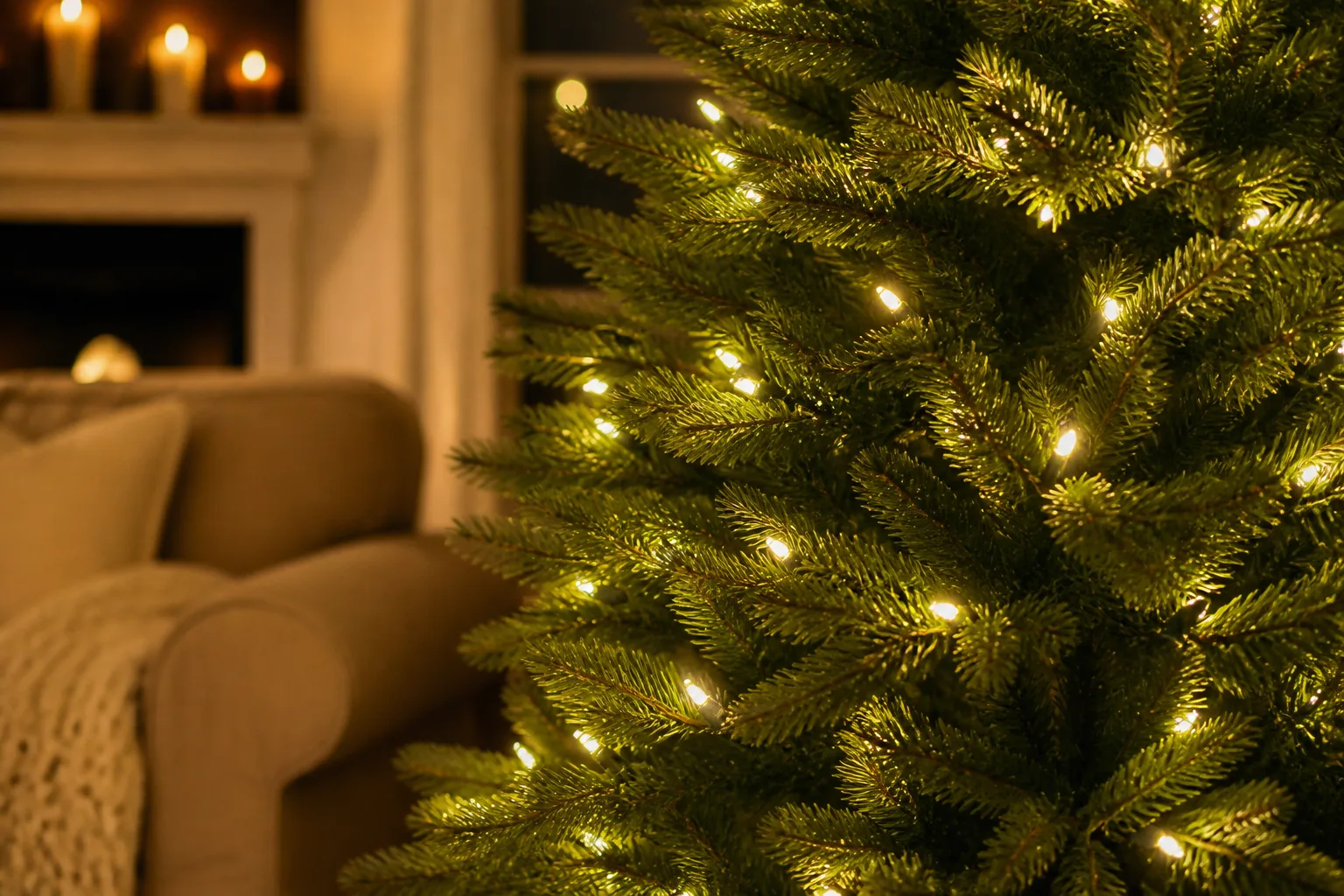
32. Woodland wildlife. Deer, owls, pheasants, squirrels, acorns, and pinecones make a woodland story. Combine matte and shiny ornaments in one restrained palette, then repeat the animal motif only at a few focal points.
33. Botanical and tropical. Faux leaves, orchids, palm shapes, and pink or green ornaments make a surprising tree for a warm-climate home or sunroom. Use faux botanicals that can be wiped clean and keep the tree’s lights cool around synthetic foliage.
34. Scandi evergreen. Sage, cream, wood beads, paper stars, and simple seasonal greens feel calm and architectural. Leave more branch space visible than you would on a maximalist tree, and choose one warm-white light temperature throughout the room.
35. Natural outdoor tree. Put a small real or potted tree on a protected porch, balcony, or patio and use weather-rated lights, straw, pinecones, and simple ribbon. Follow the light manufacturer’s indoor/outdoor rating and switch outdoor lights off at night.
36. Rosehip and winter-berry garden. Small bunches of rose hips or berries tied with raffia create a vivid natural accent. BBC Gardeners’ World Magazine demonstrates the basic idea—tie berries into bunches, add raffia bows, and hang them from branches.[8] Use only clean, dry material and avoid anything that sheds into food or water dishes.
37. Coastal winter. Silver, pale blue, white, driftwood tones, shells, and rope bring a seaside home into the holidays without forcing a beach souvenir look. Keep the shell shapes sparse and let the blue-white palette do most of the work.
38. Boho sunflower and dried-flower tree. Dried flowers, sunflowers, pampas-like texture, woven ornaments, and warm neutrals suit a relaxed room. Avoid placing brittle dried material beside hot bulbs or open flames, and use a few strong stems rather than filling every gap.
39. Cozy lodge. Plaid, ski ornaments, mugs, faux fur, wood, and deep red make a tree feel like a mountain retreat. Keep the lower third sturdy and practical if children or pets move through the room, and reserve delicate glass for the upper branches.
Architecture and Travel-Inspired Christmas Tree Themes
Let the room supply the theme. A tree feels custom when its colors echo the architecture instead of looking imported from a different house. Use the existing wood, metal, upholstery, or landscape as your starting material.
40. Midcentury modern. Use chartreuse, orange, teal, and red with clean geometric ornaments and a simple star. The look is more convincing when the tree sits near period furniture or a graphic rug, not when every decoration tries to be retro.
41. French romantic. Blush, ivory, champagne, soft metallics, and delicate ribbon create a gentle old-world look. Mix polished and matte finishes, then add one floral shape to keep the palette from becoming a generic gold tree.
42. Western cabin. Replace conventional garland with leather-look ribbon, bells, bandana fabric, wood, and copper. Keep the materials real or convincingly textured, and use the room’s existing saddle, leather, or stone colors as the limit.
43. Global boho. Combine handmade fabric ornaments, lantern shapes, woven garlands, bright fruit colors, and patterns drawn from places meaningful to your family. Give each culture or travel memory respectful context; a few authentic pieces are more compelling than a pile of vague “global” motifs.
Family and Personality Christmas Tree Themes
The most memorable tree may not be the most formal. These ideas are designed around participation, identity, and the reality that a home has to function during the holidays.
44. Alphabet learning tree. Use large alphabet ornaments, a limited rainbow, and one letter for each family member or yearly milestone. Space the letters generously so children can read them and so the tree does not become a wall of visual noise.
45. Pet-aware sturdy-ornament tree. Make the theme “durable and low,” using felt, wood, shatter-resistant plastic, and oversized shapes. Put fragile glass, edible ornaments, and dangling cords out of reach, then anchor the tree if a pet is likely to climb or brush against it.
46. Bold minimalist one-color tree. Choose one strong ornament color, one tree type, and one topper shape. The restraint is what makes it dramatic; do not fill every branch just because you have more decorations available.
47. Potted entryway tree. A living conifer in a container, or a small cut tree in a basket, can make an entryway feel intentional. Keep it cool, water the root ball as needed without flooding, and treat it as a short indoor display rather than a permanent houseplant.
Small-Space and No-Tree Variations
If floor space is limited, shrink the composition before you abandon the theme. A tabletop tree can still use the same palette, topper, and story as a full-size tree. A cluster of three narrow trees often occupies less visual and physical space than one wide tree, especially when placed on a console or in a corner.
You can also translate a theme into a wall-mounted branch arrangement, a ladder tree, a mantel garland, or a potted evergreen at the entry. Repeat the key motif—blue and white, wood and paper, berries and ribbon—so the alternative feels like a deliberate version of the theme rather than a consolation prize.
For a rental or a home with toddlers, use a tabletop tree on a stable surface, hang ornaments on a wall display, or decorate a large indoor plant with lightweight, non-heating lights. Never let the desire for a full-height silhouette override a clear walkway or a secure base.
How to Turn One Theme Into a Finished Tree
Decorate in passes. Trying to make every decision while standing in front of the tree is how a strong idea turns into a crowded one.
Place the lights and large anchors first
Start with a fluffed and stable tree, then place lights before ornaments. Work from the trunk toward the branch tips in loose vertical sections so the glow comes from inside the tree as well as the surface. Use products rated for the intended setting, inspect cords and sockets, and do not overload circuits. NFPA recommends keeping a tree at least 3 feet from heat sources and exits, and turning decorative lights off when you leave or sleep.[1]
Next, place the largest ornaments, picks, bows, and any visual anchors. Spread them in an uneven triangle rather than a perfect spiral. Step back every few minutes and look from the doorway; a tree is seen at room distance more often than at arm’s length.
Build depth with ribbon and repeated shapes
Add ribbon after lights and large anchors, unless the ribbon is so wide or structural that it needs to form the base composition. Tuck it into branches in wide loops, then repeat the same loop direction at the left, center, and right. A ribbon that is simply wrapped around the outside often looks flat and uses more material.
Finish with medium and small ornaments, the topper, and the tree skirt or basket. Place the smallest items at branch tips, heavier pieces close to the trunk, and meaningful pieces where they can be seen. Leave a few quiet spaces; negative space is what lets the theme read.
Choose a Theme for Your Tree Type and Room
Sparse trees suit Scandinavian, woodland, aluminum, and minimalist themes because their open architecture becomes part of the design. Dense artificial trees can carry a maximalist vintage, gingerbread, classic, or ribbon-heavy look, but they need deliberate depth so decorations do not disappear on the surface.
For a real cut tree, choose a theme that leaves access to the stand and does not depend on fragile paper or food at the bottom. The RHS notes that tree type affects needle retention: Nordmann fir, blue spruce, Korean fir, and Fraser fir hold needles differently from Norway spruce.[4] That is a useful design choice as much as a care choice; a sparse, quick-dropping tree may suit a short, natural display better than an ornament-heavy one.
For a potted or balled tree, think of the display as temporary. RHS guidance recommends bringing living trees indoors as late as possible, keeping them cool, and limiting the indoor stay; the National Christmas Tree Association also notes that living trees are heavy, need careful transitions, and should not be flooded (NCTA care guidance; RHS tree-care guidance). If your home is warm and dry or you cannot move a heavy root ball safely, choose a cut or artificial tree instead.
Room style matters, but it should not dictate every ornament. Echo one or two existing elements—brass, blue upholstery, wood, linen, or black window frames—and let the rest of the tree provide seasonal contrast. That balance makes a theme feel integrated rather than staged.
Safety Rules for Real, Artificial, and Living Trees
Safety is part of an elevated look because a tree that blocks an exit, leans into a heater, or drops dry needles across the floor is not a successful centerpiece. NFPA reports that U.S. fire departments responded to an annual average of 155 home structure fires caused by Christmas trees between 2018 and 2022, with lighting and electrical equipment involved in the largest share of those fires.[1]
For a real cut tree, make a fresh cut across the trunk before setting it in a water-holding stand, keep the water level above the cut, and check it daily. The NCTA advises against shaving the trunk to fit a stand and says plain tap water is the right default; additives and home mixtures are unnecessary.[3] Keep the tree away from heat vents, radiators, fireplaces, candles, and direct sun, and remove it when it is dry or after the holiday display ends.
For any tree, use lights in good condition and follow their indoor or outdoor rating. Never put real candles or an open flame on a tree; NFPA guidance explicitly prohibits them.[2] Keep cords out of walkways, secure tall trees in households with pets or children, and make sure the tree does not obstruct a corridor or exit.
For an artificial tree, look for the safety information supplied by the manufacturer and inspect older wiring before reuse. “Flame resistant” does not mean fireproof, so keep the tree away from heat and do not add hot bulbs, candles, or improvised electrical parts. A well-stored artificial tree can become the more sustainable option when you continue using it for many years.
Sustainable Ways to Make Holiday Decor Feel Intentional
Sustainability does not require a handmade tree or a blank ban on new decorations. Start by reusing your existing ornaments, buying fewer pieces with durable materials, and choosing a theme that will still feel good next year. Glass, wood, wool, felt, cotton, paper, and plant material can add texture without relying on a single-use plastic look; BBC Gardeners’ World Magazine also points out that glitter is difficult to recycle and that reusable decorations can earn their place over many seasons.
Garden materials can supply the most distinctive accents. RHS suggests evergreens, holly, ivy, rose hips, pinecones, seedheads, and dried flowerheads, with a reminder to check permission before foraging on public land (RHS natural-decoration guide; RHS festive garden ideas). Untie ribbon from natural bunches at the end of the season, compost clean plant material where appropriate, and keep painted, glittered, or treated pieces out of the compost stream.
When choosing a real tree, local sourcing and responsible recycling matter. When choosing an artificial tree, use the one you already own for as long as possible. A potted tree can be a good fit if you have a realistic plan for its climate, weight, indoor time, and after-holiday planting; it is not automatically the greener choice if it cannot survive the transition.
A Guest-Ready Final Check
Stand at the entry and ask four questions: Can I name the theme in one sentence? Do I see the dominant color before the accents? Are the most meaningful ornaments visible? Is there enough empty space for the tree to look intentional rather than overloaded?
Then do the practical pass. Hide the stand without blocking access to water, secure the topper, remove any ornament that strains a branch, check that lights are working without warm or damaged sockets, and switch them off before bed or when leaving. If the tree has become a catalog of every idea you liked, take ten pieces off; the edit is usually what makes the remaining 37 or 47 choices feel elevated.
Conclusion
Choose the theme that gives you a clear editing rule. It might be “only warm colors and velvet,” “only things made from wood and paper,” “only memories from our travels,” or simply “one color, repeated three ways.” Once the palette, texture, and story agree, even a small tree with a mixed collection of ornaments can feel deliberate, personal, and ready for guests.