How to Grow and Care for Stinging Nettle
Learn how to grow stinging nettle in a contained bed or pot, identify its stinging hairs, keep it from spreading, and harvest young shoots safely for cooking.
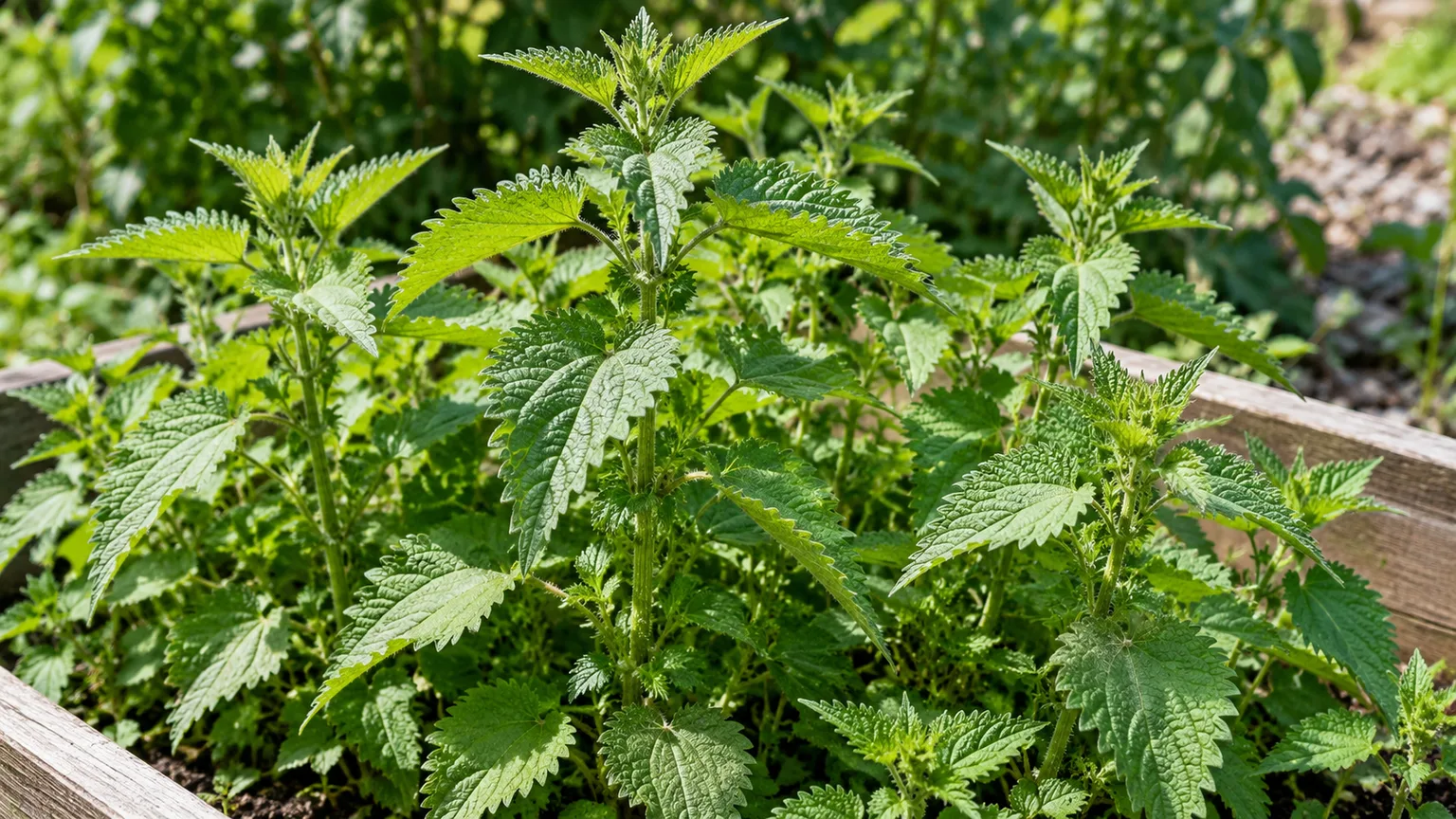
Stinging nettle is easy to grow, but it is not an easygoing neighbor. Common nettle (Urtica dioica) is a perennial herb with stinging hairs and underground stems that can create a spreading patch; it also produces seed and can be useful as a spring green or a host plant for some butterfly caterpillars. Decide what you want from it before you plant: a contained culinary crop, a managed wildlife corner, or no nettle in the garden at all.
The safest starting point is a site with room around it, away from paths, play areas, pets, and plants you need to keep clear. If you are uncertain about local native or invasive status, ask a county or regional extension service before buying seed. The plant’s status varies by region and by how botanists treat its subspecies, as Tyrant Farms’ discussion of nettle provenance explains; its ability to spread in suitable soil is clear.
Decide Whether Stinging Nettle Belongs in Your Garden
Nettle makes sense when you have a specific use and can keep the patch in bounds. Gardeners grow it for young cooked leaves, use it in a designated wildlife area, or keep it as a source of plant material for compost or garden feed. The RHS plant profile describes common nettle as native in Britain and Ireland, while North Carolina State Extension records it across a broad range and notes that it is considered a noxious weed in some areas. Those descriptions are not contradictory: local origin and regulation matter, so do not assume the plant is either native or invasive everywhere.
Skip planting if the only available space is beside a walkway, vegetable bed, children’s play area, or property line. A few seedlings can become a patch through rhizomes (creeping underground stems) and seed, and plants can be unpleasant to brush against while working nearby. If you want to try nettle, start with one plant in a contained, accessible spot and watch where new shoots appear before expanding it.
Identify Urtica dioica Before You Handle It
Common stinging nettle is a herbaceous perennial that sends up upright stems from spreading roots. Look for opposite leaf pairs, with each pointed oval leaf having a heart-shaped base and sharply toothed edges; fine hairs cover the stems and leaves, and some of those hairs sting. Small greenish, cream, or brownish flower clusters hang from the leaf axils, often appearing from late spring into autumn. In fertile conditions, stems may reach roughly 6 feet or more, though height varies with site and climate.
Do not identify a wild edible by leaf shape alone or by deliberately touching it. Small nettle (Urtica urens) resembles common nettle but is typically shorter and annual, and other plants can share one or two features without being the species you intend to harvest. The RHS nettle guide and North Carolina State Extension Plant Toolbox offer useful reference descriptions, but if you are foraging, compare several characteristics with a region-specific field guide or ask a qualified local expert. If you cannot make a confident identification, do not eat it.
Choose a Contained Planting Site First
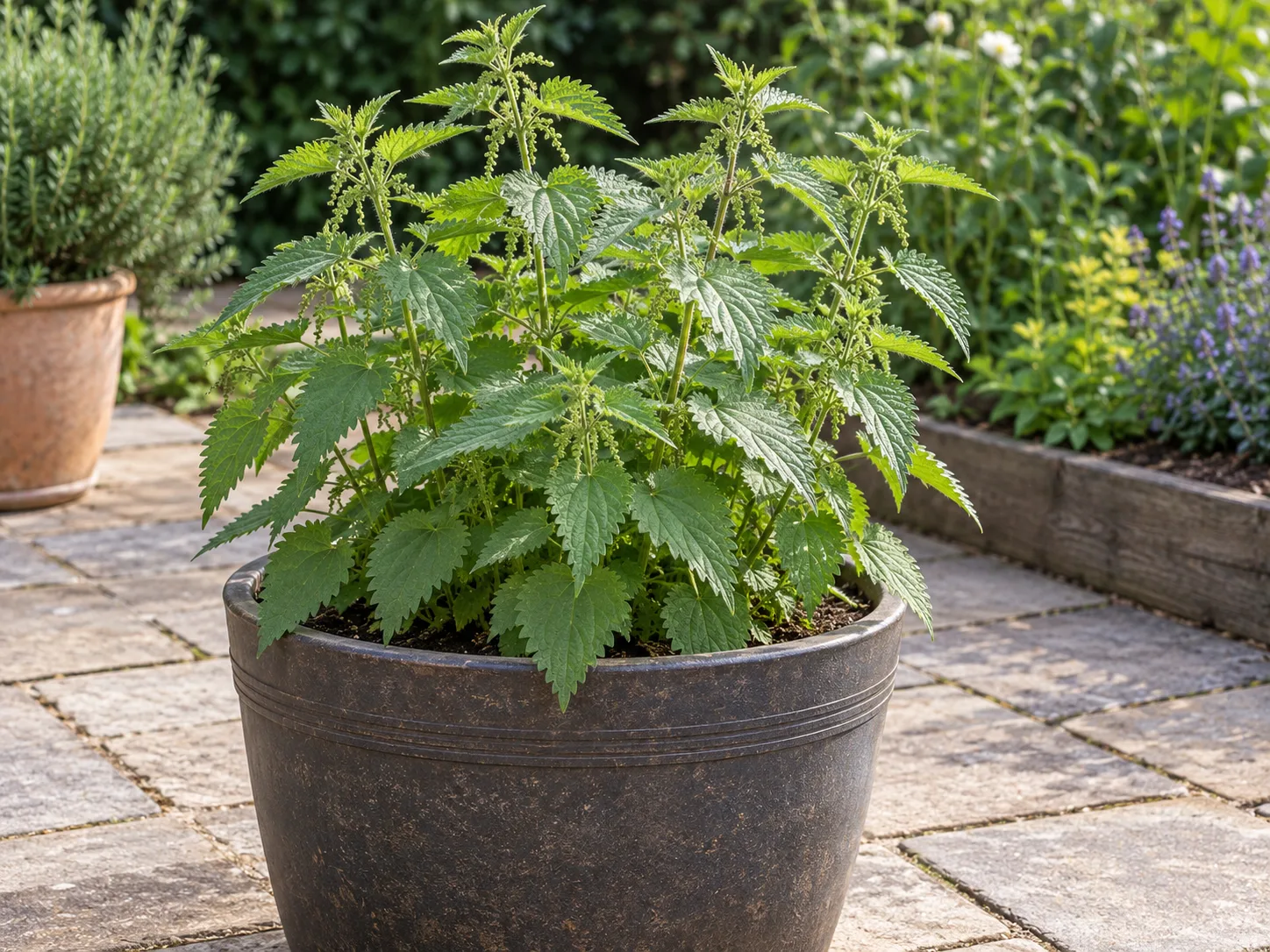
Think about the roots before the leaves. A pot on a paved surface or a purpose-built bed with a reliable belowground barrier is easier to supervise than nettle planted directly into ordinary garden soil. A planter with drainage holes is not a sealed root barrier: place it on a hard surface, inspect the base and nearby cracks, and remove any escaping shoots before they establish. A bottomless raised bed may make harvesting comfortable but does not automatically stop rhizomes from moving into the soil below it.
Keep the planting away from frequent foot traffic and give yourself access from all sides so you can weed, harvest, and check the perimeter without brushing the foliage. Do not site it against a neighbor’s fence or where animals or soil-moving garden work could carry seed or plant fragments into places you cannot maintain. If you are growing nettle for wildlife, reserve a small corner and define its edge rather than allowing it to mingle with delicate plants. The RHS advice on nettles as weeds and the practical containment approach described by Tyrant Farms both emphasize choosing the site with spread in mind.
For a container, choose a stable pot with enough soil volume to hold moisture between checks, but keep the drainage open so roots do not sit in water. Do not put the pot on lawn or bare earth and assume the sides will contain the plant; rhizomes can reach drainage openings and root into the ground below. A hard surface makes escaping shoots easier to spot, but it still needs inspection, especially around cracks or joints.
If you plan to eat the crop, keep that harvest patch separate from places where garden sprays, pet waste, or ornamental treatments may reach it. Label the planter clearly so another gardener does not handle or eat the leaves without knowing what they are. These small decisions matter more with nettle than with a mild culinary herb because the same plant is both a skin irritant and a food ingredient after proper cooking.
Give Nettle Moisture, Fertility, and Workable Light
Nettle is most vigorous in deep, fertile soil that stays evenly moist but does not remain waterlogged. It tolerates a range of light conditions, from partial shade to sun; in a bright, warm position, consistent soil moisture matters more than trying to keep it in a dry bed. Poor, dry soil tends to limit growth, but deliberately stressing the plant is not a dependable containment method and can make a culinary crop disappointing.
Use ordinary garden soil improved with finished compost if it is thin or compacted, and water when the surface layer begins to dry. Container plants need closer checks because a pot can dry faster than a bed, especially in wind or hot weather. In a fertile garden, extra fertilizer is usually unnecessary; heavy feeding can simply encourage more vigorous growth that requires more frequent harvesting and edge control. The RHS plant profile recommends moist, nitrogen-rich, well-drained soil, while North Carolina State Extension notes nettle’s preference for rich, moist ground.
Quick Care at a Glance
| Need | Practical target |
|---|---|
| Light | Sun to partial shade; protect soil moisture in hot, exposed sites |
| Soil | Fertile, moisture-retentive, and well-drained |
| Water | Keep evenly moist while establishing; check pots more often |
| Growth habit | Perennial; spreads by rhizomes and seed |
| Propagation | Seed or division, only where the plant is wanted |
| Main maintenance | Remove unwanted shoots and flowers before seed matures |
| Handling | Gloves, long sleeves, and tools; keep children and pets away |
Start Stinging Nettle From Seed
Buy seed from a reputable supplier when possible, and check that the botanical name and provenance suit your purpose and region. Sow indoors several weeks before the last expected frost or direct-sow in early spring when the soil can be worked. The seed is small, so press it onto moist seed-starting mix and cover it only lightly; keep the surface evenly damp, not saturated, until seedlings emerge. Gardening Know How gives an indoor start of about four to six weeks before frost and reports germination in roughly two weeks, but actual timing varies with seed freshness and temperature.
When seedlings have several leaves and are sturdy enough to move, transplant them into the prepared contained site and water them in. Give each plant room to grow instead of crowding a whole packet into a small bed; spacing is easier to manage when you can see individual crowns and remove volunteers. Keep the seed tray labeled, wash tools afterward, and use gloves once the seedlings are large enough to brush against while transplanting.
If sowing outdoors, mark the row and keep it moist while the tiny seedlings establish. It can be hard to distinguish a young nettle from other spontaneous seedlings, so avoid scattering seed through an ornamental bed and hoping to identify it later. Thin or remove plants that emerge outside the selected patch before they develop stronger roots.
Propagate Nettle by Division
Division is often quicker than raising a crop from seed, but only take material from a plant you can identify and are allowed to propagate. In early spring, use gloves and a hand fork to lift a small section of rooted growth from the edge of an established clump, keeping a healthy piece of rhizome with the shoot. Replant it promptly at about the same depth, firm the soil gently, and water it until new growth shows that the roots have resumed growing.
The same underground stem that makes division reliable also makes nettle difficult to confine in open ground. Do not dig up random roots and carry them to another part of the garden without planning their final boundary. If you are unsure where the divisions came from, whether the species is suitable locally, or whether the plant is subject to restrictions, choose labeled seed instead.
Maintain the Patch Without Forcing Excess Growth
Once established, nettle generally needs little routine care beyond moisture during dry spells and regular perimeter checks. Remove competing weeds while they are small, then replenish the soil with a modest layer of finished compost if growth is weak or the planting medium has become depleted. Avoid treating a large dose of fertilizer as a fix for every thin patch; if growth is poor, first check whether the roots are dry, crowded in a small container, or growing in compacted soil.
Harvesting the young tips can keep a culinary patch productive, but it is not a substitute for containment. The plant may branch or produce new shoots after cutting, and underground runners can continue expanding even if the tops look tidy. If your goal is a wildlife patch rather than a steady crop, allow some stems to mature only when you can keep the seed inside the boundary and local wildlife value justifies the space.
Contain Rhizomes, Runners, and Seed
Use two controls because nettle spreads in two ways. A physical root barrier or a container on hard paving helps limit rhizomes, while removing flower stems before seed matures reduces seedlings. Check the outside edge during the growing season and after digging nearby: the RHS guide notes that nettle can regrow from rhizome fragments, so a fragment moved with soil may start a new plant. Tyrant Farms also describes keeping an edible patch in a container or behind a hardscape boundary.
Do not assume that cutting once or pulling the visible stems has contained the patch. Remove young shoots as soon as you find them, and repeat the inspection after rain or soil disturbance. If you want to keep flowers for caterpillars or collect seed, leave only a manageable portion and remove seed heads before they disperse; place seed-bearing material in yard waste according to local rules rather than in a home compost pile. The RHS cautions against composting nettle rhizomes, stolons, or seed because a home compost heap may not heat enough to kill them.
Harvest Tender Shoots Safely
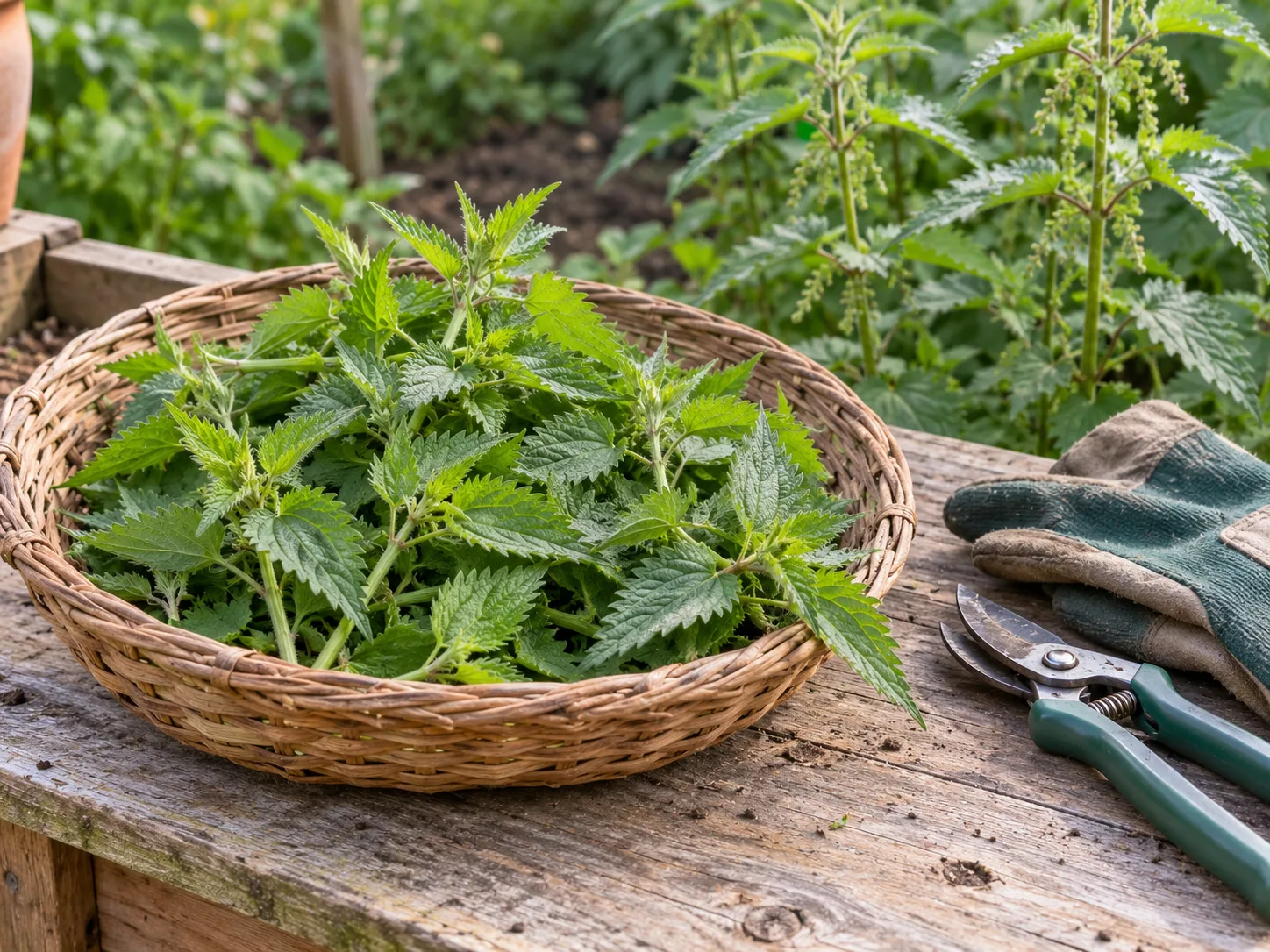
For cooking, choose clean, young shoots before the plant flowers, when leaves and stems are still tender. Many gardeners harvest the top few leaf pairs rather than stripping a whole stem; this leaves the crown and lower growth to keep the perennial alive. Harvest only from a patch you have identified with certainty and that has not been exposed to herbicide, roadside runoff, animal waste, or other contamination. Do not gather nettles from public or private land without permission. The practical harvest guidance from Tyrant Farms and Gardening Know How likewise stresses young growth and protective clothing.
Wear thick gloves and long sleeves, and use clean scissors or shears rather than grabbing a stem. Transfer cut shoots to a basket without pressing them against bare skin, then use kitchen tongs or gloves while rinsing and sorting them. If you are new to nettles, harvest a small amount first and plan the cooking method before cutting; fresh tops collapse substantially when cooked, so a large-looking basket can produce a much smaller serving.
Cook Nettle; Do Not Eat It Raw
Treat raw stinging nettle as an irritant plant, not as a salad green. North Carolina State Extension’s edible-use guidance recommends soaking young shoots to remove dirt, then boiling them in salted water for five minutes; the cooked shoots can be served as a vegetable or added to soup. Use tongs when placing the shoots in the pot, and keep uncooked leaves and stems separate from ready-to-eat food until they have been cooked thoroughly.
The key boundary is processing, not a taste test. Do not chew a leaf to check whether the sting is gone, and do not assume that blending or crushing raw shoots makes them safe. Use young leaves and tender tips as a seasonal culinary ingredient after cooking; older stems become coarse, and leaf quality declines as flowering progresses. Nettle supplements, concentrated extracts, and medicinal preparations are a different topic from cooking greens and can have different risks, so this guide does not recommend them as treatment.
Respond to Stinging Hairs and Protect People and Pets
Stinging hairs are specialized structures that can break against skin and deliver an irritating fluid. A peer-reviewed review by Ensikat and colleagues describes the nettle-type hair’s injection mechanism and notes that the chemical basis is more complex than the familiar claim that formic acid alone causes the sting. Sensitivity varies, so cover skin rather than relying on a short-lived touch test or on improvised “neutralizing” plants.
If contact happens, wash the area with soap and water and avoid rubbing it; the RHS says washing can help ease the discomfort. Seek medical advice for a severe or persistent reaction, eye exposure, or symptoms beyond a local skin irritation. Keep nettle away from children’s play areas and places where dogs or other pets roam: RHS plant guidance flags skin irritation and harm to dogs through contact or eating. If a pet chews the plant or develops symptoms, contact a veterinarian for case-specific advice.
Weigh the Wildlife Value Against the Risks
Nettle can be valuable in a deliberate wildlife corner because some butterfly and moth caterpillars feed on it. The RHS nettle guide lists more than 100 invertebrate species associated with common nettle in Britain, including small tortoiseshell, red admiral, comma, painted lady, and peacock butterflies; North Carolina State Extension also lists several butterfly larvae supported by nettle in its region. Those lists are regional evidence, not a guarantee that every nettle patch will attract the same species where you live.
Its flowers are wind-pollinated, so describe nettle as a host plant rather than assuming it is a nectar source for adult pollinators. A small patch under a hedge or at the far edge of a garden may serve wildlife while keeping it away from a path; a patch in a busy vegetable bed may create more handling and competition problems than it solves. If your local ecology guidance discourages a particular nettle species or provenance, choose a locally suitable host plant instead.
Troubleshoot Weak Growth and Unwanted Seedlings
If nettle looks thin or stunted, check moisture first, especially in a container exposed to afternoon sun or wind. Next look at soil structure and root space: compacted ground, a root-bound pot, or a dry, low-organic planting mix can limit growth. Add water and compost in measured amounts, then observe the new growth before applying fertilizer; a quick feed will not fix a site that dries out every day.
If the patch appears in places you did not plant, trace the likely route. A shoot just outside the bed may be attached to a rhizome under the edge, while a separate seedling may have started from seed carried by wind, animals, or moved soil. Pull or fork out seedlings while small, inspect the planter base and cracks, and remove flowers before viable seed forms. If the main patch keeps expanding, the planting boundary needs to change; more frequent harvesting alone will not solve a root problem.
Remove an Established Nettle Patch Methodically
Wear protective clothing, choose a day when the soil is workable, and start by removing flower or seed heads so the cleanup does not spread seed. For a small patch, use a hand fork to loosen the soil and lift as much of the root system as possible; shake soil back over the area rather than scattering roots across the garden. Avoid rototilling or chopping through a mature patch because fragments can resprout and be carried into new ground.
For a large patch, work in sections and plan for repeat visits. The RHS recommends repeated cutting to weaken nettle over more than one growing season, or smothering cut growth with cardboard and a thick mulch layer while keeping the ground covered long enough to suppress regrowth. Inspect the edge each season and remove new shoots promptly. Do not put live rhizomes, runners, or seed heads into a home compost bin; use a local green-waste service that accepts them or follow municipal disposal instructions.
Choose digging for a small patch where removing the roots is practical; choose repeated cutting or smothering when a large, established root network would take too long to lift cleanly. If you dig, work a manageable area at a time and keep the loosened roots on a tarp so pieces are not lost in neighboring beds. Afterward, check the site at regular intervals through active growth and pull new shoots while they are small; a clear surface immediately after removal does not prove that every rhizome is gone. Follow your local waste service’s instructions for seed-bearing or rooted material rather than moving it to another part of the property.
Plan for Winter Dieback and Spring Regrowth
In cold weather, the leafy stems commonly die back while the perennial root system remains alive underground. You can cut dead stems back after they have died down, but if you are keeping a wildlife corner, leave some standing material until it is no longer useful and remove it before seed disperses. Mark the patch edge before the leaves disappear so you can find and inspect the same area when shoots return.
Nettle in an in-ground bed usually needs no special winter cover where the species is adapted to the local climate. Container roots experience larger temperature swings than roots in the ground, so protect the pot from prolonged extreme exposure in regions where the container mix freezes solid; use local container-wintering guidance rather than assuming an in-ground hardiness description applies to a pot. Resume edge checks as soon as spring shoots appear, when small escapes are easiest to remove.
Conclusion
Stinging nettle can earn a place in a garden, but only when its purpose and boundaries are clear. Give it fertile, moist soil and sun to partial shade, then control both the underground runners and any seed you do not want; choose a container or isolated wildlife corner if an open-ended patch would be a problem.
Handle every fresh plant as though it can sting, identify it carefully, and cook young shoots thoroughly before eating them. If you cannot provide a safe, contained site—or local guidance says the species is a poor fit—enjoy it in the landscape where it already belongs and keep it out of the beds you rely on.