How to Grow and Care for Crepe Myrtle in Your Garden
Learn how to grow crepe myrtle with the right cultivar, planting depth, sun, water, pruning, and pest checks for reliable flowers and year-round structure.
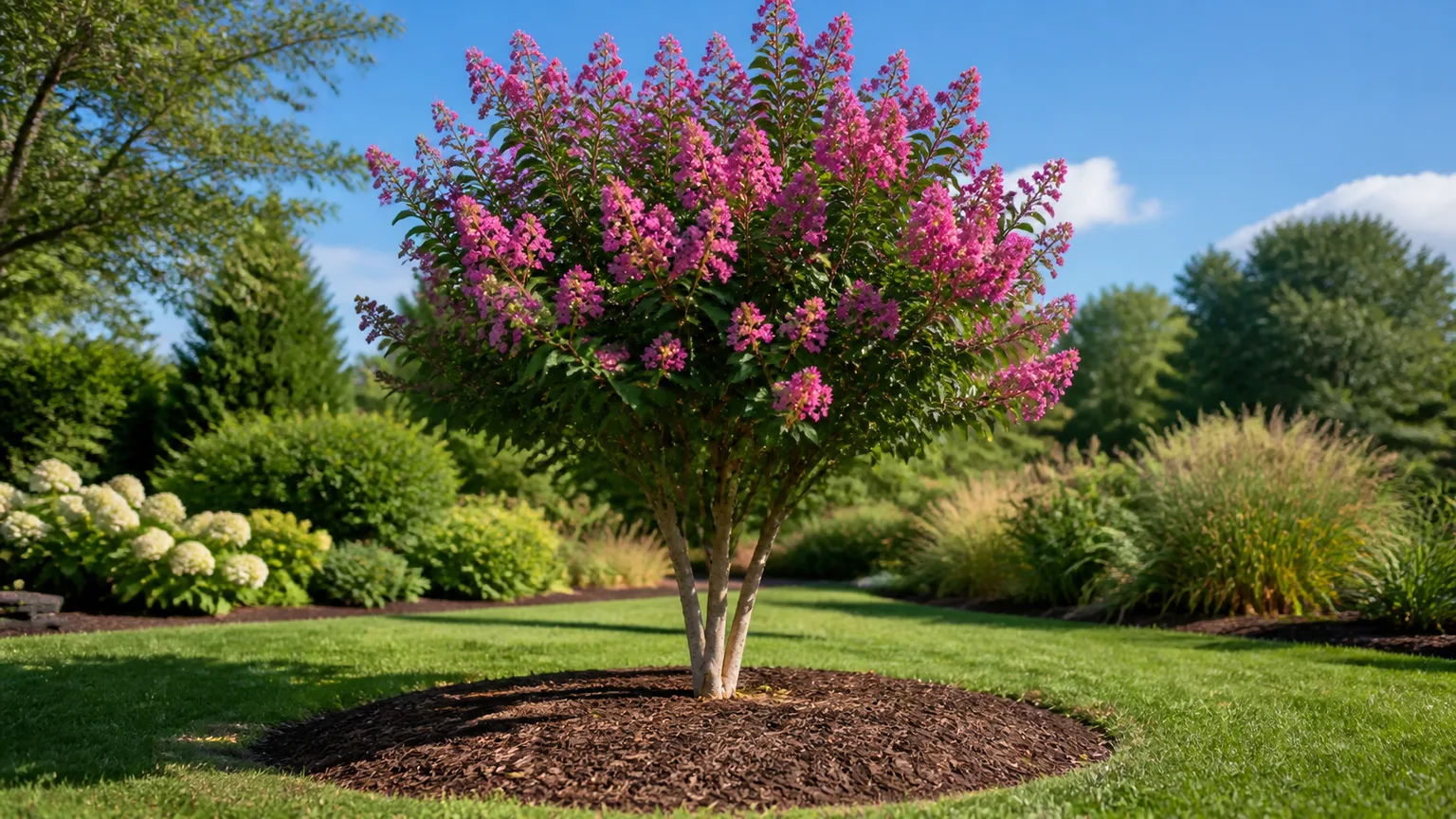
The most important crepe myrtle care decision happens before you dig: choose a cultivar that can reach its natural size in the space you have. These deciduous shrubs and small trees can flower for months in summer, show peeling bark in winter, and turn color in fall, but a tree planted in too much shade or forced to fit a narrow space will need years of correction. A properly sized plant in sun usually needs less intervention and makes a better display.
Crepe myrtle and crape myrtle are common spellings for plants in the genus Lagerstroemia. The familiar Lagerstroemia indica and its hybrids range from compact shrubs a few feet tall to trees over 20 feet. The University of Georgia Cooperative Extension’s culture guide, fully reviewed in 2026, organizes cultivars by mature height and describes differences in bloom, bark, and disease resistance. That variability is why a nursery label should name the cultivar, not just say “crepe myrtle.” University of Georgia Cooperative Extension
Quick care snapshot
Give a crepe myrtle full sun, well-drained soil, and room for the cultivar’s mature canopy. Water thoroughly at planting and keep the root ball evenly moist while roots establish; established plants tolerate dry spells better, though a long hot drought can still reduce flowering. Avoid heavy nitrogen feeding, which may encourage leafy shoots at the expense of flowers.
Major pruning is optional. When a structural cut is needed, do it in late winter or early spring before new growth starts, removing dead, crossing, or poorly placed branches rather than cutting every trunk to the same height. The tree flowers on current-season growth, but that does not mean it must be cut back to bloom. Choosing the right size up front is safer than repeatedly trying to hold a large cultivar inside a small footprint.
| Care factor | Practical starting point |
|---|---|
| Light | At least six hours of direct sun; more sun generally supports heavier flowering |
| Soil | Adaptable to many textures, provided excess water drains away |
| Planting | Set the root ball at the surrounding soil level; make the hole wider than deep |
| Establishment water | Soak thoroughly at planting; water when rainfall does not keep the root zone moist |
| Mature water | Water during prolonged dry weather, especially when flowers are forming |
| Pruning | Late winter to early spring for necessary structural work; avoid topping |
| Fertilizer | Use only when growth or a soil test shows a need; avoid excess nitrogen |
| Size | Cultivar-dependent, from under 5 feet to more than 20 feet |
Start with a cultivar that fits the site
Before considering flower color, check the cultivar’s expected mature height and width in your region. A small plant in a one-gallon pot may look like a manageable shrub today, but it can mature into a wide, multi-trunk tree. The University of Georgia lists named selections from dwarf types in the 3-to-5-foot range to varieties more than 20 feet tall; NC State Extension gives a broad 6-to-30-foot range for the species profile, reflecting how much cultivars differ. NC State Extension
Think about the job the plant needs to do. A compact cultivar can anchor a sunny border or grow in a large patio pot; a medium type can be a specimen in a courtyard; a larger tree needs clearance from the house, roof, wires, driveway, and pedestrian paths. Do not use pruning as the plan for keeping a 20-foot tree at 8 feet. It will keep trying to grow back, and repeated severe cuts leave a poor branch structure.
Choose by mature height, not the nursery pot
Use cultivar groups as a first filter, not a promise of exact dimensions. ‘Chickasaw’ and other dwarf selections can stay under about 5 feet in many landscapes; ‘Acoma’ and ‘Tonto’ are commonly grown as smaller shrubs or small trees; ‘Catawba’ and ‘Sioux’ fit a medium-scale planting; ‘Natchez’ and ‘Muskogee’ are larger choices. Extension listings vary in reported height because soil, climate, pruning history, and whether a plant is grown as a multi-stem shrub or trained tree all affect the final outline.
Flower color is useful for narrowing the shortlist, but it should come after scale and climate. White-flowering ‘Acoma’ is a smaller landscape selection; dark-purple ‘Catawba’ is often used at medium size; white ‘Natchez’ and lavender ‘Muskogee’ can become much taller. The UGA cultivar table also compares mildew resistance and bark quality, giving a gardener more than color to weigh. HGTV’s gardening guide similarly recommends choosing within the size range first, then selecting a flower color. Confirm the exact label and local mature-size estimate with a knowledgeable nursery or extension office before buying. Clemson Cooperative Extension’s cultivar examples provide additional regional context.
Pick the right planting time and location
Plant when the soil is workable and you can keep the root ball from drying out. In regions with mild winters, fall through early spring gives roots time to settle before the hottest weather. Spring is a practical choice in colder areas, where a young plant benefits from a full growing season before winter. A flowering specimen bought in summer can still be planted, but it needs closer moisture checks through heat and may pause while it establishes.
Choose the position based on the mature plant, not just the size of its root ball. A crepe myrtle can work as a specimen, a loosely spaced group, or a seasonal screen, but it is deciduous and does not provide year-round privacy. Place it where its full-sun canopy can expand without being pushed against a wall or overhead line. Consider flowers, seed capsules, and sticky aphid honeydew when deciding whether to position it over a car, patio furniture, or a regularly used walkway.
Plant at the correct depth
Dig a broad hole about two to three times the root ball’s width and no deeper than its height. Loosen compacted soil across the planting area, but do not place the tree in a deep pocket of enriched compost or potting mix. University of Georgia Extension explains that roots benefit from growing outward into the surrounding native soil; heavily amending only the hole can create a sharp transition that encourages roots to stay confined.
Slide the plant out of its container and check the roots. If they circle tightly around the outside, gently tease a few loose; if the root ball is severely congested, make several shallow vertical cuts with a clean tool rather than leaving a dense spiral intact. Set the upper root ball even with, or slightly above, surrounding grade in heavy or poorly draining soil. Backfill with the excavated soil and water thoroughly to settle air pockets without stomping the root zone hard.
Spread a shallow mulch layer over the root area to reduce evaporation and weeds, keeping mulch several inches away from the stems. Do not pile mulch against trunks or bury the root flare. If rain is scarce after planting, water slowly at the root zone so the original root ball and nearby soil both become moist; a quick splash on the surface does not establish a deep, expanding root system. Southern Living’s planting guide also stresses a wide hole, level root-ball placement, and thorough watering at installation. Southern Living
Give it full sun, but do not obsess over soil
Plan for at least six hours of direct sunlight each day. A crepe myrtle may stay alive in partial shade, but a shaded canopy often grows more slowly and flowers less. Shade and poor air movement can also make powdery mildew more troublesome. Check the sun at midday and late afternoon after nearby trees have leafed out; a place that looked bright in winter can become shaded in summer.
Crepe myrtles tolerate a wider range of soil textures than many flowering trees, including clay and sandy soils, if drainage is adequate. They do not need a special acidic planting mix in every garden. The main red flag is a low spot that stays saturated after rain: roots in prolonged wet soil are more vulnerable to decline and root rot. If you are unsure about pH or fertility, test the soil before adding lime, sulfur, compost, or fertilizer rather than treating a number from a general care card as a universal recipe.
Water for establishment, then during dry spells
New trees need a consistent supply of water until roots move beyond the original container soil. Water deeply at planting, then check the root ball and adjacent soil several times a week during hot or windy weather. The surface may dry while the root ball remains wet, or the soil around a peat-based root ball may shed water; probe carefully with a finger or trowel before deciding. If the root zone is dry several inches down, water slowly and thoroughly. If it is still damp, wait and recheck rather than watering by calendar alone.
University of Georgia Extension recommends a thorough watering at planting and weekly watering when rain is absent during the first two months. The exact schedule changes with soil, rainfall, heat, container size, and how quickly the plant was growing before purchase. Continue to watch a newly planted tree through its first growing season, and longer if it is in a confined planting strip or a hot, exposed site. Clemson Extension notes that establishment can take around two years, especially where roots have limited room.
Once established, a crepe myrtle can tolerate periods of drought, but “drought-tolerant” does not mean that water never matters. A prolonged dry spell during active shoot growth and flower formation can reduce the display or cause stress. Water the root area during an extended dry period, especially for young plants, and let rainfall do the rest when it is adequate. Avoid frequent shallow sprinkling and routine wetting of the foliage; the goal is moist root-zone soil with time to drain, not constantly soggy ground.
Fertilize only when the tree needs it
Do not fertilize automatically because a crepe myrtle is slow to bloom. Excess nitrogen can push soft, leafy growth and reduce flowering; nearby lawn fertilizer can reach the tree’s roots even when you never feed the tree itself. First check sunlight, soil moisture, planting depth, recent pruning, cultivar age, and winter damage. A soil test can identify a genuine nutrient shortage and prevent adding the wrong product.
If a test or clear deficiency supports feeding, use a balanced landscape fertilizer at the label rate and at the locally recommended time. Keep granules away from the trunk, water them in as directed, and do not add repeated high-nitrogen doses to chase blooms. Plants grown in containers lose nutrients faster as water drains through the pot, but use a modest, labeled feeding schedule for container trees rather than borrowing a lawn or vegetable rate.
Know what to expect through the seasons
Crepe myrtles are deciduous. New leaves emerge in spring, then terminal clusters of crinkled flowers open on current-season shoots, usually from summer into early fall depending on cultivar, climate, and establishment. A young or recently transplanted plant may spend its first season making roots and branches instead of putting on a full show. After flowering, small seed capsules can remain through winter; they are normal and do not need to be removed for plant health.
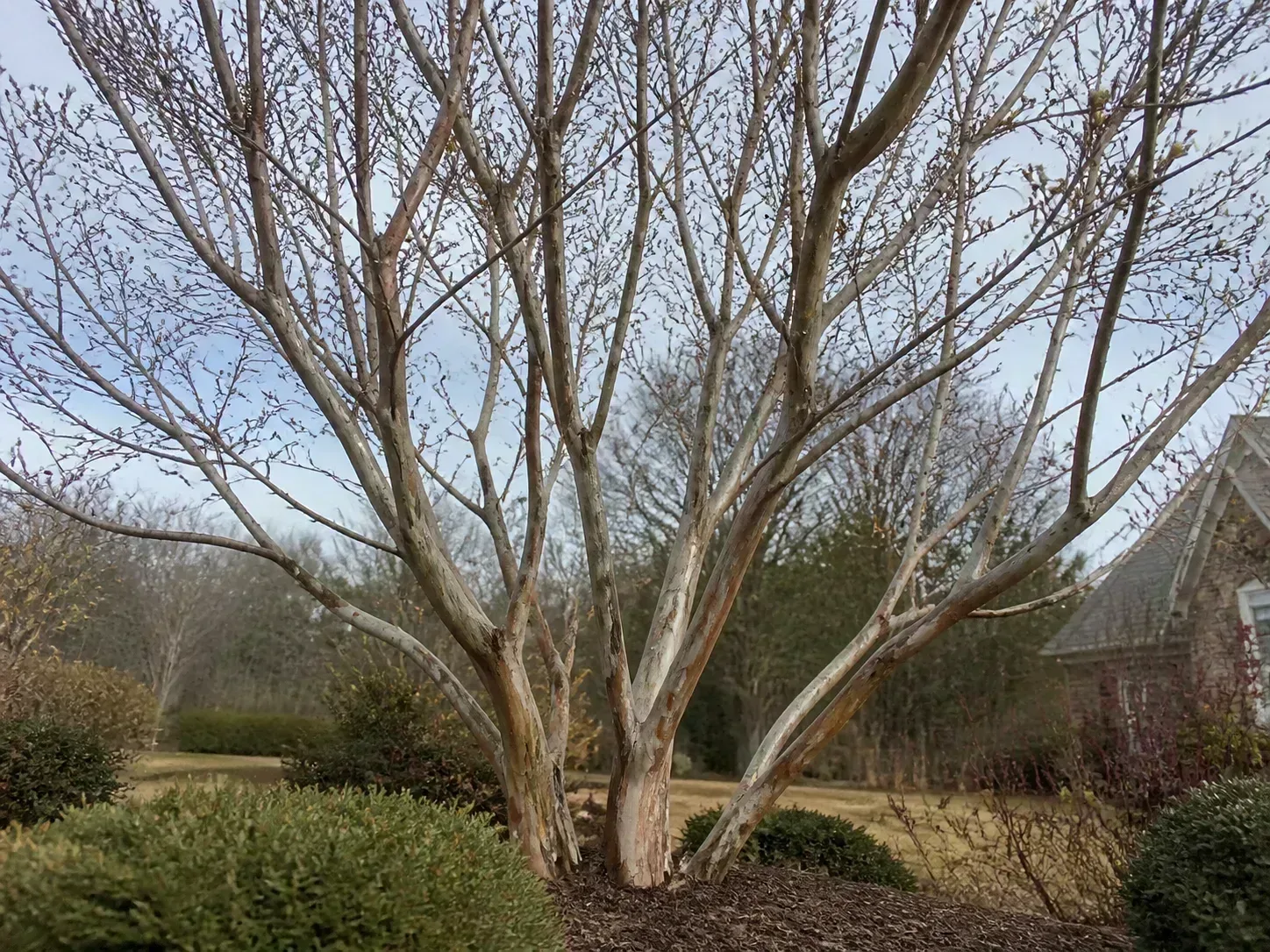
In fall, foliage may turn yellow, orange, or red before dropping. In winter, smooth exfoliating bark becomes more visible on many cultivars, though how much bark color shows varies by selection and age. A bare tree is not a sign that it is dying. In colder areas, however, stems may suffer winter injury even if the root system survives; the cultivar’s hardiness and local microclimate matter more than a single zone number on a general label.
Prune for structure, never an arbitrary size
Crepe myrtle flowers on growth produced during the current season, so necessary structural pruning is usually done in late winter or early spring, before buds swell. Wait until the coldest part of winter has passed in your area, especially if tips may have been damaged by freezes. Remove dead, broken, or crossing branches first, then step back and decide whether any additional cut has a clear purpose.
Do not cut every stem to short stubs each year. This practice, often called topping, is not required to make flowers and can leave knobby ends with crowded regrowth and a less natural form. If the plant is too large for the site, the lasting fix is usually to replace it with a cultivar that stays the right size. A few selective reduction cuts can correct a branch, but they cannot permanently shrink a large cultivar without repeated damage. For detailed cut placement and recovery guidance, see our crepe myrtle pruning guide.
Remove the right branches at the right time
For a shrub form, keep several well-spaced stems and remove only weak, damaged, or badly crowded growth. For a small tree form, choose a few strong, outward-angled trunks and gradually remove low side branches if clearance or the trunk silhouette matters. Do not strip the trunk bare in one session; leaving some lower foliage while the plant is young supports growth and creates a more balanced canopy.
Cut suckers close to their origin at the soil line, without gouging the trunk or digging into the root flare. Remove a branch just outside its collar instead of cutting flush to the trunk or leaving a long stub. If an old tree has already been topped, do not try to repair every knuckle at once. Selectively thin competing shoots over several dormant seasons, and ask an arborist to evaluate major decay, split trunks, or limbs close to a building or utility line.
Diagnose weak flowering before you prune
Start with light. Count direct sun where the leaves and flower panicles grow, not just at the base of the tree; buildings and larger trees may shade the crown during the middle of the growing season. If it receives less than six hours, extra fertilizer will not replace the missing light. A young plant may also need a season or two to settle in, and a cultivar’s bloom timing can differ from a neighbor’s plant.
Next, review water and nitrogen. A dry root ball during a hot spell can slow shoot growth, while a saturated site can weaken roots. Lush, dark foliage with very few flowers can point toward excess nitrogen from a fertilizer or nearby lawn program. Then consider pruning and winter: late or severe cuts remove flowering tips, and cold injury may kill the newest shoots. This check order is more useful than immediately buying a bloom booster. For a more focused diagnosis, see why a crepe myrtle may not bloom.
If buds form but fail to open, inspect new shoots and the undersides of leaves for pests or a powdery coating; disease and insect stress can interfere with flower development. If the tree blooms but drops leaves early late in a wet season, note whether spotted leaves yellow before falling. Keep track of the timing and take clear photos for a local extension office, especially when symptoms spread or recur. Do not apply fungicide or insecticide until you have a reasonable diagnosis and a product labeled for the plant and problem.
Watch for pests and disease signals
Powdery mildew can appear as a white or gray powder on leaves, young shoots, and buds; distorted growth or unopened buds may accompany it. It is more likely when air movement is poor and conditions favor the fungus. The preventive choices are often the most durable: plant in sun, give the canopy room, avoid excessive nitrogen, and select a cultivar with good reported disease resistance for your region. Cercospora leaf spot is a different pattern, with dark spots that may yellow surrounding tissue and lead to premature leaf drop during warm, humid weather.
Not every late-season leaf drop calls for a spray. A few marked leaves or normal seasonal color change are different from repeated early defoliation, rapidly declining shoots, or a tree that fails to leaf out. Remove fallen diseased leaves when practical, avoid overhead watering when conditions are damp, and ask a local extension service to confirm an ongoing problem before treatment. Fungicide labels and registrations vary, and a blanket yearly spray is not a substitute for site selection and resistant stock.
Separate aphids, sooty mold, and bark scale
Aphids can feed on tender growth and leave sticky honeydew. Black sooty mold often grows on that sugary residue, so the black coating is a clue to inspect for the insect rather than proof of a primary fungal infection. Look at leaf undersides and new growth before choosing a response; a light infestation may be tolerable, while a severe or recurring issue deserves a local identification. Avoid insecticides that could harm beneficial insects unless the label and diagnosis support their use.
Crape myrtle bark scale can look like white or gray waxy crusts on bark and larger stems, sometimes accompanied by honeydew or sooty mold. Clemson Extension documents it in South Carolina and describes the visible scale as a distinct problem from the more familiar leaf pests. Reports and recommendations are regional, so ask a local extension office to confirm a suspect infestation and advise on treatment that is effective and currently legal in your state. Clemson Cooperative Extension
Propagate with summer cuttings
Semi-hardwood cuttings taken from healthy current-season growth are a practical way to propagate a crepe myrtle. University of Georgia Extension lists June through August as a useful window in its climate: take a nonflowering shoot, cut it into sections with three or four nodes, remove lower leaves, and place the base in a clean, well-drained rooting medium. Keep the medium lightly moist and the cutting in bright shade; a clear cover can hold humidity, but vent it if condensation stays heavy or mold appears.
Rooting times vary with temperature, cultivar, and cutting condition, so do not tug repeatedly to check progress. Once roots form and new growth is steady, acclimate the young plant gradually to outdoor conditions before transplanting. A seedling may not reproduce the parent cultivar’s flower color or form. Also check the plant tag or current patent status before propagating a named selection; some cultivars are protected and should be purchased from an authorized nursery rather than copied.
Grow dwarf types in containers
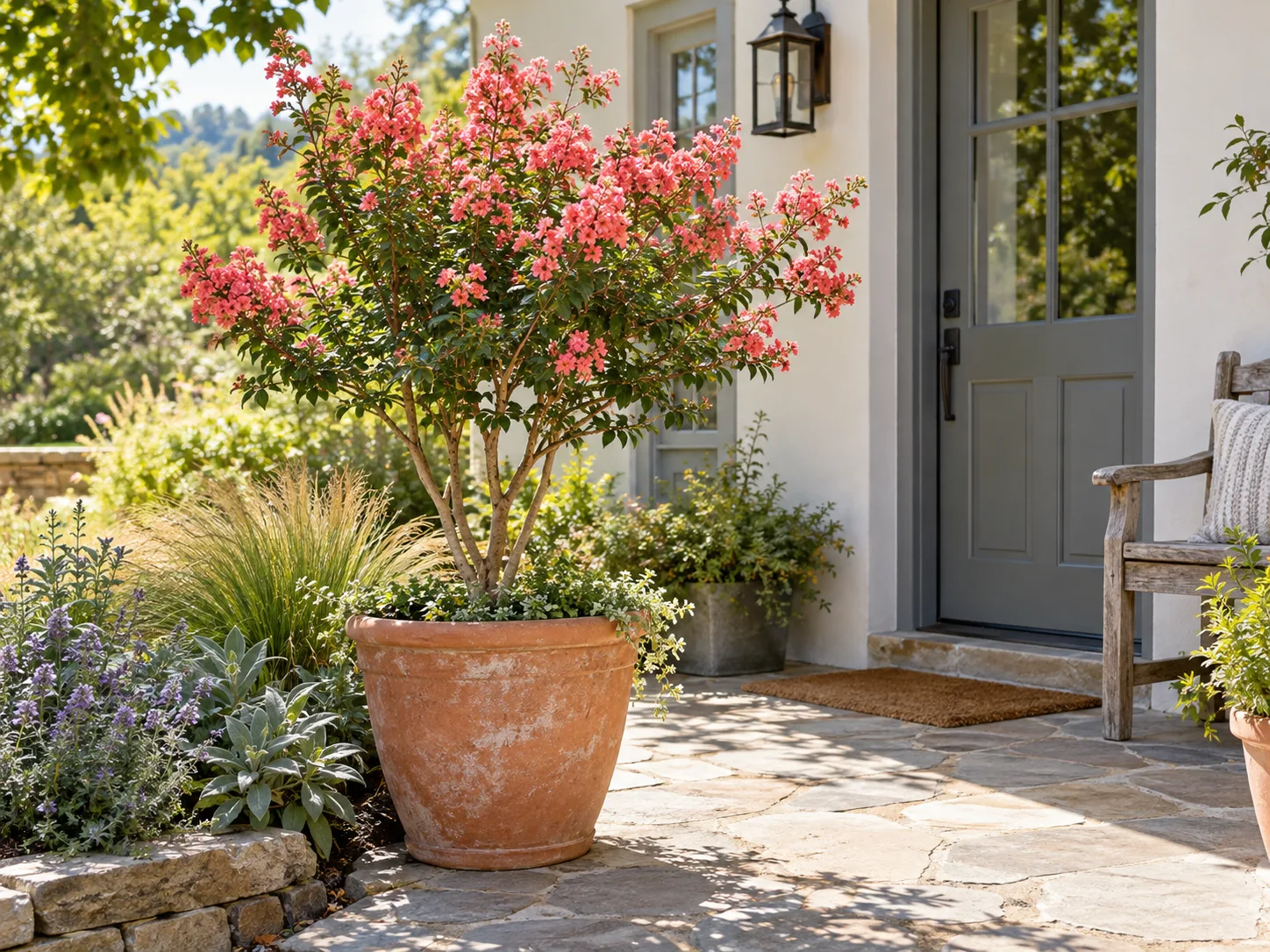
You can grow a compact crepe myrtle in a large outdoor container, but it needs more regular attention than one planted in the ground. Start with a named dwarf cultivar whose mature size suits a pot, choose a sturdy container with open drainage holes, and use a free-draining potting mix. A large pot is more stable and dries less quickly than a small one, yet the root ball still heats and dries faster than in garden soil during summer.
Set the pot in full sun and check moisture more often during hot, windy weather. Water thoroughly when the mix begins to dry below the surface, then let excess water drain; do not leave the container standing in a full saucer. Feed conservatively according to a product label made for container plants. Repot or root-prune when roots densely circle the pot and water runs straight through, but do not move a stressed tree into a dramatically larger pot that stays wet for too long.
Container roots are more exposed to winter cold than roots in the ground. In a region where the selected cultivar is marginally hardy, move the pot to a sheltered, unheated location or otherwise protect the root zone during severe freezes; do not keep a deciduous crepe myrtle in a warm living room as though it were a tropical houseplant. If you want patio color with less winter work, choose a cultivar suited to your local zone and ask a nearby nursery how it performs in containers.
Conclusion: plant the right size and let it grow
Crepe myrtle care is straightforward when the cultivar matches the site. Give it sun, plant it at the right depth in soil that drains, establish roots with weather-aware watering, and avoid feeding it into leafy growth. Check the cultivar’s mature size and regional hardiness before purchase; those choices prevent more future work than frequent pruning ever will.
When a branch needs correction, make a selective dormant-season cut and preserve the plant’s natural framework. Inspect unusual leaf, bark, or flower symptoms before treating them, and use local extension guidance for disease or pest diagnosis. A well-sited crepe myrtle can provide summer flowers, fall color, and winter bark without an annual haircut.