How to Prune a Crepe Myrtle Tree Like a Pro
Learn when and how to prune a crepe myrtle, what to remove first, how to protect flowers, and why topping creates weak growth.
First, remove only dead, broken, or clearly diseased wood with clean, sharp tools. That gives you a safer starting point than cutting the whole canopy to an arbitrary height. Once the tree is clean, step back and decide whether it actually needs shaping, size control, or just a few corrective cuts.
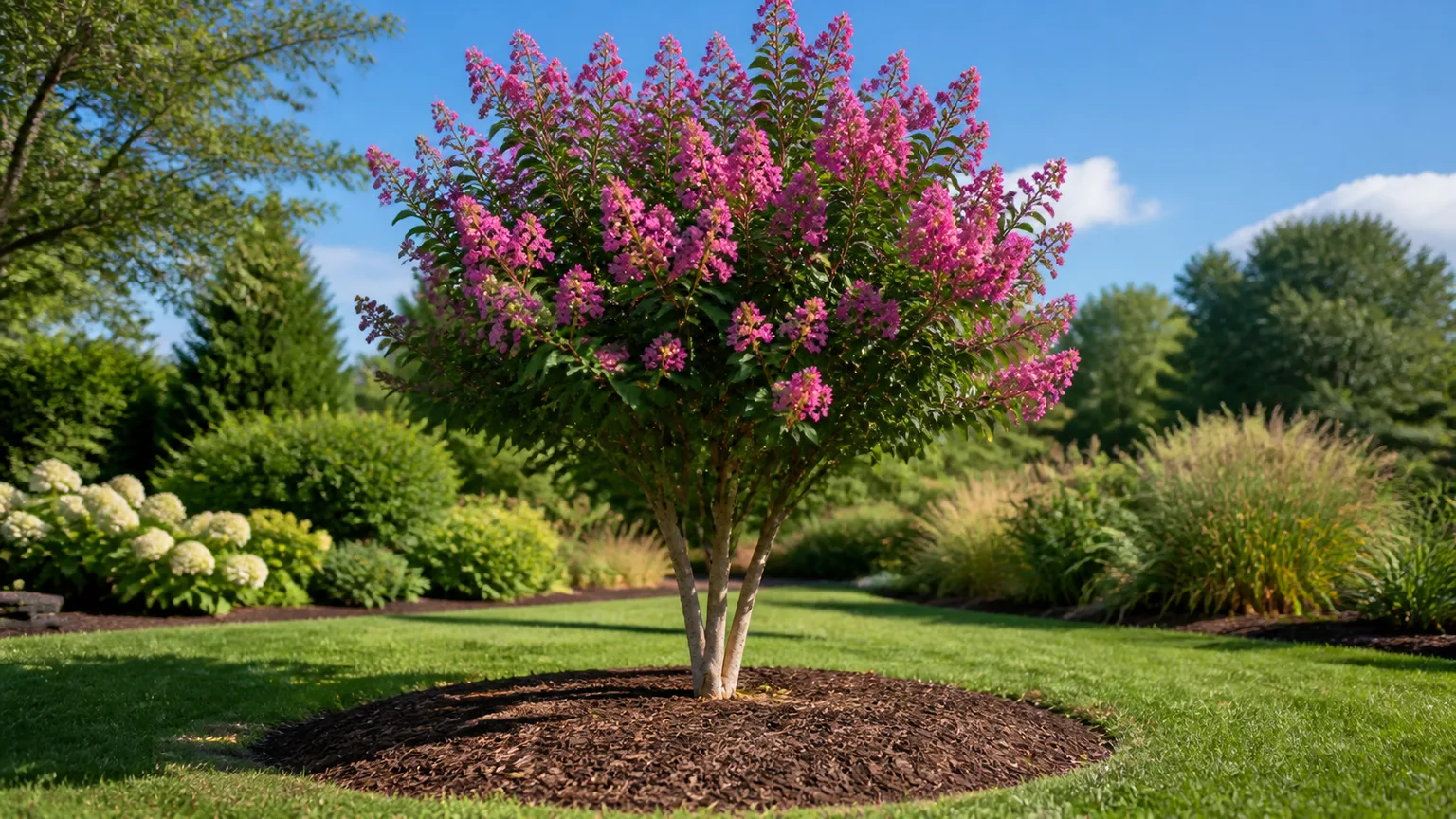
Crepe myrtles (also spelled crape myrtles) include shrubs, multi-trunked trees, and upright single-trunk forms in the genus Lagerstroemia. Their flowers appear on current-season shoots, so pruning can support a strong bloom display—but only when it improves structure instead of replacing the canopy with stubs. The University of Georgia Extension explains that aggressive annual cutting is not required for flowering and can create weak, unattractive shoots. University of Georgia Extension
Start with one inspection before making a cut
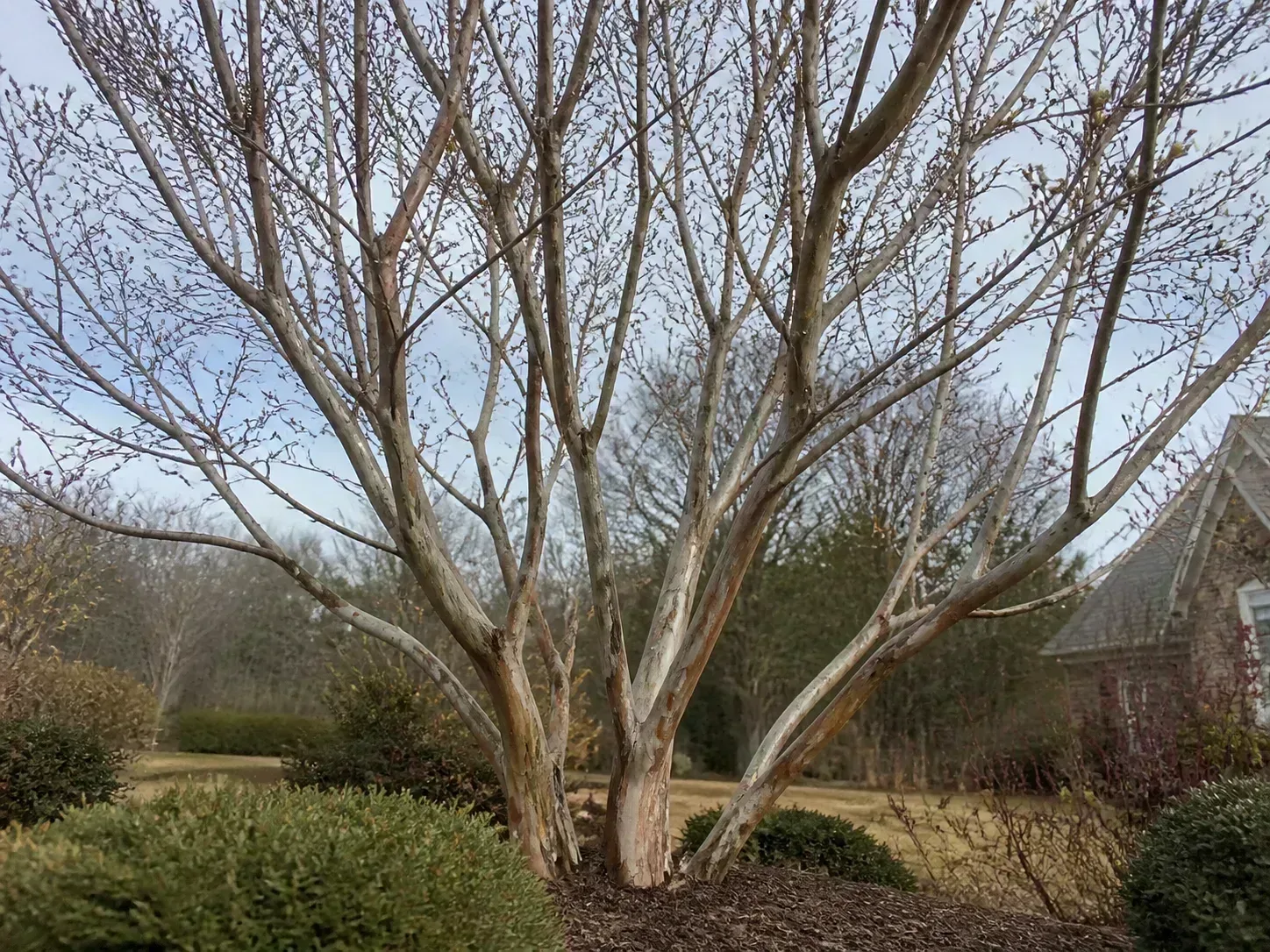
Walk around the entire tree. Look at the base, each trunk, the main limbs, and the outer tips. Note whether the problem is dead wood, a crowded center, low branches, root suckers, storm damage, excessive height, or a tree that has been cut back into knobby stubs. Those are different problems and should not receive the same cut.
Check whether the plant is a shrub cultivar or a tree-form cultivar before removing trunks. A dwarf crepe myrtle may be meant to stay multi-stemmed, while a trained standard may have one permanent trunk. The cultivar’s mature size matters more than the height it has reached this year; pruning cannot permanently turn a large tree into a narrow foundation shrub.
Decide whether the tree needs pruning at all
A healthy crepe myrtle with well-spaced trunks, no dead limbs, and a canopy that fits its site may need no annual pruning. Its exfoliating bark and branching silhouette are part of its winter value. Prune when a branch threatens a path, roof, wire, or sightline, when growth is damaged or diseased, or when selective thinning will improve the chosen form.
If the tree is green but flowerless, do not assume pruning is the cure. NC State Extension’s Lagerstroemia profile lists full sun and well-drained soil as core conditions, and shade, drought, cold injury, or excess nitrogen can limit flowering. Diagnose those conditions before removing healthy wood.
Choose the right pruning window
For substantial structural pruning, late winter through very early spring is usually the most useful window: the leaves are off, the branch framework is visible, and new shoots have not yet developed their flowering tips. Prune after the worst hard-freeze risk has passed in your area, but before vigorous spring growth begins.
Timing is not identical everywhere. In a warm climate, the dormant window may be short. In a colder region, freeze-killed tips may not be obvious until spring, so wait until you can distinguish live wood from winter damage. Scratch a small spot on a questionable twig; green tissue under the bark suggests life, while dry brown tissue may be dead. Do not keep scratching along a large limb; remove it only if the inspection shows a clear dead section.
Remove a hazardous broken limb whenever necessary, regardless of season. If a large branch is split, hanging, near utility lines, or beyond safe ladder height, use a qualified arborist. A late-summer haircut is not a neutral substitute for dormant pruning: it can remove current flowering shoots, stimulate soft regrowth, or leave fresh cuts exposed to heat and drought.
Gather tools and make them safe
Use bypass hand pruners for pencil-thin twigs and suckers, loppers for manageable medium branches, and a sharp pruning saw for limbs too large for loppers. Wear eye protection when cutting overhead, gloves that still allow control, and stable footwear. A pole saw is not a reason to work from an unstable ladder.
Clean blades before the first cut and whenever you move from diseased wood to healthy wood. A household disinfectant used according to its label can reduce transfer risk; allow the blade to dry before cutting. Keep blades sharp so they slice rather than crush bark. Do not paint routine cuts with wound dressing: a smooth, correctly placed cut is generally more useful than a sealed stub.
Keep the natural trunk framework
Decide whether you want a multi-trunk tree or a single-trunk tree, then keep that decision consistent. For a multi-trunk form, select several well-spaced leaders with attractive angles and enough room between them for bark and branches to develop. For a single-trunk form, retain one dominant leader and remove competing basal shoots while they are small.
Select permanent trunks and remove suckers
Cut root suckers at their point of origin near the soil line. Do not leave short stubs that can resprout. Make the cut without gouging the trunk or scraping the root flare. Repeat this inspection during the growing season because crepe myrtle can send up new shoots after warm rain or disturbance.
Remove low branches only when they conflict with the intended clearance or silhouette. Raising the canopy too aggressively can expose a thin trunk and create a top-heavy tree. Remove one low branch at a time, then look again before choosing the next one.
Remove dead, damaged, and diseased wood first
Follow a dead or broken branch back toward healthy wood. Cut just outside the branch collar—the slightly swollen area where the limb joins a larger branch or trunk. If there is a stub from an old cut, remove the stub back to the collar rather than cutting into the trunk. For a diseased section, cut into visibly healthy wood and disinfect the blade before another healthy-tree cut.
Do not confuse naturally mottled bark with disease. Crepe myrtle bark can peel and reveal gray, tan, cinnamon, or pinkish layers. That is different from soft decay, blackened tissue, sunken lesions, or a limb that has lost all live buds. When damage extends into a major trunk or the tree is unstable, a professional assessment is safer than repeated exploratory cuts.
Open the canopy without hollowing it out
After cleanup, find the branches that rub, cross, or grow sharply into the center. Keep the branch with the better attachment, direction, and role in the canopy; remove its weaker rival at the collar. A few strategic cuts should create windows through the canopy without exposing the entire interior.
Resolve rubbing, crossing, and inward-growing branches
Rubbing branches injure each other as wind moves them. Crossing branches can thicken a crowded center and make future cuts harder to place. Inward-growing shoots may be removed if they compete with the tree’s chosen framework. Do not strip every small lateral from the main limbs: those side branches carry leaves, shade bark, and help the tree build flowering shoots.
Make reduction cuts that preserve a branch’s direction
When a branch is too long, shorten it back to a strong lateral branch that is at least roughly one-third the diameter of the portion being removed. The remaining lateral becomes the new end of the branch and preserves a natural direction. Cutting a long limb halfway to a random bud creates a stub; cutting every branch to the same height creates a hedge-like line and a flush of weak shoots.
Use reduction sparingly on crepe myrtle. The plant flowers at shoot tips, so every shortened branch represents potential flowering wood removed. Make the cut above an outward-facing lateral when you want the new growth to move away from the center, but do not force every branch into a symmetrical pattern.
Use the three-cut method on heavy limbs
A heavy branch can tear bark as it falls. First, make a shallow undercut on the underside of the limb several inches away from the trunk or parent branch. Second, cut from the top a little farther out until the limb drops. Third, remove the remaining stub just outside the branch collar with a clean finish cut. This method protects the trunk from a long strip of torn bark.
The three-cut method is for controlled removal, not for making a large tree safe from the ground. Stop if the limb is beyond your reach, under tension, close to a structure, or entangled in wires. Pruning cannot compensate for a dangerous tree position.
Protect the branch collar
The collar contains protective tissue that helps the tree compartmentalize a wound. Cutting flush against the trunk removes that protection; leaving a long stub leaves dead wood that can decay and sprout. Aim for a smooth cut just outside the collar, following the angle of the branch attachment.
Never seal routine crepe myrtle cuts with paint or tar unless a local tree professional gives a specific reason. The quality of the cut, the tree’s vigor, and the timing of pruning matter more than a cosmetic coating.
Decide what to do with spent flower clusters
Deadheading is optional. Remove spent panicles only if you want a tidier appearance or are trimming a small plant for a particular display. It may encourage additional flowering in a long warm season, but it is not a requirement for a healthy tree and can become tedious on a tall canopy.
Use hand pruners to cut a flower stalk back to a side shoot or a pair of healthy leaves after the display fades. Do not shear the entire outer canopy to chase every brown cluster. If the tree is drought-stressed, newly planted, or recovering from cold damage, leave the foliage in place so it can continue supporting recovery.
Why topping creates a weaker crepe myrtle
Topping means cutting trunks or major branches back to arbitrary stubs, often at the same height. It is not a professional pruning style. The stubs respond with numerous fast shoots attached to a damaged end, and those shoots form a dense, twiggy crown that is harder to manage and less graceful than the original framework. The practice also removes the branch structure and bark display that make the tree valuable outside bloom season.
If the tree is too tall for its location, topping it once will not solve the mismatch. Choose a smaller cultivar for a new planting, selectively reduce a few branches to suitable laterals, or have an arborist assess whether removal and replacement is the honest long-term answer.
How much can you prune in one session?
There is no safe universal percentage for every crepe myrtle. A young, vigorous tree may tolerate more correction than a drought-stressed, newly planted, storm-damaged, or root-compromised tree. As a practical rule, finish the essential cleanup first, then pause. If the canopy already looks balanced, stop rather than using the remaining time to make it uniformly sparse.
Do not combine a severe structural cut, transplanting, root disturbance, and drought recovery in the same week unless a safety problem leaves no choice. Multiple stresses make it harder to tell whether slow growth is a normal response or a sign of deeper damage. Correct drought stress and make sure the tree receives adequate light before expecting strong new shoots.
Correct an overpruned or knobby tree
Do not try to erase a bad topping job in one season. In late winter, remove dead stubs and choose one or two well-placed shoots near each damaged end. Remove competing shoots while they are small, but keep enough leaf-bearing growth for the tree to rebuild energy. Over several seasons, guide replacement branches outward and remove those that cross or point into the center.
Expect years, not weeks, for a mature tree to regain a convincing framework. A tree that is repeatedly cut to knobs will keep repeating the same weak regrowth cycle. If the central trunks are decayed, split, or too badly damaged to support a safe canopy, consult an arborist instead of attempting a cosmetic rescue.
Aftercare and recovery checks
Leave the soil around the tree undisturbed and water deeply when the root zone begins to dry, adjusting for rainfall and soil type. Keep mulch flat and a few inches away from the trunks. Do not fertilize automatically after pruning; healthy roots and adequate light matter more than a quick flush of soft shoots. Check the canopy weekly for wilting, dieback beyond a cut, rubbing, or an unexpected burst of suckers.
If a spring-pruned tree produces many vigorous shoots, select the best-positioned ones while they are young instead of waiting until they become large competing limbs. If it produces little growth, investigate light, drought, winter injury, and root problems before cutting again. Propagation from suitable young material is a separate project; do not turn every pruning job into a cutting project.
Common pruning mistakes to avoid
The most damaging mistake is cutting first and deciding on the design later. Other frequent errors include removing every low branch, cutting flush to the trunk, leaving long stubs, shearing all outer tips, pruning late when flower shoots are forming, and treating flower loss as proof that more pruning is needed.
Avoid using a chainsaw or pole saw for routine small cuts. Avoid climbing into a canopy that can be reached safely from the ground with hand tools. Never cut near utility lines. Finally, do not let a neat row of identical stubs become the goal: a crepe myrtle’s best shape comes from preserving a few strong leaders, well-spaced laterals, and enough current-season growth to flower.
Conclusion: prune for structure, not a haircut
The professional approach is selective and patient. Start with dead, broken, or diseased wood; keep the natural trunk framework; remove suckers and conflicts; reduce long branches to suitable laterals; and protect every branch collar. Schedule major work in the dormant window, account for your climate and cultivar, and leave healthy flowering wood alone when no real problem requires a cut.
Pruning can improve clearance, structure, air movement, and the way the bark and flowers are seen. It cannot repair a permanently wrong planting site, replace missing sun, or make a large cultivar stay small. If you inspect before cutting and stop when the tree is balanced, your crepe myrtle has a much better chance of returning with strong shoots and a canopy that looks intentional in every season.
Related Crepe Myrtle guides
- Light: match pruning expectations to the full-sun conditions that support flowering.
- Water: manage drought stress before and after structural cuts.
- Propagation: decide whether suitable young cuttings are worth saving.
- Pruning: use the tree’s structure and current growth to guide seasonal checks.
- Slow growth: investigate weak recovery instead of pruning repeatedly.