4 Ways to Remove Tough Grass Stains Like a Cleaning Pro
Remove grass stains from washable clothes with four tested approaches, fabric-safety checks, pretreatment timing, and drying rules that prevent set-in marks.
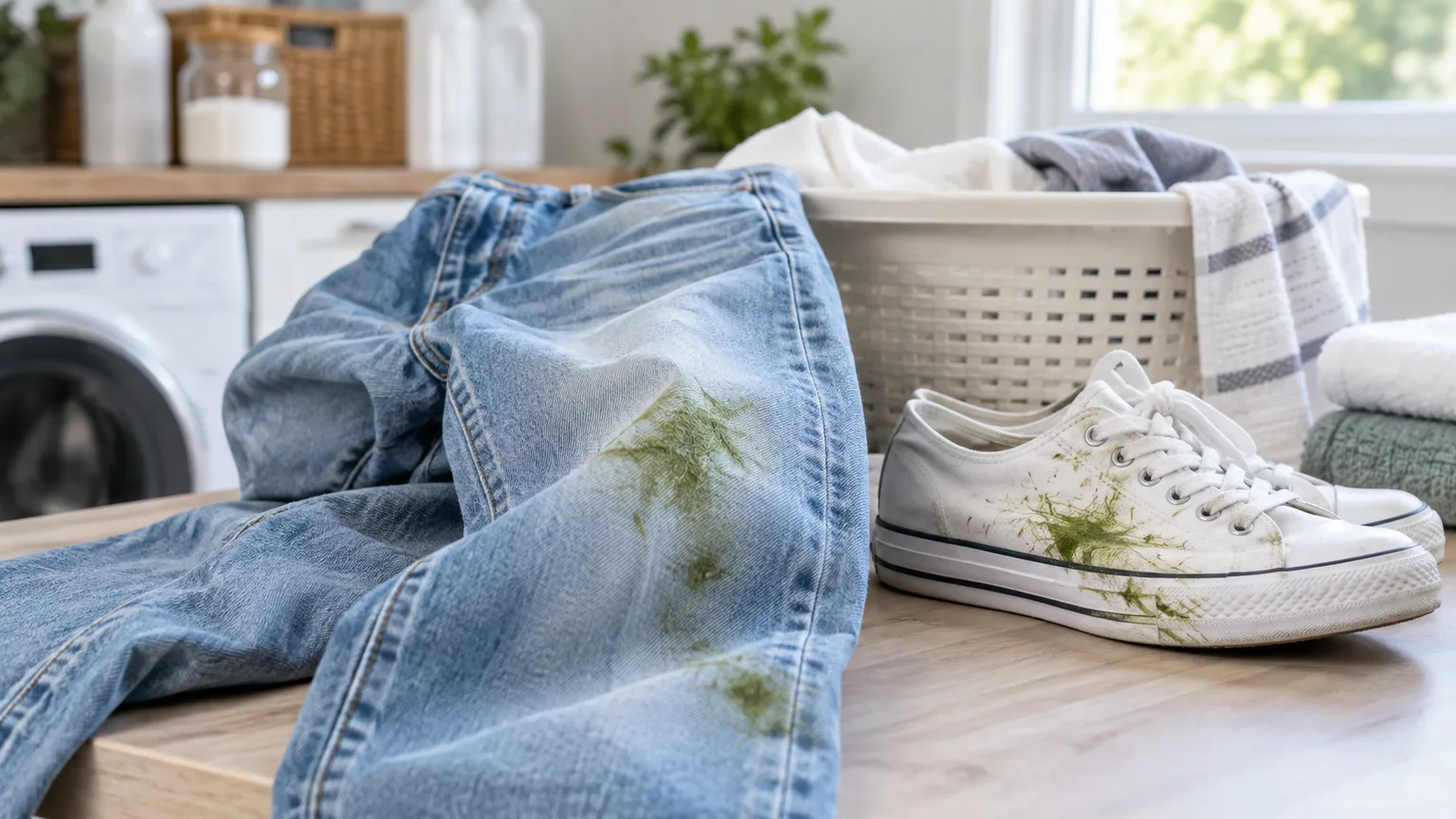
Grass stains are usually salvageable, but they reward speed and restraint. The green mark is a mixture of chlorophyll, plant residue, soil, and whatever was already on the garment—sunscreen, sweat, food, or body oil. Scrubbing hard can drive that mixture deeper into the weave, while a hot dryer can make the remaining color much harder to lift.
The reliable approach is to remove loose dirt, choose one compatible treatment, give it time to work, and check the result before heat touches the fabric. The four methods below cover most washable clothes, from a child’s knees to a pale cotton shirt worn on a picnic. Always follow the care label first, test a hidden area, and treat a delicate or dry-clean-only item differently.
Why grass stains cling to fabric
Fresh grass marks can look simple, but they are not just green dye. Plant pigments attach to fibers, and fine soil particles lodge between threads. A damp knee pressed into a lawn can also pick up oils and proteins that behave more like ordinary body stains. That is why one rinse may fade the color without removing it completely.
Cotton and other absorbent fabrics often hold a mark more visibly than a smooth synthetic shell. Fleece, athletic knits, and denim can hide residue in their texture. The stain may also look gone when wet and reappear after drying. Treat the visible area plus a small margin around it, because the edge can contain diluted pigment.
The stain-removal rules that prevent a bigger mess
Start with the care label. “Washable” does not mean every cleaner is safe: wool, silk, rayon, acetate, leather, and garments with unstable dyes need extra caution. If the label says dry clean only, blot away excess and take it to a cleaner rather than experimenting.
Next, remove loose soil outdoors or over a trash can. Use a soft brush or the dull edge of a spoon; do not grind grit into the fabric. Work from the back of the stain when you can, so water and treatment push residue out instead of further through the fibers.
Use cool or lukewarm water for the first rinse unless the care label says otherwise. Avoid chlorine bleach unless the label and fabric both allow it; it can weaken fibers, alter dyes, and interact poorly with other products. Never mix cleaners. In particular, keep vinegar away from bleach and do not combine hydrogen peroxide with other stain chemicals.
Method 1: Enzyme detergent for everyday washable clothes
An enzyme laundry detergent is the best starting point for cotton shirts, socks, towels, uniforms, and many colorfast blends. Enzymes help break down organic residues, while the detergent carries loosened soil away in the wash. This method is less aggressive than reaching immediately for a solvent, which makes it useful for a broad range of ordinary garments.
- Rinse the back of the stain with cool water.
- Apply liquid enzyme detergent directly to the green area, covering the fibers without flooding the whole garment.
- Gently work it in with a soft laundry brush or your fingertips. Avoid vigorous scrubbing on a knit.
- Let it sit for 15 to 30 minutes, or follow the product label if it gives a different time.
- Wash at the warmest temperature permitted by the care label.
- Inspect the garment in good light before using a dryer.
If the stain has lightened but remains, repeat the pretreatment once. A second controlled treatment is safer than adding several products at once. Enzyme products vary, so check whether the formula is suitable for wool or silk; many are intended only for plant-based or synthetic washable fibers.
Method 2: Rubbing alcohol for green, fresh marks
Rubbing alcohol can help loosen chlorophyll on sturdy, colorfast washable fabrics. It is particularly useful when a grass mark remains sharply green after rinsing. Because alcohol can affect dye, finish, elastic, and some synthetic fibers, treat this as a targeted method rather than a universal one.
Place a clean white towel behind the mark. Dab a small amount of 70% isopropyl alcohol onto a hidden seam first and wait several minutes. If the color does not transfer or fade, dab the stain from the outside toward the center with a white cloth. Do not pour alcohol over a large area or rub it back and forth.
When the green has begun to release, rinse thoroughly with cool water. Follow with enzyme detergent, allow the normal dwell time, and launder according to the label. Keep alcohol away from flames and heat, and do not use it on leather, acetate, or a garment whose dye bleeds during the test.
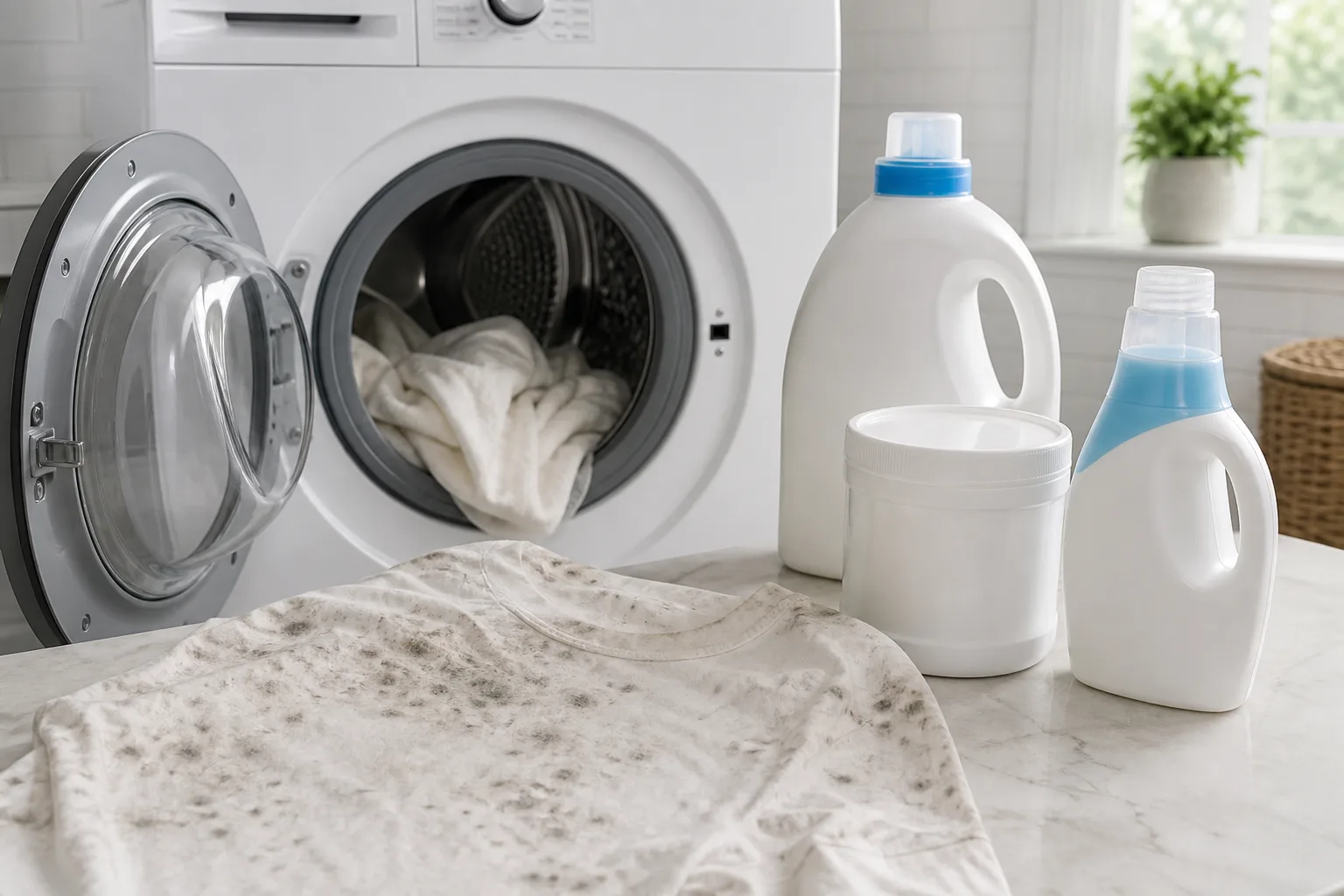
Method 3: Hydrogen peroxide and dish soap for light fabrics
For white or very light, washable cotton and durable blends, a small amount of 3% hydrogen peroxide paired with mild dish soap can loosen a stubborn mark. Peroxide is an oxidizer, so it may lighten some dyes. A hidden-area test is essential even on a garment that looks colorfast.
Mix equal small amounts of 3% hydrogen peroxide and mild dish soap just before use. Dab enough onto the stain to wet it, then let it sit for up to 20 or 30 minutes while checking occasionally. Rinse with cool water, apply enzyme detergent, and wash normally.
Do not use this mixture on wool, silk, leather, or garments with a finish that the label says to protect. Do not seal or store the mixture in a bottle. If the test patch changes color, rinse the garment and choose enzyme detergent instead. For a large white item, it is better to repeat a short, supervised treatment than to leave peroxide soaking for hours.
Method 4: Diluted white vinegar for a gentle first pass
Diluted distilled white vinegar can be useful when a mark is fresh and you want a mild pretreatment before detergent. Mix one part vinegar with two parts cool water, dab it onto the affected area, and wait about 10 to 15 minutes. Rinse well, then use enzyme detergent and wash.
Vinegar is not a guaranteed solvent for every grass stain, and its acidity is not appropriate for every fiber or finish. Do not use it on delicate materials without checking the label, and never mix it with chlorine bleach or products that contain bleach. If the smell remains, an extra water rinse usually helps; do not add another cleaner to “neutralize” it.
How to choose the right method
Use enzyme detergent first for most washable colored clothes. Choose alcohol only after a hidden-area test when a green mark persists. Reserve peroxide and dish soap for light, washable, colorfast fabrics. Use diluted vinegar as a mild first pass for a fresh mark, not as permission to soak a delicate garment.
The fabric matters more than the drama of the stain. A cheap cotton play shirt can tolerate a careful repeat treatment; a silk skirt, wool blazer, or garment with a special finish cannot. When in doubt, choose the least aggressive compatible method and take a photo of the stain before treatment so a cleaner can see what happened.
A step-by-step workflow for fresh stains
The following sequence is the practical “laundry room” version:
- Treat the stain as soon as possible, before it dries.
- Read the care label and separate the garment from the rest of the load.
- Brush off dry soil without grinding it in.
- Rinse from the back with cool water.
- Test your selected treatment on an inside seam.
- Apply it to the stain and let it work for the recommended time.
- Rinse, then wash with a suitable detergent.
- Check the mark in daylight before drying, ironing, or pressing.
Blot rather than scrub when working on upholstery, a printed graphic, or a loosely woven fabric. A white cloth makes it easier to see whether color is transferring. Change to a clean section of cloth as the stain lifts; otherwise you can spread the pigment back over the surface.
What to do with dried or old grass stains
Dried stains are not automatically permanent, but they need patience. First soften the area with water, then apply enzyme detergent and allow a full dwell time. Wash and inspect. If the fabric permits, repeat once before trying a different method.
Avoid stacking treatments in one session. Alcohol followed immediately by peroxide, vinegar followed by bleach, or several commercial products layered together can damage fibers and create irritating fumes. Rinse thoroughly between different approaches and let the garment dry naturally while you decide whether another treatment is worthwhile.
An old mark may have been heat-set by a dryer. In that case, the goal may be reduction rather than complete removal. A professional cleaner may have better options, especially when the item has sentimental or replacement value.
Grass stains on jeans, uniforms, and athletic clothes
Jeans are usually sturdy, but dark indigo can bleed. Test any solvent inside the waistband, then use enzyme detergent first. Turn the jeans inside out for washing and keep the water temperature within the label’s limits. Do not assume a hot cycle will solve a stubborn mark; it may make fading and shrinkage worse.
School uniforms and sports clothing often combine grass with sunscreen, sweat, and synthetic performance fibers. Rinse promptly, use a sports-safe enzyme detergent if the label permits, and avoid fabric softener on moisture-wicking garments because residue can affect performance. For padded or printed sportswear, use light pressure and never attack a logo with a stiff brush.
Grass stains on white clothing
White cotton gives you the most room to work, but it still benefits from a test and a no-heat inspection. Start with detergent. If a shadow remains, consider the 3% peroxide method after checking the label. Oxygen-based laundry products may be preferable to chlorine bleach for some washable whites, but follow the product directions and never mix them with other treatments.
Bright white does not mean indestructible. Repeated chemical exposure can yellow fibers or weaken elastic. Use the shortest effective contact time and rinse thoroughly.
Cleaning grass stains from shoes
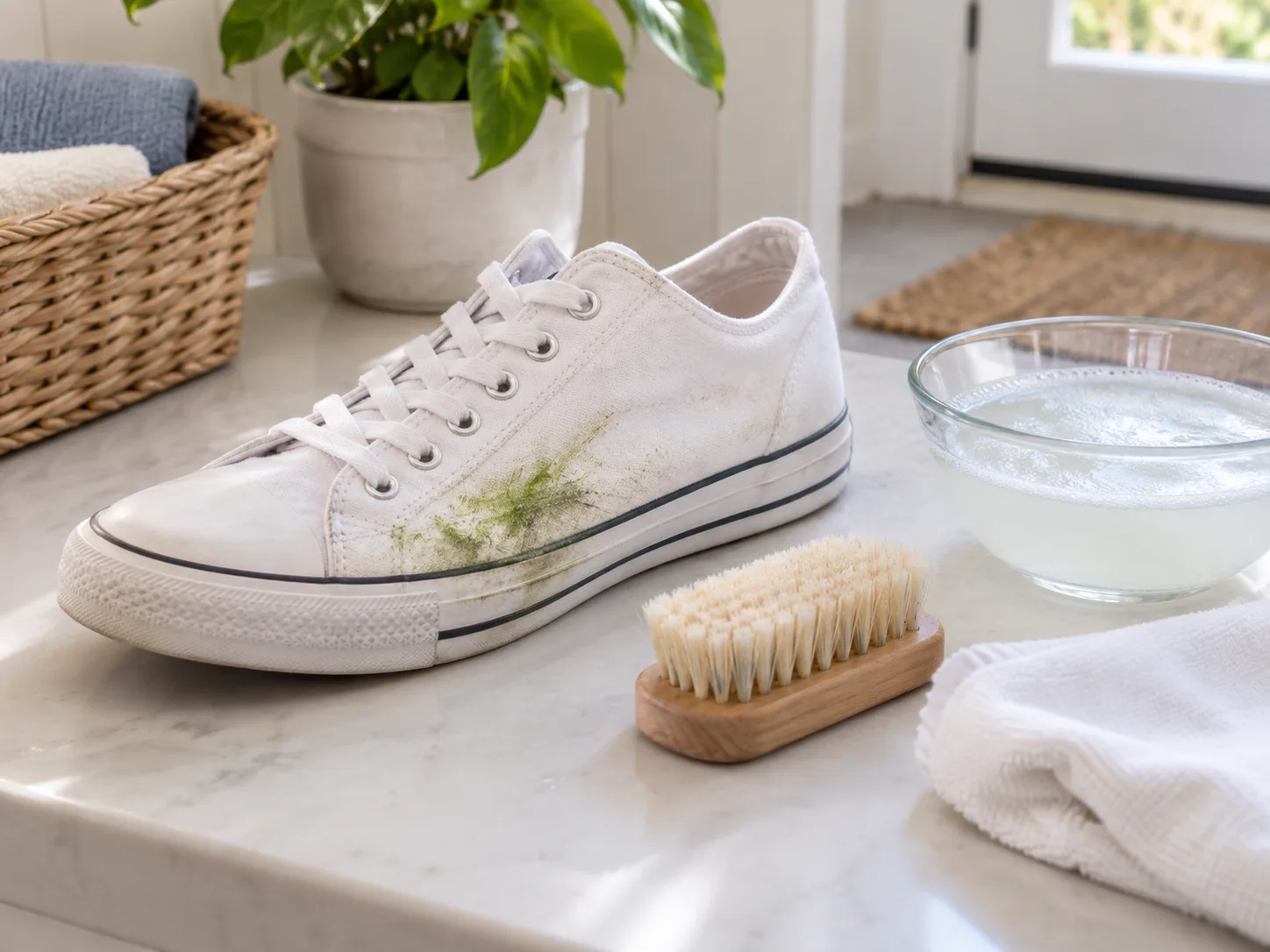
Shoes require a different plan because the material may be canvas, mesh, suede, finished leather, rubber, or a combination. Remove dry dirt with a soft brush. For washable canvas or mesh, dab mild detergent solution onto the mark and blot with a damp cloth. A soft toothbrush can reach a textured sole, but keep it away from delicate uppers.
Do not soak leather or suede. Use a product made for that material, and test an inconspicuous spot. A mildly abrasive cleaning sponge may help on rubber soles, but it can scuff fabric and change the nap of suede. Air-dry shoes away from radiators and direct high heat, using paper to help them hold shape.
Removing grass marks from upholstery and rugs
Begin by checking the upholstery code or rug-care instructions. Vacuum or brush away dry soil, then blot a small amount of diluted mild detergent onto a white cloth. Work from the outside edge inward and use as little liquid as possible. Rinse by blotting with a separate cloth lightly dampened with water, then press with a dry towel.
Do not saturate cushions, wool rugs, or furniture with unknown backing. Moisture can leave a tide mark or remain inside the padding. Alcohol, peroxide, and vinegar are not default upholstery cleaners; use them only when the manufacturer’s guidance and a hidden test support them. A large stain, valuable rug, or color that transfers to the cloth belongs with a professional.
Mistakes that set grass stains permanently
The most common error is putting a partly treated garment in the dryer. Heat can set the remaining pigment, so air-dry until you are certain the mark is gone. Ironing is even riskier because it concentrates heat directly on one area.
Other mistakes include scrubbing before removing grit, using a colored towel that transfers dye, skipping the care label, applying chlorine bleach to an unknown color, and combining products. Another failure is treating only the darkest center: as the mark fades, a halo can remain around it. Wet the whole affected patch evenly and rinse thoroughly.
When to stop and use a professional cleaner
Ask for professional help when the care label says dry clean only, the fabric is silk, wool, leather, suede, acetate, or heavily embellished, or the stain covers a large area. Stop home treatment if the dye transfers, the fabric changes texture, or the item has already been exposed to high heat and is valuable.
Tell the cleaner what caused the mark and what you applied, including approximate amounts and timing. That information helps them choose a treatment and avoid incompatible chemistry. Do not hide a previous attempt; it is useful diagnostic history.
Conclusion: treat early, wash carefully, inspect before drying
The winning grass-stain routine is simple: lift loose dirt, rinse from the back, use one fabric-compatible treatment, give it time, and inspect before heat. Enzyme detergent is the best general first choice; alcohol, peroxide, and diluted vinegar each have a narrower role. Fast action helps, but careful testing protects the garment you are trying to save.