24 DIY Plant Stand Ideas for Indoor and Outdoor Displays
From tree stumps to mid-century wood builds, compare 24 DIY plant stand ideas with weight, drainage, and stability rules so your display stays safe.
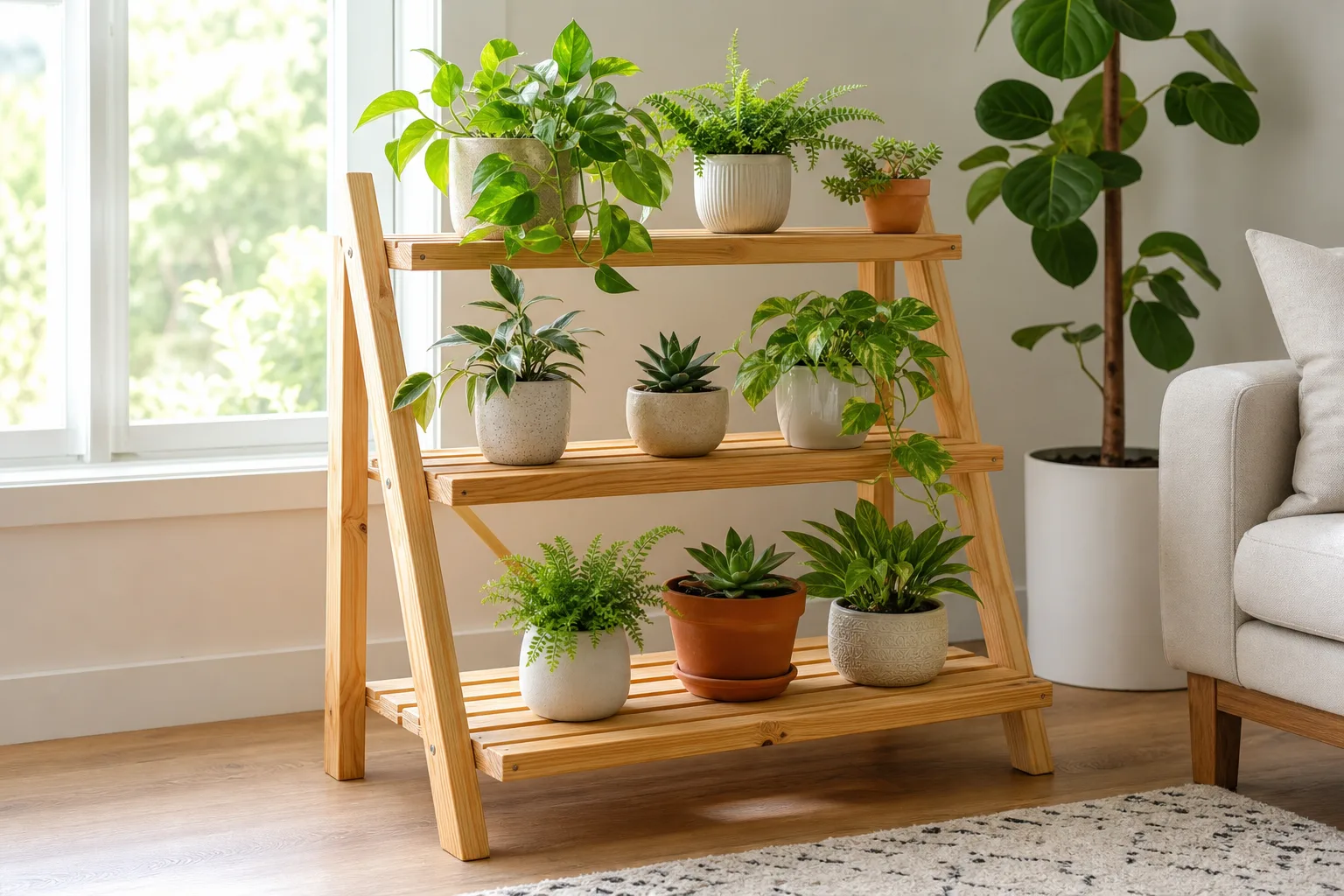
A gorgeous plant display fails the moment a wet 12-inch ceramic pot tips a wobbly riser or soaks through an unsealed shelf. The 24 DIY plant stand ideas below are grouped by how much building you want to do — from zero-build repurpose finds to weekend wood projects — but every option starts with the same three questions: How heavy is the loaded pot, where will it live, and does water have somewhere to go? Answer those first and the styling choices get easier.
How to Choose the Right Plant Stand Before You Build
Treat a plant stand as load-bearing furniture, not decor. A stand that looks perfect empty may flex, rock, or rot once you add saucers, trailing stems, and weekly watering. Before you pick an idea from this list, run your space through the rules below.
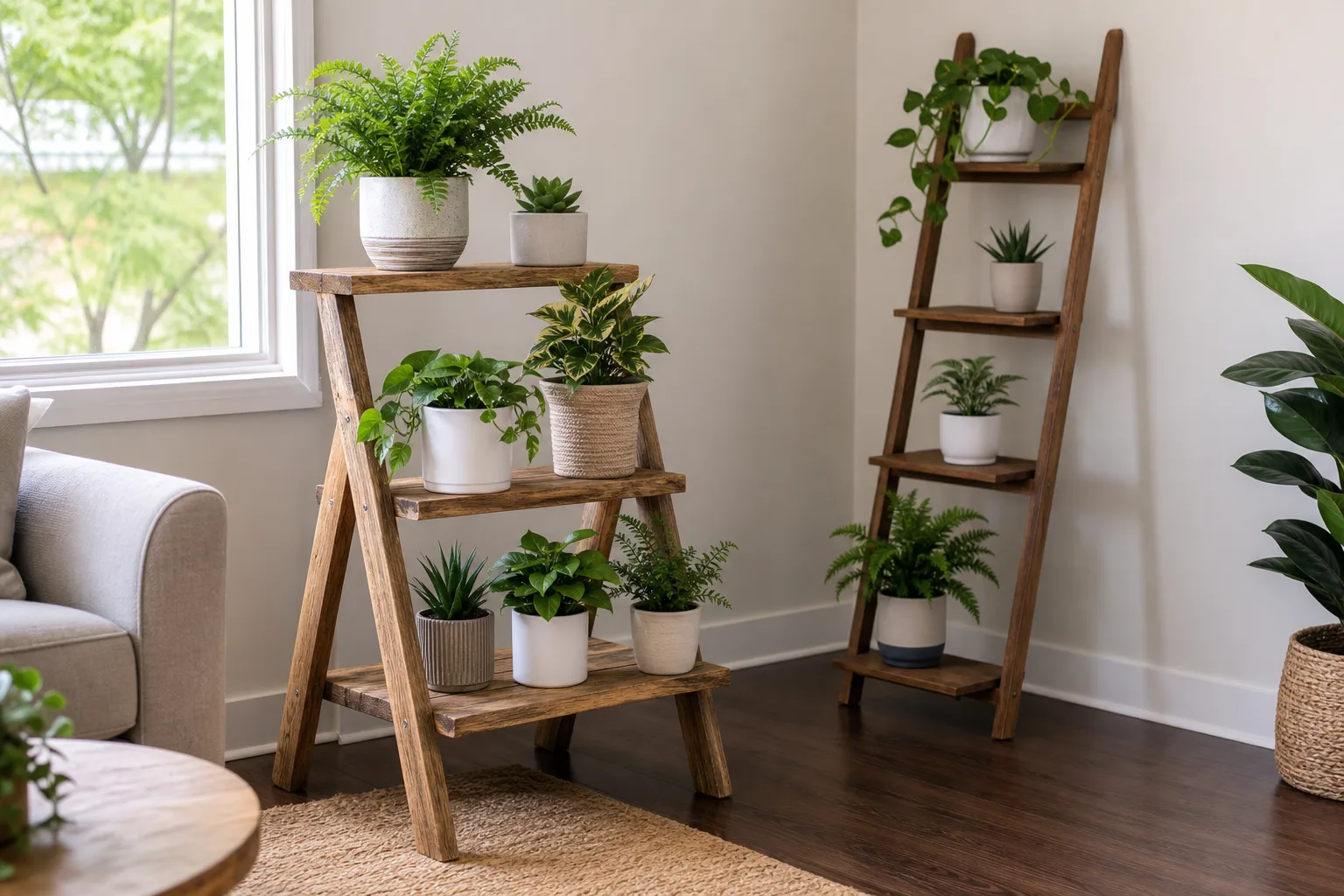
Weight, drainage, and stability rules
Estimate wet weight, not dry soil. A medium houseplant in an 8-inch ceramic pot often lands near 8–12 pounds once watered; large floor pots can exceed 30 pounds. Put the heaviest pots on the widest, lowest tier of any multi-level stand. Top shelves are for small succulents, air plants, or empty decorative pots — not a saturated fiddle-leaf fig.
Drainage beats pretty wood every time. The RHS container gardening guidance stresses that containers need free drainage so roots are not sitting in waterlogged mix. On a stand, that means saucers under every pot, slatted shelves that let air reach the pot base, or drilled holes if you are turning a crate or pallet into a planter itself. Never let runoff pool on a flat wooden shelf without a saucer — it is the fastest route to cupped boards and mildew.
Stability scales with height. Tall narrow stands — ladders, rolling towers, mid-century tripods — need a wide footprint or wall anchoring. The CPSC Anchor It campaign applies the same tip-over logic to tall shelving loaded with weight at the top: anchor to a stud when children, pets, or windy balconies are in the picture. After loading, push gently on the top tier; if it walks, lower the weight or add a brace before you call the project done.
Indoor vs outdoor material choices
Indoor stands can use furniture-grade pine, painted MDF, or metal with felt pads under feet. Priority is floor protection and saucer capacity, not rot resistance.
Outdoor and porch stands need cedar, acacia, pressure-treated frame lumber, galvanized or powder-coated metal, or sealed hardwood. Charleston Crafted’s outdoor rolling plant stand build pairs pressure-treated 2×2 framing with cedar shelf planks specifically because the unit rolls into rain — a useful benchmark for any porch project. Re-seal cut ends whenever you drill into outdoor wood; the US EPA wood preservative overview is worth reading if you are deciding between treated lumber and naturally durable species.
Ten Zero-Build and Repurpose Stands You Already Own
These ten ideas need no cut list — only placement logic. They are the fastest way to test height and grouping before you commit to a build.
1. Tree stump. A cured stump is nature’s pedestal: heavy, stable, and visually tied to the plant. Use one stump for a single specimen or three stumps at different heights in a corner for depth. Outdoors, set stumps on level ground and expect slow decay over years; indoors, seal the top or use a saucer so moisture does not wick into flooring.
2. Cement garden column. Cast columns add weight at the base, which helps with top-heavy pots on windy patios. Pair gray concrete with bamboo, terracotta, or glazed ceramics. Avoid smooth columns on sloped decks without a non-slip pad underneath.
3. Woven ottoman. Prop a tall snake plant or narrow floor palm on a sturdy woven ottoman for texture and height. Stack two ottomans only if the footprint stays wider than the pot and the ottoman frame is rated for seated weight — not a lightweight decor cube.
4. Wire tomato cage (decorated). Flip or wrap a cage with rope for a tiered vertical look. Best for light pots — herbs, small succulents, or cache pots — not heavy glazed ceramics. Anchor the cage to a wall or stake if it is taller than the pot is wide.
5. Garden stool. Ceramic or metal garden stools double as side tables and plant risers on patios. Group three at different heights near seating, or use one as a drinks-and-plant perch beside a lounger.
6. Cake stand (kitchen or dining). Elevate herbs or a centerpiece pot on a cake stand; stack plates under smaller pots for staggered height on a table. Keep away from table edges where pets can bump the tier.
7. Woven outdoor chair. An empty bistro chair seat holds a single pot while the back frame adds vertical interest on a balcony. Drainage still matters — saucer only, not direct planting in the seat cushion zone.
8. Wooden stool (step, counter, or bar height). Round stools suit single cache pots beside a desk or dresser. Match stool height to the plant: counter stools for floor plants you want nearer eye level, step stools for table-adjacent displays.
9. DIY iron plant stand (store-bought base, custom finish). Buy a simple iron stand and spray-paint it; pair with a contrasting planter rim. Indoors, use a felt pad under feet; outdoors, touch up chips so rust does not spread.
10. Shop-your-home pass. Before buying lumber, walk the room with a pot in hand: side tables, unused bar stools, sturdy baskets, and low bookshelves (with weight centered) often solve the job in an afternoon.
Six Vertical and Multi-Tier Display Ideas
Vertical stands save floor space but concentrate weight higher — plan shelf spacing for leaf clearance and your watering hand, not just Instagram density.
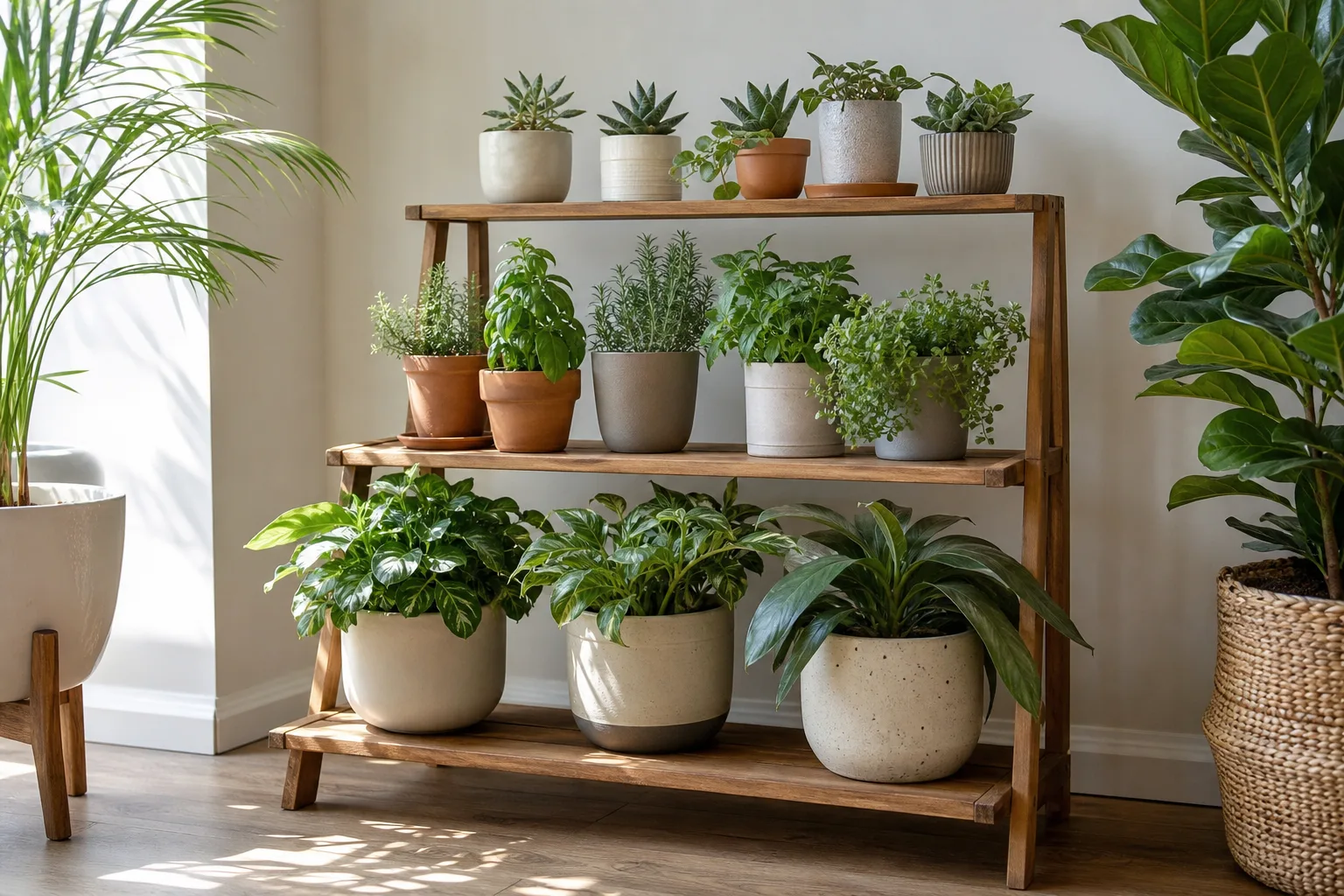
Ladders, rolling shelves, and plant stand walls
11. Ladder plant stand. Lean a wooden ladder against a wall or stand it in a corner with the heaviest pots on the lowest rung. Secure tall ladders to the wall with a strap or L-bracket; a ladder that is only leaned is a tipping hazard when you pull a pot forward to water.
12. Rolling plant stand shelves. Tiered rolling shelves let you chase light on a porch or sunroom. Use locking casters on any slope, build with exterior-grade materials if the unit goes outdoors, and leave 2–3 inches between shelf and lowest leaf tips so growth is not crushed. For a full framed rolling build, cedar planks over a treated 2×2 tower is a proven outdoor pattern.
13. Plant stand wall. Vertical boards with hooks or brackets turn a blank patio wall into a living grid. Use labeled herb cans or matching pots for readability. Outdoors, choose rust-resistant hooks and leave gap behind boards for airflow so wood does not stay wet against the house.
Pegboard walls and shoe-organizer tiers
14. Pegboard wall. Pegboard is not just for tools — hooks and small shelves hold lightweight pots in a craft room, sunroom, or shed. Keep the board anchored to studs; peg hooks are not meant for 15-pound glazed pots.
15. Over-the-door shoe organizer. Each pocket suits small plants, cuttings, or air plants in a bright bathroom or office. Water carefully — pockets can hold moisture against walls. Best for plants that tolerate quick drying between waterings.
16. Bar cart plant stand. A tiered bar cart holds multiple pots and rolls for cleaning day. Lock the wheels, use saucers on both tiers, and skip bar carts with thin glass shelves if you use heavy ceramics. The cart becomes a dining-room or sunroom focal point when you mix trailing and upright plants.
Furniture-Flip Stands That Add Instant Height
17. Wooden bench or shoe bench. A slim bench against a wall supports a row of pots without deep floor projection — ideal for narrow halls. Line pots on saucers, not directly on unfinished wood, and distribute weight evenly so the bench does not rack.
18. Bar cart (mobile furniture flip). Already covered above but worth repeating in the furniture category: mobility is the feature. Use it when you rotate plants between window and sink weekly.
19. Garden stool cluster (patio furniture flip). Three stools in a triangle create a casual outdoor coffee-table moment with plants on each seat — swap one stool for a human when guests arrive.
20. Woven chair / accent chair. Same as the zero-build chair idea but scaled as a furniture-style vignette: one statement plant on a chair, flanked by lower stools.
Single-Pot Risers: Stools, Pedestals, and Cake Stands
Single risers solve one empty corner without committing to a multi-tier footprint.
21. Wood pedestals on a console. Build or buy short pedestals of different heights and group them on a sideboard behind a sofa. Contrast planter shapes — cylinder, bowl, basket — so the display reads as intentional, not accidental.
22. Wooden plant stand stool. Already in zero-build; as a designed riser, paint the stool to match trim and use one pot per stool along a wall for rhythm.
23. Cake stand and plate stacks. See zero-build; best for kitchen herbs and dining centerpieces where height change matters more than load.
24. Iron riser with custom planter. See zero-build iron stand; emphasize contrast — black metal with concrete or terracotta — for modern rooms.
Height guide: Desk-adjacent plants often sit 24–30 inches off the floor; corner floor plants on risers often need 14–20 inches of lift to clear baseboards and trailing leaves; balcony corners can go taller if anchored.
Four Rustic Outdoor Builds From Found Materials
Pallets, crates, and painted tire stacks
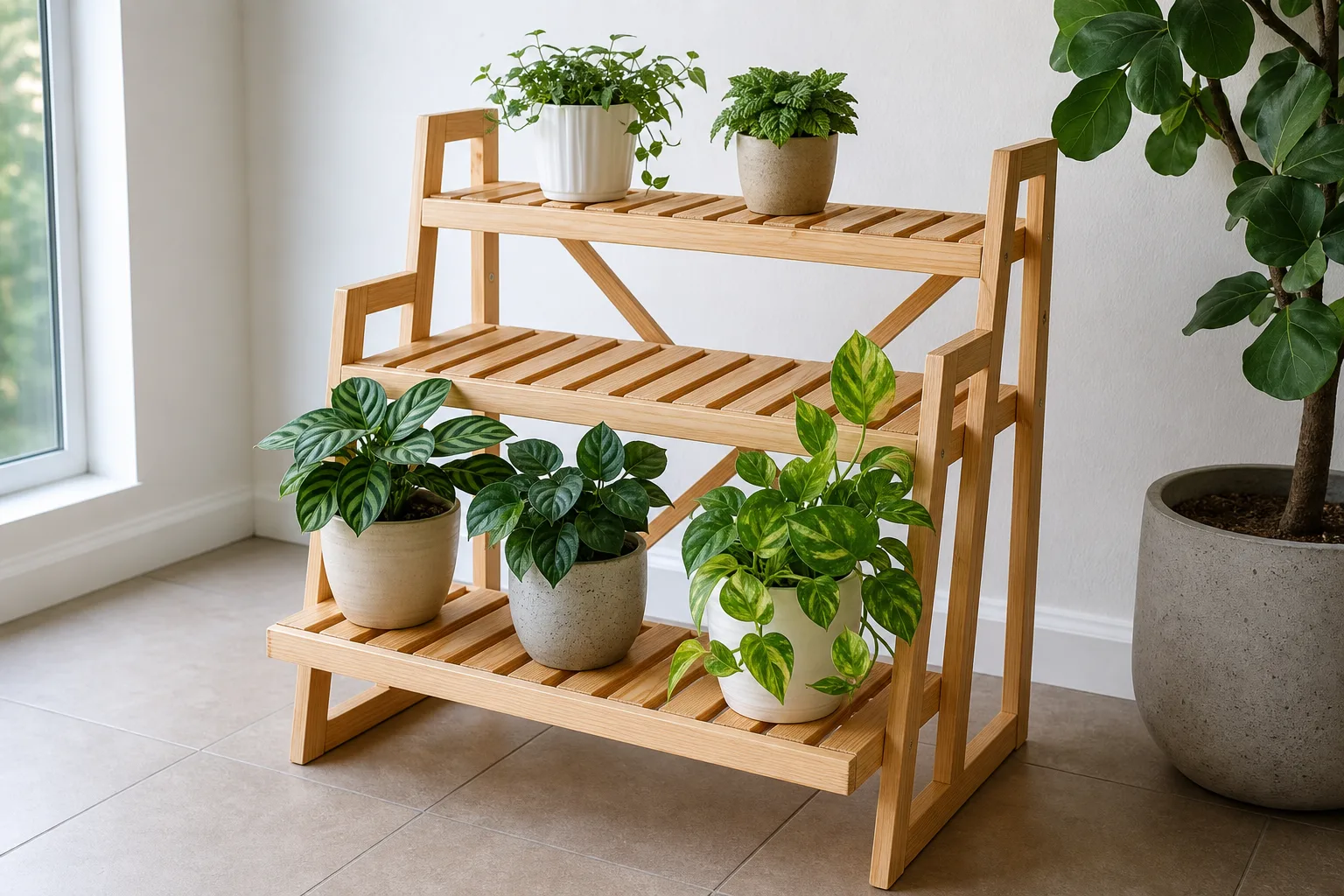
Pallet plant stand. Stack or half-cut pallets into a broad platform for many pots. Use heat-treated pallets (HT stamp), sand splinters, and keep pots on saucers — do not assume pallet wood is food-safe for direct planting. A wide pallet platform excels on patios where low center of gravity matters more than height.
Wooden crate risers. Vintage crates on bricks add rustic height and airflow underneath. Drill drainage holes only if you are planting into the crate; otherwise treat the crate as a riser and keep the nursery pot inside with a saucer.
Colorful tire stacks. Painted tires stacked for bold patio color work best with lightweight annuals or empty cache pots — not large shrubs. Research local guidance on outdoor tire planters; in hot climates, dark tires can overheat roots. Use saucers or liner pots rather than filling raw tire cavities with edible herbs unless you are comfortable with material leaching questions.
Tree stumps outdoors (build-adjacent). Group stumps of three heights for a corner forest effect; seal tops or rotate stumps every season if softwood begins to crumble.
Four Built-from-Scratch Wood Stands Worth the Weekend
When repurpose pieces wobble, a simple wood build pays off. For a step-by-step tiered stand with cut list and load test notes, see the DIY tiered plant stand complete build guide.
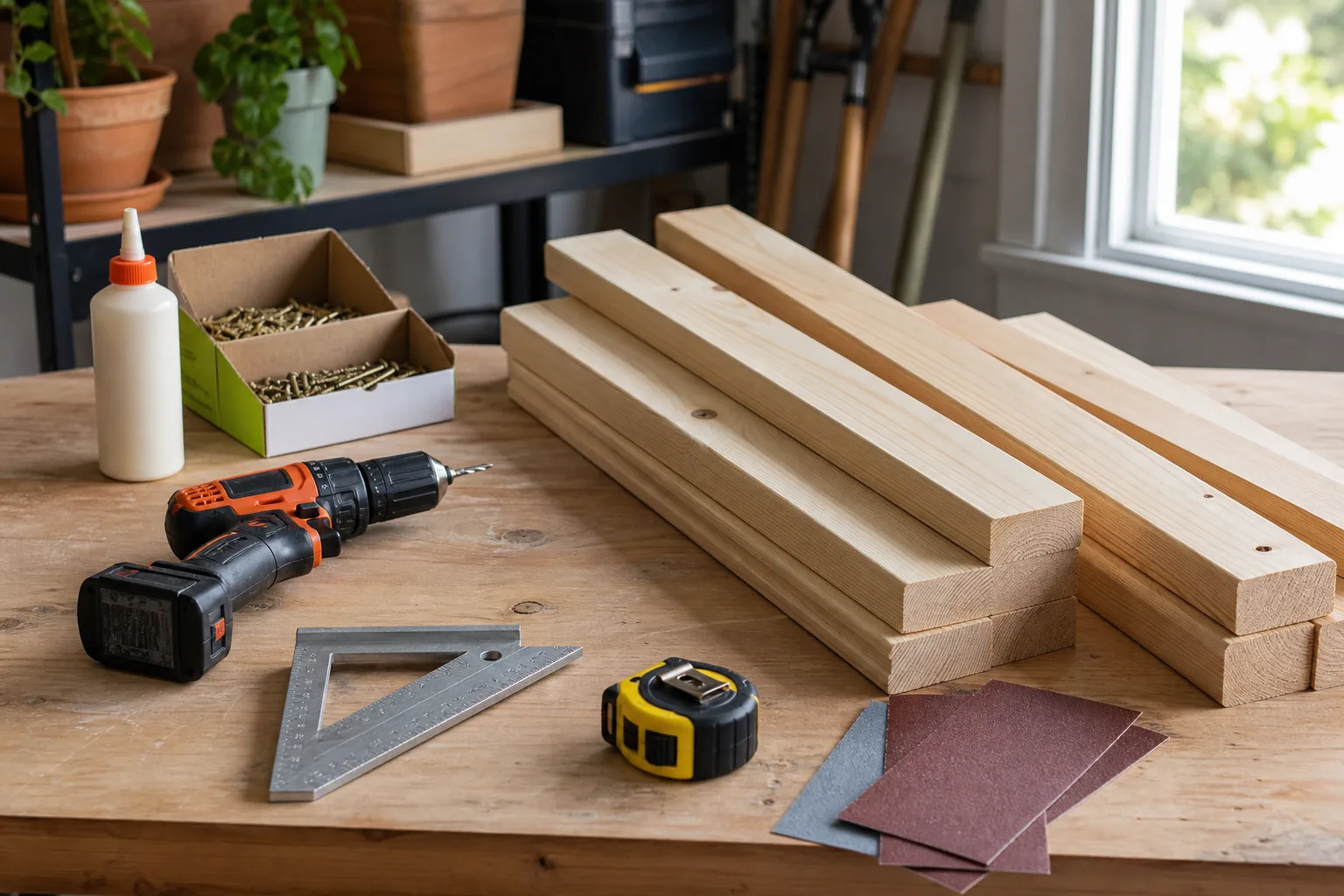
Mid-century tripod stands and acacia platforms
Mid-century modern tripod stand. Online plans for three-leg plant stands usually need a drill, saw, sander, and dowels or screws. Keep the tripod footprint wider than the pot diameter; a 10-inch pot wants roughly a 12–14-inch triangle between feet. Stain or paint legs and leave the top plate sealed on all sides.
Acacia wood plant stand. Acacia is naturally water-resistant and warm-toned — a strong choice for indoor risers that may see splash during watering. Seal end grain after cuts; acacia still stains floors if water sits in an unprotected saucer ring.
Custom plant stand wall (built version). Frame vertical 1×4 or 1×6 boards, mount to studs, and add adjustable brackets for pot hooks. Paint to match siding or interior trim.
Wallpaper-wrapped stand (custom finish on a simple box stand). Cover a plain cube or column stand with leftover wallpaper to match an office or bedroom wall — fast personality without new carpentry. Use exterior-rated adhesive and seal the top surface where saucers sit.
Style a Layered Display With Mixed Materials
Combining wire, wood, rattan, and iron
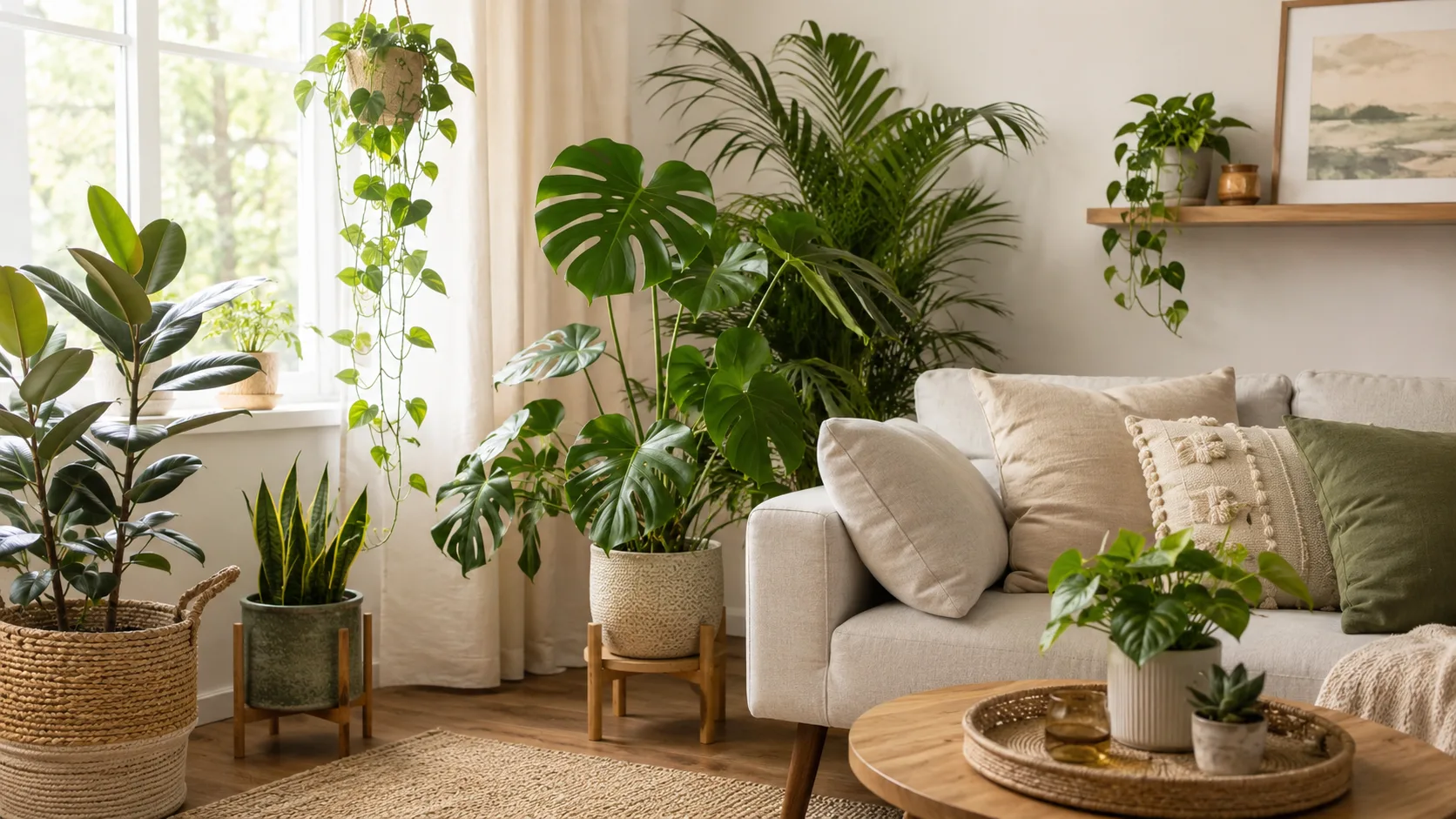
Assortment of different plant stands. The strongest room-scale displays mix wire, rattan, wood, and metal at varied heights rather than matching sets. Place the tallest wood or ladder piece in the back, medium iron or wire in the middle, and low stools or crates forward so leaves layer without blocking light to lower plants.
Repeat one color (black metal hooks, white painted wood, or natural rattan) so eclectic pieces still feel related. Step back six feet and confirm you can name one anchor plant in a single glance — if everything competes, remove one stand layer.
Rolling shelf + single pedestal combo. Pair a rolling tower on one side of a patio door with a single stump or pedestal on the other to balance visual weight.
When a DIY Stand Is the Wrong Choice
Skip DIY when stability cannot be solved without anchoring and you cannot anchor — for example, a rental wall that forbids brackets and a toddler who pulls on leaves. Buy or repurpose a low, wide stand instead of a tall ladder.
Skip pallet and tire builds for edible herbs you eat daily if you are uneasy about unknown treatments or heat buildup. Use labeled nursery pots on saucers instead.
Skip stacking lightweight ottomans or shoe pockets for large ceramic floor plants — the failure mode is sudden, not gradual.
When you need a precise load-rated multi-tier unit for dozens of propagation pots, a documented wood build with cedar shelves and locking casters beats a chain of repurposed hacks.
Safety Checklist Before You Load Pots
Run this list once the stand is built or placed, before you move plants:
Footprint: Base width ≥ pot diameter on every tier you load heavily.
Weight order: Heaviest pots lowest; top tier ≤ small dry succulents or empty decor pots.
Drainage: Saucer under every pot; no standing water on raw wood or carpet.
Anchoring: Wall strap or bracket on any stand taller than you are comfortable catching if it tips.
Casters: Locks engaged on slopes; test roll on wet tile before trusting a bar cart or rolling tower.
Outdoor seal: Cut ends sealed; rust touch-up on metal; re-check after first month of rain.
Pet and child pass: No tempting climbable ladder rungs within reach unless anchored.
Push-test the loaded stand from the side. If it rocks, fix structure before adding the next pot.
Conclusion
The best DIY plant stand is the one that survives real watering — wet weight, saucer drainage, and a footprint that matches your room. You can start today with a stool, stump, or bar cart from the zero-build list, graduate to ladders and rolling shelves when you need vertical space, and move to acacia or mid-century wood builds when repurpose pieces start to wobble. Mix materials for depth, anchor anything tall, and keep heavy ceramics low. Pick two or three ideas from this catalog, load-test them empty, then bring plants over one tier at a time so your display stays gorgeous and upright.