Do You Need a Moss Pole for a Monstera? When It Helps
A moss pole can help a Monstera climb, but it isn't required. Compare moss poles, stakes, trellises and planks, then choose and secure support safely.
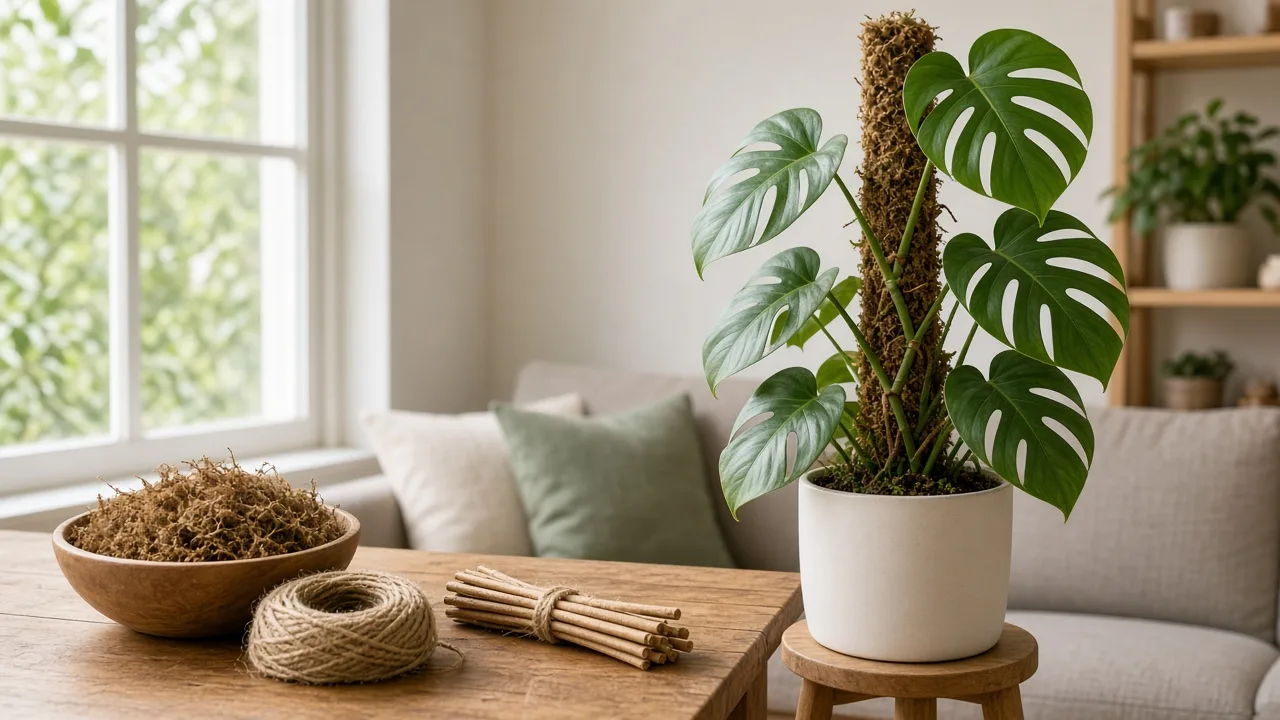
Short answer: no, but a climbing Monstera needs support
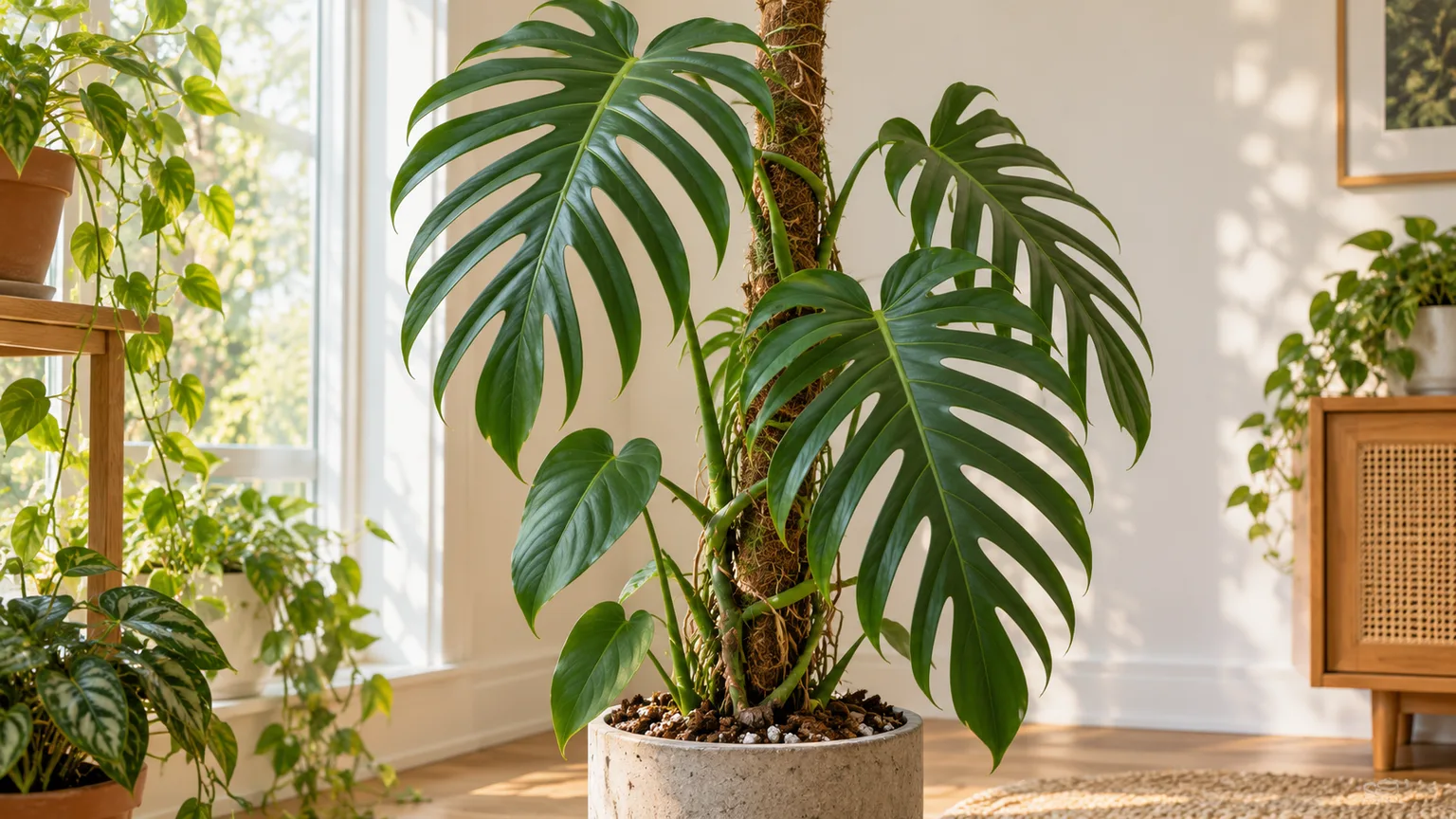
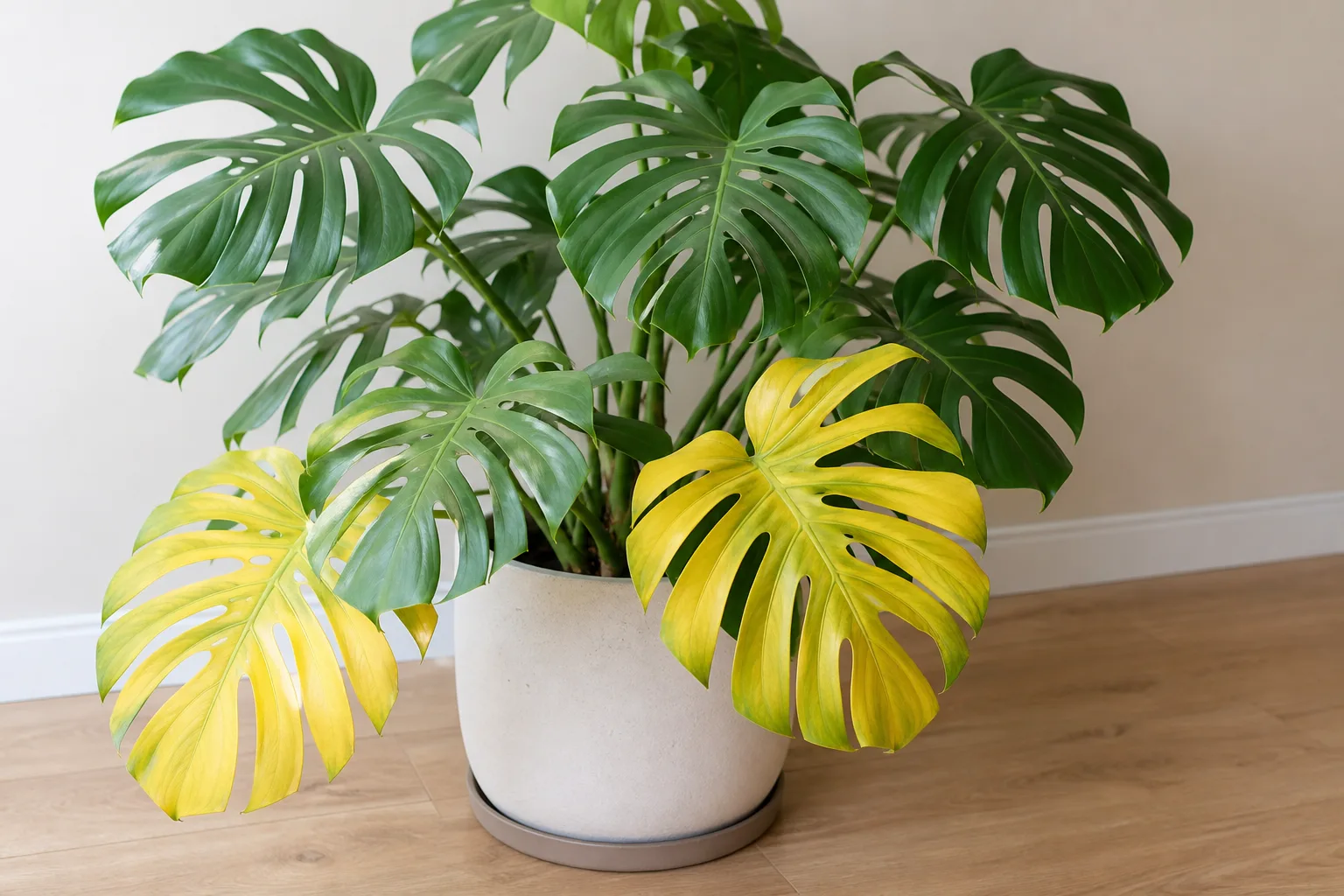
No—a Monstera can grow without a moss pole. What a mature, climbing Monstera often needs is a stable surface or support to lean against. A moss pole is one way to provide it, especially if you want aerial roots to attach to a moist, rootable surface; a plain stake, board, or trellis can keep the stems upright without that extra moisture routine.
The useful question is not whether every Monstera needs moss. It is whether your plant is starting to climb, becoming top-heavy, or taking up more room than you want—and whether you want to maintain a damp pole. If the plant is small and self-supporting, you can wait. If it is leaning or spreading, choose the simplest support that meets your goal.
Why Monstera climbs
In a tropical forest, Monstera deliciosa begins on the ground and climbs when it encounters a tree. Its long aerial roots help it attach to trunks and branches as the vine moves upward; once climbing, it can keep growing toward the canopy. NC State Extension describes it as a climbing vine that becomes epiphytic after it reaches a sturdy tree, while the National Tropical Botanical Garden documents its climbing habit and roots that grow from the stem and anchor against or into the ground.
A pole is a convenient indoor stand-in for that vertical surface. It does not turn a Monstera into a different kind of plant, and it is not a biological requirement for keeping one alive. Without a surface, the stem may lean, sprawl, or need more room; with a well-anchored support, you can guide the vine upward and reduce the chance that a heavy stem will tip or break. (NC State Extension’s Monstera profile; National Tropical Botanical Garden’s plant database)
Aerial roots anchor stems; they are not a watering system
Aerial roots grow from the stem, often near a node, rather than from the potting mix. In nature, they help the vine grip a surface and may reach the ground; indoors, they can attach to a damp moss pole, rest against a board, or extend into open air. They are not a sign that the plant is sick or that it needs a larger pot.
They also do not mean you should water the soil more often. Aerial roots can help the plant attach and take up moisture, but the main root ball still needs an airy potting mix and its own sensible watering rhythm. Penn State Extension notes that indoor Monsteras can be trained on moss sticks, trellises, bamboo stakes, or moss-covered boards; the plant should be attached gently rather than forced against the support. (Penn State Extension’s Monstera guide)
What a moss pole changes—and what it does not
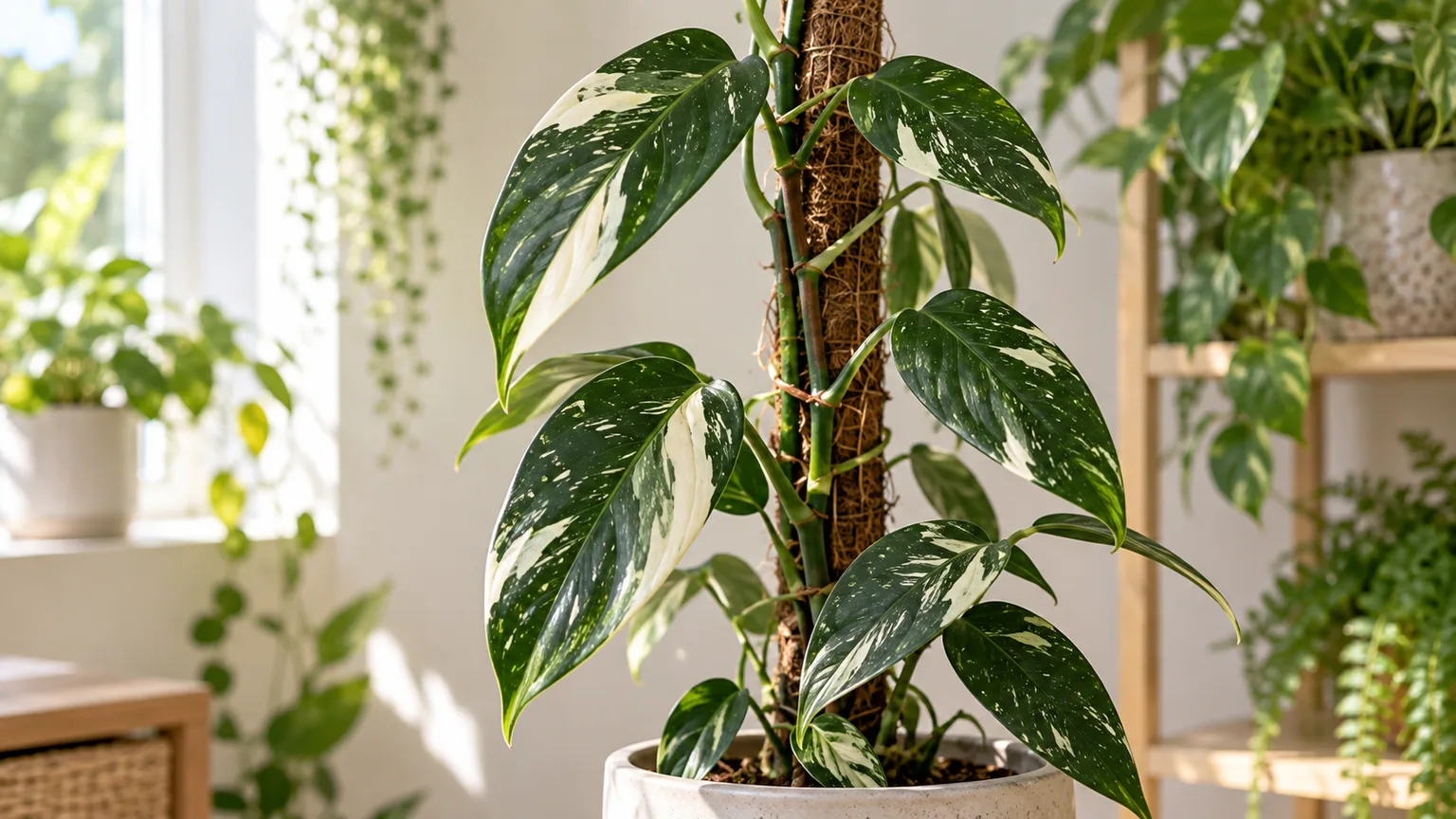
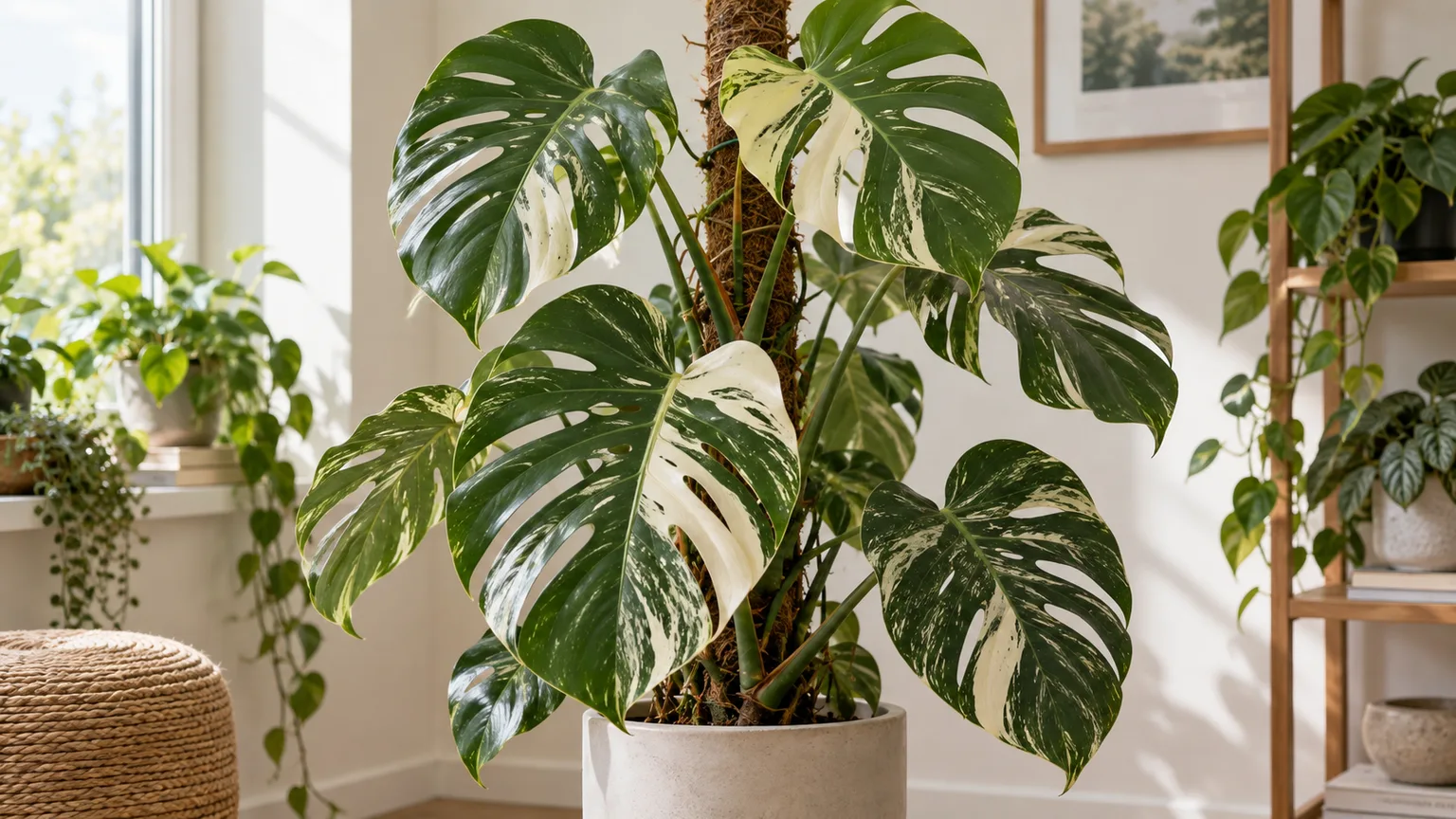
A moss pole gives the vine a narrow vertical surface that aerial roots can grow into when the moss stays damp. That can make the plant easier to train upward, add a rooting surface, and help a tall stem stay close to the pole instead of bowing across the room. The RHS recommends training or tying Swiss cheese plants to a moss pole and notes that roots can grow into moist moss.
A pole does not guarantee huge leaves, dramatic splits, or fast growth. A Monstera’s leaves change as the plant matures and climbs, but the quality of light and general growing conditions still matter; Fine Gardening notes that low light slows growth and can limit fenestration. Think of a moss pole as a structure that makes climbing possible—not a shortcut that replaces light, time, or healthy roots. (RHS growing guide; Fine Gardening’s Monstera guide)
A pole also adds work. Sphagnum moss dries, so keeping it moist enough for roots to attach may mean checking and rewetting it; that maintenance is unnecessary if you only need mechanical support. A pole is a poor fit if you want a low-maintenance plant, cannot keep it upright, or do not want extra moisture near the pot. In those cases, use a dry support and train the stem with soft ties.
When a moss pole is worth adding
Choose a moss pole when your Monstera is actively climbing and you want it to root along the support, rather than simply lean against a stake. It makes particular sense for a large M. deliciosa with a long stem, for a plant whose aerial roots are already reaching outward, or for a grower who wants an upright, tree-like silhouette in a limited floor footprint. The RHS notes that climbing plants can develop larger, more mature leaves with more fenestrations; that is a possible result of the plant maturing as it climbs, not a promise that a moss pole alone will produce a particular leaf.
A moss pole is also useful when you want the support itself to hold the stem close and encourage a single vertical line. Use it when you are willing to keep the pole surface moist enough for root attachment and to extend or replace it as the plant grows. If you cannot commit to that upkeep, the plant can still climb against a trellis or a dry board while you secure it manually.
You can wait if the plant is young, upright, and not taking up too much room. A short Monstera with a few leaves may not need any support yet. Let the growth tip and stem tell you what is needed: if it is leaning into a window, tipping the pot, or stretching sideways, add support before the stem has to carry a larger canopy.
When a stake, trellis, or plank is enough
If your goal is simply to stop a stem from flopping, moss is optional. NC State Extension says sturdy support can prevent Monstera stems from breaking, and Penn State Extension lists several alternatives—including trellises, bamboo stakes, and boards—as workable supports. A stake or trellis is often the better choice when you want a stable plant but do not want to mist or soak a moss surface.
A bamboo or coated stake works for one main stem that needs a simple upright guide. A trellis or ladder-shaped support is better for several stems, a plant you want to fan out, or a vine that has more than one direction of growth. A flat wooden board gives aerial roots a surface to grip without requiring a column of damp moss, and it can suit a shingling Monstera such as M. dubia better than a narrow pole.
Choose by the form you want, not by claims that one material makes a plant healthier. A Monstera can grow with its stem secured to a dry structure; it may not root into that surface, so you will continue to use ties as the plant grows. BBC Gardeners’ World makes the same practical point for plant supports generally: match the structure to the climber and tie growth in with soft material where needed. (BBC Gardeners’ World’s plant-support guide)
Match the support to the plant and your routine
The right support depends on three things: how many stems need guiding, whether you want roots to attach, and how much upkeep you are prepared to do. Also consider the pot: a heavy, broad-based container is more stable than a lightweight nursery pot beneath a large canopy. If several Monstera cuttings share one pot, a single pole in the middle may not support every stem; a wider trellis or more than one support can be easier to position.
A quick comparison of four options
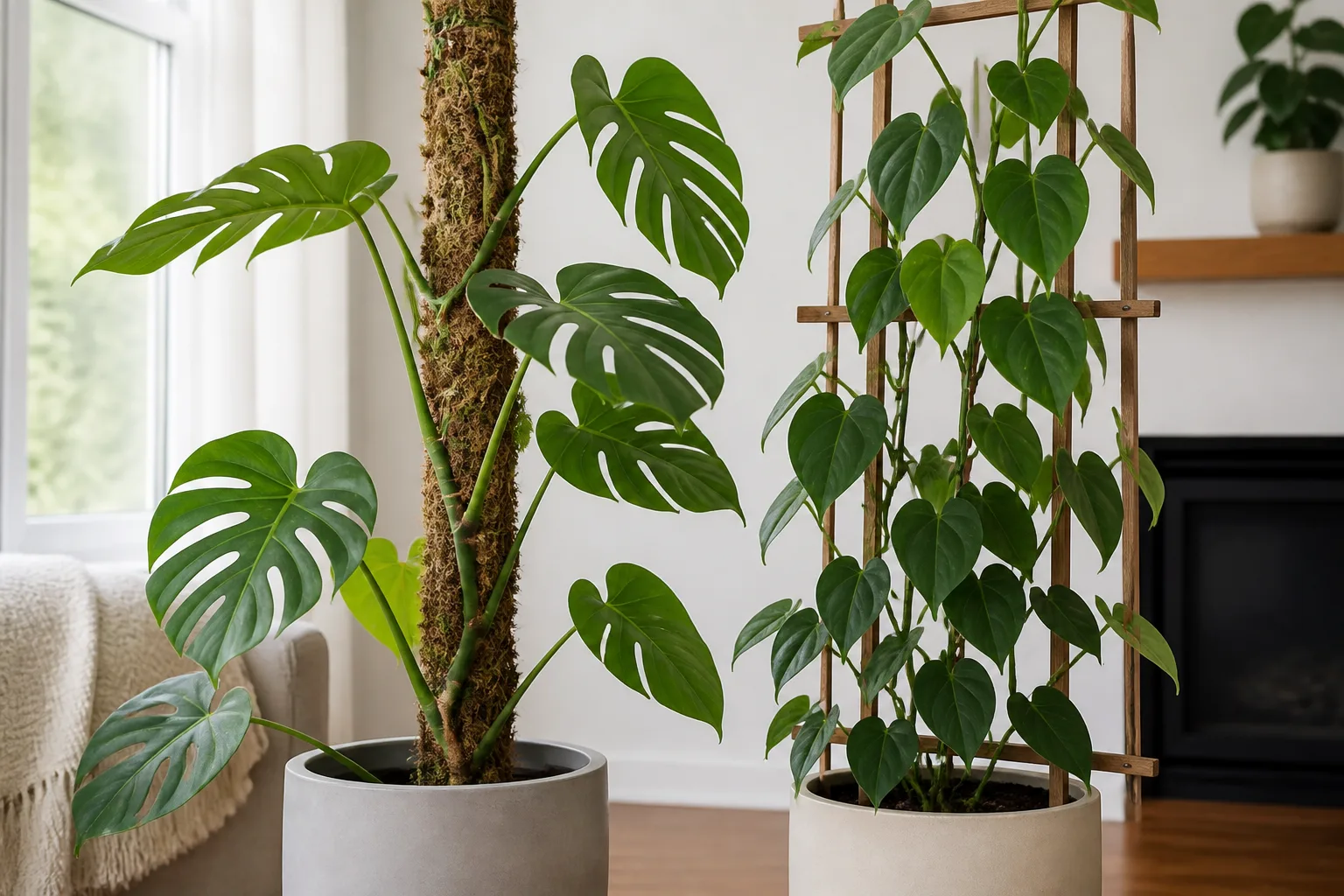
| Support | Best for | Aerial-root attachment | Upkeep |
|---|---|---|---|
| Sphagnum moss pole | One upright climbing stem; rooting into the support | Possible when the moss stays moist | Highest; inspect and rewet the moss as needed |
| Coir pole | A simple vertical guide with a drier surface | Less dependable than damp moss | Lower; still secure the stem with ties |
| Stake | A small or single stem that only needs bracing | Not the goal | Lowest; check ties and stability as the plant grows |
| Trellis or board | Multiple stems, a wider display, or a flat climbing surface | Roots may grip a board; no damp moss column | Low to moderate; guide stems onto it as they grow |
These are functional differences, not strict rules. A sturdy stake can support a large plant if it is anchored well, and a moss pole will not help if it is too flimsy or loose in the pot. If you prefer a trailing Monstera, a hanging position can also work for some species and younger plants; you do not have to train every vine upward.
Choose pole height and stability for future growth
Pick a support that reaches above the plant’s current growing tip, with enough room to guide the next several inches of stem. Do not choose a pole based only on the height of the leaves: the stem’s attachment points and the plant’s future growth matter more. If the support has stackable extensions, confirm that the connection is secure before adding another section.
Stability matters more than extra height. The support should be firm when you gently nudge it, and the pot should not rock when the plant leans on it. Use a pot with enough weight and a base wide enough for the plant’s canopy; do not try to compensate for a loose pole by packing gravel or rocks around it in the soil. That can reduce space for roots without fixing a poorly anchored support.
Orient the plant so its aerial-root side faces the support, then set the pole just behind the main stem. If the plant has several stems, orient the support toward the stems you actually want to train. Leave room for petioles—the leaf stalks—to turn toward the light instead of trapping every leaf against the pole.
Add a pole without damaging roots
The easiest time to place a pole is while repotting, because you can position it beside the root ball rather than driving it through established roots. But repotting is not mandatory: if the pot is stable and there is a clear gap near the stem, insert the support slowly along the inner edge of the pot and stop if you feel resistance. Do not push hard through a dense root mass just to make the pole stand in the exact spot you imagined.
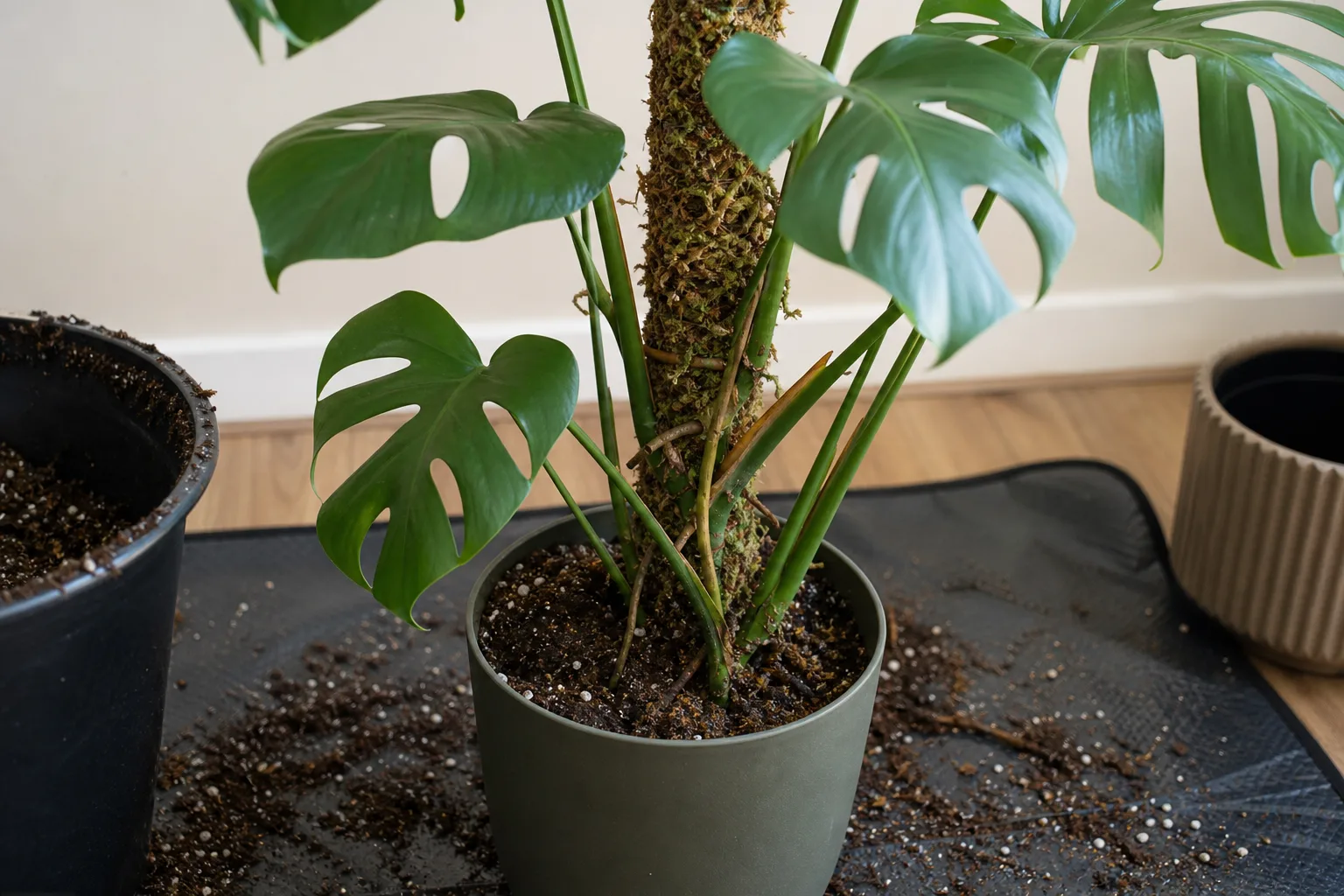
Set the base deep enough that the pole is held by the potting mix, but keep the plant’s existing root crown at its original level. For a tall plant, anchor the pole itself to the container if the design allows, or use a heavier pot; the plant ties should not be asked to hold up a loose pole. If the pot is already crowded with roots, wait until the next necessary repot rather than moving the plant into a much larger pot solely to fit a pole.
Tie the stem—not the petioles
Use soft plant tape, a fabric tie, or a loose loop of soft twine. Secure the main stem near a node, then add another loose tie higher up if the plant needs it; ties should hold the stem against the support without cutting into the tissue or squeezing a node. Avoid attaching a tie around a leaf petiole, which needs to move and angle its leaf toward the light.
Do not bend a mature stem sharply to force it vertical. If the vine has grown sideways, bring it closer in stages with a few ties over time. Penn State Extension advises gentle attachment, and the general support guidance from BBC Gardeners’ World favors soft ties; that is a safer approach than pulling the stem tight or using a hard zip tie around living tissue. (Penn State Extension; BBC Gardeners’ World)
Do Monstera aerial roots need to go into the pole?
No. Aerial roots do not have to touch a pole for the plant to grow, and you do not need to train every root. If a root naturally reaches the moss, it may attach there; if it hangs into the air, leave it alone unless it is in your way. You can gently guide a flexible root toward the pole or back toward the potting mix, but do not yank, coil, or staple a stiff root into place.

Aerial roots that reach the floor, wall, or a neighboring plant can be tucked toward the pole, redirected into the pot, or trimmed if they are damaged or genuinely obstructive. Use clean scissors and make a small cut rather than tearing at the stem. Pruning an aerial root is a cosmetic or space-management choice; it will not make the plant stop producing new ones.
Keep a moss pole damp only if you want roots to attach
A moss pole can be a dry brace or a moist rooting surface; decide which job you want before adopting a watering routine. If you want roots to enter sphagnum moss, keep the surface evenly damp rather than saturated and rewet it when it dries. Do not follow a fixed misting calendar: a warm, bright room dries the pole faster than a cool, dim one, and different pole materials hold water differently.
Moistening the pole is separate from watering the pot. Continue to check the potting mix and water the root ball when its normal dry-down indicates it is ready; do not water the soil more often just because the moss looks dry. The RHS notes that a Monstera can root into moist moss, but that does not make a wet pole a substitute for a well-draining mix or a reason to keep the pot constantly damp. If the pole is only there for support, it can stay dry and needs no misting.
If the moss smells sour, stays soggy, or develops persistent mold, let it dry and improve airflow; do not add more water to encourage attachment. If maintaining the pole becomes a chore, switch to a dry stake, board, or trellis at the next safe opportunity. The plant’s growth habit does not obligate you to keep a moss pole wet.
Can you add support to a mature Monstera?
Yes, but a large plant is heavier and its stems are less flexible, so plan the move before lifting or tugging. Ask someone to steady the canopy if necessary, identify the main stem and the direction its aerial roots face, and choose a support tall and sturdy enough to carry the next stage of growth. When you can, add it during a repot that was already due.
If you are adding a pole without repotting, make a small gap at the pot edge, ease the pole down slowly, and stop if it catches on a root. It is better to secure the plant to a slightly off-center support than to spear the middle of the root ball. Once the pole is stable, bring one section of the stem toward it with a loose tie; do not try to press the whole vine flat in a single session.
A mature plant may have aerial roots attached to a wall, another plant, or an old support. Free only the roots you can release without tearing them, and leave firmly attached roots in place if removal would damage the stem. If the existing arrangement is stable, there is no need to dismantle it merely because a moss pole is fashionable.
Troubleshoot a leaning or unhappy plant
A support solves posture, not every cause of weak or awkward growth. If the plant is stretching toward the window, moving it to brighter indirect light may matter more than buying a taller pole. If it is leaning because the pot is too light, use a more stable container or anchor the pole independently instead of tightening the ties until they bite.
Toppling, no attachment, and smaller leaves
The pole leans or the pot tips: the support is not anchored deeply or the container is too light for the canopy. Stabilize the pole and pot before adding height; a heavy plant with a loose support can fall as one unit.
Aerial roots are not attaching: the pole may be dry, or the roots may simply be growing elsewhere. If root attachment is the goal, keep the moss moist and guide one or two roots gently toward it. If attachment is not important, use ties and stop worrying about whether the roots have latched on.
New leaves remain small or lack splits: do not assume the pole failed. New leaves can be smaller when a plant is still juvenile, recently pruned, adjusting to a move, or growing in low light. Fine Gardening notes the role of light in Monstera growth and fenestration, while the RHS links more mature foliage with climbing; neither source says a moss pole alone forces mature leaves. Give the plant stable light and time, and avoid repeatedly changing its position or support.
The stem feels pinched or marked: loosen or move the tie immediately. Replace narrow, rigid fasteners with a soft loop that can be checked and adjusted as the stem thickens.
Conclusion: choose support for the habit you want
A moss pole is useful when you want a Monstera to climb and you are willing to maintain a moist surface for aerial-root attachment. It is optional if the plant is small or self-supporting, and it is not the only way to prevent a large stem from leaning or breaking. Choose a moss pole for rooting, a stake for simple bracing, or a trellis or board for a wider climbing path.
Install support gently, orient the aerial-root side toward it, and tie the stem loosely while keeping petioles free. If your Monstera is upright and fits the space, you can leave it alone for now; add support when its growth—not a rule about moss—shows that it needs one.