Monstera Leaves: Holes, Yellowing, Curling & Fixes
Diagnose Monstera leaves by pattern, texture, age, and soil moisture. Get practical next steps for fenestrations, yellowing, brown edges, curling, and drooping.
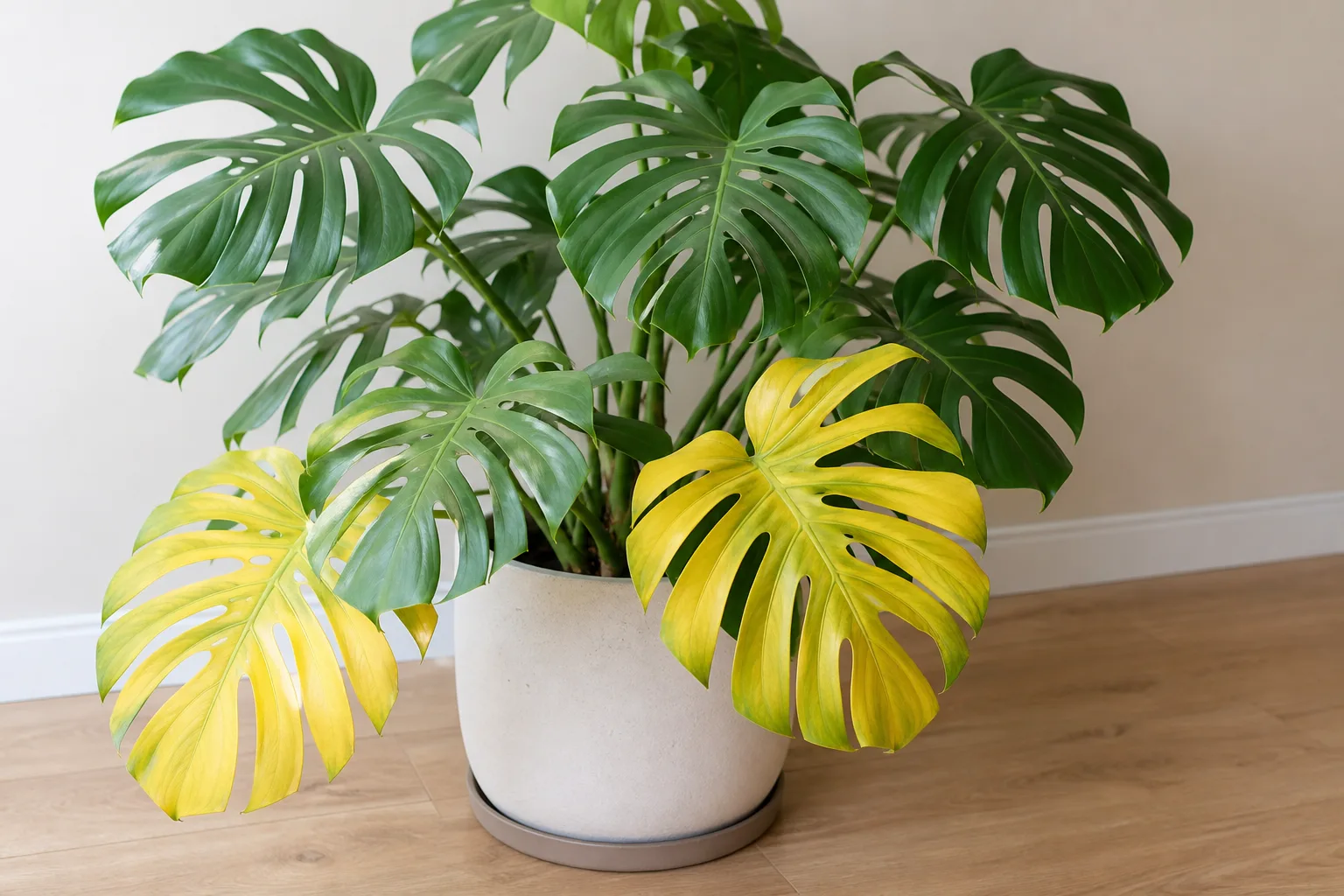
Monstera leaves are a record of growth as much as a report on health. A neat row of openings may be normal fenestration; a soft yellow leaf on a plant sitting in wet mix may be an early warning that its roots are struggling. Before you water, fertilize, move, or prune, compare the affected leaf with the rest of the plant and check what is happening below the soil.
That order matters because several different problems can produce a similar-looking leaf. Yellowing alone does not diagnose overwatering, and a curl does not prove the plant is thirsty. The useful clues are the pattern, the leaf’s age and position, its texture, the soil’s moisture, and whether the change is affecting one leaf or the whole vine.
First, tell normal leaf development from damage
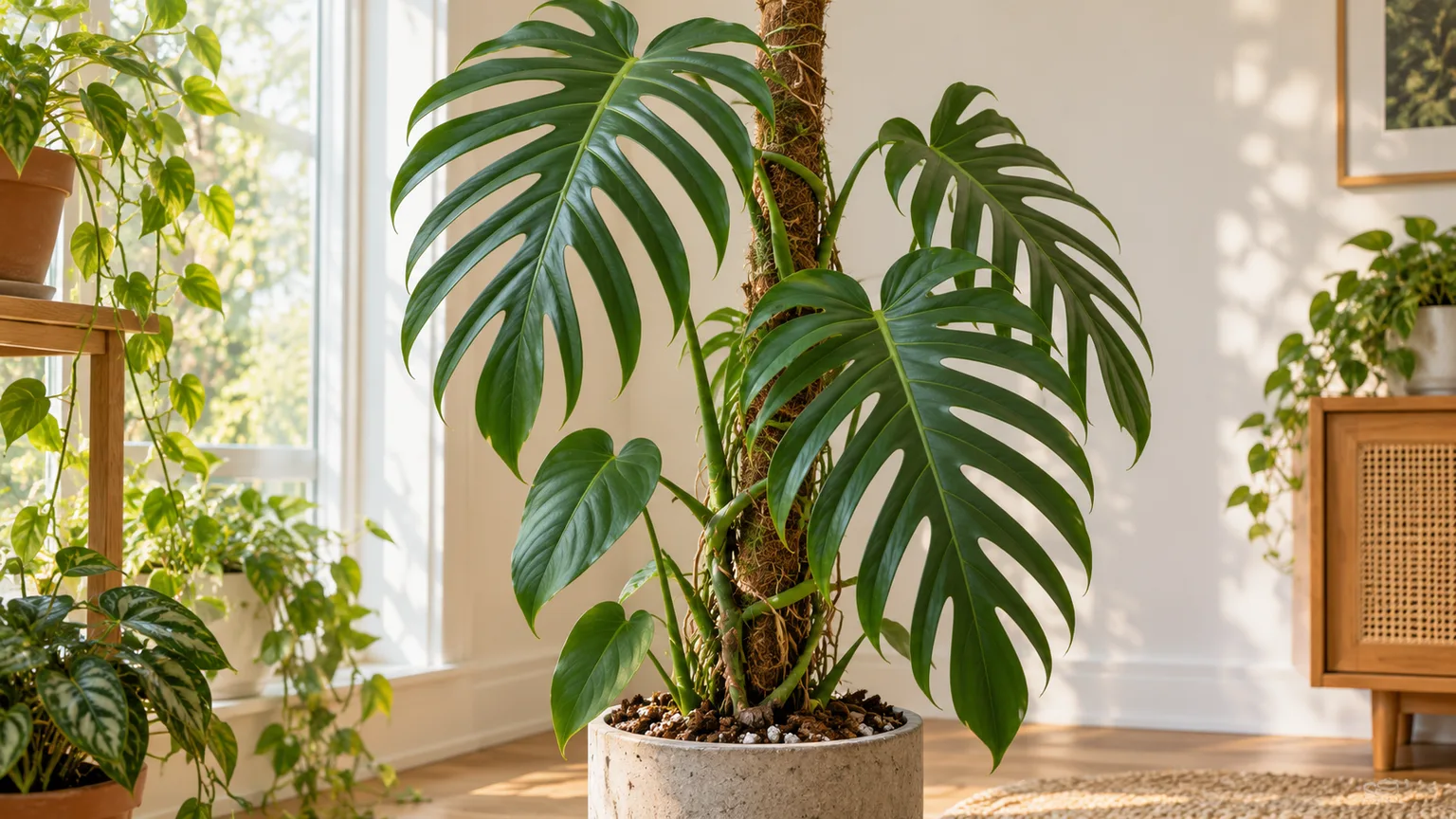
A healthy Monstera deliciosa typically grows broad, glossy, heart-shaped leaves. Juvenile leaves are often whole or only lightly divided; as a climbing plant matures, later leaves may grow larger and develop slits along the edges and holes within the blade. Those natural openings are called fenestrations. A plant can have both solid and fenestrated leaves at the same time because each leaf reflects the conditions and maturity of the shoot when that leaf developed.
A few differences help you decide whether an opening is natural. Fenestrations tend to appear in a repeated, balanced pattern along the leaf blade and veins, and the surrounding tissue stays smooth, firm, and green. A tear is more likely to have a ragged line, a crease, a pale or dried edge, or a path that continues from the leaf margin. Chewing damage may leave irregular bites or small holes with damaged, browned edges; check the undersides and nearby stems for insects, webbing, frass, or sticky residue. A damaged leaf does not necessarily mean there is a pest outbreak, but repeated new damage deserves inspection.
Fenestrations versus tears and chewing
A fenestration is not a wound that heals into a hole: it is part of how a particular leaf formed. Once a leaf has hardened, it will not grow new natural openings because you changed the lighting or installed a pole. Conversely, a leaf with an accidental tear will not repair its missing tissue. Judge a care change by the next leaves, not by waiting for an old leaf to remodel.
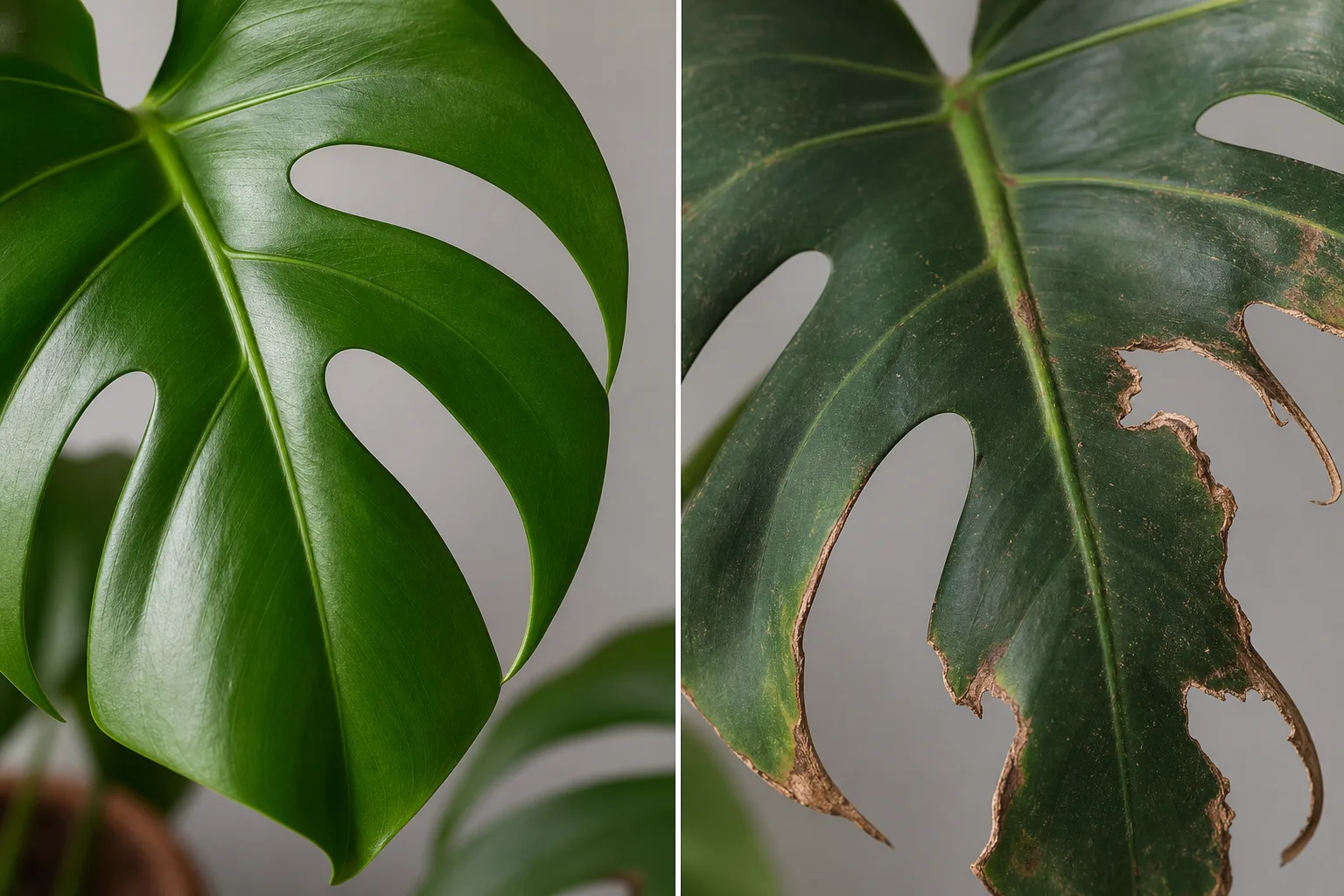
This distinction is especially useful with Monstera adansonii, whose leaves usually have conspicuous holes, and Monstera deliciosa, which may develop both internal holes and deep edge splits as it matures. Other plants sold under “Swiss cheese plant” names can have different leaf patterns. If the plant’s identity is uncertain, compare its leaf, stem, and growth habit with a reliable species reference rather than assuming every Monstera should look like the same poster plant.
Why Monstera leaves develop holes—and when they do not
The reliable houseplant-level explanation is developmental: mature growth on a climbing Monstera tends to carry more fenestrations than juvenile growth. The Royal Horticultural Society notes that Swiss cheese plants usually begin producing holey leaves after they have grown for a few years, that low light tends to reduce the number of holes, and that a plant trained to climb often makes larger, more mature leaves with more fenestrations. There is no dependable “three feet tall” threshold. Species, starting size, light, root health, and how the shoot grows all change the pace.
Why the openings evolved is a separate question. The common ideas—that holes help light pass to lower leaves, channel rain toward roots, or reduce wind resistance—are plausible, but they should not be treated as proven rules for indoor care. A small field study of Monstera deliciosa in Costa Rica tested water capture, wind damage, and herbivory; it found a water-capture benefit under those conditions, but did not find support for the tested wind or herbivory explanations. That study was limited to particular plants and field conditions, so it does not establish one universal function for every Monstera species or every leaf (University of South Florida Digital Commons field study). For a houseplant owner, the practical takeaway is simpler: provide conditions for healthy mature growth instead of trying to create holes by cutting or spraying leaves.
Age, species, light, and climbing support
First confirm what you own. Monstera deliciosa and M. adansonii are commonly grown indoors and produce fenestrated leaves, though their leaf proportions and hole patterns differ. Not every species or cultivar in the genus develops the same dramatic splits, so a solid leaf can be normal for the plant you have. Even on a fenestrating species, a recent cutting, young plant, or new shoot may still be making juvenile leaves.
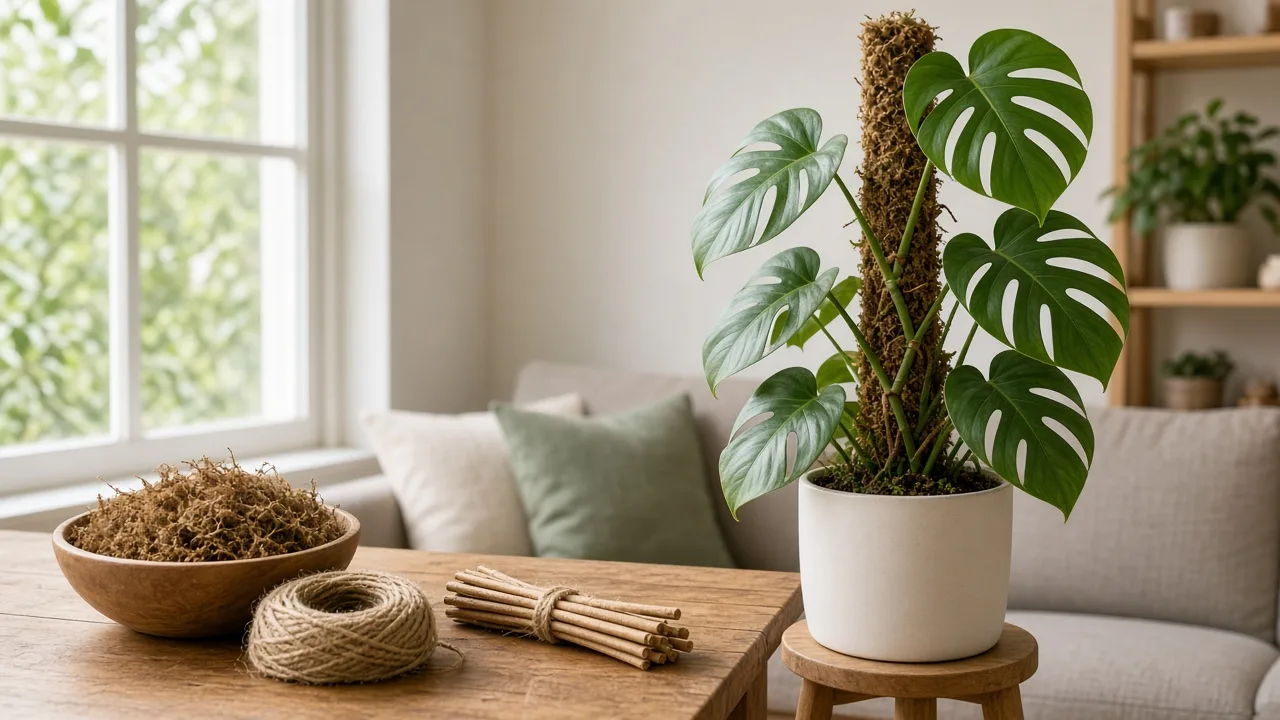
Next, consider whether the plant can grow upward. In nature, Monstera is a climbing vine that uses aerial roots to attach to a support; a stable moss pole, coir pole, or trellis gives a houseplant a vertical surface to climb. The RHS describes support as a way to encourage larger, more mature leaves with more holes, but support is not a switch that forces the next leaf to split. If the pole is loose, the stem is not secured to it, or the plant is short on light, simply placing a pole beside the pot may make little difference.
Gardening Know How also puts species, light, and plant maturity among the first things to check when fenestrations are missing (Monstera leaves not splitting). Treat those as conditions to review, not a countdown: a specific age or leaf size cannot promise that the next blade will have holes.
Low light is a common bottleneck. If the newest leaves are getting smaller, stems are stretching between leaves, or the plant is leaning hard toward a window, it may not be receiving enough usable light to sustain larger growth. Bright, indirect light is the goal; direct afternoon sun through glass can scorch the foliage. A grow light can help in a dim room, but consistency and distance matter, and it cannot compensate for waterlogged roots. The RHS covers these light and support points in its Swiss cheese plant growing guide.
Diagnose the pattern before changing care
Treat leaf color as a clue, not a prescription. Before making changes, record which leaf changed first, whether it is old or new, whether the yellow or brown area is spreading, and what the soil feels like a few inches below the surface. Check whether water runs freely from the drainage holes and whether the pot is still standing in runoff. Look under the leaves and along the stems for fine webbing, cottony clusters, scale-like bumps, or tiny moving insects.
| What you see | Check next | Safer first action |
|---|---|---|
| One old bottom leaf slowly fading while the rest of the vine grows | Whether new leaves are healthy and the change is limited to the oldest leaf | Monitor; do not repot or fertilize on this clue alone |
| Several yellow leaves plus persistently wet mix | Drainage, pot weight, soil odor, stem firmness, and roots if the decline continues | Empty the saucer and let the mix begin drying; inspect roots if stems or roots are soft |
| Crispy brown margins with a light, dry pot | Moisture deeper in the root ball, room humidity, heat vents, and drafts | Water thoroughly if the root ball is dry; correct the dry-air or heat source if it is not |
| A bleached or papery patch on the window-facing side | Recent movement into direct sun | Move to bright indirect light and acclimate gradually to any brighter position |
| Small pale speckles, sticky residue, webbing, or repeated holes | Leaf undersides, petioles, and new growth | Isolate and identify the pest before choosing a treatment |
| Curling with wet mix or a sour smell | Root condition and drainage | Stop adding water; investigate the root zone |
The first check is cheap and reversible: feel the mix and confirm drainage. A finger test, wooden skewer, or pot-weight comparison is more useful than a watering calendar because drying time changes with pot size, temperature, light, and season. The Brooklyn Botanic Garden also recommends reading leaf clues alongside the roots and growing conditions in its Monstera troubleshooting guidance. If two causes seem possible, do not stack several fixes at once; change the most likely constraint, then observe the next few days and the next leaf.
A five-minute evidence check
- Map the damage. Is it on one old leaf, the newest leaf, or several leaves across the plant? Is the pattern uniform, spotted, patchy, or limited to an edge?
- Feel the tissue. Firm yellowing, dry crispness, a water-soaked patch, and a soft black area point in different directions.
- Check moisture below the surface. The top may dry before the center of a large pot. A wet, heavy mix several days after watering is different from a dry root ball that has pulled away from the pot.
- Trace recent changes. A move to a sunny window, cold draft, heat vent, repotting, missed watering, or fresh fertilizer can help explain when the symptom began.
- Look for pests before treating. Check the leaf undersides, petioles, and stem joints with bright light. Do not apply a pesticide or fertilizer just because a leaf looks unhealthy.
Take a quick photo before making the first correction. Leaf problems unfold slowly, and a photo makes it easier to tell whether a mark is spreading or whether a new leaf is emerging in better condition.
Yellow leaves: old leaf or root-zone alarm?
Yellowing is a broad stress response, not a diagnosis by itself. It can accompany normal aging, roots kept too wet, drought, a sudden change in light or temperature, pests, or nutrient problems. Look at which leaves are yellowing and pair that with the moisture and drainage check; that combination is much more informative than the shade of yellow alone.
Yellowing starts at the base
If just one of the oldest lower leaves turns yellow gradually while the rest of the plant remains firm and is still producing growth, natural leaf turnover is a reasonable explanation. Monstera does not keep every leaf indefinitely, and an old leaf may be shed as the vine adds new growth. You can leave it while it still has substantial green tissue. A single yellow lower leaf is not, by itself, evidence that the pot is too small or the plant needs fertilizer.
The pattern changes the urgency. Several lower leaves yellowing in a short span, yellowing that reaches newer leaves, or a yellow leaf paired with blackened or soft stems deserves a closer check. Feel the mix and lift the nursery pot if possible: if it remains heavy and wet long after watering, drainage or root function may be failing. If the plant otherwise looks healthy and only one old leaf is fading, leave the roots undisturbed and watch what the next leaf does.
Several leaves yellow at once
When yellowing appears across multiple leaves, check the root zone before adding water or food. A pot without working drainage, a decorative cachepot holding runoff, compacted mix, or a container far larger than the root ball can keep roots oxygen-starved. The RHS advises using an open, well-drained mix and letting it become almost dry before watering thoroughly; it also warns that waterlogged compost can lead to root rot. That is a better guide than a fixed weekly schedule because the plant’s drying rate changes over the year.
If the soil is soggy and leaves are declining, stop watering and remove standing water. If the stem base is firm, give the mix time to dry and improve airflow around the pot. If the plant is collapsing, the mix smells sour, or roots are black, mushy, or hollow, unpot it and inspect the root ball. Trim only clearly rotten roots with clean shears, then use fresh, airy potting mix and a pot only slightly larger than the remaining roots. Do not repot a stable plant solely because one leaf yellowed; repotting is another stress and will not correct a light problem.
If the root ball is dry all the way through, water it evenly until excess drains out, then empty the saucer. In a tightly packed root ball, water may run down the sides without wetting the center; check again after watering rather than assuming the plant is hydrated. When the moisture is appropriate but new leaves remain pale or growth is stalled, inspect for pests and review light first. Fertilizer is most useful when the plant is actively growing and the basic root conditions are sound; more fertilizer will not fix damaged roots and may add salt stress.
Brown edges, spots, and scorched patches
“Brown” can describe dry margins, a single sunburned patch, dark soft lesions, or old damage. Touch the area if it is safe to do so and compare where it appears. Crispy edges that start at tips often fit water loss from dry soil, low humidity, or hot airflow. A pale tan patch on the side facing strong direct sun suggests scorch. Dark, soft spots combined with wet mix move root stress higher on the list. None of these patterns is perfect on its own, so confirm with the pot and the history.
Match texture and location to the likely cause
Dry air can make leaf tips or margins brown, particularly in heated rooms or near forced-air vents. Check humidity with a small hygrometer if the room feels dry; increasing humidity with a room humidifier is more consistent than relying on a brief mist. Do not compensate for crisp edges by watering more often if the mix is still damp. A Monstera can have dry air and wet roots at the same time.
Direct sun causes a different clue: the most exposed areas may bleach or turn papery, especially after a plant moves from a dim room to a sunny window. Move it back to bright indirect light and, if you want it in a brighter position, increase exposure over days rather than putting the leaves into strong afternoon sun all at once. A scorched area will not turn green again, but later leaves can emerge without the same mark.
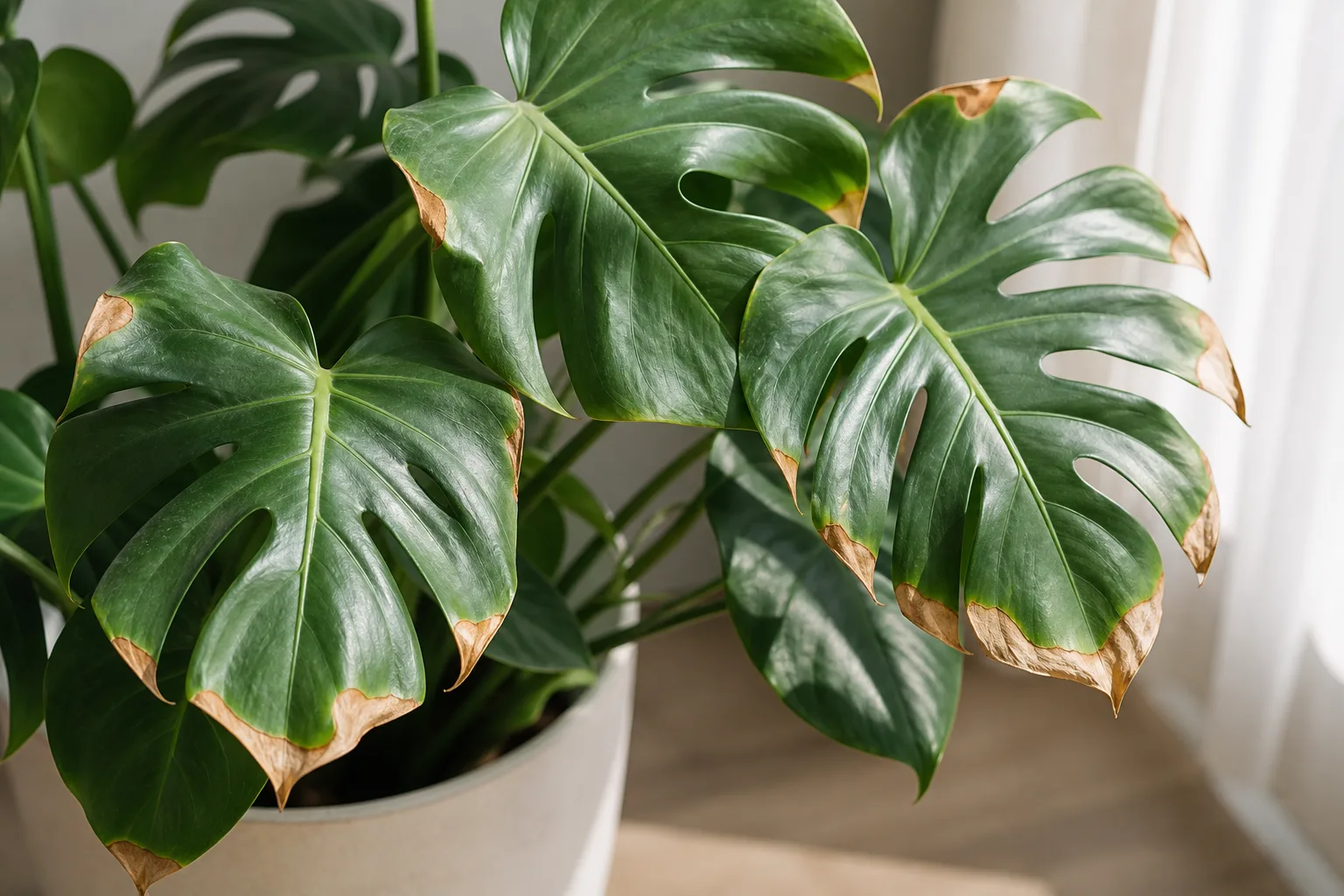
Mineral buildup or overfeeding can also damage margins, especially when fertilizer is applied too often or the potting mix has accumulated salts. Do not respond to yellow or brown edges by adding a stronger feed. If a recent fertilizing mistake is likely and the pot drains freely, flush the mix with plain water and let it drain fully; then pause feeding until active growth resumes and follow the product label at a conservative rate. Hard water may leave deposits on soil or pots, but white crust alone does not prove that it caused a leaf symptom.
Look more closely if spots are multiplying, have yellow halos, or appear on leaves that stay wet or have poor airflow. Separate the plant from nearby houseplants while you inspect it, and remove only badly affected tissue if the condition is spreading. A stable dry edge can simply be old damage. The Royal Horticultural Society’s Monstera guide notes that dry air can brown edges and direct sun can scorch leaves; those clues are most useful when paired with the plant’s position and the soil check.
Curling, drooping, and leaning
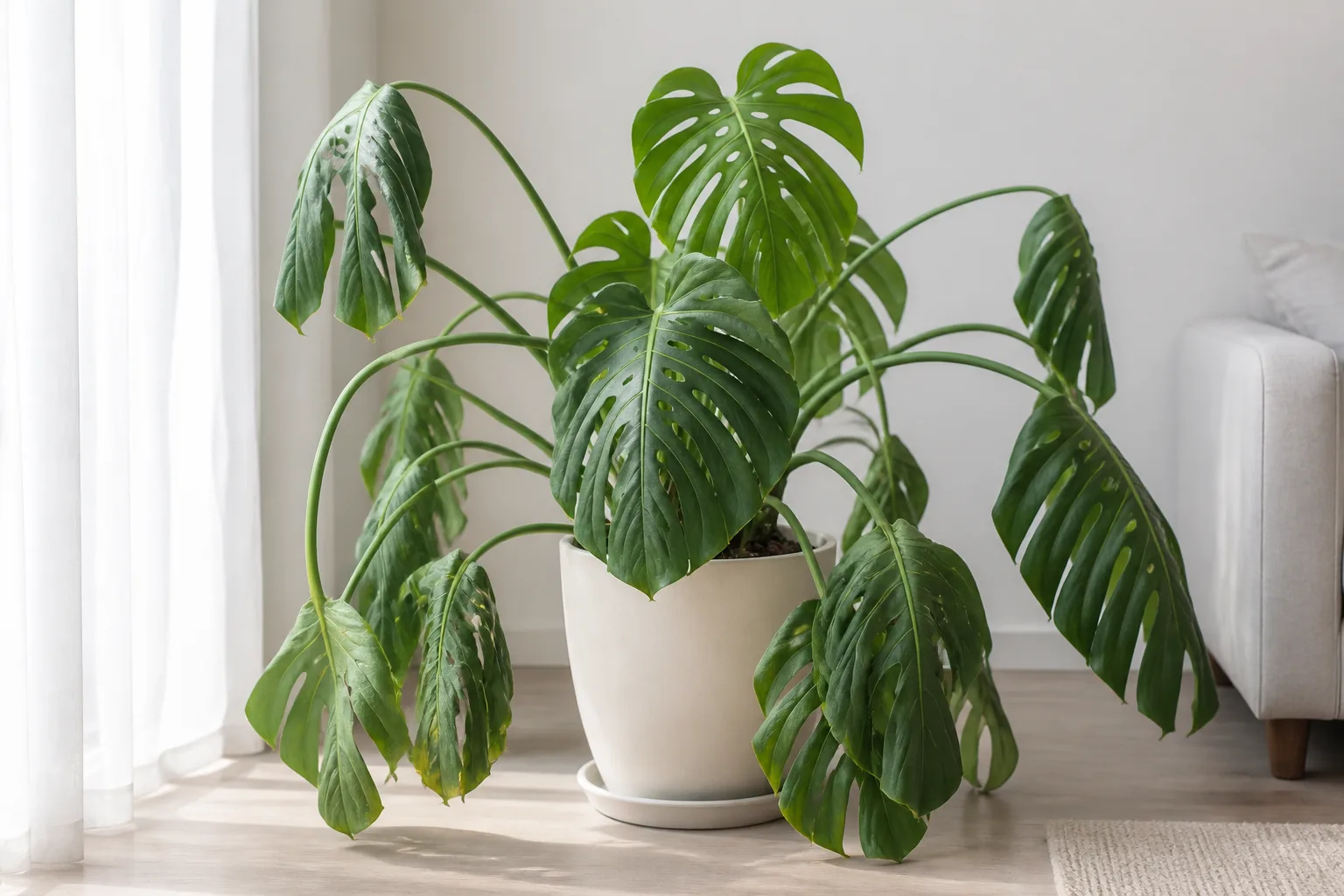
Curling and drooping overlap, but they are not interchangeable. A leaf that curls inward or rolls along its edges may be limiting water loss or reacting to root, light, heat, or pest stress. A drooping petiole can follow a very dry root ball, waterlogged roots, a cold draft, or the normal weight of large leaves. A plant that leans steadily toward a window may simply be growing toward its strongest light.
Separate dry roots from waterlogged roots
When the mix is dry several inches down and the pot feels light, underwatering becomes more plausible. Water thoroughly so the entire root ball gets wet, allow all excess to drain, and then wait until the upper portion of the mix has dried before watering again. If the dry mix repels water or has pulled away from the sides, rewet it gradually so water does not race through a channel and miss the roots.
When the mix is wet and the plant is drooping, adding more water is risky. Check for poor drainage, a pot sitting in runoff, a dense mix, or roots that have turned soft. If the plant has a foul smell, soft stem bases, or progressive collapse, treat the root zone as the priority; humidity or leaf misting will not restore roots deprived of air. Epic Gardening’s Monstera leaf-curling overview likewise separates underwatering from overwatering and direct-sun stress, which is why the soil check matters more than the curl’s direction alone.
Also check the plant’s immediate surroundings. Keep it away from a heating vent, radiator, air conditioner, and cold glass during winter nights. Rotate a strongly one-sided plant a quarter turn every week or two if you want more even exposure, but do not keep moving it between very different light levels. If a new leaf or several leaves are misshapen, inspect for thrips or mites before assuming a nutrient deficiency.
New leaves stuck, torn, or slow to unfurl
A new Monstera leaf usually emerges rolled up and gradually opens. A little delay is not automatically a crisis: new growth can pause when light levels drop or the plant is settling after a move. A leaf that remains stuck for an unusually long time, dries at the tip, or unfolds with tears points to stress worth investigating. Start with root moisture, recent light changes, and room conditions rather than pulling on the leaf.
Never force the leaf open or cut its sheath while it is still unfurling. The tender blade can tear before it has finished expanding. If the room is very dry, improve ambient humidity; if the root ball is dry, water it thoroughly; if the mix is wet, do not add water to solve a leaf that is stuck. Once an emerging leaf has started to open, keep the plant in a stable position and let it harden. A tear in a tender leaf may be permanent, but a later leaf can be normal after the underlying stress is corrected.
Inspect for pests when new growth emerges twisted, stippled, or scarred. Thrips can mark tender leaves, while mites often leave fine stippling and webbing on the undersides. Isolate a suspect plant and identify what is present before choosing a control; a broad treatment applied without diagnosis can create more stress than the original symptom.
Build conditions for healthier, more mature leaves
A Monstera does not need a complicated routine; it needs a stable one. Give it enough light to grow, a root zone that is moist after watering but not waterlogged, and room to climb. The goal is not to force every leaf into a larger or more dramatic shape. The goal is to keep the plant growing steadily so that the leaves it makes next season have a better chance of being healthy and mature.
Light and orientation
Place the plant in the brightest spot where leaves are not struck by strong direct midday or afternoon sun. An east-facing window often offers gentle morning sun; a west- or south-facing window may need a sheer curtain or some distance from the glass. A bright room with no direct beam can work, but if stems stretch and new leaves shrink, move it closer to the light source or use a grow light on a regular schedule. Acclimate it gradually when increasing intensity.
Clean dust from the leaf surface with a soft damp cloth so it does not build up. This is also a chance to check the underside and stem joints. Turn the pot occasionally if you want the vine to fill out more evenly, while keeping the climbing face toward the support. A dramatic swing from shade to direct sun can burn leaves even when the plant benefits from brighter light overall.
Water, roots, support, and feeding
Use a pot with open drainage holes and an airy mix that drains but does not dry instantly. Water thoroughly when the upper part of the mix has dried, then empty the saucer or cover pot. In winter or during a low-light period, the plant usually uses water more slowly; check before watering instead of keeping the same weekly rhythm. The RHS recommends slightly less frequent watering in winter and a free-draining compost for Monstera.
Train the main stem up a sturdy pole or trellis, fastening the stem loosely with soft ties. Do not tie petioles tightly to the support; they need to move and orient their leaves. Aerial roots can be guided toward a moss pole or into the soil, but cutting every aerial root is not needed for routine care. Give the support a stable base so a top-heavy plant does not rock when you water or turn it.
Feed only while the plant is actively growing, using a balanced houseplant fertilizer at the label rate or a weaker dilution if the product is concentrated. Pause or reduce feeding when growth slows in winter, after root damage, or just after repotting. The RHS advises balanced liquid feeding during the growing season; avoid improvised kitchen scraps or piling on nutrients to solve a color change. A plant with rotting roots cannot use fertilizer normally, and additional salts can burn the remaining roots.
Prune only after you have diagnosed the problem
Pruning is for removing dead or badly damaged tissue, controlling size, or shaping the vine—not for curing the cause of yellowing. Leave a partly green old leaf while it still contributes to the plant. If it is mostly yellow or brown and no longer useful, cut the petiole near the main stem with clean, sharp shears without nicking the stem. Do not strip off many healthy leaves at once; the remaining foliage helps power new growth.
If damage is spreading, photograph it and check the soil, light, and pests before pruning. Removing a leaf can make the plant look tidier, but it will not fix root rot, sun scorch, pests, or a draft. Monstera is an aroid with irritating compounds if eaten, so keep pruned material away from children and pets and wash your hands after handling it; the RHS advises keeping the plant away from them.
Conclusion
Monstera leaves become easier to read when you look at the whole pattern. Regularly placed holes on mature growth are usually fenestrations, while random tears, yellowing, crispy margins, dark soft patches, and curling call for a check of leaf age, soil moisture, drainage, light, and pests. Make the first correction that the evidence supports, then give the plant time to show its response in new growth.
A single old leaf can fade without signaling a crisis; several declining leaves or a wet, foul-smelling root ball deserve quicker attention. Stable bright indirect light, careful watering, and climbing support help a Monstera produce healthier mature leaves, but no single pole, fertilizer, or weekly schedule can promise a particular shape. Keep the roots healthy and let the next leaves tell you whether the conditions are working.