Variegated Monstera: Types, Care, and Buying Tips
A practical variegated Monstera guide to leaf patterns, light, watering, propagation, and buyer checks—so you know what you’re growing before you pay.
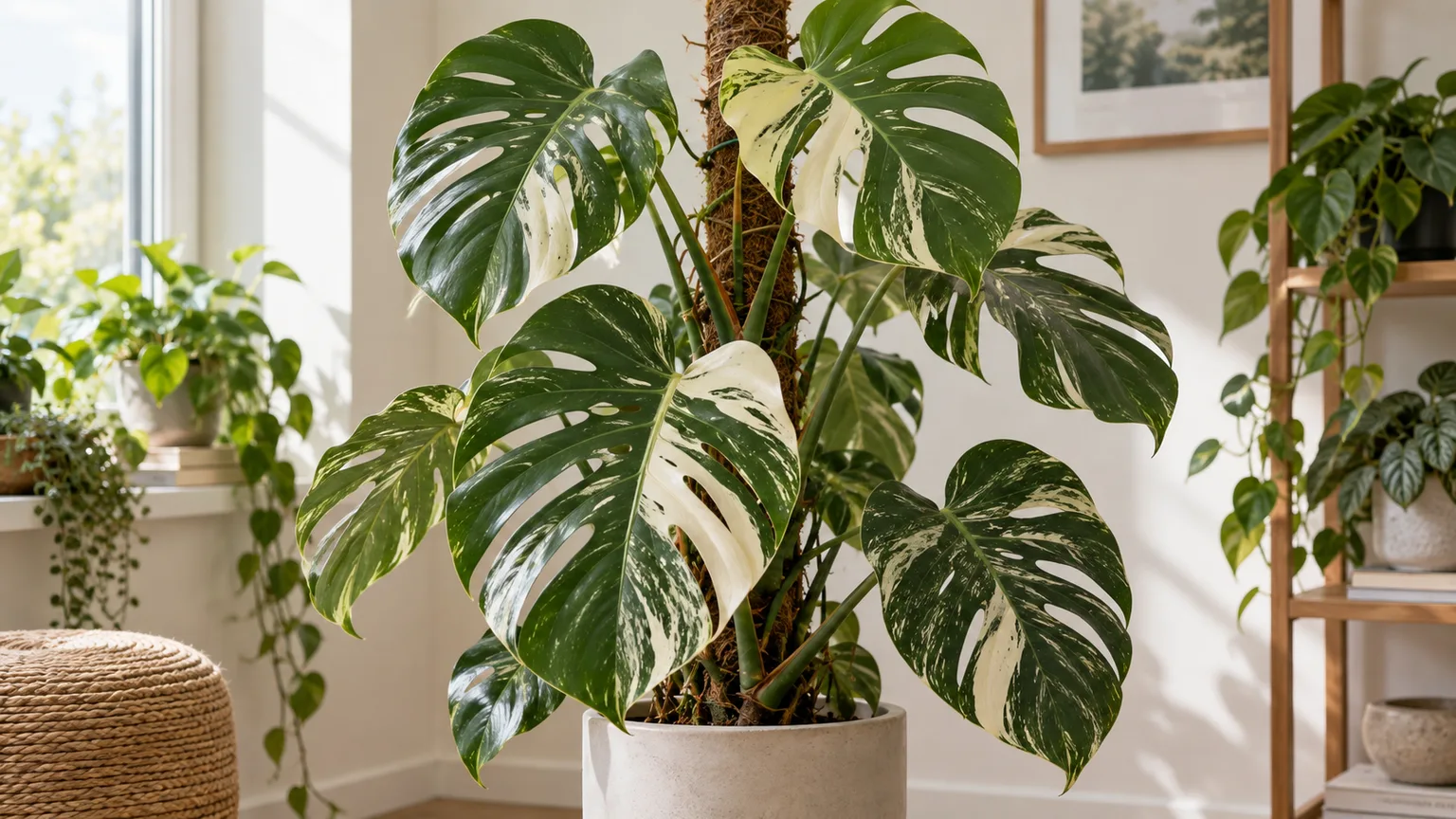
A variegated Monstera is not simply a green Monstera with decorative white paint. Its pale tissue has less chlorophyll, so it captures less light energy than the green parts; that changes how the plant grows and why all-white leaves, dim rooms, wet soil, and bargain cuttings deserve extra thought. The goal is a healthy plant with enough green tissue and a stable growing point, not the whitest leaf in the room.
“Variegated Monstera” is also a loose retail label. It can refer to several Monstera deliciosa forms, but sellers sometimes use “variegated Monstera” for other species in the genus. Identify the plant and inspect its stem before buying, then set care by how quickly its potting mix dries rather than by a weekly schedule.
Start with the type: what “variegated Monstera” means
Variegation describes contrasting colors within leaves or stems. In the popular Monstera deliciosa forms, pale patches are generally areas with reduced chlorophyll. The pattern may be creamy flecks, broad white sectors, yellow-green areas, or a softer mint tone, depending on the plant sold under that name. Petal Republic’s overview describes these forms and the chimeral pattern often seen in variegated Monsteras.
Before comparing colors, check the species. Monstera deliciosa has broad, mature leaves with splits and interior holes as it climbs; Monstera adansonii is a different species with a more vining habit and many holes within smaller leaves. A “Monstera albo” listing may refer to an albo-variegated deliciosa, but names such as “Borsigiana” are not used consistently in the houseplant trade. Ask for the seller’s exact identification and judge the actual plant, not just the label.
The main variegated Monstera deliciosa forms
The names below are useful shopping shorthand, not a guarantee that every plant will match a perfect color pattern. New leaves can vary on the same vine, and photographs may exaggerate white or yellow areas through lighting and editing.
| Form commonly sold | What the leaves often look like | What to keep in mind |
|---|---|---|
| Thai Constellation | Creamy speckles, splashes, or star-like flecks | Pattern is often more evenly distributed, but individual leaves still vary. |
| Albo / Albo-Variegata | High-contrast white or cream patches, sometimes large sectors | The amount and placement of white can shift between growth points. |
| Aurea | Yellow to chartreuse patches or marbling | Color can look warmer or cooler under different light and camera settings. |
| Mint forms | Pale green or mint-toned marbling | Retail naming is inconsistent; request clear photos and provenance. |
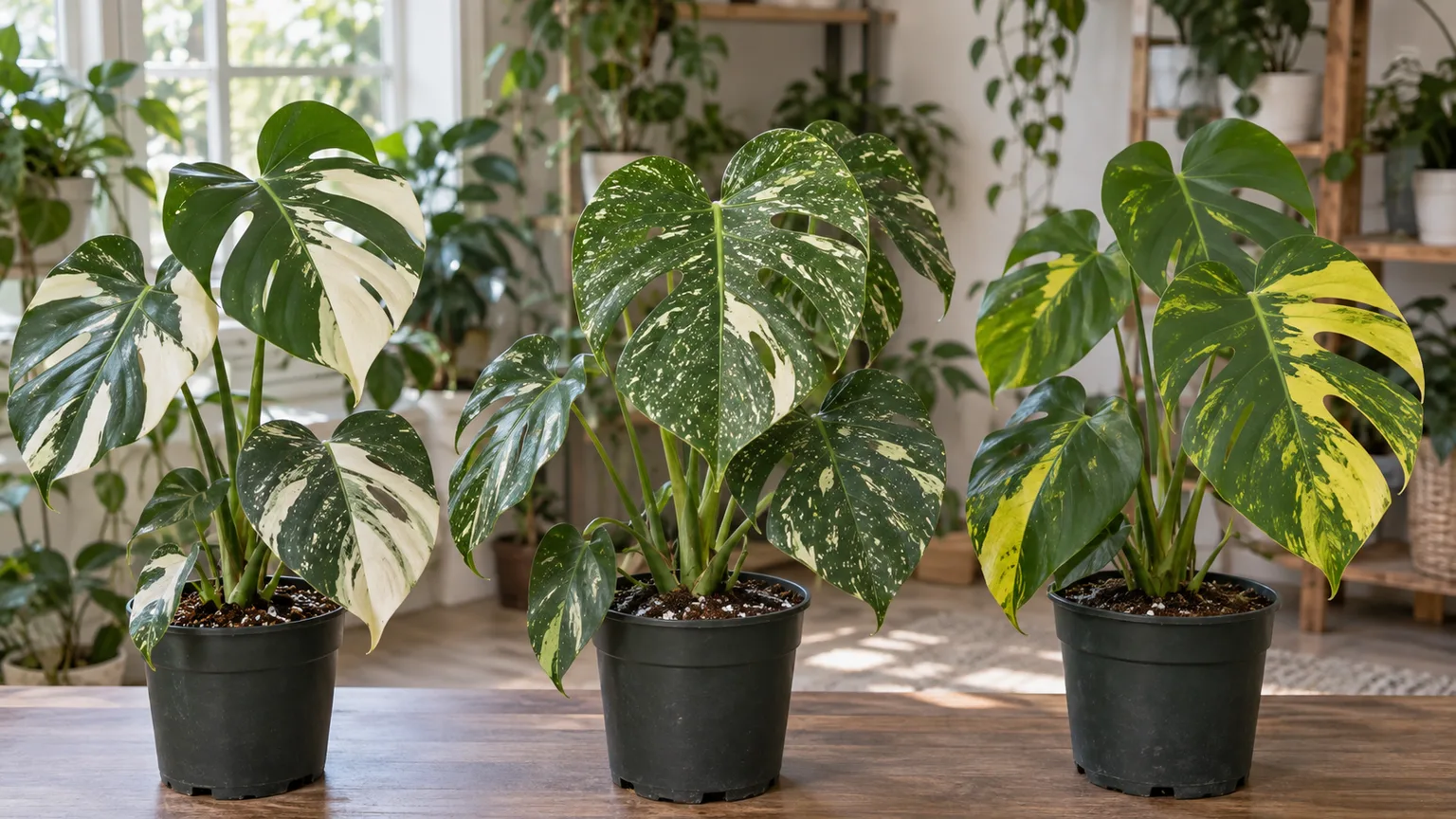
Thai Constellation: cream speckles
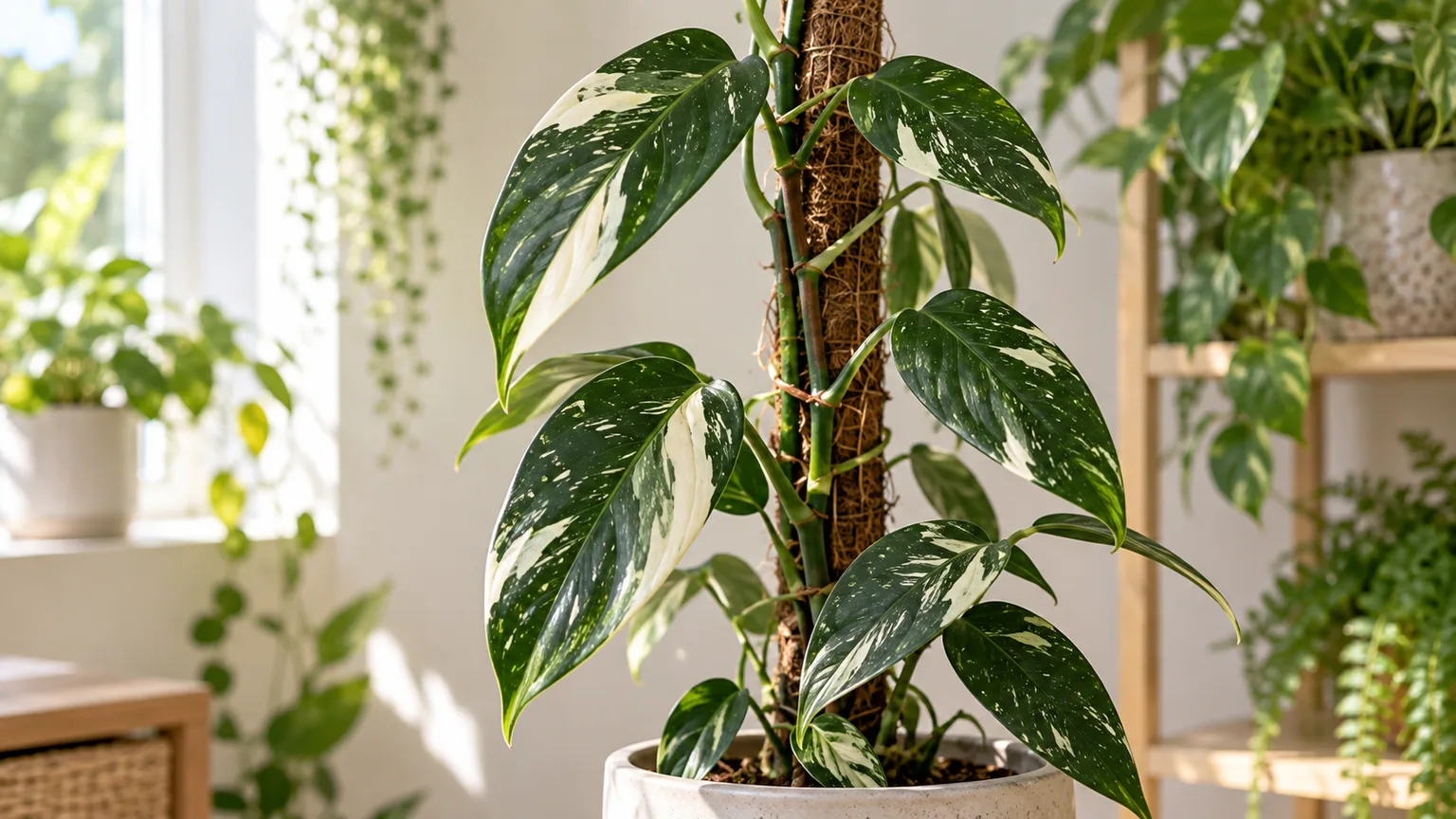
Thai Constellation is usually recognized by cream or pale yellow flecks scattered across green leaves. The pattern often appears more evenly distributed than the large sectoral blocks people associate with an Albo. It became easier to find through commercial propagation, including tissue culture, but that does not mean every plant will grow identical leaves or that a seller’s photo guarantees the next leaf’s pattern.
Choose this form if you like a more speckled look and want to compare plants by overall balance rather than one dramatic leaf. Look for healthy green areas as well as cream markings. A plant with a balanced pattern gives the leaf more photosynthetic tissue than one dominated by pale color.
Albo: bold white sectors
Albo Monsteras are prized for sharp white or cream sections that may cover part of a leaf, cross the midrib, or appear as scattered patches. In the trade, “Albo” usually describes an albo-variegated Monstera deliciosa, but sellers’ botanical labels are not always consistent. Check that the plant has the large, split-leaf deliciosa form if that is what you intend to buy.
The large white sections are visually striking but more vulnerable to browning because they contain little or no chlorophyll. That does not mean every white patch is a problem or that you should remove a healthy leaf. It does mean that an all-white leaf is a poor long-term target: it contributes little energy, and the plant must rely on green tissue elsewhere.
Aurea and mint forms
Aurea forms carry yellow or chartreuse areas rather than the clearer white of an Albo. The exact shade depends on the plant and the light in which the photo was taken, so compare several leaves and ask for current, unfiltered pictures. Yellow color alone is not enough to identify a plant; a listing should show the stem and the whole plant too.
“Mint Monstera” is an especially variable retail term for pale green marbling. It may refer to distinct stock or simply a seller’s color description, so treat provenance and live photos as part of the purchase. If the mint color is the reason for a premium price, ask the seller to show the same plant in neutral daylight and explain how it was propagated.
Why the pattern changes
In variegated tissue, cells do not all contribute the same amount of chlorophyll. When green and pale cell lineages sit beside one another, the plant can show a mosaic or sectoral pattern. Because a new shoot grows from a particular bud, its leaves reflect the cells present at that growing point; a shoot can therefore become greener, paler, or differently patterned than the leaves lower on the same plant.
That is why “give it more light to make it more variegated” is misleading. Better light can help the plant use its available green tissue and maintain healthy growth, but it cannot reliably create new pale sectors in a shoot that is growing green. Conversely, too much direct sun can scorch leaves. Aim for vigorous, balanced growth; do not use harsh sun, excess fertilizer, or repeated pruning to force a pattern the plant may not carry.
Buying a plant or cutting: what to inspect
Price changes with size, rooting, seller, season, and local availability, so a number seen online quickly becomes stale. A large white area may raise an asking price without improving the plant’s prospects. Compare the cost with the condition of the roots, the number of established leaves, the health of the growth point, and the seller’s willingness to show the exact plant being shipped.
For an online purchase, request recent photos from more than one angle: the full plant, the stem, the node or nodes, the newest growth, and the pot or roots if it is sold as rooted. Check whether the images show the actual specimen rather than a parent plant or stock photo. A reputable seller should be able to explain whether the plant is rooted, what part is being sold, and how it was propagated.
Check the stem and growth point
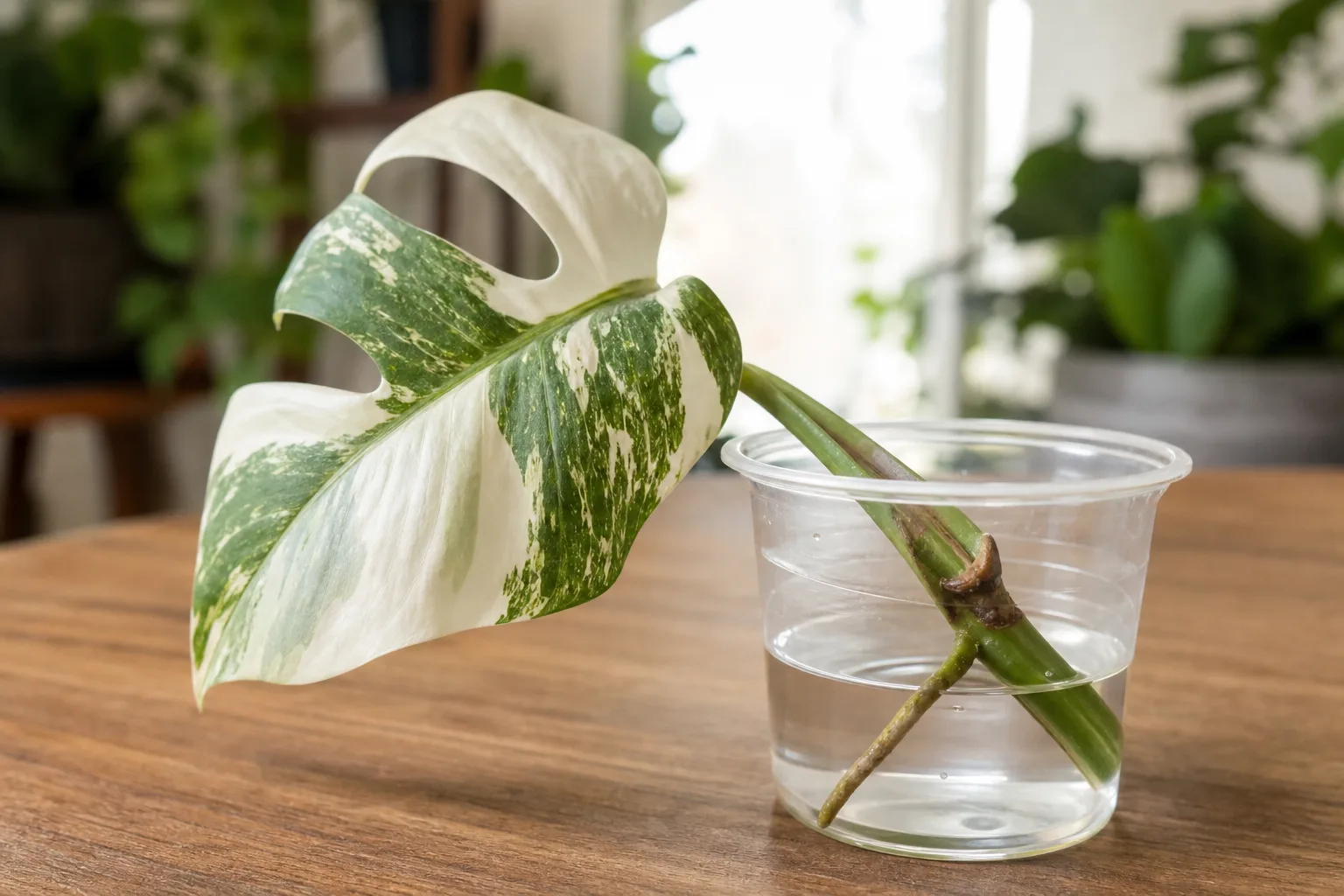
A leaf attached only to a petiole is not a complete cutting. A viable Monstera cutting needs a piece of stem with at least one node, where a new shoot can develop; an aerial root can help the cutting establish, but it does not replace the node. On a cutting, inspect for a small bud or growth point near the node and ask the seller to identify it in the photo.
Variegation on the leaf is not a promise that the next shoot will repeat the same pattern. The visible stem near the node offers useful clues about the tissue feeding that bud, but it cannot guarantee the outcome. Avoid listings that show only a dramatic leaf, hide the stem, or promise a particular future pattern without evidence.
Read the leaves and roots
On a rooted plant, look for firm stems, at least some healthy green leaf area, and fresh growth that is not collapsing. Brown edges on white tissue can occur, but widespread mushiness, a sour smell, soft black stem sections, or constantly wet mix are reasons to pause and inspect more closely. Yellowing alone does not diagnose root rot; it is a cue to check moisture, light, and the roots rather than guess.
If the plant is potted, check that the container drains and that the mix is not waterlogged. If the seller offers a rooted cutting, ask for a clear root photo and confirm whether it has been acclimated to potting mix or still lives in water or moss. A freshly shipped plant may need a quiet recovery period; avoid paying extra for leaf count if its root system is weak.
Give it bright, indirect light
Place a variegated Monstera near a bright window where it receives strong ambient light without hours of harsh midday sun. An east-facing window or a spot set back from a brighter window may work; use a sheer curtain when direct rays strike the leaves. The RHS growing guide recommends filtered or indirect light for Monstera and notes that direct sun can scorch foliage.
Move a newly purchased plant gradually. Start it in bright shade, then increase exposure in small steps over a week or two while checking for bleached patches, dry brown areas, or leaf curl. If the room is dim, a grow light can help, but keep enough distance to avoid heating the leaves. New growth that is smaller or stretched toward the window suggests the plant may need a brighter position; a sudden pale, crispy patch after moving it closer points the other way.
Water by pot dryness, not the calendar
Water when the upper portion of the mix has dried and the deeper root zone is approaching dry, then soak the mix evenly and let the pot drain. For a small pot, check the top couple of inches; for a larger pot, use a finger or wooden skewer deeper in the mix as well. Do not water simply because seven days have passed—the interval changes with pot size, season, room temperature, light, and how much root fills the container.
Variegated plants often grow more slowly than vigorous all-green Monsteras, so their mix may stay damp longer than expected. If the pot still feels heavy and the lower mix is wet, wait and check again rather than topping up. Empty the saucer after watering, and make sure the drainage holes are open. The RHS recommends letting the compost become almost dry before watering thoroughly; the useful household version is to judge the mix, not follow a fixed timetable.
Use an airy mix and a snug pot
Choose a pot with drainage holes and a mix that holds some moisture while leaving air around the roots. A practical starting blend is quality indoor potting mix with orchid bark and perlite or pumice mixed through it. Adjust the proportions to your home: use a little more moisture-retentive mix in a hot, dry room and a chunkier blend where pots dry slowly. The goal is an open mix, not a magic recipe.
When repotting, move up only enough to fit the root ball comfortably—often one pot size larger. An oversized container leaves more wet mix around a relatively small root system and takes longer to dry. Repot when roots are circling densely, emerging from drainage holes, or the plant dries unusually fast despite a healthy mix; do not disturb a stable plant just because a new pot looks better.
Balance warmth, humidity, feeding, and support
Keep the plant in a warm room away from cold drafts, air-conditioning blasts, and hot radiators. The RHS gives 18–25°C (65–77°F) as a suitable range for Swiss cheese plants. Average home humidity is often workable; if leaf edges repeatedly crisp while watering and light are appropriate, a room humidifier may help more than misting, which only wets the leaf briefly.
Feed during active growth with a balanced houseplant fertilizer at the label rate, or begin at the lower end if the plant is small or newly repotted. Do not feed a plant that is waterlogged, recently stressed, or not actively growing, and do not increase fertilizer to try to intensify variegation. Rinse the mix with plain water occasionally if mineral or fertilizer residue builds up on the surface.
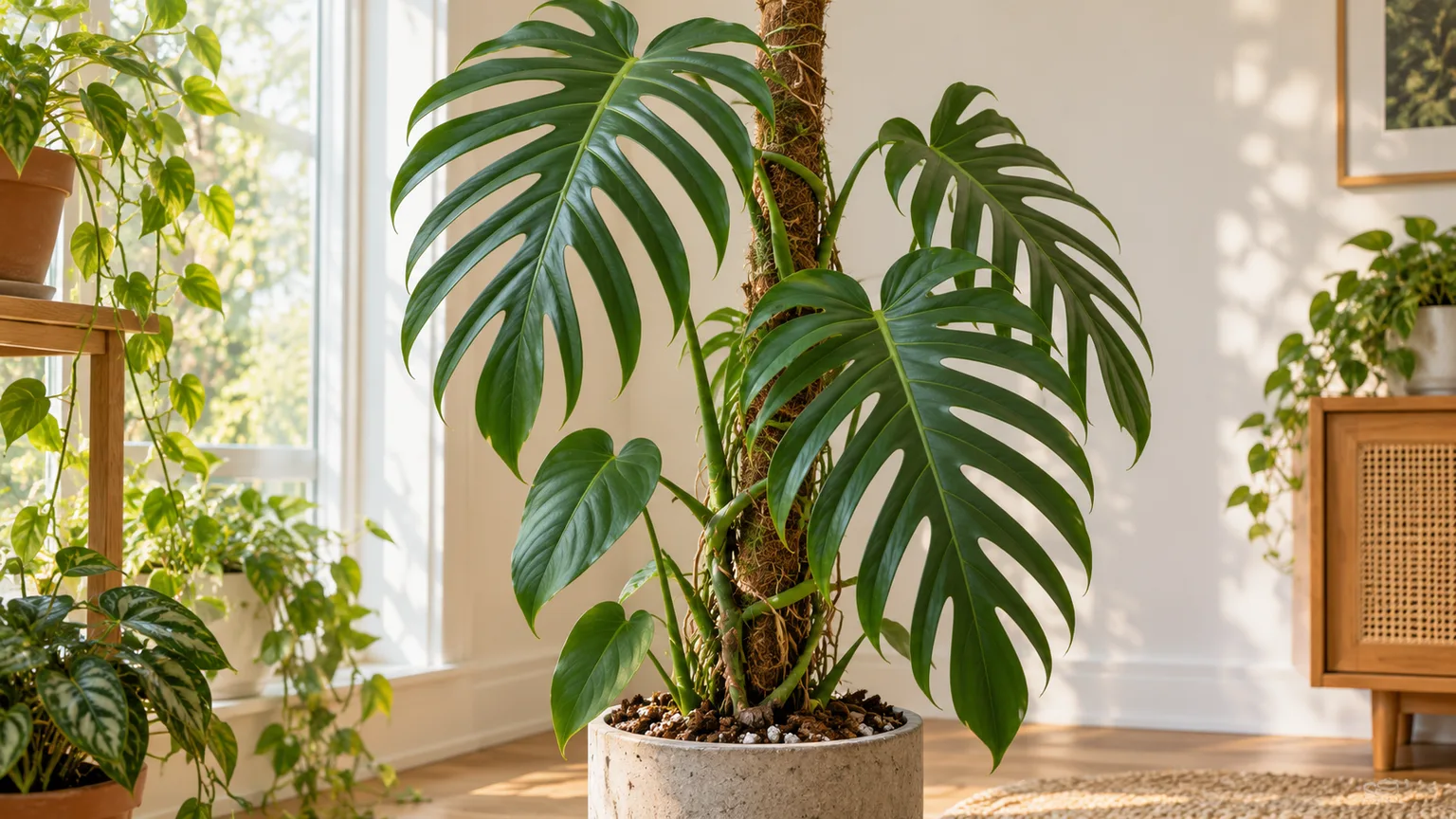
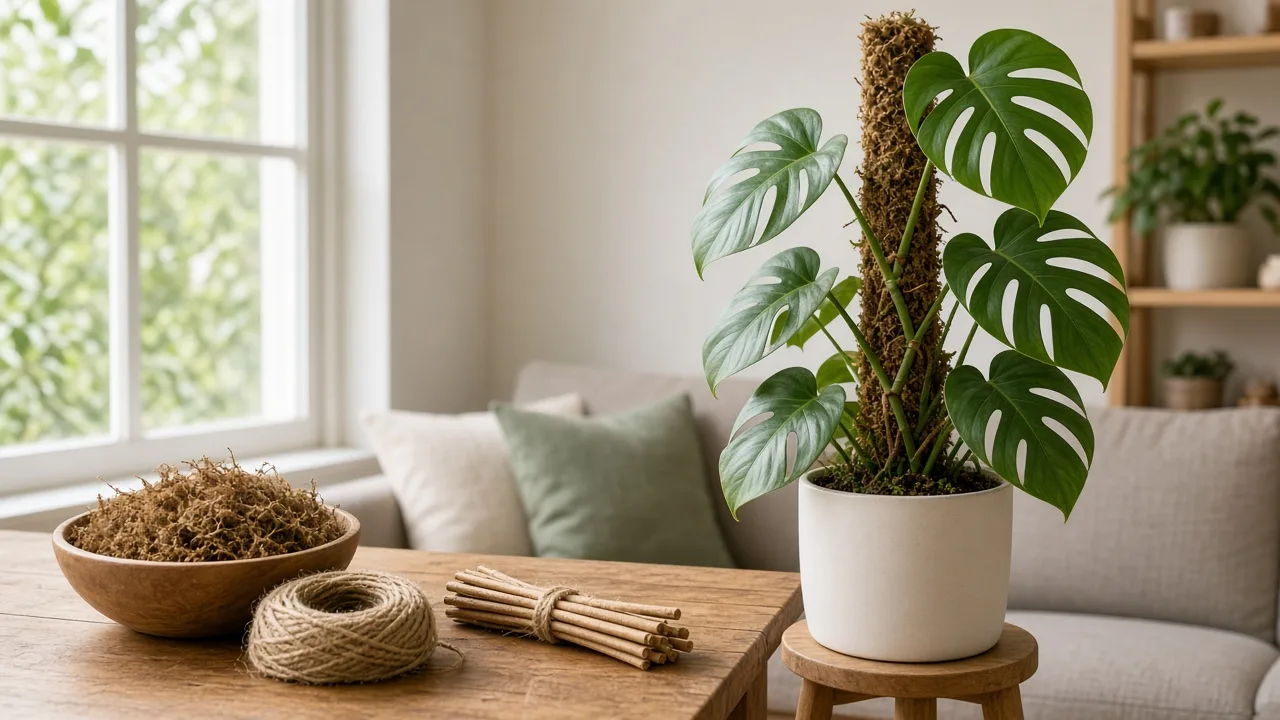
Monstera deliciosa is a climber. A stake or moss pole gives the stem a direction and can help support a top-heavy plant; attach the stem loosely rather than tying the leaf stalks. Rotate the pot a little at a time if growth leans toward a window, but avoid repeatedly turning it if the plant is already settling into a stable position.
Diagnose leaf changes before pruning
One leaf rarely tells the whole story. Note whether the change is on old or new growth, whether it affects green or pale tissue, how quickly it appeared, and what the soil felt like before the symptom showed up. Compare those clues with the recent history: a move to stronger light, a cold delivery, a repot, or a change in watering can explain more than a generic “variegated plants are delicate” rule.
Green, cream, or white new leaves
An all-green leaf can be a natural shift in the growth point, especially on an Albo, and extra light will not necessarily reverse it. If several new leaves emerge mostly green and the plant is healthy, decide whether you want to keep that shoot; pruning back to a node on a better-balanced section may encourage growth from that point, but the result is not guaranteed. Use clean shears and keep a viable node on any cutting you plan to root.
An almost all-white leaf is also not an emergency. It may open and remain attractive for a while, but it has little green tissue to support itself and may brown or decline sooner than a balanced leaf. Keep it if the plant has healthy green leaves elsewhere; avoid buying a cutting or plant whose active growth is entirely white if your priority is long-term vigor.
Brown patches and yellowing
Dry brown areas limited to white sections can reflect the vulnerability of low-chlorophyll tissue, but broad crispy patches may also follow abrupt sun exposure, dry roots, or fertilizer salts. First move the plant out of direct harsh sun, check that the mix is not bone dry or soggy, and look for a pattern across several leaves. Damaged tissue will not turn green again; the goal is to prevent the next leaf from developing the same damage.
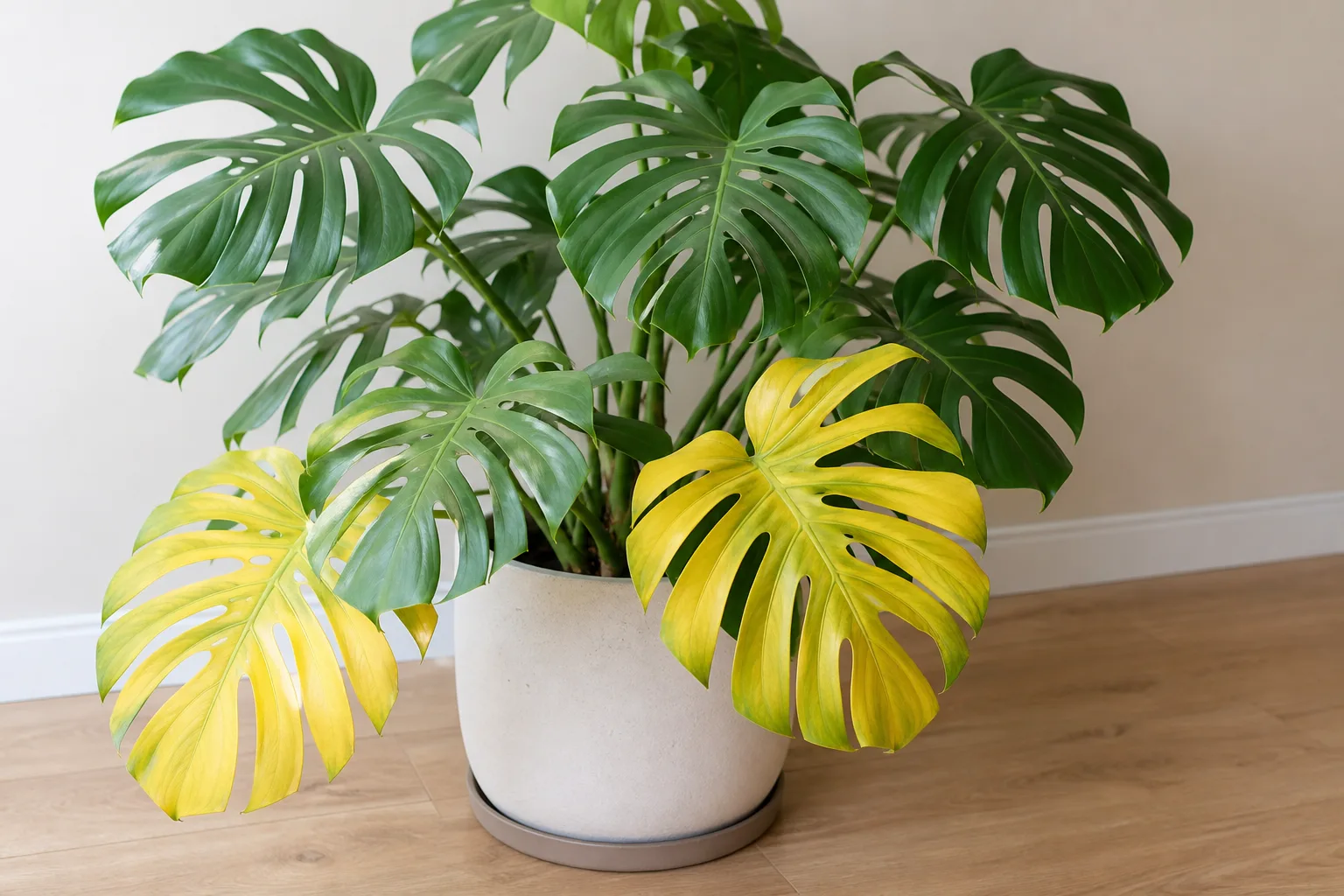
Yellowing can follow overwatering, poor drainage, low light, or normal aging of an older leaf. Check the mix several inches down and inspect the roots if the soil stays wet or the stem softens. Healthy roots are firm; dark, mushy roots and a sour smell support a rot concern. Correct the underlying condition before pruning, because removing leaves alone will not fix a wet root zone or a dim location.
Propagate only from a viable node
Choose a healthy stem section with a node and a visible growth point. Use clean, sharp pruners and cut below the node; a leaf without stem tissue will not produce a new vine. A cutting with a balanced amount of green and variegated stem is a more sensible gamble than an all-white tip, though no cutting can promise a particular leaf pattern. Ohio Tropics’ practical guide also stresses checking the stem and growth point when taking or buying a cutting.
Root the cutting in water, damp sphagnum, or a light propagation mix, keeping the node in contact with the medium and the leaf above it. Give it warmth and bright indirect light. In water, change it when it becomes cloudy; in moss or mix, keep the medium lightly moist rather than saturated. Once roots have branched and are a few inches long, pot it into an airy mix and keep moisture even while it adjusts. A clear cover can reduce wilting in dry air, but vent it and remove it if condensation stays heavy or mold appears.
If the parent plant is valuable, air-layering the stem before cutting can reduce the time the new section spends without roots. It still takes patience, and neither air-layering nor a particular rooting medium can stabilize a pattern that the new growth point does not carry. Keep a backup plan: let the established parent continue growing until the rooted division is clearly settled.
Keep it out of reach of pets
Monstera deliciosa is toxic to cats and dogs because it contains insoluble calcium oxalates. The ASPCA’s plant entry lists oral irritation, drooling, vomiting, and difficulty swallowing among possible signs after ingestion. Place the plant where animals cannot chew leaves or stems; if a pet eats part of it or shows symptoms, contact a veterinarian or animal poison-control service promptly.
Conclusion
Start by confirming which plant and which part you are buying. For a cutting, ask to see the node and growth point; for a rooted plant, check the roots and make sure the mix drains. Then give it bright filtered light and water only after the pot has begun to dry. Those choices protect the plant’s green tissue and roots—the two things that matter more to long-term growth than chasing an unusually white leaf.