How to Grow and Care for Monstera Standleyana Albo
Learn how to grow Monstera Standleyana Albo with practical guidance for light, watering, soil, humidity, support, propagation, pests, and safe placement.
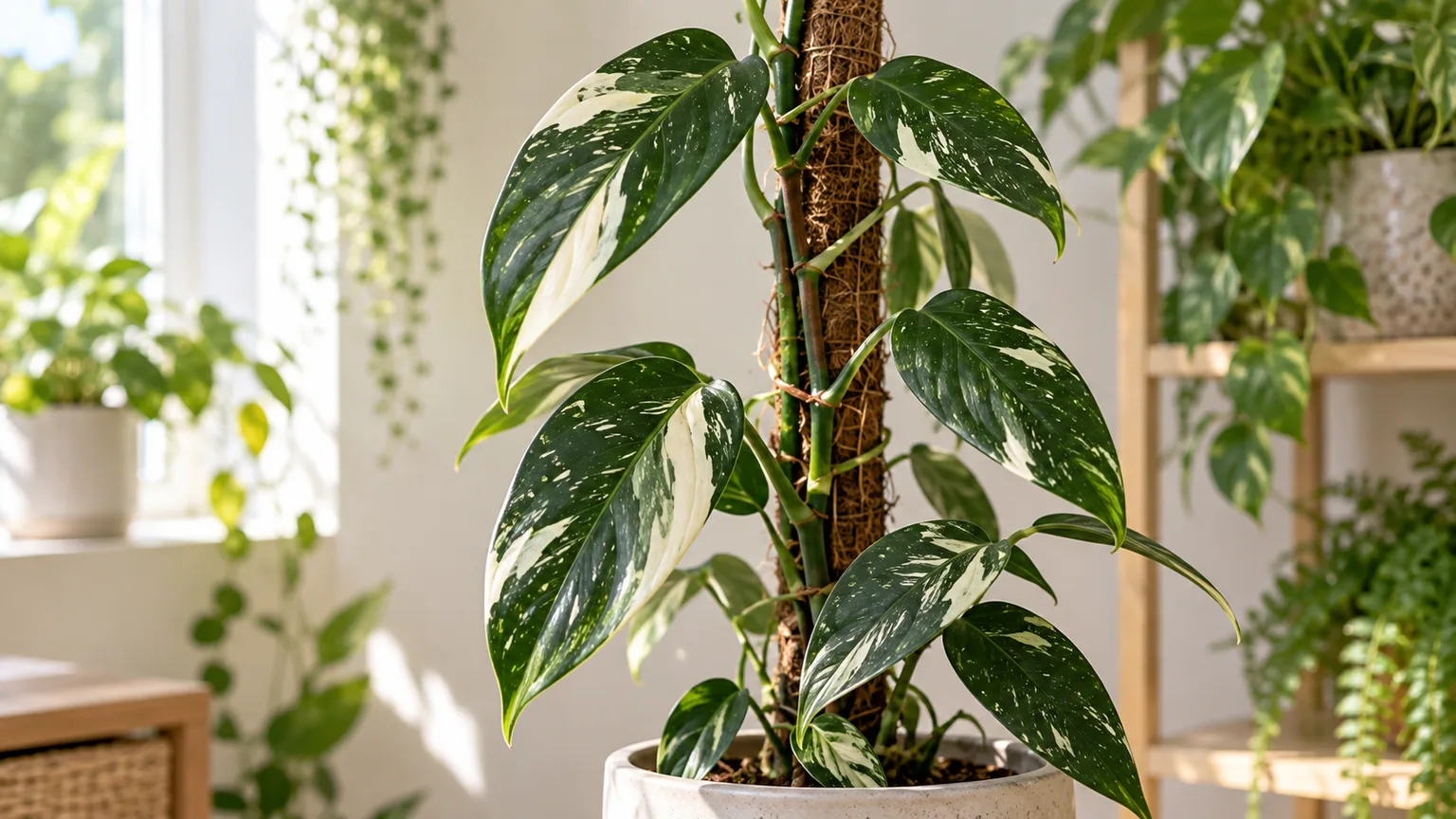
Monstera Standleyana Albo is a climbing aroid prized for elongated, glossy leaves marked with cream or white splashes. It is often sold under the botanical name Monstera standleyana ‘Albo Variegata’ and sometimes mislabeled as Philodendron standleyana or a “five holes plant.” The naming is confusing, but the care is not: give it filtered brightness, a fast-draining root zone, steady warmth, and something to climb.
The detail that changes the routine is the variegation. White tissue has little or no chlorophyll, so an Albo plant has less working leaf surface than an all-green plant. That is why it needs enough light to support new growth, but also why a bright window that is harmless to a dark-green Monstera can scorch pale patches. The goal is not maximum sun; it is consistent, usable light.
What Monstera Standleyana Albo Is
The RHS lists Monstera standleyana as a compact, slow-growing, evergreen climber or trailer with dark leaves that can carry creamy-white speckles or larger areas of variegation. Its native range extends from Central America to northwestern Colombia, and the species is suited to sheltered, warm growing conditions rather than a cold outdoor border. The RHS plant profile gives an indoor-friendly mature range of roughly 1 to 1.5 meters tall when grown with support, although an unsupported vine can travel farther by trailing.
Young plants commonly have smooth, oval or pointed leaves without the dramatic splits associated with Monstera deliciosa. The RHS notes that larger plants can develop tear-drop or oval perforations, but this is not a promise that every small Albo will become a Swiss cheese plant. Buy it for its narrow leaves and irregular variegation, not for the leaf shape of a different Monstera.
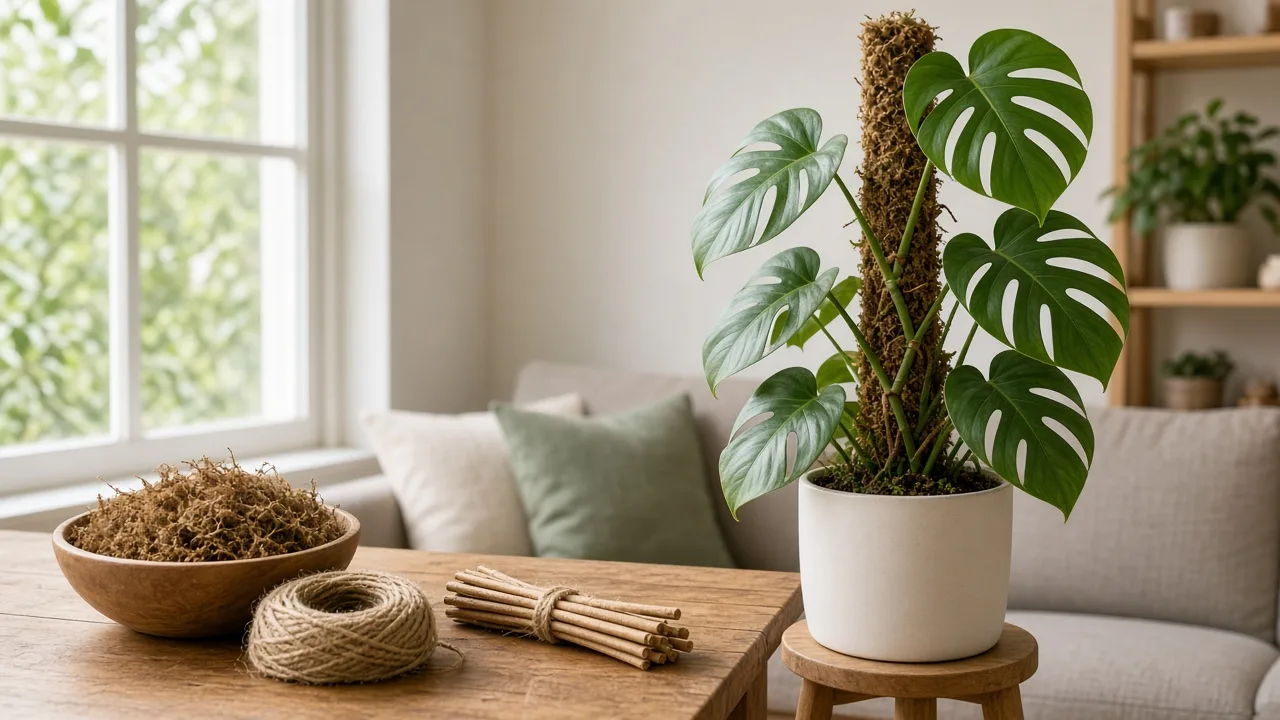
It is also a plant with a climbing strategy. In a home, a small trellis, coco pole, or moss-covered support can keep the stems from sprawling across a shelf and can help the plant present new leaves toward the light. A hanging basket works too, but it produces a trailing silhouette rather than an upright specimen.
What Its Variegation Changes
Variegation is a pattern of green tissue mixed with white, cream, or sometimes pale yellow tissue. The pale sections are attractive but less productive for photosynthesis, so the plant depends heavily on its green sections and on the quality of the light reaching them. This is why a variegated Monstera can stall in a dim room even when a green pothos looks fine in the same spot.
Use the new growth as your report card. A healthy new leaf should unfurl with a reasonable balance of green and pale tissue, then harden without large fresh scorch marks. If several new leaves emerge smaller, mostly green, or with long gaps between nodes, first improve the light and check the roots before adding more fertilizer. If a stem produces an entirely green run of leaves, keep enough green growth for energy but consider pruning back to the last node that shows stable variegation; this may encourage the next growth point to express the pattern, but it cannot guarantee a reversal.
The opposite problem is an almost-white shoot. A leaf with large pale sectors may be viable when the plant also has plenty of green foliage, but a long section with very little green tissue has limited energy production. Do not remove every green leaf in pursuit of a cleaner pattern. On an Albo, a slightly less dramatic but well-balanced leaf is usually a stronger long-term trade than a perfect-looking cutting that cannot sustain itself.
Find the Right Indoor Placement
Start with bright, indirect light. An east-facing window, a bright north-facing room, or a spot a short distance back from a south- or west-facing window can work. A sheer curtain is useful when afternoon sun lands directly on the leaves, especially if the plant has just arrived from a shaded nursery and has not been acclimated.
The practical test is the plant’s response, not a slogan about “low light.” Inadequate light produces weak, widely spaced growth, smaller leaves, and less vigorous variegation. Harsh light produces bleached or tan patches, crisp edges, curling, or a hot, dry leaf surface. Move the plant in small increments over a week rather than taking it from a dim room into several hours of strong sun in one day.
The NC State Extension Monstera profile notes that variegated cultivars need more light than darker green cultivars. That guidance is for the related Monstera deliciosa, so treat it as a genus-level culture principle rather than a claim that every Monstera needs the same exposure. The right placement is the brightest location where the white areas stay cool and intact.
Balance Temperature and Humidity
Keep the plant warm and steady. A normal indoor range around 65–85°F (18–29°C) suits active growth, while the RHS Monstera growing guide recommends 18–25°C for Swiss cheese plants. Avoid cold drafts, open windows during freezes, heat vents, and sudden swings; a warm room is less useful if the leaves are repeatedly blasted by dry air.
Moderate to high humidity helps the leaves unfurl cleanly, but you do not need to turn the room into a greenhouse. A hygrometer is more useful than guessing. If the room sits around 40–50 percent and the plant is growing normally, focus first on light, watering, and airflow; if the leaf edges repeatedly crisp in dry heated air, a humidifier or a grouping of plants can make the environment more stable.
A pebble tray can raise humidity immediately around a pot only modestly, and it must be set up correctly. Put pebbles in a shallow waterproof tray, add water below the top of the stones, and place the pot on the stones so its drainage holes never sit in water. Good airflow matters as humidity rises, because still, constantly wet foliage can create a different set of problems.
Build an Airy Root Zone
The potting mix should hold some moisture without collapsing into a dense, airless mass. A practical starting blend is two parts quality indoor potting mix, one part orchid bark or coarse coconut chips, and one part perlite or pumice. Adjust the proportions for your room: use more aeration if the mix stays wet for many days, and slightly more moisture-holding material if the pot dries almost immediately.
The container matters as much as the recipe. Use a pot with drainage holes and a saucer that can be emptied. Avoid placing a small root ball into a huge decorative pot filled with wet mix; the unused volume dries slowly, which increases the chance of root damage. A clear nursery pot inside a heavier cachepot makes it easier to inspect roots and lift the plant to judge its weight.
The RHS recommends an open, well-drained, slightly acidic compost for Monsteras and warns that poorly draining compost can keep roots wet long enough to rot. You do not need to chase a laboratory pH number for an indoor Albo. You do need a mix that drains quickly when watered and does not become a compact plug after repeated drying.
Water by Soil, Not by Calendar
Check the top 1–2 inches of mix with a finger or a wooden stick before watering. If that layer is still cool and wet, wait and check again; if it is dry and the pot feels noticeably lighter, water thoroughly until excess runs from the drainage holes. Empty the saucer after the pot has finished draining so the roots are not left in standing water.
The interval changes with light, pot size, temperature, humidity, and season. A plant in bright summer light may need water much sooner than the same plant in a dim winter room, so “once a week” is only a calendar habit, not a care rule. Both the RHS and Plant Addicts describe allowing the upper layer to dry before a deep watering, while NC State Extension recommends letting roughly the top quarter to one-third of the medium dry for related Monstera culture.
If the mix dries out completely and pulls from the pot wall, water slowly in two passes so the root ball can rehydrate instead of shedding water down the sides. If your tap water is very hard, use rainwater or filtered water when practical; the RHS specifically flags hard, alkaline mains water as a reason to choose filtered or collected water. Do not solve a water-quality concern by keeping the soil permanently wet.
Fertilize for Steady Variegated Growth
Feed during active growth, usually spring through early fall in a bright indoor setup. A balanced liquid houseplant fertilizer diluted according to its label, often at half strength for routine feeding, is a safer starting point than a concentrated dose. Water the plant first if the root ball is dry, then apply the diluted fertilizer to already-moistened mix.
Fertilizer cannot create variegation or repair a root system that is staying wet. If new leaves are small, look at light and roots before increasing feed. Too much fertilizer can leave salts in the root zone and contribute to brown margins, so flush the pot with plain water occasionally if the medium is prone to buildup and always reduce or stop feeding when growth slows in winter.
Train the Climber and Prune With a Purpose
Give the plant support when the stems begin to lean or the newest leaves are facing away from the pot. A trellis keeps the vine arranged, while a moss or coco pole gives aerial roots a surface to grip. Tie the stem loosely with soft plant tape; never cinch a tie around a swelling node or petiole.
Training also improves your reading of the plant. A supported stem receives more even light, stays easier to inspect for pests, and is less likely to snap when a heavy leaf extends outward. If you prefer a trailing plant, rotate the basket so one side does not become bare while the vine reaches for a window.
Prune in active growth when possible. Remove dead or badly damaged leaves at their base with clean shears, and shorten a long stem by cutting just above a node so the remaining node can produce a new shoot. Keep a healthy amount of green foliage, especially on a strongly variegated plant; pruning away every green leaf for appearance can reduce the energy available for regrowth.
Repot Without Setting It Back
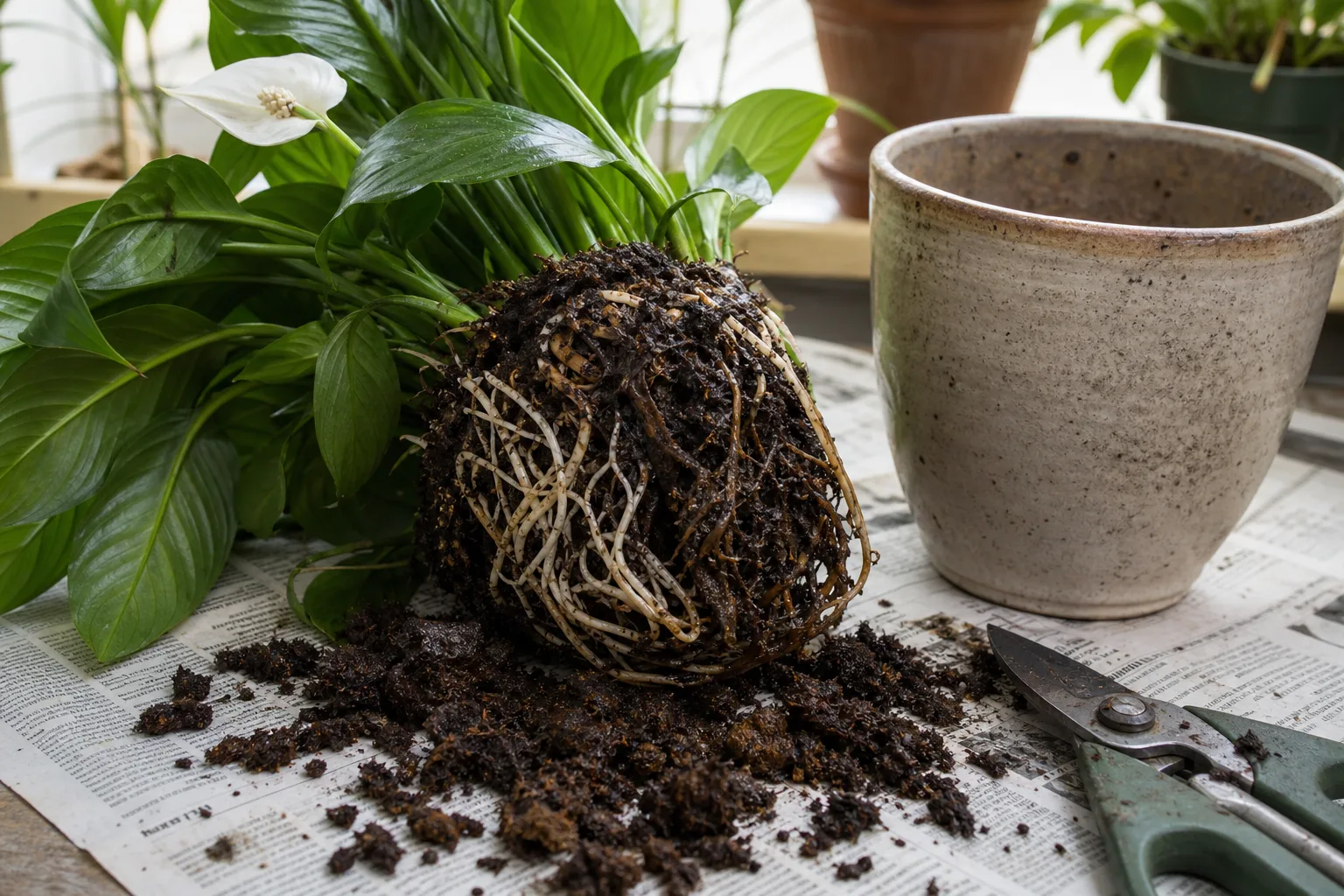
Repot when roots circle densely, emerge repeatedly from the drainage holes, the mix has broken down, or watering runs straight through because the root ball has become hydrophobic. Do not repot a mildly stressed plant just because a calendar says it has been a year. Check the roots and the medium first.
Move up only one pot size, usually about 1–2 inches wider than the current container. Gently loosen the outer roots, remove only mix that falls away easily, and keep the stem at the same depth. Water once after repotting, let the excess drain, and return the plant to bright indirect light while it settles.
Repotting is a poor first response to one yellow leaf. It is more useful when several symptoms point to a root-zone problem: wet, sour-smelling mix, repeated yellowing, slow growth, and brown or mushy roots. If those signs are present, remove rotten material with sterilized tools and correct the container and mix rather than simply placing the same wet root ball in a larger pot.
Start Propagation With a Real Node
Monstera Standleyana Albo propagation begins with a node. A node is the joint on the stem where a leaf, aerial root, or dormant growth point attaches. A leaf or petiole by itself may stay green for a while, but it does not contain the stem growth point needed to make a new plant. Positive Bloom’s propagation guide likewise makes the node the deciding factor for a viable cutting.
Choose a healthy stem with at least one clear node and, ideally, an aerial root and a leaf. Use a clean, sharp blade and make the cut just below the node. Letting the cutting sit in direct sun, burying the leaf, or keeping every stem section submerged creates more opportunities for rot than for roots.
Water Propagation
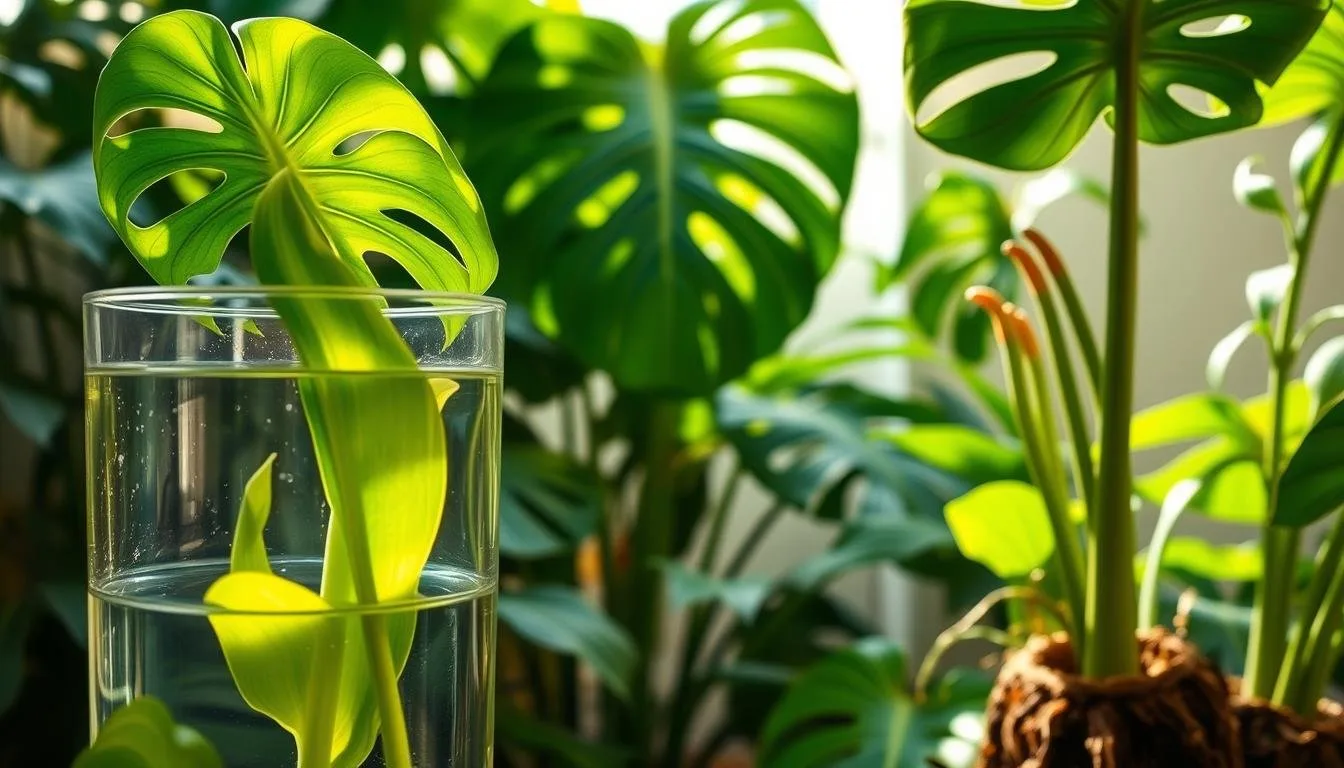
Water is useful when you want to watch the roots develop. Place the node below the water line while keeping the leaf and most of the stem above it, then put the container in bright indirect light in a warm, draft-free room.
Refresh the water when it becomes cloudy or develops an odor; changing it every few days is reasonable for a fresh cutting. Once several roots are a few inches long, transfer the cutting to a small pot of airy, pre-moistened mix. Water roots can be delicate, so expect a short adjustment period rather than moving the cutting into a large pot and keeping it saturated.
Soil Propagation
Soil propagation avoids the transition from water roots to potting roots, but it gives you fewer visible clues. Place the node into a small pot of airy mix, keep the leaf above the surface, and secure the cutting so it cannot wobble every time the pot is moved.
Keep the mix lightly and evenly moist, never muddy, and maintain warm bright indirect light. High humidity can help a cutting lose water more slowly, but a sealed plastic covering without ventilation can trap excess moisture. New growth is encouraging; gentle resistance when the cutting is moved is another sign that roots are forming, but do not pull repeatedly to test it.
Diagnose Yellow Leaves
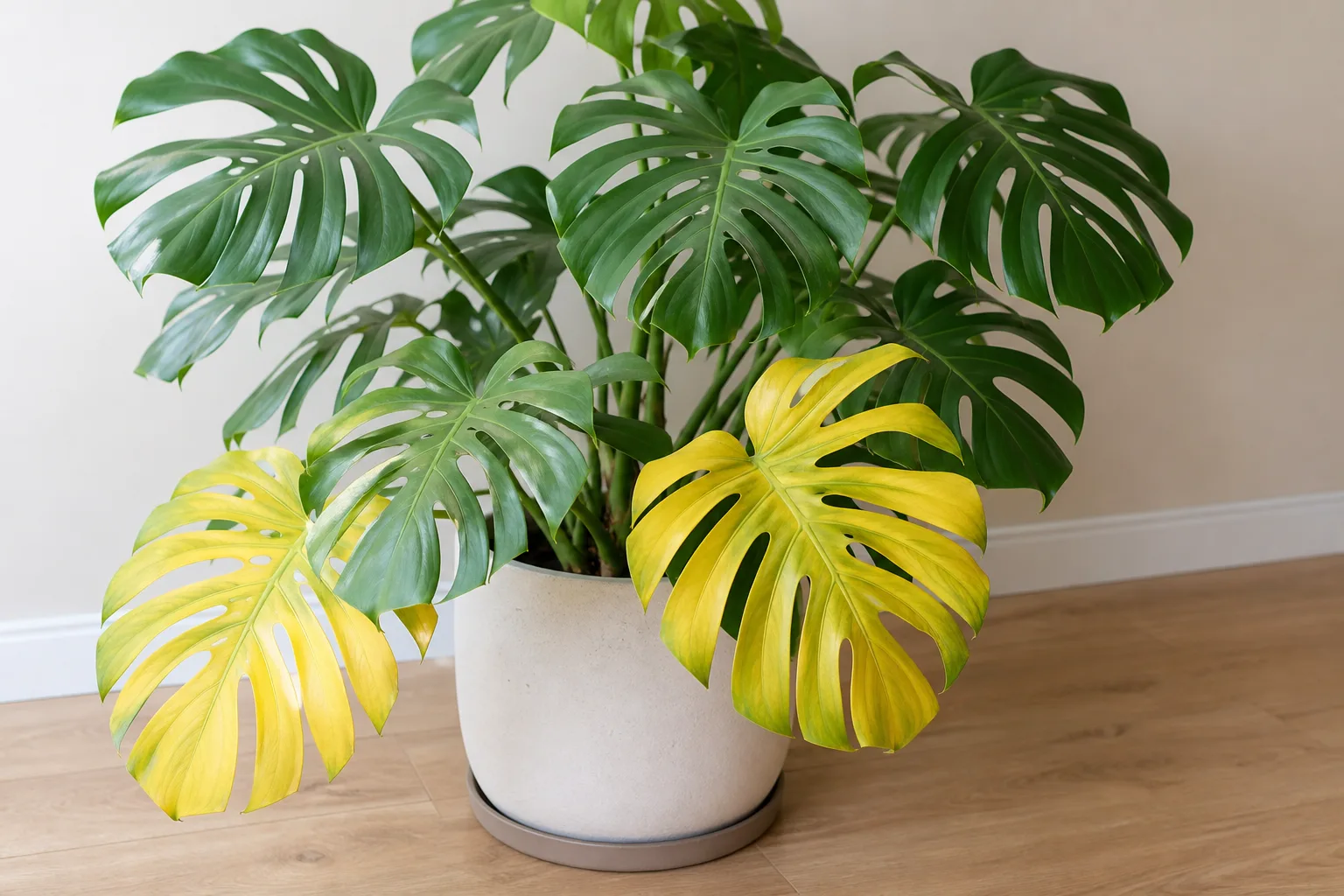
One old lower leaf turning yellow can be normal aging, but several yellow leaves in quick succession deserve an inspection. Start with the soil: yellowing combined with wet mix, a sour smell, or a limp stem points toward overwatering or damaged roots. Yellowing with bone-dry mix and a light, papery leaf points in the opposite direction.
Low light can also slow the plant enough that older leaves are shed, especially when the pot is being watered on the same schedule as it was in summer. Move the plant toward brighter filtered light, then allow the mix to dry to the correct depth before watering again. Do not add fertilizer to a wet, failing root system; roots need oxygen before they can use more nutrients.
Variegated sections can yellow or brown sooner than green sections because they contribute less chlorophyll. A pale patch that changes slowly while the green tissue remains firm is different from a whole leaf turning soft yellow. Look at the pattern across several leaves and the condition of the roots before deciding that every color change is a nutrient deficiency.
Diagnose Brown or Crispy Leaves
Brown, dry edges have several possible causes. Low humidity, inconsistent watering, intense direct sun, cold drafts, and fertilizer-salt buildup can all create similar-looking damage. The location of the damage helps: a bleached patch on the window-facing side suggests light stress, while many crisp tips during dry heating season suggest air and watering stress.
White variegated tissue is especially vulnerable to drying and scorch, so a little browning in a large pale sector does not automatically mean the whole plant is failing. Protect the plant from harsh afternoon rays, improve the watering rhythm, and check for salt crust on the mix surface. Trim only the dead brown tissue, following the natural leaf edge; green tissue will not grow back after it is cut.
If brown areas are soft, spreading, or accompanied by a wet stem, treat the situation as a root or disease concern rather than a humidity problem. Isolate the plant from a crowded collection, inspect the roots and stem, and avoid misting damaged foliage until you know what is happening.
Diagnose Drooping or Curling Leaves
Droop is a symptom, not a diagnosis. A dry pot, lightweight root ball, and crisp leaf edges suggest thirst; a heavy pot, wet mix, and limp leaves suggest roots that are short of air because watering has been too frequent or drainage is poor.
Curling after a move to a hot, bright window can be light or heat stress. Curling beside an air conditioner, heater, or frequently opened door suggests a draft problem. Check soil moisture first, then review the last change you made rather than reacting with another large move, fertilizer dose, or extra watering.
Give a recently stressed plant time to respond. Older curled or scorched leaves may never look perfect again, so judge recovery by the next leaf, firmer stems, and a return to a predictable drying rhythm. This prevents a common cycle in which repeated interventions damage roots while the original symptom is still being interpreted.
Handle Pests With a Safe First Response
Inspect the undersides of leaves, leaf joints, and aerial roots every time you water. Scale may look like small brown or tan bumps, mealybugs like white cottony deposits, and spider mites can leave stippling or fine webbing in dry conditions. The RHS specifically lists scale and glasshouse red spider mite as pests that may affect M. standleyana.
If you find pests, move the plant away from other plants and wipe or rinse the foliage where appropriate. Follow the label for an indoor insecticidal soap or another product registered for the pest and plant; test a small area first, because tender pale tissue can react to sprays. Repeat treatment as directed, since one cleaning rarely reaches every egg or crawler.
Avoid treating an uncertain symptom with several products at once. White variegation, mineral residue, and cottony mealybugs can look different under close inspection, and spraying a plant that is already sun-hot can add leaf damage. Diagnose, isolate, treat consistently, and improve airflow and inspection habits.
Keep the Plant and Cuttings in a Safe Place
The RHS lists Monstera standleyana as harmful if eaten and a skin and eye irritant, so wear gloves when pruning or handling sap and wash your hands afterward. Keep leaves, pruned stems, and propagation jars out of reach of children and pets; a cutting on a low shelf is still a chewing hazard.
The ASPCA Swiss cheese plant listing lists the related Swiss cheese plant, Monstera deliciosa, as toxic to cats and dogs because of insoluble calcium oxalates and describes oral irritation, drooling, vomiting, and difficulty swallowing. That entry is not a species-specific laboratory result for Standleyana Albo, but it reinforces the sensible placement rule for a Monstera: treat the plant as unsafe to chew and contact a veterinarian or animal poison-control service promptly after a suspected pet ingestion.
Use Seasonal Growth Checkpoints
In spring and summer, brighter light and active growth usually mean faster drying, more frequent observation, and a regular but moderate feeding routine. This is the best window for repotting, pruning long vines, adding a support, or taking cuttings because the plant can replace lost roots and leaves more readily.
In fall and winter, do less by default. Move the plant closer to usable light if days are short, but do not compensate for low light by watering on the old summer schedule. Let the mix dry farther between waterings, stop feeding if growth has slowed, and keep the pot away from cold glass and heating vents.
Review the plant by its newest growth every few weeks. A firm new leaf, stable variegation, clean nodes, and a root zone that dries predictably are better signs than a flawless older leaf. If growth stops, change one variable at a time—light first, then watering and roots—so you can tell which correction actually helped.
Conclusion
Monstera Standleyana Albo is easiest when you stop treating it like a delicate ornament and start reading its growing system. Give it bright filtered light, warm stable air, an airy potting mix, thorough watering after the upper layer dries, and a support that matches whether you want a climber or a trailer.
The variegation makes the plant more rewarding and slightly less forgiving: pale tissue can scorch, green tissue is essential, and a no-node cutting cannot become a new plant. Check the soil before watering, the roots before repotting, and the newest growth before changing the whole routine. Those three checks will prevent most of the problems that make this beautiful aroid seem difficult.