Lime for Lawns: When to Apply and How Much You Should Use
Get a soil-test-first plan for lawn lime: pH ranges by grass type, calcitic vs. dolomitic lime, how to calculate the rate, and when and how to spread it.
Lime is useful when a soil test shows that acidity is holding a lawn below the pH range suited to its grass. It is not a routine “green-up” treatment: adding it to soil that is already in range can push pH too high and make some nutrients harder for roots to access. Start with a lawn soil test that includes a lime recommendation, then match the product and amount to that report.
What lawn lime changes—and what it cannot do
Most lawn lime is ground limestone: a calcium-rich material that reacts with acidic soil and gradually raises pH. That change can improve the availability of nutrients and create a better root-zone environment when acidity is the limiting factor. The chemical reaction is gradual, so lime is a soil amendment rather than a fast-acting feed for the grass blades.
Lime does not supply nitrogen, kill weeds or moss, loosen compacted soil, fix poor drainage, or repair drought damage. If a lawn is pale because it is shaded, waterlogged, nutrient-deficient, scalped, diseased, or simply the wrong grass for the site, liming may do nothing to solve the cause. It can even make a nutrient problem harder to correct if the pH is already suitable.
The target is not necessarily neutral pH 7.0. Turf types have different tolerances, and the best target also reflects local soil and nutrient conditions. Think of lime as a specific correction for confirmed acidity—not a general-purpose lawn treatment.
Does your lawn need lime? Let the test answer
Order a soil test through your state or county Cooperative Extension service, university lab, or another reputable lab that accepts turf samples and returns a lime requirement. A useful report gives the measured pH, nutrient information, and a rate or clear instruction if raising pH is recommended. A handheld meter or color-strip kit may give a rough pH estimate, but it usually does not measure the soil’s reserve acidity well enough to calculate the amount of limestone a lawn needs.
That distinction matters because two soils can show the same pH but require different amounts of lime to reach a target. Clay and organic matter buffer acidity; sand generally has less reserve acidity and can shift more readily. Extension labs may use a buffer-pH test alongside the water pH to estimate the soil’s capacity to resist change, as UMass Amherst explains in its soil pH and liming guide.
Choose the lab’s “lawn,” “turf,” or named grass option if the form asks what you are growing. A recommendation for a vegetable bed or field crop may use a different target and must not be carried over blindly to turf. In Iowa State’s guidance, the practical rule is explicit: apply lime to a home lawn only when the soil test recommends it. The same test-first principle appears in land-grant guidance across regions, even though local pH targets and rate limits differ.
When the test report says no lime
If the lab says lime is not needed, do not add it because a neighbor does, the calendar says fall, or the bag promises a greener lawn. A report showing pH within the range for your grass is a useful result: it rules out acidity as a likely reason to keep buying amendments. Continue with the other recommendations on the report, such as correcting a nutrient shortage only if one is identified.
If the report shows alkaline soil or a pH above the turf’s useful range, limestone is the wrong direction. Ask the lab what its report means before applying another amendment; lowering pH is a separate, soil-test-guided process and can be difficult in some soils. For instance, Missouri Extension’s lawn-testing guide lists 6.0–7.5 as its optimum range for turf and says no pH amendment is needed in that band. Its recommendation is regional, not a universal number for every grass and state.
Read soil pH in the context of your grass species
Many common turfgrasses perform well in mildly acidic soil, but “lawn pH” is not one exact number for every yard. Local extensions publish slightly different ranges because soils, grass mixes, management goals, and testing methods vary. Use example ranges to understand why a species matters—not to override the lime recommendation on your own lab report.
| Turfgrass example | Extension-published pH range | What it means for liming |
|---|---|---|
| Tall fescue | About 5.8–6.5 in Maryland guidance | Mild acidity may already be suitable; don’t chase pH 7. |
| Zoysiagrass | About 6.0–7.0 in Maryland and Georgia guidance | Test first and correct only below the locally recommended range. |
| Bermudagrass | About 5.5–6.5 in Georgia guidance | A number below 6 is not automatically a lime order. |
| Centipedegrass | About 5.0–6.0 in Georgia guidance | This grass tolerates more acidity; routine liming can overshoot. |
| Fine fescues | Some tolerate pH around 5.1–5.5 | A lower pH may give acid-tolerant grasses a competitive advantage. |
These are regional examples from Maryland Extension, Georgia Cooperative Extension, and UMass Amherst. Georgia Extension specifically cautions against liming centipedegrass unless a soil test indicates it. UMass also notes that low soil pH can favor fine fescues and bentgrasses in some turf communities, so raising pH can change which grasses compete best.
Why grass type changes the target
Soil pH affects the availability of several nutrients and the soil processes that cycle them, but grass species differ in how well they tolerate acidity. A homeowner with Kentucky bluegrass may receive a different recommendation than a homeowner with centipedegrass, even if the same pH number appears on both reports. Mixed lawns add another layer: ask the lab to recommend for the dominant grass or the intended future mix.
If you do not know the grass type, identify the seed or sod used, check local turf-extension identification pages, or ask your county Extension office before trying to force the soil toward a generic target. This is especially useful in transition zones where cool- and warm-season grasses may coexist. A soil test can tell you what the soil is doing; it cannot choose the turf species that best fits your shade, heat, or maintenance goals.
Collect a useful lawn soil sample
The lime recommendation is only as good as the sample. First divide the yard into areas that have similar soil, grass, drainage, and management history. Send separate samples for areas with a different lawn type, construction fill, chronic wetness, heavy shade, or a distinct problem; combining those with the rest can blur the result you need for a lime decision.
For each area, follow the lab’s sample depth and collection instructions. In general, take multiple small cores from representative spots, avoid unusual locations such as fertilizer spills, compost piles, pet-urine spots, and lawn edges, then mix the cores in a clean plastic container and submit the requested amount. Keep the sample free of surface thatch and plant debris. Wisconsin Extension’s sampling guidance emphasizes testing before applying lime or fertilizer; local instructions take priority because sample depth and packaging can vary.
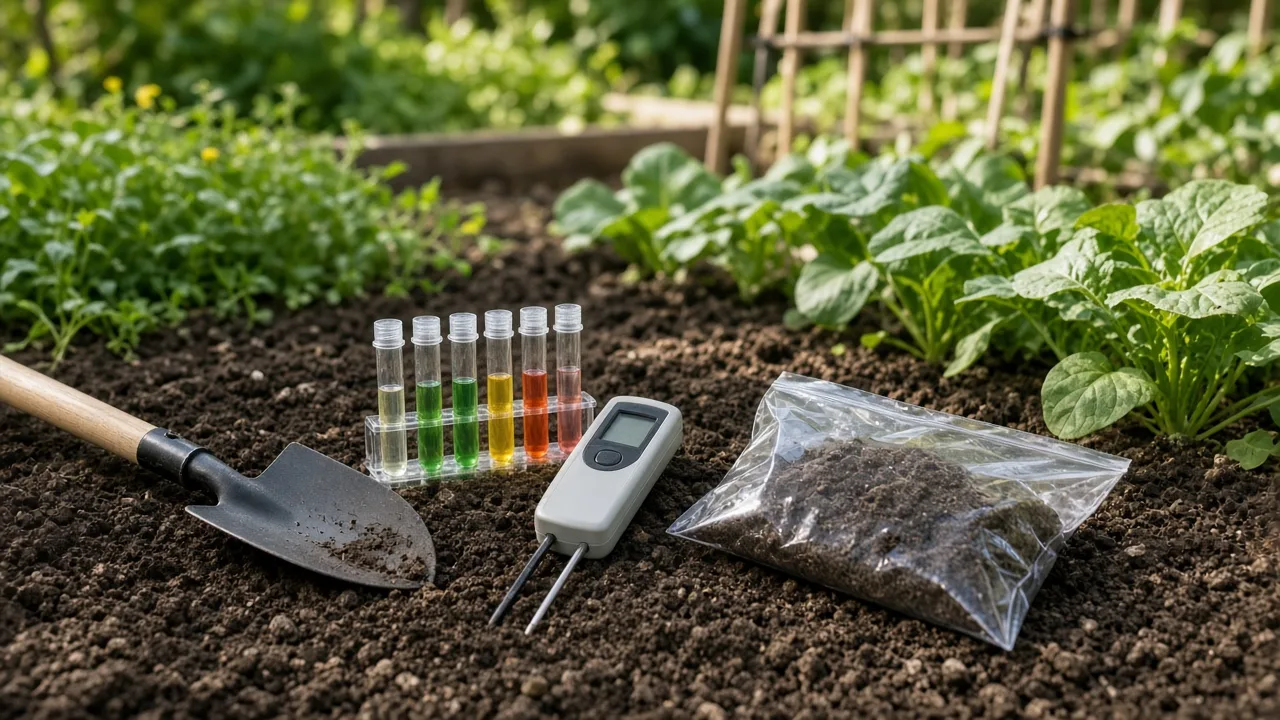
When the lab asks what crop or plants the soil supports, write “home lawn” and name the grass if known. Tell the lab if you recently applied lime, fertilizer, compost, or another amendment, because recent applications can affect interpretation. Do not sample immediately after applying lime and then use that result to decide whether the prior application worked.
Choose calcitic, dolomitic, or pelletized lime
Calcitic limestone is primarily calcium carbonate. Dolomitic limestone contains calcium and magnesium carbonate, so it can address low pH while also supplying magnesium. It is not automatically the better or more complete product: choose dolomitic lime when the soil analysis shows magnesium is low or the lab specifically recommends it. If magnesium is already adequate or high, adding more may be unnecessary.
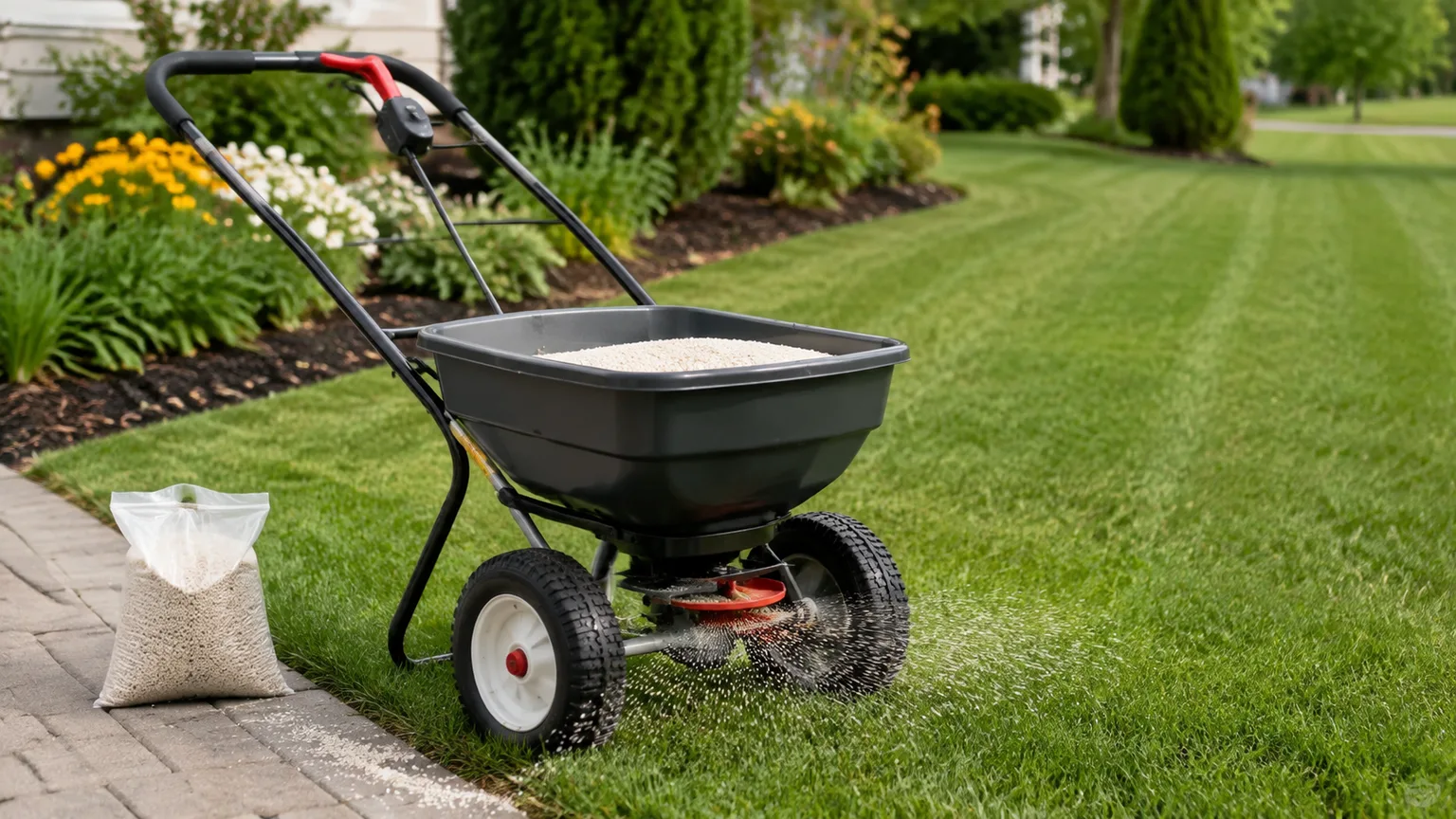
Pelletized lime is ground limestone bound into granules that are easier to spread with common lawn equipment and tend to create less dust than fine powder. The pellet form does not mean it is a different pH treatment or an instant fix; the pellets break apart with moisture and the underlying limestone reacts over time. Finer particles can react faster when they contact soil, while granules may be easier for a homeowner to distribute evenly. Compare the bag’s guaranteed analysis and directions, not “fast” wording alone.
The bag may list a calcium carbonate equivalent (CCE), effective neutralizing value, or similar measure. That value reflects how much acid the product can neutralize relative to pure calcium carbonate, and fineness affects how quickly it reacts. Some lab rates assume a standard material; others include a correction or tell you exactly how to convert. Penn State’s turf liming guidance explains why material quality and particle size matter. If the report’s basis is unclear, call the testing lab before adjusting its number.
Avoid quicklime and hydrated lime on turf
For a home lawn, look for agricultural limestone or a lawn-labeled calcitic/dolomitic limestone recommended by the test. Do not substitute hydrated lime (calcium hydroxide) or quicklime/burned lime (calcium oxide) for ordinary lawn limestone. These more caustic materials can injure turf and create handling hazards; they are not simply a stronger version of a consumer lawn product. Missouri Extension and Maryland Extension both distinguish standard agricultural lime from those products.
Wear the protective equipment stated on the label, avoid creating dust, keep material off skin and eyes, and store it away from children and pets. Label directions are product-specific, so follow them even when a general lawn-care article suggests a different approach.
Calculate the product amount from the test recommendation
Most homeowner rates are expressed as pounds per 1,000 square feet. Measure the actual grass area rather than the whole property, then calculate: recommended pounds per 1,000 square feet × lawn area ÷ 1,000 = total pounds. For example, if a test recommends 25 pounds per 1,000 square feet and the measured lawn area is 6,000 square feet, the arithmetic gives 150 pounds of the reference material before any product-label conversion or split-rate limit. The 25-pound figure here is only an example; it is not a generic recommendation.
Do not estimate from the bag size or copy a neighbor’s rate. The amount depends on the soil’s buffering capacity, starting pH, target, soil depth, and the neutralizing value of the product. If a report recommends a very large amount, check the maximum for a single application in your state guidance and the product label. Different extension publications set different limits for established turf, which is why one national “pounds per lawn” rule is misleading.
For a product adjustment, use the method specified by your lab. If—and only if—the lab rate is based on 100% CCE and the instructions say to correct for CCE, the basic calculation is: adjusted amount = lab rate × 100 ÷ product CCE percent. A material with 80% CCE would require 1.25 times the reference amount to supply the same neutralizing capacity under that simple assumption. Some labels report an effective value that also accounts for fineness, and some tests already tailor the recommendation; do not apply the calculation twice.
When to apply lime to a lawn
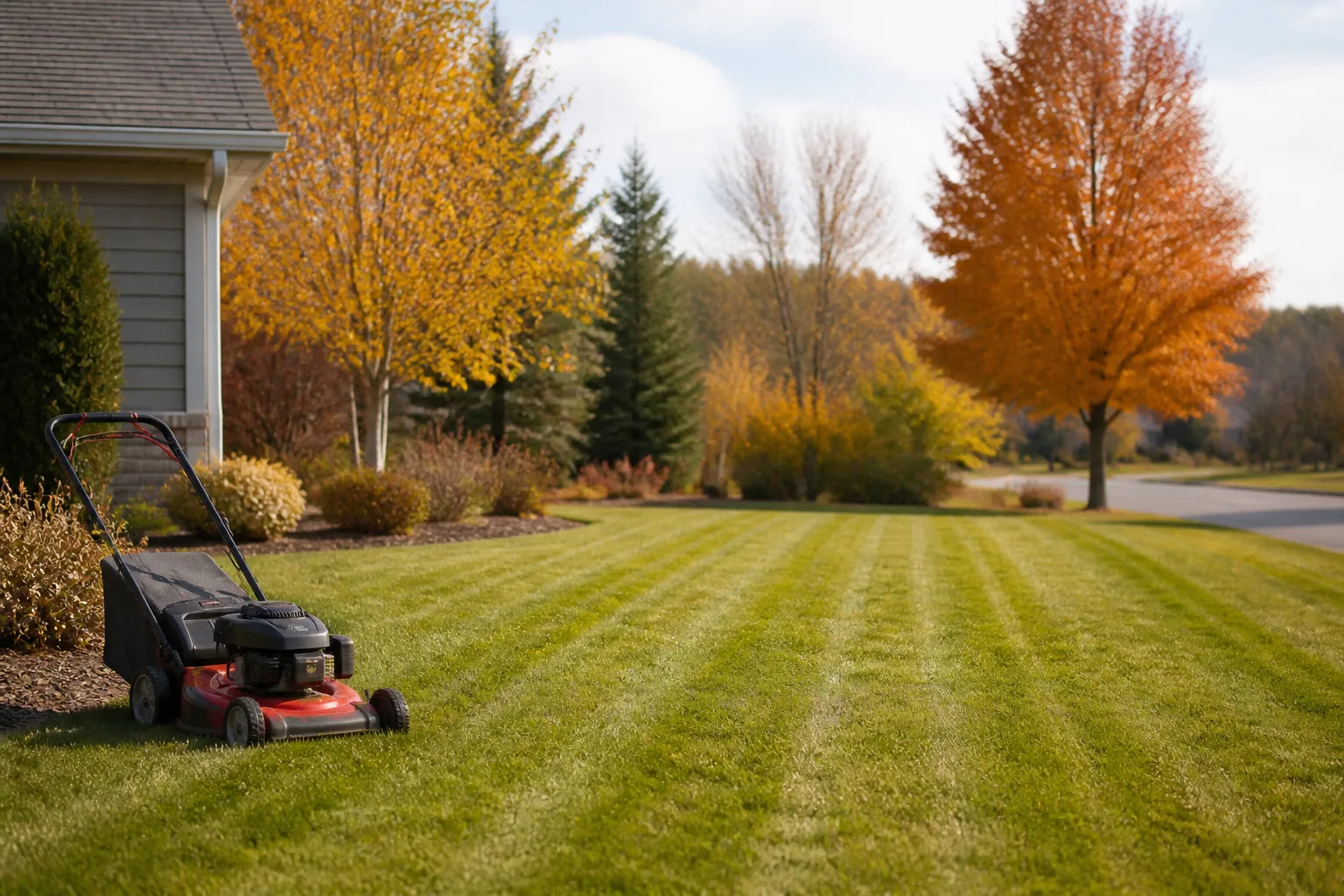
Apply lime when the soil test calls for it and you can follow the lab and bag directions—not because a particular month arrives. For established cool-season turf, fall is often a convenient window, and some extensions also recommend cool spring conditions. Maryland Extension says limestone can be applied any time of year, with autumn a preferred season there; Missouri Extension recommends cool spring or fall conditions. These are practical regional windows, not a rule that lime only works in one season.
Avoid spreading on snow- or frost-covered grass, frozen ground, a saturated lawn, or in conditions where wind or heavy runoff could move granules into beds or storm drains. Choose a time when you can spread evenly and, if directed, water the product according to the label. There is no need to force an application before the grass becomes dormant if the soil-test correction can wait for a suitable weather window.
Lime reacts gradually, and a measurable pH change may take months. Do not expect the lawn to turn green in a few days, and do not add another dose just because the first pass is not visually obvious. Maryland Extension notes that one application may take up to six months to measurably change pH; the correct response is patience and a test at the interval advised by the lab.
How to apply lime to an established lawn
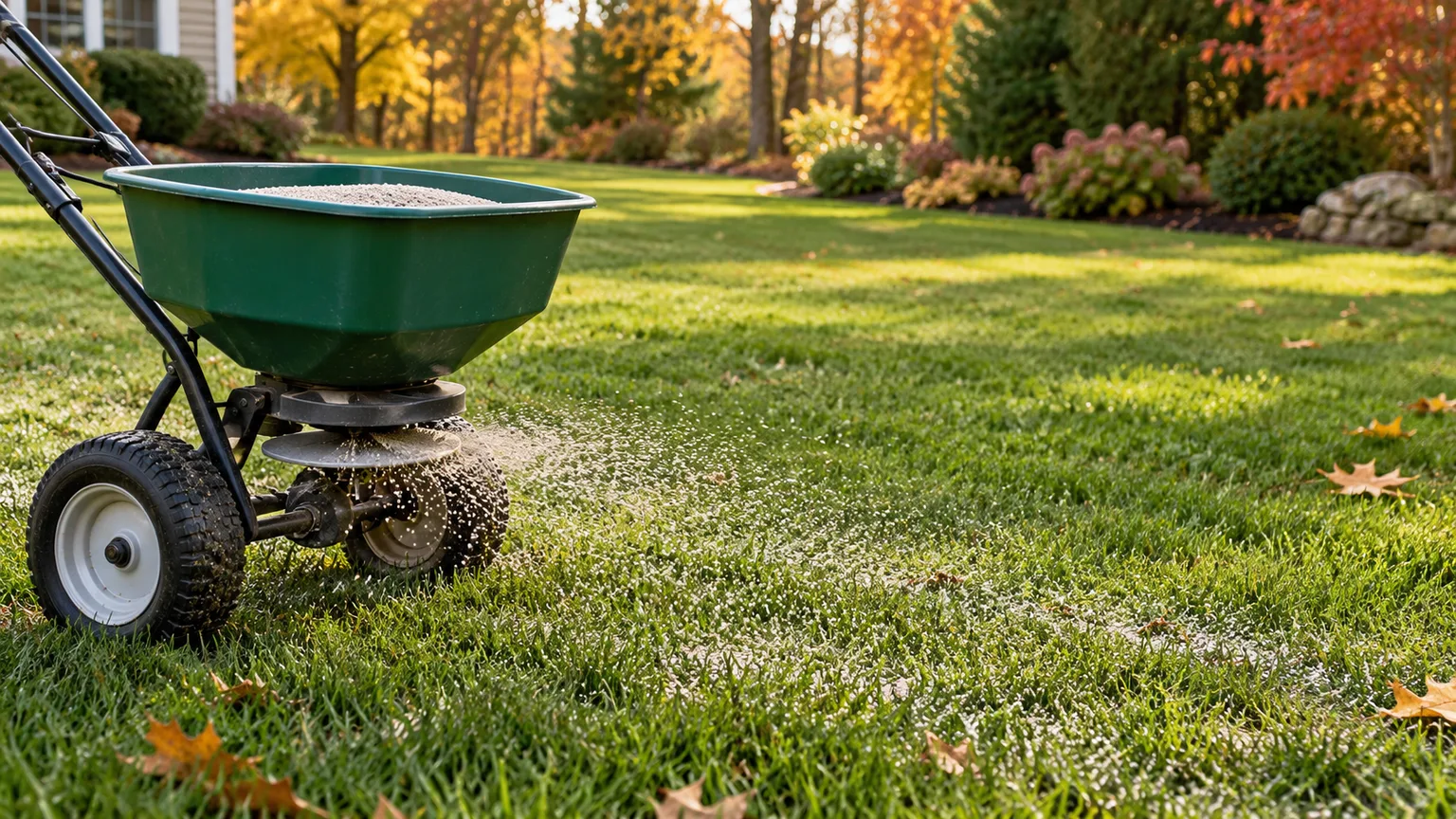
Use the product label and the soil-test rate as the controlling instructions. A rotary or drop spreader can distribute pelletized limestone more evenly than broadcasting handfuls. Before you fill it, confirm the lawn area, weigh or measure the amount required for that area, check the spreader setting on the product label, and split the total into equal portions if you plan to make crossing passes.
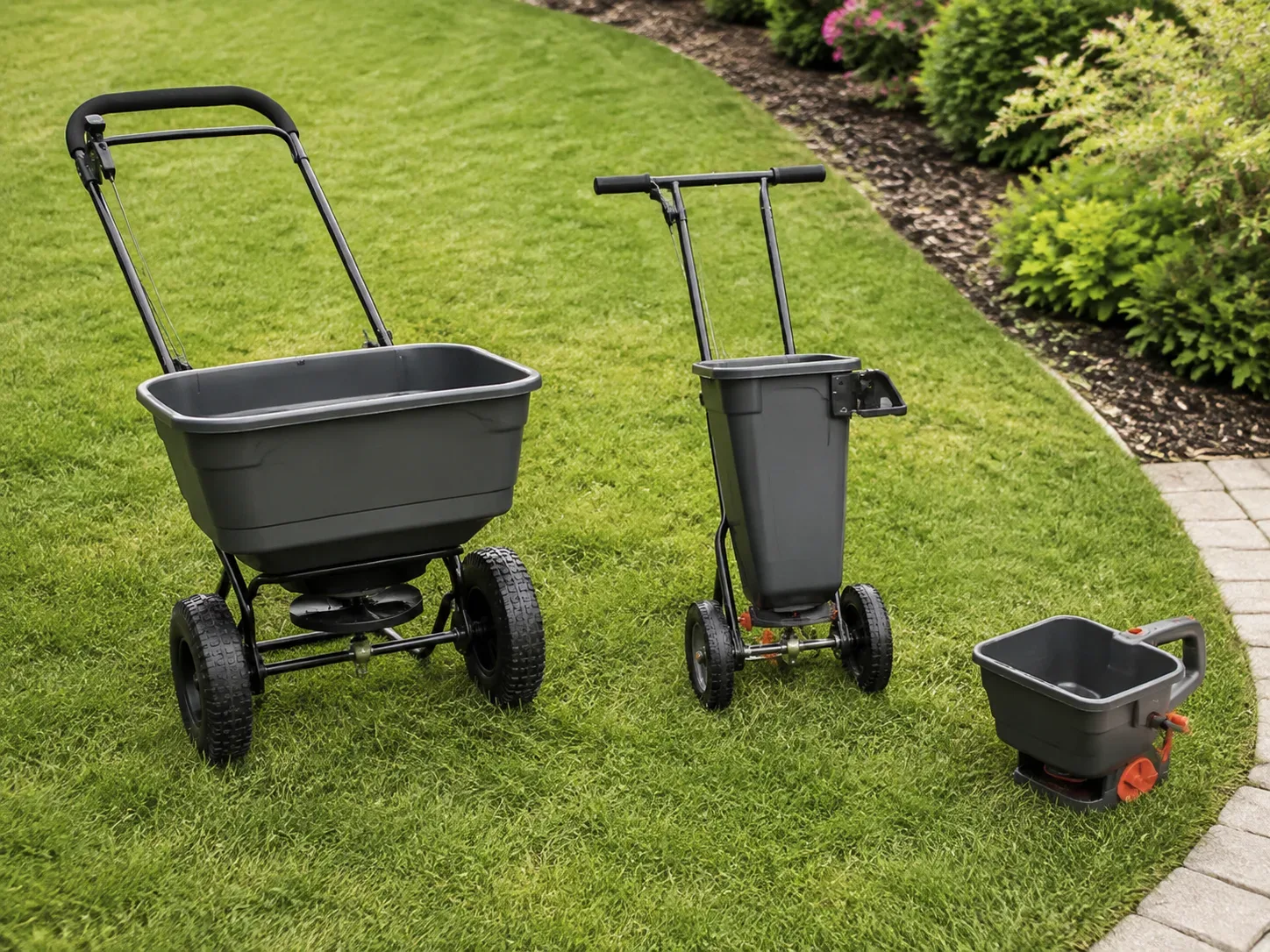
Work in calm weather over dry or lightly damp turf rather than sticky, saturated ground. Apply one half of the measured amount in parallel passes, then spread the other half in perpendicular passes. This crisscross approach helps prevent streaks from missed lanes or overlap. Gardening Know How’s practical lawn-liming guide also describes crossing directions for more even coverage; use the spreader’s product-specific setting and do a small calibration pass if you have not used that product before.
Keep granules from accumulating on pavement, driveway edges, garden beds, and exposed tree or shrub roots. Sweep any spilled product back onto the lawn where appropriate and keep it out of gutters and waterways. Water the area only as directed by the product label or local recommendation; if light irrigation is advised to move granules off the leaf blades, apply just enough to settle them without producing runoff.
Split larger rates when the local guidance says to
Do not interpret every recommendation as one large pass. State limits vary: for example, Missouri Extension advises no more than 50 pounds per 1,000 square feet per application on established lawns, while Penn State’s and UMass’s publications describe different maximums based on their recommendations and turf situations. Those differences reflect local research and practice; choose the limit from your own Extension or lab, and split a larger total over the stated interval.
If the report recommends multiple applications, mark down the first date and amount, then apply only the remaining portion at the approved interval. Do not recalculate from a second test taken immediately after the first treatment or assume that two products with different neutralizing values deliver the same result at the same weight. The lab can clarify a split schedule when a single report’s wording is unclear.
For a new lawn, correct pH before seeding
New lawn establishment is the easiest time to incorporate a soil-test-recommended amendment because bare soil can be mixed more deeply than an established turf root zone. If the report calls for lime, apply the correct product and incorporate it to the depth specified by your local recommendation before seeding or laying sod. This gives the amendment better contact with soil than leaving it on the surface of mature grass.
Do not till lime into a yard simply because you are renovating. First test the area and determine whether the recommendation is intended for the planned grass. If a high rate is required, the lab may advise splitting it even during renovation or incorporating only a calculated amount at the available depth. A seed blend suited to the site and a prepared seedbed still matter; lime cannot compensate for poor seed-to-soil contact, shade mismatch, or irrigation failure.
When overseeding an existing lawn rather than starting from bare soil, treat it as established turf for application limits. Follow the lime product directions and the seed supplier’s instructions about surface preparation, watering, and timing. If the test and seeding schedule conflict, ask the lab or local Extension office which step should come first for your area.
Coordinate lime with fertilizer, aeration, and seed
Lime and fertilizer solve different problems. Lime changes pH and may supply calcium or magnesium; fertilizer supplies plant nutrients such as nitrogen, phosphorus, and potassium. A soil test can recommend both, but that does not automatically mean they belong in the spreader together or should be applied on the same day. Follow both labels and any timing notes from the testing lab, particularly if the fertilizer contains herbicide or if you are seeding.
Core aeration is not a universal prerequisite for liming. It can be useful where compaction is independently diagnosed and where the grass can recover, and some local lawn guidance pairs liming with aeration. But the pH correction is driven by the limestone contacting soil and reacting over time; if your soil test calls for lime and the lawn does not need aeration, you do not have to rent an aerator just to make the application valid. Avoid aerating very wet soil or turf under stress.
If you are combining work with overseeding, check the sequence for your grass and climate. A soil-test amendment can be applied before establishment and incorporated where possible; for a surface application on established turf, do not bury seed under a heavy lime layer. The Old Farmer’s Almanac recommends using soil results to guide amendments rather than applying them by habit, a useful principle when several lawn projects compete for the same weekend.
Treat symptoms only after ruling out other causes
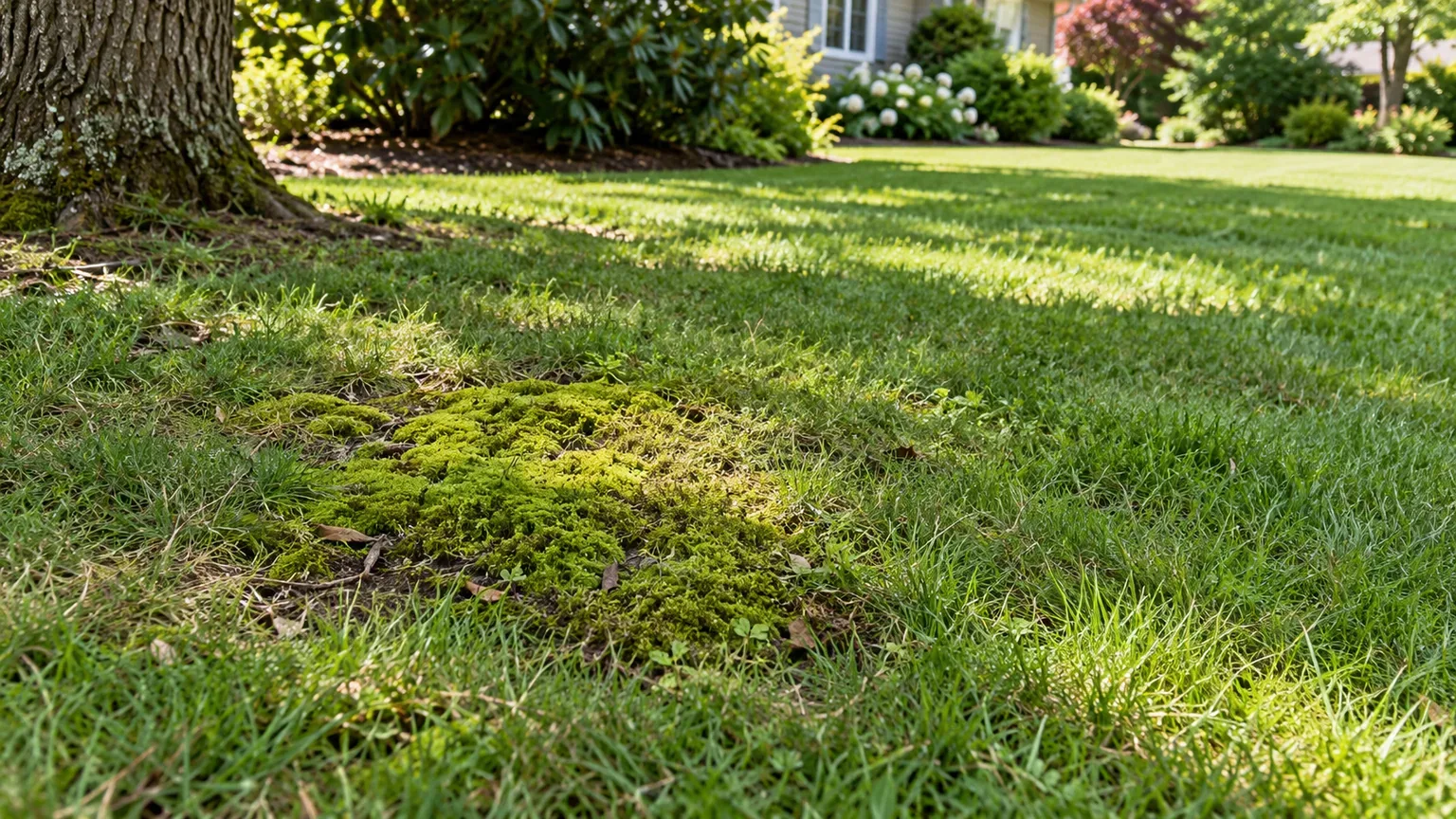
Yellowing, sparse growth, moss, and poor response to fertilizer can make soil pH worth checking, but none proves a lawn needs lime. Yellow blades may point to nitrogen deficiency, water stress, poor drainage, compacted soil, disease, or an unsuitable grass for the site. Moss can take hold where turf is thin, shaded, wet, or compacted; lime will not remove it unless excessive acidity was one part of the problem.
Use the symptoms to decide where to take a sample and what else to inspect, not to choose an application rate. If one part of the yard is thin and another is healthy, submit separate samples when the soils or management histories differ. Check irrigation coverage, sunlight, mower height, drainage, and recent construction before assuming pH is the only issue.
When the report recommends lime, correct that issue and then give the soil time to respond. If the lawn remains weak after the pH has moved into the range recommended for the grass, reassess nutrients, compaction, drainage, shade, seed quality, and disease instead of repeating lime. This avoids turning one inconclusive visual symptom into an annual amendment routine.
Lime mistakes that waste money or harm turf
The most common mistake is applying lime without a soil test. A product can be widely used and still be wrong for a lawn whose pH is adequate or alkaline. The next is treating a pH number as the full prescription: soil texture, buffer pH, species, and product neutralizing value all influence the amount needed.
Other avoidable errors include using a vegetable-garden rate on turf, applying a large total in one pass when local guidance says to split it, choosing dolomitic lime without checking magnesium, and buying caustic hydrated or burned lime as a shortcut. Applying while wind or heavy rain can carry granules off-site also wastes product and may send it where it is not needed. Measure the grass area, use a calibrated spreader, and protect nearby plantings.
Finally, do not repeat an application just because there is no immediate color change. Limestone dissolves and reacts slowly, and established turf can take months to show a measurable pH response. Record what you applied, wait for the test lab’s retest window, and use a new representative sample before deciding whether another application is warranted.
Conclusion: test first, then apply only what the lawn needs
Lime belongs on a lawn when a turf-appropriate soil test identifies acidity and recommends a correction. The grass species, soil’s reserve acidity, product type, neutralizing value, and local application limit determine the plan; a neighbor’s schedule or a bag’s broad coverage estimate cannot replace that information.
Start with a representative sample, choose calcitic or dolomitic limestone to match the test, measure the actual lawn area, and spread the recommended amount evenly in safe, label-compliant conditions. Then allow time for the soil to respond and retest when your lab advises. If the result says lime is unnecessary, skip it and investigate the lawn’s real limiting factor.