Japanese Umbrella Pine Care: Planting and Growing Guide
Plan for Japanese umbrella pine’s mature size, protect it from drought and wind, and get practical advice on containers, cultivars, and needle browning.
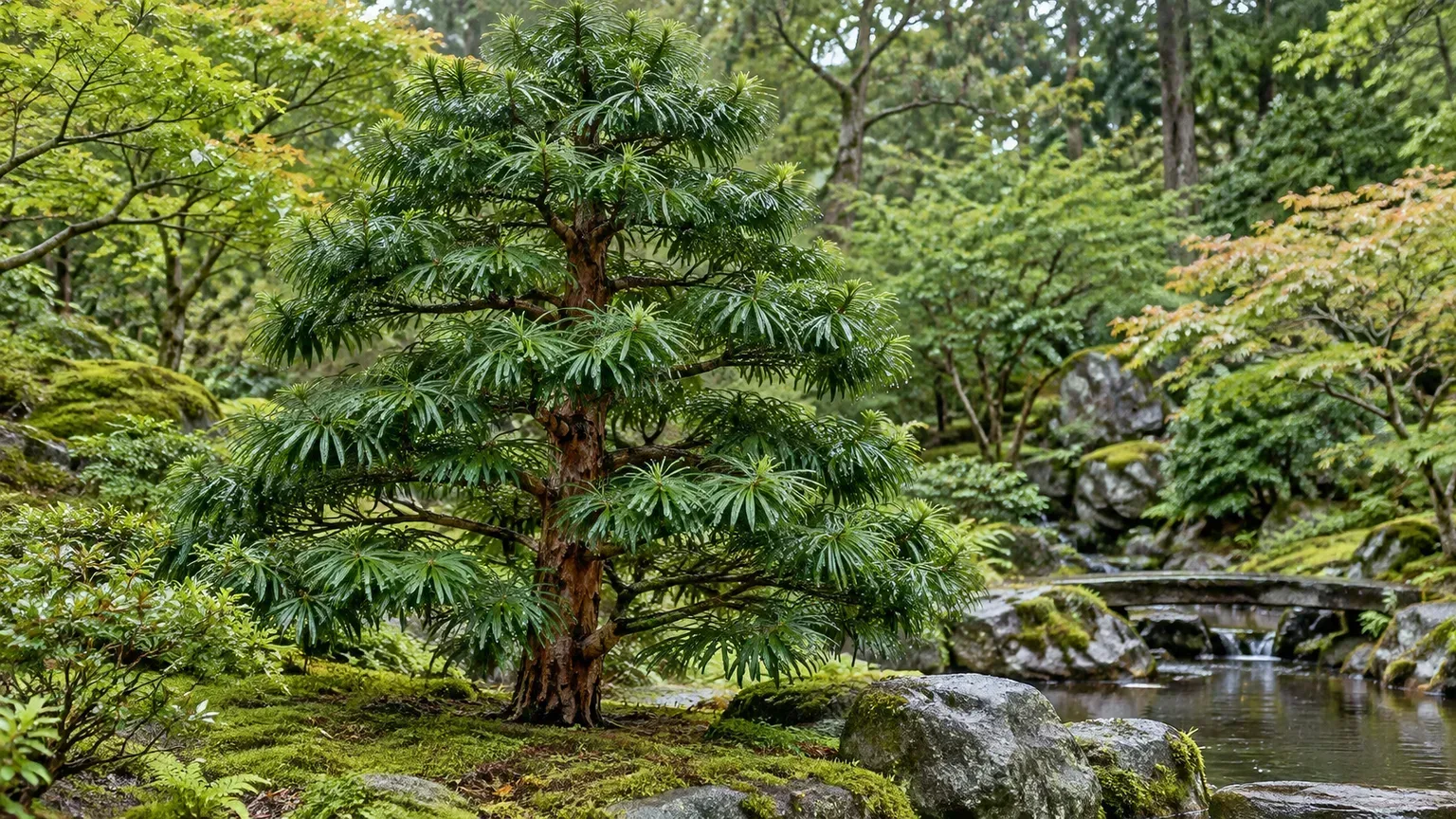
Japanese umbrella pine is a striking evergreen for a gardener who can give it a cool, sheltered position and soil that stays evenly moist without becoming soggy. It grows slowly, but “slow” does not mean small forever: the species can become a substantial tree over decades. The most important care decision is therefore whether your climate and planting space suit it before you bring one home.
The botanical name is Sciadopitys verticillata. Its long, glossy green foliage fans out in whorls at branch tips, resembling the ribs of a small parasol. It is not a true pine and is the sole living species in its own plant family, Sciadopityaceae. Its uncommon foliage and reddish-brown bark make it a specimen tree rather than a plant to squeeze into a narrow foundation bed. North Carolina State Extension’s plant profile describes its native habitat in Japan as forested areas with high rainfall and humidity.
Know the Tree Before You Plant It
Japanese umbrella pine is sometimes sold as parasol fir or parasol pine, but neither common name changes its botanical identity. It is a cone-bearing evergreen conifer, not a member of the pine genus Pinus. That distinction is useful when you are comparing care advice or trying to identify the plant: look for flat, strap-like foliage in umbrella-shaped whorls, not the usual clusters of long, narrow pine needles.
Plan for its mature dimensions, not the size of the pot on the nursery bench. Published figures vary with region and reference: The Morton Arboretum lists a garden size around 20 to 30 feet tall and 15 to 20 feet wide, while NC State Extension and Oregon State University describe a broader potential size range, including much taller specimens. The RHS gives a 20-to-50-year time to maturity. Together, these profiles point to a long-lived tree whose eventual footprint depends on climate, cultivar, and growing conditions—not a dependable miniature for a tight corner. Morton Arboretum, Oregon State University, and the RHS plant profile offer complementary regional descriptions.
The pace is measured in years rather than seasons. A young tree may seem unchanged for a while as it establishes roots, and its silhouette can become broader and more layered as it ages. If you need a screen quickly, a compact patio plant, or a tree that must stay below a roofline, choose a different plant instead of expecting pruning to keep this species permanently small.
Match the Climate and Site
This conifer performs best where summers are not punishingly hot, rainfall or irrigation is dependable, and cold-season winds are moderated. Zone ratings are not identical across references: NC State includes USDA Zones 5 through 8, while Morton Arboretum notes that it is marginal in northern Illinois and lists Zones 5 through 7 for its regional use. A zone describes average winter minimums; it does not tell you whether your yard has scorching reflected heat, dry wind, or summer drought. Treat the ratings as a starting point, then judge the actual site. NC State Extension and Morton Arboretum document that regional nuance.
Light, Heat, and Wind
In a cool-summer garden, full sun to light partial shade is suitable. Where afternoons are hot, give the tree some protection from the strongest late-day sun while keeping it in an open position with good airflow. A spot that is bright in the morning and shaded later can reduce heat stress without placing the tree in deep, dry shade. NC State and Oregon State both note that afternoon shade can help in hotter areas.
Shelter it from hard winter winds, especially near the colder edge of its range. A windbreak or nearby structure can help, but do not plant it in a stagnant pocket between a wall and dense hedge. Avoid hot pavement and heat-reflecting walls as well as low spots that collect cold air or standing water. When choosing between an exposed sunny lawn and a bright, sheltered woodland edge, the second site may be the better fit if the lawn is hot, dry, and wind-scoured.
Soil and Drainage
Aim for soil that is rich, slightly acidic to neutral, and consistently moist yet well drained. This combination matters more than chasing one exact pH number: Japanese umbrella pine is sensitive to drought, but saturated soil leaves roots short of oxygen. The RHS lists acid or neutral soil and “moist but well-drained” conditions; NC State and Morton Arboretum likewise emphasize moisture and drainage.
Before planting, watch the site after a soaking rain. If water stands in the planting area or the ground stays sticky and airless, correct drainage or choose a raised, better-drained location rather than digging a deep pocket and filling it with a different mix. If soil is sandy and dries quickly, organic matter spread broadly over the root zone can improve water retention. Do not add sulfur, lime, or strong fertilizer without a soil test that gives you a reason.
Plant Without Burying the Root Flare
Plant during cool weather when the ground is workable and not waterlogged or frozen. In much of North America, early spring or fall reduces heat stress while new roots settle in; avoid a hot, dry planting window unless you can water carefully. The RHS conifer guide similarly recommends planting in mild, unfrozen conditions and improving compacted soil across the planting area rather than only in the hole. RHS: How to grow conifers
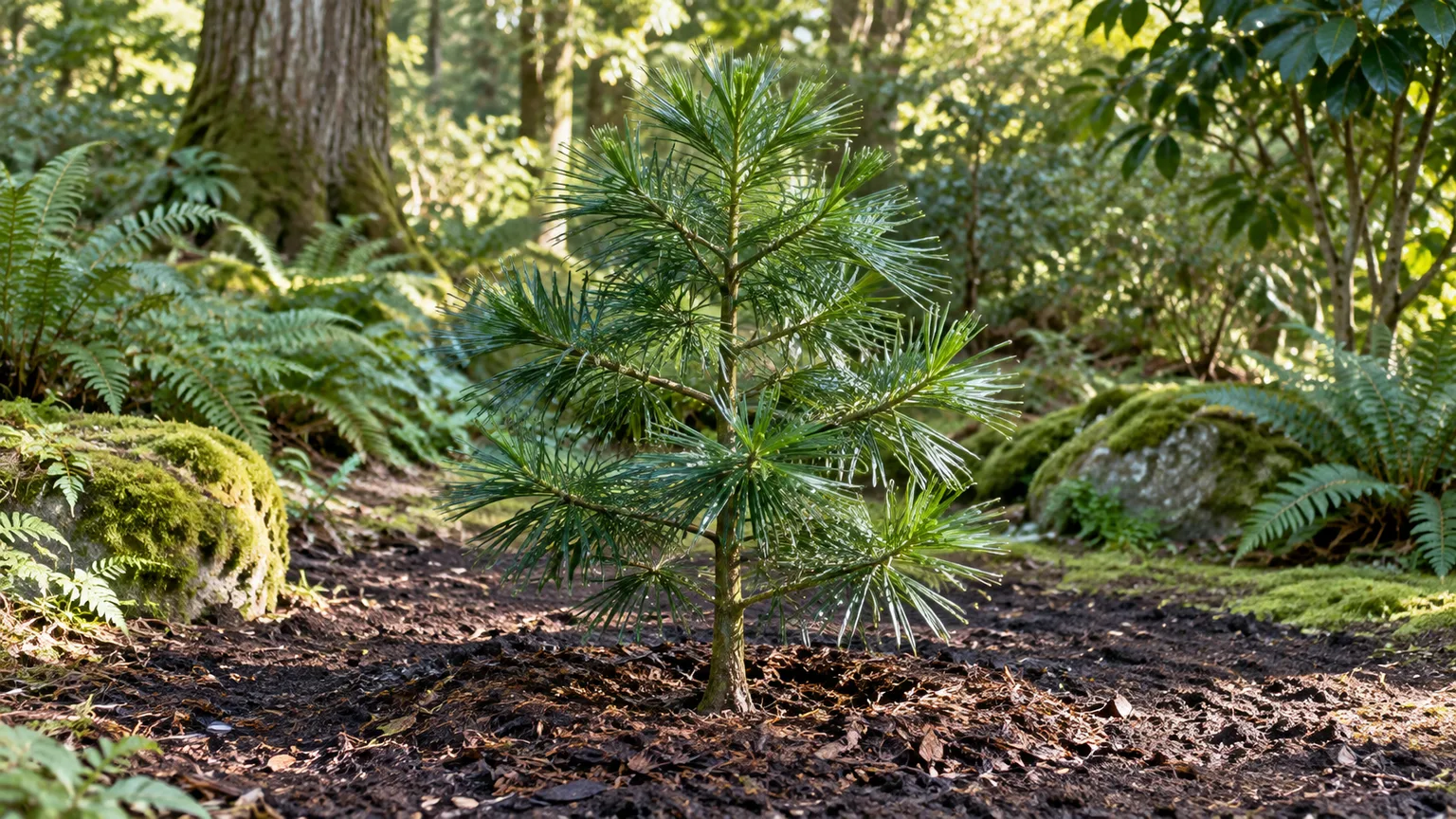
Start with a healthy nursery plant that has an intact leader and evenly distributed branches. Check that the root ball is moist and firm rather than waterlogged, and avoid a pot-bound plant with thick roots circling repeatedly around the container if another specimen is available. A balanced young tree is easier to establish than one whose top has been broken or whose roots are severely congested.
Dig a broad hole no deeper than the root ball, loosen compacted ground around it, and set the root flare at or just above the surrounding grade. If the roots circle around the edge, gently tease or redirect the outer roots; do not destroy the whole root ball. Backfill with the excavated soil, firm lightly to remove large air gaps, then water slowly so the soil settles around the roots. Keep the trunk collar visible. A tree planted too deep is harder to correct later and can stay wet where trunk and soil meet.
Finish with a shallow, even layer of organic mulch over the root zone, leaving several inches of open ground around the trunk. Mulch helps slow evaporation and buffers soil temperature, but a mound against the bark can keep the collar damp and conceal damage. The goal is a broad, breathable root zone—not a deep bowl that traps water around the trunk.
Water by Root-Zone Conditions
During establishment, check the soil beneath the mulch every few days in hot or dry weather. Feel several inches down near the edge of the original root ball: if that soil is beginning to dry, water slowly and deeply enough to wet the whole ball and the surrounding soil. If it is still damp, wait. A weekly routine can be a rough reminder in dry weather, but rainfall, soil texture, temperature, and root-ball size change how often a new tree needs water.
Continue these checks through the first growing season and into the next if the tree has not rooted into surrounding soil. Sandy soil may need more frequent watering; clay that drains poorly may need less frequent irrigation and a better site. When watering, aim at the ground rather than spraying the foliage. Repeated shallow splashes wet the surface but may leave the absorbing roots dry.
Once established, the tree still benefits from supplemental water during prolonged drought. Do not accept the claim that its slow growth makes it drought tolerant: Morton Arboretum describes Japanese umbrella pine as drought-sensitive, and NC State warns that it does not tolerate dry conditions. Before watering, check that the soil is not already saturated. If the root zone is wet for days, more irrigation makes the problem worse; investigate drainage and compaction instead.
In a container, check moisture more often because a finite volume of mix dries faster than garden soil. Water thoroughly when the upper portion of the root ball begins to dry, let excess water drain freely, and empty any saucer beneath the pot. Avoid repeated tiny drinks that keep the surface damp while the center of the root mass dries out.
Fertilize Only When There Is a Reason
A newly planted umbrella pine needs good roots, not a heavy dose of fertilizer. If the foliage has normal color and the tree is producing healthy new growth, routine feeding is unlikely to fix anything. Slow extension is part of the plant’s character, so do not use aggressive fertilizer to force faster growth or compensate for a poor site.
If growth is unusually weak or the foliage is pale across the tree, check moisture, light, drainage, and root health first. A soil test can show whether pH or nutrients are actually limiting growth. If a test or a qualified local recommendation points to a deficiency, use a product labeled for landscape trees at the stated rate, preferably as growth begins in spring. Keep fertilizer away from the trunk and do not feed late in the season to stimulate soft growth before winter.
Prune to Preserve Its Natural Form
Japanese umbrella pine generally needs little pruning. Its slow, graceful structure is the point; routine shearing or repeated shortening changes the outline and can leave empty patches. If you need a narrow or permanently short tree, select an appropriate cultivar or another species rather than cutting the top off an ordinary specimen.
On a young plant, watch that one central leader remains dominant. If two leaders compete, address the weaker one while the tree is still small, preferably with guidance from an experienced arborist if the structure is substantial. The RHS notes that the species may need training to maintain a central leader, while also listing no pruning as the general requirement. That means structural correction is occasional, not an annual haircut.
Remove dead, broken, or diseased branches with clean, sharp tools, cutting just outside the branch collar. Avoid cutting a healthy branch back to a bare section: many conifers do not reliably produce new foliage from old, leafless wood. If a branch is too large to remove safely or the main leader is damaged, ask a qualified arborist to assess the tree before making a large cut.
Protect the Tree Through Winter
Cold tolerance and wind tolerance are not the same thing. A Japanese umbrella pine may survive a winter minimum in a listed zone and still suffer when dry winds pull moisture from foliage while frozen soil limits replacement. In colder or exposed gardens, plant near a permeable windbreak and keep the root zone evenly moist going into winter. Do not wrap the foliage tightly in plastic, which can trap moisture and restrict airflow.
Maintain a few inches of mulch over the root zone, but keep it off the trunk. After a dry autumn, water before the ground freezes if the soil is not saturated. In spring, wait for new growth before deciding that winter browning has killed a branch; damaged evergreen foliage may look poor for weeks, and the tree’s slow pace makes it easy to misjudge recovery.
Container roots are more exposed to freezing air than roots insulated by garden soil. Move the pot to a sheltered outdoor position, group it with other containers, or protect the sides of the pot while keeping drainage holes open. Do not bring the tree into a heated living room for the season. This is an outdoor conifer that needs outdoor conditions and a cool dormant period.
Grow It in a Container Only With a Long-Term Plan
A large, well-drained container can display a young Japanese umbrella pine on a patio, and compact cultivars are sometimes used in containers or bonsai. But a pot does not turn the species into a low-maintenance miniature. Roots have less room, the soil volume swings between wet and dry more quickly, and winter temperature changes reach the root ball faster than they do in the ground.
Use a stable container with generous drainage holes and a free-draining potting mix. Choose a pot that gives the roots room without surrounding a small root ball with a huge volume of slow-drying soil. Keep it outdoors in bright light, protect it from hard wind and harsh reflected heat, and check moisture whenever the weather changes. If the plant dries within a day or two after a thorough watering, roots are circling densely, or water no longer penetrates the mix, it is time to inspect and repot.
Treat container growing as a managed display or a way to grow a small, named cultivar—not as a promise that the tree will stay small forever. Plan for eventual root restriction, repotting, winter protection, and the possibility that the tree will need a permanent garden site. If those jobs are not practical, plant it in the ground where climate and space are suitable.
Propagate Japanese Umbrella Pine
Propagation is possible, but it is not a quick route to a mature landscape tree. If you want a particular cultivar, buy a correctly labeled nursery plant: seedlings may not match the parent, and cuttings can be slow or unreliable. For a gardening experiment, seed is the more straightforward starting point; cuttings are useful when preserving a selected form matters.
Start With Seed if You Have Patience
Collect seeds only from mature cones and keep them labeled with the parent plant and collection date. The cones develop over more than one season, so a green cone is not the same as a mature source of viable seed. Remove debris, discard visibly damaged seeds, and expect germination to vary rather than assuming every seed will sprout.
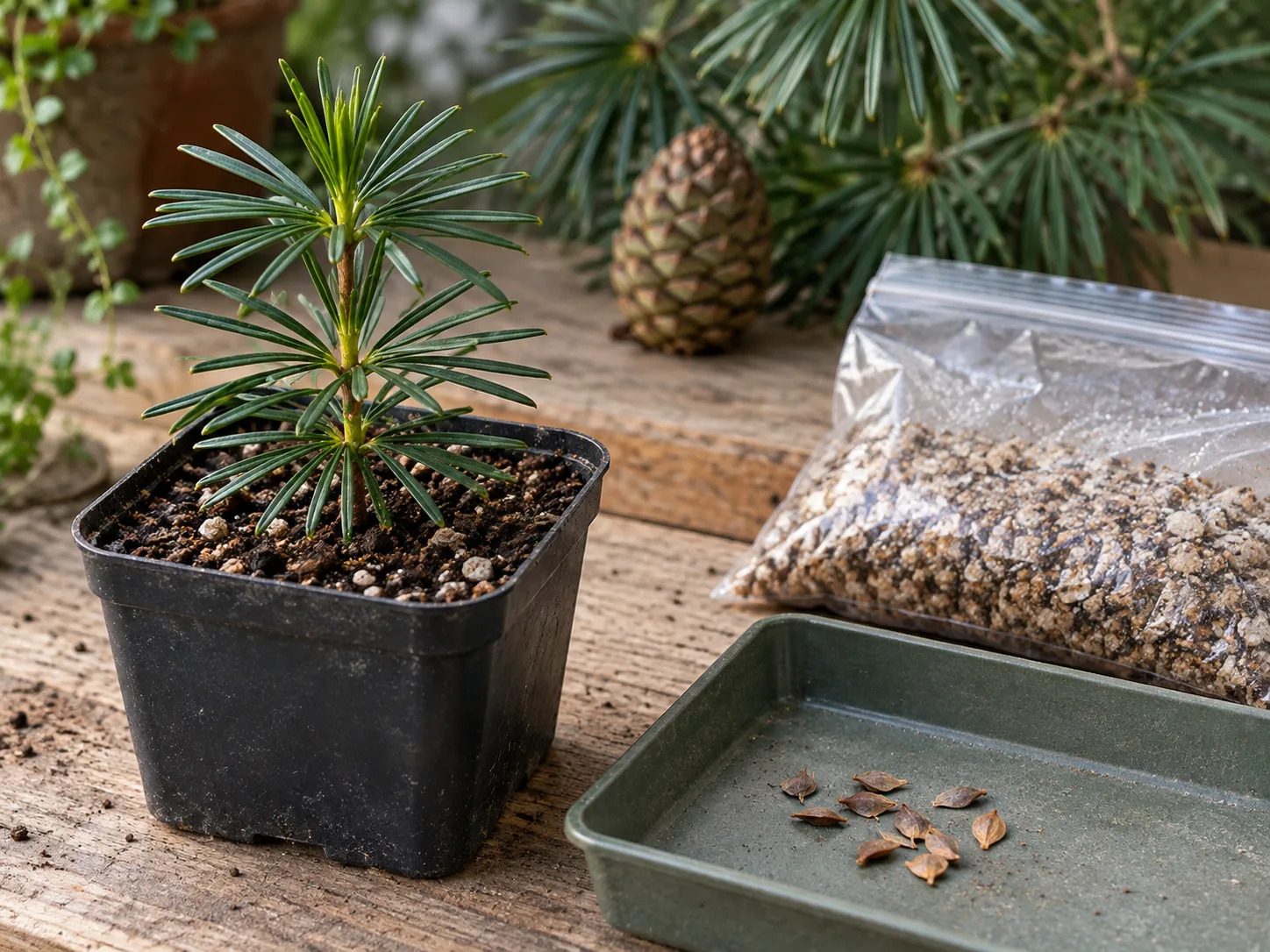
A cold, moist stratification period is commonly recommended before sowing. Harvest to Table suggests holding seeds in moist sand in a refrigerator for about two to three months; treat that as a starting method, not a guarantee, because seed maturity and storage history affect results. Harvest to Table’s Japanese umbrella pine guide covers this practical approach.
After chilling, sow seeds shallowly in a clean, free-draining seed mix. Keep the medium evenly moist, not waterlogged, and place the pot in bright indirect light where temperatures remain moderate. Check regularly for germination and damping-off; do not keep the surface permanently soaked. Pot seedlings on only after they are sturdy enough to handle, then grow them on in a protected outdoor nursery area before attempting a permanent planting. This is a long project, and seedlings will not necessarily reproduce the parent cultivar.
Try Cuttings When Preserving a Cultivar Matters
The RHS lists seed and semi-hardwood cuttings as propagation methods. A semi-hardwood cutting is a shoot that has begun to firm up but is not fully woody. Use a clean blade, take several healthy shoots rather than relying on one, remove foliage from the lower portion, and insert the cut ends into a sterile, airy rooting medium.
Maintain humidity around the cuttings while keeping the medium aerated and only evenly moist. Bright shade is safer than direct sun, which can overheat a covered propagation tray. Check for roots gently rather than tugging repeatedly. Expect the process to be slow and the success rate uncertain; a cutting that remains green is not necessarily rooted. For a named cultivar, a specialist nursery is usually the more dependable choice.
Choose a Cultivar for Its Eventual Habit
The species has several named forms, but availability can be limited. ‘Pendula’ has a weeping habit, ‘Variegata’ has green-and-yellow foliage, and ‘Wintergreen’ is selected for brighter green foliage that holds its color in winter. NC State Extension also lists ‘Mitsch Select’. Cultivars differ in shape and growth, so ask the nursery for dimensions of the specific selection rather than applying the species range to every plant.
Inspect the label carefully and buy from a nursery that can identify the cultivar. A small seedling sold without a cultivar name may eventually have a different form or color from a named specimen. If the mature habit is central to your design, confirm the botanical name, cultivar spelling, expected width, and whether the plant has been grafted before you buy it.
Diagnose Yellow, Brown, or Falling Foliage
A few discolored older leaves do not automatically mean the whole tree is dying. Look at where the change starts, how quickly it spreads, and what the soil has been doing. The first checks should be simple: probe the root zone, inspect the drainage, compare the affected side with sun and wind exposure, and look for healthy buds or new growth.
Separate Normal Change From a Problem
If older foliage inside the canopy yellows gradually while the tips remain green and the tree continues to grow, monitor it before taking action. A sudden change across the whole crown, repeated yellowing of new growth, or branch tips that turn brown and brittle deserves closer attention. Oregon State notes that foliage can bronze in winter; color change alone should be interpreted with season, pattern, and the condition of the shoots.
When the soil is dry several inches down, give the root ball a slow, deep soak and recheck it after watering. When it is wet and sour-smelling, stop irrigating and address drainage; constant saturation can damage roots just as drought can. A tree with both a wet root zone and browning foliage needs better drainage, not more frequent watering because the leaves look thirsty.
Browning mainly on the windward or sunniest side after winter points toward exposure stress, while scattered brown tips after a hot dry spell suggest drought or root-ball drying. If an entire branch is brown, scratch a small twig lightly: green tissue under the bark means it may still be alive, while dry brown tissue along several twigs suggests dieback. Prune only after you can distinguish dead wood from foliage that is temporarily stressed.
Yellowing can also follow poor drainage, transplant shock, or unsuitable heat and light. Do not automatically acidify the soil or apply iron fertilizer based on leaf color alone. If the symptom persists despite correcting a clearly dry or waterlogged root zone, have the soil tested and ask a local extension office or arborist to inspect the plant in person.
Pests and Diseases Are Usually Not the Main Challenge
University and arboretum profiles generally describe few serious pest or disease problems for Japanese umbrella pine. The RHS notes that honey fungus may be relevant where it is already present but says the degree of susceptibility is unclear. That is not a reason to apply a preventive pesticide or fungicide; monitor the tree and respond to a confirmed diagnosis.
Check the trunk, branch junctions, and foliage if new damage appears, and compare the timing with recent drought, waterlogging, heat, or winter exposure. If you see a spreading canker, repeated dieback, or mushrooms at the root collar, document the pattern and consult a local arborist or extension service. For this tree, correcting the site and root-zone moisture is more likely to solve a routine decline than spraying for an assumed pest.
Conclusion
Japanese umbrella pine rewards patience when its essential needs line up: a cool or moderate summer climate, shelter from harsh wind, and soil that holds moisture while draining freely. Choose the planting site with its decades-long mature size in mind, preserve the central leader, and water according to root-zone conditions rather than a rigid calendar.
If your summers are very hot, the soil stays wet, or the available space is too small, choose another tree before planting. If the fit is right, give this uncommon conifer a broad, protected home and let its umbrella-like whorls and slow-changing form develop over time.