How to Grow Dwarf Mondo Grass in Your Yard
Dwarf mondo grass grows slowly but handles shade well. Get realistic spacing, watering, hardiness, division, and lawn-substitute guidance before you plant.
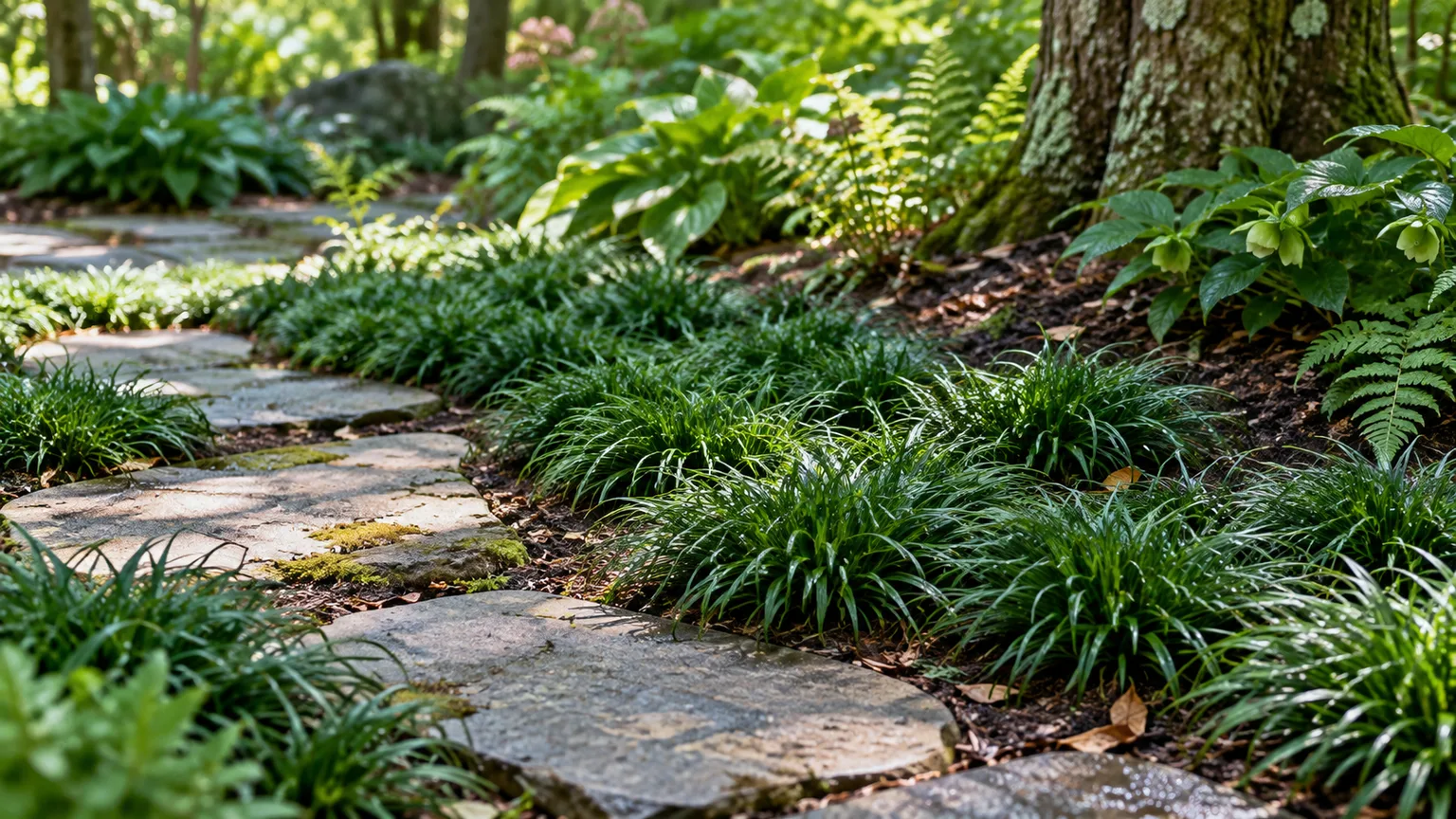
Dwarf mondo grass can make a shaded path edge or small garden bed look finished without regular mowing. Its fine, arching leaves stay low, and once a planting settles in, the plants need less fuss than a patch of turf. The tradeoff is time: dwarf mondo grass spreads slowly, so it is a poor choice if you expect inexpensive plugs to cover a broad area by next season.
The best results come from matching the exact plant to the site, then keeping new divisions evenly moist while their roots establish. Before you buy enough for a whole bed, decide how much sun the spot gets, how quickly water drains there, and whether people will walk across it. Those answers determine whether dwarf mondo grass will be a useful groundcover or an expensive experiment.
Is dwarf mondo grass right for your yard?
Dwarf mondo grass is a compact, evergreen perennial grown for low mounds of narrow, grasslike leaves. NC State Extension describes the dwarf cultivar commonly sold as ‘Nana’ as reaching about 3 to 6 inches tall and 8 to 12 inches wide, with a slow growth rate; it spreads by short underground stolons rather than racing across a bed. That makes it useful for edging, underplanting, small shaded pockets, and the spaces between stepping stones, but not for quick coverage on a budget. NC State Extension’s Plant Toolbox lists both its low habit and the years it may take to establish in a large area.
Think of it as a low ornamental carpet, not a short version of a conventional lawn. It can soften a border and tolerate occasional light foot traffic, but repeated walking, running, dog play, furniture dragging, and mower traffic can flatten or break the tufts. If the area is a route people cross every day, plan stepping stones or a durable path and let the planting fill the space between them.
Choose another plant if your main goals are fast cover, a uniform surface, drought tolerance, or a play-ready lawn. A locally adapted sedge, native groundcover, or shade-tolerant turf may establish faster or take more traffic. You can also test mondo in a small bed first; a season of observing that site is more informative than a hardiness zone alone.
Identify the plant and cultivar before you buy
The word “grass” in the common name describes the leaves, not the plant family. Dwarf mondo grass is generally sold as Ophiopogon japonicus ‘Nana’, a member of Asparagaceae; it is not a true turfgrass. NC State Extension lists the cultivar as an evergreen, low-growing groundcover. Standard mondo grass is taller and broader, black mondo grass is a different species (Ophiopogon planiscapus ‘Nigrescens’), and lilyturf is a Liriope—related in appearance and use, but not the same plant. The NC State profile for ‘Nana’ and its standard mondo profile show why the species or cultivar on a label matters.
Nursery tags and catalogs sometimes use “mondo grass,” “monkey grass,” “dwarf lilyturf,” and “lilyturf” loosely. Ask for the botanical name and cultivar if you need a plant to stay very short or fit between pavers. The Royal Horticultural Society lists ‘Gyoku-Ryu’ as “super dwarf mondo grass,” which is a separate named selection; do not assume its size or hardiness is interchangeable with ‘Nana’ simply because both are called dwarf. The RHS profile for ‘Gyoku-Ryu’ confirms that cultivar distinction.
At the nursery, look for a pot with several healthy, firm green fans and roots that hold the mix together without forming a foul, waterlogged mass. Avoid plants with mushy crowns, extensive yellowing, or a mix that smells sour. A small pot is not necessarily a problem for this slow grower, but you want a living, rooted division—not loose leaves pushed into a container.
Choose the right light and location
Start with bright shade, dappled light, or a spot that receives gentle morning sun and afternoon shade. Dwarf mondo grass is valued for growing in shade where many lawn grasses thin out, and NC State Extension records the ‘Nana’ cultivar for deep to partial shade. In cool regions with moist soil, it may tolerate more sun; in a hot summer climate, reflected afternoon heat beside a south- or west-facing wall can scorch or dry the narrow leaves even when the bed is technically in partial shade.
Watch the site for a day before planting. Note direct sun around 9 a.m., noon, and late afternoon, and notice whether a wall or paving stays hot after the sun moves. Under a tree, distinguish filtered shade from the dry shade directly beneath a dense canopy: leaves may block rain while roots compete for water. A planting that gets no rain and is hard to irrigate will need more attention than one in a naturally moist, open woodland edge.
If you have only a sunny space, do not treat the plant’s ability to survive sun as proof that the site is ideal. Plant a few divisions first, water consistently while they establish, and check foliage through the hottest part of summer. If tips brown repeatedly despite sensible watering, afternoon shade or a different groundcover is a better fix than feeding the plant more fertilizer.
Give it moisture without leaving the roots wet
Aim for soil that stays lightly and evenly moist during establishment but drains after rain. Dwarf mondo grass does not need a bog, and “keep moist” should not mean letting water sit around the crown. NC State Extension lists moist, well-drained soil, while the RHS profile for the species describes moist but well-drained conditions and acid or neutral pH. Both parts matter: roots need access to water, but prolonged saturation deprives them of air and encourages decay.
Loam or sandy loam is straightforward to work with. In clay, do not dig a narrow planting hole, fill it with loose potting mix, and create a little basin that collects water; instead, improve drainage across a wider bed by incorporating a modest amount of finished compost into the upper soil, or raise the planting area if water stands after storms. In very sandy soil, compost can help the surface hold moisture without turning the root zone into a wet pocket.
Test drainage before buying a large quantity. After a soaking rain, see whether the area remains puddled into the next day. If it does, correct the grade or choose a plant adapted to wet soil rather than relying on extra compost to solve a site-wide drainage problem. A simple finger check a few inches down also helps distinguish a dry surface from soil that still holds moisture below.
Check hardiness and regional fit
Hardiness information is not perfectly consistent across records because plant labels may describe different species, named cultivars, or broad groups of mondo grass. NC State’s profile lists dwarf mondo ‘Nana’ for USDA zones 7a through 10b. The RHS profile for the species gives an H5 rating in the RHS system, which is not a USDA zone number, while its ‘Gyoku-Ryu’ profile does not provide the same detail. Use the label for the exact cultivar you are buying and ask a local extension office or reputable nursery how that selection performs in your area.
The USDA Plant Hardiness Zone Map is based on average annual extreme minimum winter temperatures, not summer heat, rainfall, soil drainage, wind exposure, or how quickly a bed dries beneath a tree. The USDA ARS explanation of its updated map is useful for understanding what a zone does—and does not—tell you. A plant rated for your zone can still fail in waterlogged soil, hot afternoon sun, a windy exposed bed, or a site where winter conditions are harsher than the regional average.
In areas at the colder edge of a cultivar’s rating, choose a sheltered site with good drainage and avoid planting late in fall when roots have little time to establish. In warm, humid regions, shade and moisture may favor growth, but drainage remains important. In dry or hot-summer regions, select a location where you can water deeply during establishment and where afternoon shade reduces stress. In regions outside the cultivar’s stated range, grow a small trial before treating it as a dependable perennial groundcover.
How to plant dwarf mondo grass for coverage
Planting small rooted divisions is the practical way to start a bed. Spring, after the ground is workable and before summer heat, gives new roots time to settle in; in mild climates, early fall can also work if the plants have time to root before cold weather. Prepare the whole area first. Remove perennial weeds and their roots, loosen compacted soil, and shape the bed so excess water can move away rather than collect around each plant.
Set divisions with the crown level with the soil surface. Backfill, firm gently, and water the bed so soil settles around roots without burying the leaves or packing the soil hard. Mulch lightly between plants if weeds are an issue, but keep mulch clear of the crown and do not bury low foliage under a thick blanket. The small leaves make it easy to overlook new weeds; removing them while young is much simpler than tugging them out of a closed planting later.
Set spacing by budget and patience
Spacing controls both the upfront plant bill and the number of seasons you will see open soil. Tighter spacing creates a more continuous look sooner but requires more plants and still does not guarantee instant carpet. Wider spacing saves money, but each plant must expand farther before its leaves meet its neighbors. NC State gives an eventual clump width of roughly 8 to 12 inches for ‘Nana’ and notes that large plantings can take years to establish.
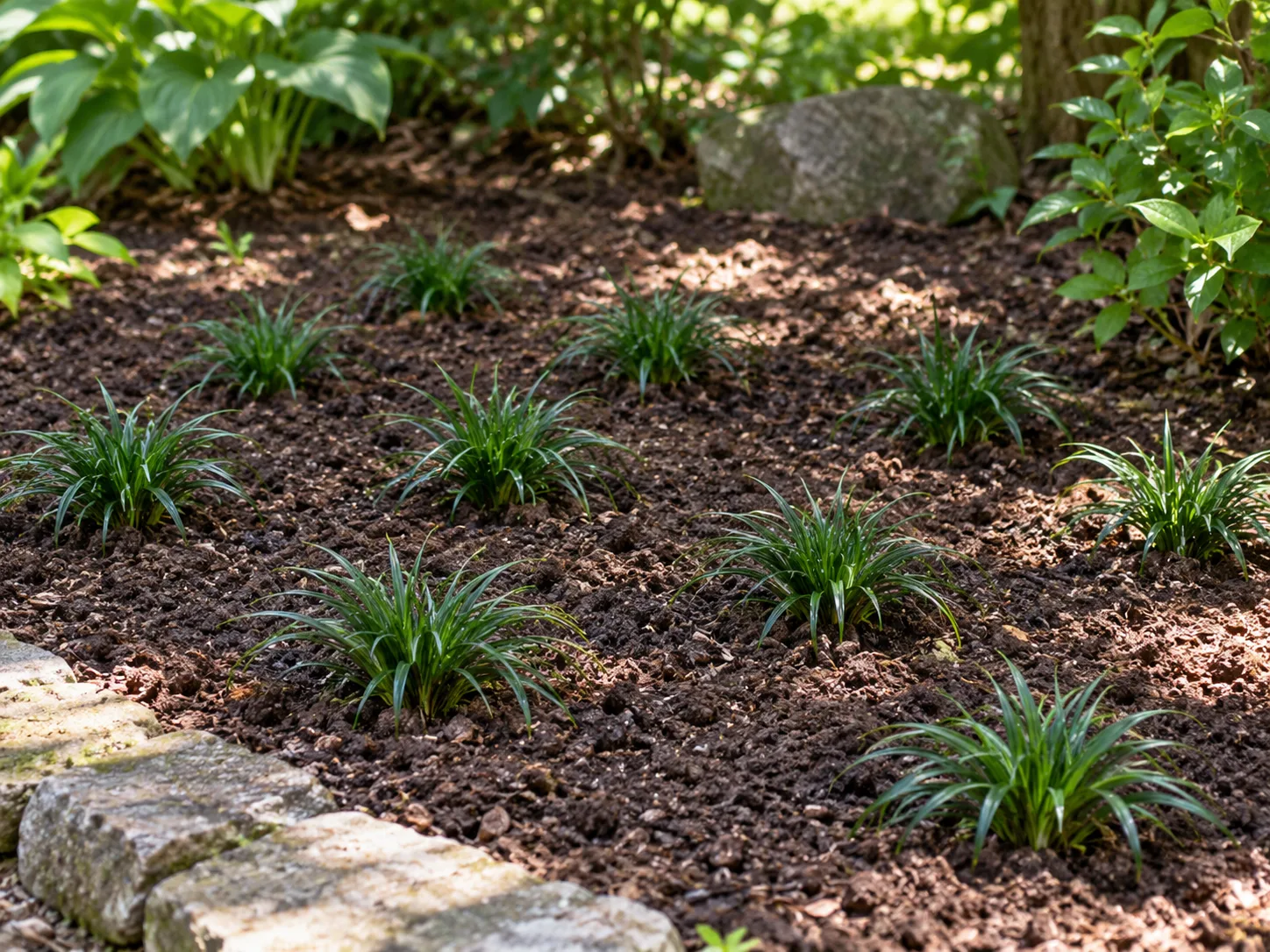
For a narrow edge or a small gap between stones, use closer centers so the leaves can meet sooner. For a broad bed where budget matters, space plants farther apart and treat the open soil as part of the first-year plan: mulch it lightly, weed it, and resist the urge to fill every gap with more plants before you see how the first divisions grow. Ask the nursery for the typical width of the exact cultivar, then use that mature width as the basis of a spacing plan rather than a generic “plant four inches apart” instruction.
Arrange the plants in staggered rows, like bricks, instead of straight lines. That pattern avoids a checkerboard of bare channels and makes the bed look more natural as the clumps expand. Mark the centers before you dig so you can estimate how many pots the area needs and avoid crowding the crowns against a border.
Plant divisions at the right depth
Water each nursery pot before planting so its root ball stays together. Ease the plant out, tease only the outside roots if they circle tightly, and set the root ball into a hole just deep enough to keep the crown at grade. If a pot contains several rooted fans, you may separate them into small pieces only if each division has roots attached; leaf fans without roots are not ready-made plugs.
After planting, water slowly until the root zone is moist, then let the surface begin to dry before watering again. A thin layer of mulch over exposed soil reduces evaporation and weed pressure while keeping the leaves uncovered. Label the cultivar at the bed edge or save the plant tag, especially if you are mixing dwarf mondo with liriope or black mondo in nearby borders.
What to expect during the first year
The first season is for rooting, not for a finished carpet. A division can remain almost the same size for a while as it settles into the bed; that does not mean it has failed if the foliage is firm and the crown is green. New growth may be subtle, especially in shade or cooler weather, so judge establishment by healthy leaves, resistance when you gently tug the plant, and new fans appearing at the edge—not by how quickly it hides every patch of soil.
Keep weeds out, maintain even moisture, and avoid walking across the planting. If the bed sits under a tree, check it after dry spells because the canopy may intercept rain and mature roots may take up water quickly. Do not keep the soil permanently wet just to accelerate growth; extra irrigation cannot make this naturally slow plant spread faster and can damage roots in poorly drained ground.
Set expectations with the scale of the project. A handful of divisions can make a tidy border in time; covering a large yard with small pots may take several years and many rounds of dividing. Horticulturist Neil Sperry describes using ordinary mondo grass successfully in a shaded home landscape and growing it from transplanted clumps, but that personal account is about mondo generally, not a promise that dwarf ‘Nana’ will cover at the same rate or scale. His landscape notes are a useful reminder to plan by plant size and use, not by the word “grass” alone.
Water and maintain an established bed
Once established, water when the soil begins to dry rather than following a rigid weekly schedule. Rain, shade, soil texture, temperature, and root competition all change how fast the bed dries. Probe below the surface near a plant: if the soil is cool and slightly moist, wait; if it is dry through the root zone, water deeply enough to reach the roots. Mature plantings tolerate short dry spells better than newly planted ones, but they are not a reliable drought-proof solution in hot, exposed locations.
Mondo grass is not a high-maintenance plant, and routine mowing is usually unnecessary for a dwarf selection grown as a border or groundcover. Remove winter-damaged or ragged leaves in early spring before new growth becomes dense. If you have a large bed and want to shear it for a uniform finish, test a small patch and use a blade set high enough to avoid cutting into crowns; repeated close mowing is unnecessary and can leave the planting looking scalped.
Fertilizer is rarely the first answer to a weak patch. If the site has healthy soil and the leaves are a normal deep green, leave it alone. A thin top-dressing of finished compost in spring is enough for many garden beds; if growth is genuinely poor, first review light, drainage, watering, and the plant’s identity. Better Homes & Gardens notes that mondo grows slowly and spreads by stolons, but its general care recommendations cover multiple forms, so follow the label and local growing conditions rather than applying lawn-style fertilizer to dwarf plants. Its mondo grass guide is useful for general planting and division practices.
Divide dwarf mondo grass to expand a planting
Divide established clumps in spring as new growth begins. Water the bed the day before if soil is very dry, then use a hand fork or spade to lift a section from the outer edge. Pull or cut it into smaller pieces, making sure each piece has both healthy roots and several leaf fans; discard mushy or dead tissue and clean the cutting tool between questionable sections.
Replant divisions promptly at the same depth, water them in, and keep the soil evenly moist while they re-root. Division is more dependable than starting seed when you want another plant like the parent, because seed-grown plants may not reproduce a named cultivar consistently. Leave enough of the original clump in place to recover rather than excavating the entire bed at once.
This is also a useful way to repair a bare patch or move a plant that was placed in too much sun. The new divisions may take time to resume growth, so do not expect the gap to close immediately. If a whole area is declining, investigate the site first; dividing and replanting into the same soggy or hot conditions will repeat the problem.
Can dwarf mondo grass replace a lawn?
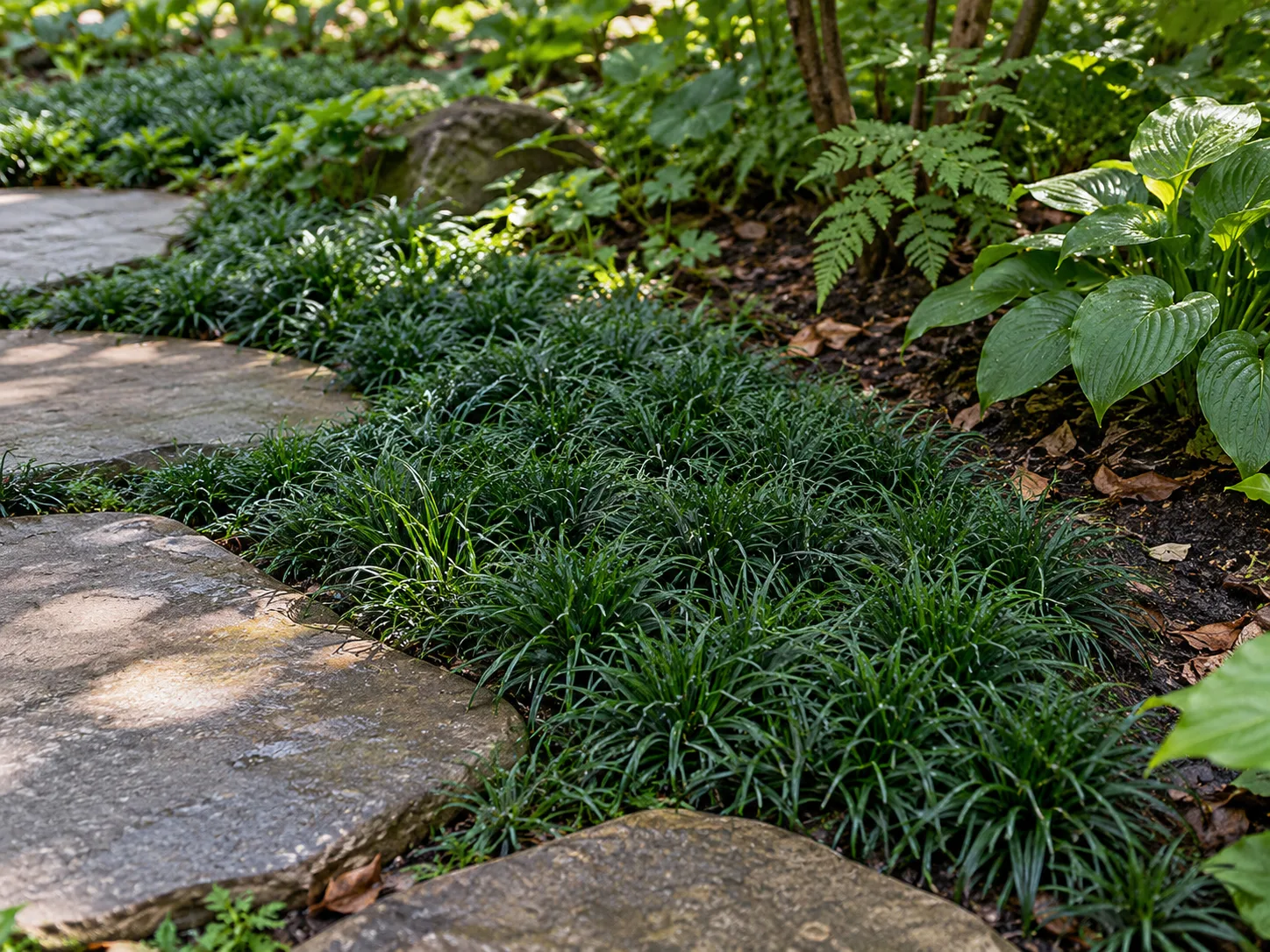
It can replace turf in a small, shaded, low-use area when your priority is a neat green surface with less mowing. It is especially suited to narrow strips, understory beds, borders around patios, and spaces between stepping stones where conventional turf is hard to maintain. NC State Extension lists dwarf mondo among lawn-alternative plants, but also cautions that it is slow and not suited to high-traffic areas. That combination is the practical answer: it is a lawn alternative for specific sites, not a universal lawn replacement.
Where it works as a lawn alternative
Use it in a place where the ground is visible but people rarely walk, such as a shaded courtyard edge or the landing between stepping stones. Its low foliage can visually connect hardscape to a planted bed, and you can avoid regular mowing once it fills in. A defined path protects the plants and makes the space function well even while open soil remains during establishment.
It may also suit a small area under trees where turf repeatedly becomes thin, provided you can water during dry periods and the soil drains. The slow growth that frustrates someone trying to carpet a yard can be an advantage in a confined border: it stays compact and does not demand frequent trimming. Still, confirm that the cultivar’s expected height and spread fit the use; regular mondo or liriope can look much taller than you want between pavers.
Where it will disappoint
Do not choose it for a play lawn, a dog run, a frequently crossed shortcut, or a level area where you want to sit or roll equipment. A mat of narrow leaves is not a resilient turf surface, and trampling can open holes faster than the slow-growing plants can knit them closed. A garden path, pavers, or a more traffic-tolerant groundcover is a better solution where people need to move through every day.
It is also a poor bargain for a large sunny or drought-prone site if your goal is to save both time and water. Many small plants may be needed to reduce the wait, while widely spaced plants leave bare ground for years; the bed still requires weed control and establishment watering. Compare the total number of pots, expected timeline, irrigation access, and traffic level with a locally adapted alternative before making a whole-yard conversion.
Use dwarf mondo grass in small-scale designs
Use the plant where its fine texture and restrained height are visible: along the front of a shaded border, around a stone, between broad pavers, or beneath open-canopied trees. Repeating the same short clumps at regular intervals creates rhythm, while a small mass can soften the sharp edge of a wall or patio. It pairs well with plants that bring larger leaves, contrasting forms, or seasonal flowers; the point is contrast in shape, not a mix of several look-alike grassy plants.
Under trees, leave enough distance from the trunk and do not pile soil or mulch against bark. Tree roots already compete for water, so a mondo bed in that setting may need supplemental irrigation through dry weather. Between stepping stones, set the crowns where they will not be crushed by the foot placement, and choose pavers wide enough that the walking surface remains stable as foliage grows at the edges.
For containers, select a shallow pot with drainage holes and water more often than an in-ground bed because a small container dries faster. The compact growth can work in a trough or small courtyard pot, but winter exposure is harsher above ground than in garden soil. In a cold climate, protect or move the pot as local conditions require instead of assuming an in-ground hardiness rating guarantees a container will overwinter safely.
Troubleshoot yellow leaves, bare patches, and pests
Yellowing or collapsing leaves call for a root-zone check before a fertilizer application. If the soil is saturated or smells sour and roots are brown or mushy, poor drainage or overwatering may be causing root decline; reduce irrigation, improve drainage, and remove damaged material. If the soil is dry and leaf tips are crisp, check recent heat and sun exposure, then water the root zone deeply and adjust the site or irrigation rather than repeatedly misting the foliage.
If a new planting looks sparse, first check how long it has been in place and whether the roots are still anchored. Dwarf mondo is slow, so normal gaps between young clumps can persist; weeds, deep shade, root competition, or drought may slow it further. If only one area fails, compare its drainage and light with neighboring healthy plants; a low spot that stays wet and a sun-baked edge often need different corrections.
Slugs and snails may chew the leaves, especially in cool, damp, sheltered spots. Look for ragged holes and slime trails after rain or in the evening, then reduce hiding places and use locally approved controls according to their labels if damage is substantial. NC State Extension flags slugs as a pest to monitor, while the RHS lists slug damage as a possible issue for the species; neither source suggests that routine pesticide use is needed for every bed. If the leaves look intact but the plant declines from the base, diagnose drainage first.
Conclusion
Dwarf mondo grass is a good choice for patient gardeners who want a short, tidy groundcover for shade, path edges, or small low-traffic spaces. Identify the cultivar, test the site’s drainage, plant at spacing that matches your budget, and keep the root zone evenly moist while divisions establish. Expect slow coverage and treat the plant as an ornamental alternative to turf—not a durable lawn for daily activity.