Does Baking Soda Kill Bed Bugs?
Does baking soda kill bed bugs? Learn why it fails, what to do in the first 24 hours, and how heat, steam, isolation, and follow-up work together.
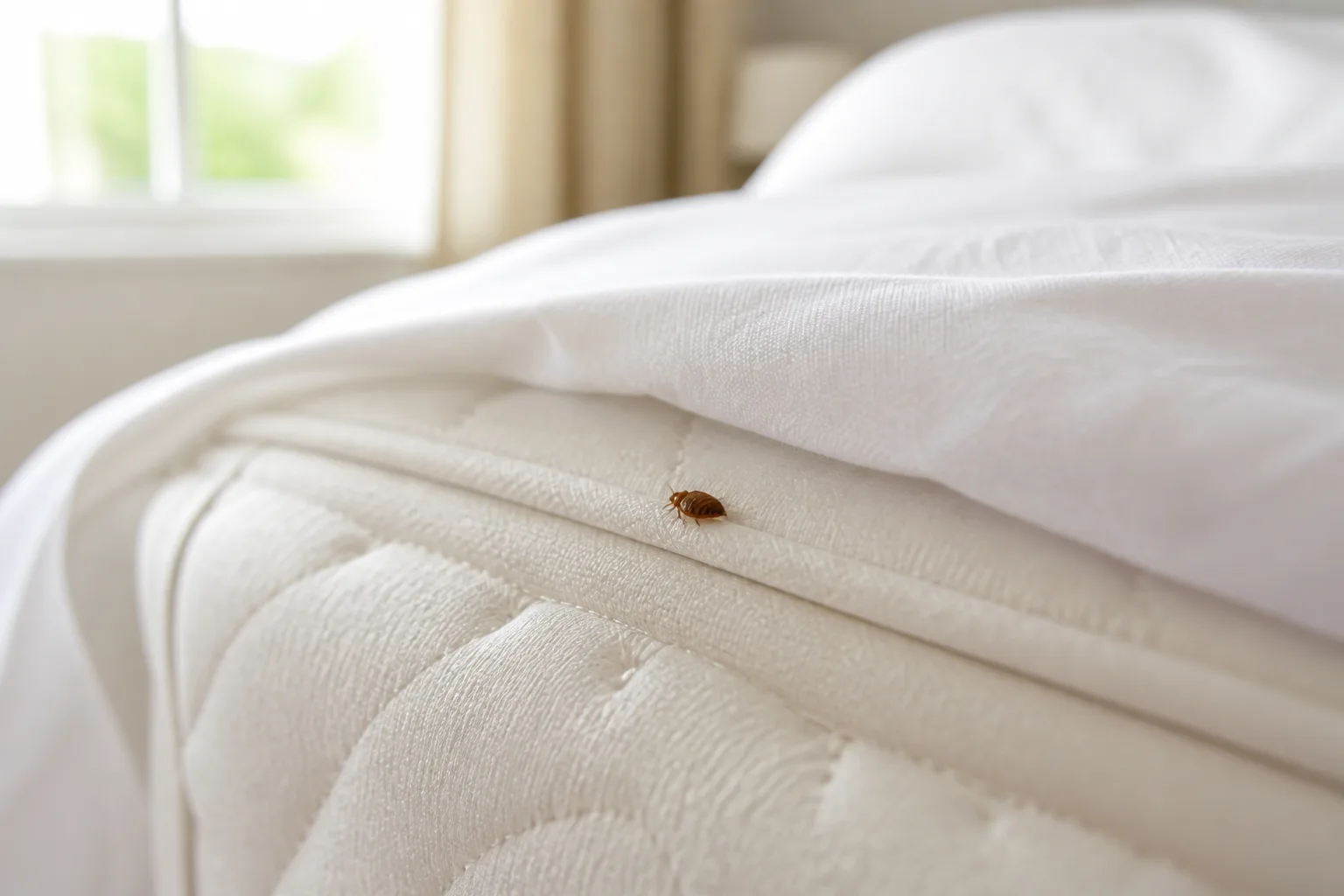
If you sprinkled baking soda around a mattress hoping to kill bed bugs, you have not ruined the room—but you should not count that powder as treatment. Baking soda is a household deodorizer and mild abrasive, not a proven bed bug insecticide. It does not reliably kill adults, nymphs, or eggs, and it cannot reach the deep seams, screw holes, box-spring fabric, wall gaps, and furniture joints where an infestation survives.
The useful response is not to find a stronger kitchen ingredient. It is to identify the pest, stop moving potentially infested belongings, treat washable items with controlled heat, reduce hiding places, monitor the bed, and use targeted professional or labeled products when the evidence calls for them. The steps below explain what baking soda can and cannot do, then give you a practical sequence that is much less likely to spread the problem.
The short answer
No—baking soda does not reliably kill bed bugs or eliminate an infestation. The common theory is that it absorbs moisture and dehydrates the insects. That reasoning confuses a general drying property with a tested, lethal treatment. A bed bug that walks through a dusting of baking soda can simply move away, hide in a protected crack, or remain alive long enough to reproduce.
The distinction matters because bed bugs are not a surface-only pest. Eggs are cemented to hidden surfaces, adults shelter close to a sleeping host, and a room can look clean while bugs remain inside a box spring or behind a headboard. Even if baking soda were to kill an exposed bug by chance, that would not address the population you cannot see.
Why baking soda fails as a bed bug treatment
Baking soda has no established household application rate, exposure time, or label claim for bed bug control. It is also not a repellent barrier: a line of powder around a bed does not prevent a hungry bed bug from crossing it, and it does not seal the route through a baseboard, electrical conduit, or adjoining apartment.
Bed bugs spend much of the day in narrow, protected harborages. Loose powder on a mattress surface rarely reaches those locations, while a thick layer can become airborne during bed-making or cleaning. More importantly, spending days repeatedly sprinkling a harmless material can delay inspection and allow bugs to spread to nearby furniture or rooms.
University extension guidance describes a broader pattern: common household cleaners, most natural products, and foggers are frequently ineffective, while successful control combines monitoring, exclusion, physical treatment, and carefully selected pesticides. Rutgers Cooperative Extension reports that all bed bugs in one test survived direct application of a commonly believed effective disinfectant. That is why “it smells strong,” “it is natural,” or “it dries things out” is not enough to establish a treatment.
Diatomaceous earth and silica gel dust are sometimes discussed alongside baking soda, but they are not interchangeable products. Some formulations are registered and designed to damage an insect’s cuticle or remove protective oils after contact. They work slowly, depend on the bug crossing a light, correctly placed deposit, and still do not solve every hiding place or egg.
Use only a product whose label specifically permits bed bug use, and follow the label for application site, amount, ventilation, and re-entry. Food-grade does not mean “safe to spread everywhere,” and baking soda is not a substitute for an insecticidal dust. Penn State Extension advises keeping dusts out of surface treatments and mattresses because they can irritate the respiratory system and skin; if used, they belong only in label-approved cracks, crevices, or voids.
Confirm bed bugs before treating the room
Do not treat every itchy mark or tiny brown insect as proof. Bites can resemble reactions to mosquitoes, fleas, mites, or irritation from fabric, and a photograph of a speck is often too blurry to identify. A correct identification prevents you from putting pesticides on a mattress for the wrong pest and tells you where to inspect next.
Signs that support an identification
Inspect with a flashlight and, if possible, a magnifier. Look at the piping and seams of the mattress, the underside of the box spring, bed-frame joints, screw heads, headboard attachment points, nearby upholstered furniture, and the wall or baseboard behind the bed. Do not dismantle a wall or electrical outlet yourself; those areas may require a professional inspection.
Adult bed bugs are flattened, wingless, oval insects, usually reddish-brown after feeding and roughly the size of an apple seed. Nymphs are smaller and paler. Stronger physical clues include black or rust-colored fecal spots, pale shed skins, tiny pale eggs attached to a surface, and live insects in a protected seam. Penn State’s bed bug integrated pest management guide describes these life stages and explains why their small size makes them difficult to remove.
If you find a live specimen, capture it on clear tape or in a sealed container rather than crushing it into an unidentifiable stain. Photograph the specimen next to a ruler or coin for scale, but use a qualified inspector or extension identification service when the decision to treat depends on certainty.
Lookalikes and bite confusion
Carpet beetles, spider beetles, cockroach nymphs, fleas, bat bugs, and swallow bugs can be mistaken for bed bugs. A bed bug is wingless and broadly oval; fleas are laterally flattened and jump, while carpet beetle larvae are hairy and often leave shed skins rather than bed bug fecal spotting.
Bites alone cannot tell you which insect is involved. If no bed bug or physical sign turns up after a careful inspection, pause before applying a home remedy and check pets, window screens, upholstered furniture, and other plausible sources. A professional can also distinguish a bed bug from a close relative that may require a different response.
What to do in the first 24 hours
Your first goal is containment, not a dramatic cleaning spree. Bed bugs hitchhike in clothing, bags, bedding, and furniture, so carrying piles from the bedroom to the laundry room or guest room can distribute the problem. Leave items in the suspected room until you have a treatment route for each one.
Write down where you found the evidence, when you found it, and which rooms share a wall or hallway. In an apartment, dorm, hotel, or other multi-unit building, notify the manager or responsible housing office promptly; treating only one room may fail when bugs can move through shared structures or arrive again from an adjacent unit.
Keep the bed and sleeping area in place
Do not move to the sofa or a different bedroom. Bed bugs can survive for months without feeding, and relocating the sleeping host can draw them into a larger area. Instead, keep the bed where it is while you inspect and set up monitoring.
Pull the bed a short distance from the wall if the room allows it. Keep blankets and sheets from touching the floor, remove items stored beneath the bed, and avoid draping clothing over the headboard or nearby chairs. These changes reduce routes to the host and make later inspection more meaningful.
Isolate belongings without spreading bugs
Sort items by treatment, not by guesswork. Bag bedding, clothing, and soft items inside the room in sealed plastic bags before carrying them out. Use clear lidded bins for small hard goods when possible, and mark each bag with its contents and treatment status so a clean item does not get mixed with an untreated one.
Do not take an infested suitcase, backpack, blanket, or cushion into a clean bedroom. Inspect luggage on a hard floor, vacuum seams carefully, and use a dryer, freezer, heat chamber, or professional treatment only when the item and its materials can tolerate that method. Never improvise by placing belongings in a hot car, oven, microwave, or sealed plastic bag in direct sun; the center of the item may never reach a lethal temperature, and some materials can ignite or deform.
Treat clothing and bedding with controlled heat
For washable or dryer-safe textiles, the dryer is usually the decisive step. Washing may help remove bugs, but a complete high-heat drying cycle is the part that supplies reliable lethal heat to the fabric. Purdue’s bed bug treatment guidance recommends washing at the hottest practical setting and drying dryer-safe items on high heat for at least 20 to 45 minutes, depending on the item and the treatment plan.
Use the dryer as the decisive step
Carry sealed bags to the laundry area and open one bag at a time directly into the washer or dryer. Do not shake bedding out in a hallway. If an item is already dry and the care label permits it, put it straight into the dryer; adding a wash is not required for killing the bugs, and wet, tightly packed loads can take longer to heat through.
Use a loose load so warm air can circulate. Select the hottest setting the fabric can safely tolerate and allow the cycle to run long enough to dry the entire load. Bulky comforters, dense blankets, shoes, and stuffed items may need more time because the interior warms more slowly. When in doubt, use a professional laundry or heat-treatment service rather than guessing.
Dry-clean-only items should remain sealed and be disclosed to the cleaner before transport. Some delicate goods, electronics, books, and luggage are better candidates for a controlled heat chamber or professional treatment. The goal is to treat the whole item, not just warm its outside surface.
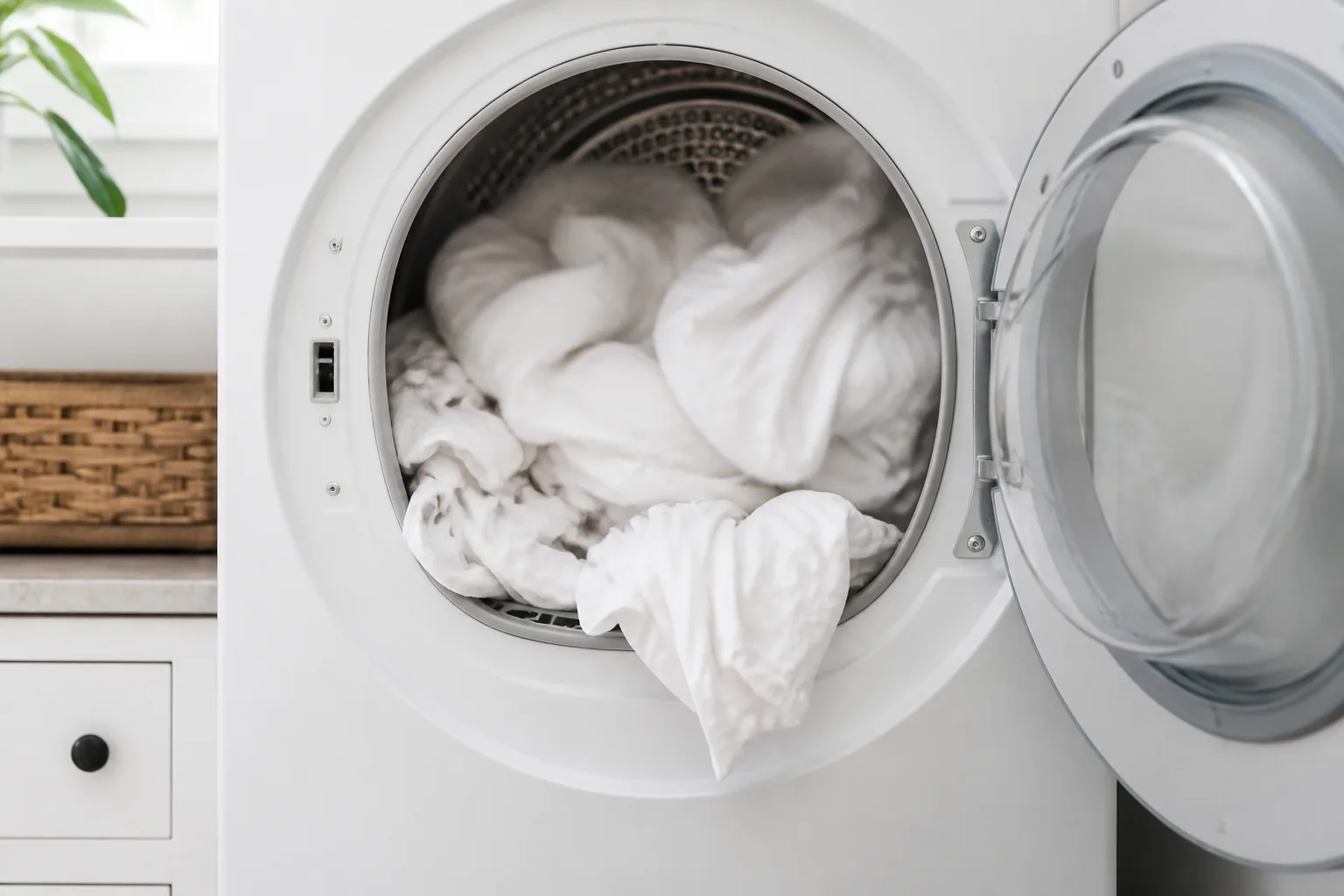
After drying, put the items into new clean bags or lidded containers. Do not return them to an untreated hamper, suitcase, closet, or dresser drawer. Keep the storage closed until the sleeping area has been inspected and the treatment plan says the items can return.
This clean-to-sealed handoff is easy to miss. A successful dryer cycle can be undone when clean sheets are placed back on a bed whose box spring still contains bed bugs, or when dry clothes are returned to a contaminated drawer. Think of each treated batch as clean inventory that must remain separated from the room until control is complete.
When freezing small items makes sense
Freezing can work for small, dry, bagged items that cannot be laundered, but a freezer is not an instant-kill box. Rutgers Cooperative Extension’s control summary gives the practical benchmark as at least four days at 0°F (-17.8°C) for small items, while Purdue notes that cold tolerance varies and that the item must remain cold long enough for the center to reach the target.
Seal the item in plastic before freezing so bugs cannot escape while you handle it. Do not pack the freezer tightly, and do not start the four-day clock the moment the item enters if it is large or warm; the interior may take time to reach the freezer temperature. Leave delicate objects sealed while they return to room temperature to limit condensation, then inspect the bag before opening it.
Freezing an entire mattress, room, or upholstered sofa in a household freezer is not realistic. Outdoor winter temperatures are also unreliable because temperatures fluctuate and protected harborages warm slowly. Use freezing for appropriately sized belongings, not as a reason to postpone room inspection and monitoring.
Use steam and vacuuming for exposed harborages
Steam and vacuuming are useful because they remove or kill bugs you can reach, but neither is a complete stand-alone cure. Vacuum mattress seams, bed-frame joints, upholstery edges, carpet edges, and accessible cracks with a crevice tool. Move slowly, scrape seams where appropriate, and immediately seal the vacuum contents in a bag before putting them in an outdoor bin; wash a bagless canister with hot, soapy water afterward.
Steam can kill bugs and eggs on contact when the surface receives enough heat, but technique matters. Purdue Extension’s control guidance notes that many retail steamers do not deliver the necessary heat at the surface, while forceful airflow can scatter bugs. A dry-steam or vapor device with a suitable head is preferable, and the material should be tested in an inconspicuous spot first.
Move the steam head slowly across seams and crevices, never hover over a finished surface long enough to soak or damage it, and protect yourself from burns. Do not use steam on electrical outlets, delicate electronics, or materials that can be ruined by heat or moisture. Follow the steamer instructions and treat steam as one layer in a monitored plan.
Add encasements and interceptor traps
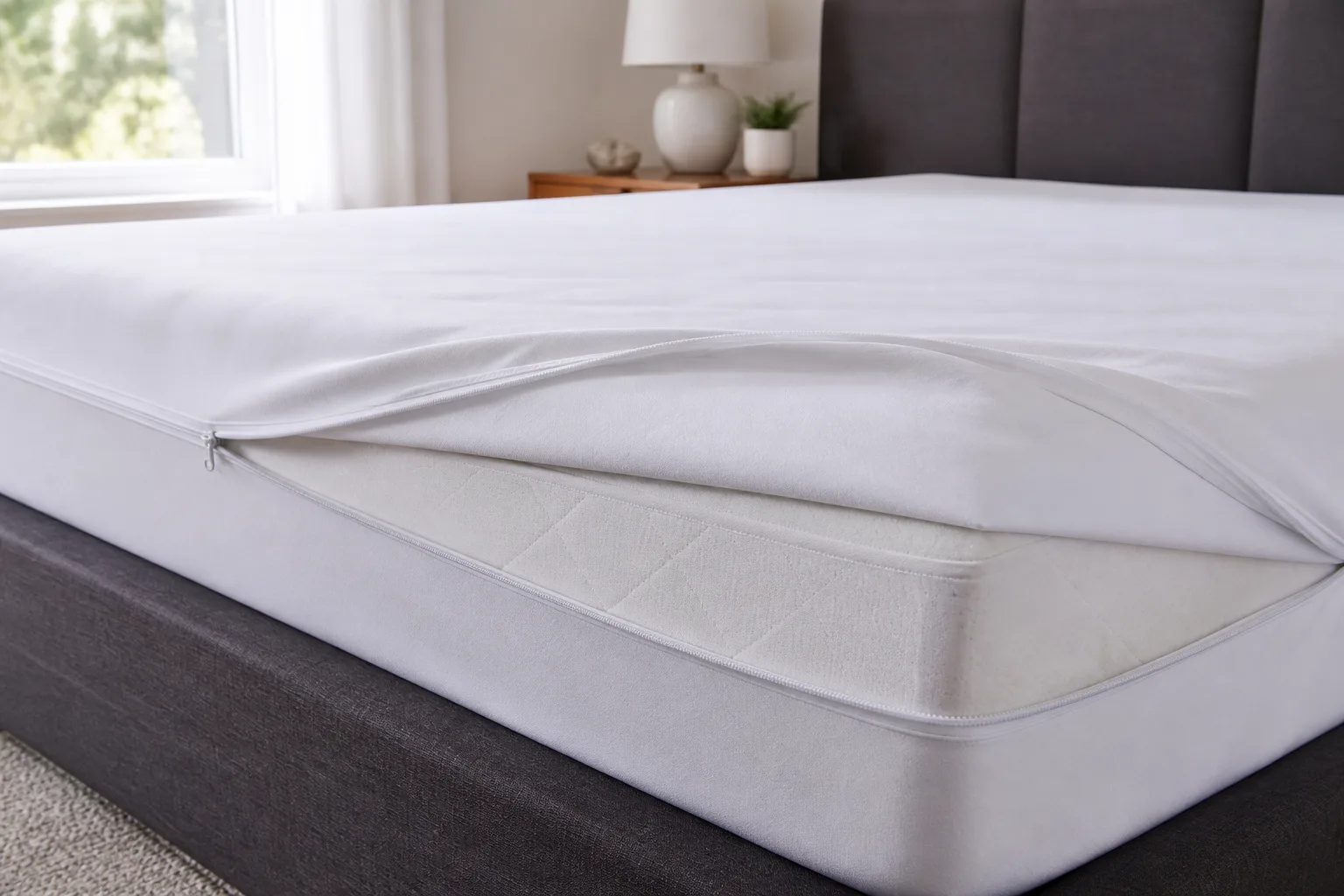
A properly designed mattress and box-spring encasement removes many hiding places and lets you inspect a smooth surface more easily. Choose a bed-bug-rated, zippered cover that fully encloses the item and has a zipper end that cannot be reopened by a bug. Inspect it for tears before installation and whenever the bed is moved.
Do not assume an encasement kills an infestation immediately. Bugs trapped inside may take a long time to die, and bugs already in the frame, floor, baseboard, or nearby chair remain outside the cover. Leave the cover on for the duration specified by the manufacturer or pest professional; removing it after a week defeats the purpose.
Place interceptor cups under each bed leg on a level floor. Keep the bed away from walls and prevent sheets from touching the floor so the traps can function as both monitors and a partial barrier. Check them on a consistent schedule and record whether you find live bugs, shed skins, or nothing. Rutgers reports that pitfall-style traps can be cost-effective for detection, but a trap is a monitor—not proof that an infestation is absent everywhere else.
Diatomaceous earth and silica dust are not baking soda
Some insecticidal dusts can contribute to bed bug control, but this is a job for a correctly labeled product and restrained placement. Diatomaceous earth is abrasive and drying to insects; silica gel dust works differently but also depends on contact. Both can be slow, and an undisturbed deposit cannot affect a bug that stays inside a wall void or deep furniture cavity.
Never blanket a mattress, carpet, or bedroom with loose powder. Dust clouds can irritate lungs, and excess dust may cause bugs to avoid a route instead of crossing it. Penn State recommends that insecticidal dusts be blown into appropriate cracks, crevices, and voids—not used as broad surface treatments or spread on mattresses.
Read the full product label before purchase and application. The label controls where the product may be used, what protective equipment is needed, how much can be applied, and when people or pets may return. If the label does not name bed bugs and the intended site, do not assume the product is suitable. Do not confuse food-grade DE, pool-grade DE, baking soda, boric acid, and a registered bed bug dust; they are different materials with different risks and uses.
Pesticides, sprays, and foggers: what to avoid
If you use a pesticide, choose one registered for bed bugs in your jurisdiction and follow its label exactly. Product availability and allowed uses vary by location. The National Pesticide Information Center label guidance explains that product labels can change and that users are responsible for following the label on the container.
Avoid spraying mattresses, clothing, skin, or furniture unless the label explicitly permits that site. Do not mix products, increase the concentration, or apply more often than the label allows. Keep children, pets, and sensitive occupants away as directed, ventilate as required, and never use a garden pesticide indoors just because it kills insects outdoors.
Foggers and bug bombs are especially poor choices for bed bugs. Their droplets may not penetrate the cracks where bed bugs hide, while the extra pesticide can increase exposure and fire risk. Rutgers reports that total-release foggers failed in a severe apartment test, and Penn State warns that foggers and ordinary household sprays can add toxins without controlling the infestation.
Rubbing alcohol, vinegar, essential oils, dryer sheets, mothballs, and homemade sprays are also unreliable substitutes. Alcohol is flammable; repellents may scatter bugs or merely change where they hide; and a product that kills one exposed insect in a demonstration is not necessarily capable of reaching eggs and harborages in a home.
When to hire a pest management professional
Call a qualified pest professional early when you find bugs in more than one room, live in a multi-unit building, cannot identify the insect, have a large or recurring infestation, or cannot safely move and treat belongings. Professional heat treatment can be effective when technicians monitor temperatures throughout the space, but heat alone does not prevent reinfestation after the room cools. A company should be able to explain preparation, temperature monitoring, sensitive-item removal, warranty or follow-up visits, and what happens if bugs are found afterward.
Conventional treatment may combine inspection, vacuuming, steam, encasements, monitoring, targeted residual products, and repeat visits. Bed bugs can resist some insecticide classes, so a company promising that one quick spray always solves every infestation deserves scrutiny. Ask for licensing or certification required where you live, written preparation instructions, product names and labels, and a follow-up plan.
Do not throw away a mattress or sofa automatically. Furniture is often treatable, and moving it through shared hallways can spread bugs. Disposal makes sense when an item is severely infested, damaged, impossible to inspect or treat, or no longer worth keeping; wrap or mark it according to local guidance so another person does not take it home.
Follow up until the infestation is truly quiet
The most common failure is stopping after the first visible improvement. Eggs may survive an initial pesticide treatment, a bug may remain inside a frame, and a clean night does not prove the room is clear. Schedule inspections and monitor traps at regular intervals, recording live bugs, new fecal marks, cast skins, and bites without treating bites as your only measurement.
Purdue’s follow-up guidance recommends a follow-up inspection at a suitable interval such as 10 to 21 days after each control effort. That interval is not a universal promise; it is a reminder to inspect again when hidden survivors or newly hatched nymphs may become detectable. Retreat only according to a product label or the professional plan.
Rutgers advises continuing a combination of visual inspection and monitors and not ending treatment prematurely. A practical stopping rule is to keep monitoring for several weeks after the last confirmed sign, with no live bugs, fresh fecal spots, shed skins, or trap captures. If evidence returns, treat it as information about an untreated harborage or reinfestation route—not as proof that you need a thicker layer of baking soda.
Prevent bed bugs from returning
After travel, unpack on a hard, non-carpeted surface rather than on the bed. Keep suitcases zipped and off hotel floors, inspect seams before packing, and move travel clothing directly into a dryer when the fabric allows. Better Homes & Gardens’ prevention guidance also recommends keeping luggage off bedroom floors and using high heat for travel clothing when the fabric allows. Store luggage away from bedrooms until it has been inspected and cleaned.
At home, reduce bedroom clutter without scattering it. Keep laundry in a hamper, not on the floor; store seldom-used belongings in sealed bins; keep the bed slightly separated from the wall; and retain mattress and box-spring encasements. In shared housing, seal cracks only when the material and building rules permit it, and coordinate inspection of adjacent units when management or a professional recommends a building-wide response.
Outdoor sightings need careful interpretation. Bed bugs prefer indoor shelter near a host, but they can be carried on clothing or hide temporarily in protected patio furniture, wood, or other sheltered materials. Gardening Know How’s outdoor bed bug guidance notes that insects found outdoors are often transported from elsewhere and may hitchhike inside; do not broadcast insecticides around a garden or patio for an insect that may not be established there. Identify the pest, inspect items coming indoors, and use a professional when evidence persists.
Conclusion
Baking soda does not solve bed bugs. It is not a tested replacement for heat, steam, monitoring, encasements, controlled isolation, labeled insecticidal products, or professional treatment, and relying on it can cost the time you need to keep an infestation from spreading.
Start with identification and containment. Dry or heat-treat safe textiles, freeze only suitable small items under controlled conditions, vacuum and steam reachable harborages carefully, isolate clean belongings, and use interceptors to track activity. Then follow the plan long enough to catch survivors and newly hatched bugs. If the evidence is widespread, the home is shared, or your treatment is not working, bring in a licensed professional with a written, follow-up-based plan.



