Does Diatomaceous Earth Kill Ticks? What Works
Diatomaceous earth may kill exposed ticks in dry areas, but it is not a whole-yard fix. See the limits, safety rules, and better prevention steps.
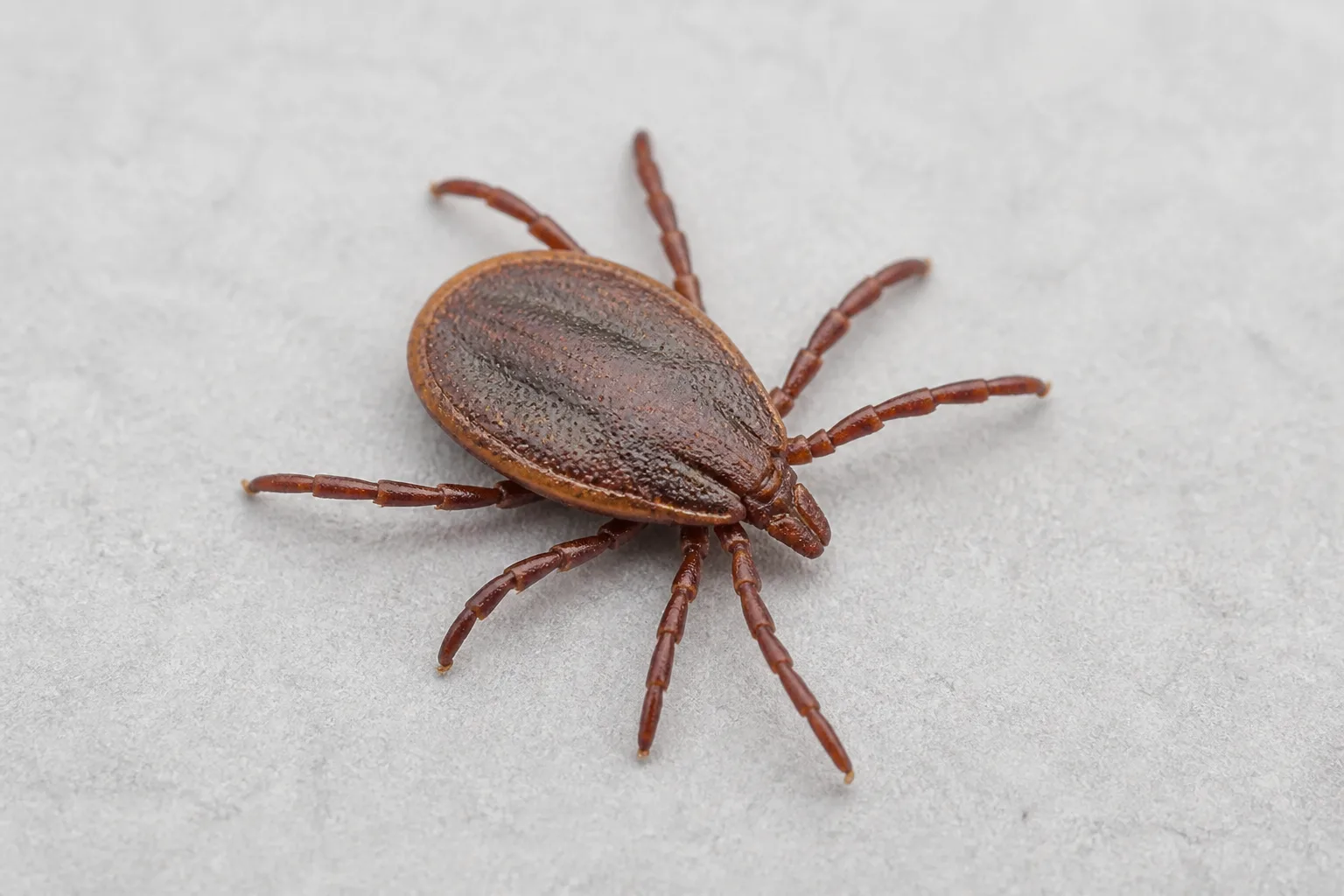
Yes, diatomaceous earth can kill an exposed tick if the tick crawls through a dry, undisturbed layer of the powder. That does not make it a dependable way to clear a lawn, woodland edge, or tick-heavy backyard. Outdoors, rain, dew, irrigation, wind, leaf litter, mulch, and passing wildlife quickly create conditions that let ticks avoid or outlast a dust treatment.
The useful answer is therefore conditional. DE can be a small, targeted tool on a dry crack, sheltered threshold, or other place where you can keep the powder dry and control who contacts it. For a yard, the stronger plan is to reduce cool, humid habitat, make the lawn edge easier to cross, protect your skin and clothing, check pets, and use a labeled treatment or professional assessment when the problem is larger than a few exposed ticks.
The short answer: yes in a dry contact zone, no as a yard-wide solution
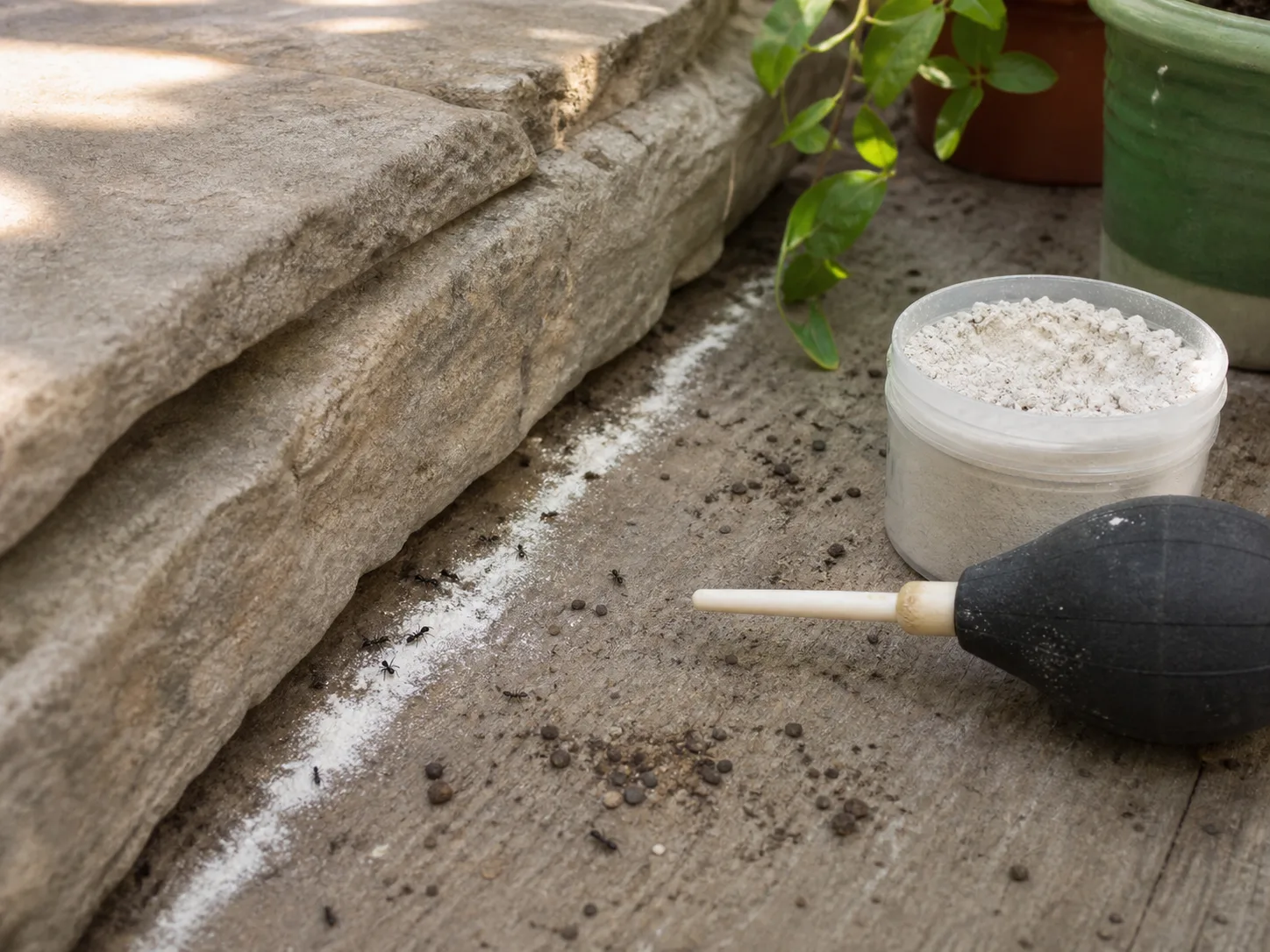
NPIC explains that diatomaceous earth is made mainly from amorphous silicon dioxide and works mechanically: it absorbs oils and fats from an arthropod’s outer body, while its abrasive particles speed drying. It is not a poison that has to be eaten, and it remains effective only while it is dry and undisturbed. (National Pesticide Information Center diatomaceous earth fact sheet)
That mechanism gives DE a narrow advantage and a large limitation. A tick must encounter enough dry powder for long enough to lose moisture. A tick tucked beneath damp leaf litter, sheltered in brush, carried by a mouse or deer, or already attached to a dog is not in the kind of exposed, dry contact zone where loose DE performs well.
| Situation | DE verdict | Better next move |
|---|---|---|
| A dry, sheltered crack with a small number of crawling pests | May help as a limited contact treatment | Keep the area dry and follow the product label |
| A lawn, shady bed, or woodland edge | Unreliable | Change the habitat and protect people and pets |
| Damp soil, mulch, leaf litter, or recently watered ground | Poor fit | Wait for appropriate conditions or skip DE |
| A tick attached to skin or a pet | Not a removal method | Remove it with fine-tipped tweezers; call a veterinarian for pet advice |
| Repeated ticks across the property | Too narrow to be the plan | Monitor, reduce habitat, and consider professional help |
The practical test is simple: Can you keep the treatment dry, prevent drift, and confirm that the target will crawl through it? If the answer is no, DE is probably giving you the feeling of action without meaningful control.
What diatomaceous earth does to a tick
Ticks are arachnids, not insects, but the same dry-contact principle can affect them. Their outer body loses moisture when a suitable dust disrupts the protective surface, so a tick that walks through a dry layer may eventually die rather than being knocked down instantly.
That delay matters. DE is not a “kill on contact” spray, and a tick can leave the treated area before the drying process is complete. Do not judge the method by whether a tick stops moving within minutes. The more important question is whether the powder stayed dry and whether the tick had enough contact with it to matter.
Dry powder and contact are non-negotiable
Moisture is the dividing line between a plausible DE application and a wasted one. NPIC says DE remains effective while it is dry and undisturbed, while West Virginia University Extension identifies desiccation—or drying out—as a major cause of natural tick mortality. (West Virginia University Extension tick management)
This is why an indoor wall void or sheltered foundation crack can be a better DE setting than a lawn. A powder line laid in damp grass may clump, sink into thatch, wash away, or become hidden under leaves. Even if some particles remain, the target may be moving through a much wetter microclimate underneath the visible surface.
The same rule explains why a dry day is not enough. Heavy dew can re-wet a treatment overnight, irrigation can wash it toward a drain or bed, and a gust can spread fine dust beyond the intended zone. A treatment that needs a stable dry surface is a poor match for a living landscape that regularly changes with weather.
Food-grade does not mean “use it anywhere”
“Food-grade” describes a product intended for specific food or feed uses; it is not a universal permission slip for dusting lawns, pets, children, or skin. NPIC notes that food-grade DE is purified, but also warns that people can be exposed by breathing the dust, getting it in their eyes, swallowing it, or entering a treated area before the dust settles. Inhalation can irritate the nose and airways, and the abrasive powder can irritate eyes and dry skin. (National Pesticide Information Center safety guidance)
Pesticide products are a separate question. NPIC lists DE products registered for use against ticks, but the label controls the legal site, target pest, application directions, and precautions. A bag labeled for a different use is not automatically an appropriate tick treatment. Do not substitute pool or filter media for a labeled pest-control product, and do not assume that “natural” eliminates exposure concerns.
If you decide DE fits a small job, choose a product whose label actually covers that job. Apply the minimum amount directed, keep people and pets away until the label says the area is safe, avoid creating airborne dust, and do not broadcast it over a play area, vegetable harvest, pet bedding, or a windy lawn as a shortcut.
Why outdoor DE disappoints
The failure is not mysterious. The biology that makes DE useful against an exposed arthropod is the same biology that makes ticks difficult to reach in a backyard. Ticks do not need to stand on top of a white powder line waiting for it to work; they spend much of their time in protected, humid places or on hosts that move through the yard.
Rain, dew, irrigation, and mulch defeat the dust
Ticks need moisture to survive, and the low vegetation, thatch, leaf litter, and mulch around a yard can hold a humid microclimate even when the air feels dry. GrowIt BuildIt’s field-focused gardening guide describes ticks retreating into lower vegetation and leaf litter when conditions are dry, precisely where a surface dusting is least likely to stay exposed. (GrowIt BuildIt tick-management guide)
This creates an awkward mismatch. You may see a dry white stripe on the top of a bed while ticks remain below it in damp cover. Then rain or irrigation removes what little powder was available. Reapplying after every wet period can turn DE into a recurring exposure and cleanup problem without solving the source of the ticks.
Mulch deserves special attention because it is not automatically a tick barrier. Thick, damp organic mulch can preserve the cool humidity ticks need. A dry, maintained strip of coarse wood chips or gravel at a lawn-to-woods transition has a different job: it creates a less favorable crossing zone and makes the boundary visible. It is not a guarantee, and it is not the same as sprinkling DE into a wet flower bed.
It misses the ticks that matter most
A yard tick problem is usually a movement problem as much as a surface problem. Ticks can quest on grass and low vegetation, but they can also arrive on deer, rodents, dogs, birds, or other hosts. WVU Extension notes that blacklegged tick abundance is associated with white-tailed deer and that mice can serve as reservoir hosts for disease-carrying ticks. (WVU Extension tick management)
DE cannot dry a tick that is on a deer passing through the property. It cannot reach every tick below leaf litter, and it cannot stop a new tick from falling off a host tomorrow. That is why a whole-yard dusting is usually less useful than improving the yard edge and reducing the conditions that let ticks survive between host meals.
Are lavender, rosemary, and marigolds a tick barrier?
No plant should be treated as a reliable tick-proof border. Lavender, rosemary, mint, marigolds, and other strongly scented plants can be pleasant additions to a garden, but planting them does not replace mowing, brush management, tick checks, pet protection, or a labeled control program.
The more defensible landscaping lesson is about structure, not a magic ingredient. A sunny, open, maintained edge generally offers fewer cool hiding places than a dense brush line or deep leaf litter. A plant that creates shade and thick ground cover can have the opposite effect from the one a gardener expects, especially when it also attracts wildlife or makes inspection difficult.
Keep plants you enjoy, but do not buy them for a promise that their scent will repel every tick. Spend the first hour on the edge of the property, the leaf litter under play areas, the grass around paths, and the places where pets or wildlife pass. Those changes address exposure more directly.
A practical DE decision rule
Use DE only when all of these conditions are true:
- The target is an exposed, crawling tick or another pest that will actually contact the powder.
- The surface is dry and sheltered from rain, irrigation, and routine disturbance.
- The product label covers the target pest and the exact site.
- You can apply it without creating a dust cloud or exposing children, pets, food, drains, or pollinators.
- You are using it as a small part of a broader plan, not as proof that the yard is safe.
Skip it when any of those conditions fail. That includes a wet lawn, a shaded leaf pile, a broad open yard, a tick already attached to skin, and any product with no clear tick-and-site directions.
If you use DE, keep the application narrow
Choose a sheltered crack, dry threshold, or other defined zone rather than dusting every blade of grass. Read the label before opening the container, wear the protective equipment it specifies, keep the container closed when not in use, and apply gently so the powder settles where it belongs.
Do not mix DE with homemade sprays, oils, lime, or other powders because the combination sounds stronger. Do not wet it to make a slurry unless the label specifically describes that formulation; wetting changes the dry-contact mechanism. If the surface becomes damp, the treatment has reached its practical limit and should not be “recharged” by adding more powder on top of old residue.
The safest success metric is not “I used a lot.” It is “I treated a small, labeled, dry zone with minimal exposure and then addressed the habitat that keeps bringing ticks back.”
Make the yard less tick-friendly first
CDC guidance for reducing blacklegged tick exposure around homes starts with simple landscape changes: remove leaf litter, clear tall grasses and brush at the home and lawn edge, create a 3-foot wood-chip or gravel barrier, mow frequently, stack wood neatly in a dry place, and keep play areas, decks, and patios away from yard edges and trees when possible. (CDC tick prevention)
Those steps do not sterilize a yard. They make the places people use easier to inspect and less favorable for the sheltered, humid conditions ticks prefer. Work from the high-use zone outward instead of trying to treat every square foot equally.
Mow the lawn and trim the edge
Mowing is not about creating a putting green. It is about removing tall, dense vegetation where ticks can quest and where people brush against them. Keep grass at a height appropriate for your turf and climate, but do not let the lawn edge grow into a wall of weeds beside a patio, path, swing set, or garden entrance.
Consumer Reports’ practical yard guide recommends keeping grass from becoming tall and trimming weeds at the boundary because ticks use vegetation as a place to wait for passing hosts. (Consumer Reports tick-proofing guide)
The edge is the priority. A short strip beside woods or brush gives you a place to inspect shoes and pant legs before entering the house. It also reduces the amount of foliage touching people and pets, which is more useful than scattering a dust that may be gone after the next watering.

Remove leaf litter and manage woodpiles
Leaf litter is valuable habitat for many garden organisms, but a thick layer beside a play space or the door used for yard work is a poor place to accept extra tick exposure. Rake or remove leaves from the zones people and pets use most, then compost them or dispose of them according to local rules rather than piling them against the house.
Woodpiles deserve the same logic. Stack firewood neatly in a dry location away from the house when practical, and avoid turning the area under a deck or beside a shed into a permanent mix of damp boards, weeds, and leaves. That reduces both cover and the rodent traffic that can help maintain a tick cycle.
Do not strip every natural corner of the property just to chase zero ticks. Preserve habitat where it does not increase daily exposure, and create a clearer, drier, easier-to-check zone around paths, patios, play equipment, and entrances.
Use a dry three-foot transition zone
A 3-foot strip of coarse wood chips or gravel between a lawn and wooded area is a commonly recommended boundary for reducing blacklegged tick movement into recreational space. CDC and Consumer Reports both describe this kind of barrier, while GrowIt BuildIt emphasizes that the strip works by being easier to keep dry and visible—not because it is an invisible chemical wall.

The material matters less than maintenance. Keep the strip free of weeds, leaves, and overhanging brush; a damp, overgrown border loses the advantage you were trying to create. If gravel is more likely than wood chips to stay open and dry in your climate, use gravel. If either material becomes a leaf-filled tunnel, it has become habitat instead of a buffer.
Treat the boundary as a reminder, too. Children, guests, and dog walkers can see where the higher-risk edge begins. That simple cue can prompt shoes, socks, clothing, and pet checks before anyone moves indoors.
Reduce wildlife traffic without wrecking the garden
You do not need to remove every bird, rabbit, or beneficial insect from a yard. Focus on predictable attractants and hiding places near high-use areas: uncovered food, spilled seed, trash, brush piles, and wood stacked against a wall. A fence can reduce deer access where it is realistic, while sealed food storage and clean feeding areas can reduce rodent and raccoon interest.
Consumer Reports quotes Cornell IPM specialists describing tick control as heavily connected to wildlife. That does not mean you can eliminate all hosts; it means a property that welcomes many mammals at the lawn edge will keep receiving new ticks even after a dust or spray treatment.
Do not place homemade pesticide “tick tubes” or treated materials where children, pets, or non-target wildlife can reach them. If you are considering a host-targeted product, use a commercial system according to its label or ask a local Extension office or licensed professional what is appropriate in your area.
Protect people and pets while working outdoors
Yard changes reduce exposure; they do not replace personal protection. CDC recommends EPA-registered repellents for exposed skin, including products containing DEET, picaridin, IR3535, oil of lemon eucalyptus, para-menthane-diol, or 2-undecanone, with label directions controlling who can use each product. It also recommends clothing and gear treated with 0.5% permethrin, or commercially treated clothing and gear. (CDC preventing tick bites)
For gardening, the routine can be simple: wear closed shoes and socks, avoid brushing against the overgrown edge, keep long pants tucked or secured when the habitat is high risk, and check clothing before entering the house. Light-colored clothing can make a crawling tick easier to see, but it is not a repellent.
When you come indoors, examine your clothes, gear, children, and pets. CDC says dry clothing can be tumble-dried on high heat for 10 minutes to kill ticks; damp clothing may need longer, and cold or medium-temperature washing is not dependable for killing ticks. Showering within two hours of coming indoors can help wash off unattached ticks and creates a good opportunity for a full body check.
Do not dust a dog, cat, child, or your own skin with loose DE as a substitute for a veterinary or personal tick product. Some DE products are labeled for direct use on dogs or cats, but that is a product-specific decision governed by the label; an attached tick still needs prompt removal and a pet-specific conversation with a veterinarian.

What to do after finding a tick
Finding one tick does not prove that the entire yard is infested, but it is useful evidence that your current exposure routine needs attention. Note where it was found: tall grass, a shaded bed, a dog’s fur, a child’s clothing, or the lawn edge. That location tells you whether your next move is habitat work, a pet check, or a personal-protection upgrade.
If a tick is attached to skin, use fine-tipped tweezers or forceps to grasp it as close to the skin as possible. Pull upward with steady, even pressure, then clean the bite area and your hands. WVU Extension specifically recommends this approach to remove the mouthparts intact and reduce the chance of leaving material in the skin. (WVU Extension tick removal and management)
Do not burn the tick, coat it with petroleum jelly, or cover it in DE while it is attached. Those methods delay removal and can irritate the skin. If you develop a rash, fever, unusual fatigue, muscle aches, or other concerning symptoms after a bite, contact a healthcare professional and mention the possible tick exposure; regional disease risk and recommended follow-up vary.
For a pet, do not improvise a pesticide treatment after finding a tick. Remove it if you can do so safely, inspect the ears, collar area, toes, and groin, and ask your veterinarian which preventive product and follow-up are appropriate for that animal.
When a yard problem needs professional help
Call a licensed pest professional when ticks are repeatedly found on people or pets, when several areas of the property test positive, when a child or pet uses the yard daily and exposure cannot be reduced, or when the yard borders dense woods, wetlands, or heavy wildlife traffic. A professional can identify likely tick habitat, select a product labeled for the site, and explain re-entry and timing requirements.
Do not accept a vague promise that one blanket spray will make the property tick-free. CDC cautions that outdoor pesticides can reduce ticks in treated areas but should not be your only protection from infection. Ask what areas will be treated, what will not be reached, how long people and pets must stay out, how pollinators and water are protected, and what habitat changes should happen first.
A local Extension office or health department can also help identify the tick species and seasonal risk in your region. That matters because blacklegged, lone star, American dog, and other ticks do not all have the same range, host associations, or disease concerns. Good control is local and layered, not a universal powder recipe.
Conclusion: use DE as a limited tool, not the plan
So, does diatomaceous earth kill ticks? It can kill a tick that contacts a dry, undisturbed, appropriately labeled DE product, but it is not a reliable whole-yard treatment. Rain, dew, irrigation, damp mulch, leaf litter, wind, hidden habitat, and host animals all work against it.
If you have a small, dry, sheltered contact zone, DE may have a narrow role when the label supports that use and you can control exposure. For the yard itself, start with the measures that keep working after the dust is gone: mow and trim the edge, remove leaf litter from high-use areas, store wood dry, create a maintained 3-foot transition, reduce wildlife attractants, protect your clothing and skin, check pets, and remove attached ticks promptly.
That approach is less dramatic than covering the lawn in white powder, but it is more honest about how ticks live—and more likely to reduce the number of encounters that matter.



