How to Get Rid of Asian Lady Beetles in Your Home
Asian lady beetles gather indoors in fall. Here is a practical plan for identification, vacuuming, exclusion, light traps, and cautious treatment.

Asian lady beetles are easiest to manage when you separate two problems: the beetles already inside and the openings that let the next group in. Start with a vacuum or a dark-room light trap for immediate relief, then spend your prevention effort on window screens, door gaps, siding, vents, and other exterior cracks.
Do not treat every orange or red lady beetle as a pest. The multicolored Asian lady beetle, Harmonia axyridis, is a useful predator of aphids outdoors, but it can gather by the hundreds in fall, overwinter inside wall voids or attics, release an acrid yellow secretion when disturbed, and occasionally pinch skin. The goal is targeted control around the home while leaving working native predators in the garden alone.
The quickest plan for a house full of beetles
If beetles are crawling on windows, ceilings, or sunny walls today, use this order:
- Confirm the insect before applying anything. Check for the pale cheek patches and dark M-shaped marking behind the head.
- Remove visible adults with a vacuum, ideally a shop vacuum or a household vacuum fitted with a disposable containment method.
- Clean the area and contain the waste so trapped beetles do not escape and crushed beetles do not leave stains.
- Inspect the outside of the same wall for gaps around windows, soffits, vents, utility penetrations, and siding.
- Seal openings before the next sunny fall afternoon, when adults may gather on the warm, bright side of the building.
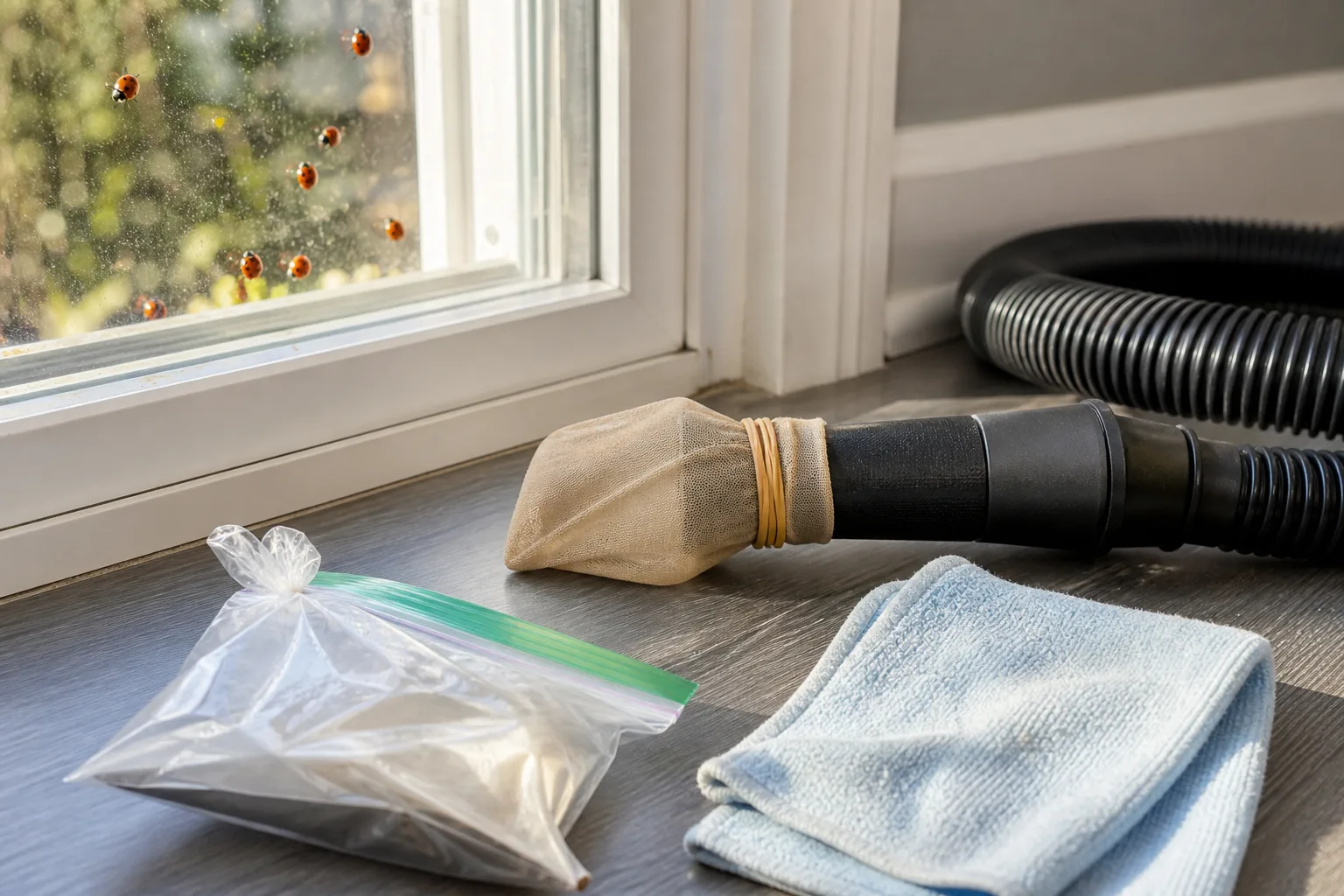
This sequence matters because killing the beetles inside does not close the route they used. Conversely, caulking every crack while hundreds are already in a living space does not provide immediate relief. If the beetles are concentrated in an attic, wall void, or upper story you cannot safely reach, skip improvised dusting and call a pest professional.
Identify the beetle before you treat it
“Ladybug” is a common name for many lady beetles, not a guarantee that the insect is either helpful or harmful. Colorado State University Extension describes lady beetles as a large group whose adults and larvae commonly prey on aphids, scale insects, mites, insect eggs, and other small arthropods. The multicolored Asian species belongs to that beneficial group outdoors, but its habit of using buildings as winter shelter makes it a household nuisance.
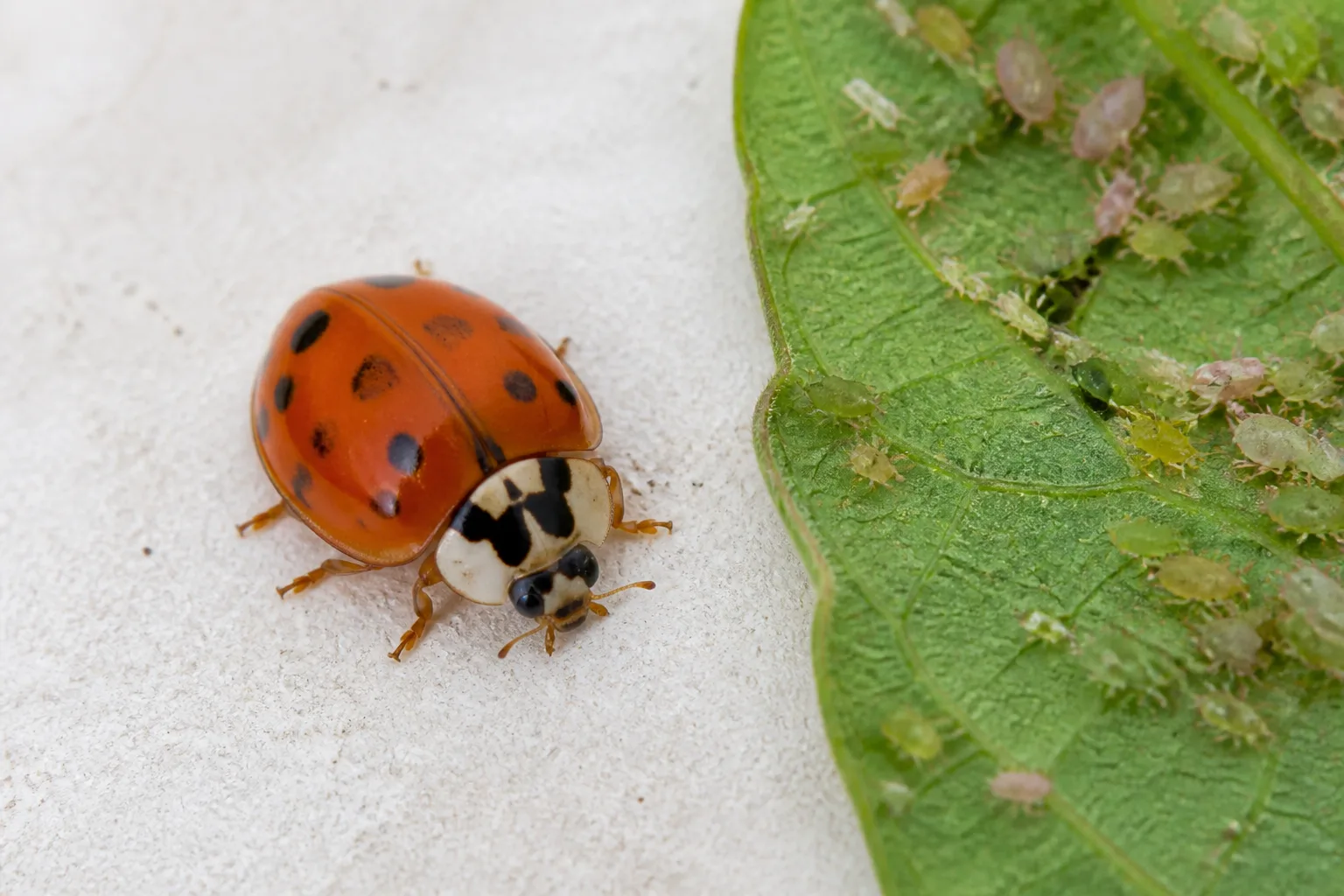
Lady beetles are useful predators in the garden; identify the adult before removing one from a plant or treating the area.
Signs it is the multicolored Asian lady beetle
Look for a combination of clues rather than relying on one spot pattern. Adult Asian lady beetles are broadly oval and range from pale yellow-orange to deep red. Some have many black spots, some have only a few, and some appear nearly spotless. Color and spot count can overlap with native species.
The most useful field mark is on the pronotum, the shield-like area directly behind the head. White patches on either side form a dark M- or W-shaped mark in the center. The head often looks more white around the “cheeks” than the mostly black head of many familiar native lady beetles. The beetles may also emit a strong odor or leave a yellow-orange stain when handled, crushed, or frightened.
An indoor cluster in autumn is another strong clue, especially if the insects are collecting on a sun-warmed exterior wall before appearing around windows. That behavior points to overwintering shelter, not a nest inside your pantry or a colony reproducing in your carpet.
Native lady beetles, look-alikes, and the plant-feeding exception
The safest approach is not “kill every lady beetle.” Native species can be valuable aphid predators, and the larva of a lady beetle may look like a small black-and-orange alligator crawling on a leaf. Leave eggs, larvae, and attached pupae in the garden unless you have evidence that the insect is a plant-feeding exception.
The Mexican bean beetle is one important exception within the wider lady beetle family. It feeds on bean foliage rather than hunting aphids, so expanding lace-like leaf damage on beans deserves a closer identification. Lacewing larvae and hoverfly larvae can also appear in aphid colonies; body structure helps separate them. Lady beetle larvae have visible legs and an elongated, often spiny body, while hoverfly larvae are legless and maggot-like.
If you cannot identify the insect, take a clear photo from above and include the plant, the damage, and the surrounding location. A local extension office or master gardener identification service can help you avoid treating a beneficial species or protecting a plant-eating one.
Why Asian lady beetles come indoors in fall
Asian lady beetles spend the growing season outdoors in trees, fields, gardens, and other places where aphids and related prey are available. As temperatures fall and food becomes less dependable, adults seek a sheltered place to pass the winter. A building offers protected cracks, stable temperatures, and a surface that can warm in the sun.
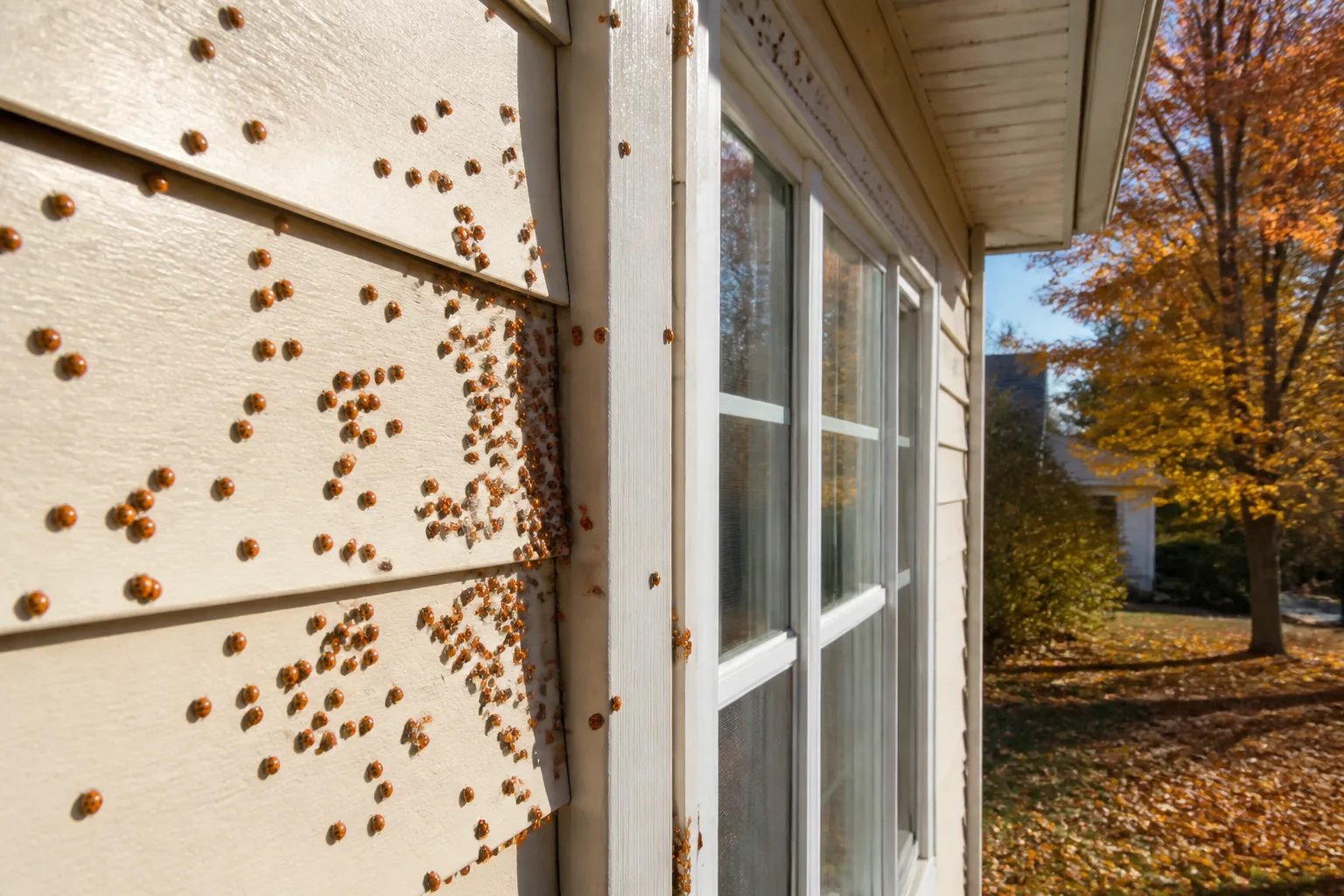
The beetles are not usually coming inside because your home has food for them. They are using it as a seasonal shelter. University of Kentucky Entomology describes these structural infestations as a fall entry and overwintering problem, which is why interior spraying after the beetles have disappeared into wall voids often gives disappointing results.
Why sunny walls and upper floors attract them
Migration and entry often peak on bright afternoons after a stretch of cooler weather. Warm, sunlit walls can act like a landing zone, and dark trim or shaded corners beside bright siding may provide visual contrast that helps the insects settle. The upper, sunny sides of a house are therefore worth inspecting first, along with attic vents, rooflines, dormers, and windows near the roof.
Once adults find a crack, they can move behind trim, into soffits, around window frames, or through openings around pipes and wires. Several beetles emerging from one room does not necessarily mean they bred there. It may mean an outside aggregation is using a connected void and has found a warmer route toward the living space.
That distinction changes your response. Look for the exterior entry route and the building envelope before treating furniture, houseplants, or baseboards. If the same wall attracts beetles every year, prevention should begin before the first large fall flight, not after the first indoor cluster appears.
Remove the beetles already inside
Physical removal is usually the cleanest first response because it takes the insect out of the room without coating the air, walls, or nearby surfaces with pesticide. Work slowly around windows and ceilings, and avoid crushing the beetles against light-colored paint or fabric. Their defensive secretion can smell unpleasant and leave yellowish marks.
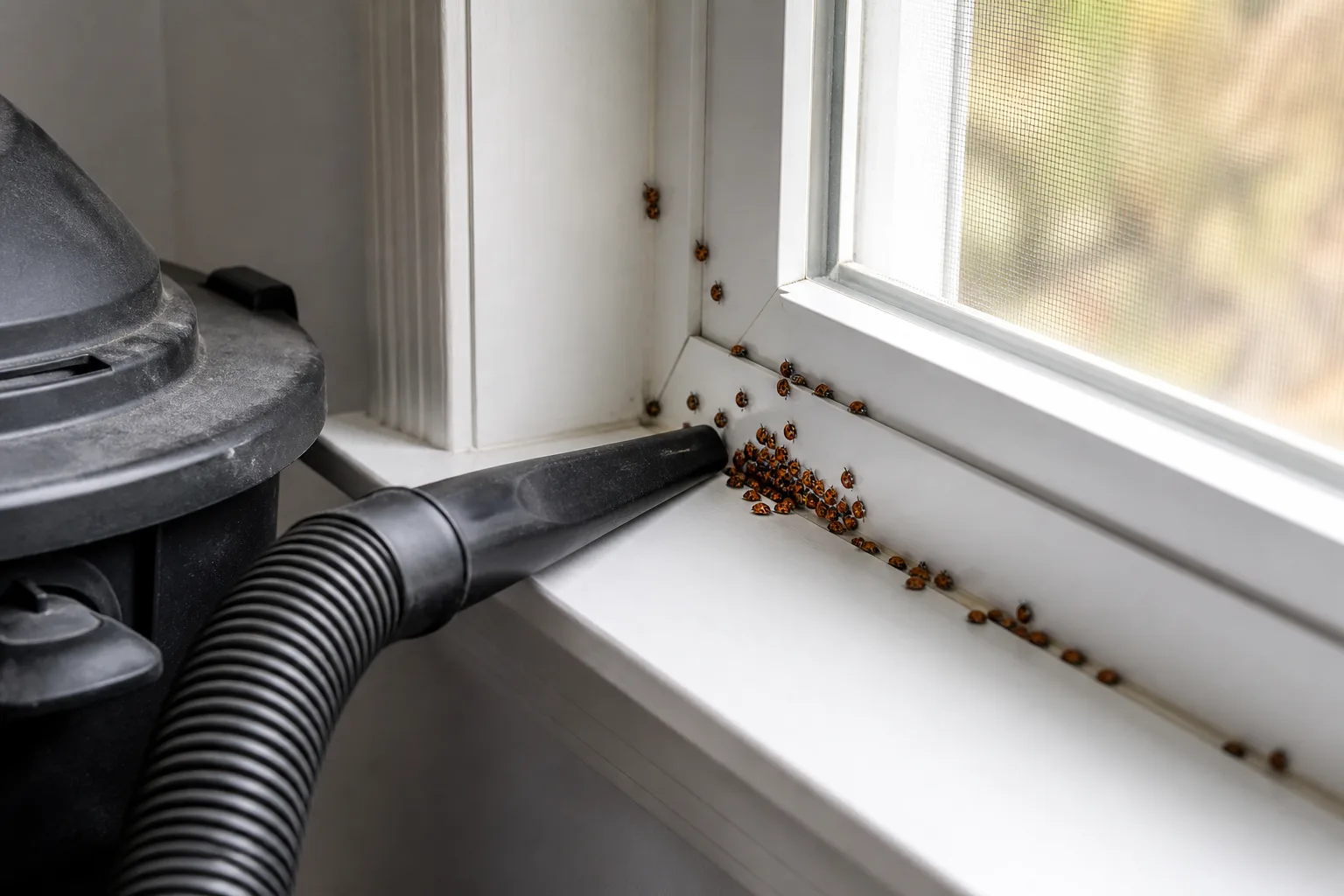
A close inspection helps you find the cluster and the entry route before choosing a treatment.
Vacuum without spreading the odor
A vacuum is the best all-purpose tool for a visible indoor group. A shop vacuum is convenient because the canister and hose are easier to empty outside, but a regular vacuum can work if you prevent beetles from reaching the machine’s interior and seal the waste immediately afterward.
One low-contact option is to stretch a nylon stocking over the end of the hose and secure it with a rubber band. The beetles collect in the stocking rather than traveling deep into the vacuum. Turn the vacuum off before removing the stocking, tie or seal the end, and take it outdoors for disposal. If the vacuum uses a bag, remove and seal the bag promptly; do not leave a beetle-filled bag in a warm utility closet.
Do not use a leaf blower indoors, spray a cluster into the air, or sweep beetles into a floor vent. Those methods spread the insects and their odor without addressing the entry point. After removal, wipe stained surfaces with a suitable household cleaner that will not damage the finish, and test any cleaning product on an inconspicuous area first.
Use a light trap in dark rooms
A black-light insect trap can help when adults are concentrated in an attic, enclosed porch, or other dark room. Place the trap where it is the most prominent light source; competing windows, lamps, or overhead fixtures reduce the contrast that makes the trap attractive. Choose a model designed for indoor insect capture and keep it away from water, walkways, and places where children or pets can knock it over.
Light traps are a removal tool, not a substitute for exclusion. They work best on beetles that are actively moving through a dark space. They will not pull every insect out of a wall cavity, and they will not stop new adults from entering through an unsealed gap. Check the trap regularly, especially during a heavy flight, and dispose of the catch according to the device instructions.
Stop the next wave with exclusion
Exclusion is the part that makes indoor control last. Walk the outside of the building on a bright day and inspect the wall that receives the most afternoon sun. Look from the foundation to the roofline, then repeat the inspection from indoors so you can compare exterior gaps with the rooms where beetles appear.
Seal the exterior before warm fall afternoons
Use an appropriate exterior caulk around stationary joints in window and door frames, siding transitions, trim, and utility penetrations. Larger holes may need a durable patching material or fine mesh before the surface is sealed. Do not caulk over a vent that is supposed to move air, block a drainage opening, or close an area that requires access for electrical or plumbing maintenance.
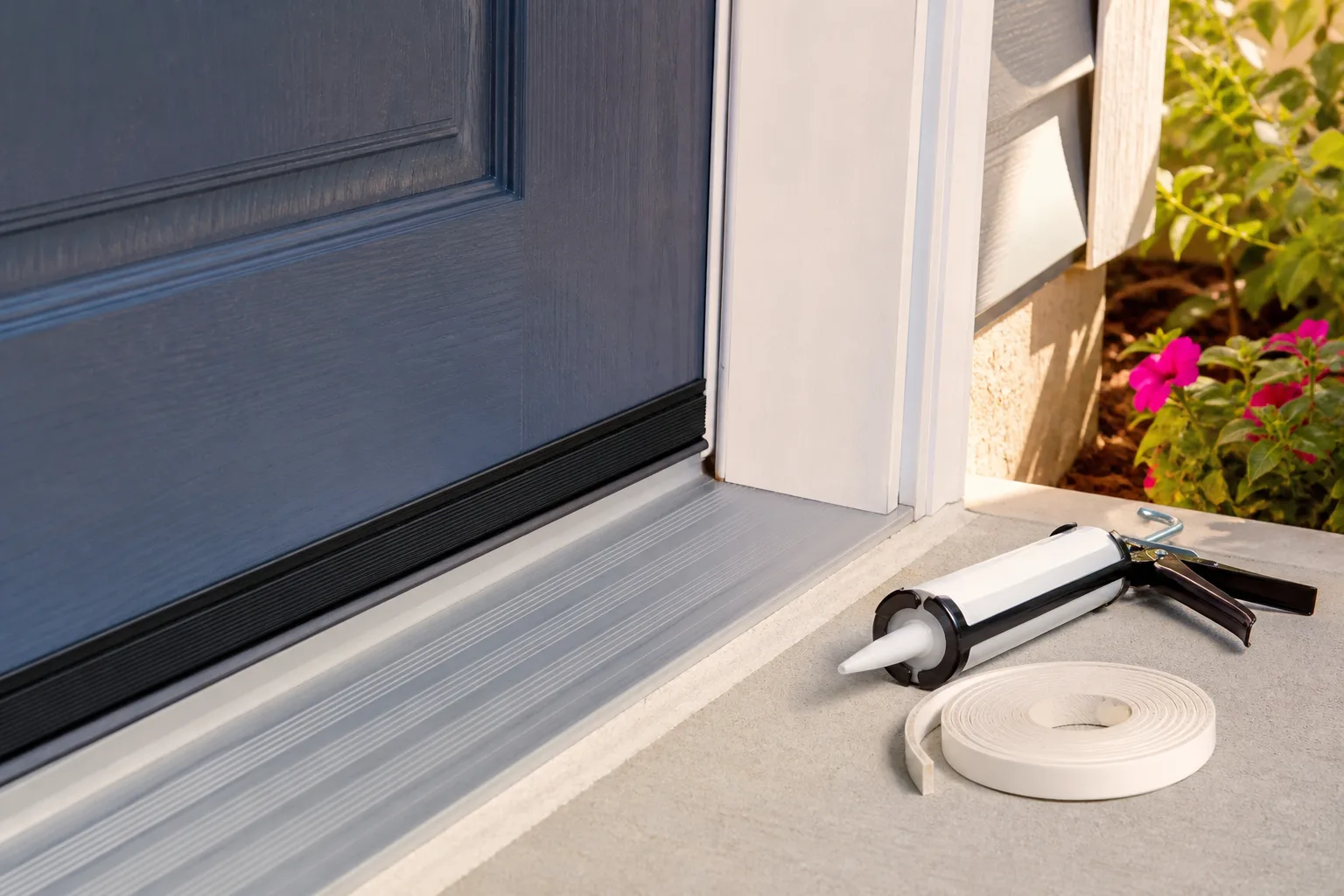
Door sweeps, weatherstripping, and careful caulking close the kinds of small gaps that let overwintering insects through.
Prioritize gaps that connect directly to the interior: loose window trim, torn screens, gaps beneath doors, cracks where siding meets the foundation, and openings around cable, hose, pipe, and electrical lines. Inspect attic vents, soffits, roofline joints, and chimney flashing as well. A fine insect screen or mesh can preserve airflow while reducing access, but it must fit tightly and remain intact.
Timing is as important as material. Finish repairs before the first sustained cool spell followed by sunny afternoons. If you seal only after the beetles have settled into a wall cavity, you may prevent a new entry while still seeing adults emerge indoors for days or weeks.
Repair screens and manage the building edge
Replace torn window screens and check that screen frames sit tightly in their tracks. Pay attention to windows that are rarely opened; a small gap at a corner can be enough for a cluster to enter. At exterior doors, inspect the sweep, the threshold, and the meeting point between the jamb and weatherstripping. Close the door fully while checking for visible daylight.
Reduce unnecessary hiding places immediately beside the building without stripping the property bare. Move loose boards, dead vegetation, and stored materials away from siding where practical, but do not remove every garden shelter or apply a blanket pesticide to the landscape. The goal is a maintained building edge and a sealed structure, not a sterile yard.
If a recurring infestation seems to originate behind siding, in a soffit, or inside a wall, do not drill holes or inject an unapproved product. Those spaces can contain insulation, wiring, or ventilation paths. Document where beetles appear, then have a licensed professional inspect the structure and recommend a treatment that is legal for that site.
Which treatments help—and which disappoint
Treatments make the most sense after identification and exclusion. A product that kills a beetle on contact may do little for insects already protected inside a wall, and a strong-smelling repellent may leave you with the same entry gap after the scent fades. Think in terms of the job: remove, exclude, or treat a hard-to-reach reservoir.
Diatomaceous earth and repellents: limited roles
Diatomaceous earth is a dry abrasive dust. It can damage an insect’s waxy outer layer and contribute to dehydration when the insect crosses a dry, undisturbed deposit. It is not a sealant, and a damp, windblown, or heavily scattered line around a home is not dependable exclusion.
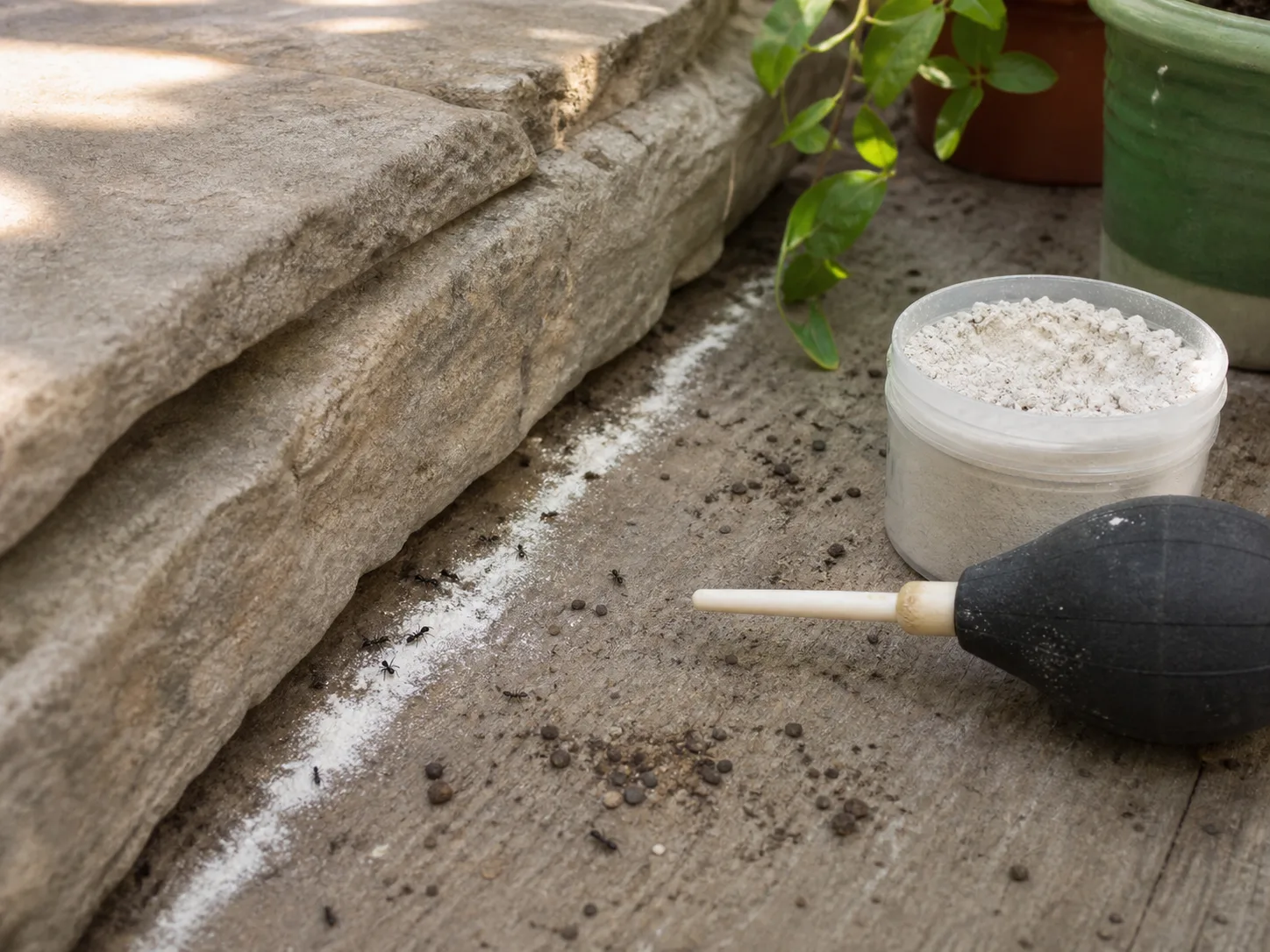
A dust works only where it stays dry and is contacted; it cannot replace caulk, mesh, or a door sweep.
If you use a labeled product, apply it only where the label permits and avoid creating airborne dust. Keep children, pets, and food-preparation areas away from the application, and remember that a nonselective dust can harm beneficial insects that cross it. Never assume “natural” means harmless or that a thick perimeter is better than a thin, targeted application.
Peppermint, citrus, citronella, bay, and clove scents are often suggested as repellents. Treat them as temporary, unproven add-ons rather than a primary control method. A scent cannot repair a torn screen, and spraying essential oils on siding, plants, or pets can create its own irritation or surface-damage problem. If you try a repellent, follow its label, test it on a small surface, and continue the exclusion work.
Insecticides: use only as a labeled perimeter option
Indoor insecticide sprays are rarely the first choice for a visible cluster. Spraying walls, ceilings, or wall voids can expose people and pets while leaving the structural entry problem unchanged. It can also kill other insects that are not causing the nuisance, and aerosol drift may reach surfaces where it does not belong.
When a pesticide is appropriate, the most useful timing is usually before entry, on exterior cracks, frames, or other sites specifically allowed by the product label. Read the entire label for the target pest, application site, ventilation, re-entry time, protective equipment, and restrictions around children, pets, food, and aquatic areas. Do not mix products, improvise concentrations, or use an outdoor product indoors.
Professional perimeter treatment can be reasonable for a severe, recurring, or inaccessible infestation, especially when exclusion repairs are difficult. Ask what area will be treated, how the application avoids beneficial-insect habitat, and what exclusion work is still needed. A spray should support a prevention plan, not stand in for one.
Protect the garden’s beneficial insects
Asian lady beetles are not bad insects in every setting. Outdoors, adults and larvae eat aphids and other soft-bodied pests, and adults may also use pollen, nectar, or honeydew. The same individual that is unwanted in an attic may be useful on an aphid-covered tree.
That does not mean you should purchase and release a container of lady beetles every time aphids appear. Many commercially sold adults are field-collected convergent lady beetles, and extension guidance warns that they are strongly dispersive. The University of Georgia Cooperative Extension reports that purchased adults may arrive in reproductive diapause and leave quickly after release; Colorado State University Extension likewise describes poor establishment as a common outcome. An open garden offers too many escape routes, and adults may leave before reproducing.
Instead, make the garden usable for local natural enemies. Plant small, accessible flowers such as alyssum, dill, coriander, yarrow, or other climate-suitable nectar sources. Keep some shelter in a managed corner, tolerate a modest amount of prey long enough for predators to find it, and avoid broad-spectrum insecticides when a targeted response will do. Penn State Extension emphasizes plant diversity, flowers across the season, water, and careful insecticide choices when supporting beneficial insects.
Before spraying an aphid colony, inspect the newest growth and leaf undersides for eggs, larvae, lacewings, hoverflies, and parasitized pests. If a plant is not in immediate danger, a few days of monitoring may show that natural enemies are already reducing the colony. When treatment is necessary, spot-treat the confirmed pest and follow the label; do not blanket-spray a flowering bed simply because one plant has aphids.
When a professional is the better choice
Call a licensed pest professional when the infestation is too large to remove safely, returns every year despite serious exclusion work, or appears to be coming from a wall, soffit, attic, or other inaccessible void. Professional help is also sensible when you cannot tell whether the insect is a lady beetle or a different beetle and the proposed treatment would involve a pesticide.
Ask for an inspection-led plan rather than a promise to “eradicate” every beetle on the property. A good plan should identify likely entry points, distinguish indoor removal from exterior treatment, explain what will and will not be treated, and include repair priorities. Request the product name and label directions, including when people and pets can re-enter treated areas.
If anyone has a strong reaction after handling or crushing the beetles, move away from the insects, ventilate the area, wash exposed skin, and seek medical advice for persistent or severe symptoms. Asian lady beetles are not known as disease transmitters to people, but odor, secretions, bites or pinches, and household pesticide exposure are still reasons to use sensible precautions.
Conclusion
The reliable answer to how to get rid of Asian lady beetles is a two-stage job: vacuum or trap the adults that are already inside, then seal the building before the next fall flight. Start with the windows and sunny walls where you see activity, and work outward to screens, door sweeps, siding, vents, soffits, and utility openings.
Outside, resist the urge to destroy every spotted beetle. Identify the species, protect resident larvae and other natural enemies, and use pesticides or dusts only when the label and the situation justify them. You may not be able to remove Asian lady beetles from the wider landscape, but you can make your home a much harder place for them to overwinter.



