How to Clean Bird Bath Algae With Vinegar
Vinegar can loosen bird bath algae when used on an empty basin. Follow this bird-safe cleaning method, plus the schedule and placement changes that slow regrowth.
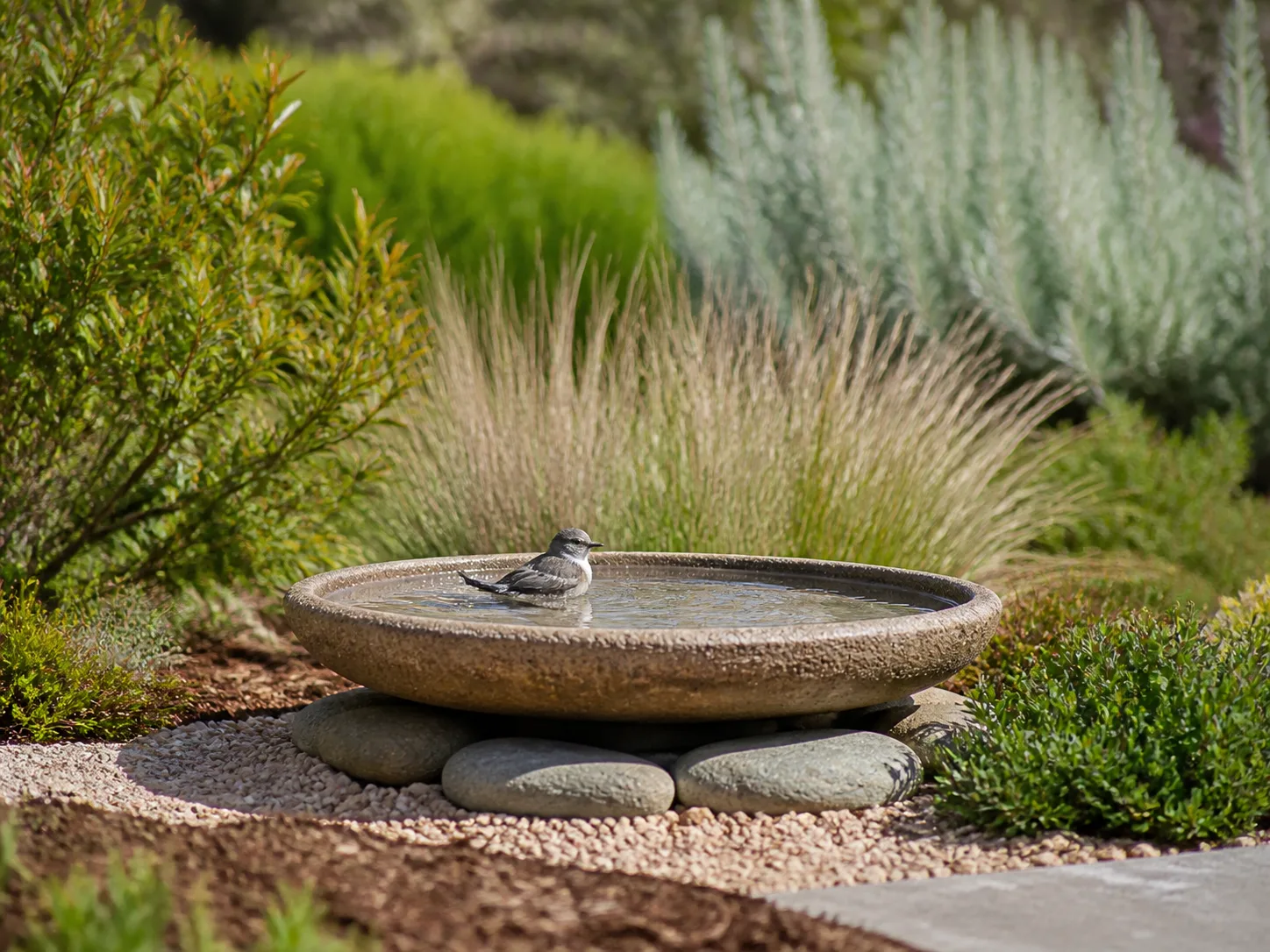
Yes, vinegar can help remove algae from a bird bath—but only when you use it as a cleaner on an empty basin. Never pour vinegar into the water that birds drink or bathe in. Drain the bath, scrub the algae with a diluted distilled-white-vinegar solution, rinse until no vinegar remains, let the basin dry, and refill it with fresh water.
That distinction matters because a bird bath is not a decorative bowl. Birds drink from it, splash in it, and preen their feathers afterward. A residue that seems minor to us can end up on feathers or be swallowed, so the goal is not to make the water acidic enough to kill algae. The goal is to remove the algae from the surface and return the bath to clean, plain water.
The short answer: use vinegar only on an empty bath
For routine algae, mix 1 part distilled white vinegar with 9 parts water. Use the solution to wet and scrub the empty bath, then rinse it thoroughly with clean water. This is the ratio recommended in Audubon’s birdbath maintenance guidance and echoed by other bird-care experts; some sources suggest stronger mixtures, but a mild solution is the sensible starting point for a surface birds will touch.
Vinegar can loosen the slimy film and help lift mineral residue that gives algae a rough surface to cling to. It does not make dirty bird-bath water safe, and it should not replace emptying the basin, removing debris, or refreshing the water. Think of it as one step in a cleaning sequence, not a treatment that belongs in the bird bath itself.
For ordinary green film, the safest useful order is:
- Empty the old water and remove leaves, feathers, droppings, and seed.
- Pre-rinse the basin so loose grit does not become abrasive while you scrub.
- Apply the diluted vinegar solution to the empty surface and scrub with a material-appropriate brush.
- Rinse the basin until the vinegar smell and visible residue are gone.
- Let it dry, then refill with fresh water.
Audubon advises skipping synthetic soaps and cleansers because residues can interfere with the oils birds rely on to keep their feathers functioning properly (Audubon’s birdbath maintenance guidance). That is why “more powerful” is not automatically better here.
Algae is a warning sign, not the whole problem
The common green film that grows in a bird bath is usually more useful as a maintenance signal than as a diagnosis of poisoning. Better Homes & Gardens notes that common green algae is typically not toxic to birds directly, but its presence can point to warm, nutrient-rich water that also supports bacteria, parasites, and other sanitation problems (Better Homes & Gardens’ bird-bath algae guidance).
That means you do not need to panic over a thin green smear, but you should not simply skim it off and top up the bath. Cloudy water, a slippery basin, a foul smell, bird droppings, dead insects, feathers, spilled seed, or mosquito larvae all raise the urgency. Drain the bath and clean it rather than diluting the mess with more water.
Why green film appears faster in warm weather
Algae needs light, water, and nutrients. A bird bath in strong afternoon sun warms quickly; leaves and flowers add organic material; droppings and spilled seed feed the water; and a shallow basin can evaporate until the remaining water becomes warmer and more concentrated. Heavy bird activity can make the same bath turn cloudy much faster than it does in a quiet week.
This is why a bath can look fine on Monday and need attention by Thursday. The fix is not always a stronger cleaner. Often it is a cooler location, a complete water change, less debris falling into the bowl, and a cleaning schedule that matches the weather and the number of visitors.
Prepare a bird-safe cleaning setup
You do not need a specialized chemical kit. Gather waterproof gloves if you prefer them, a bucket or hose, a scrub brush or soft cloth, distilled white vinegar, and a place where the dirty water can drain without pooling. Keep the bath away from birds while you work and do not let pets drink the old water or lick the cleaning tools.
Use plain distilled white vinegar, not a scented cleaner, a product with added ingredients, or a highly concentrated cleaning vinegar. The label’s acidity can vary, so there is no good reason to improvise a strong recipe when a mild 1:9 solution and physical scrubbing can handle routine algae.
Do not mix vinegar with bleach, ammonia, or another cleaner. If a bath has been exposed to a chemical product already, rinse it repeatedly with clean water before using anything else. When in doubt about a residue, stop experimenting and replace the water several times rather than stacking cleaners in the same basin.
Match the brush to the basin material
The right brush removes algae; the wrong one can create scratches that trap the next film. Use a soft cloth, nylon dish brush, or non-scratch scrubber on plastic and resin. A soft-to-medium nylon brush is a good default for glazed ceramic. Concrete and rough stone can tolerate more vigorous brushing, but inspect the surface first so loose grit does not become the abrasive.
Avoid a wire brush on a lightweight plastic or resin bath. A deep scratch is not just cosmetic: algae can settle into the grooves, making the bath harder to clean the next time. A 2026 cleaning guide in Martha Stewart describes the same material-specific caution and recommends gentler scrubbers for delicate basins (Martha Stewart’s bird-bath cleaning steps).
If the bath has removable rocks, take them out and clean them separately. Do not assume a decorative stone is safe just because it came with the bath; porous pieces can hold organic residue. Rinse every rock before returning it, and discard any that remain slimy, cracked, or impossible to clean.
How to clean bird bath algae with vinegar
Set aside enough time to finish the whole process. The rinse is not an optional final flourish; it is what separates a useful surface cleaner from a chemical residue left where birds will put their feet, feathers, and beaks.
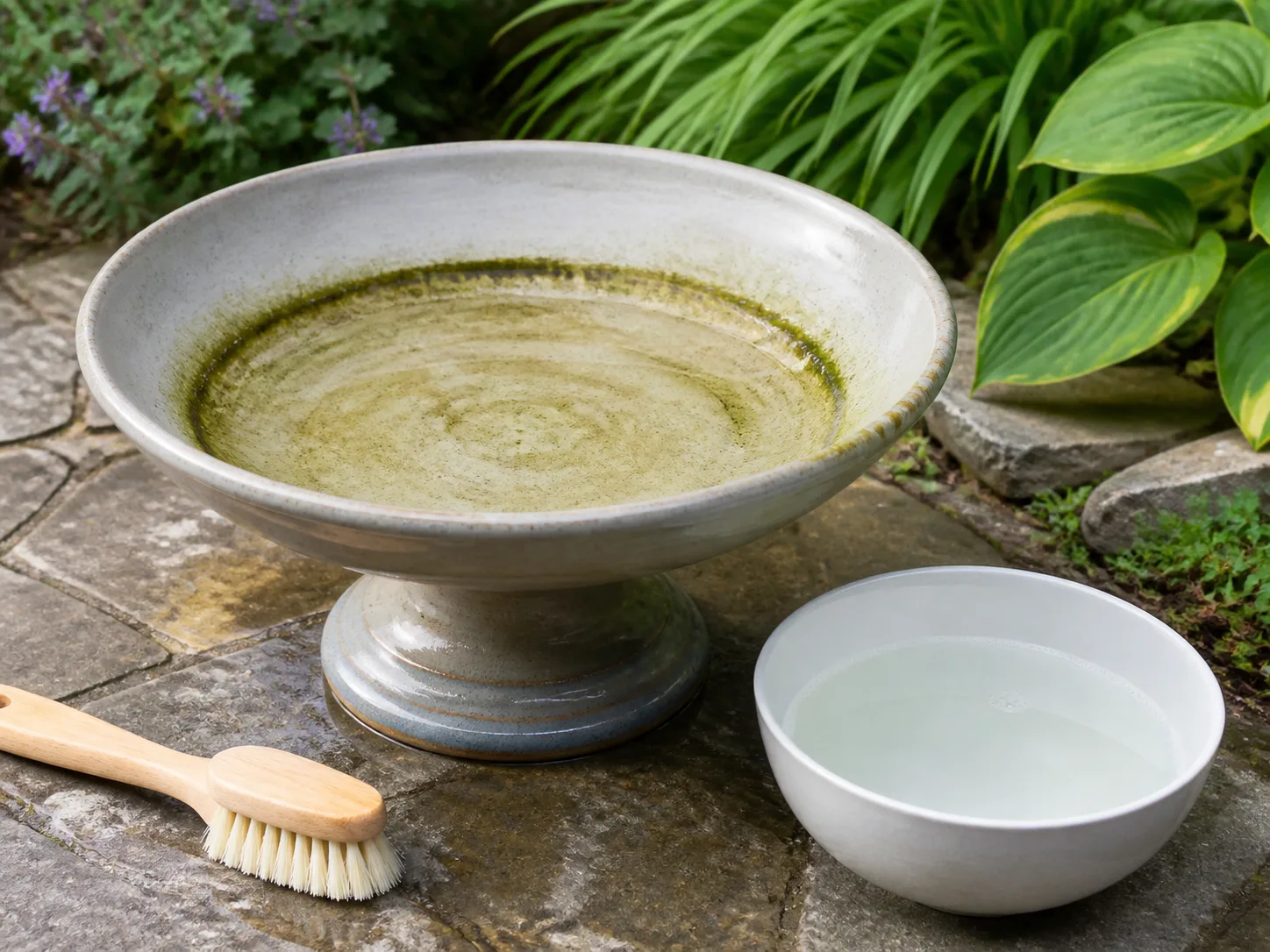
Drain the basin before the vinegar wash; the cleaning solution should never be part of the water birds drink or bathe in.
Empty and pre-rinse the basin
Pour the old water onto a lawn or garden area where it can spread and drain instead of collecting in another puddle. Do not dump it beside a path where a pet, child, or wild animal could immediately drink it. Pick out leaves, feathers, insects, seed hulls, and droppings with a disposable paper towel, small scoop, or dedicated brush.
Rinse the empty basin with a hose or a bucket of clean water. A light pre-rinse removes grit and loose organic matter before you scrub. If the water was foul-smelling, unusually cloudy, or full of mosquito larvae, wear gloves, avoid splashing your face, and wash your hands after the cleaning is complete.
Inspect the surface while it is wet. A green, slick coating is likely algae or biofilm. A hard white crust is more consistent with mineral scale. Brown or black staining may be embedded organic matter, weathering, or a coating problem. The treatment can overlap, but a stain that remains after the surface is clean is not a reason to keep adding vinegar indefinitely.
Scrub with a 1:9 vinegar solution
Mix one cup of distilled white vinegar with nine cups of water in a bucket. You can scale the recipe down for a small bath; the important part is the ratio, not the exact volume. Dip the brush into the solution, wet the basin, and work from the rim toward the lowest point so loosened algae does not spread back over a cleaned area.
Start with the bottom, then scrub the inside walls, rim, drainage points, feet, and any perch stones. Use short overlapping strokes rather than one hard pass. Algae often hides at the waterline and under a rim, while droppings and seed collect on ledges that are easy to overlook.
Let the solution sit on stubborn green patches for a few minutes while keeping the surface wet, then scrub again. A mild solution may need a second round on a neglected bath; that is preferable to increasing the concentration without knowing how the material or the surrounding wildlife will respond. Use a separate clean brush for the bath rather than one used for toilets, pesticides, or household chemicals.
If the basin is plastic or resin, stop when the film is gone and the surface is smooth. Do not chase a faint discoloration with aggressive pressure. Protecting the finish makes future cleanings easier and reduces the chance of giving algae new scratches to occupy.
Rinse, dry, and refill completely
Rinse the basin with clean water several times. Run your fingers over the surface if the material allows it; it should feel clean rather than slippery. Keep rinsing until you can no longer smell vinegar, and pay attention to the underside of the rim, screw heads, drainage holes, and rock crevices.
Let the bath air-dry fully before refilling. Sun and airflow help, but the key test is that the basin is free of visible residue and standing cleaning solution. If you cannot smell vinegar at all and the final rinse runs clear, the bath is ready for plain water.
Refill with fresh water rather than pouring the old water back in or topping it off. Keep the water shallow—generally no more than about 2 inches, with a gradual depth if the design allows—so smaller birds can bathe and stand comfortably. Martha Stewart’s bird-care guidance also warns that deeper water is harder to keep clean and less comfortable for small birds.
If algae is thick or keeps returning
When the algae forms a thick mat, the basin feels greasy after scrubbing, or the water turns green again within a day, treat the pattern as information. The bath may be receiving too much debris, warming in direct sun, sitting beneath a feeder, or made from a porous surface that holds residue below the top layer.
First, repeat the drain–rinse–scrub–rinse sequence with fresh tools. If the water is dirty again almost immediately, move to prevention rather than escalating to a stronger chemical. A fountain or gentle bubbler can reduce stagnation, but it does not remove the need for cleaning; moving water can still collect droppings, leaves, and seed.
Porous concrete and deep staining need a different rhythm
Concrete and natural stone have pores and texture that can hold algae and mineral deposits. They may need more frequent brushing than a glazed ceramic or resin bath, and they benefit from being emptied before the film becomes thick. Better Homes & Gardens recommends matching the brush to the material, using more vigorous scrubbing for porous concrete or stone and gentler tools for resin and ceramic.
Do not assume every dark mark is active algae. Once the basin is drained and scrubbed, feel for slime and look for new green growth rather than trying to bleach the color out of a weathered surface. If a concrete bath remains difficult to clean, a replaceable shallow insert or a less porous basin can be a more bird-safe long-term solution than repeated experiments with stronger cleaners.
Prevent algae with a simple maintenance routine
Cleaning once is easy; keeping the bath usable is a small recurring job. Set the routine by conditions, not by an arbitrary calendar. A quiet bath in cool weather may need less attention than a sunny bath visited by many birds in midsummer.
Refresh water daily and deep-clean regularly
In hot weather, refresh the water every day. Audubon recommends changing it every other day as a baseline, while more recent bird-care guidance recommends daily refreshes when the water is warm, heavily used, cloudy, or exposed to debris. Use the stricter schedule when conditions are working against you.
At every refresh, empty the bowl completely, remove visible debris, and give it a quick rinse. Do not simply add water to a dirty bath; topping off leaves behind the nutrients and residue that help algae return. If the basin feels slippery or the water smells stale, do a full scrub instead of a quick rinse.
Plan a deeper clean about once a week during active summer use, or sooner when the surface begins to feel slimy. The deep clean is the vinegar step: drain, pre-rinse, apply the 1:9 solution, scrub the rim and fittings, rinse thoroughly, dry, and refill. In cooler, less active weather, you may be able to stretch the interval, but never ignore cloudy water or a sudden buildup simply because the calendar says it is not cleaning day.
Keep a simple backup routine for busy weeks: an extra clean basin or a second shallow bath lets you swap one out while the other dries. That is often more useful than buying a stronger cleaner, especially for a fixed concrete bath that is awkward to empty.
Place the bath to slow algae without making birds vulnerable
Placement changes how quickly the water warms and how much debris it receives. A bath should be visible and easy for birds to reach, but it should not sit directly beneath a seed feeder or a tree that drops leaves, fruit, or sticky flowers into the basin.
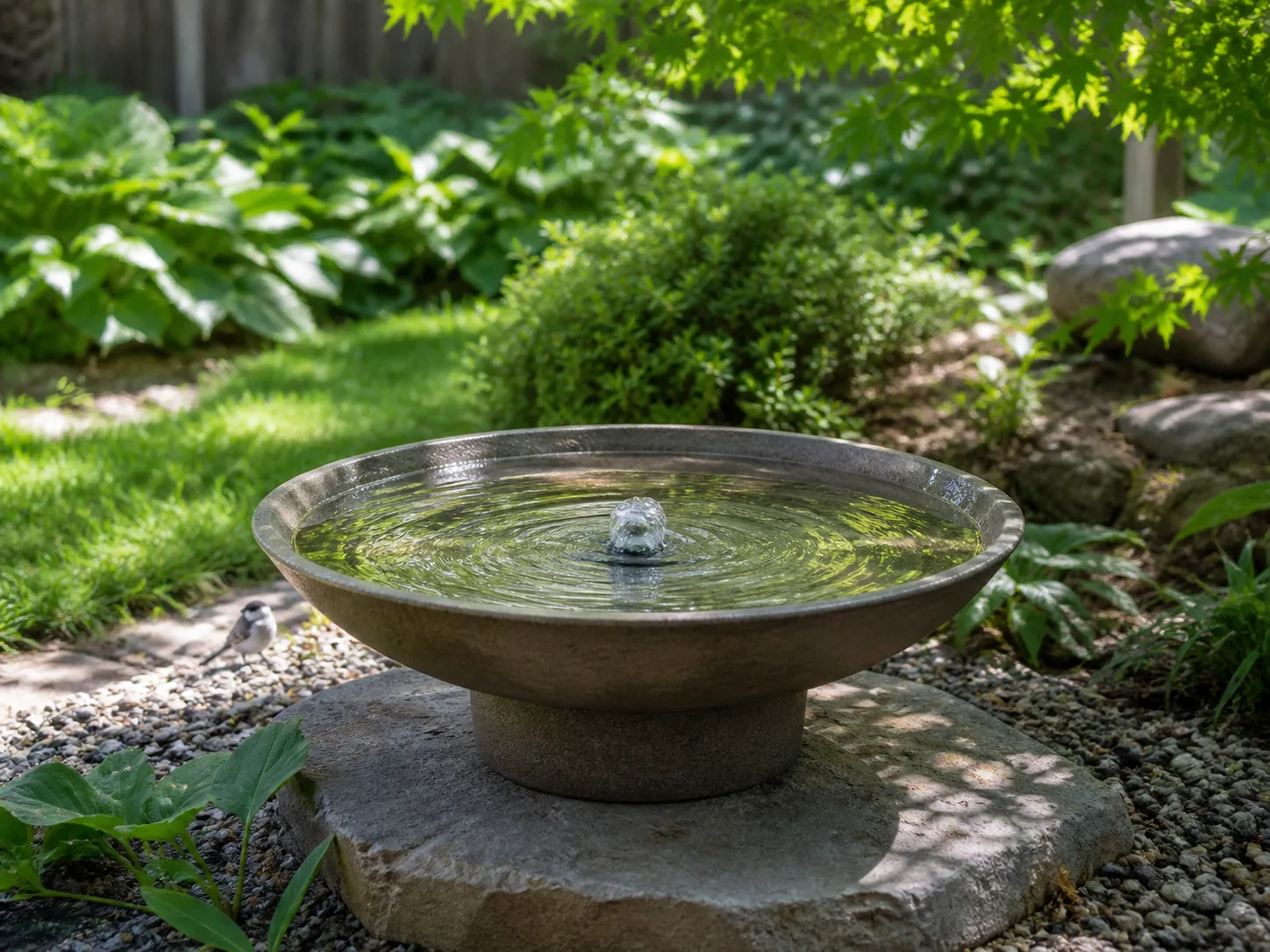
Partial shade, stable footing, and gentle water movement can reduce heat and stagnation while keeping the bath usable.
Balance shade, debris, visibility, and predator cover
Partial or afternoon shade usually helps keep water cooler and slows algae growth. In a cold climate or during winter, a sunnier position may help prevent freezing, so the best location depends on season and local weather. Make the bath easy to see from the yard, level and stable on its base, and close enough to a hose or spigot that cleaning does not become an avoidable chore.
Place it near—not inside—low shrub cover. Birds appreciate a nearby escape route, but dense vegetation touching the basin can drop debris and give cats or other predators a hiding place. Keep the bath away from heavy feeder traffic so spilled seed and droppings do not enrich the water.
If the bath is close to a window, consider collision risk as well as your view. Birds need room to maneuver, and a beautiful bath is not helpful if its placement sends startled birds toward glass. Choose a location that is convenient to maintain and safe for the birds you are inviting.
Keep the water shallow and gently moving
Shallow water is easier for small birds to use and easier for you to keep clean. A textured bottom or a few stable, flat stones can provide footing, but make sure they do not create deep pockets of stagnant water or tip when a bird lands.
A fountain, bubbler, or slow drip can make the bath more noticeable and discourage mosquitoes from treating it as still water. Water movement is a supplement, not sanitation: empty and scrub the basin on schedule, clean the pump or bubbler, and do not let a moving feature become an excuse to leave old water in place.
Bird-bath cleaning mistakes to avoid
The most common mistakes are simple, and each one makes the next algae bloom more likely:
- Adding vinegar to the refill: Vinegar belongs on the drained surface. It should never be used to acidify the water birds drink or bathe in.
- Stopping at a quick rinse: A rinse removes loose debris but may leave a slippery film at the waterline, around the rim, or under rocks.
- Using dish soap or fragranced cleaner: Residue is difficult to verify on a textured basin, and synthetic cleaners can interfere with feather oils. Use physical scrubbing and a complete rinse instead.
- Using a wire brush on plastic or resin: Scratches create places for algae to settle and can shorten the useful life of the bath.
- Treating a stain as proof the bath is dirty: Clean the surface, then judge by slime, odor, and new growth. Do not keep applying acid because the color of old concrete has not changed.
- Topping off instead of changing the water: Fresh water does not remove the nutrients and microbes already left in the bowl.
- Placing the bath under a feeder: Seed, hulls, and droppings add exactly the organic matter that turns a clear bath into a green one.
- Using an algae-prevention product without wildlife-specific guidance: A product made for ponds, pools, or ornamental water is not automatically safe for a bird bath.
- Ignoring an unusual die-off or repeated illness: A visibly dirty bath is a maintenance problem; sick or dead birds near the bath require extra caution and advice from a local wildlife or animal-health authority.
When vinegar is not enough
Vinegar is a reasonable routine cleaner for an empty bath with ordinary algae and mineral film. It is not a universal disinfectant, a cure for a disease event, or a solution for water that is repeatedly contaminated faster than you can maintain it.
If several birds appear sick, you find dead birds around the water source, or a local wildlife agency has issued disease guidance, stop using the bath until you know what that authority recommends. During a suspected disease event, local instructions may call for temporarily removing the bath, disinfecting it with a specified product and concentration, or taking additional steps. Follow the exact current guidance rather than improvising bleach, peroxide, or a homemade mixture.
Replace the water immediately and reassess the setup if the bath repeatedly smells foul, attracts mosquito larvae, or becomes slimy within hours. Check the placement, water depth, material, pump, and nearby feeder. If the basin is cracked, heavily porous, or permanently scratched, replacing it with a smooth, shallow, stable bath may improve bird safety and reduce the amount of cleaner you need.
Conclusion
Vinegar can help clean bird bath algae when it is used on an empty basin, diluted to about 1 part distilled white vinegar to 9 parts water, followed by thorough scrubbing and rinsing. Do not put vinegar in the refill water, and do not mistake a green film for the only problem: it often means the water is warm, nutrient-rich, and overdue for a complete change.
The most dependable routine is simple. Refresh the water daily in hot or heavily used weather, deep-clean about weekly, keep the bath in partial shade away from feeders and falling debris, use a brush that will not scratch the surface, and refill only after all cleaning residue is gone. If algae keeps returning or the bath is tied to a suspected disease event, change the setup or seek local wildlife guidance instead of reaching for a stronger chemical.



