Does Vinegar Kill Flies? The Honest Answer
Vinegar can drown fruit flies but will not reliably repel house flies. Learn the right trap, cleanup steps, and fix for each kind of fly.
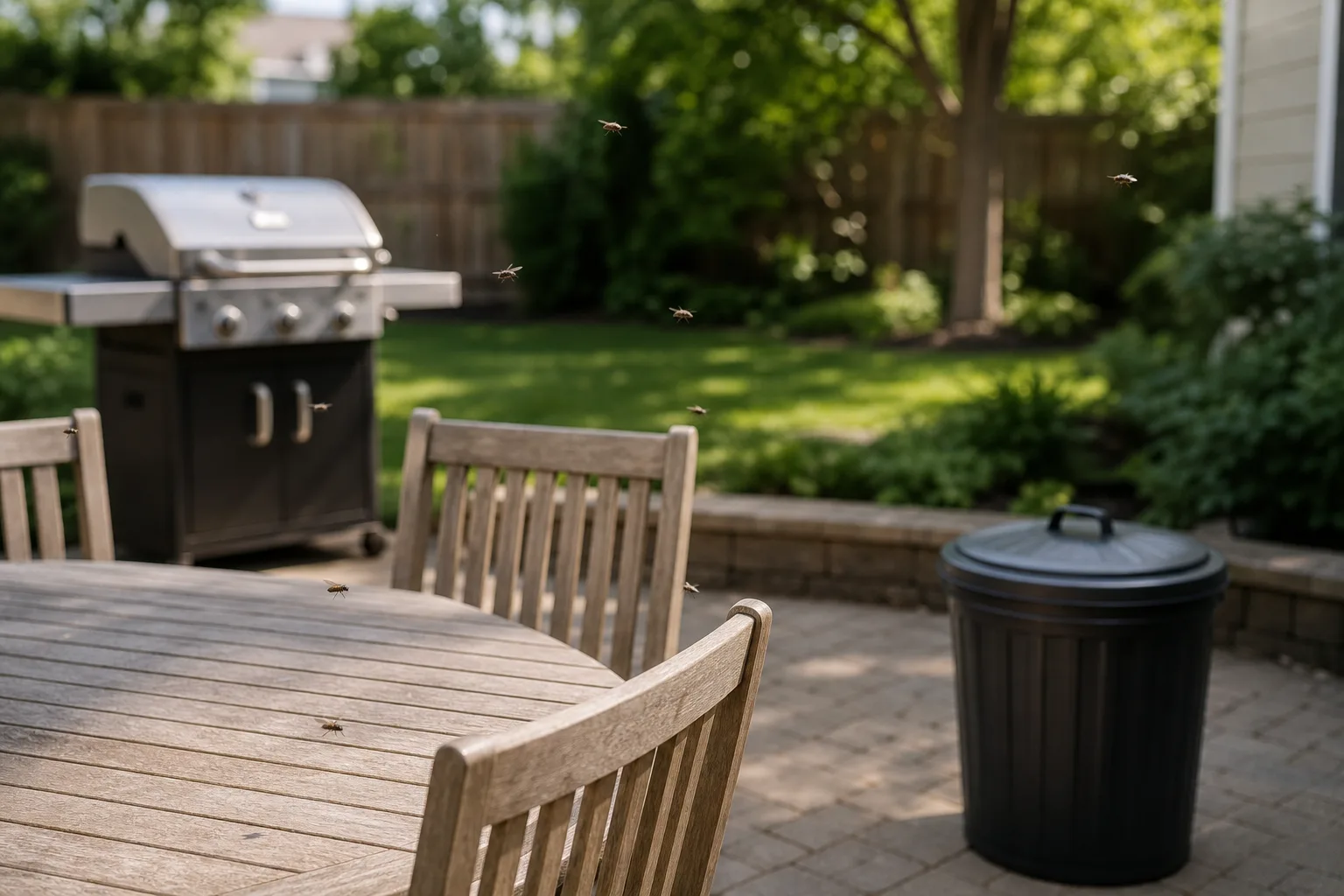
Vinegar can kill some flies, but the useful answer is narrower than the viral kitchen trick suggests. Apple cider vinegar is an attractant for fruit flies, and a trap can drown the adults that enter it. Vinegar spray is not a reliable way to kill large house flies, and vinegar is not a dependable fly repellent.
That distinction matters because “flies” can mean several unrelated indoor pests. A tiny red-eyed fly hovering over bananas, a gray fly landing on a window, a fuzzy fly rising from a sink drain, and a black gnat circling a houseplant need different fixes. Start by identifying the fly, then use vinegar only where its attraction helps you.
The quick answer: vinegar kills in a trap, not by poisoning
Vinegar does not act like a conventional insecticide. For fruit flies, its fermented smell works as bait; when a fly enters a container and lands in the liquid, it may drown. A drop of unscented dish soap makes the setup more effective by reducing the liquid’s surface tension, so the fly is less able to stay on top and escape. Penn State Extension explains the monitoring-trap mechanism and the role of dish detergent.
The trap is therefore an attract-and-capture tool, not a spray that turns every surface into a fly barrier. If you put a bowl of vinegar beside a bowl of ripening fruit, the vinegar may help divert small flies, but it can also add another attractive odor to the room. It only becomes a control measure when the flies enter a container they cannot leave and the breeding material is removed.
Vinegar is especially poor at solving a house-fly problem. A large fly that is sprayed on a wall or window may fly away, and the smell is not a reliable deterrent. For those flies, the high-value work is sanitation, exclusion, and targeted capture—not coating the room in a sour-smelling cleaner.
Identify the fly before choosing vinegar
The location and movement of the flies often tell you more than the household remedy you were planning to try. Look at size, body shape, resting behavior, and the material nearby. If you can, catch one on a sticky card or photograph it against a light background before deciding whether a vinegar trap makes sense.
Fruit or vinegar flies: tiny, tan, and drawn to fermentation
Common fruit flies are usually about 1/8 inch long, with a tan, yellow-brown, or dark body; many have conspicuous red eyes. They hover around ripening produce, wine, beer, juice, recycling containers, compost scraps, and sticky spills. The University of Maryland Extension fruit-fly guide notes that vinegar, fermenting food, and moist organic residue can all attract them, and that their life cycle can be completed in roughly 8 to 10 days under favorable conditions.
These are the flies vinegar traps are designed for. The trap can remove adults quickly enough to make the room feel better, but it cannot reach eggs and larvae inside a banana peel, leaking onion bag, bottle, garbage disposal, or damp cloth. That is why a counter trap may fill with flies while new adults continue to appear.
In a garden, a related group such as spotted-wing drosophila can attack ripening soft fruit. A vinegar bait is useful for monitoring, but a trap is not automatically enough to protect a crop. RHS guidance on spotted-wing drosophila emphasizes hygiene, removal of infested fruit, and protecting susceptible crops when pressure is persistent.
House flies: larger visitors from waste and outdoors
House flies are noticeably larger than fruit flies and commonly rest on walls, windows, ceilings, bins, pet waste, or outdoor food areas. They often enter through open doors, damaged screens, gaps, and poorly sealed windows, then move toward food odors and warm light. UC IPM’s house-fly guidance identifies sanitation and exclusion as the foundation of control because adult flies can pick up and transfer contaminants from waste and animal feces.
A vinegar bowl is usually the wrong tool for this group. It may attract a few small vinegar flies while leaving the larger problem untouched, and spraying a fly with vinegar is not a dependable kill method. Use a fly swatter for an occasional adult away from food preparation, a sticky strip where appropriate, and a source-and-entry inspection if the visits are repeated.
Drain flies and fungus gnats: two look-alikes with different sources
Drain flies are tiny, fuzzy, moth-like insects that tend to sit on sink walls or emerge around drains. Their larvae develop in wet organic film inside drains, overflows, or other persistently damp material. A vinegar trap may catch a few adults, but it will not remove the film where the next generation develops; UC IPM’s drain-fly guidance recommends addressing the development site and improving exclusion.
Fungus gnats are slender, dark flies most often seen around potting mix and houseplants. They are not the same as fruit flies, even though both are small. A vinegar trap may be interesting to test, but sticky cards near the soil surface, less consistently wet potting mix, and removal of decaying plant material are better matched to a fungus-gnat problem. Do not pour vinegar into a plant pot as a pest treatment; the acidity and added moisture can create a second problem for roots.
Why vinegar attracts some flies
Fruit and vinegar flies are not seeking vinegar because they want a cleaning product. They are responding to volatile odors associated with yeast, fermentation, and softening plant material. In a kitchen, that smell can come from cider vinegar, wine, beer, a bruised banana, a recycling bottle, or a barely visible film under an appliance.
This is the central trade-off: the same smell that makes vinegar useful bait makes it a poor repellent. White vinegar may smell sharp enough to people that it seems like it should drive pests away, but human dislike is not evidence of insect repellency. Vinegar can help you bring fruit flies to a controlled container; it does not create a reliable no-fly zone around a patio or window.
The bait also explains why a trap may seem ineffective. If the room contains a stronger or closer food source—an unwashed bottle, leaking garbage bag, overripe tomato, or wet mop—the flies can ignore a small cup of vinegar. Trapping works best after competing odors are removed, not while the room is still offering several places to feed and lay eggs.
How to make a vinegar trap that works
For a small fruit-fly problem, use a simple container that is easy to inspect and discard. The point is not to make a complicated chemical mixture; it is to combine a recognizable fermenting lure with a liquid the flies cannot stand on and a container that limits escape.
Set up the bait and drowning liquid
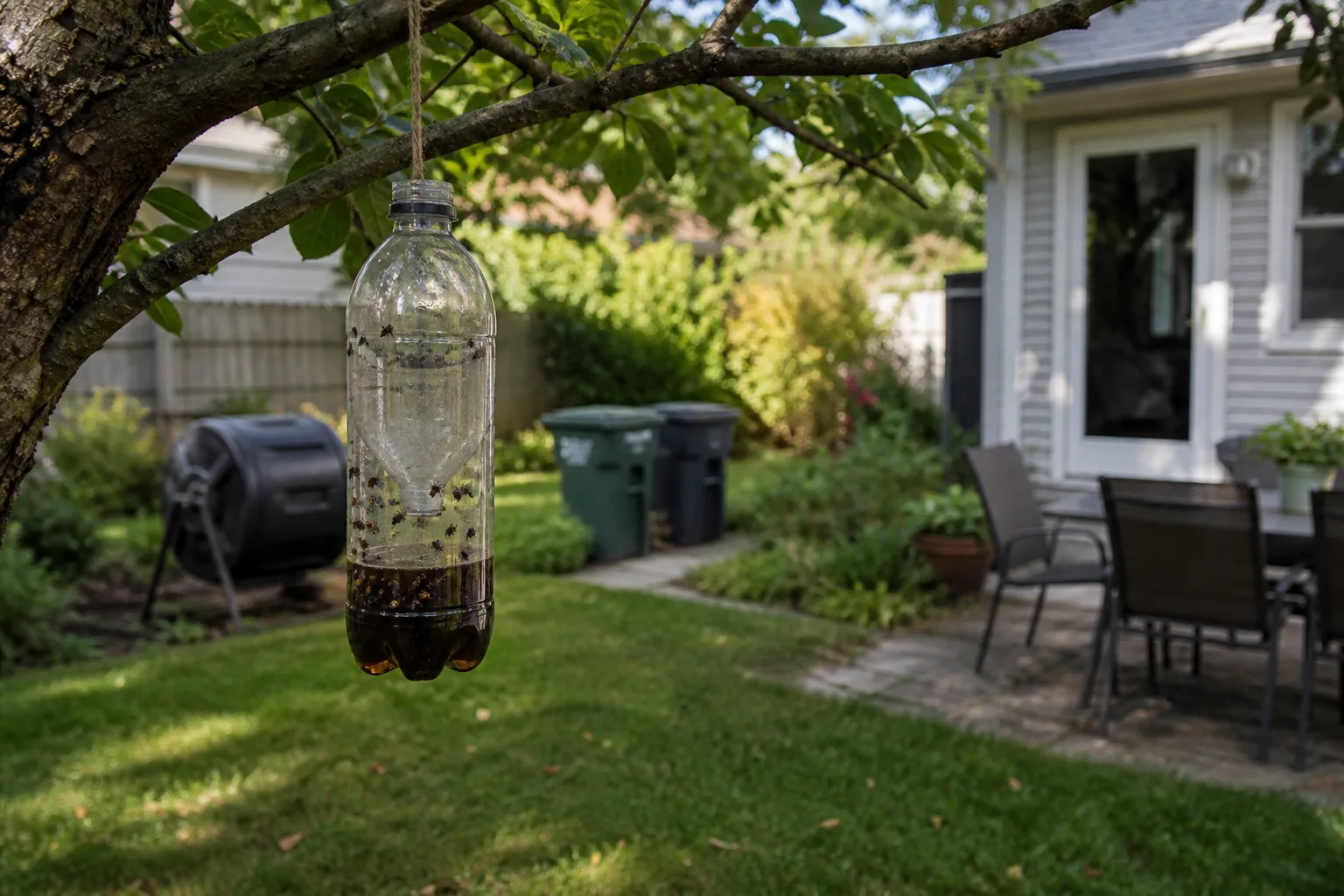
Use a shallow glass, jar, or disposable container. Add about 1 to 2 inches of apple cider vinegar, then add one small drop of unscented dish soap. The vinegar provides the lure; the soap helps prevent flies from remaining afloat. University of Florida IFAS describes vinegar-baited traps as a way to capture fruit flies, while University of Maryland Extension provides a covered jar version.
You can leave the container open, cover it tightly with plastic wrap and poke a few tiny holes, or use a paper funnel with a narrow opening pointed down toward the bait. An open bowl is the quickest to assemble but gives a fly more opportunity to leave. A funnel or small entry holes make the trap easier to monitor and reduce escape without requiring a large amount of liquid.
Use apple cider vinegar rather than an aggressively perfumed cleaning vinegar. Do not add bleach, ammonia, insecticide, essential oils, or random cleaners to the bait. More ingredients do not make it more effective, and products intended for surface cleaning do not belong in a food-adjacent insect trap.
Place, monitor, and refresh the trap
Set the trap next to the activity—not in the middle of a food-preparation surface. Good locations include beside the fruit bowl after the fruit is moved, near the recycling area after bottles are rinsed, or beside a sink after the drain area is cleaned. If flies cluster in more than one room, use several small traps rather than one large container that is easy to forget.
Check the trap at least daily at first. Replace it when the liquid is full of insects, cloudy with debris, diluted by water, or no longer smells fresh. Dispose of the contents in a sealed bag or flush them according to local wastewater guidance; then wash the container. A trap left for weeks can become a new wet organic site, which defeats the point of the cleanup.
Treat the trap as a short-term adult-capture tool. Texas A&M AgriLife Extension notes that vinegar and other fermenting baits can attract fruit flies, but that sanitation is still necessary because adults can breed in many damp, food-contaminated locations. If the count does not decline after several days, stop adding more traps and look for the source.
Why spraying vinegar on flies usually fails
Spraying a visible fly can feel satisfying because it turns a cleaning task into an immediate attack, but the method is unreliable. A surface spray must contact the insect in enough quantity and for long enough to work; a quick mist in the fly’s direction usually does neither. A fly can also leave the treated surface before the liquid has any meaningful effect.
Vinegar is not registered as a universal household insecticide simply because it is acidic or familiar. It may damage some finishes, irritate eyes or skin, discolor porous surfaces, and leave a strong odor without solving the population. If a product is needed, use only a product labeled for the specific pest and site, and follow its directions; do not improvise a stronger mixture.
Spraying counters with diluted vinegar can still have a cleaning role when the surface and finish are compatible. Removing sticky food residue may indirectly reduce fly activity because it removes the food cue. That is different from repelling flies: the improvement comes from taking away what attracted them, not from a lasting vinegar barrier.
Fix the source after adults enter the trap
A good trap tells you that adult flies are present. It does not tell you that the infestation is solved. The fastest path to lasting control is to remove the material that supports eggs and larvae, then keep a trap running briefly to catch the adults already flying.
Remove fermenting food and organic waste
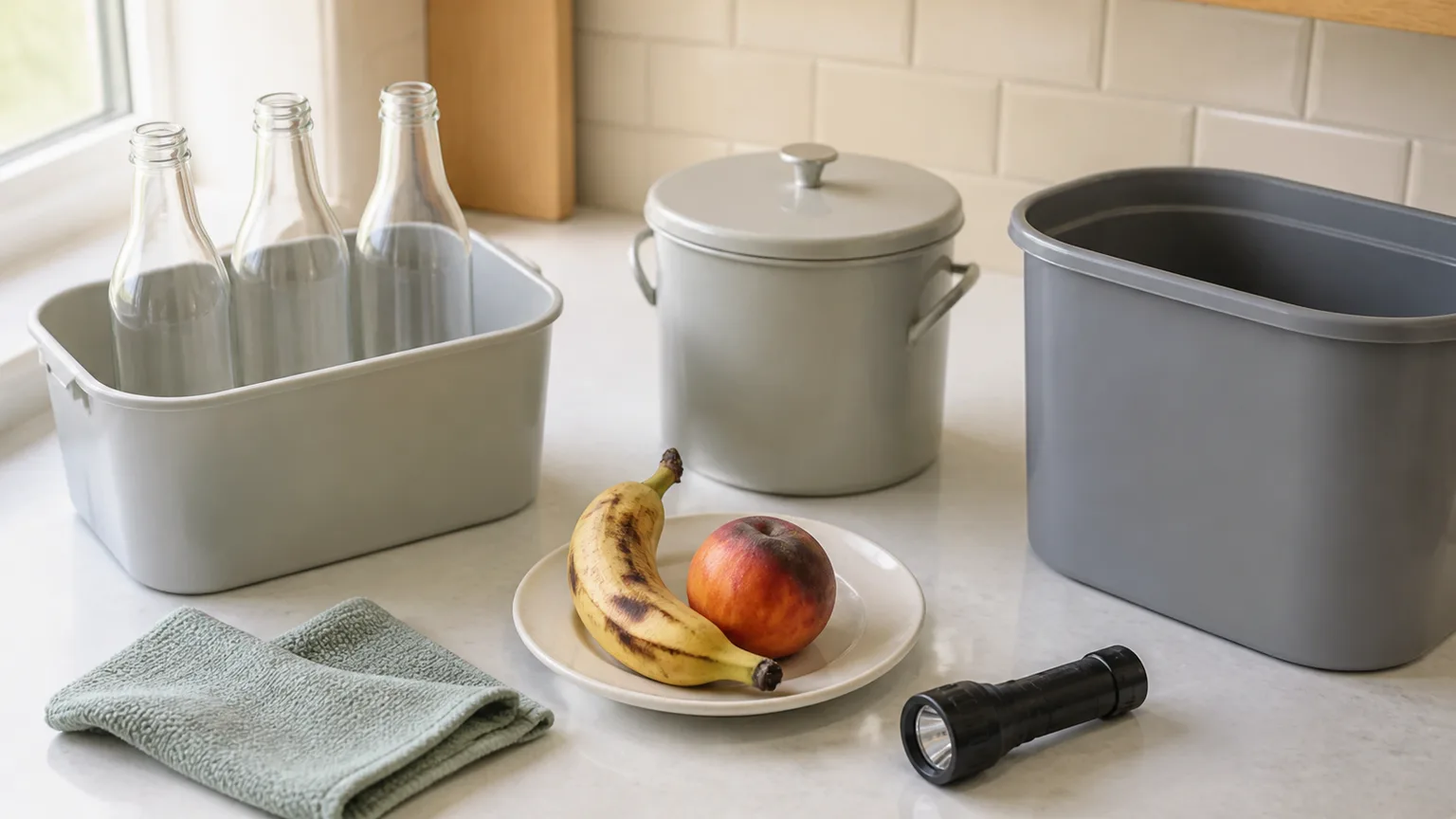
Inspect every place where a small amount of moisture and food can hide. Check the fruit bowl, produce drawers, potato and onion storage, compost caddy, recycling bin, bottle bottoms, pet-food area, under the refrigerator, and the floor beneath trash cans. Wipe sticky juice and syrup rather than assuming the counter looks clean enough.
Store ripe fruit in the refrigerator for a few days while you reset the room. Rinse bottles and cans before recycling, use a tight lid on food waste, and empty small indoor compost containers frequently. Throw away cracked or fermenting produce; trimming the visibly bad patch is not enough if flies have already had access to the soft interior.
Check drains, recyclables, and damp hiding places
If the flies concentrate near a sink, cover the drain overnight with a clear cup or sticky card and check whether adults appear beneath it in the morning. This is a simple diagnostic, not a treatment. Clean the drain and overflow according to the fixture manufacturer’s instructions, remove organic buildup, and correct slow drainage or leaks. Never mix vinegar with chlorine bleach: Poison Control warns that the combination can produce highly irritating chlorine gas.
Do not forget damp mops, sponges, dishcloths, mop buckets, and the drip area beneath a refrigerator. Fruit flies need very little material to complete a generation, and a wet cloth with food residue can be more important than the clean-looking counter beside it. Wash and dry reusable cloths, rinse the recycling container, and let the sink area dry between uses.
For a houseplant room, inspect potting mix and saucers separately. If flies rise when you disturb the soil, switch from a vinegar-first strategy to fungus-gnat control: allow the mix to dry as appropriate for the plant, remove dead leaves from the soil surface, and use yellow sticky cards to measure adult activity.
Keep house flies from entering again
When the flies are large, gray, and appearing around windows or doors, think like an exclusion specialist. UC IPM recommends screens, sealed cracks, and sanitation as first-line measures. A trap inside can reduce the adults you see, but it cannot compete forever with an open door, a torn screen, outdoor garbage, or pet waste near the entry.
Repair screens, manage doors, and add airflow
Inspect window and door screens at eye level and from an angle that reveals small tears. Check the frame, corners, door sweep, and the gap where a screen meets the sill. Repair a small hole, replace a badly bowed screen, and keep doors closed when practical—especially near kitchens, outdoor meals, grills, and garbage storage.
Air movement is a useful supporting layer. A fan aimed across a doorway or food-preparation area makes it harder for flies to hover and settle, although it does not eliminate the source. Use airflow to reduce congregation while you handle sanitation and exclusion; do not treat a fan as a repellent that solves a breeding site.
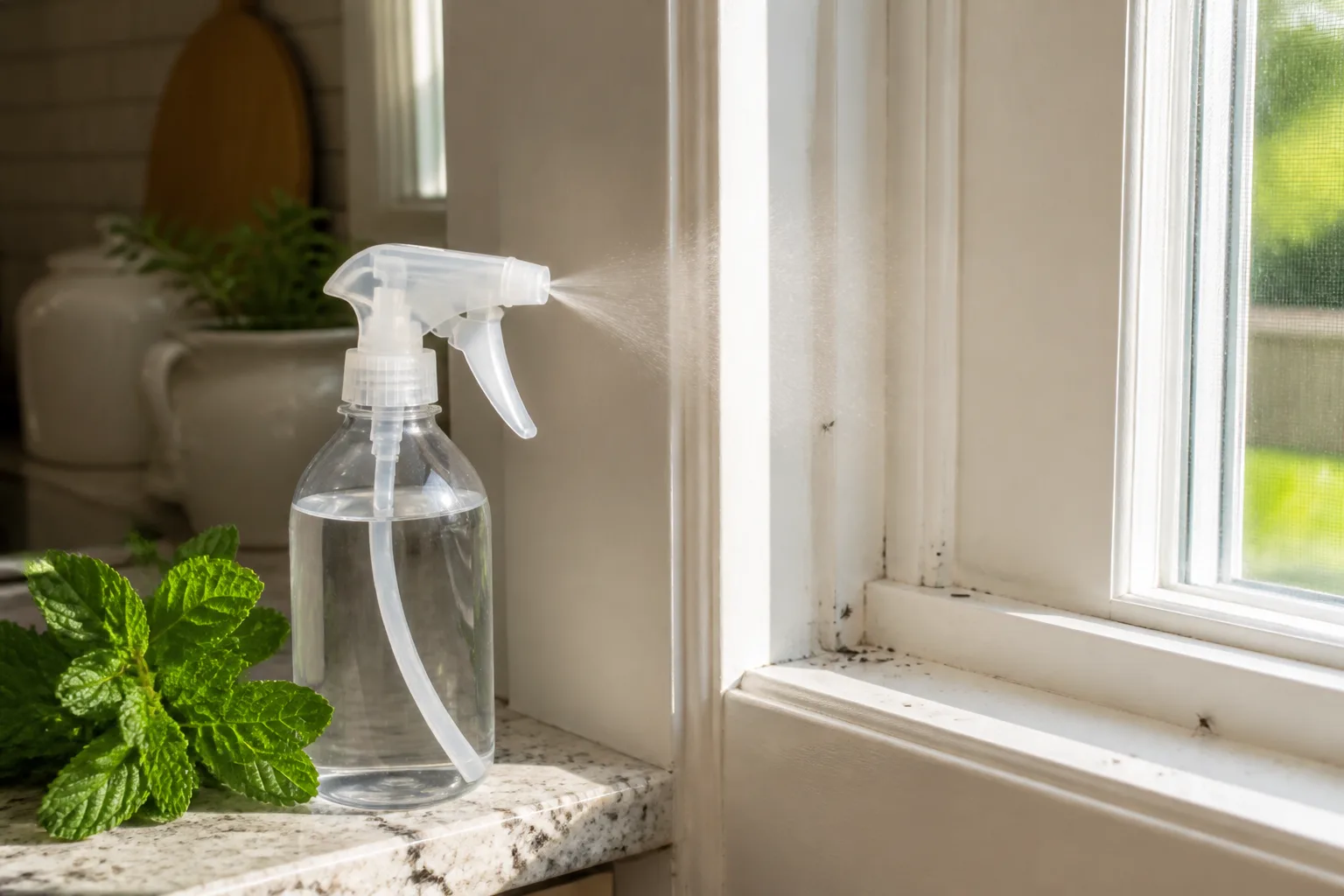
Keep lights and food cues from pulling flies toward open doors at night. Move outdoor trash farther from entrances when possible, clean grill grease and food debris, and keep pet waste picked up. These changes are less exciting than a homemade spray, but they remove the reasons flies keep testing the same doorway.
Control outdoor flies without moving the problem closer
Outdoor fly control starts where flies feed and breed: garbage, animal waste, spilled food, compost, decaying fruit, and damp organic debris. Keep garbage lids closed, use liners that do not leak, and rinse residue from bins when needed. Pick up dog waste promptly and remove fallen fruit from beneath trees before it ferments.
An outdoor bait trap can be useful when it is placed away from doors, seating, kitchens, and food crops. A trap near a patio table can attract more flies into the exact place you want to enjoy, and a trap beside a kitchen door can pull insects toward the threshold. UC IPM notes that outdoor fly traps work best when they are not competing with nearby waste and should be kept away from occupied structures when their bait smells foul.
Vinegar does not reliably keep large flies away from a porch, grill, or trash bin. If the outdoor source is a neighbor’s livestock area, a communal dumpster, a dead animal, sewage, or a persistent sanitation problem, a household vinegar trap is unlikely to be enough. Correct the source when possible, document the pattern, and contact the responsible property manager or a licensed pest professional when the exposure is persistent.
Know when to skip vinegar and call for help
Skip the vinegar trap when the flies are not responding to fermented bait or when the problem is clearly tied to another habitat. A fuzzy cluster at a drain needs drain cleaning and moisture correction. Gnats rising from potting mix need a soil-focused plan. Large numbers of house flies around a ceiling, wall void, attic, animal area, or inaccessible waste source may indicate a breeding site you cannot safely reach.
Professional help is reasonable when fly numbers are high, the source cannot be found, flies continue for more than a week after careful sanitation, or the problem involves food service, animal housing, sewage, or a deceased animal. Ask the professional to identify the fly and locate the development site before recommending an indoor spray. The label, site, and timing matter more than a product’s “natural” or “strong” marketing language.
Do not use bug zappers near food preparation, and do not swat flies over uncovered food. UC IPM cautions that exploding insect bodies can propel debris near food and that swatters are best reserved for a few flies away from preparation areas. Good pest control includes preventing the next contamination event, not only reducing the number of insects you can see.
A practical 48-hour fly reset
If you need a clear starting sequence, use this two-day reset:
- First hour: Identify the fly by size and location. Photograph one if needed, then remove fruit, rinse recyclables, empty food waste, clean spills, and dry cloths and sponges.
- Same day: Set one or two apple-cider-vinegar traps only if the flies are tiny and attracted to fermenting food. Use a drop of unscented dish soap and place the traps near, but not on, food-preparation surfaces.
- Overnight: Cover or monitor drains, inspect beneath appliances, and check whether activity moves when produce and waste are removed. Look for damp soil if plants are nearby.
- Next morning: Count what the traps caught and compare that with the number of flies elsewhere. Replace a dirty or diluted trap, but do not multiply traps before checking for a competing source.
- Second day: Repair a torn screen, adjust door habits, move outdoor waste away from entrances, and add a fan where flies congregate. If the flies are drain flies, fungus gnats, or large house flies, switch to the matching source-control plan.
- After 48 hours: Keep the trap for a few more days only if captures are falling. If adults remain steady or rise, assume the breeding site is still present and investigate drains, garbage, compost, pet waste, stored produce, and inaccessible wall or ceiling spaces.
The reset gives vinegar a fair test without letting it become a distraction. A declining count means the trap and cleanup are working together. A flat count means the flies have another food source, another entry route, or a different identity than the trap was designed for.
Conclusion
Vinegar can kill fruit or vinegar flies when it is used as bait in a container that drowns or traps them. It does not reliably poison flies on contact, repel house flies, or solve a breeding site by itself. Use apple cider vinegar and a small amount of dish soap for a short-term fruit-fly trap, then remove fermenting food, residue, damp organic material, and hidden drain buildup.
For larger house flies, focus on screens, doors, garbage, pet waste, airflow, and exclusion. For drain flies or fungus gnats, treat the drain or potting mix instead. The best use of vinegar is narrow but real: make it an attractant in the right trap, not a universal spray for every insect that has wings.