7 Fruits That Are Cheaper to Grow Yourself
Find seven fruits that can beat grocery prices when grown at home, plus startup costs, climate limits, container tips, pollination, and break-even advice.
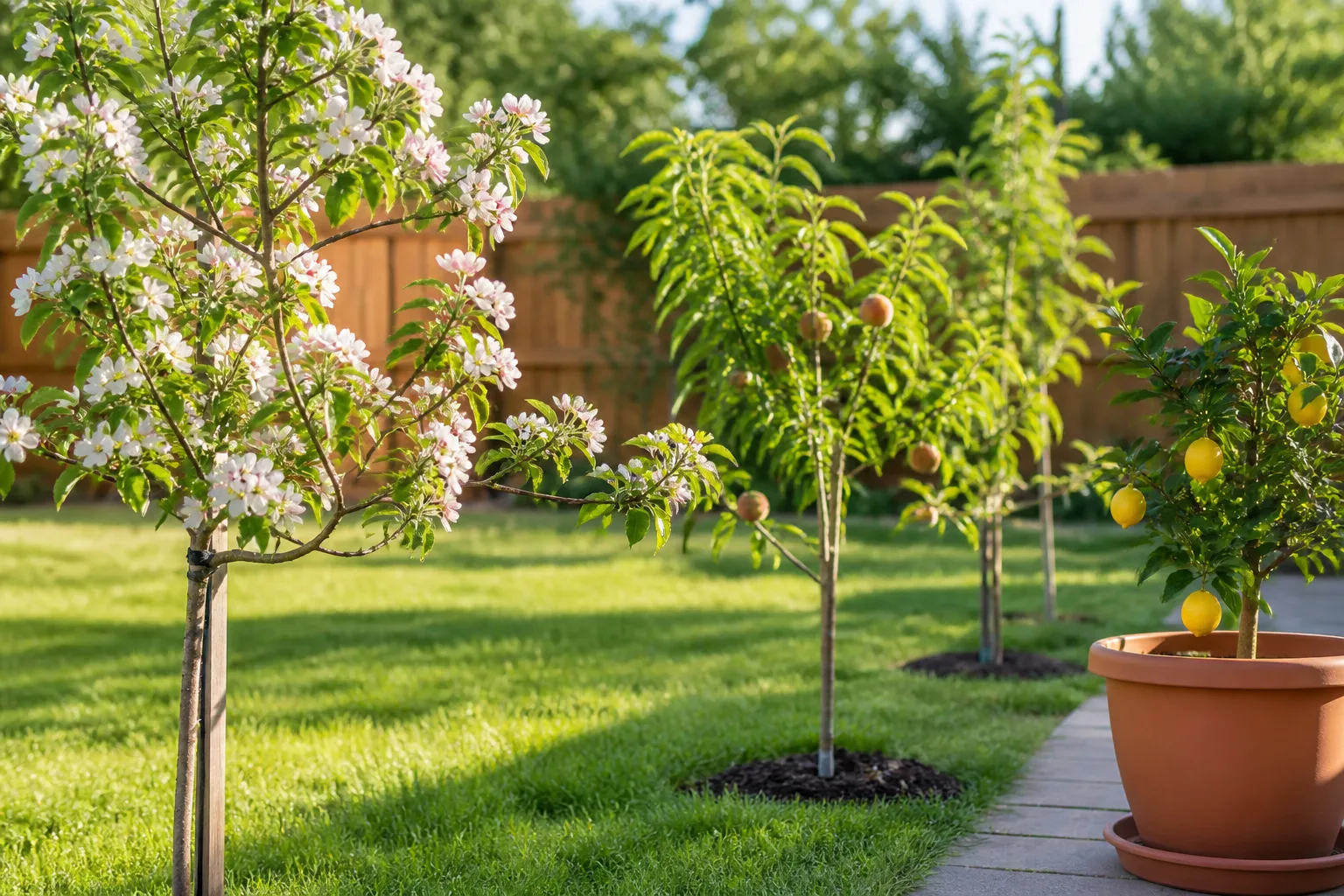
Growing fruit can lower your grocery bill, but “cheaper” is not a property that every plant carries into every garden. A strawberry bed in a sunny patio planter may pay for itself quickly, while a cherry tree that needs a pollinator, bird netting, and several years of training is a much slower investment. The best choices are the fruits you already buy often, that spoil quickly at the store, and that your climate can produce without expensive workarounds.
That is why this list is a practical ranking rather than a promise that all seven always win on price. It covers the seven crops with the clearest home-garden value—strawberries, tomatoes, blackberries, raspberries, blueberries, bananas, and cherries—then shows how to test the economics for your own yard, balcony, or containers.
When homegrown fruit really saves money
Homegrown fruit has three kinds of value: the money you avoid spending, the quality you can harvest at peak ripeness, and the ability to grow varieties that are hard to find fresh. The first two are closely related. Soft berries and ripe tomatoes lose quality quickly in transit, so a plant outside your door can deliver a better product even when a supermarket sale price is temporarily low.
The calculation should include more than the price of a seed packet. Add the plant or seedling, potting mix or soil amendments, containers, trellis or stakes, irrigation, mulch, bird netting, fertilizer, and any protective cover. Then add the edible pounds you actually harvest—not the optimistic yield on a label—and compare the result with the price of comparable fruit at the store.
The most convincing savings usually come from a crop that produces repeatedly after its first setup. University of Illinois Extension lists different timelines and mature yields for backyard fruit crops, a useful reminder that a perennial’s value is spread across several seasons rather than judged on its first harvest [1]. If you move or abandon the garden before the plant reaches steady production, the arithmetic changes.
1. Strawberries give the quickest small-space payoff
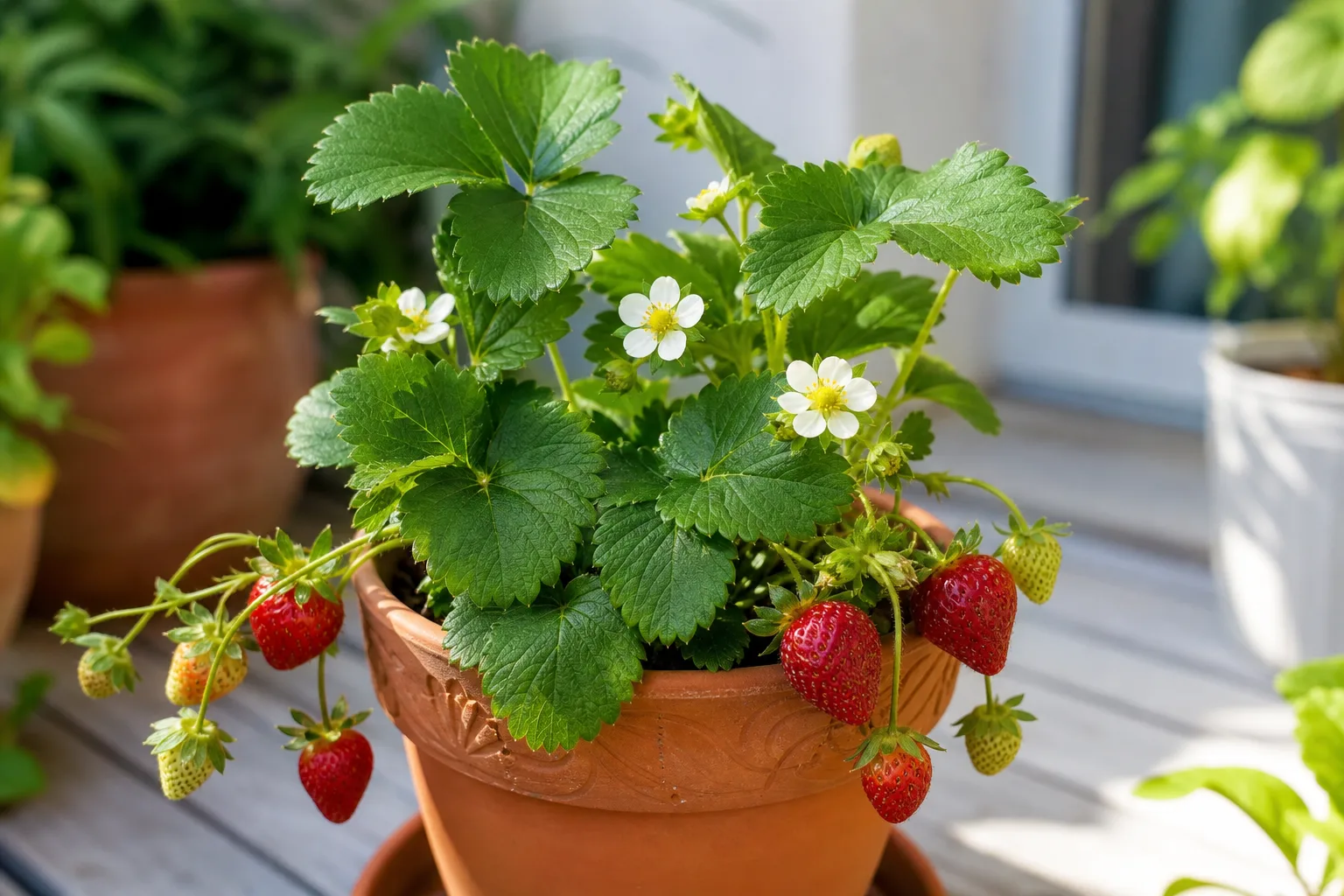
Strawberries are the easiest entry point for a gardener who wants to see a financial return without dedicating part of the yard to a tree or large shrub. They grow in a bed, raised planter, hanging basket, or wide pot, and even a handful of plants can replace the most fragile berries on a few grocery trips. The plants are also easy to multiply through runners in systems where runners are desirable.
Most strawberry varieties are self-fruitful, but insects still need to move pollen among the many stigmas in each flower for a large, well-shaped berry to develop [3]. Give the plants full morning sun, good drainage, and a clean mulch that keeps fruit off wet soil. A shallow root system makes consistent moisture more important than occasional soaking followed by drought.
Choose the harvest style that matches your space
June-bearing strawberries produce a concentrated crop, which is useful if you want a large batch for freezing or jam. Day-neutral varieties flower and fruit across a longer moderate-temperature window, so they suit gardeners who prefer a steady handful of berries rather than one large flush. University of Minnesota trials note that day-neutral strawberries perform best in a moderate temperature range and can yield from summer into fall when heat is managed [4].
There is a trade-off: day-neutral plants demand more regular picking, watering, runner removal, and feeding. For a first low-cost bed, choose a locally recommended June-bearing type if you have space, or use a compact day-neutral planting in containers if you value a long harvest more than maximum pounds.
Do not count every runner as a free new strawberry plant. Runners can fill a bed, but a crowded patch produces smaller fruit and more disease pressure. If you want maximum berry size, remove most runners during the production season; if your goal is to renew an inexpensive bed, root a few healthy runners in small pots and replace older plants on a planned schedule. The RHS also recommends choosing varieties suited to your situation and protecting flowers or early fruit from frost when necessary [5].
2. Tomatoes turn one sunny container into a high-value crop
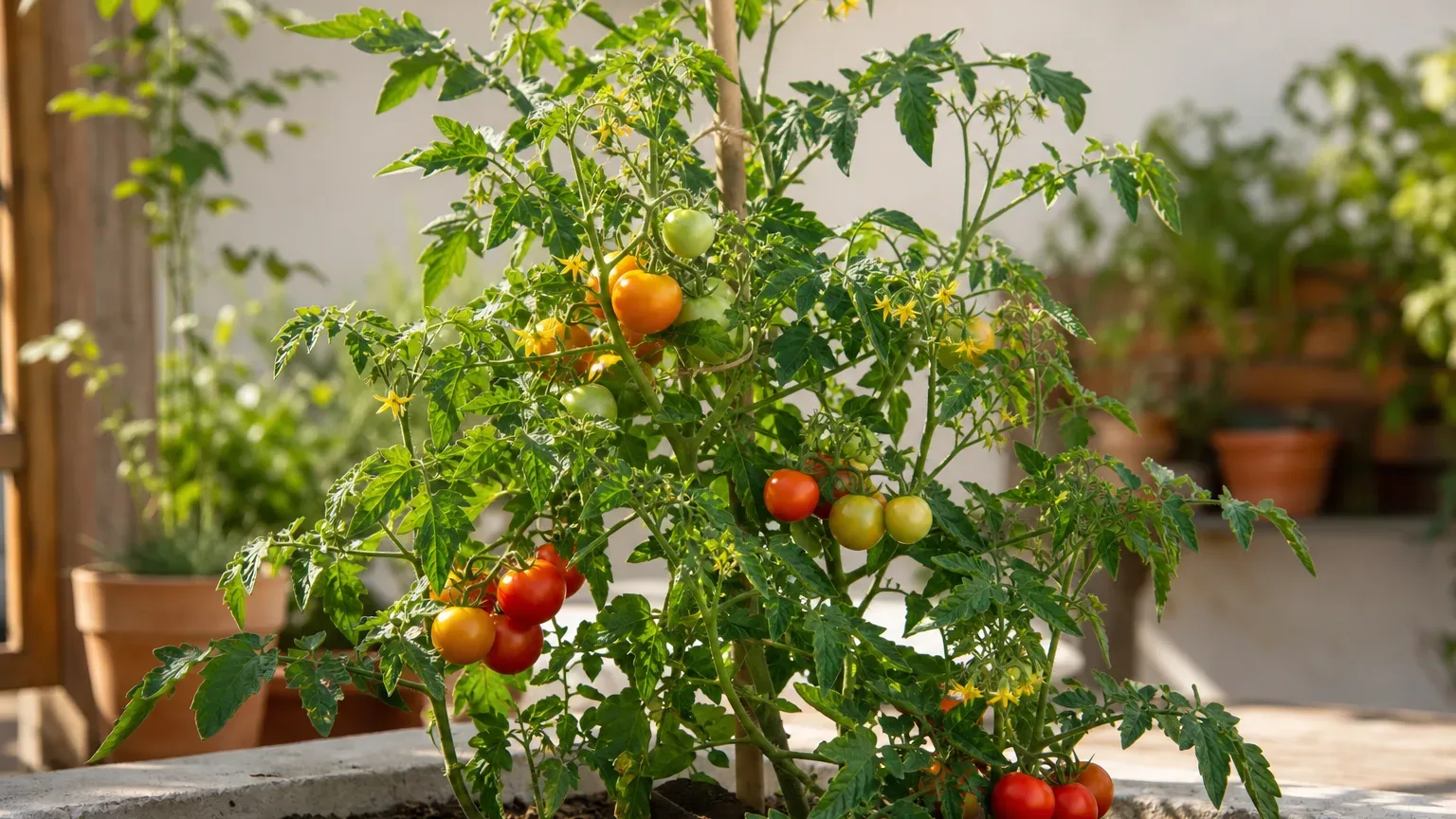
Tomatoes are botanically fruit, and they are often the strongest dollar-for-dollar crop for a beginner. One healthy plant can produce steadily for weeks, it can grow in the ground or a large container, and the flavor difference between a ripe homegrown tomato and a firm fruit harvested for shipping is obvious. Illinois Extension notes that a few plants can supply an adequate harvest and that varieties differ greatly in size, habit, maturity, and disease resistance [2].
The cost advantage is clearest when you grow cherry tomatoes, specialty colors, or varieties you would pay a premium for at a market. A generic field tomato bought during peak local season may be cheaper than your first container-grown plant once you count a cage and potting mix. Choose a variety you will actually eat, because unused harvest is not savings.
Give tomatoes the sunniest site you have, support indeterminate plants from the beginning, and water the root zone deeply enough to prevent repeated swings from dry to saturated. A cage, stake, or trellis is not decorative: fruit-laden vines can uproot or sprawl, fruit becomes harder to inspect, and foliage stays wetter when it lies on the ground. Mulch after the soil warms to moderate moisture and reduce soil splash.
For the fastest payback, buy one or two healthy transplants when the weather is suitable rather than starting a large seed collection. Save seed and build your own transplant supply later, after you know which varieties perform in your microclimate. If you have only a balcony, select a determinate or dwarf cherry type and use a container large enough to keep watering manageable.
3. Blackberries reward a little structure and patience
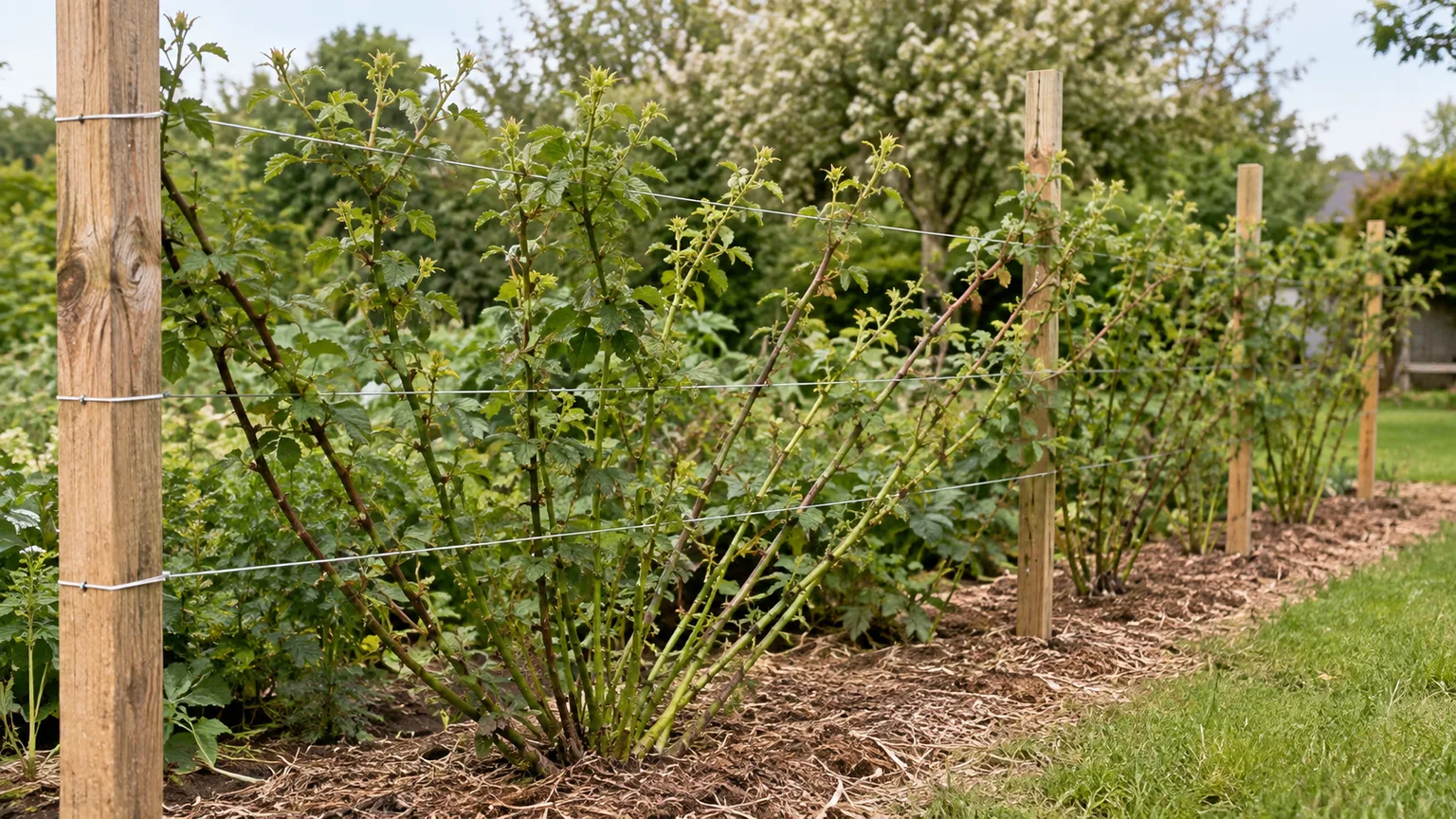
Blackberries are expensive to buy in small fresh containers because they are delicate, highly perishable, and difficult to store at peak quality. A productive home planting can turn a fence line into a harvest area, and one established cultivar can fruit without a second blackberry variety for pollination. OSU Extension describes blackberry cultivars as self-fruitful and emphasizes regular picking to protect quality and reduce the time ripe fruit spends exposed to pests [7].
The first cost is not just the plant. Most trailing or semi-erect blackberries need a sturdy trellis, room for canes, and a pruning plan that separates fruiting canes from new canes. A cheap trellis that sags under summer growth is a false economy; it makes harvest and pruning harder and can damage the plant.
Plant in a sunny, well-drained location and mulch the root zone without burying the crown. Tie new canes where they will be easy to reach, remove canes that have finished fruiting according to the cultivar’s growth habit, and pick ripe berries frequently. Overripe fruit left on the plant attracts insects and molds, turning a high-value crop into waste.
Blackberries are especially cost-effective for a gardener who already has a fence, wire, or strong support and who eats berries fresh, freezes them, or bakes with them. They are a poorer choice when the only available site is waterlogged, heavily shaded, or too small to manage thorny growth. Thornless cultivars can reduce the pain of harvest, but they still need space and training.
4. Raspberries keep producing when you manage the canes
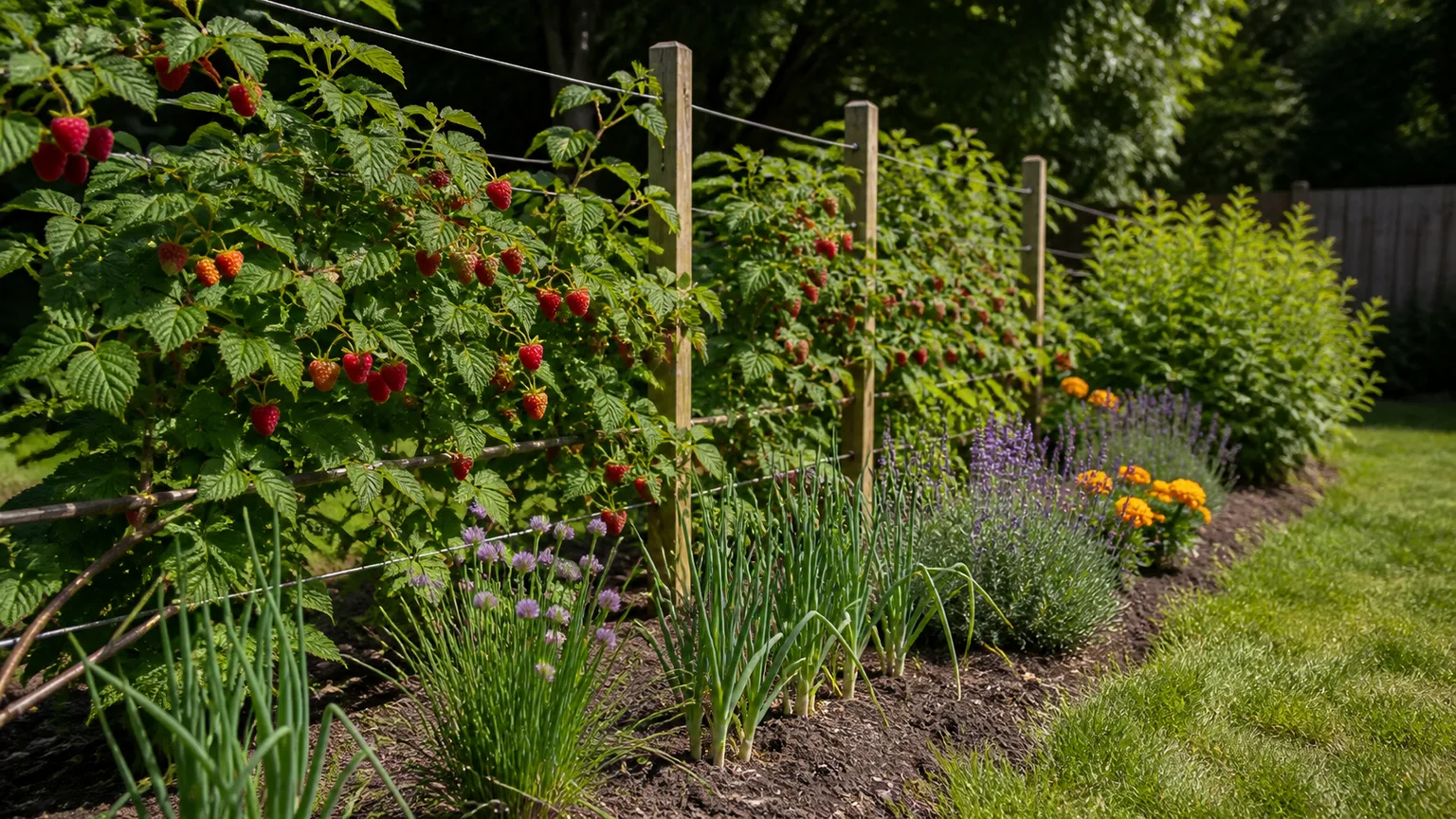
Raspberries can provide a long harvest window and spread their setup cost over many years, but they are not maintenance-free. Summer-bearing plants fruit on second-year floricanes, while primocane-fruiting or fall-bearing plants can fruit on new canes in their first year. OSU Extension explains that this difference changes pruning, winter risk, and the timing of the crop [6].
For a first planting, a primocane-fruiting cultivar managed for one late-summer crop is often the simplest approach. You can cut all canes to the ground in late winter and avoid trying to preserve a fruiting cane through severe winter weather. If you want an earlier crop or two harvest periods, accept more complicated pruning and a greater need to identify which cane is which.
Raspberries need sun, regular moisture, and a support system that keeps canes upright. Red and yellow types can send up new canes from roots, so install them where a spreading row will not conflict with paths or other crops. A narrow hedgerow is easier to weed, net, and harvest than an unmanaged thicket.
The value is strong when you use the harvest immediately or freeze it in small batches. Raspberries have a short shelf life, so a home garden’s ability to pick exactly what you need is a real advantage. OSU Extension reports mature yields in the range of 18–27 pounds per 10 feet of row for summer-bearing red or yellow raspberries in suitable conditions, while noting that region and cultivar affect production [6]. Treat that as a mature-plant reference, not a first-year guarantee.
5. Blueberries are valuable only if you can provide acid soil
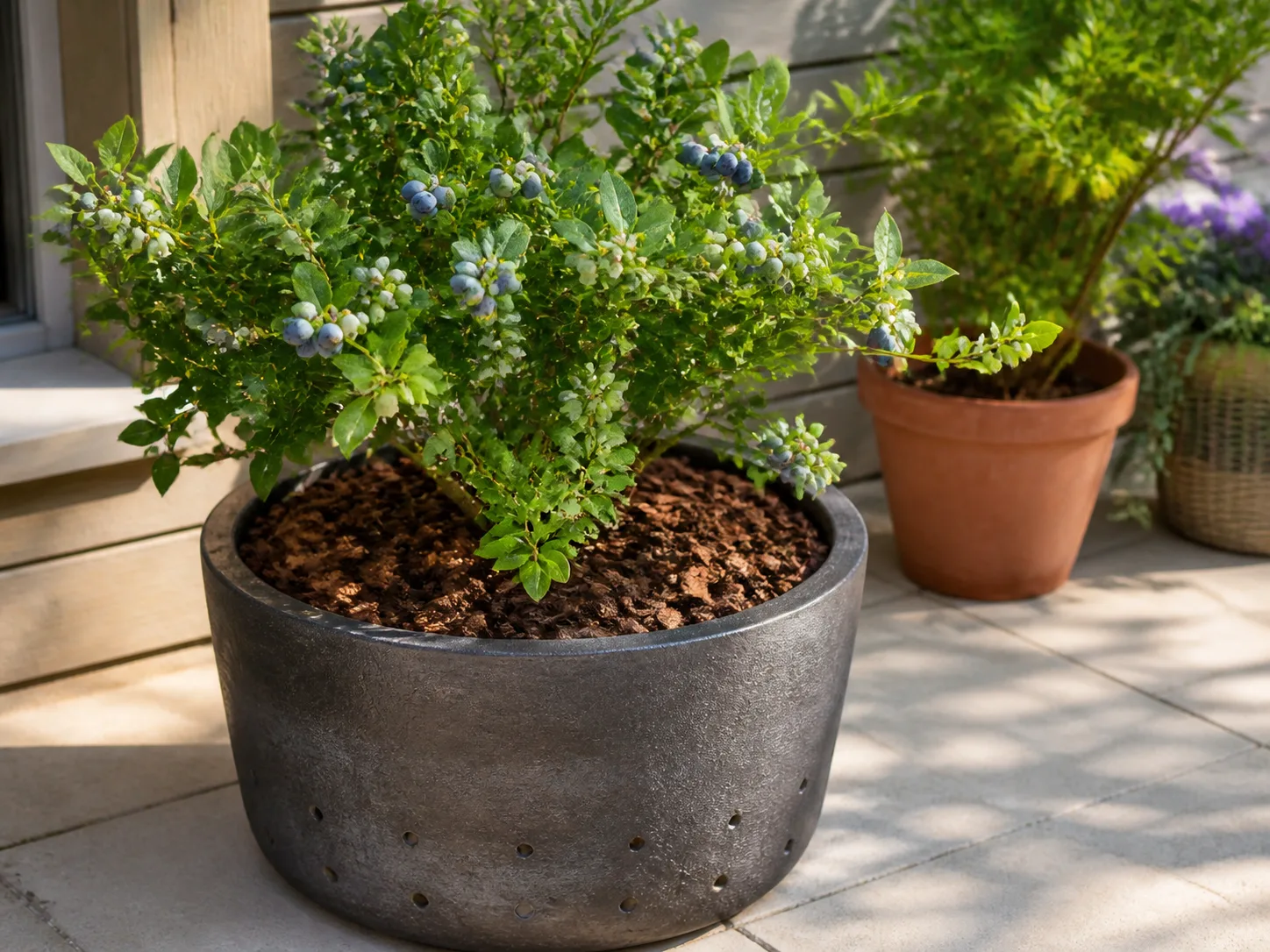
Blueberries can be one of the most satisfying fruits to grow and one of the most expensive to get wrong. They need a sunny site, steady moisture, good drainage, and acidic soil; correcting a naturally alkaline bed can cost more and require more maintenance than growing a different crop. Containers are often the smarter financial choice when you need to control the root-zone mix.
Many northern highbush blueberries can set fruit alone, but a second compatible cultivar often improves berry size and yield. Rabbiteye and some southern highbush types have stronger pollination requirements, so read the cultivar label instead of assuming two random bushes will work together (OSU blueberry guide; OSU pollination guidance). Choose cultivars with overlapping bloom and harvest times if you want both better set and a longer picking season.
Solve the soil and pollination problem before planting
Test the soil before buying a blueberry. If the pH is unsuitable, do not bury the root ball in a small pocket of acidic material and hope it remains correct; roots eventually explore the surrounding soil. A large container filled with an acidic, well-drained mix can make the plant’s nutrition more predictable, but it still needs regular watering and protection from overheating.
Blueberries also need patience. A nursery bush may produce a small crop while it establishes, but heavy fruiting too early can slow root and branch development. Remove some flowers from a young plant if needed, then let the crop build as the bush develops a strong framework. Mulch shallow roots with an appropriate organic material and keep competing grass away from the base.
The savings are strongest when fresh blueberries are a regular purchase and you have the right soil or are already prepared to grow them in containers. If your site is alkaline, dry, or poorly drained and you dislike monitoring pH, blueberries are not automatically a bargain. Buy one or two plants only after the soil test tells you the project is feasible.
6. Bananas make financial sense in a long, warm season

Bananas are the most climate-dependent crop on this list. They need heat, moisture, fertility, and a long enough growing season for a stalk to flower and the fruit to mature. In a warm region they can produce from a vigorous clump; in a cold region they may grow beautiful leaves all summer and still fail to fruit before winter.
University of Georgia Extension notes that bananas commonly need 12–18 months to produce a flower stalk, followed by roughly four to eight months for fruit to mature, with winter cold capable of killing the top and preventing fruit production [10]. That timeline makes a banana plant a poor “quick savings” crop outside a suitable climate. It can also require a large container, indoor overwintering space, or substantial winter protection.
If your winters are mild and your summer is long, plant in a warm, sheltered site with rich, moisture-retentive soil and room for the clump. Keep only the number of suckers you can support, feed during active growth, and protect the rhizome and stalk when cold threatens. In a cooler climate, choose bananas for foliage and treat fruit as a bonus unless you have a proven overwintering system.
Bananas can become economical when you already have a warm microclimate, access to free divisions, and a reliable way to protect the plant. Buying a tropical plant every spring, hauling it indoors, and heating a space for it may cost more than the fruit is worth. Climate fit matters more here than enthusiasm.
7. Cherries are a long-term orchard investment
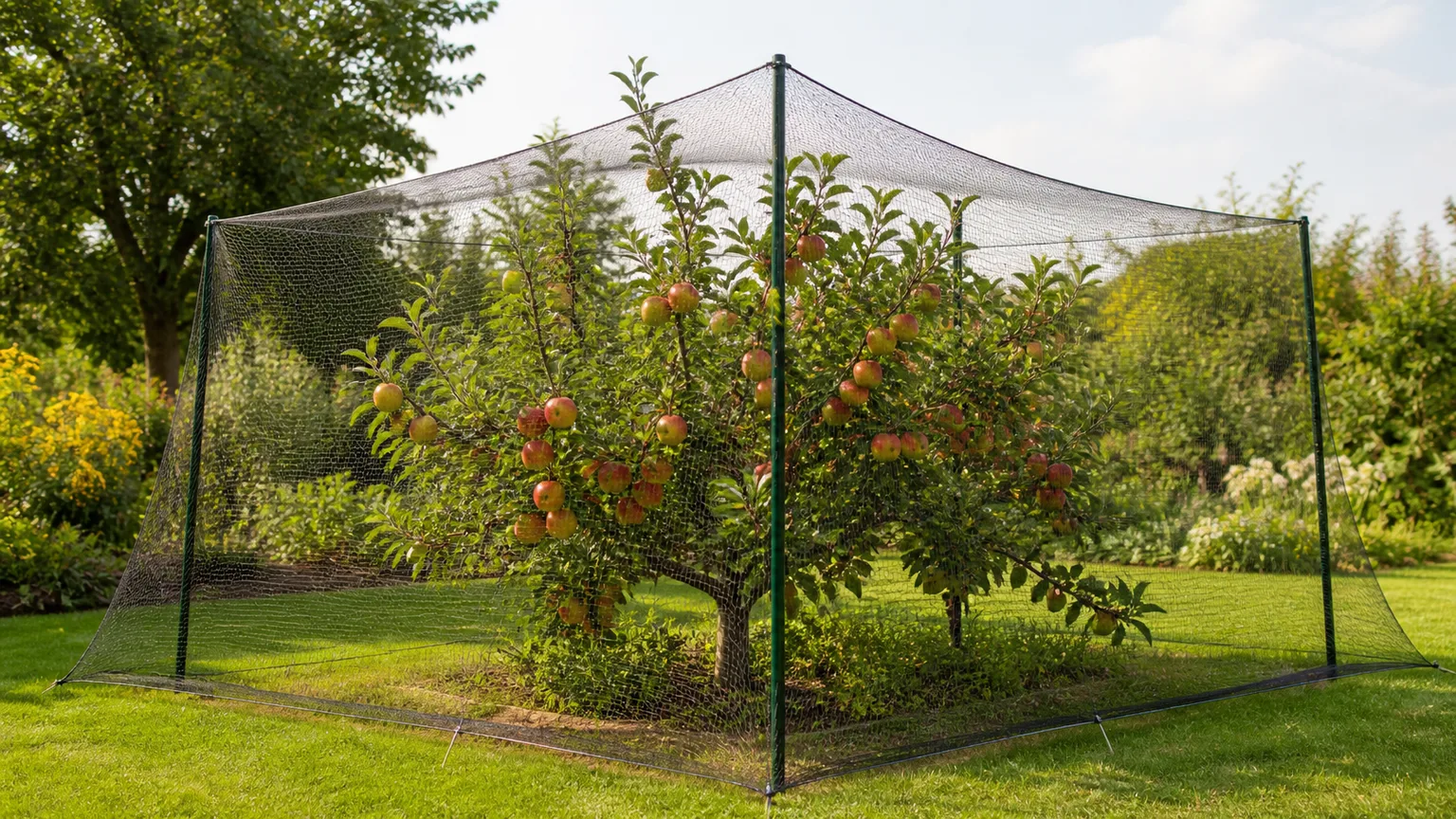
Cherries can eventually replace a surprisingly expensive seasonal purchase, but they are not the best first fruit for a gardener who wants immediate savings. Sweet cherry trees need adequate sun, drainage, training, and protection from birds; many cultivars also need a compatible pollinizer. Penn State Extension points out that birds, pests, diseases, and rain-related cracking can all affect a home cherry harvest [12].
Sour or pie cherries are often easier for a small home orchard because many are self-fruitful and the trees can be smaller. Sweet cherries are a better match when fresh eating is the priority, but check compatibility, bloom time, mature size, and local disease pressure before planting. A dwarfing rootstock can make netting and pruning more realistic, but “dwarf” does not mean maintenance-free.
Buy the right grafted tree instead of gambling on a pit
A cherry pit is cheap, but a seed-grown tree may not reproduce the fruit you liked, and it can take longer to bear. A grafted nursery tree costs more at the start but gives you a known cultivar on a rootstock selected for size, adaptation, and earlier production. OSU Extension explains that modern sweet cherry trees are budded or grafted and that rootstock affects vigor, precocity, and eventual management [11].
Plant one self-fertile sour or sweet cherry if that suits your climate and space, or buy two compatible sweet cultivars when cross-pollination is required. Train the young tree early, keep the canopy open, and plan bird protection before the fruit colors. A small nettable tree can produce more usable cherries than a large unprotected tree whose crop disappears overnight.
Cherries become a good financial choice when you will stay in the garden for several seasons, have the right winter chill and summer conditions, and value fresh fruit enough to manage the short harvest. They are a poor choice for a rental balcony, a warm winter climate that lacks chill, or a yard where a full-size tree cannot be protected.
How to calculate your garden’s break-even point
Use a simple crop-by-crop equation instead of relying on a general claim that homegrown is cheaper:
Break-even edible pounds = first-year setup cost ÷ (comparable store price per pound − annual growing cost per pound).
For example, if a strawberry bed costs $45 to establish and uses $15 of plants, water, and supplies each year, do not divide $60 by the retail price alone. Estimate the pounds you actually pick, include the annual cost, and compare the result with the same quality of fruit you would buy. If you harvest 20 pounds in a season, the bed’s first-year cost is $3 per edible pound; later seasons may be cheaper if the plants remain productive and you do not need to replace the bed.
This is not an accounting exercise that needs false precision. It is a way to expose the variables that matter: whether you already own containers, whether the soil is suitable, how much fruit the household eats, and whether the crop survives long enough to spread out the setup cost. Record purchases and harvests for one season, then adjust the next planting based on evidence from your own yard.
The hidden costs that can erase the savings
The biggest hidden cost is infrastructure. Berries may need trellises, cages, netting, mulch, or irrigation; blueberries may need acidic media and a second cultivar; cherries may need a dwarfing tree and bird protection; tomatoes may need a large container and sturdy support. A plant that is inexpensive at the nursery can become expensive once its site is made workable.
The second cost is crop loss. Birds, slugs, spotted-wing drosophila, rain cracking, fungal disease, heat, and poor pollination can turn a promising harvest into a handful of damaged fruit. Pick frequently, remove overripe fruit, improve airflow, water consistently, and use physical protection before reaching for a pesticide. If a product is needed, follow its label and confirm that it is approved for the edible crop and the pest.
The third cost is the gardener’s time. A crop that requires picking every day may be excellent value for someone who eats it fresh and enjoys the routine, but wasteful for someone away from home. The most economical fruit garden is not the one with the highest theoretical yield; it is the one you can harvest, use, and preserve on schedule.
Best choices for containers, balconies, and small yards
Start with strawberries or a compact tomato if space is tight. Both can produce in a single season, both can be placed close to the kitchen, and both let you learn how quickly your containers dry without committing to a permanent shrub. A blueberry can also work in a pot if you can provide acidic mix, adequate volume, a suitable cultivar, and a consistent watering routine.
Compact blackberries or raspberries can work in large containers with support, but the pot must be stable and the canes must have somewhere to go. Container-grown fruit dries faster than in-ground fruit, and a windy balcony can increase water loss even when the pot looks damp on top. Put containers where you can inspect them daily and raise them slightly so drainage holes do not clog.
Bananas belong in a container only when you already have a realistic overwintering plan. Cherries can be grown as compact trees in the right setting, but they are a long-term space commitment and are difficult to protect if the tree is allowed to become too large. A small yard favors berries; a sunny patio favors strawberries and tomatoes; a warm frost-free garden can add bananas.
Harvest and preserve the surplus before it becomes waste
Harvesting at the right moment is part of the cost calculation. Strawberries and raspberries should be picked often, blackberries when fully colored and flavorful, blueberries when they are completely blue and release easily, tomatoes when they are fully colored or beginning to color depending on weather, and cherries when ripe because they do not continue ripening after picking. The less fruit you discard, the lower your effective cost per pound.
Cool soft fruit quickly, keep it shallow so it does not crush, and refrigerate what you will use soon. Freeze clean, dry berries in a single layer before transferring them to a container, and turn excess tomatoes into sauce or roasted portions. Bananas can be peeled and frozen, while cherries can be pitted before freezing; preservation gives a short harvest a longer financial life.
Do not grow more than your household can process just because a plant is productive. A smaller planting picked at peak quality usually beats a large planting that produces a glut, attracts pests, and ends in the compost pile. If you have too much, share it early in the harvest rather than waiting until the fruit is already soft.
A low-risk order for starting your fruit garden
Begin with one fast crop and one perennial only if your site has been checked. A practical sequence is a tomato or strawberry this season, followed by a blackberry, raspberry, or blueberry once you know your sun, drainage, and watering patterns. Delay bananas or cherries until the climate, space, and time horizon make sense.
Buy the smallest useful quantity of plants, use existing containers or supports where safe, and keep a simple record of costs, harvest weight, and crop loss. After the first season, you will know whether the problem was price, yield, or the amount of work required to use the harvest. That information is more reliable than a generic ranking because it reflects your household’s actual shopping habits.
Conclusion: grow the fruit you can harvest reliably
Strawberries and tomatoes usually offer the quickest path to useful homegrown fruit. Blackberries and raspberries can deliver excellent value after the trellis and pruning routine are in place, while blueberries are worth the effort only when acidic root conditions and pollination are handled. Bananas and cherries can be rewarding, but their climate, time, and protection requirements make them conditional investments rather than universal bargains.
Choose the crop that fits your site, buy or build only what that crop needs, and compare real edible harvests with the price of comparable fruit. When you grow what your household already eats and preserve the surplus before it spoils, the garden has a much better chance of saving money as well as producing better-tasting fruit.


