Early Warning Signs of Termites: What to Do Next
Learn the early warning signs of termites, how to tell them from ants or rot, what to document, and when a professional inspection is needed.
Termites rarely announce themselves with one unmistakable event. More often, a homeowner notices a narrow mud line, a few discarded wings, a door that changed with the weather, or paint that suddenly looks swollen. Each clue has harmless look-alikes, but several clues in the same area can point to an active wood-destroying insect problem.
The useful question is not “Does this one mark prove termites?” It is “What evidence is present, where is it, and what should I do before I disturb it?” This guide covers the nine common early warning signs, the mistakes that make them easy to misread, and a practical response that protects both your home and the evidence.
Start With the Evidence, Not the Panic
Termite risk is highest where wood, moisture, and concealment overlap. A damp sill plate beside a crawl space, mulch hiding the foundation, a leaking window, or a porch support touching soil can create both access and cover. Subterranean termites often travel from soil through shelter tubes, while drywood termites can remain within infested wood. The right response depends on the type of evidence and the construction of your home.
Do not begin by spraying every insect or tearing open a wall. Take clear photographs, note the date and exact location, and look for a second clue nearby. A single winged insect at an open window is weak evidence. A cluster emerging from a baseboard beside mud-filled cracks is much stronger. Purdue Extension’s basic termite-control principle—break the connection between soil and structural wood—also explains why foundation clearance and moisture checks belong in every inspection.
The 9 Early Warning Signs
1. Mud tubes on the foundation, crawl space, or wood
Shelter tubes are among the strongest visible clues for subterranean termites. They may run vertically up a foundation, cross a pier, follow a crack, or connect soil to a porch, sill, or floor joist. The tube protects termites from drying out while they travel between the colony and a food source.
An old, broken tube does not prove that the colony is active, and breaking a tube does not control termites. Photograph it first. If it is safe, open only a small section and check whether the tube contains damp soil or insects; do not pry into finished walls or structural wood. Mark the location and check again later. A repaired section, fresh soil, or continuing activity makes a professional inspection more important.
2. Swarming insects indoors or close to openings
Termite swarmers, also called alates, are winged reproductive adults. They may appear around windows, doors, light fixtures, vents, or other openings when a colony produces a flight. Finding swarmers indoors is more concerning than seeing a few flying insects outside near a stump or woodpile, but it still needs identification.
Vacuuming the insects is fine for cleanup, but it does not remove the colony. Save a few specimens if possible, along with photographs of where they appeared. A professional should know whether they came from a wall, ceiling, trim joint, crawl space, or an open door. Kansas State University Extension notes that swarmers are not the wood-eating workers, but their presence can reveal a colony nearby.
3. Piles of shed wings
After a swarm, termites may leave behind equal-length wings on windowsills, floors, spider webs, or beneath light sources. A pile near one wall or opening deserves more attention than a random wing outside. Look for additional clues in the same area: mud, soft trim, pinholes, or insects emerging from a crack.
Shed wings are not a diagnosis by themselves. Winged ants also shed wings, and insects can enter from outdoors. Termite wings are generally similar in length and extend much farther than the body; ants have unequal front and rear wings, elbowed antennae, and a distinctly pinched waist. If you cannot tell, preserve the sample instead of guessing.
4. Tan pellet-like droppings or frass
Drywood termites push fecal pellets, called frass, out of small kick-out holes. The pellets are usually tiny, hard, and fairly uniform, often accumulating on a sill, floor, stair, or furniture surface below a small opening. Their presence can indicate activity in the wood above, but a pile may continue to fall after insects have moved or after vibration disturbs an old gallery.
Do not sweep the material away before photographing the pile and the hole. Termite pellets can be confused with sawdust, insect debris, or other household grit. Coarse shavings, splinters, or damp wood dust may point toward carpenter ants, boring beetles, or decay instead. The texture, exact location, and the insect or gallery that produced it matter.
5. Faint clicking or rustling in a wall
In a quiet room, a larger infestation can sometimes produce faint clicking, rustling, or tapping sounds. Termites may move through galleries or respond to disturbance, but household plumbing, ductwork, electrical components, rodents, and normal expansion can create similar noises.
Treat sound as a prompt to look for physical evidence, not as proof. Check accessible trim, the room on the other side of the wall, and nearby plumbing or roof-leak areas without opening a cavity. If the sound is paired with soft wood, bubbling finish, frass, or swarmers, record the location and ask for a targeted inspection.
6. Bubbling paint or rippled wallpaper
Paint that blisters, wallpaper that ripples, or a thin-looking surface can result from termite galleries just behind the finish. Termites do not eat the gypsum core of drywall, but they can feed on the paper facing or use the space behind a finish. Soil-filled pinholes or a fragile surface around trim raise suspicion.
Moisture is a major alternative explanation. A plumbing leak, condensation, poor bathroom ventilation, roof leak, or ordinary paint failure can lift a finish without insects. Look for dampness, staining, a musty odor, and the nearest water source. Do not cover the area with new paint before the moisture and pest questions are answered.
7. Hollow-sounding or weakened wood
Termites can consume wood along the grain, leaving a thin shell or galleries inside. Tapping a suspect baseboard, stair tread, door frame, or exposed beam may sound dull or hollow compared with similar sound wood. A soft spot that gives way under light pressure is more concerning than a small difference in tone.
Comparison matters. Wood species, framing, trim thickness, and the presence of a void can change the sound. Wood rot can also make boards weak and hollow, especially near a leak. Do not probe finished flooring, electrical areas, or structural members with a sharp tool. Photograph the surface, check for moisture and mud, and let an inspector choose a safe inspection point.
8. Blisters, pinholes, or raised areas in flooring
Small holes in wood flooring, blistered boards, raised edges, or loose laminate can be signs of damage below the visible surface. Termites do not eat laminate or vinyl as a food source, but they can damage the wood subfloor, adhesive, or other cellulose material beneath it. Water damage, installation movement, poor ventilation, and ordinary wear are common alternatives.
Look for a pattern rather than one defect. Is the problem near a bathroom, exterior wall, crawl-space opening, or a spot where moisture collects? Are there mud traces, frass, soft wood, or swarmers nearby? Avoid pulling up a broad area just to investigate. A focused inspection can often connect the floor symptom to the wall, foundation, or moisture source.
9. Doors or windows that suddenly stick
A door that rubs, a window that becomes difficult to open, or trim that swells can be an early sign of wood damage near an opening. Termites are one possibility, but a shifting foundation, seasonal humidity, swollen wood, loose hardware, paint buildup, or rot is often more likely.
The clue becomes stronger when the sticking is new and localized with other evidence: mud-filled joints, hollow trim, bubbling paint, or insects emerging from the frame. Check both sides of the opening, the sill, nearby exterior grade, and any roof or plumbing leak above it. Do not force the window or door and damage the hardware; document the change and arrange an inspection if the surrounding wood is soft or visibly altered.
Termites, Flying Ants, and Wood Rot: A Safer Comparison
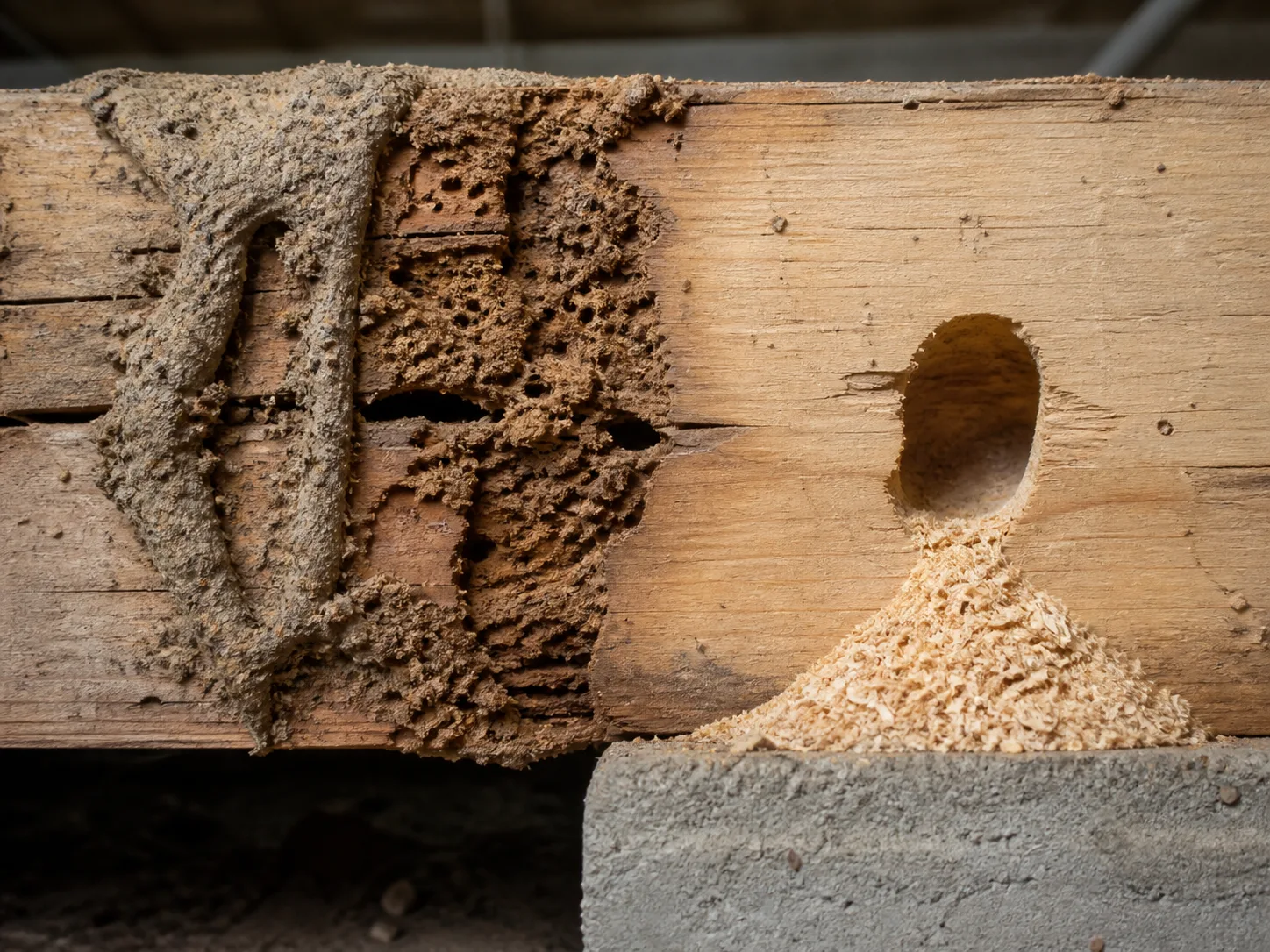
The most useful distinction is a pattern of clues, not color. Termites generally have straight antennae, a broad waist, and wings of similar length. Ants have elbowed antennae, a narrow waist, and unequal wing pairs. Carpenter-ant galleries are often smoother and associated with coarse frass, while termite galleries may contain soil or mud. Wood rot produces soft, crumbly, stained, or stringy material without requiring an insect colony.
| Clue | More consistent with termites | More consistent with another cause |
|---|---|---|
| Shelter tube | Soil-lined route from ground toward wood | Cracked mortar or old dirt with no connected route |
| Wings | Four similar-length wings near an indoor emergence point | Unequal wings, outdoor swarm, or one stray insect |
| Debris | Fine, uniform pellets from small holes | Coarse shavings, splinters, or ordinary dust |
| Wood | Hollow, thin, or mud-streaked galleries | Damp, crumbly rot or clean carpenter-ant galleries |
| Sticking opening | Paired with insect evidence or damaged trim | Seasonal swelling, hardware, settlement, or paint |
This table is a triage tool, not a species identification. If several signs cluster in one area, treat the pattern seriously even when no individual clue is conclusive. University of Georgia Cooperative Extension also emphasizes following wood-damaging insect activity back to moisture and nesting conditions rather than treating only the insects that happen to be visible.
What to Do in the First 24 Hours
Preserve and photograph the evidence
Take wide photographs showing the room or exterior wall, then close photographs showing the clue beside a ruler or familiar object for scale. Record where the sign was found, whether it was indoors or outdoors, whether it followed rain or a repair, and whether it has changed. Save wings or insects in a sealed container if you can do so safely.
Do not paint over bubbling finish, sweep away pellets, seal a mud tube, or saturate a wall with contact spray before documenting it. Do not drill through a wall, floor, or trim near wiring and plumbing. The goal is to give an inspector usable evidence while avoiding a repair that hides the source.
Check the matching indoor and outdoor areas
If the sign is beside a window, inspect the exterior sill, foundation, mulch line, downspout, and wall below it. If it is near a bathroom, check the plumbing cabinet, floor edge, crawl-space access, and ceiling below or above. If it is at a porch or deck, inspect the support, ledger, steps, and soil contact.
Look for excess moisture, blocked gutters, leaking condensate, wood debris, cardboard, firewood, or dense vegetation hiding the foundation. These conditions can support termites, carpenter ants, and decay at the same time. Correcting the moisture source is valuable, but do not assume it eliminates an established colony.
When to Call a Licensed Professional
Arrange a prompt inspection for indoor swarmers, repeated wing piles, a shelter tube connected to the home, soft or hollow structural wood, mud-filled cracks, active insects emerging from trim, or evidence in a crawl space, wall void, attic, slab edge, or floor system. Call sooner if the home has a history of termites, a damp crawl space, difficult-to-inspect construction, or a high local termite pressure.
Ask for written findings: what insect was identified, where activity was found, whether damage appears active or old, which areas were inaccessible, what moisture repairs are needed, and how treatment success will be monitored. A credible recommendation should explain why a treatment fits the species and construction rather than relying on one alarming clue.
Store-bought sprays may kill insects they contact, but they usually do not locate a hidden colony or create continuous protection around a structure. Soil barriers, bait systems, drilling, wall-void work, and structural repairs have placement, label, and safety requirements. Use products only as labeled and keep children, pets, food, and pollinators away from treated areas. When termites are suspected in the structure, professional assessment is safer than a whole-house experiment.
Prevention That Makes Future Signs Easier to Spot
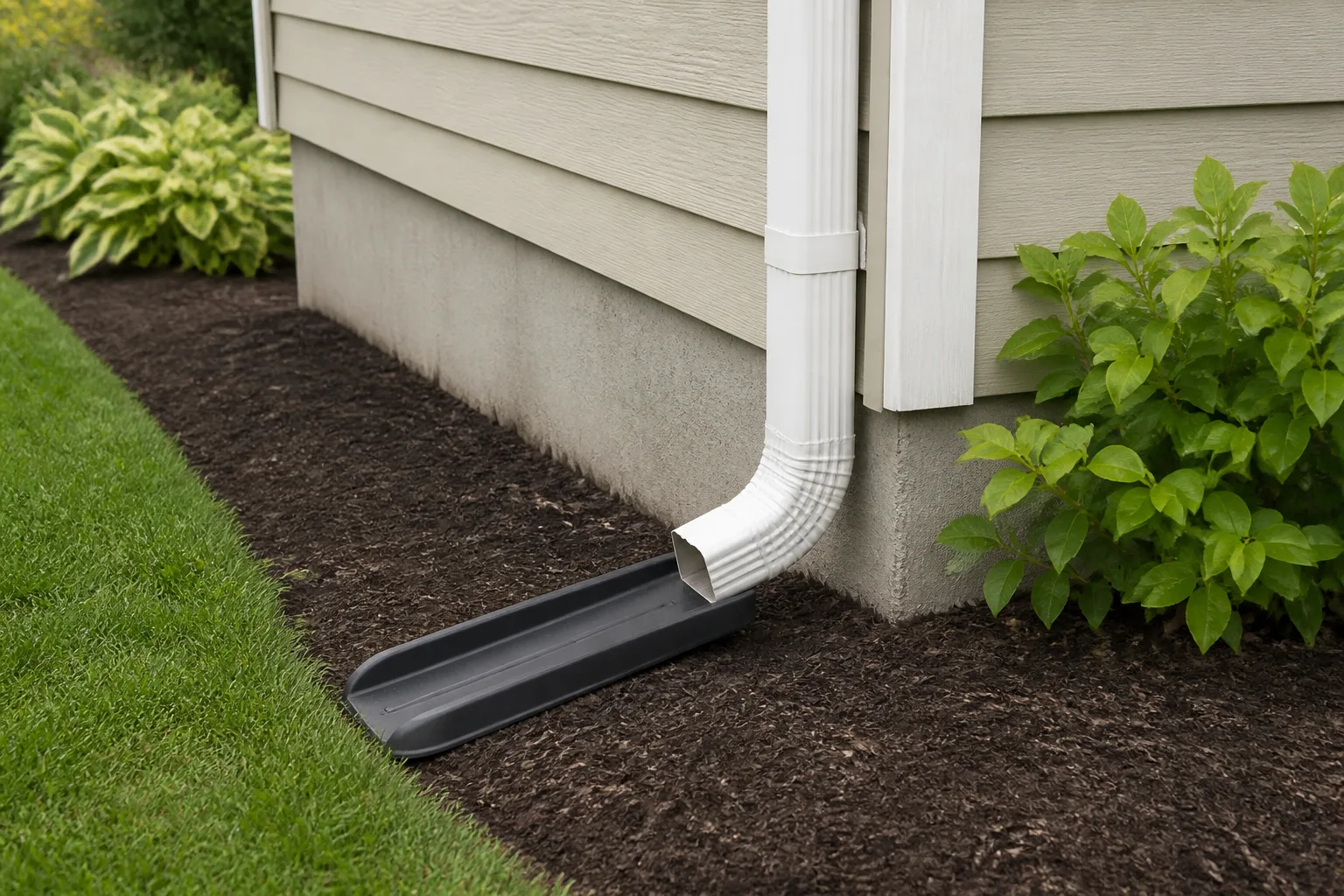
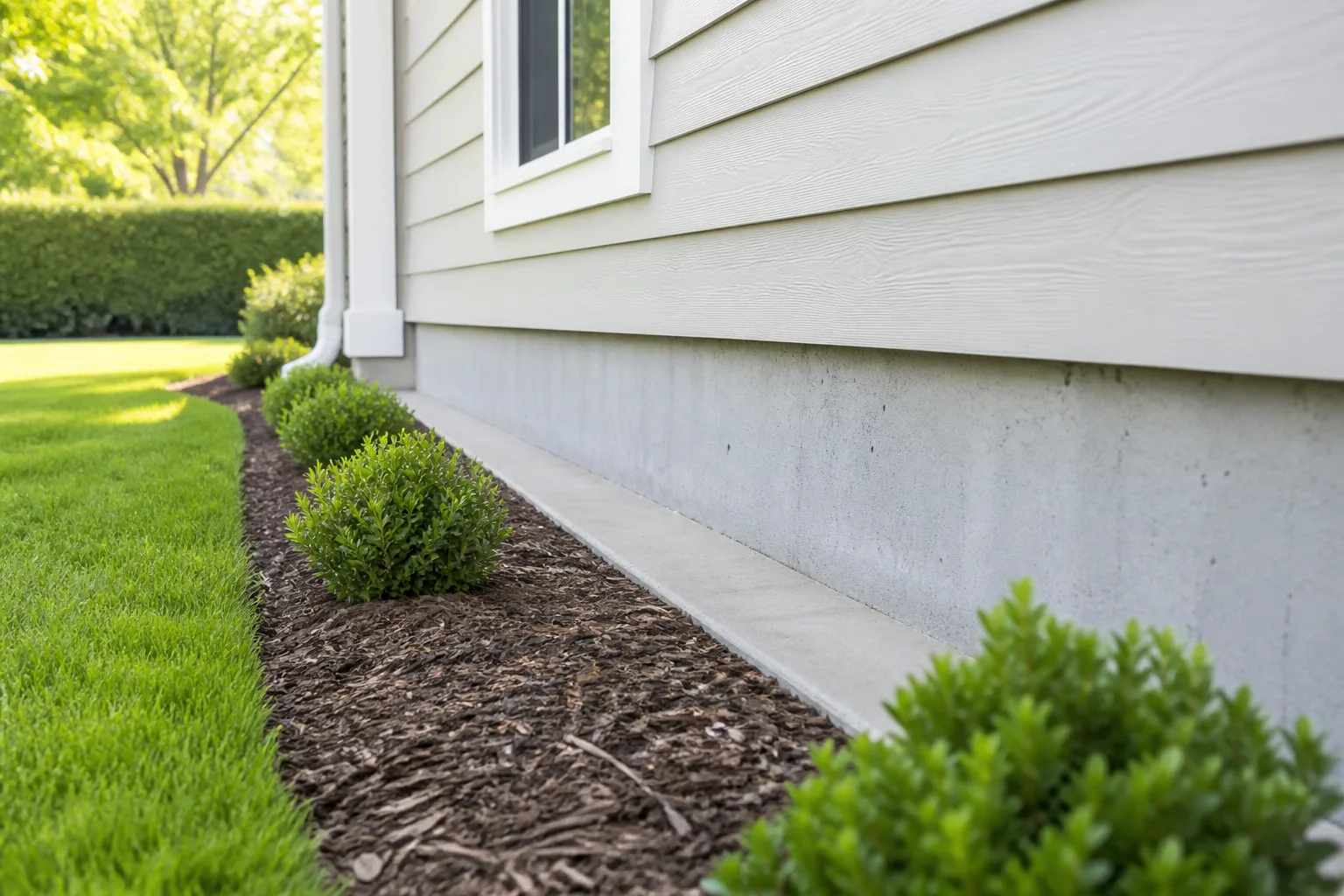
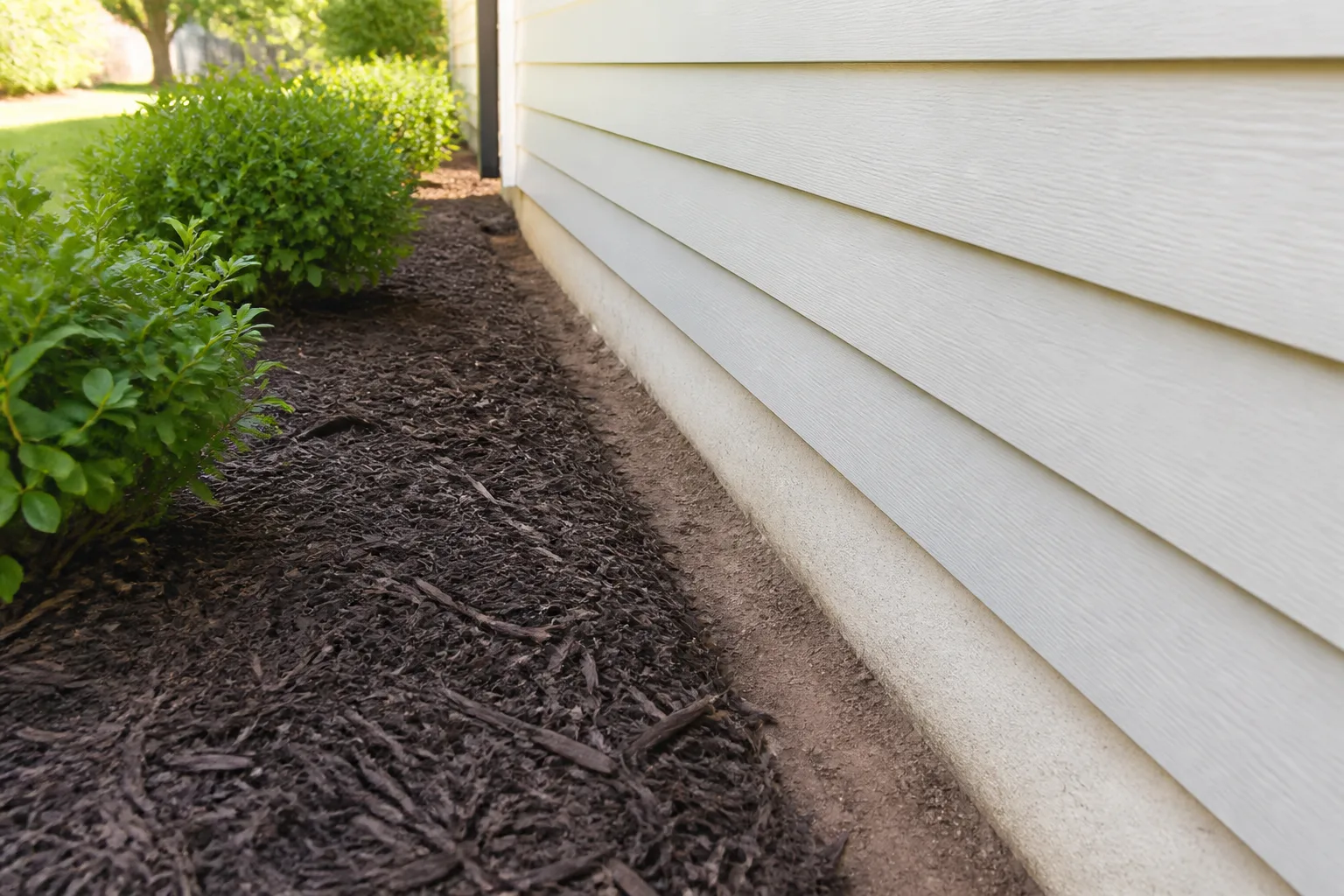
Keep structural wood visibly separated from soil where the building allows it. Pull mulch back from walls so the foundation and lower siding remain inspectable. Store firewood, cardboard, stumps, and scrap lumber off the ground and away from the house. Keep gutters clear, send downspouts away from the foundation, repair leaks, and do not let irrigation spray siding, porch supports, or crawl-space vents. Clemson Extension likewise recommends preserving a visible gap between mulch and walls so the foundation is easier to inspect.
Keep crawl spaces and basements dry and accessible. Remove wet debris, check sill plates and joist ends, and correct condensation or drainage problems rather than hiding them behind new paint. Trim vines and dense groundcover away from the inspection line. After landscaping, roof, plumbing, or foundation work, walk the perimeter again because a new bridge or wet spot can be easy to miss.
Set a recurring visual check for spring and after heavy rain. Photograph the foundation, porch supports, utility penetrations, windows, doors, and any previous problem areas. Prevention cannot guarantee a termite-free home, but it reduces concealment and makes a meaningful change easier to recognize.
Conclusion: Act on Patterns, Not One Scary Clue
Mud tubes, swarmers, shed wings, pellets, hollow wood, bubbling finishes, flooring changes, sounds, and sticking openings all deserve context. None should be used alone to announce a whole-house infestation, but several signs in the same place should not be ignored. Preserve the evidence, check for moisture and wood-to-soil contact, avoid destructive or improvised treatment, and call a licensed professional when structural activity is plausible. Early attention gives you more information, more treatment choices, and a better chance of limiting damage.