14 Dwarf Rhododendron Varieties to Grow
Compare 14 dwarf rhododendron varieties by flower color, size, hardiness, light, and the best place to grow each one.
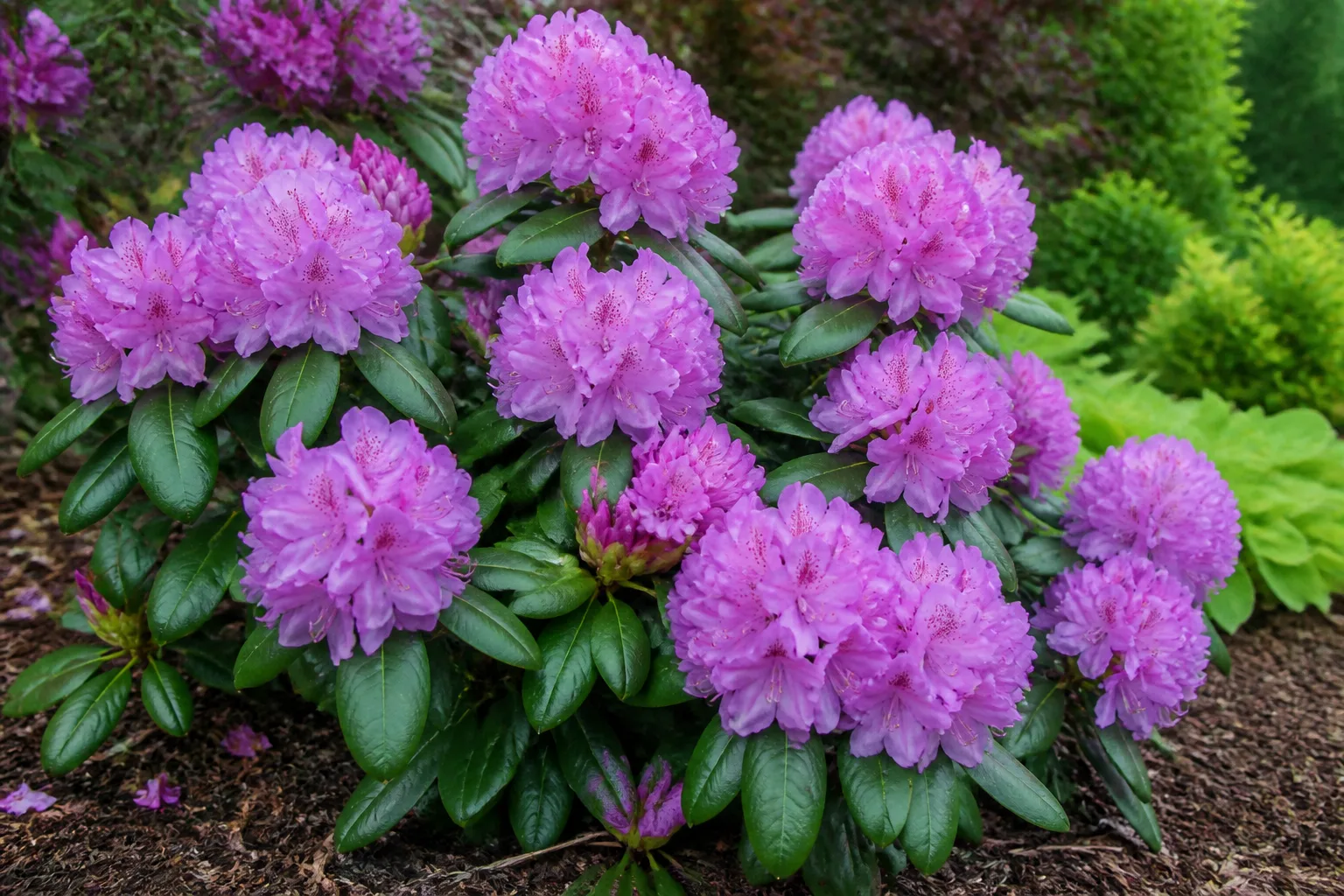
Dwarf rhododendrons bring the broad leaves and showy flower trusses of their larger relatives into spaces where a 10-foot shrub would be impractical. Most stay roughly 1 to 3 feet tall, but “dwarf” is not a promise of a tiny, slow plant. Some spread wider than they grow, some eventually reach 4 feet, and some are better suited to a container or rock garden than a foundation bed.
The best choice depends on more than flower color. Match mature width to the bed, hardiness to winter, light to the foliage, and soil to the plant’s need for acidity and reliable drainage. Rhododendrons dislike both baked, exposed roots and wet soil that stays airless. They also form next year’s flower buds soon after flowering, so careless summer pruning can remove the display you were expecting.
What counts as a dwarf rhododendron?
There is no single worldwide height cutoff. In garden use, dwarf rhododendrons are compact species, hybrids, or azaleas selected for a low habit, small leaves, slow growth, or a naturally restrained mature size. A plant sold at 12 inches may still become 3 feet wide. Read the mature height and spread on the nursery label, and allow room for air to move around it.
The word azalea can add confusion. Botanically, azaleas are included in Rhododendron, but garden centers often use “azalea” for plants with smaller leaves, a lighter branching habit, and flowers that may be deciduous or evergreen. The cultural overlap is considerable: both need acidic, humus-rich, well-drained soil and protection from harsh drying conditions. Do not assume every compact azalea has the same winter tolerance, however.
Quick comparison of 14 compact varieties
| Variety | Flower impression | Approximate size | Light and zone notes |
|---|---|---|---|
| Manitou | White to pale pink-purple | 3 ft | Sun to part shade; zones 4–8 |
| Scarlet Wonder | Deep scarlet red | 2 ft | Part sun; zones 5–9 |
| Fantastica | Dark pink edges, pale center | 3 ft | Part sun; zones 5–9 |
| Elisabeth Hobbie | Red, wavy-edged flowers | 3 ft | Sun to part shade; zones 5–8 |
| Azurika | Purple-blue | 2 ft | Sun or dappled shade; zones 7–9 |
| Kyushu | Spring flowers, spreading habit | 2–3 ft | Sun to part shade; zones 6–9 |
| Satsuki | Large flowers in pink shades | Variable | Sun to part shade; zones 7–9 |
| Impeditum | Low-growing blue-purple tones | 1 ft | Part shade; zones 4–8 |
| Kamchatka | Rosy purple to pink-red | 1–2 ft | Part shade; zones 3–7 |
| Moerheim | Compact flowering hedge plant | 1–2 ft | Part shade; zones 5–8 |
| Medusa | Coral pink to orange | About 3 ft | Part shade; zones 4–9 |
| Robleg | White, repeat-blooming type | 3 ft | Sun to part shade; zones 7–9 |
| Blue Diamond | Blue-violet flowers | 3 ft | Sun to part sun; zones 7–9 |
| Princess Anne | Yellow-green flowers | Confirm locally | Sun to part shade |
Size and hardiness are useful starting points, not guarantees. Cultivar naming, regional stock, exposure, and local winter protection can change the result. Treat the table as a short list for comparison, then verify the tag from the nursery supplying your plant.
Fourteen varieties worth growing
Manitou
Manitou is a good choice when you want a subdued palette rather than a high-contrast red or purple. White to pale purplish-pink flowers sit above olive-green foliage, and a single rounded truss can carry many flowers. Its roughly 3-foot size suits a mixed shrub border, provided neighboring plants do not shade it completely. Give it morning or filtered sun, acidic soil, and mulch that keeps the root zone cool.
Scarlet Wonder
Scarlet Wonder earns its place in a small bed through color and foliage texture. The deep red flowers are easy to see from a distance, while glossy, quilted leaves keep the plant interesting after spring. It is one of the shorter choices at about 2 feet. Morning sun and afternoon protection are a sensible default in hot climates; in cooler regions, brighter light can support heavier flowering.
Fantastica
Fantastica produces rounded trusses with dark pink, wavy edges that soften toward the center. At about 3 feet, it is compact enough for a border but not a groundcover. Its naturally tidy habit reduces the need for pruning. Remove only damaged, crossing, or clearly misplaced growth after flowering, because cutting later can remove developing buds.
Elisabeth Hobbie
Elisabeth Hobbie is a red-flowering, wavy-edged azalea with a naturally compact form. It works especially well as a low border or in a large container where its shape can be appreciated close up. A little corrective pruning after bloom can prevent legginess, but do not shear it into a hard ball. Preserve the branch structure and make selective cuts back to a suitable side branch.
Azurika
Azurika is for gardeners who want blue-purple color and small, scaly evergreen leaves. It stays near 2 feet and can handle full sun where the soil remains evenly moist, though dappled shade is safer in hot or dry locations. The mid-spring display is only part of its value: the fine foliage gives the plant a textured, low mound after flowering.
Kyushu
Kyushu has a low, spreading habit that can reach 2 to 3 feet across. That width matters more than the height when planning a path edge or rock garden. Use it where the plant can broaden without being stepped on or crowded by annuals. A slope or raised bed can help if the native soil drains slowly, but the planting medium must not dry out.
Satsuki
Satsuki types are valued for large flowers in several pink shades and for their response to careful training. A specimen can become a refined container plant or bonsai subject, but it needs consistent moisture and a gentle hand. In a garden bed, let it keep its natural low form. Because cultivar size varies, buy a named plant with a reliable mature-size description rather than relying on the word “Satsuki” alone.
Impeditum
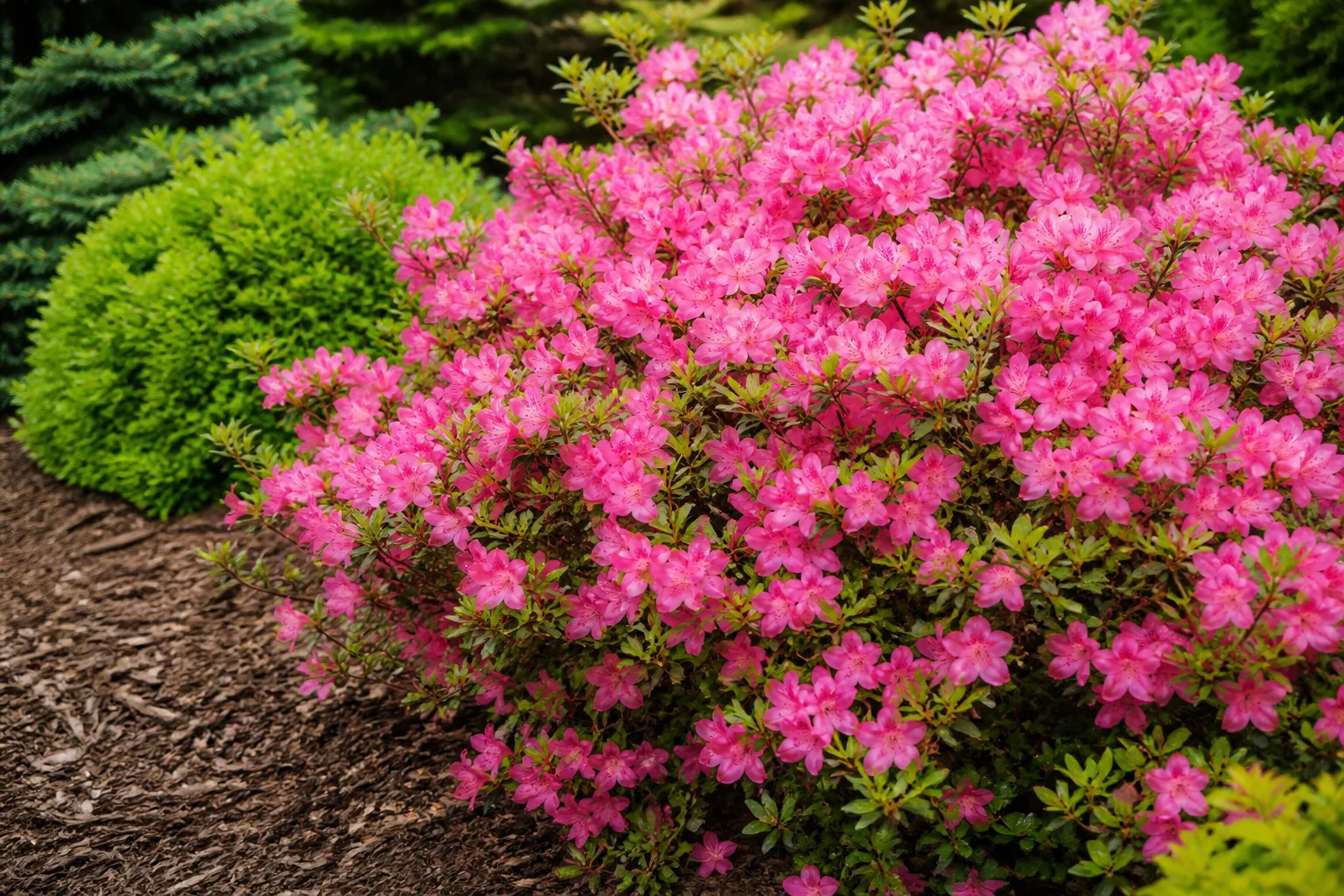
Impeditum is among the lowest choices in this group, often around 1 foot tall. It is useful at the front of a bed, in a trough, or among stones where a high shrub would block the view. Protect it from intense afternoon sun, especially when the root zone is dry. Its close-to-the-ground habit makes drainage essential: low does not mean tolerant of standing water.
Kamchatka
Kamchatka offers a longer flowering window than many spring-focused rhododendrons, with color that can extend from June toward September in suitable conditions. Rosy purple flowers may lean pink or red. Its subarctic origin makes it an appealing option for colder gardens, but hardiness still depends on snow cover, wind, and whether the plant entered winter well hydrated. Give it shelter from desiccating wind.
Moerheim
Moerheim is a compact option for a lightly shaded edge or a low flowering hedge. At roughly 1 to 2 feet, it can repeat as a short rhythm along a path without becoming a wall. Space plants according to their eventual width rather than the current nursery container. Crowding may look full quickly, but it reduces airflow and makes watering and inspection harder.
Medusa
Medusa can grow slightly taller than the smallest dwarf types, generally around 3 feet and occasionally more in favorable conditions. Its trumpet-shaped flowers range from coral pink to orange, so it works where warm color is needed among darker evergreens. Give it room to mature and avoid placing it against a heat-reflecting wall unless irrigation is dependable.
Robleg, or Autumn Angel
Robleg, also known as Autumn Angel, has white flowers and a repeat-blooming habit associated with encore azaleas. It can provide interest beyond the main spring flush in a warm enough climate. Do not interpret repeat bloom as unlimited bloom: drought, hard pruning, root stress, and insufficient light can all reduce the later display. Deadhead for neatness, but keep the plant’s leaves healthy so it can refuel.
Blue Diamond
Blue Diamond is a blue-violet choice for mild climates, where its evergreen foliage and extended color can make it a strong feature near a patio or pollinator planting. Bees and butterflies may visit the flowers, but the plant should still be selected first for site fit. Bright light helps flowering; intense reflected heat can damage leaves, so morning sun or filtered afternoon light is often the safer arrangement.
Princess Anne
Princess Anne stands out for unusual yellow-green flowers, with foliage that may take on bronze tones in fall and winter. This is a variety to choose for foliage and color contrast rather than a conventional pink, red, or white flower effect. Confirm mature size and zone locally before purchase because the available label information can be incomplete. A sheltered, acidic, well-drained site gives it the best chance to settle.
How to choose one for your site
Match light to climate
Rhododendrons generally flower best with bright light, but “full sun” is not identical in every climate. Four to six hours of gentle sun can be excellent, while hot afternoon exposure beside paving can scorch leaves and dry the shallow root system. In a cool climate, an east- or south-facing site may be suitable. In a hot climate, use morning sun and afternoon shade, especially for small-leaved or low-growing types.
Look at the site at midday and again in late afternoon before planting. If the soil is dry and the leaves of nearby plants wilt there, a rhododendron will need either irrigation or a better location. If the site is dark all day, expect fewer flowers and looser growth.
Get soil and drainage right
Acidic soil is foundational, not a minor preference. Rhododendrons may struggle in alkaline soil even when fertilizer is present because roots cannot access some nutrients efficiently. Test the soil before adding amendments. If the pH is unsuitable, a raised bed or large container filled with an appropriate ericaceous mix is more predictable than repeatedly scattering acidifying products.
Work in organic matter that improves structure, such as composted bark, but do not bury the root ball in a heavy, water-holding pocket. The planting hole should be broad, and the top of the root ball should sit level with or slightly above the surrounding soil. A 2- to 3-inch layer of leaf mold, pine bark, or other suitable mulch helps conserve moisture; keep it away from the stem.
Decide between a pot and the ground
Containers make dwarf varieties portable and let you control soil chemistry. Use a pot with a drainage hole, a stable base, and enough volume for several years of root growth. Containers dry and heat faster than garden soil, so check moisture by touch rather than following a fixed calendar. Water thoroughly until excess drains, then empty any saucer.
In the ground, roots have more thermal protection and moisture reserve, but soil correction is harder. A dwarf type can still outgrow a small border. Leave an access gap around the plant so you can inspect leaves, refresh mulch, and water the root zone without wetting the flowers.
Planting and first-year care
Plant in spring or early fall while temperatures are moderate. Water the nursery plant before removing it from the pot. Loosen circling outer roots only if they are tightly wound, and avoid tearing the central root ball. Set the plant high enough that the crown is not buried. Backfill with the excavated soil improved for drainage rather than packing rich compost into a small isolated hole.
Water slowly and deeply after planting, then monitor the root zone through the first growing season. The goal is consistent moisture, not permanent saturation. New plants may wilt during hot afternoons even when the soil is damp; check the soil before adding more water. A temporary shade cloth or nearby screen can protect a newly planted shrub from extreme exposure while roots establish.
Feed only when a soil test or visible nutrient pattern supports it. Overfertilizing encourages soft growth and salt injury, while fresh manure or strong general lawn fertilizer can damage shallow roots. If fertilization is needed, use a product labeled for acid-loving plants and follow its label rate. Do not use fertilizer to compensate for poor drainage or high soil pH.
Pruning, deadheading, and winter protection
Prune immediately after flowering if a size correction is necessary. Rhododendrons set flower buds for the next season soon after the current flowers fade, so late summer or fall pruning can remove those buds. Start with dead, diseased, broken, or rubbing branches. Then shorten only the shoots that extend beyond the intended shape.
Deadheading is optional. It improves appearance and may direct energy away from seed formation, but it is not a substitute for adequate light, water, or soil. Pinch the spent truss carefully without damaging the new buds and leaves below it.
Before a hard winter, water plants during a dry autumn until the soil freezes. A mulch layer moderates temperature swings. In windy sites, a breathable windbreak can reduce leaf dehydration; do not wrap the plant tightly in plastic. Containers need extra protection because their roots experience colder temperatures than roots in the ground. Move a pot to a sheltered, unheated space or insulate the container while maintaining drainage.
Troubleshooting weak growth and few flowers
If leaves are pale and growth is weak, check soil pH, root moisture, planting depth, and light before adding fertilizer. Yellowing with persistently wet soil points toward root stress, while dry, crisp edges suggest drought, heat, wind, or salt buildup. Brown buds that fail to open can follow winter injury, late pruning, drought during bud development, or an unsuitable climate.
Few flowers with healthy green foliage often means insufficient light or excessive nitrogen. Leggy growth can result from shade or crowding. Leaf scorch on the sunny side usually calls for better afternoon protection and steadier moisture, not more feed. Inspect the undersides of leaves and new shoots for pests, but avoid treating a symptom before identifying the cause.
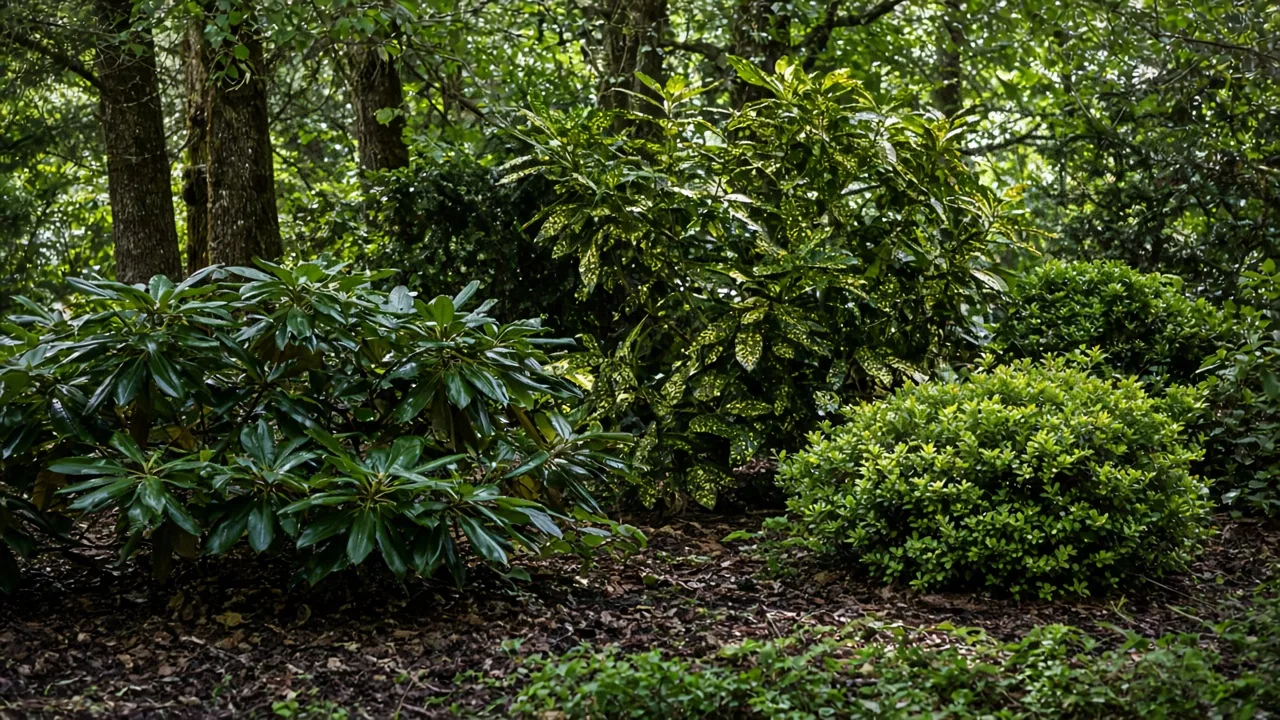
The most reliable repair is usually simple: correct the site, water deeply when the root zone is dry, refresh the mulch, and wait for healthy new growth. Avoid moving an established plant repeatedly. If the soil is fundamentally alkaline or waterlogged, relocation to a raised bed may be more effective than years of incremental amendments.
Conclusion
Dwarf rhododendrons are compact only when you choose with mature size and spread in mind. Manitou, Scarlet Wonder, Fantastica, and Elisabeth Hobbie offer classic flower colors; Azurika and Blue Diamond bring cooler tones; Impeditum and Moerheim suit low edges; Kamchatka extends the season in colder gardens; and Robleg or Princess Anne provide unusual timing or color. Start with the site, not the catalog photograph: confirm hardiness, provide acidic well-drained soil, protect shallow roots from drying, and prune just after flowering. With those fundamentals in place, a small rhododendron can deliver years of structure and seasonal color without becoming a maintenance problem.
Sources: NC State Extension: Rhododendron Royal Horticultural Society: Rhododendrons Missouri Botanical Garden: Rhododendron Clemson Extension: Azalea and Rhododendron Fine Gardening: Rhododendron Pruning