7 Expert Tips for a Healthy Lawn This Spring
Use these seven expert spring lawn care tips to tell dormancy from damage, time mowing and feeding, and repair bare spots without wasting seed.
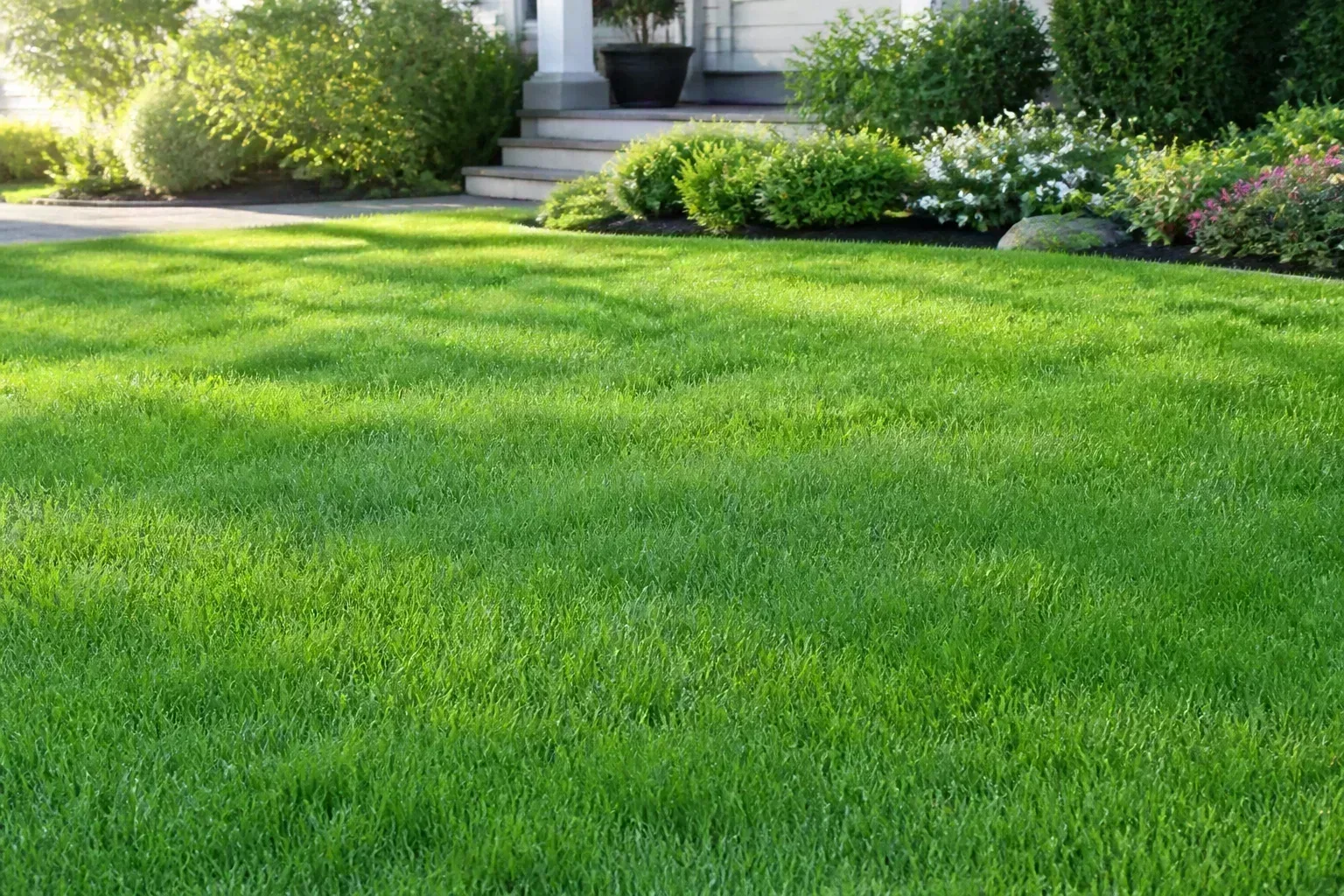
A lawn that looks brown after winter does not automatically need fertilizer, new seed, or an aggressive rake. First figure out what kind of grass you have, whether it has started its normal spring growth, and what the brown areas look like. Those observations can save you from treating dormant turf, driving a mower over mud, or seeding into a weed-control barrier.
The most useful spring lawn care tips are decisions, not a shopping list. The right order is to wait for workable soil, clear what is smothering the grass, identify the cause of persistent bare spots, then choose only the feeding, mowing, watering, or repair work your lawn needs. Timing varies across regions and grass types, so treat a calendar date as a clue—not a command.
Start with grass type and weather, not the calendar
Spring does not arrive at the same time for every lawn. Kentucky bluegrass, fescues, and perennial ryegrass are cool-season grasses, while bermudagrass, zoysiagrass, and St. Augustinegrass are warm-season grasses. They respond to different temperature patterns, so a brown lawn in a northern yard may be waking while a warm-season lawn farther south is still dormant.
The Penn State Extension seasonal guide bases lawn work on growth, soil conditions, and regional timing rather than treating spring as a single date. That distinction matters if you see a neighbor’s lawn greening before yours: the lawns may contain different grasses, sit in different sun or drainage conditions, or experience different nighttime temperatures.
Before you act, identify the dominant grass if possible and note whether the soil is firm, whether new green shoots are appearing, and whether the damage is uniform or concentrated in particular patches. If you cannot identify the grass, take a clear close-up to your local cooperative extension office or garden center and ask for a regional identification resource. The rest of this guide uses those observations to choose a safe next step.
1. Wait for dormancy to break before calling grass dead
Brown blades are a poor diagnosis by themselves. Cool-season grass can go dormant during heat or drought, and many warm-season lawns naturally turn tan or straw-colored in cold weather; winter injury, salt, disease, traffic, and drought can also leave brown areas. Landscape contractor Roger Cook’s brown-lawn guidance for This Old House likewise starts with the cause—such as winter damage, drought, disease, or poor soil—because the right repair depends on what happened.
Give the lawn time to show whether it is resuming growth under the conditions normal for your region. Do not use a week of warm air as proof that every brown section is dead: the soil may still be cold, a shaded area can wake later than a sunny one, and warm-season grass needs sustained warmth before it greens. Take photos of the same areas from a fixed spot and check weekly for new shoots or expanding bare ground. If the surrounding lawn starts growing but one patch remains unchanged, investigate that patch instead of renovating the whole yard.
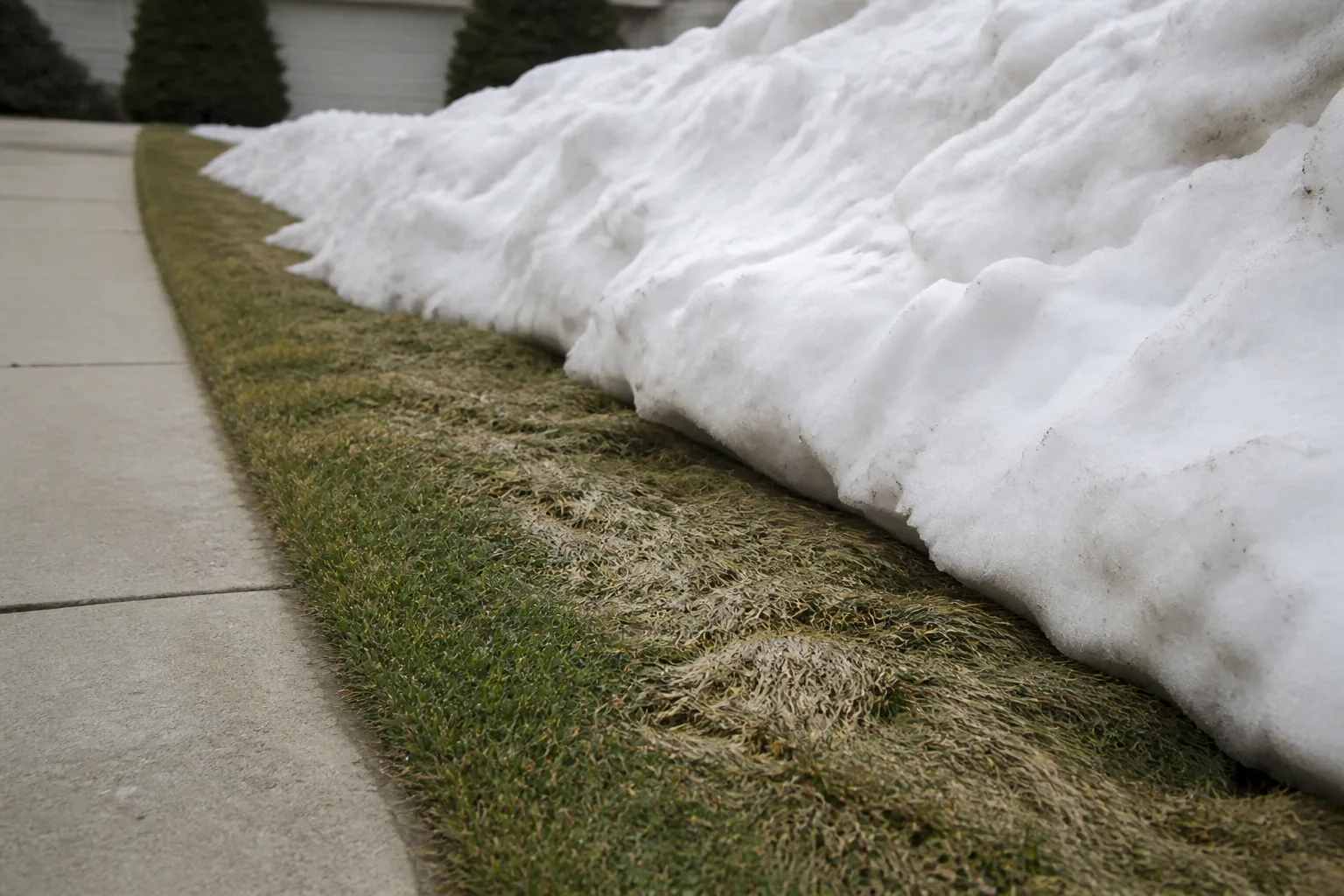
Cool-season and warm-season lawns wake on different schedules
Cool-season lawns often grow during cool spring weather, but spring is not automatically their best season for major renovation. Penn State notes that late summer to early fall is usually the more dependable time to establish cool-season grass from seed; spring overseeding can work for thin areas, but seedlings face weed competition and approaching summer stress. In a warm-season lawn, wait for active green-up before feeding, mowing closely, or seeding; applying a spring calendar intended for cool-season turf can push work ahead of the plant.
Transition-zone yards can contain a mix of species or a lawn that behaves differently in sun and shade. When you are uncertain, defer a major treatment and use the grass type, current growth, and local extension calendar together. This is especially important for fertilizer and weed-control products, whose usefulness depends on both timing and the specific turf species.
Compare the crown and pattern, not just the leaf color
Look for green shoots emerging from the base of the brown leaves, and compare the same grass in a healthy patch. A lawn recovering evenly across a broad area is a different situation from sharply defined circles, a strip along a salted driveway, a low spot that stays wet, or a path worn by traffic. The pattern is not a diagnosis on its own, but it narrows the questions you should ask before applying anything.
If brown areas continue expanding, the turf lifts easily, roots appear chewed or missing, or the same spots fail each year, pause broad treatments. Take close photos, record when symptoms began and recent weather or applications, and contact your county extension service or a qualified turf professional for a diagnosis. Fungicides and insecticides should not be used as a guess; Penn State advises that identifying the cause is the first step in managing turf disease.
2. Keep boots and equipment off soft spring soil
The first useful job may be no job at all. If your shoes leave deep prints, the mower wheels sink, or a rake pulls mud and roots rather than loose debris, the soil is too wet for traffic. Walking and driving equipment across saturated ground compresses pore space, makes existing compaction worse, and can leave ruts that remain after the grass starts growing.
Choose a dry interval after rain or snowmelt and check more than the surface. A blade of grass can look dry while the soil beneath it is still soft. The Royal Horticultural Society advises against mowing wet, soft, or frozen ground because it can damage turf and compact soil; that condition-based guidance is more useful than a fixed “first mow” weekend.
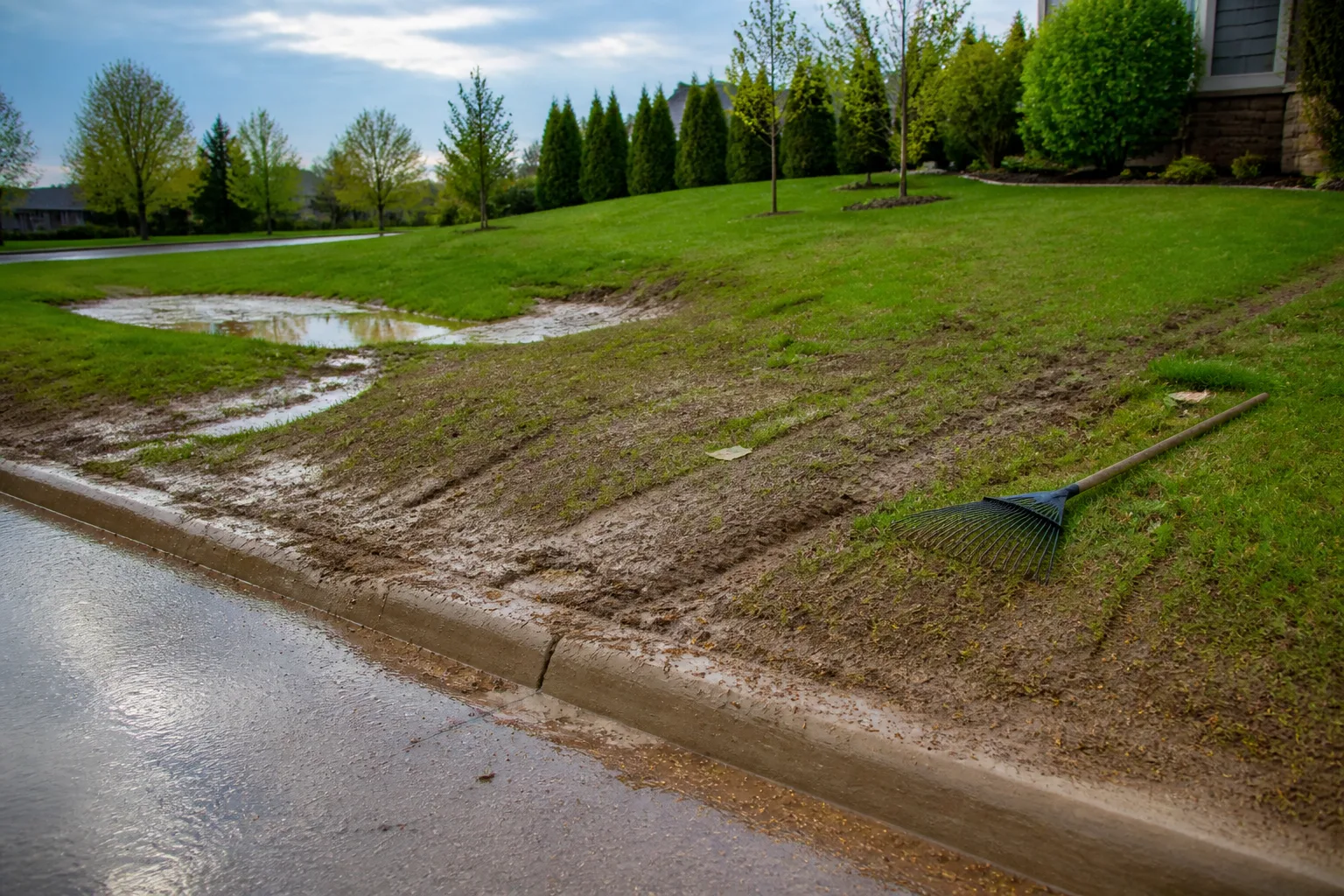
Watch for footprints and smeared soil
Press a shoe heel into an inconspicuous spot. If the heel leaves a deep impression or soil sticks and smears, postpone raking, mowing, aeration, and heavy fertilizer spreading until the ground firms. If the lawn is dry enough to work but still dormant, use only a gentle cleanup; dry soil does not mean the grass is ready for every spring treatment.
Do not aerate simply because you have a machine or because spring is on the calendar. Core aeration is intended for compaction, and Penn State notes that spring aeration can also expose weed seeds and create openings where weeds germinate. If compaction is a recurring problem, plan the timing around your turf’s active growth and local guidance, then address the traffic or drainage pattern that caused it.
3. Rake only what needs raking
Remove branches, leaves, and other debris that are resting on and shading the grass. Use a flexible leaf rake and a light touch once the ground is firm. The goal is to uncover living blades, not to scrape the soil clean; overly aggressive raking can tear crowns and roots that are just beginning to recover.
A mat of flattened blades after snow or prolonged damp weather may need a gentle lift so air and light reach the turf. Work when the foliage is dry and pull lightly in more than one direction. If the grass is still firmly rooted and the mat begins to resist, stop and wait for active growth rather than trying to force the lawn into looking tidy in one pass.
Loose debris, snow mold, and thatch are different jobs
Leaves and twigs are surface debris. Snow mold often appears as matted or straw-colored patches after a long period under snow or damp conditions; light raking after the lawn dries can help expose the grass, but severe or expanding symptoms deserve diagnosis. Thatch is a tight layer of stems and roots between the soil and green blades, not simply the brown material you can rake off the surface.
Do not power-dethatch a lawn just because it looks brown. Penn State recommends mechanical thatch removal only when buildup is excessive and during suitable cool, moist growing conditions; it also cautions that dethatching is not a yearly requirement. If you cannot tell whether you are seeing thatch, dead leaves, or matted grass, dig a small inspection wedge at the edge of a patch or ask a local extension office before renting equipment.
4. Diagnose brown or bare spots before treating them
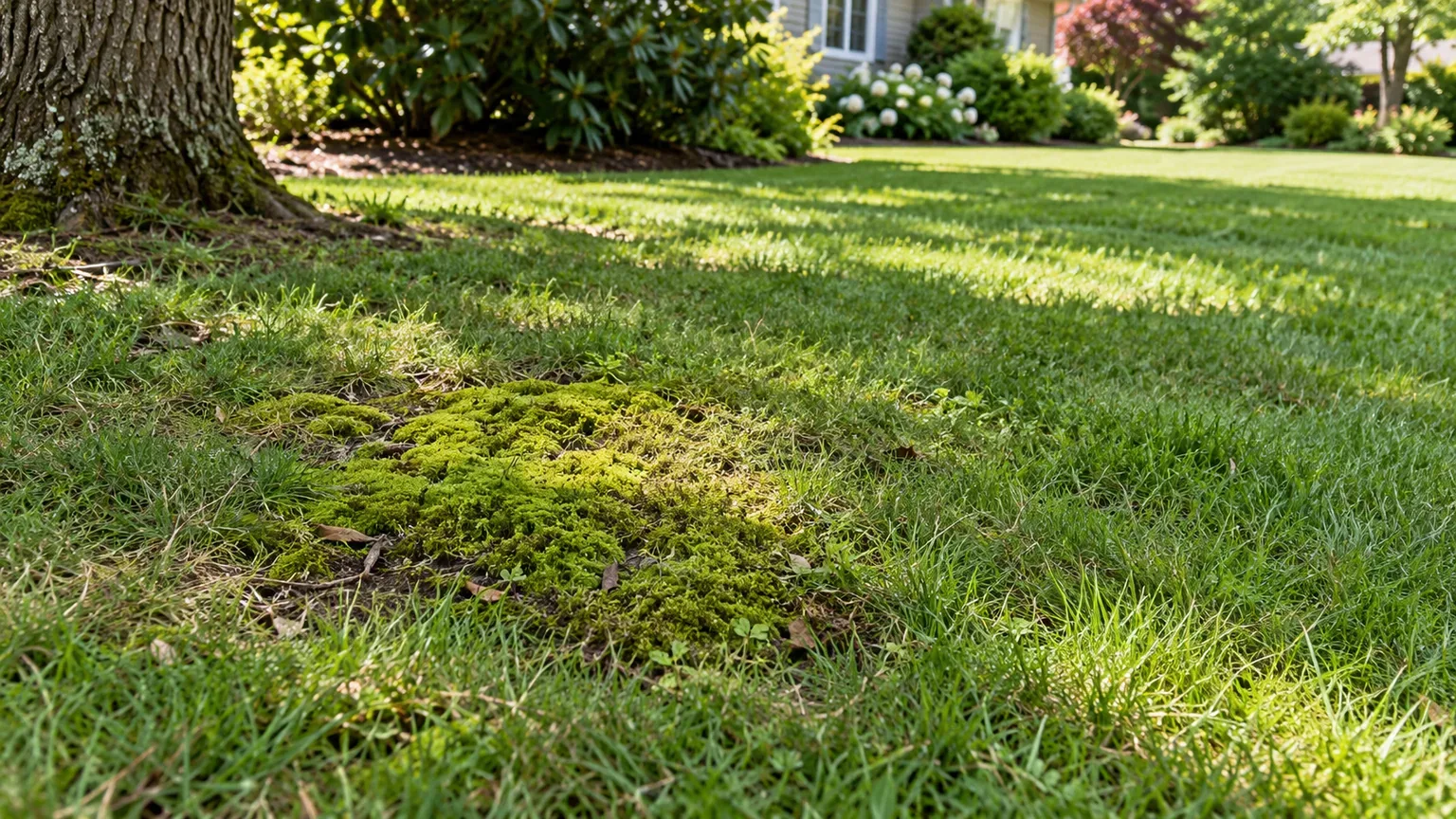
A dead-looking patch can have several causes that require different remedies. A narrow strip beside pavement may reflect winter salt or heat; a low, constantly damp spot suggests drainage; a worn path points to repeated traffic; a thin area beneath a tree may lack light; and a spreading irregular patch may involve disease or insect damage. Adding nitrogen to all of these is not a universal fix and may make some problems worse.
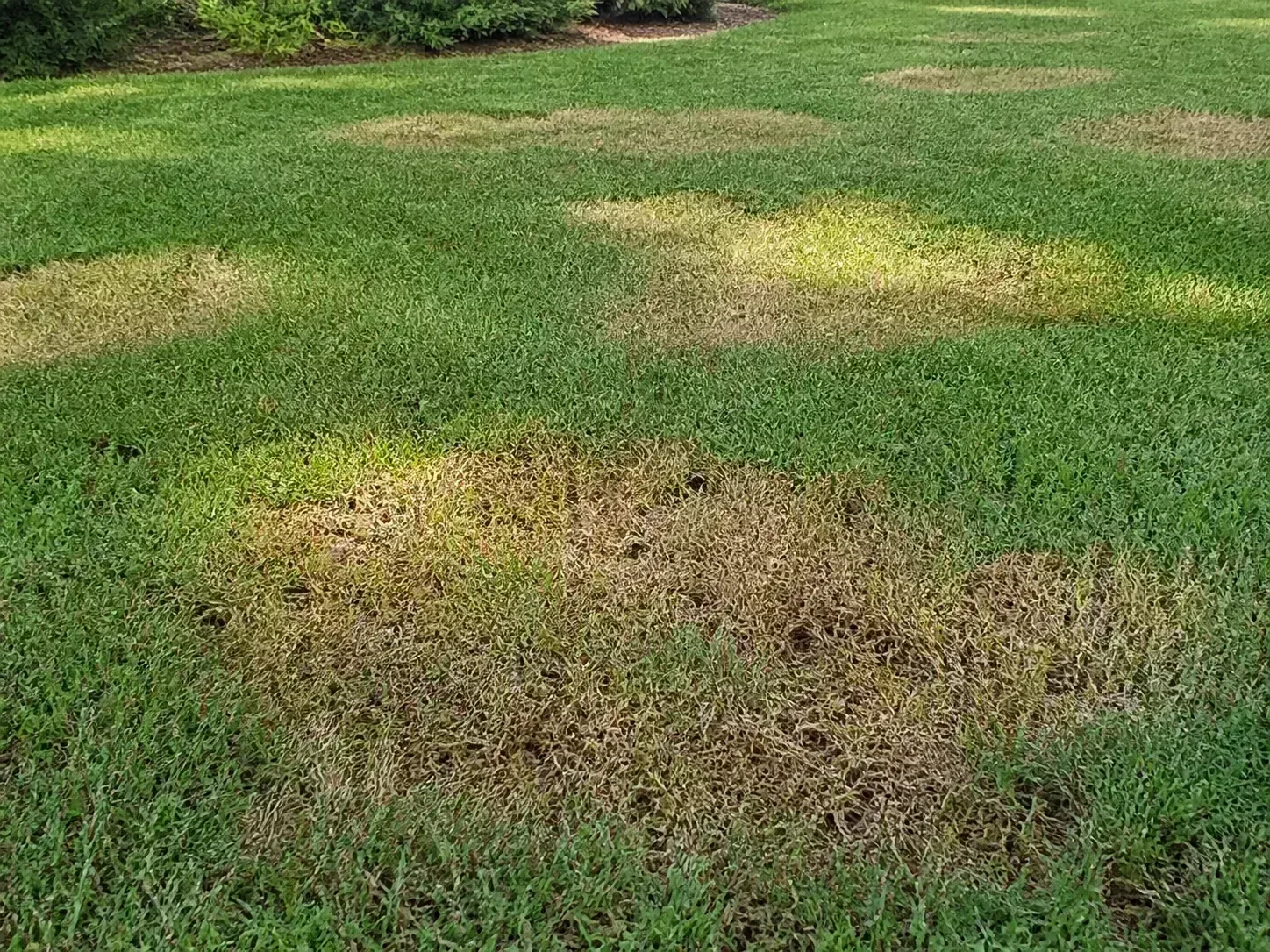
Compare the edge, center, and surrounding grass. Is the damaged area sharply outlined or fading gradually? Is the soil dry, saturated, compacted, or crusted? Does the turf hold when tugged gently, or does it lift with little resistance? Note the answers, take a photo, and look for a repeated pattern. Those clues help distinguish a one-time winter effect from an underlying site problem that will return after reseeding.
Use pattern and root attachment to narrow the cause
A patch caused by a downspout, foot traffic, dog use, plow salt, shade, or a mower scalping a high spot will not improve much until you change that condition. Move or redirect the source of water where appropriate, protect a traffic route, flush salt only when drainage and local water rules allow, raise the mower deck over uneven ground, or choose a seed mix suited to shade. A recurring wet spot may need drainage or grading work rather than more seed.
If the damage is expanding or the grass pulls away from the soil, inspect a small edge for healthy roots and crowns, then seek local advice if the cause remains unclear. Avoid combining fertilizer, herbicide, fungicide, and seed as a “cover everything” treatment. A good repair begins with a cause you can explain; if you cannot, collect evidence first.
5. Feed only after growth begins and the lawn needs it
Do not fertilize brown grass simply to make it green faster. Fertilizer cannot reverse dead crowns, restore roots damaged by disease, correct poor drainage, or replace grass where bare soil has taken over. On dormant or stressed turf, an unnecessary application can be wasted or contribute to runoff, especially if heavy rain follows.
Use a soil test to guide pH, phosphorus, and potassium decisions, and use local turf recommendations plus the product label for nitrogen timing and rate. Penn State explains that soil testing is the way to determine whether phosphorus or potassium is needed, while nitrogen timing is based on the lawn’s growth and regional program rather than a soil-test number. A test is most helpful when you sample representative areas as directed and keep an unusual problem patch separate from the rest of the lawn.
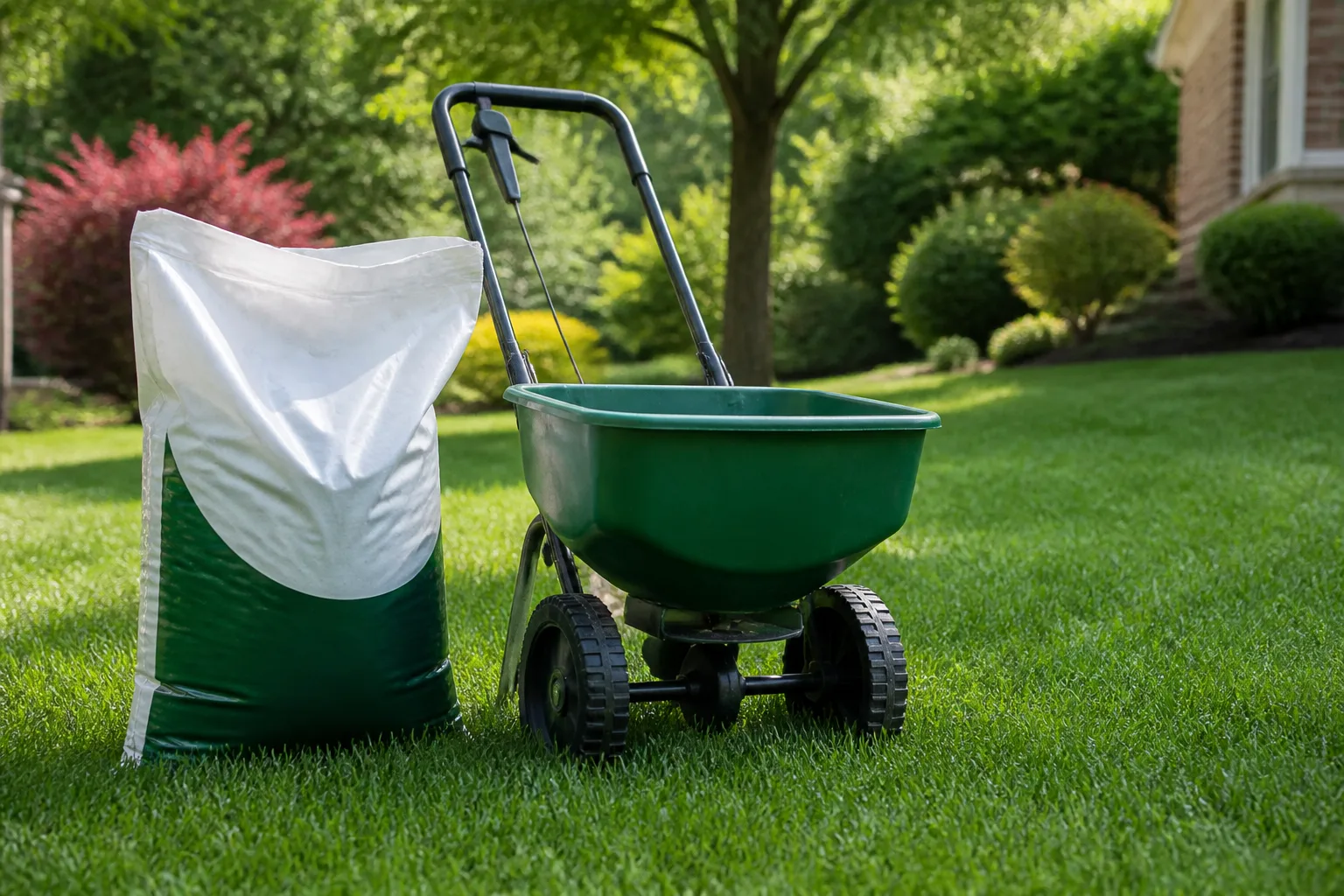
Follow soil tests and region-specific grass timing
Cool-season grass may benefit from a spring feeding in some regional programs, but it usually does not need a heavy surge of nitrogen just because green blades are visible. For warm-season grass, wait until it is actively growing after green-up; a calendar date that works in southern Florida may be far too early in a cooler region. LawnLove’s overseeding and seasonal guidance also differentiates feeding by grass type and cautions against fertilizing dormant turf; treat its temperature suggestions as a practical reference, not a substitute for local extension advice or the label.
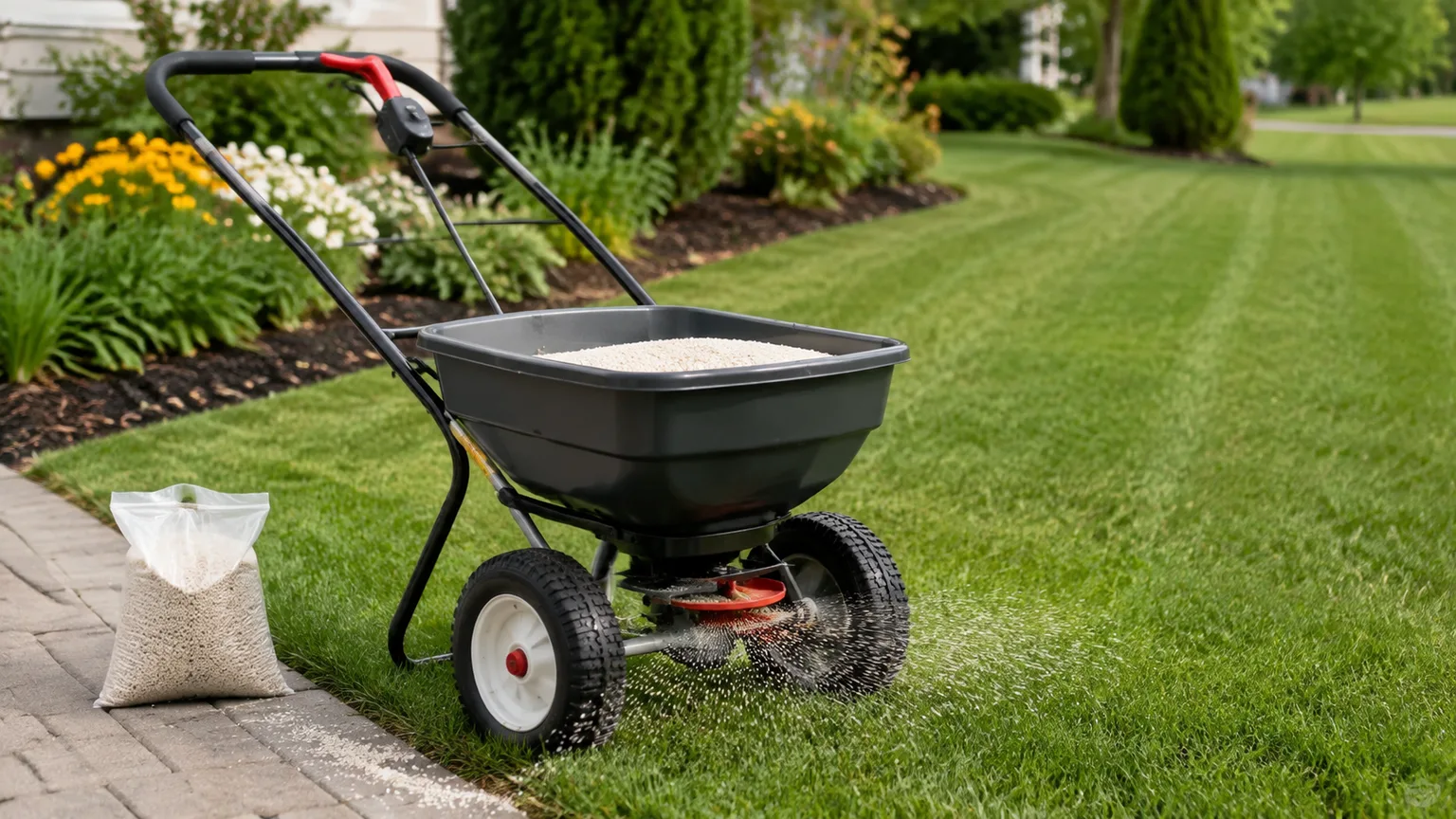
If the lawn is growing well and the soil test does not show a need, you may not need to feed this spring. The RHS notes that many lawns grow adequately without fertilizer and recommends using only what is needed. If you do apply a product, measure the lawn area, calibrate the spreader, keep granules off pavement and drains, and do not exceed the label rate. Keep people and pets off treated areas for the period specified on the label.
6. Give the first mow a high, clean cut
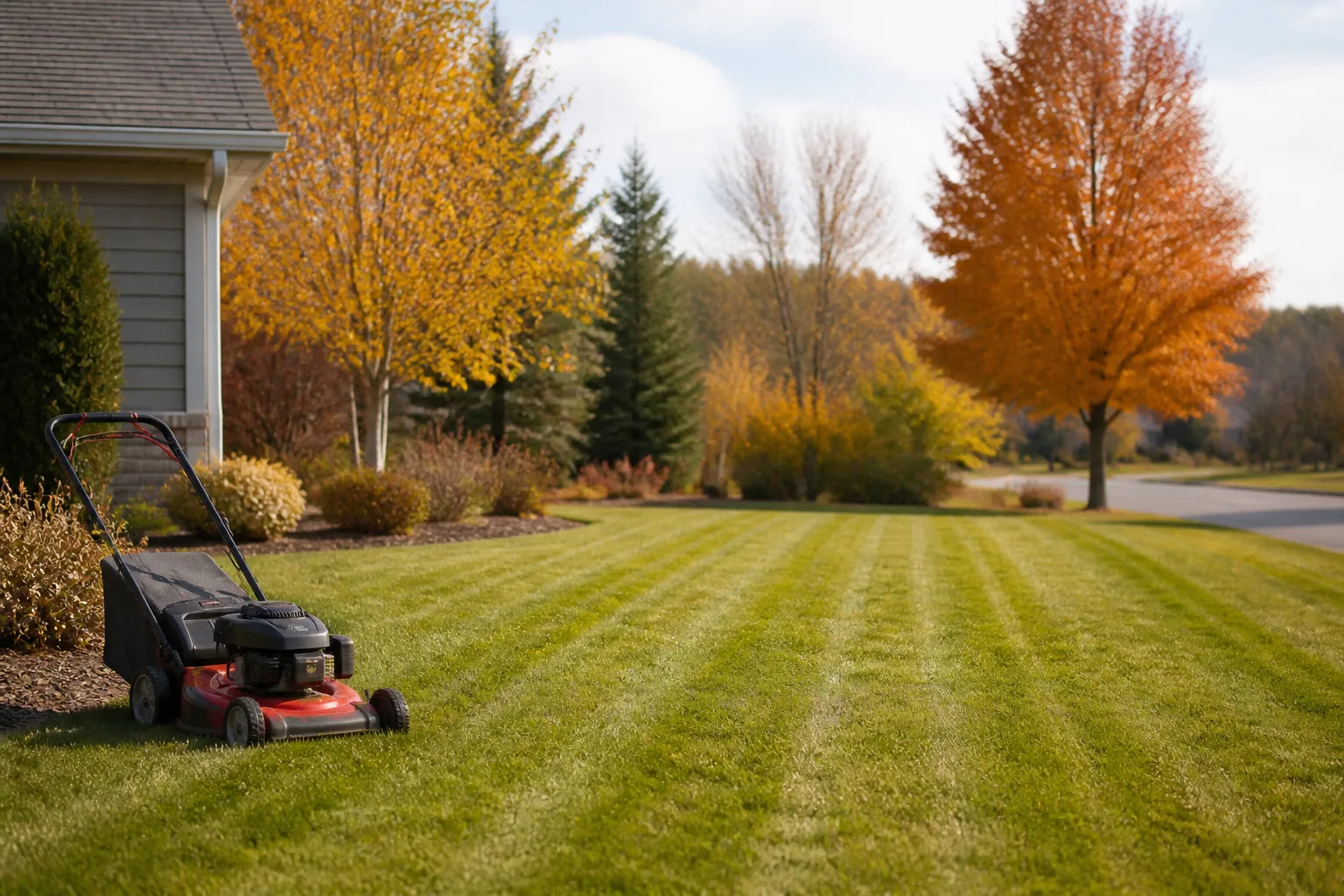
Wait until grass is actively growing and the soil is firm enough to support the mower without leaving tracks. Check that the blade is sharp, clear away sticks and stones, and set the deck high for the first pass. A high cut leaves more leaf surface for recovery and reduces the risk of scalping uneven ground that may have heaved during winter.
Use the one-third rule: remove no more than about one-third of the grass blade in a single mowing. If the lawn has grown too tall, make a gradual reduction over multiple cuts instead of dropping the deck to the summer height at once. The RHS spring advice recommends making the first cut light, and its mowing guidance likewise says to use the highest setting for the first spring pass or long grass. BBC Gardeners’ World Magazine also recommends a high first cut to reduce the risk of scalping.
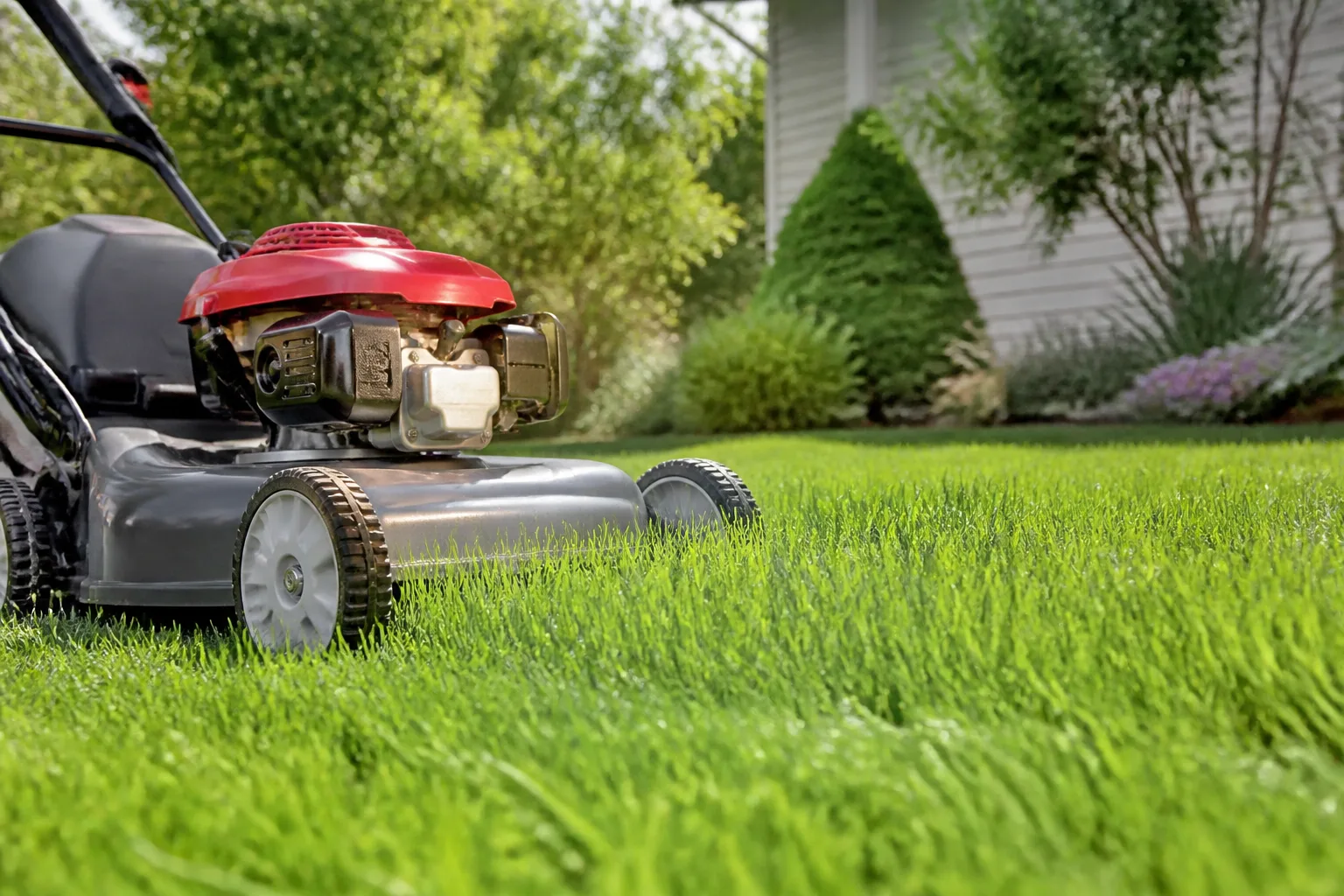
Adjust for height, blade, and wet conditions
A dull blade tears leaf tips and leaves a ragged tan cast that can look like disease. Sharpen or replace the blade according to the mower manufacturer’s instructions, and avoid mowing when leaves are wet or the soil is soft. Do not scalp the whole yard to remove brown blades; warm-season turf may have species-specific spring practices, but those should come from a local extension recommendation for that grass.
Leave fine, scattered clippings where they fall if they do not form heavy mats. Collect or redistribute clumps that cover growing grass, especially after an overgrown first cut. If the lawn contains flowering bulbs or you are managing a wildlife-friendly patch, delay mowing that area until the foliage has finished its job or until the mowing schedule you have chosen allows it; a uniform cut is not the only way to maintain a useful yard.
7. Repair thin spots without undoing weed control
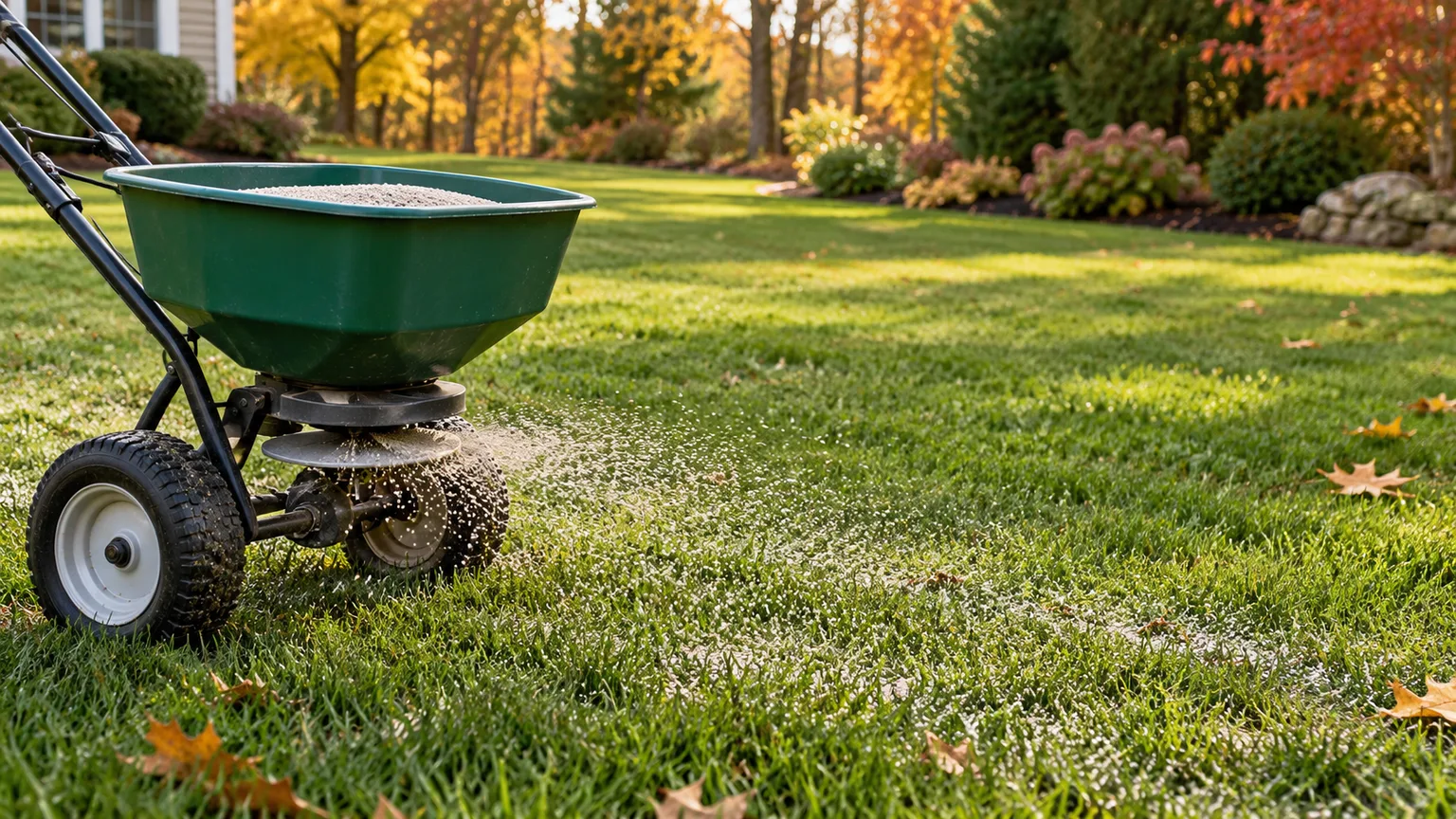
For a small bare area, first correct the cause, then remove loose dead material, lightly loosen the soil surface, and choose seed that matches your existing grass, sun exposure, and use. Spread it so it contacts soil rather than sitting on top of a thick thatch layer, and cover only lightly if needed. The RHS lawn-repair guide emphasizes matching the seed to conditions such as shade or heavy wear and notes that newly sown grass takes time to establish.
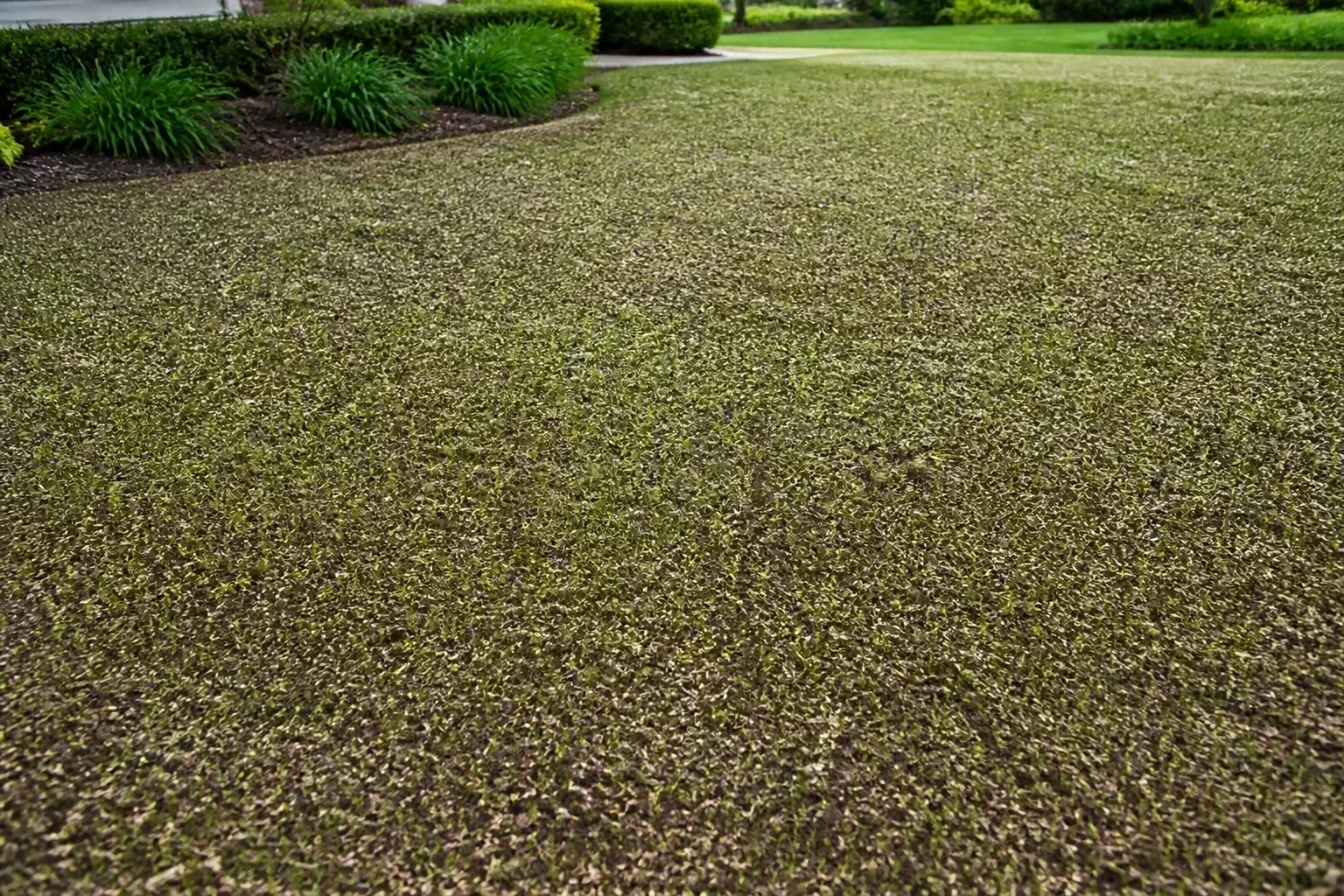
Spring can be a reasonable repair window when conditions are mild and the seed can stay moist, but it is a compromise for many cool-season lawns. Penn State Extension says late summer to early fall is generally the more dependable time to establish cool-season turf; the warm soil and lower summer heat stress give seedlings a better runway. A patch that is small enough to tolerate for a few months may be better left for fall than rushed into a poor spring window.
Match seed to grass and season
Cool-season seed can germinate in spring, but new seedlings must compete with weeds and then face summer heat. Warm-season seed usually needs warmer soil and should be sown during that grass’s active growth period. If you do not know the lawn’s species, identify it before buying seed: a coarse, pale patch in an otherwise fine lawn can be more noticeable than the original bare spot.
Avoid applying a pre-emergent weed product over an area you intend to seed unless the exact label says it is compatible with the seed and timing you plan to use. Many pre-emergent products work by preventing seeds from establishing, which can include desirable grass seed. Penn State’s seasonal guidance times pre-emergent treatment before weed germination and warns that timing varies by region; when seeding and weed prevention compete, choose the priority for that area and follow your local extension calendar and product label.
Keep new seed moist without overwatering established turf
New seed needs more frequent attention than mature grass. Keep the seedbed evenly moist through germination, using light applications that do not wash seed into a low spot. Once seedlings are established, gradually reduce watering frequency while wetting the root zone more deeply. By contrast, an established lawn usually should not receive extra irrigation in a rainy spring just because the calendar says it is time to water.
Use a rain gauge or several straight-sided containers to learn what your sprinkler actually delivers. Adjust for rainfall, soil texture, slope, shade, local restrictions, and the needs of new seed. If water runs off before soaking in, pause and resume with shorter cycles rather than extending a single session until puddles form.
A low-risk order for the first spring weekend
A spring reset does not have to mean a full renovation. On the first dry, workable weekend, take photos and identify the grass if possible; remove branches and leaves; gently lift only matted turf; and flag patches that need another week or a closer inspection. If the ground is still soft or the grass has not resumed growth, finish with observation rather than equipment.
When growth is underway, mow high with a sharp blade, then decide whether the lawn needs a soil test, a measured fertilizer application, or a small seed repair. Do not schedule all three automatically. If you plan to seed, check the pre-emergent conflict first; if you plan to feed, check the grass type, soil result, weather forecast, and label; if the same patch returns each year, solve the underlying site condition before replacing the grass.
For a large lawn with broad winter kill, persistent disease-like spots, repeated standing water, or a repair area that grows each week, ask a county cooperative extension office or turf professional to inspect a sample. A diagnosis is less expensive than repeating treatments that do not match the problem. Keep a simple note of what you did and when; next spring, that record will help distinguish a recurring site issue from a one-season setback.
Conclusion
A healthy spring lawn comes from matching the work to the grass and the conditions, not from treating brown color as an emergency. Wait for firm soil and active growth, clear debris gently, diagnose persistent bare areas, then mow, feed, water, or seed only where the evidence points.
The best result may be a lawn that greens up on its own, a small patch repaired in the right season, or a decision to fix drainage or traffic before buying seed. If your lawn is still brown after the local green-up period or symptoms are spreading, get the cause identified before treating it. That patience protects the turf you already have and makes any spring work more likely to last.