15 Flowers That Look Like Animals
Explore 15 animal-looking flowers, from bee orchids and bird of paradise to the black bat flower, plus practical advice for choosing one to grow.
Some flowers resemble animals so closely that the first glance feels like a trick. A bee appears to be perched on a petal, a duck seems frozen in flight, and a white bird looks as if it has landed inside an orchid. Other examples are less scientific but just as delightful: our brains are excellent at finding faces, wings, eyes, and familiar silhouettes in complex shapes.
That distinction matters if you want to grow one. A handful of orchids use scent, color, or floral structure to manipulate pollinators. Others merely happen to look like a creature to us. This list includes both, along with a succulent whose leaves—not flowers—look like dolphins and one fungus that earns its place because it resembles an octopus but is not a flower at all.
What “animal-looking” really means
There are three different stories behind these plants. Floral mimicry is an evolved resemblance that can change a pollinator’s behavior; the bee orchid is the clearest example here. Pollinator mechanics can also create an animal-like outline without the plant trying to imitate that animal—bird of paradise flowers, for instance, are shaped so visiting birds can act as pollen carriers. The third category is pareidolia, the human tendency to see a familiar form in an ambiguous object; the monkey orchid is charming because our eyes do the imaginative work.
The resemblance is not a promise of easy cultivation. Many of the most convincing orchids are terrestrial species with specialized underground organs, narrow seasonal cycles, or relationships with soil fungi. Before buying, look for the scientific name, a nursery’s propagation history, and care information for your climate. A dramatic photograph is not evidence that a plant belongs on a sunny windowsill.
15 flowers and plant forms to know
The entries below are organized by what the plant actually offers: a flower, a foliage form, or a fungus-like fruiting body. Each description includes a reality check so you can enjoy the oddity without confusing rarity with suitability.
Bird of Paradise
The orange-and-blue bloom of bird of paradise (Strelitzia reginae) is one of the most growable entries on this list. Its stiff, beak-like spathe sits at a right angle to the stem, while orange sepals and blue petals emerge like a crested bird’s head. The resemblance is reinforced by the flower’s pollination system: birds perch on the sturdy structure to reach nectar, and the petals place pollen on their feet. The Missouri Botanical Garden lists it as a warm-climate perennial for zones 10–12, with full sun to part shade.
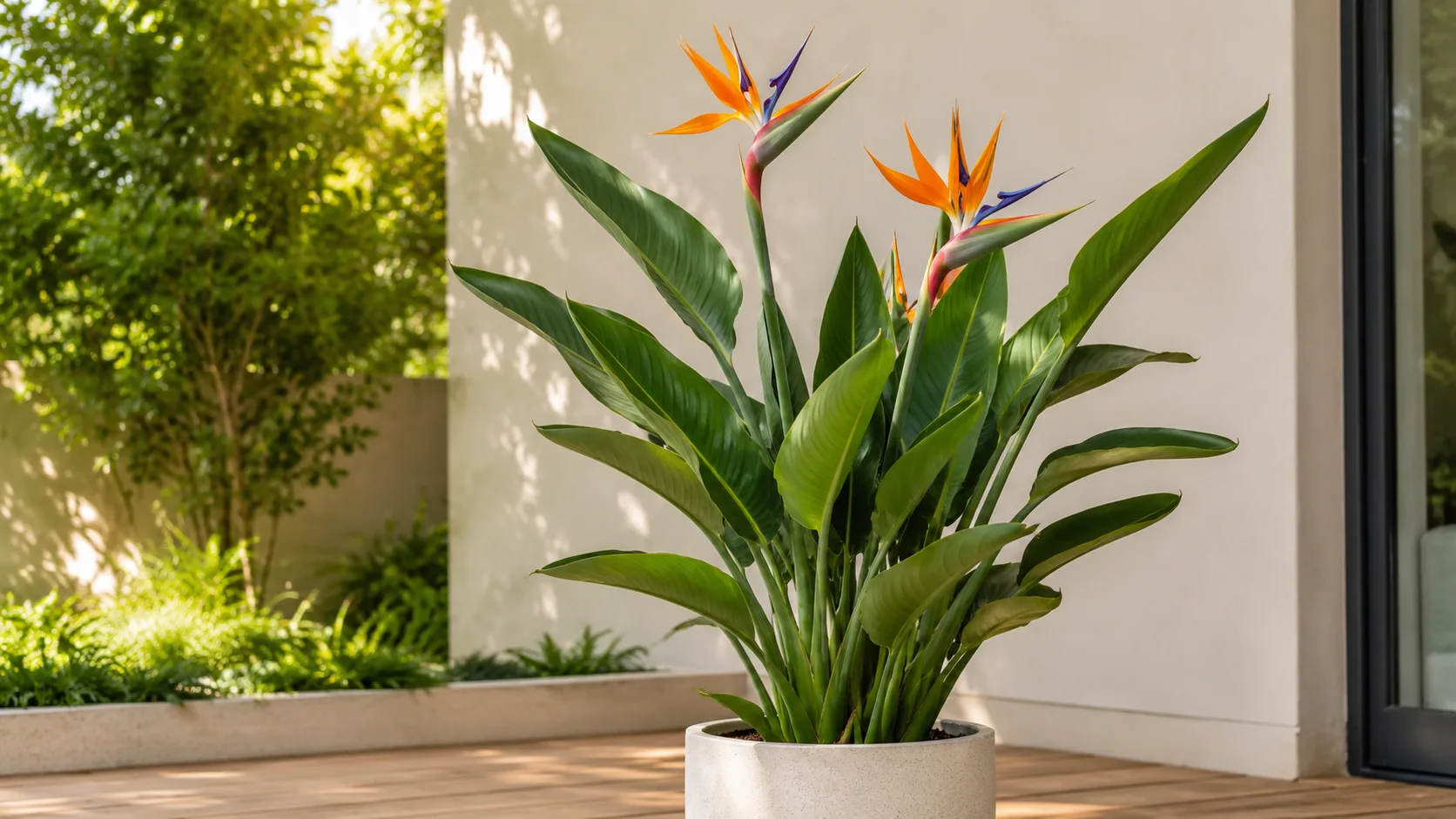
As a houseplant, it needs more light and floor space than its nursery pot suggests. Give it a bright window, a fast-draining mix, steady water during active growth, and protection from cold. BBC Gardeners’ World notes that it can move outdoors for summer in suitable climates but should return indoors before temperatures fall; it may also take several years to flower. This is the best choice here if you want an animal-like bloom without committing to a rare orchid. (Missouri Botanical Garden; BBC Gardeners’ World)
Bee Orchid
The bee orchid (Ophrys apifera) looks as though a small bee has settled on a pink-and-white flower. The dark, velvety labellum supplies the body-like shape, while the side lobes and markings suggest eyes, wings, and antennae. Kew describes the flower as an insect mimic, but adds an important correction to the usual simplified story: unlike some Mediterranean Ophrys species that sexually deceive male bees or wasps, O. apifera is generally self-pollinated.
That makes this a good lesson in why appearance alone is not enough. Kew records the species across Europe, the Mediterranean, and into northern Iran, where it grows as a tuberous geophyte in habitats ranging from calcareous grassland to open woodland and disturbed ground. It is not a typical tropical houseplant. If you encounter one in a meadow, protect the surrounding soil and do not dig it up; if you want to cultivate an orchid with this look, buy a legally propagated plant from a specialist rather than collecting wild tubers. (Kew Plants of the World Online)
Fly Orchid
The fly orchid (Ophrys insectifera) has a narrow, dark flower whose outline reads like a fly or small wasp at close range. Its appeal is subtler than the broad, cartoon-like face of the monkey orchid: the glossy brown-black lip, compact side petals, and pale markings make the flower look like an insect resting on a stem. As with other Ophrys, the visual resemblance sits alongside scent and structure that can influence insect behavior, but the exact pollination story should not be reduced to “it looks like a fly, so flies pollinate it.”
This is a European terrestrial orchid for gardeners who enjoy observation more than instant impact. It wants the kind of lean, well-drained, often alkaline ground associated with many wild orchid habitats and a seasonal rhythm that does not resemble indoor orchid care. Choose a specialist-grown specimen, research local legality, and treat the plant as a conservation subject rather than a disposable novelty. For most people, seeing one in a protected meadow or botanical collection is more realistic than growing it in a pot.
Flying Duck Orchid
The flying duck orchid (Caleana major) is one of the most convincing animal-shaped flowers: a reddish-brown bloom hangs from a slender stem with a hinged labellum that resembles a duck in flight. The shape is not merely a visual joke. The Australian Native Plants Society records that male thynnid wasps are attracted by pheromones produced by the flower, which imitate signals from female wasps.
The plant’s care explains why it is a poor impulse purchase. It is a small Australian terrestrial orchid that grows from an underground tuber, stays active through the cooler growing season, and becomes dormant after the foliage dies back. During growth it needs moisture without drying, but once dormant the pot is allowed to dry. ANPSA also warns that it has proved difficult to maintain in cultivation for an extended period; South Australia’s flora database lists it as vulnerable in that state. Admire the species, buy only from a reputable propagated source, and never remove a wild plant. (Australian Native Plants Society; Flora SA)
Dove Orchid
The dove orchid (Peristeria elata), also called the holy ghost orchid, hides its animal shape inside the flower. Look into the center of a waxy white bloom and the column can resemble a small dove with wings tucked around its body. The illusion is strongest when the flower is viewed straight on, which is why photographs often look more astonishing than a quick side view in a greenhouse.
This is a warm-growing terrestrial or near-ground orchid from Central America, including Panama, Venezuela, and Ecuador. A specialist grower, Carter and Holmes Orchids, cautions that it is not a beginner windowsill plant: it wants warm conditions, moving air, bright-but-not-scorching light as it matures, and roots that do not stay dry for long during growth. The practical takeaway is simple: a rare orchid can be visually accessible but horticulturally demanding. If a seller offers “easy dove orchid seeds” with no provenance, walk away. (Hokkaido University)
Monkey Orchid
The monkey orchid (Dracula simia) is the classic example of pareidolia. Its flower has a pale face-like center with darker markings that can look uncannily like a small monkey, especially when the bloom is photographed head-on. The name and appearance are memorable, but there is no need to claim that the orchid evolved to imitate a monkey; monkeys are not the pollination target.
The genus Dracula points to the plant’s cool, moist, cloud-forest character rather than a sunny indoor room. These orchids generally prefer filtered light, high humidity, excellent airflow, and a root zone that stays evenly moist without becoming stagnant. That combination is possible in a controlled orchid setup but frustrating in a dry, heated home. If you want the face-like flower, prioritize a specialist’s culture notes and an established plant over an inexpensive mystery seed packet. The novelty is real; the “easy houseplant” label usually is not.
White Egret Orchid
The white egret orchid (Pecteilis radiata, formerly Habenaria radiata) looks like a tiny white bird with wings spread. Fringed lateral petals make the silhouette read as feathers, while the central flower parts form the body and neck. Orchid Digest describes it as a cold-growing terrestrial from Japan, Korea, and western China that flowers in summer and is associated with forest glades at elevation.
That habitat is the useful part of the identification. This is not a drought-tolerant orchid and not a plant to bury in ordinary potting soil and forget. It needs a seasonal cycle, moisture during growth, dormancy management, and a medium that drains while still supporting the fine roots. In a warm climate, a container in a cool, bright, sheltered spot may be possible, but a boggy or refrigerated-style setup is closer to its preferences than a dry apartment. Buy dormant tubers or plants only from legal, specialist sources. (Orchid Digest)
Black Bat Flower
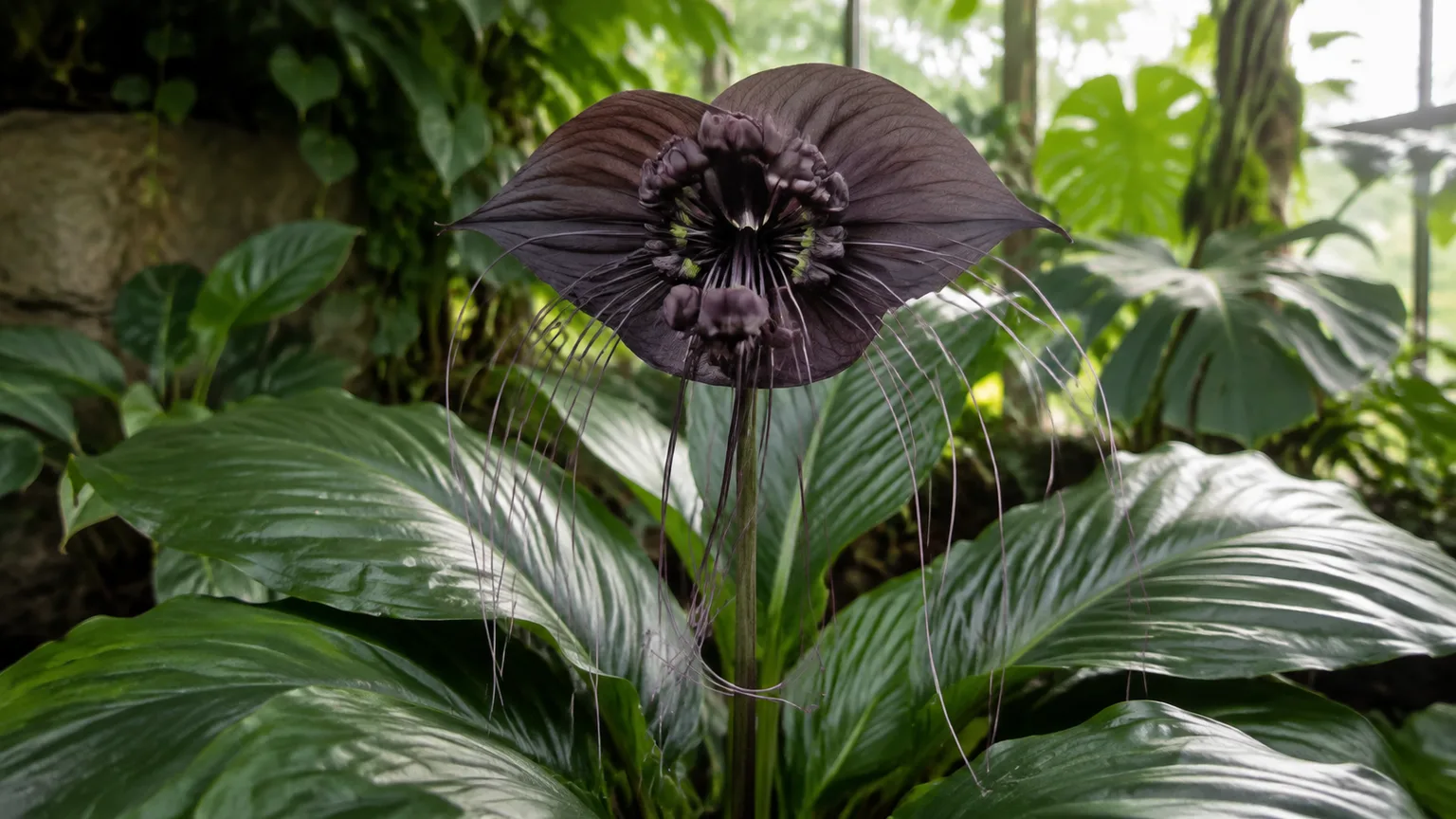
The black bat flower (Tacca chantrieri) earns its common name honestly. Its dark purple-black bracts spread like wings, the central flower cluster suggests a face, and long filamentous bracteoles trail like whiskers. Fairchild Botanic Garden describes the flowers as superficially bat-like and notes that they can become strikingly large.
This is one of the few plants here that can be grown as a tropical container specimen, but “possible” is not the same as “low maintenance.” It wants warmth, partial shade, high humidity, and soil that remains consistently moist without turning airless. Protect it when temperatures approach the low 40s Fahrenheit, and give it gentle air movement to reduce the risk of a constantly wet crown. A greenhouse, warm conservatory, or naturally humid tropical climate is a much better match than a dry, bright windowsill. (Fairchild Botanic Garden)
Cobra Lily
The cobra lily (Darlingtonia californica) is a carnivorous pitcher plant whose tubular leaves rise like a hooded snake. The inflated pitcher, forked appendages, and downward-facing opening create the cobra profile, while the plant’s real function is to trap insects. Gardening Know How describes the hood and wing-like leaves as the features that make it look both snake-like and otherworldly.
Its care is specialized enough to deserve a warning. Cobra lily is adapted to cool, wet habitats and moving, oxygenated water rather than the hot, stagnant conditions that many tropical carnivorous plants tolerate. Use mineral-poor water, a suitable acidic medium, bright light without baking the roots, and cool temperatures; do not treat it like a normal houseplant watered with hard tap water. A dedicated carnivorous-plant grower or botanical garden is a better source of instruction than a generic “easy pitcher plant” listing. (Gardening Know How)
Green Birdflower
Green birdflower (Crotalaria cunninghamii) produces dangling green blooms that look like small birds clinging to a branch. The beak-like point and drooping posture create a strong profile when several flowers hang together, making the plant especially effective viewed from a few feet away rather than as a single close-up.
Unlike the bee orchid or flying duck orchid, the evolutionary explanation is not settled simply by looking at it. The resemblance may be a visual coincidence, a by-product of floral structure, or a feature with an ecological benefit that has not been clearly demonstrated. Treat that uncertainty as a strength of the story: plant evolution is not a collection of tidy design briefs.
This Australian shrub needs warmth, sun, and room to develop, so it is best for frost-free gardens or a large container that can be protected in winter. In cool climates, the challenge is not the flower shape but maintaining enough light and heat for healthy growth. Buy from a nursery that can identify the species, and do not assume a packet labeled “green bird flower” is the same plant.
Guara
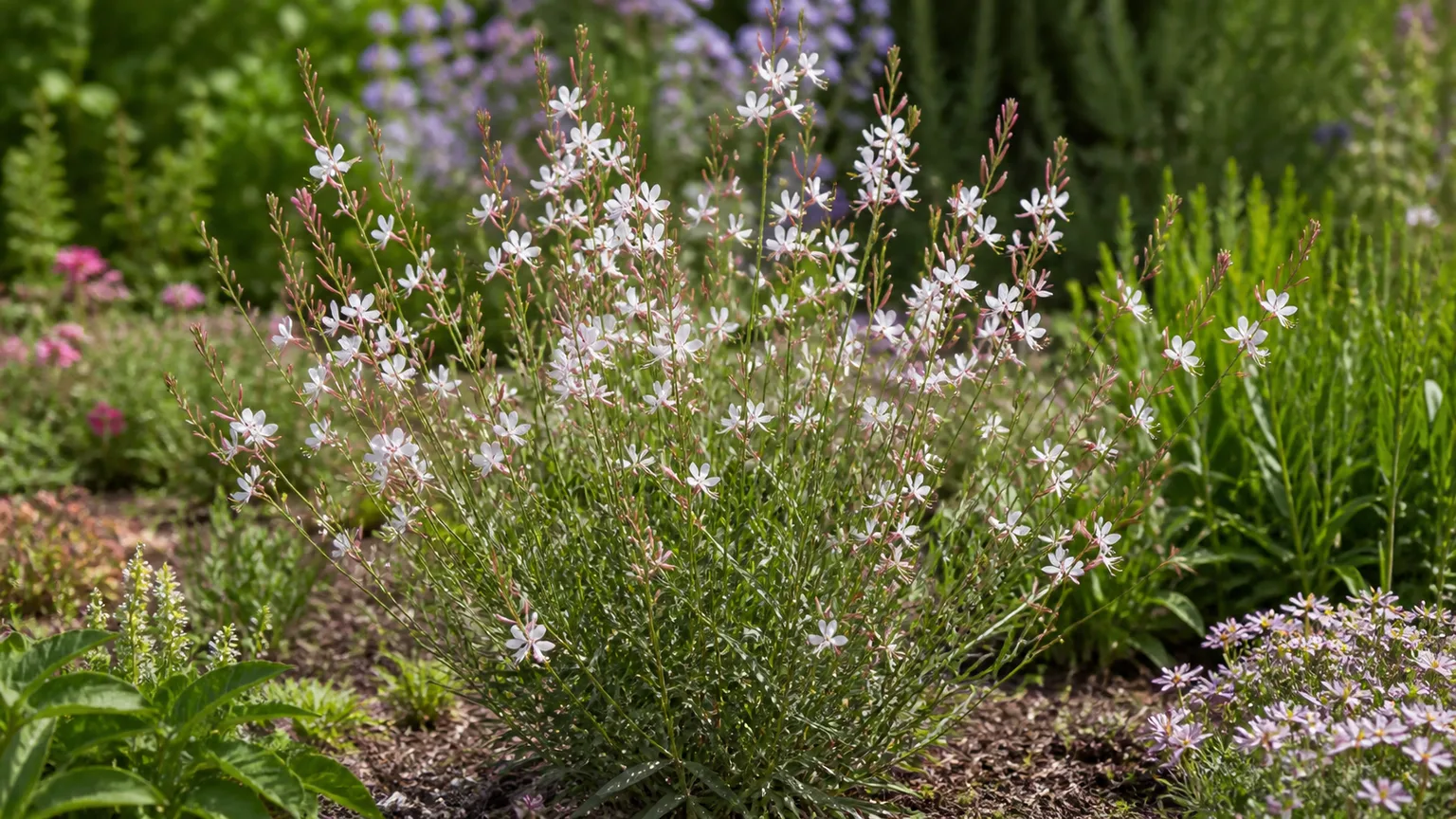
Guara, now commonly treated as Oenothera lindheimeri, is a much more approachable garden plant. Its airy stems carry four-petaled flowers on long, wiry stalks, and a mass of blooms can look like a swirl of small white or pink butterflies hovering over the border. The resemblance is an artistic reading rather than a claim that the plant is disguising itself as an insect.
Give it full sun, sharply draining soil, and enough room for the stems to move rather than crowding it into a rich, wet bed. It is a useful choice for gardeners who want the animal impression without a greenhouse: the plant brings movement, long bloom, and a light texture to a perennial border or container. The trade-off is that it can flop in fertile soil or after heavy rain, so a leaner site and discreet support usually produce a better display than constant feeding. An existing guara image in the LeafyPixels library shows the effect more honestly than a single isolated bloom. (Gardening Know How)
Parrot Flower
The parrot flower (Impatiens psittacina) has a dangling, hooded bloom in blue-violet, red, and yellow tones that can look like a tiny parrot or cockatoo in flight. Kew accepts the species and records its native range from northeastern Myanmar to northern Thailand, where it grows as a lithophytic annual in a seasonally dry tropical biome. That habitat note is more useful than the common name: it signals a rare, specialized plant rather than a standard bedding impatiens.
This is a plant to appreciate through a botanical garden or a properly documented collection, not a novelty seed listing. Availability is limited, cultivation is demanding, and the plant’s conservation picture is not casual—Kew’s current extinction-risk prediction marks it as threatened. Avoid wild-collected material and sellers who cannot explain propagation and legal provenance. The best ethical choice may be to enjoy the flower’s form without trying to own it. (Kew Plants of the World Online)
String of Dolphins
String of dolphins (Senecio peregrinus, also sold under newer Curio naming) breaks the rules in two ways: the animal resemblance is in the leaves, and the plant is a succulent rather than an animal-shaped flower. Each fleshy leaf curves like a leaping dolphin, so a trailing basket can look like a pod moving through waves.
That makes it one of the most realistic choices for a beginner, provided you remember that the “dolphins” are storage organs. Use a gritty, fast-draining mix, a pot with a drainage hole, and bright light; let the mix dry substantially before watering again. The common failure is loving the plant to death with frequent sips of water. If the leaves soften, darken, or drop from the vine, inspect the roots and watering pattern before adding humidity or fertilizer. (Gardening Know How)
Yulan Magnolia
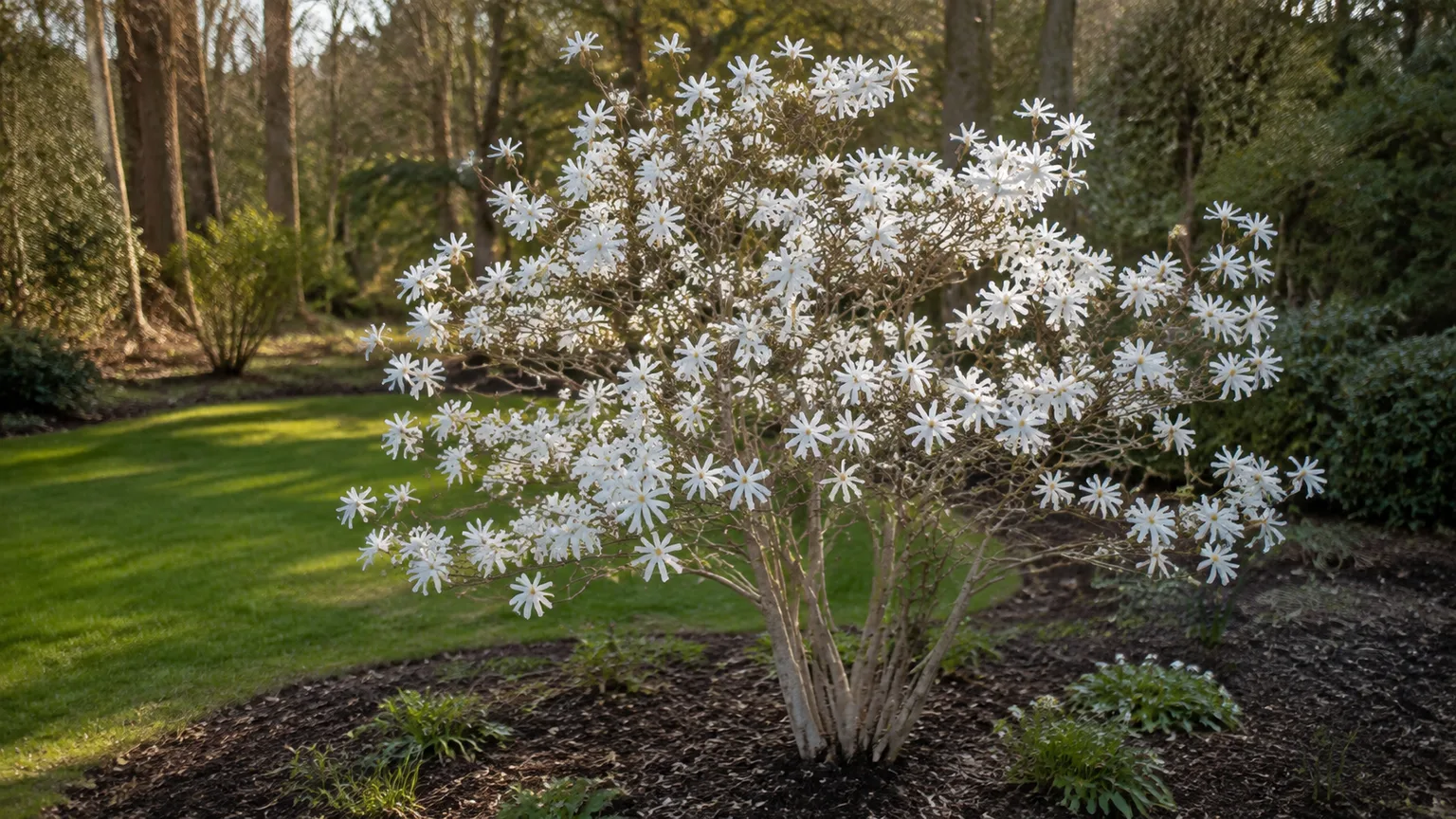
Yulan magnolia (Magnolia denudata) is not animal-shaped once fully open, but its fat, pale flower buds can resemble small birds perched along bare branches. That fleeting stage is the charm: the tree changes from a row of avian silhouettes to large, fragrant white flowers as the buds expand.
This is a deciduous tree, not a houseplant or a small novelty shrub. It needs space, sun to light shade depending on climate, consistent moisture while establishing, and protection from the kind of late frost that can blacken an early flush of buds. Choose it for the whole tree—form, fragrance, spring display—not only for the bird-like moment. A magnolia can live for decades, so site it where mature size and root-zone moisture will not become a later problem.
Octopus Stinkhorn
The octopus stinkhorn (Clathrus archeri) is the list’s deliberate imposter. It is a fungus, not a flowering plant, and its red arms emerge from an egg-like structure before spreading into an unmistakable octopus or starfish shape. First Nature records a strong odor reminiscent of rotting meat and explains that insects visit the spore-bearing gleba, helping distribute spores.
You do not plant it as a flower. It may appear where suitable organic matter or mulch supports fungal growth, and the most sensible response is to observe it, keep curious children and pets from handling unknown fungi, and avoid tasting it. Its inclusion makes the larger point clear: a “flower that looks like an animal” search can return anything from a true orchid to foliage, fruiting bodies, and visual coincidences. Name the organism before you decide what to do with it. (First Nature)
How to choose one you can actually grow
Start with your climate and your available winter protection, not with the most astonishing photograph. For a sunny garden or large container in a frost-free climate, bird of paradise, guara, and—where available—green birdflower are the practical end of this list. For a bright indoor collection, bird of paradise or string of dolphins is more realistic than a monkey orchid, dove orchid, or flying duck orchid.
Use this quick filter:
- Want the easiest visual payoff? Choose bird of paradise for an actual animal-like flower, guara for a butterfly-like drift, or string of dolphins for animal-shaped foliage.
- Have a warm, humid greenhouse? Consider black bat flower, but plan for moisture control, airflow, and winter heat.
- Keep terrestrial orchids successfully? Then research bee, fly, flying duck, dove, or white egret orchids—but match the species’ seasonal cycle instead of applying supermarket-phalaenopsis care.
- Have a cool carnivorous setup? Cobra lily is a specialist project, not a decorative windowsill plant.
- See a rare species for sale? Ask whether it was nursery-propagated, request the scientific name, and avoid wild-collected plants or vague seed listings.
The phrase “looks like an animal” describes the invitation, not the care plan. Read the scientific name, check the plant’s native habitat, and decide whether you can reproduce the basics—light, temperature, moisture, dormancy, space, and airflow—before buying. That small pause protects your budget, the plant, and wild populations that cannot be replaced by a novelty purchase.
Conclusion
The best animal-looking flowers are not all doing the same thing. Bee and fly orchids connect appearance with pollinator biology; bird of paradise combines a bird-like outline with a pollination mechanism; the monkey orchid mostly rewards the human imagination; string of dolphins turns leaves into a moving animal parade; and the octopus stinkhorn reminds us that not every strange form belongs to the flower kingdom.
For a garden or home, choose the plant whose real needs fit your conditions. A well-grown bird of paradise, guara, or string of dolphins will give you more joy than a rare orchid that slowly declines in the wrong room. Let the resemblance spark curiosity, then let habitat, provenance, and practical care decide what comes home.