Forget-Me-Not Plant Care and Growing Guide
Learn forget-me-not plant care, seed timing, watering, shade, container tips, bloom care, spread control, problems, and symbolism.
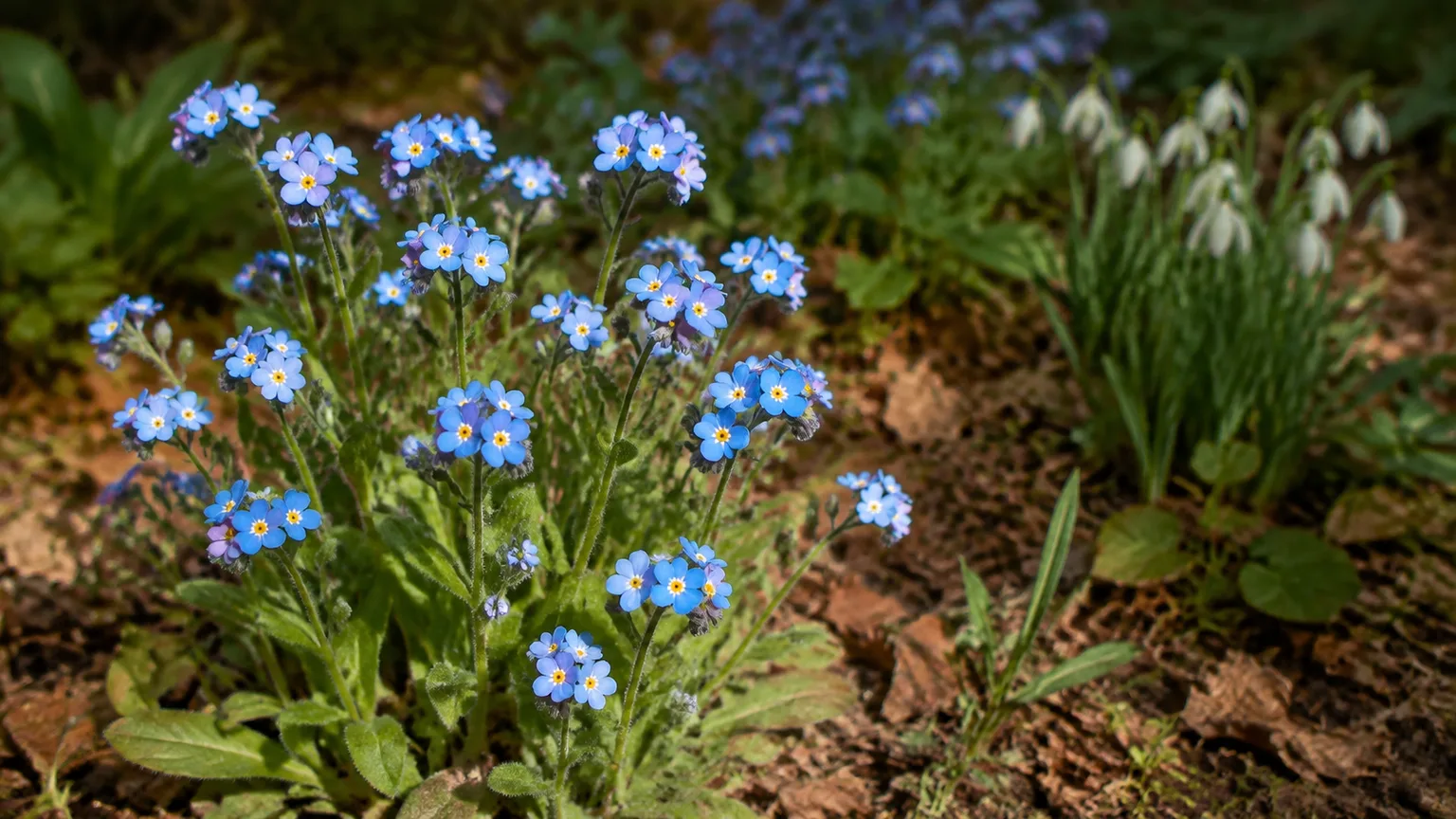
Forget-me-not (Myosotis sylvatica) earns its place in a garden by doing several small jobs well: it brightens spring shade, fills gaps around bulbs and perennials, and supplies nectar when many beds are only just waking up. The plant is compact, easy to raise from seed, and charmingly informal. It is also a committed self-seeder, so the best care plan includes a boundary decision before the first flowers fade.
The name “forget-me-not” covers several Myosotis species. This guide focuses on woodland forget-me-not, Myosotis sylvatica, a tufted plant usually grown as a biennial or short-lived perennial. NC State Extension’s plant profile describes it as a spring-flowering plant that can be grown as an annual from seed started indoors or as a biennial from midsummer sowing outdoors. That distinction explains why one gardener sees a single season of color while another sees a returning patch.
Forget-Me-Not Care at a Glance
Give woodland forget-me-not cool light, consistent moisture, and drainage that prevents the crown from remaining submerged. In a cool climate, it can take full sun if the soil does not dry quickly; in a hot-summer climate, afternoon shade is the safer choice. A rich, loamy soil is helpful, but steady moisture matters more than chasing a perfect pH.
Expect plants about 5 to 12 inches tall, with a similar spread, and clusters of small five-lobed blue flowers with pale yellow or white centers. The main bloom is usually in spring, with occasional flowers later when weather and moisture are favorable. The Missouri Botanical Garden lists April to May as the normal bloom period for M. sylvatica, while NC State notes that sporadic midsummer flowers can occur.
| Care point | Practical target |
|---|---|
| Light | Full sun in cool regions; part shade or dappled shade where summers are hot |
| Soil | Organically rich, moist, and well drained; loam or clay-loam can work if moisture is steady |
| Water | Water when the surface begins to dry; do not let new plants dry out |
| Bloom | Primarily spring, often April to May in temperate climates |
| Habit | Annual, biennial, or short-lived perennial depending on timing and climate |
| Spread | Frequent self-seeding; local behavior and status vary |
Decide Which Forget-Me-Not You Have
Identification matters because not every plant sold as a forget-me-not has the same water tolerance, size, or life cycle. Woodland forget-me-not is Myosotis sylvatica. Water forget-me-not is M. scorpioides, a different species associated with wet habitats, while field and broadleaf forget-me-nots have their own growth patterns. The common name is not precise enough to set a watering schedule by itself.
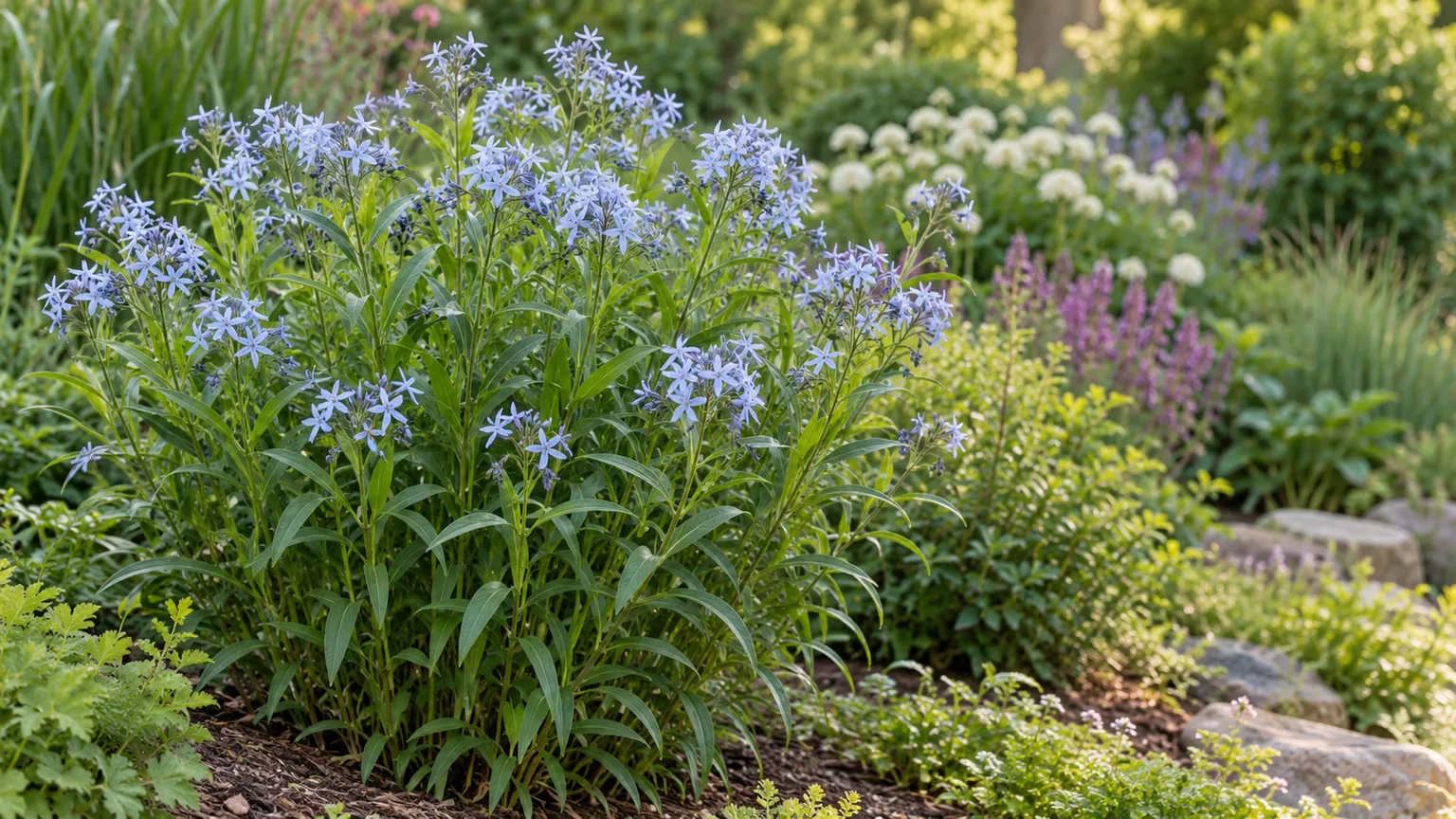
Look for a low tuft of softly hairy, green leaves and branched stems carrying clusters of small blue flowers. The flowers typically have five rounded lobes and a contrasting pale center. Cultivars can be compact, deeper blue, pink, or white, but their color does not change the main care rule: protect them from intense heat and drought, while still avoiding a stagnant container or perpetually flooded crown.
The plant’s life cycle is flexible rather than contradictory. A midsummer sowing usually makes a leafy plant that flowers the following spring, which is why gardeners often call it biennial. Seed started indoors 8 to 10 weeks before the last spring frost can produce flowers the same year, so the same species can function as an annual bedding plant under a longer, carefully managed schedule. NC State’s profile documents both approaches and notes that plants can persist for years by reseeding.
What It Looks Like Through the Seasons
After germination, seedlings make a low rosette or tuft of foliage. The first season is mostly about roots and leaves when the plant is grown on the biennial schedule. Do not judge that leafy stage as failure; the plant is building the structure that carries next spring’s flower stems.
As temperatures moderate, the foliage may remain green through winter in mild areas or become less noticeable in colder ones. The following spring, slender stems rise above the leaves and open in branching clusters. Blue is the classic color, but white and pink cultivars are available, and the small yellow or white eye gives each flower its recognizable point of contrast.
Flowering is a short, bright event rather than a summer-long display. After the main flush, plants often look tired or begin making seed. This is the moment to choose between naturalization and control: leave some fading clusters if you want volunteers, or remove them before mature seed drops if the bed is small.
Give It Cool, Bright Light
“Full sun or shade” is too broad to be useful without a climate qualifier. In northern or cool-summer regions, forget-me-not can grow in full sun or partial shade, especially when the soil stays evenly moist. In hot regions, morning sun with afternoon shade or bright dappled light is more reliable because intense afternoon light increases leaf stress and watering demand.
Watch the site, not just the label. Deciduous-tree shade may be sunny enough for spring bloom before the canopy closes, then become cooler and dimmer in summer. A north-facing bed can be shaded but unexpectedly dry if tree roots or a roof overhang divert rain. The ideal location has light sufficient for sturdy growth, protection from reflected heat, and soil that does not swing from saturated to bone dry.
If stems stretch, flop, and produce sparse flowers, light may be too low or the plants may be crowded. Move or thin them after flowering rather than adding fertilizer to compensate. More nitrogen can make soft foliage without fixing a light problem, and crowded foliage holds humidity around the leaves.
Build the Right Moisture Balance
Forget-me-not is a moisture-loving plant, but “moist” does not mean that every root should sit in water. A shallow wet pocket can be tolerated, especially outdoors in organic soil, yet a pot without drainage or a compacted bed can keep the crown wet long enough to invite decline. The useful target is a root zone that feels cool and damp below the surface while excess water can still move away.
Improve a dry bed by adding organic matter and watering deeply during establishment. Improve a heavy bed by loosening compaction and choosing a slightly raised or better-drained position rather than creating a swamp. If rain remains on the surface for hours after ordinary weather, solve drainage before planting; frequent watering cannot correct a site that has nowhere for water to go.
The Missouri Botanical Garden profile for Myosotis sylvatica recommends organically rich, consistently moist, well-drained soil and notes that afternoon shade helps in hot-summer climates. That combination is more informative than any single hardiness-zone number because two gardens in the same zone can have very different heat, soil, and exposure.
Improve Soil Without Making It Soggy
Start by clearing perennial weeds and loosening the planting area. A thin layer of finished compost worked into the surface can improve a poor soil, but adding a large amount of moisture-holding material to a low, slow-draining bed may make the problem worse. The goal is a crumbly surface that holds enough water for the plant without sealing around its roots.
Forget-me-not tolerates a range of soil reactions, so a pH correction is rarely the first intervention. Test soil if the bed is unusually poor, the planting is large, or you are also growing edible crops nearby. Otherwise, spend your effort on structure, organic matter where needed, and a watering plan that matches the site.
Do not bury the crown under a heavy blanket of mulch. A thin, loose layer can moderate soil temperature and reduce evaporation, but mulch piled against low foliage keeps leaves damp and makes volunteers harder to see. Leave a little air around the plant and keep the seedling zone visible during the first season.
Watering: Keep the Root Zone Even
Check the soil with a finger or small trowel instead of watering by calendar alone. If the surface is dry but the soil just below it is cool and damp, wait. If the top inch is drying and the plant is newly planted, water thoroughly at the base so the root zone is replenished, then allow excess water to drain.
Seedlings need more frequent attention than established plants because their roots occupy a shallow volume of soil. Use a gentle stream or fine rose while germinating so the seed does not wash into a low spot. Once seedlings are established, fewer deep waterings are generally more useful than repeated splashes that wet the surface but never moisten the root zone.
Sun, wind, soil type, and root competition change the schedule. A forget-me-not under a tree may need water even in a rainy week because tree roots intercept moisture. Conversely, a cool clay-loam bed may need little supplemental water after spring rain. Water in response to the soil and the plant, not to a fixed number of days.
Fertilizer and Mulch: Keep Both Light
A fertile bed amended with compost usually supplies enough nutrition for one short flowering cycle. If growth is pale and weak after you have ruled out poor light, drought, root damage, or crowding, apply a balanced fertilizer at the label rate during active growth. Avoid repeated high-nitrogen feeding: the result can be leafy, floppy plants that are more difficult to keep airy.
Container plants exhaust nutrients faster than bed-grown plants, especially when watered often. A diluted, balanced feed during the growing season can help, but stop treating fertilizer as a substitute for fresh mix or drainage. If the root ball is tight and water runs straight through, repotting into a slightly larger container is more useful than adding more food.
Plant Forget-Me-Not in the Garden
Choose a site where the spring display will be visible and where self-sown plants will either be welcome or easy to remove. The front of a woodland border, the edge of a path, a bulb bed, and a cool rock-garden pocket can all work when moisture and light are right. It also makes a soft filler around later-emerging perennials, but remember that its spring foliage may decline as the companion plants expand. The RHS plant profile likewise lists partial shade, moist soil, and spring-to-early-summer flowering as the core fit.
Set transplants at the same depth they were growing and water them in to settle the soil around the roots. Give plants enough space for airflow and expected spread rather than filling every gap immediately. A slightly open planting is easier to weed, less prone to mildew, and gives you room to lift volunteers before they become a solid mat.
If your region lists a particular Myosotis species as invasive or otherwise restricted, follow local guidance. Even where it is not formally regulated, abundant self-seeding can make it a poor choice for a tightly designed bed or a property next to natural habitat. A contained container or a routinely edged border may be a better compromise than sowing a large open patch.
Grow Forget-Me-Not From Seed
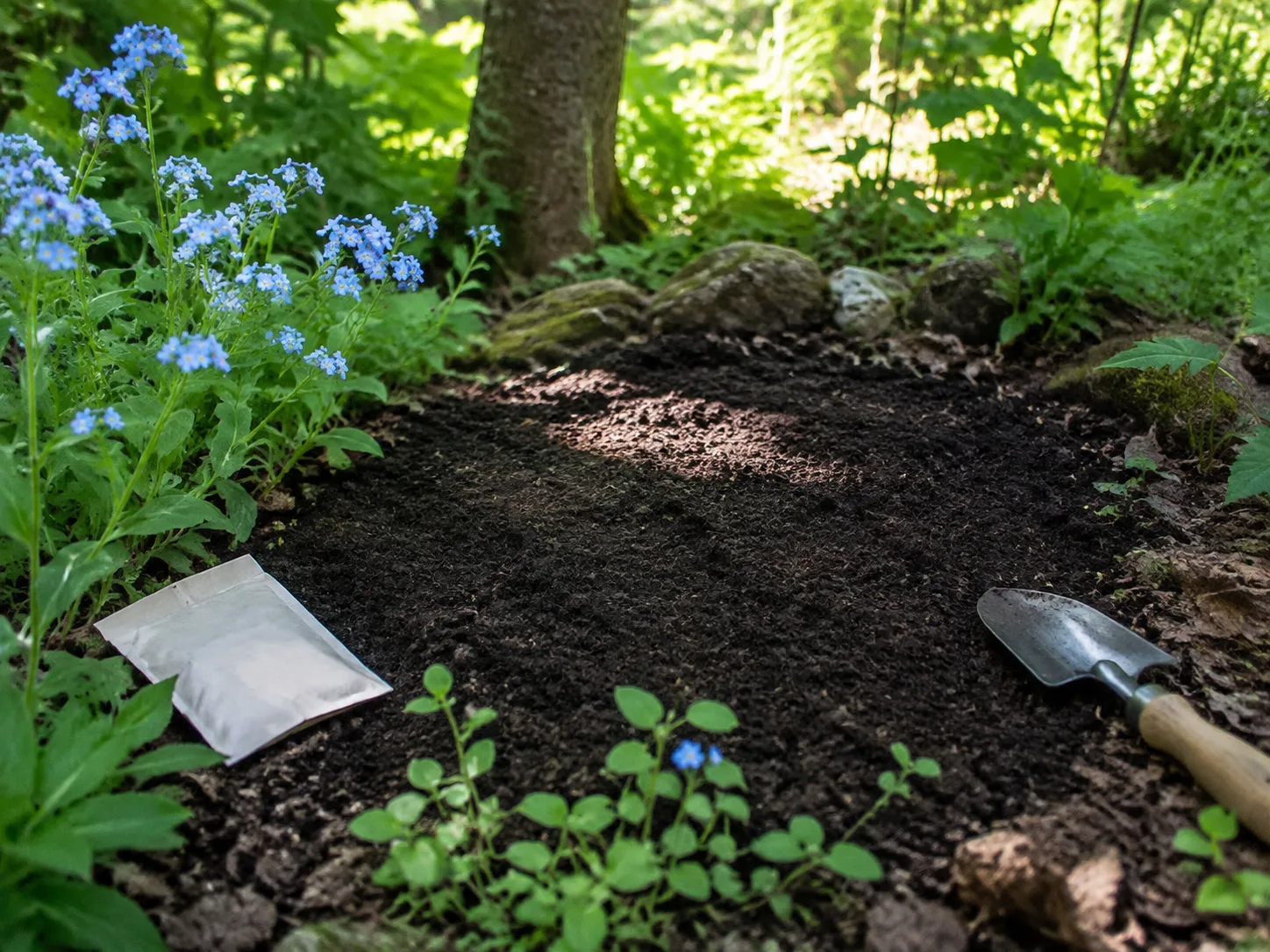
Seed is the most practical way to grow forget-me-not because the plants are inexpensive to raise and readily renew themselves. Use fresh seed from a reputable source, prepare a fine soil surface, and press the seed into contact with the soil rather than burying it deeply. Keep the surface evenly moist while germination is underway, then thin seedlings so they are not competing in a wet, crowded cluster. Epic Gardening’s forget-me-not overview is useful for the practical side of this schedule, especially the reminder that the plant’s short bloom window is part of its normal habit.
For outdoor sowing, choose a prepared bed in midsummer after the worst heat has eased or time the sowing for the conditions recommended on your seed packet. Scatter or space the seed thinly, cover only as directed, and mark the area so emerging seedlings are not mistaken for weeds. The plant usually spends the rest of the season establishing foliage, then flowers the following spring.
For same-year flowers, start seed indoors about 8 to 10 weeks before your last spring frost date. Provide bright light, steady moisture, and good airflow as seedlings grow. Harden plants gradually before setting them outdoors; moving soft indoor growth directly into bright sun, wind, or cold nights can cause setbacks even when the calendar seems correct.
Choose Seed Timing by Your Bloom Goal
Your goal determines the best schedule:
- Next spring’s flowers: sow outdoors in midsummer and keep the seedbed moist while plants establish.
- Flowers this growing season: start indoors 8 to 10 weeks before the last spring frost, then transplant after hardening off.
- A self-renewing patch: allow a limited number of flower clusters to mature, but only inside a bed whose edges you can inspect.
- A controlled display: sow in a tray or pot, deadhead promptly, and remove volunteer seedlings outside the intended planting area.
Do not assume that every packet’s “days to bloom” begins on the day of sowing. A biennial schedule includes a long vegetative season, while an indoor-started annual schedule gives the plant a head start. Weather can shift both germination and flowering, so use these as planning windows rather than guarantees.
Grow Forget-Me-Not in Containers
Containers make it easier to enjoy the flowers while limiting self-seeding. Choose a pot with drainage holes, use fresh potting mix, and keep it in bright indirect light or gentle morning sun. An 8- to 12-inch container can hold a small planting, but the pot should not be so large that the mix stays wet for days after watering.
Check containers more often than garden beds because they heat and dry from the sides. Water until a little drains from the bottom, then empty any saucer so the pot is not standing in water. In a hot location, move the container to afternoon shade; a plant that thrives in cool spring air can struggle when a dark pot bakes on a patio.
Forget-me-not can share a larger seasonal container with other shade-loving plants, but combine only plants with similar moisture needs. Avoid pairing it with a drought-loving succulent or a plant that demands a sharply dry mix. Once the flowering season ends, decide whether to remove the plant, collect seed, or let a few flowers mature in the container.
If roots circle the pot or water races through the root ball, repot one size larger with fresh mix. Do not jump to a huge container: excess wet mix around a small root ball is harder to manage than a slightly snug pot. Indoor plants also need bright, indirect light and airflow; a warm, dim room is a poor substitute for a cool outdoor spring bed.
Pruning, Deadheading, and Spread Control
Forget-me-not needs no shaping prune. Remove damaged foliage as needed with clean scissors, but save the main cleanup for immediately after flowering. Cutting fading flower stems near the base tidies the plant and prevents at least some seed from dispersing.
Deadheading is a choice, not a rule. If you want a naturalized drift, leave selected clusters in a defined area and remove the rest. If you want a formal border or have neighboring natural areas to protect, cut flower stems as petals fade, pull young volunteers while their roots are small, and dispose of unwanted seedheads rather than composting them if your compost does not reliably heat.
Inspect edges after rain and again in early fall. Small seedlings are easiest to identify and lift when they are still near the parent plant. If an established patch has moved too far, loosen the soil around the crowns, lift what you want to keep, and remove the remainder before it flowers again. Regular small corrections are less disruptive than trying to reclaim a dense colony all at once.
Encourage More and Longer-Lasting Flowers
The strongest bloom begins with the previous season’s conditions. Give young plants enough light to make sturdy growth, keep them from drying during establishment, and avoid crowding them into a damp mass. If the plant is in hot afternoon sun, moving it to morning sun or dappled shade may improve both foliage quality and flower longevity.
Water stress during bud formation can shorten the display, while excess nitrogen can push foliage at the expense of a tidy flower show. Remove faded clusters if you want the plant to put energy into remaining blooms and to look cleaner. Do not expect continuous summer flowering: forget-me-not is a spring feature with a finite main display, not a nonstop bedding plant.
Plant companions can extend the visual effect after forget-me-not fades. Pair the blue flowers with later perennials whose leaves will cover the space without smothering the low rosettes too early. Bulbs such as daffodils and tulips can rise through the patch, while columbine and bleeding heart share the woodland mood when the site is cool and moist enough.
Troubleshoot Pests, Mildew, and Rust
Forget-me-not is generally low-maintenance, but tender spring foliage can attract aphids, slugs, and snails. Inspect the undersides of leaves and new stems first. A strong spray of water can dislodge small aphid colonies; hand-pick slugs and snails at night or use a locally permitted control according to its label, especially around pets, children, wildlife, and edible beds.
Powdery mildew appears as a pale, dusty coating, often when foliage is crowded, air is still, and days are warm. Rust can produce orange or brownish pustules and discolored leaves. The first response is cultural: improve spacing and airflow, water at the soil line, remove badly affected foliage, and avoid keeping the leaves wet overnight. The RHS disease notes flag powdery mildew susceptibility, while NC State also lists mildew and rust as potential problems.
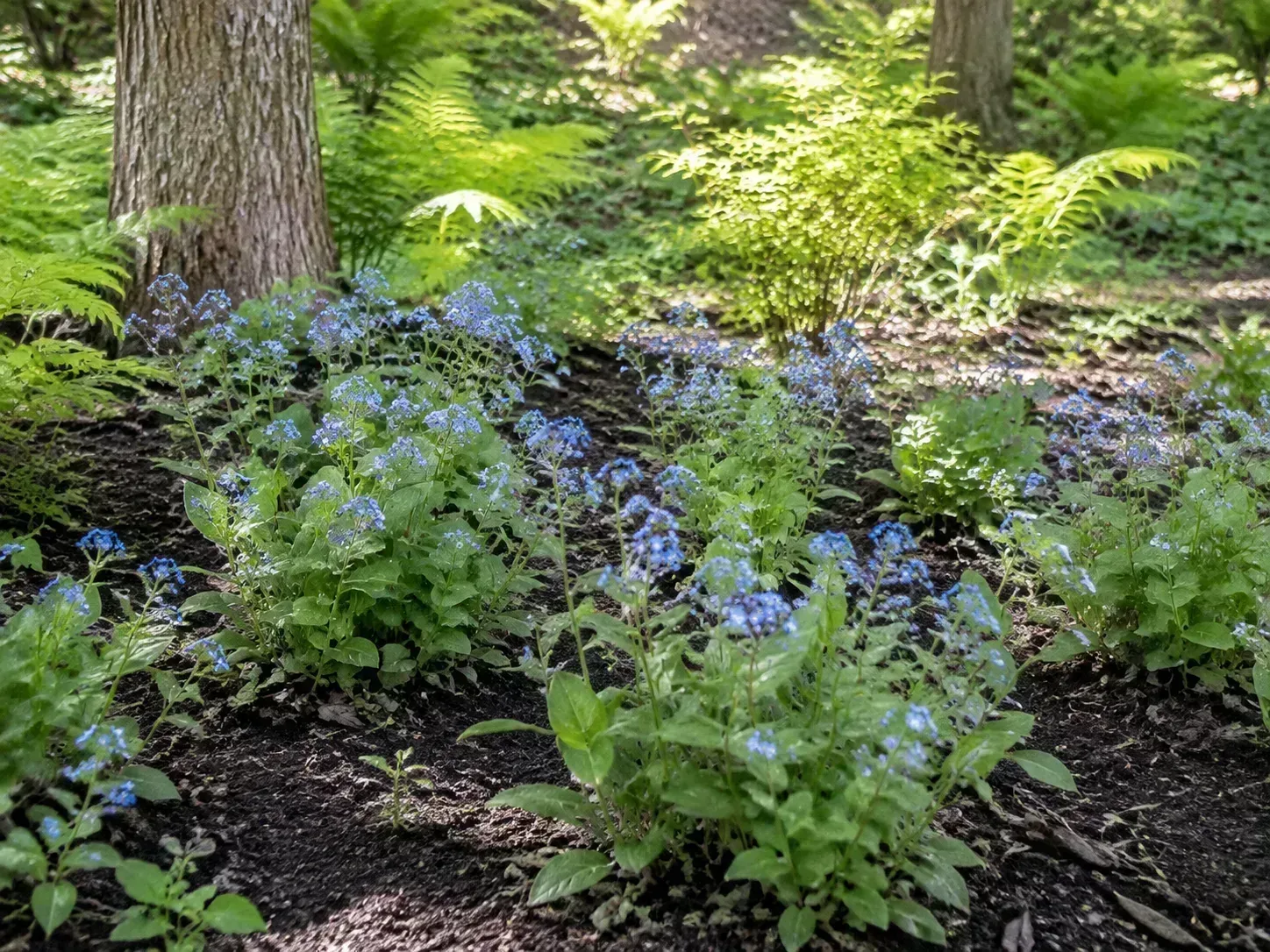
Do not reach immediately for a broad pesticide or fungicide. Identify the problem, read the product label, and check whether treatment is appropriate for an ornamental flowering plant in your region. Many light mildew symptoms arrive late in the plant’s short season; removing spent plants and cleaning fallen debris may be more sensible than trying to preserve every leaf.
Read Wilting Leaves Before You Water
Wilting is a symptom, not a diagnosis. Use the leaf texture and soil condition together:
- Crispy, curled leaves and dry soil: water deeply, shade the plant from hot afternoon sun, and check again the next day.
- Limp leaves and wet soil: pause irrigation, improve drainage, and inspect the crown and roots for decay.
- Wilting only at midday in heat: check the plant at dusk; temporary heat stress is different from continuous collapse.
- Pale, crowded foliage with a dusty coating: improve airflow and spacing before adding water or fertilizer.
- Repeated wilt despite moist soil: look for root competition under trees, a blocked drainage hole, root damage, or a plant in the wrong climate.
If the root ball smells sour or the crown is soft, simply watering more will not solve the problem. Lift the plant only if necessary, trim clearly dead roots with clean tools, and replant into a better-drained position. Severely declining plants may be easier to remove and replace with a species suited to the site.
Understand Forget-Me-Not Symbolism
Forget-me-not flowers are widely associated with remembrance, enduring affection, friendship, and fidelity. The symbolism comes from cultural stories and the flower’s name, not from a botanical property, so it can be used personally without treating one legend as the single “correct” meaning.
That symbolism is one reason the plant appears in memorial and remembrance gardens. A small blue patch can mark a relationship while still functioning as a living seasonal planting. If you use it in that setting, plan for the maintenance reality too: a plant chosen for sentimental meaning may still need deadheading, thinning, and occasional removal of volunteers.
Use Companions That Share Its Conditions
Choose companions by moisture and light before color. Columbine, bleeding heart, ferns, and other woodland perennials can work in dappled shade with rich soil. Spring bulbs such as daffodils and tulips can emerge through the low foliage and take over the display as forget-me-not begins to fade.
Avoid forcing incompatible plants into one container or bed. A drought-tolerant Mediterranean herb may enjoy the same morning sun but resent the regular moisture that keeps forget-me-not fresh. Likewise, a plant that needs deep, permanent water may overwhelm a bed that is only seasonally moist.
Think in layers: forget-me-not supplies a low spring carpet, bulbs add height, and later perennials cover the space after the blue flowers pass. Fine Gardening’s discussion of reliable groundcovers supports this site-first approach: a groundcover earns its place when its habit fits the job and the conditions, not simply because it spreads quickly. Keep enough open soil to inspect the edges. A beautiful mixed border is easier to maintain when every plant has a defined job and a manageable spread.
Conclusion
Successful forget-me-not care is less about precision feeding than about matching the plant to a cool, moist, reasonably airy site. Start by confirming that you have Myosotis sylvatica, then choose full sun in a cool climate or dappled light and afternoon shade where summers are hot. Keep soil evenly moist but not trapped in a waterlogged pot, and use compost or gentle feeding only when the growing conditions justify it.
Grow from midsummer seed for next spring’s biennial display, or start indoors 8 to 10 weeks before the last frost when you need same-year flowers. Before sowing, decide whether self-seeding is part of the design. Let a few clusters mature in a contained bed for a soft, renewing patch; deadhead and pull volunteers early when you need clear borders. With that one decision built into the routine, forget-me-not can deliver its memorable spring color without becoming a maintenance surprise.