Does Potting Soil Go Bad Over Winter? What to Check
Potting soil does not expire like milk, but garage storage can wreck it. Use this spring checklist to decide whether your stored mix is safe, salvageable, or trash.
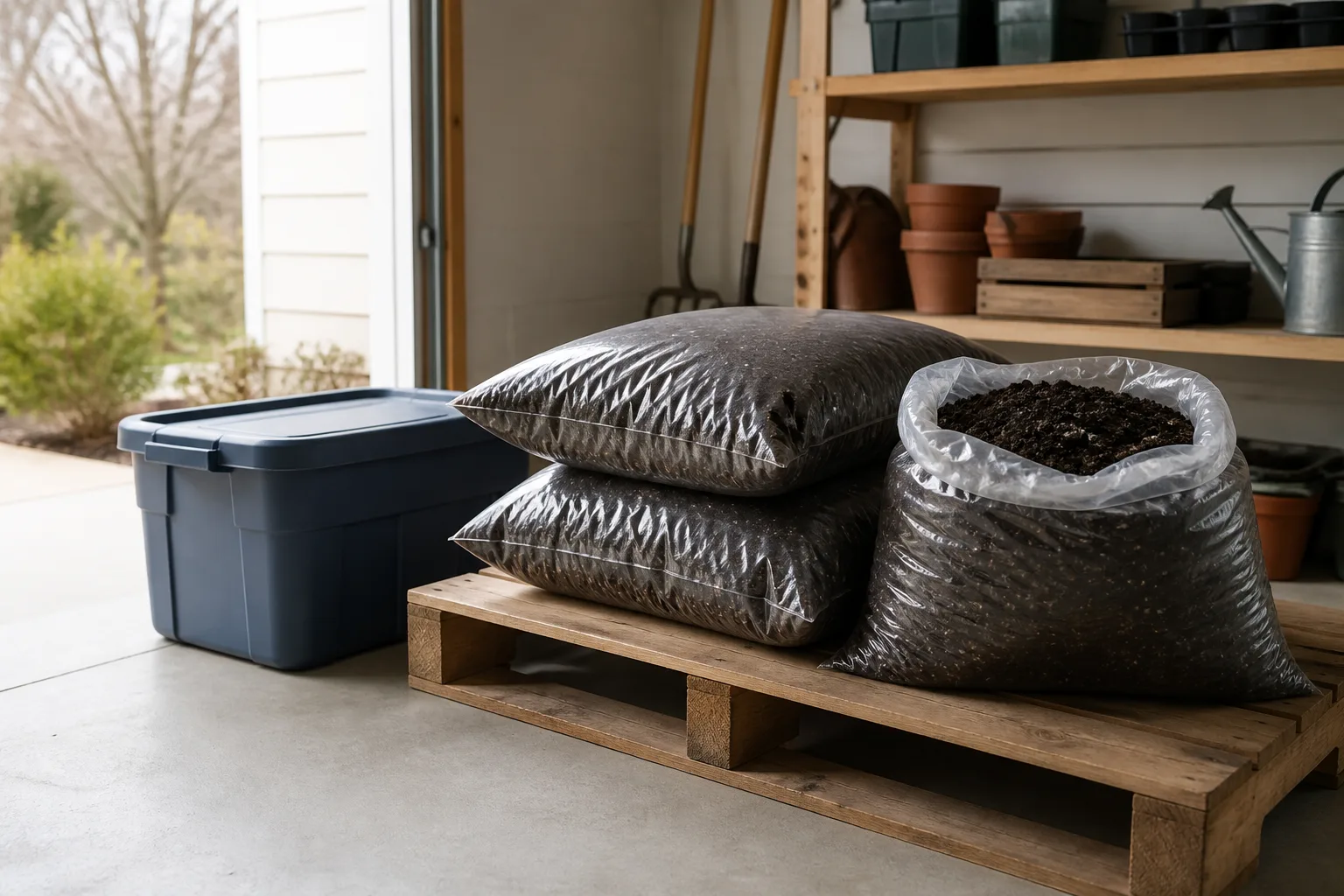
You rolled the potting bench closed in November with two half-empty bags leaning against the lawnmower. Now March light is hitting the garage door and you are wondering whether that mix is ready for seed trays—or whether you are about to import last winter’s problems into every container on the patio. Potting soil does not spoil on a fixed expiration date, but it absolutely can fail after months in the wrong storage spot. The good news: cold alone is rarely what ruins it. Moisture, compaction, pests, and time are.
Quick Answer: Storage Quality Matters More Than the Calendar
Unused potting mix stored dry and sealed can stay usable for about one to two years. An opened bag that sat in a humid garage all winter may still be fine if it stayed dry, smelled neutral, and shows no mold or insects—but you must inspect it before trusting it with seedlings. If the mix smells sour, stays soggy, grows white fuzz, or swarms with gnats when you disturb it, discard it or compost it far from your seed-starting bench. When the bag passes inspection but feels dense or repels water, you can revitalize it with fluffing, controlled rewetting, and a nutrient refresh rather than buying all new mix.
That three-way split—use as-is, revive, or discard—is the decision you need before spring planting season ramps up. The rest of this guide walks you through why garage storage succeeds or fails, exactly what to look for on inspection morning, and how to bring borderline mix back to life without wasting money or risking your plants.
What Actually Happens to Bagged Mix Over Winter
Commercial potting soil and potting mix are engineered growing media, not mineral garden dirt. Most blends combine peat moss or coconut coir for water retention, perlite or vermiculite for pore space, and compost or bark for structure and starter fertility. Those organic fractions are alive with chemistry: they hold air, grab water, and slowly break down. Sitting in a bag for months changes texture and fertility even when nothing visibly rots.
Oklahoma State Extension describes bagged potting medium as peat, vermiculite, and composted matter—not traditional soil—and notes that added fertilizers in a fresh bag typically last only three to six months before leaching and plant uptake deplete them (OSU Extension). A bag that was already six months old when you bought it may arrive at spring nearly nutrient-empty even if the physical mix looks fine. That is a refresh problem, not a discard problem.
Cold Temperatures Are Rarely the Main Problem
Freezing garage air worries gardeners, but cold by itself does not ruin unused potting mix. Peat and coir do not die at 25°F the way tender seedlings would. What cold can do is cycle moisture: warm days melt frost near the garage slab, cool nights pull condensation into a torn bag or an open clip seal. Repeated freeze–thaw plus humidity is what damages media over winter, not the thermometer reading on a single January night.
In mild-winter regions, the garage may never freeze at all—and that is fine. In northern garages that hit hard freezes, an unopened, dry, elevated bag usually survives. The risk rises when meltwater pools on the concrete floor or when an opened bag breathes garage air all season.
Moisture, Compaction, and Organic Matter Breakdown
The real enemies are waterlogging, settlement, and slow decomposition. Peat moss and coir shrink as they age and compress; perlite can crush under stacked weight. Over months, a bag that started light and fluffy can turn into a brick that sheds water on top while staying dry inside—a classic path toward hydrophobic soil when you finally open it in spring (Savvy Gardening).
Peat-heavy mixes also lose the effectiveness of wetting agents over time, which makes rewetting harder after a dry winter. University of Maine Cooperative Extension notes that potting media rely on organic matter to hold moisture and nutrients; as that fraction breaks down, structure and fertility both decline (University of Maine Cooperative Extension). None of this means automatic failure—it means you should expect to fluff and possibly amend stored mix, not pour it straight into pots unchanged.
Sealed Unopened Bags vs Opened or Patched Bags
Unopened factory-sealed bags are your best-case scenario. The plastic liner kept out garage dust, mouse nibbles, and most humidity swings. If the bag stayed dry, off the floor, and under two years old, it is very likely usable after a quick inspection and light fluffing. Check the bottom for hidden punctures from leaning against sharp tools; a pinhole can wick moisture up through capillary action over a whole winter.
Opened bags are a different product. Once oxygen and garage humidity enter, mold spores, fungus gnat eggs, and moisture can colonize the top few inches first—exactly where you will reach when you scoop. If you folded the top and clipped it, success depends on how dry the mix was when you closed it and whether the clip actually sealed. Duct tape on a torn original bag is better than nothing, but a rigid lidded tote is far more reliable for multi-month storage (Kellogg Garden).
As a practical rule: unopened + dry + elevated + under ~24 months = high confidence. Opened + floor-level + humid garage = inspect carefully and assume you may need to revive or discard.
Garage Storage: What Helps and What Hurts
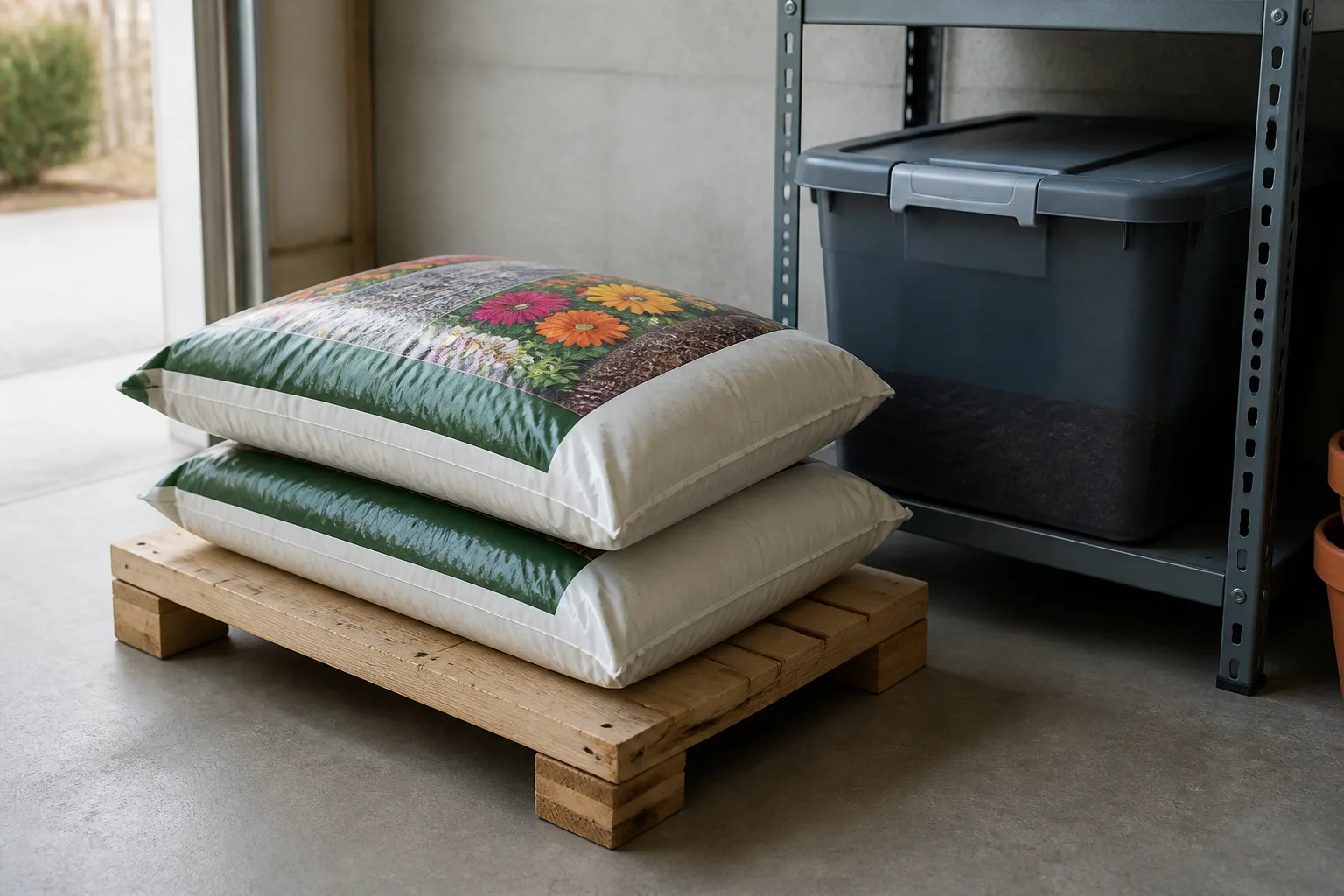
Garages are convenient—until they are not. They swing hotter than the house in summer and colder in winter, they share space with cars that track in slush, and concrete floors breathe moisture. Potting mix tolerates that environment when you treat the bag like a food-grade dry good, not like a bag of leaves you can toss in the corner.
Floor Contact, Condensation, and Pest Entry
Never store bags directly on a concrete slab. Even in a “dry” garage, the floor holds cold and can condense moisture under plastic. Elevate bags on a pallet, shelf, or scrap lumber so air circulates underneath. Stack bags flat rather than on their sides so the seal does not stress-open.
Keep bags away from downspouts, garage door thresholds, and areas where snowmelt runs in. Mice and insects also love the dark, quiet gap behind a stacked bag. If you saw droppings or chewed corners in fall, assume the mix is contaminated and discard it rather than gambling on spring vegetables.
When a Closet or Dry Basement Beats the Garage
If you have a cool, dry interior closet or a dehumidified basement corner, that usually beats a garage for opened partial bags. The temperature band between 40°F and 70°F is ideal; you are aiming for stable and dry, not tropical. A garage works when it is reasonably dry, bags are sealed in totes, and you elevate off the floor. A damp basement without dehumidification is often worse than a garage because constant high humidity feeds mold all winter.
Label totes with the purchase month and brand so you rotate oldest stock first next year. Future-you will not remember which bag was half peat-free and which was cactus mix.
The Spring Inspection Checklist
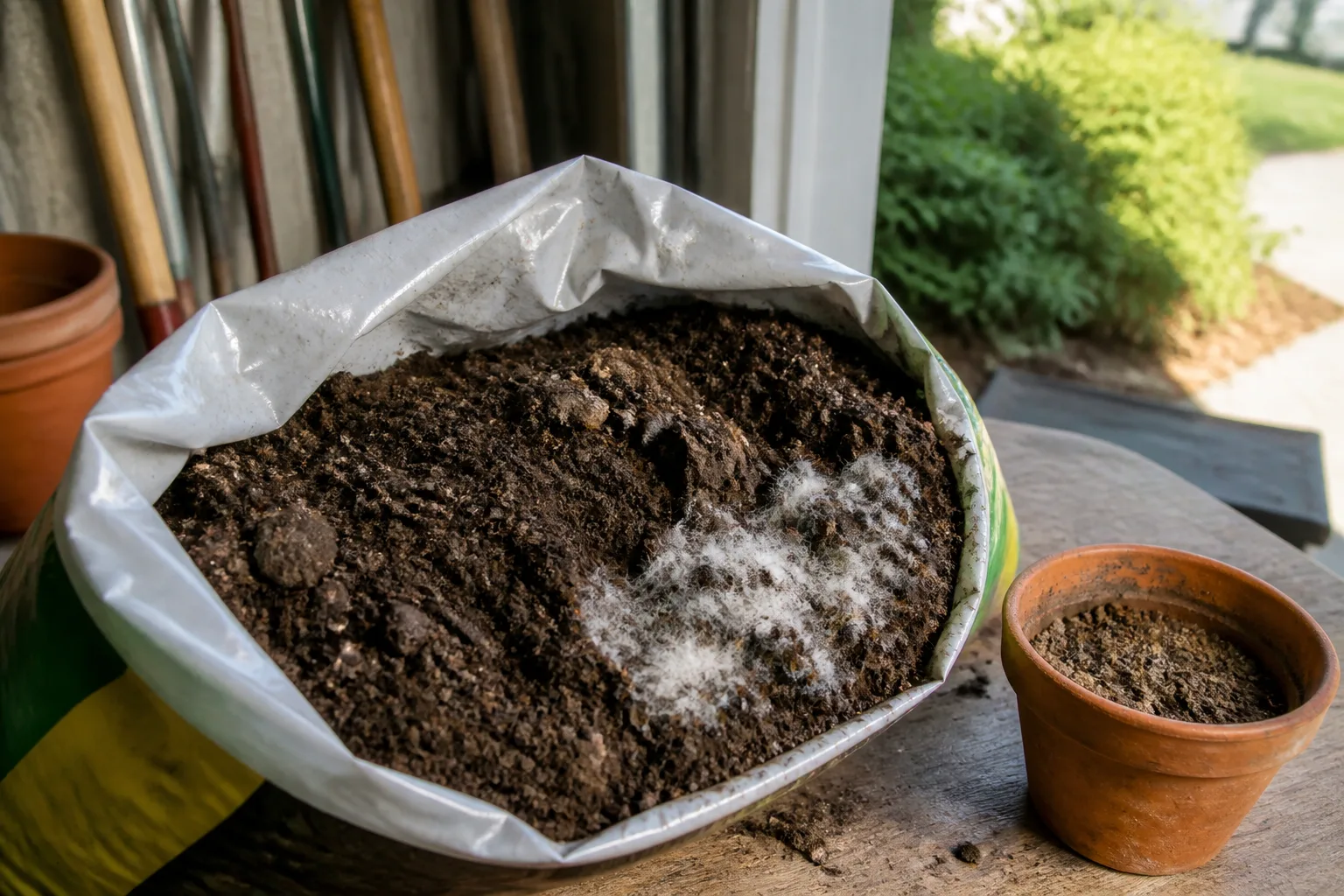
Before you fill a single cell pack, run every stored bag through the same short exam. It takes five minutes and prevents a season of weak seedlings or mysterious gnats in the kitchen.
Smell, Color, and Texture Tests You Can Do in Five Minutes
Open the bag outdoors or in the garage with the door up—never in a closed mudroom where spores and gnats escape into the house. Smell first. Fresh mix smells earthy and neutral. A sour, rotten-egg, or sharp ammonia odor means anaerobic breakdown; discard that bag for seed starting. Look at color. Uniform dark brown is normal. Gray-green fuzz, slick slimy patches, or a uniform wet black layer are not.
Feel the texture. Squeeze a handful. Good stored mix should crumble apart when you open your fist; it should not ooze water or form a hard clod. Pour a cup into a small pot and water it lightly. If water beads on top and runs off, you have hydrophobic mix—salvageable with refresh work, not a trash-bin automatic. If water sits in a pool for hours, the mix was stored too wet and may harbor pathogens.
Mold, Mushrooms, and Insect Warning Signs
White or gray surface mold on an otherwise dry bag top can sometimes be sun-treated and used for non-edible ornamentals if you are willing to solarize the batch—but do not use moldy mix for seedlings, herbs, or vegetables without full pasteurization. Small mushrooms mean fungal spores are actively fruiting; treat that as a discard or compost-only outcome unless you plan to sterilize the entire volume.
Insects are a hard stop for direct reuse. Fungus gnats, soil mites, and root mealybugs overwinter in organic media. If tiny flies rise when you disturb the bag, do not bring it indoors near houseplants. You can solarize moist mix in sealed black plastic in full sun for several weeks to reduce pathogens and some pests, but for a $12 bag of questionable mix, replacement is often cheaper than remediation.
When Stored Potting Soil Is Still Good to Use
Green-light the bag when all of these are true:
- Smell is neutral or mildly earthy—no sour or sewage odor
- Mix is crumbly or slightly dry, not wet or cement-like
- No visible mold, mushrooms, or insect activity
- Bag was sealed or in a lidded tote, elevated, and under roughly two years old for unopened stock
- Water soaks in within a minute when you test a small pot, even if you need to stir initially
For annual flowers, herbs, and established houseplant repots, lightly compacted but clean mix can go straight to the bench after hand-fluffing with a garden claw or your fingers. For seed starting and disease-prone crops like tomatoes, prefer either fresh mix or stored mix that you have pasteurized—stored-but-clean is not the same as sterile.
If fertility is your only concern—the mix looks and smells fine but is more than a year old—plan to add slow-release organic fertilizer and up to one-third fresh compost or new potting mix when you blend for containers (OSU Extension).
When You Should Discard It Instead
Some bags are not worth rehabilitating. Discard or relegate to non-plant uses when you see:
- Persistent sour smell after surface scraping
- Chronic sogginess or water that will not drain in a test pot
- Active insect larvae, eggs, or heavy gnat flights
- Mold throughout the bag, not just a thin dry surface layer
- Evidence mice or rodents contacted the mix
- Mix that previously grew diseased plants—viruses, wilts, and root rot pathogens can persist in spent media (OSU Extension)
Do not “fix” bad mix with kitchen shortcuts. Salt, random ashes, and heavy coffee grounds are not balanced fertilizers and can harm seedlings. If you need to stretch budget, buy one fresh bag and blend it with clean stored mix at a 1:3 ratio rather than rescuing clearly failed media.
Non-plant uses for truly dead mix: fill low spots in raised beds, mix into a hot compost pile, or topdress paths—not seed trays.
How to Revitalize Mix That Passes Inspection
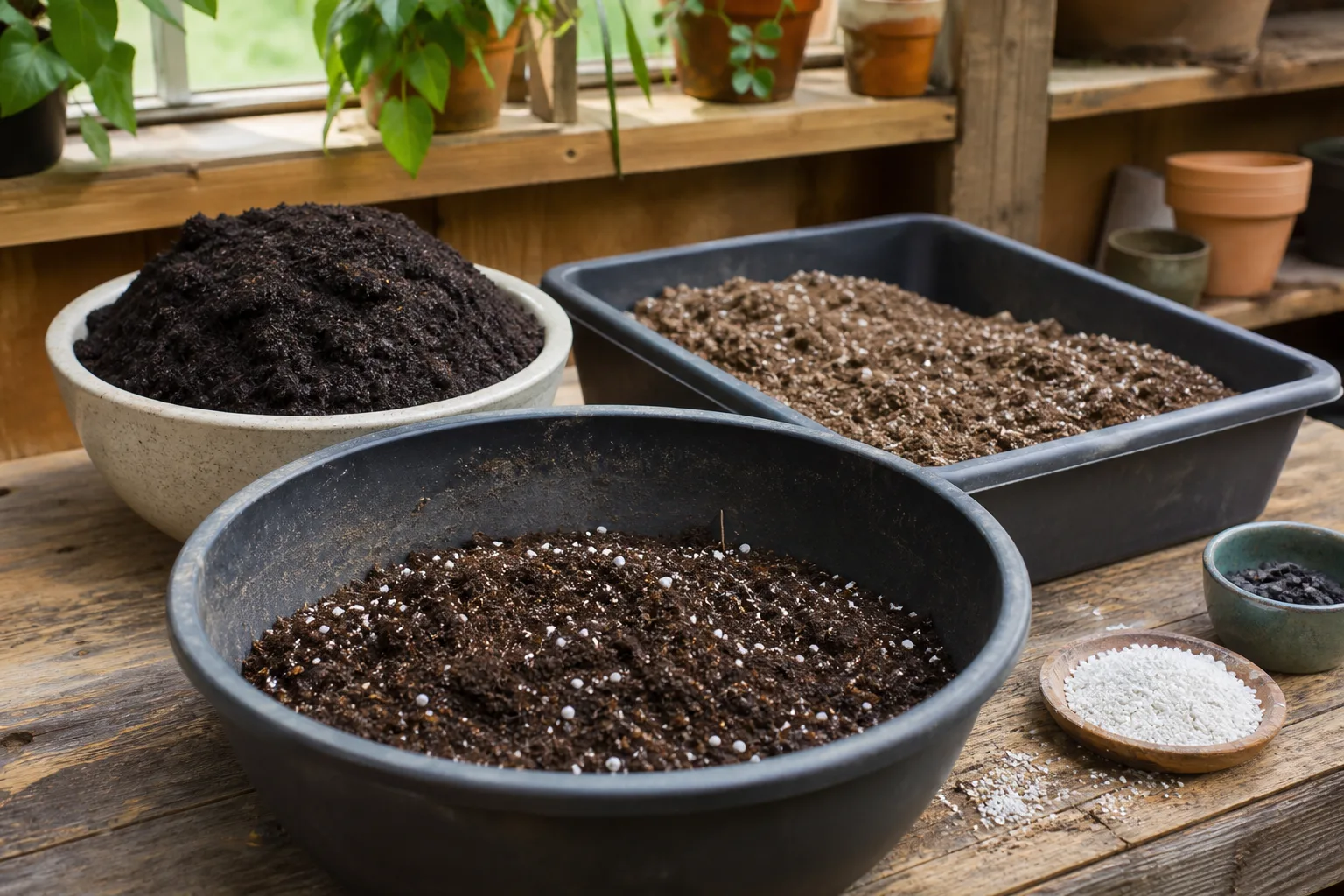
Borderline mix—dry, compacted, a little hydrophobic, but clean—deserves a refresh pass before planting. Think of it as waking the media up rather than rescuing rot.
Fluff, Rewet, and Restore Drainage
Empty the bag onto a tarp or into a wheelbarrow. Break up clumps with a hand fork or claw. Pick out any garage debris, wood splinters, or dead leaves that blew in when the bag was open. Add 10–20% by volume of dry perlite or coarse bark if the mix feels heavy; that restores pore space lost to winter settlement.
Rewet slowly. Spray or mist while you stir until the pile feels like a wrung-out sponge—damp throughout, not dripping. Savvy Gardening warns that old peat-heavy mixes may repel the first waterings; let the pile sit overnight and stir again the next day if the center is still powder-dry (Savvy Gardening). For severe hydrophobia, see our guide on how to fix hydrophobic soil for soak-and-drain techniques that work on bagged mix as well as potted plants.
Refresh Nutrients Before You Plant
Physical structure without fertility produces weak growth. For every five gallons of refreshed mix, blend in roughly ½ cup of balanced organic granular fertilizer and one part compost to two parts old mix if you have compost available. If you lack compost, substitute one-third fresh commercial potting mix by volume.
OSU Extension emphasizes that reused media needs porosity and fertility restored before a new growing season; the same logic applies to stored-but-unused mix that has simply aged (OSU Extension). Stir until uniform, then use within a few days or reseal in a dry tote so it does not dry out into a brick again before planting weekend.
What About Used Mix from Last Season’s Pots?
This article focuses on unused bagged mix, but many garages also hold planters still full of last year’s soil. That is a higher-risk category. Spent container mix may harbor weed seeds, disease, salt buildup, and pest eggs even if it looked fine when you stored the pot in November.
If the previous plant was healthy, you can refresh spent mix using the same fluff-and-amend workflow—see our full protocol in how to reuse potting soil safely. If you saw wilts, root rot, viral spotting, or heavy pest pressure, do not reuse that soil in new containers; compost it or spread it in ornamental beds only. Seedlings and tomatoes are the worst place to test questionable media.
Also confirm you are working with container mix, not garden soil. Bags labeled garden soil or topsoil are not interchangeable for pots and often carry pathogens and poor drainage for indoor use (University of Maine Cooperative Extension). Our potting soil vs garden soil guide explains when each product belongs.
Storage Habits That Keep Next Winter’s Bags Usable
When you put the bench away next fall, spend ten minutes setting future-you up for success:
- Dry before you seal. Never tape shut a wet bag; open it in the garage until mix is crumbly-dry.
- Move partial bags into lidded plastic totes with a tight snap seal; keep original labels inside.
- Elevate everything off concrete and away from the garage door drip line.
- Store indoors when possible for opened stock; reserve the garage for sealed backup bags.
- Buy only what you will use in 12–18 months; giant end-of-season sales are false economy if half the bags rot before you open them.
- Rotate stock—oldest bags on top or labeled in front.
Kellogg Garden recommends treating stored mix like any organic product: cool, dry, dark, and protected from pests (Kellogg Garden). That is boring advice—and it works.
Conclusion
Potting soil left in your garage all winter is often still good for spring planting if it stayed dry, sealed, and pest-free. Winter cold is less dangerous than a wet floor, a half-closed bag, or a year of silent peat breakdown. Run the smell-and-squeeze test, separate clean-but-compact mix from genuinely contaminated mix, and refresh structure and nutrients before you commit seedlings. When a bag fails inspection, walk away—one bad batch of mix costs more in lost plants than a fresh bag ever will. Store smarter next fall, and you will spend less time guessing and more time actually planting.



