10 Best Fragrant Trees for Landscaping: Scent and Care
Compare 10 fragrant trees for landscaping, from clove-scented apricot to tea olive, with bloom windows, mature size, soil needs, and useful placement advice.
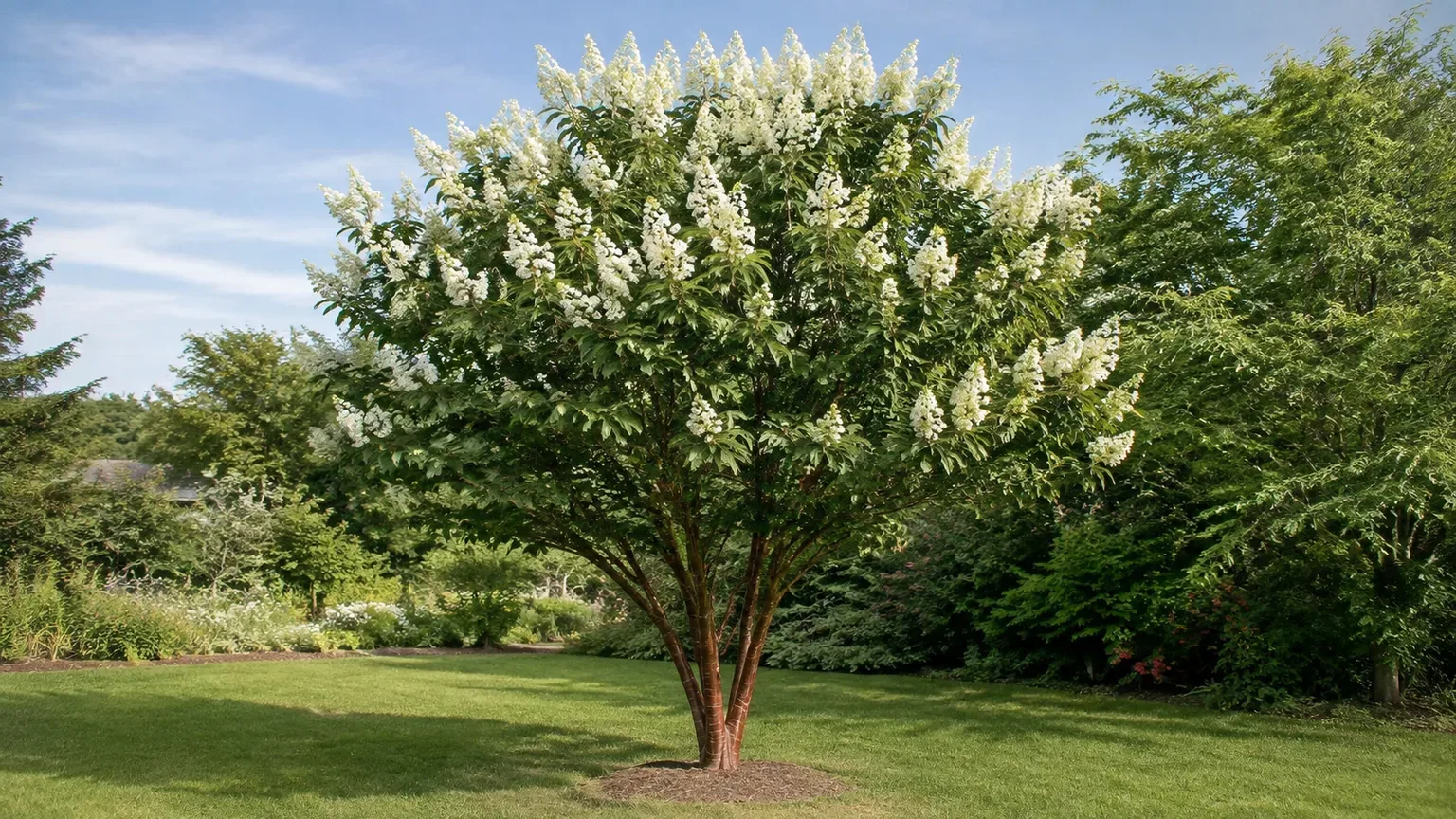
A fragrant tree earns its place when you can smell it from a path, porch, or open window—not only when you stand beneath a flower cluster. The strongest choice depends on when you want scent, how much room you have, and whether you prefer floral perfume, a citrus note, or foliage that releases aroma when touched. A tree that is ideal beside a shaded pond may be a poor fit for a hot, dry patio.
This list is organized for that decision rather than as a universal fragrance ranking. Japanese flowering apricot can smell strongly of clove in winter, sweetbay magnolia offers a lemon note over a long season, and tea olive produces tiny flowers with a surprisingly powerful apricot-like scent. Fragrance varies by cultivar, weather, time of day, and personal perception, so if scent is the main reason you are buying, visit a garden or nursery while the plant is in bloom and smell it yourself.
Decide how you want fragrance to work
Start by identifying the source of the scent. Most flowering trees release fragrance during a short bloom period; their flowers may be abundant but too high to smell from a chair or walkway. Other plants, such as chaste tree, have aromatic leaves that become noticeable when brushed or crushed. Tea olive is a useful middle ground: its flowers are small and easy to overlook, but their perfume can carry through a garden.
Flower perfume and scented foliage are different experiences
Bloom time matters as much as scent strength. A late-winter tree can perfume an entry while the rest of the garden is dormant, whereas a linden or chaste tree extends fragrance into summer. Planting two or three species with different bloom windows creates a longer season than relying on one dramatic tree for a week or two. Garden editors and tree professionals also distinguish flower scent from leaf aroma when recommending trees, an important difference for anyone designing a sensory garden. Homes & Gardens’ expert selection
10 fragrant trees, organized by bloom season
The order below roughly follows the season in which fragrance begins, but it is not a scorecard. Mature size, winter tolerance, fruit cleanup, and soil moisture can matter more than the perfume itself. Use the approximate dimensions as planning ranges, then confirm the selected cultivar and local hardiness with a regional nursery or extension office.
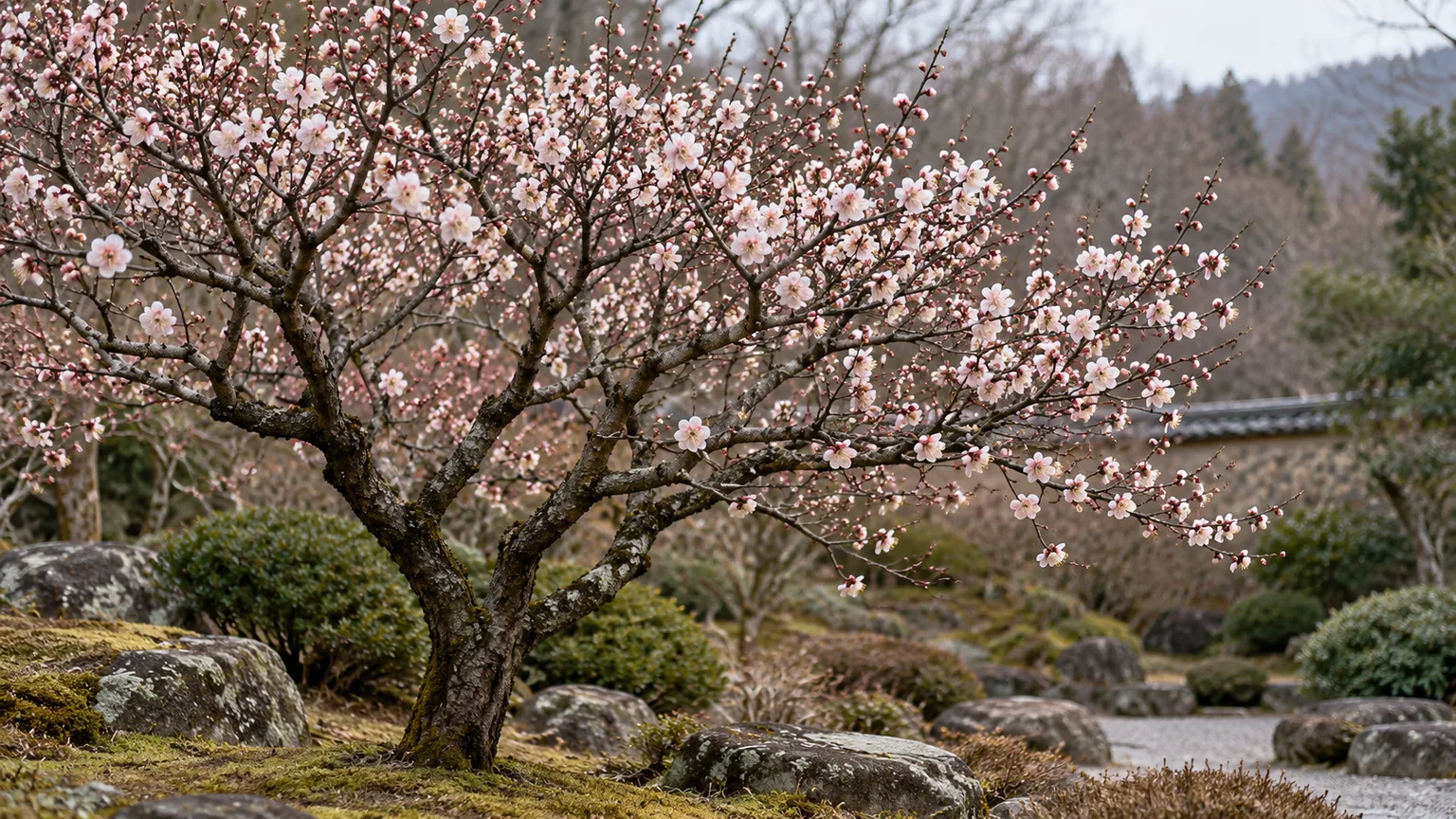
1. Japanese flowering apricot for late-winter clove scent
Japanese flowering apricot (Prunus mume) is one of the best choices when you want fragrance before spring has fully arrived. Its pale pink flowers usually open from late winter into very early spring and have a strong clove-like scent; the tree typically reaches about 15 to 20 feet tall and wide. NC State Extension describes it as a full-sun to part-shade tree and recommends a protected site because winter cold can injure flowers and fruit. NC State Extension: Japanese flowering apricot
Choose it for a sheltered courtyard, entrance, or small lawn where you can enjoy the flowers up close. A wall or fence that blocks harsh wind can help protect the early display, but do not crowd the canopy against a building. If you need an edible apricot crop, confirm that the cultivar and your climate are suitable; ornamental flowering forms are selected primarily for bloom, and an exposed site can lose flowers to a late freeze.
2. Star magnolia for a compact early-spring display
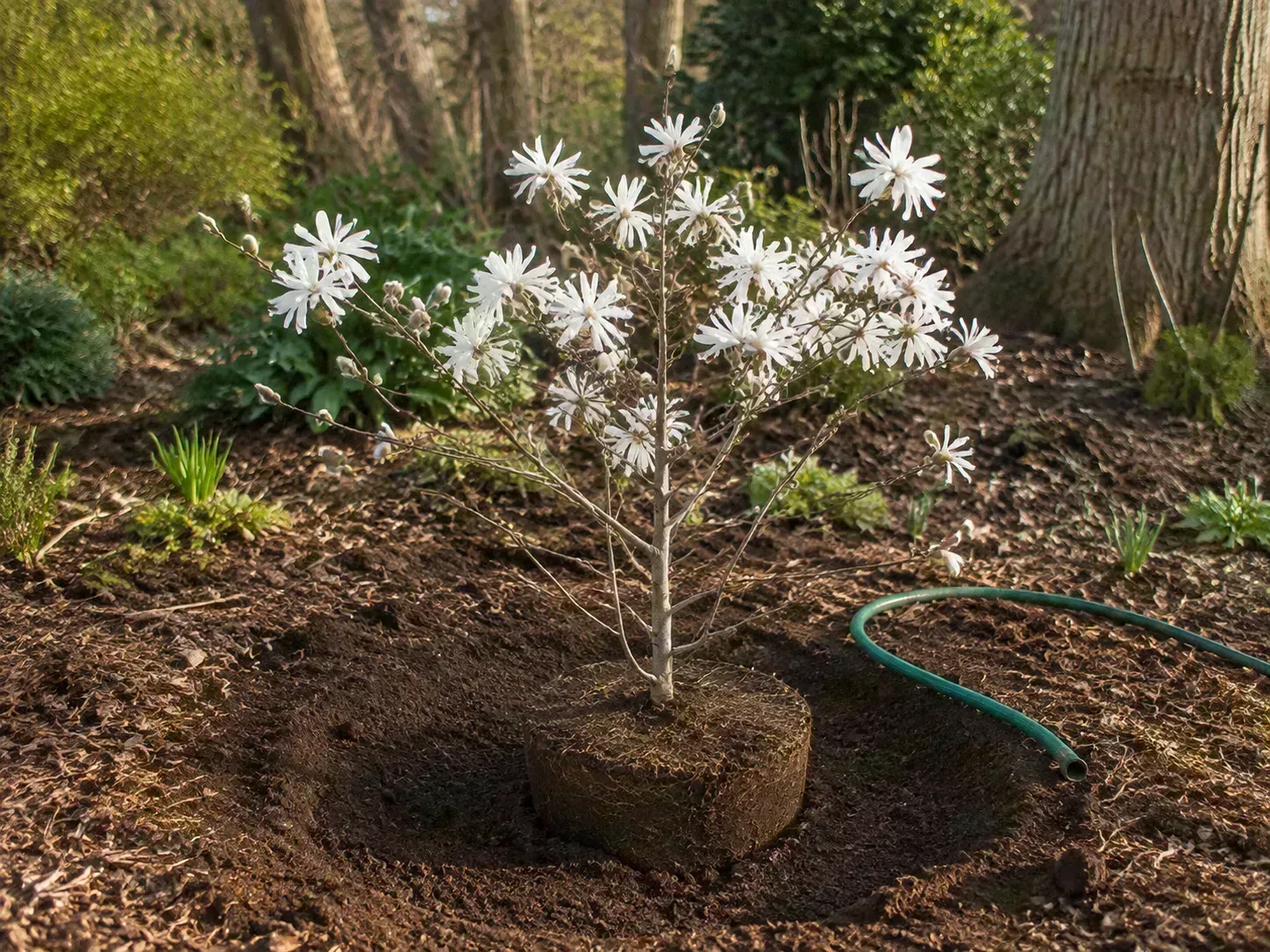
Star magnolia (Magnolia stellata) is a small deciduous tree or large shrub that often grows about 15 to 20 feet tall. Its star-shaped, usually white flowers open before the leaves in late winter or early spring and are fragrant, so the scent is easiest to enjoy from a nearby path or seating area. NC State Extension notes that this early flowering also makes the blooms vulnerable to frost damage. NC State Extension: star magnolia
Use it where a full-size shade tree would overwhelm the space, but give it enough room to develop a broad crown. A site with morning sun and some protection from the coldest wind can help the early flowers last; avoid a low pocket where cold air settles. Fine Gardening’s magnolia coverage is useful for comparing the very different habits and seasonal tradeoffs within the genus before you select a particular magnolia. Fine Gardening: “Magnolia Appeal”
3. Crabapple for scented blossoms and fall fruit
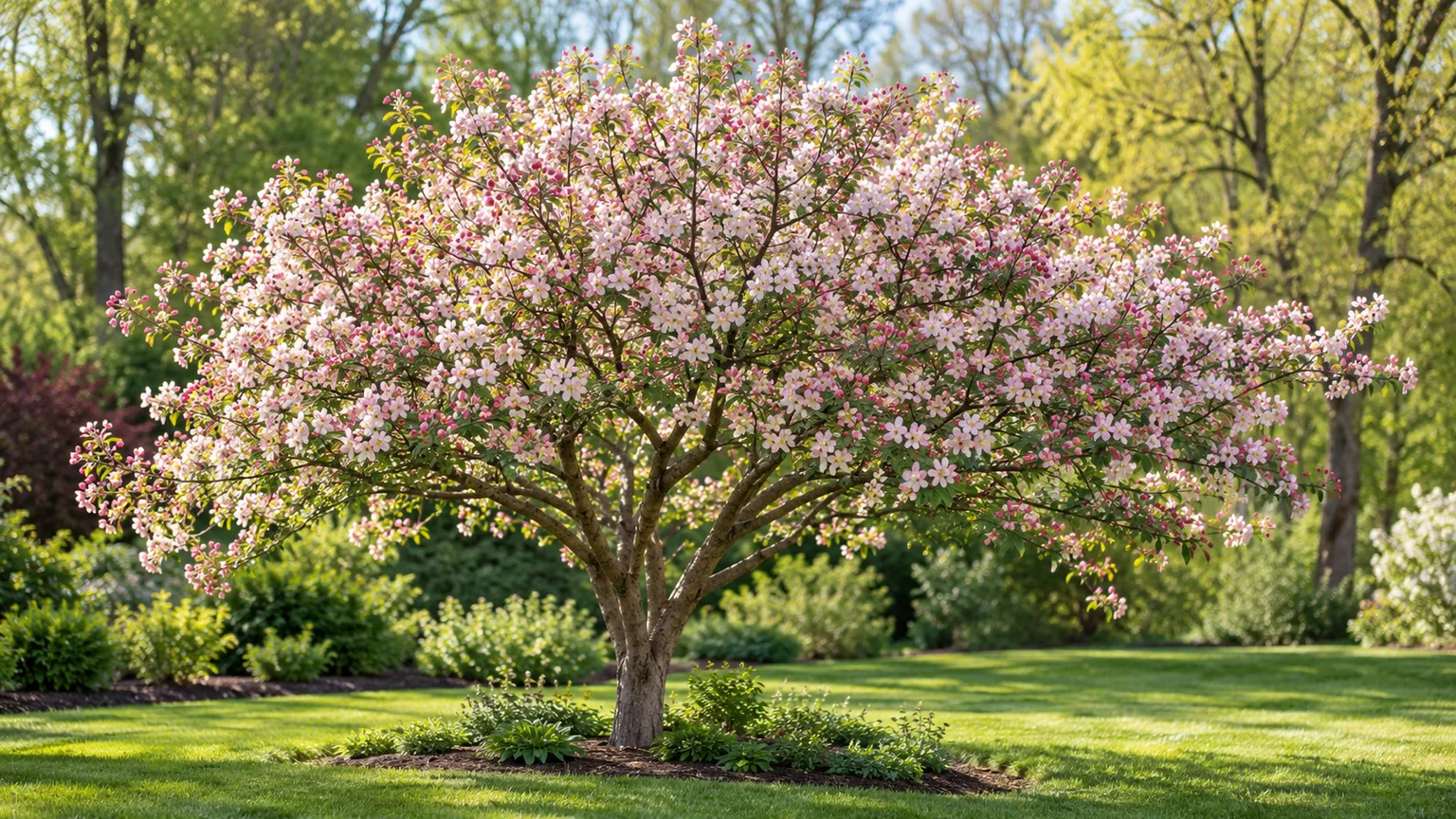
Crabapples (Malus species and cultivars) combine spring flowers with decorative fruit that can remain into fall or feed birds. Their size and flower color vary widely, and so does the noticeability of fragrance. Some selections have sweetly scented blossoms, while others are more valuable for bloom color, disease resistance, or persistent fruit; do not assume every tree sold as a crabapple smells equally strong. Nature Hills’ horticulture guide includes crabapples among spring-blooming fragrant trees, while NC State’s apple profile explains how rootstock and cultivar affect size and fruiting needs. Nature Hills: fragrant flowering trees NC State Extension: apple
Look for a named, disease-resistant cultivar whose mature height fits the site. Crabapples may be dwarf, small ornamental trees, or medium specimens; they also need room for air movement and light. If you dislike fruit drop, ask whether the cultivar is fruitless or produces small persistent fruit, and if fragrance is your top priority, smell the flowers before committing when possible.
4. Purple-leaf sand cherry for a small accent tree
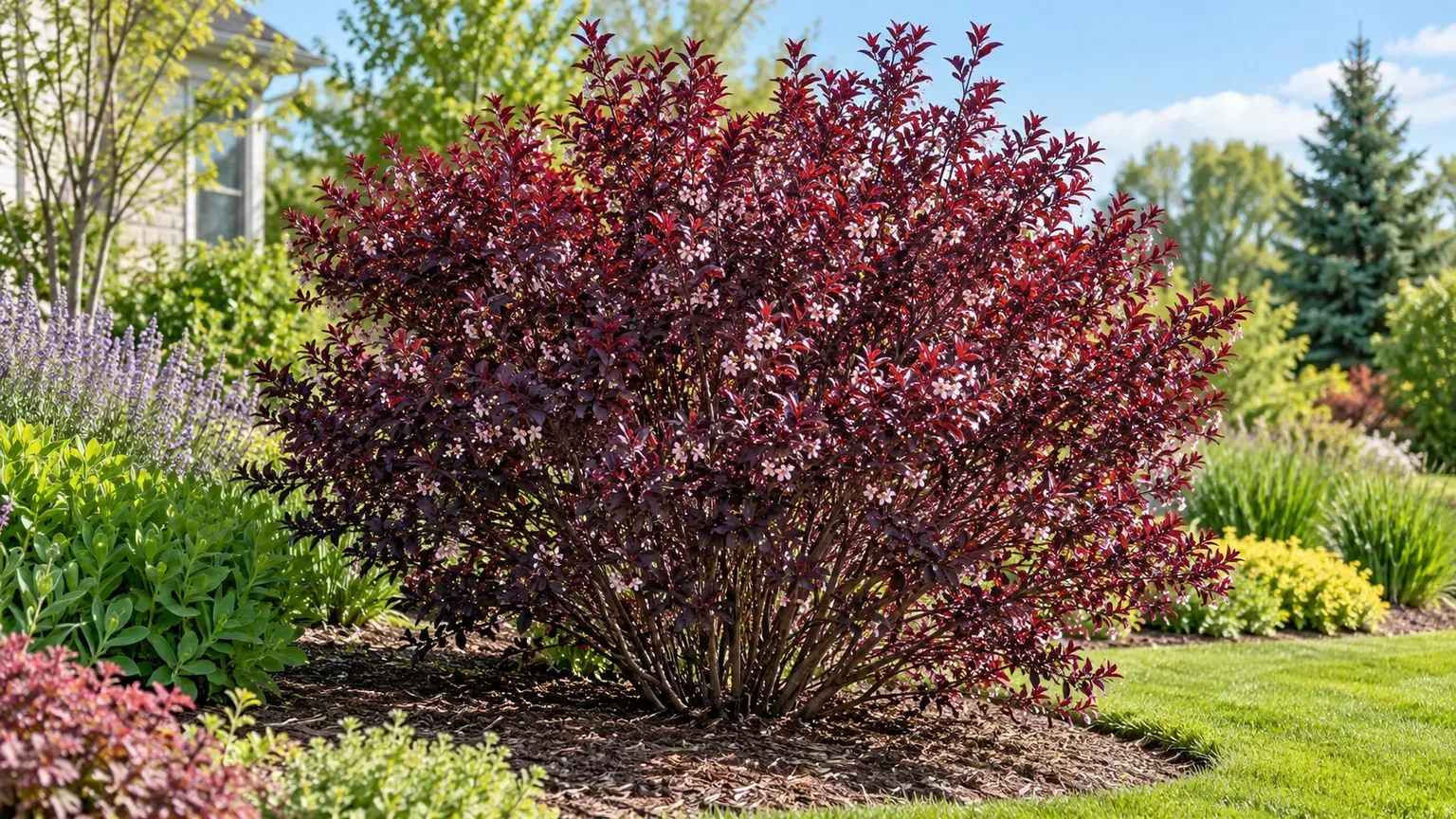
Purple-leaf sand cherry (Prunus × cistena) brings fragrance to a space too small for a canopy tree. This deciduous shrub can be trained as a small multi-stemmed tree, usually about 7 to 10 feet tall, with dark purple foliage that provides interest after its mid-spring flowers fade. NC State Extension describes the pinkish-white flowers as fragrant and notes that full sun supports the strongest flowering and leaf color. NC State Extension: purple-leaf sand cherry
Think of this as an accent with a light scent, not a tree that will perfume a large yard. Place it near a path or in a small courtyard, and leave enough space for its 5- to 8-foot spread. It prefers well-drained soil; persistent saturation is a poor trade for fragrance, even though the plant tolerates a range of urban conditions. Use it where the foliage color is part of the design, rather than selecting it solely for scent.
5. Japanese tree lilac for early-summer fragrance
Japanese tree lilac (Syringa reticulata) carries the spring fragrance season later, typically blooming around June. Creamy-white panicles can measure 6 to 12 inches long and carry a musky, privet-like scent for roughly two weeks. It is a genuine tree rather than a shrub trained to look like one, commonly reaching about 25 to 30 feet tall and 15 to 20 feet wide; NC State Extension recommends full sun for prolific bloom. NC State Extension: Japanese tree lilac
Plant it as a specimen, street tree, or raised-canopy shade tree where that mature height is welcome. The scent is not the same as the sweeter perfume of common lilacs, so smell it in bloom if you are particular about fragrance. It can tolerate clay and urban conditions better than many ornamental trees, but good air circulation and sun help the flowers develop well.
6. Sweetbay magnolia for lemon-scented flowers and wet ground
Sweetbay magnolia (Magnolia virginiana) is a standout for a consistently moist garden. Its creamy, cup-shaped flowers are fragrant with a lemon-like note, and in suitable climates it can flower sporadically from spring into fall. The tree is usually around 10 to 35 feet tall and wide, but size and winter appearance vary by region: it may be a multi-stemmed deciduous shrub in colder areas and a larger, more tree-like evergreen in the South. NC State Extension: sweetbay magnolia Homes & Gardens: fragrant tree recommendations
Unlike many magnolias, sweetbay tolerates wet, acidic soil and works near a pond, rain garden, or low area that stays moist. NC State notes that its flowers open in the afternoon and close at night, sometimes repeating over multiple days, which can make the scent rewarding near a frequently used patio or evening path. Do not plant it in a dry, compacted strip and expect regular bloom without supplemental water.
7. Chinese fringe tree for delicate spring perfume
Chinese fringe tree (Chionanthus retusus) is a smaller deciduous tree with creamy-white, fringe-like flowers in late spring. Its fragrance is delicate rather than overpowering, and the flowers are arranged in airy clusters that look particularly good against a dark backdrop or at the edge of a woodland garden. NC State Extension describes the species as a manageable landscape specimen; its native North American relative, the American fringe tree, is also known for sweetly scented blooms. NC State Extension: Chinese fringe tree NC State Extension: American fringe tree
This is a good selection when you want spring fragrance without a dense, heavy canopy. Use it as a lawn specimen or place it near a woodland edge where its open form can be appreciated. It does not need severe pruning to become attractive; allow the natural branching to develop, and avoid moving a large established tree because fringe trees resent root disturbance.
8. Tea olive for autumn fragrance and evergreen structure
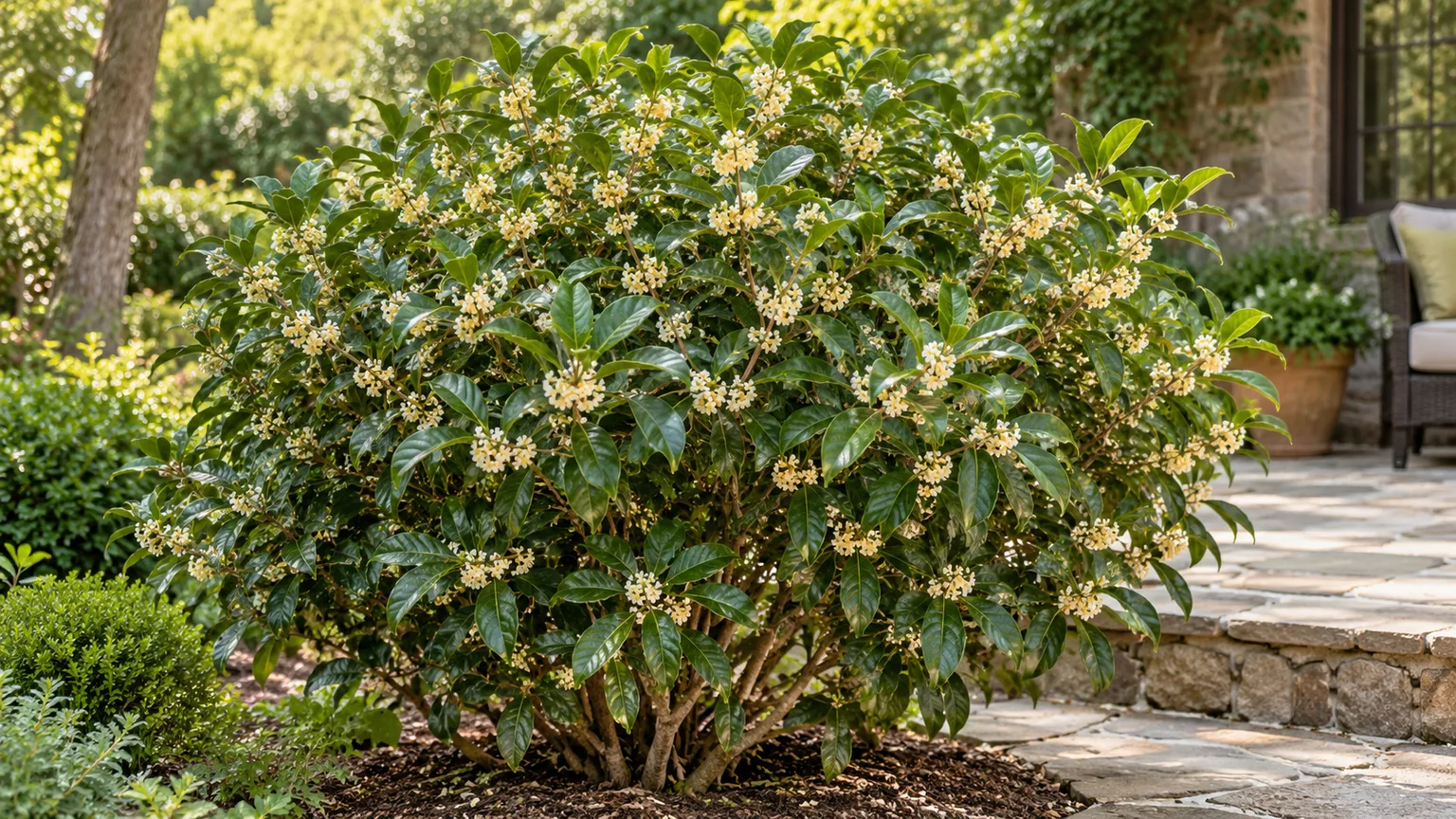
Fragrant tea olive (Osmanthus fragrans) is a broadleaf evergreen shrub that can be pruned into a small tree. Its flowers are tiny, but their apricot-like fragrance is exceptionally strong; blooms can appear in early spring and again in fall. The shrub usually matures around 10 to 20 feet tall and 10 to 14 feet wide, though pruning and cultivar change the shape. NC State Extension recommends a well-drained site and notes that frost can damage the plant and affect flowering. NC State Extension: fragrant tea olive
Use tea olive near a doorway, path, or patio where the scent can reach you without requiring a large tree. It tolerates some shade and heavy clay, but in hot southern climates afternoon shade helps prevent stress. It is best suited to mild-winter gardens; in colder regions, grow it in a container that can be moved to a cool, protected place. Prune lightly after flowering because flowers form on older growth, and repeated shearing can remove the next display.
9. American linden for a large, honey-scented canopy
American linden (Tilia americana), also called basswood, is a full-size shade tree rather than a small-yard ornamental. Fragrant yellow flowers hang beneath the foliage in late spring or early summer, drawing many bees and other pollinating insects; the scent is often described as sweet or honey-like. NC State Extension lists a mature range of roughly 60 to 80 feet tall and 30 to 60 feet wide, so treat it as a long-term canopy tree with generous space. NC State Extension: American linden Nature Hills: fragrant flowering trees
Choose linden for a large property where summer shade and wildlife value are welcome, not for a narrow foundation bed. Bees visit the flowers in abundance, so set the tree back from a dining table or the main doorway if heavy insect activity would make that spot uncomfortable. The species is sensitive to heat and soil compaction and does not tolerate all urban conditions; a broad, uncompacted root zone is part of the planting plan, not an optional extra.
10. Chaste tree for scented foliage and summer flowers
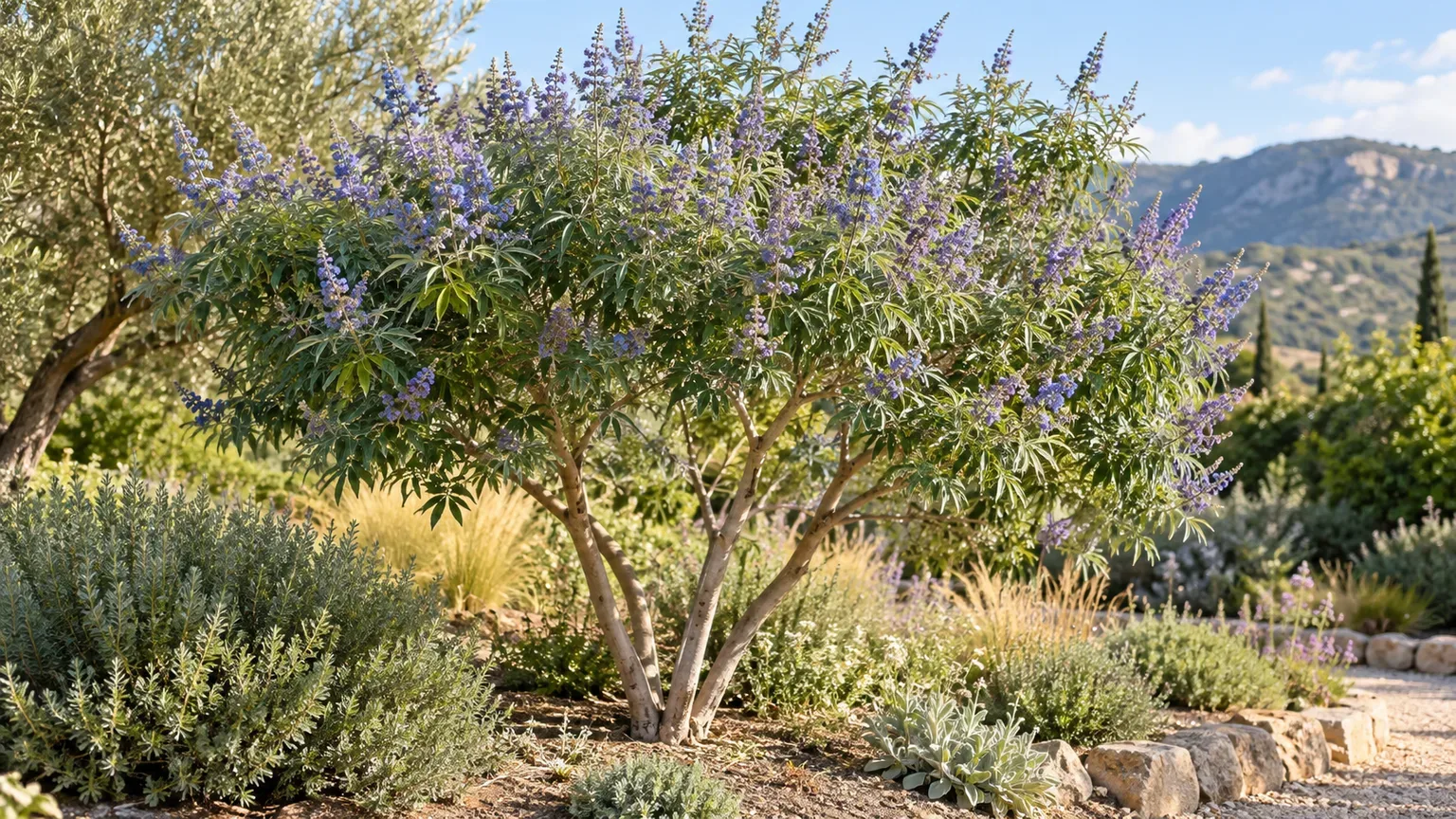
Chaste tree (Vitex agnus-castus) extends fragrance into summer with lavender, pink, or white flower panicles and gray-green leaves that smell when bruised. It can be trained as a small single-trunk tree in warm climates, though it is often grown as a large shrub. Mature plants commonly range from about 8 to 20 feet, depending on cultivar and winter injury. NC State Extension notes that cold winters can cause dieback, that the plant freely reseeds, and that it can become weedy in warmer regions. NC State Extension: chaste tree Homes & Gardens: chaste tree and other fragrant selections
This is an option for a sunny, hot site where a late-season floral display is valuable, but check local guidance before planting it. In colder zones it may die back toward the ground and regrow, which changes the intended tree form; where seedlings spread, remove unwanted plants before they set seed. Its dual flower-and-leaf fragrance makes it more flexible than a tree whose scent comes only during a short bloom.
Compare the choices by scent, season, and scale
Use this quick comparison to narrow the list before you shop. The dimensions are approximate species or common cultivar ranges, not a promise about every nursery selection. USDA hardiness zones are screening ranges, not guarantees; a cultivar, a frost pocket, and local winter conditions can shift what succeeds.
| Tree | Main scent source | Usual fragrance window | Approximate USDA zones | Landscape scale or special fit |
|---|---|---|---|---|
| Japanese flowering apricot | Clove-like flowers | Late winter to early spring | 6–9 | 15–20 ft; sheltered entry or courtyard |
| Star magnolia | Fragrant flowers | Late winter to early spring | 4–8 | 15–20 ft; compact garden, frost-prone bloom |
| Crabapple | Flower scent varies | Spring | Varies by selection | Dwarf to medium; choose cultivar for disease and fruit traits |
| Purple-leaf sand cherry | Lightly fragrant flowers | Mid-spring | 2–8 | 7–10 ft; sunny accent planting |
| Japanese tree lilac | Musky, privet-like flowers | Around June | 3–7 | 25–30 ft; street or specimen tree |
| Sweetbay magnolia | Lemon-scented flowers | Spring into fall in suitable climates | 5–10 | 10–35 ft; moist, acidic ground |
| Chinese fringe tree | Delicate flower fragrance | Late spring | 5–9 | Small ornamental; open canopy |
| Tea olive | Strong apricot-like flowers | Spring and fall | 8–11 | 10–20 ft; evergreen form, mild winters |
| American linden | Sweet, honey-like flowers | Late spring to early summer | 3–8 | 60–80 ft; large canopy space |
| Chaste tree | Flowers and bruised leaves | Summer | 7–8 for dependable woody form | 8–20 ft; warm, sunny site; check local spread risk |
If you want the strongest close-range perfume in a modest space, investigate tea olive and Japanese flowering apricot first, then verify that your winter climate suits them. For an early spring display that is easier to place in a smaller yard, compare star magnolia with sand cherry; for a larger site and later scent, consider tree lilac or linden. These are practical shortlists, not a claim that one smell is objectively better than another.
Place trees where fragrance can reach you
Put the flowering canopy near a route you actually use: a front walk, a gate, a porch, or a window that is opened during bloom. Small trees and low-branched cultivars are especially useful because you can smell flowers without leaning over a fence or standing beneath a high canopy. Tea olive can be planted close to a path because its compact flowers are distributed through the evergreen shrub; a linden belongs much farther out because its canopy is large.
Plan from the mature width on the plant tag, then leave extra room for maintenance access and airflow. Do not plant a tree directly beside a foundation simply because it is labeled “small”; height, root environment, branch clearance, and overhead wires all matter. A fragrance-focused planting works best when the tree has space to flower naturally and people can approach without stepping into a bed or brushing against a thorny or brittle branch.
Remember that wind and weather change what you smell. A warm, still evening may hold fragrance close to a patio, while a breezy site can carry it away; rain, temperature, and the age of flowers also affect the experience. If several people share the garden, ask them to smell the mature flower or visit the species in a public garden before planting a strongly scented cultivar beside an open bedroom window. Fragrance is personal, and a test visit is more useful than relying on a catalog adjective such as “heavenly.”
Keep flowers coming with the right site and pruning
Sun is a common requirement for heavy flowering, but soil moisture varies by species. Japanese tree lilac and sand cherry flower best in sun, while sweetbay magnolia accepts wetter, acidic ground and tea olive appreciates some afternoon shade in hot climates. Match the root zone to the plant instead of adding amendments to force a tree into an unsuitable site; improving drainage does not turn a water-loving magnolia into a dry-site plant, and constant irrigation cannot fix a naturally waterlogged planting hole for a species that needs drainage.
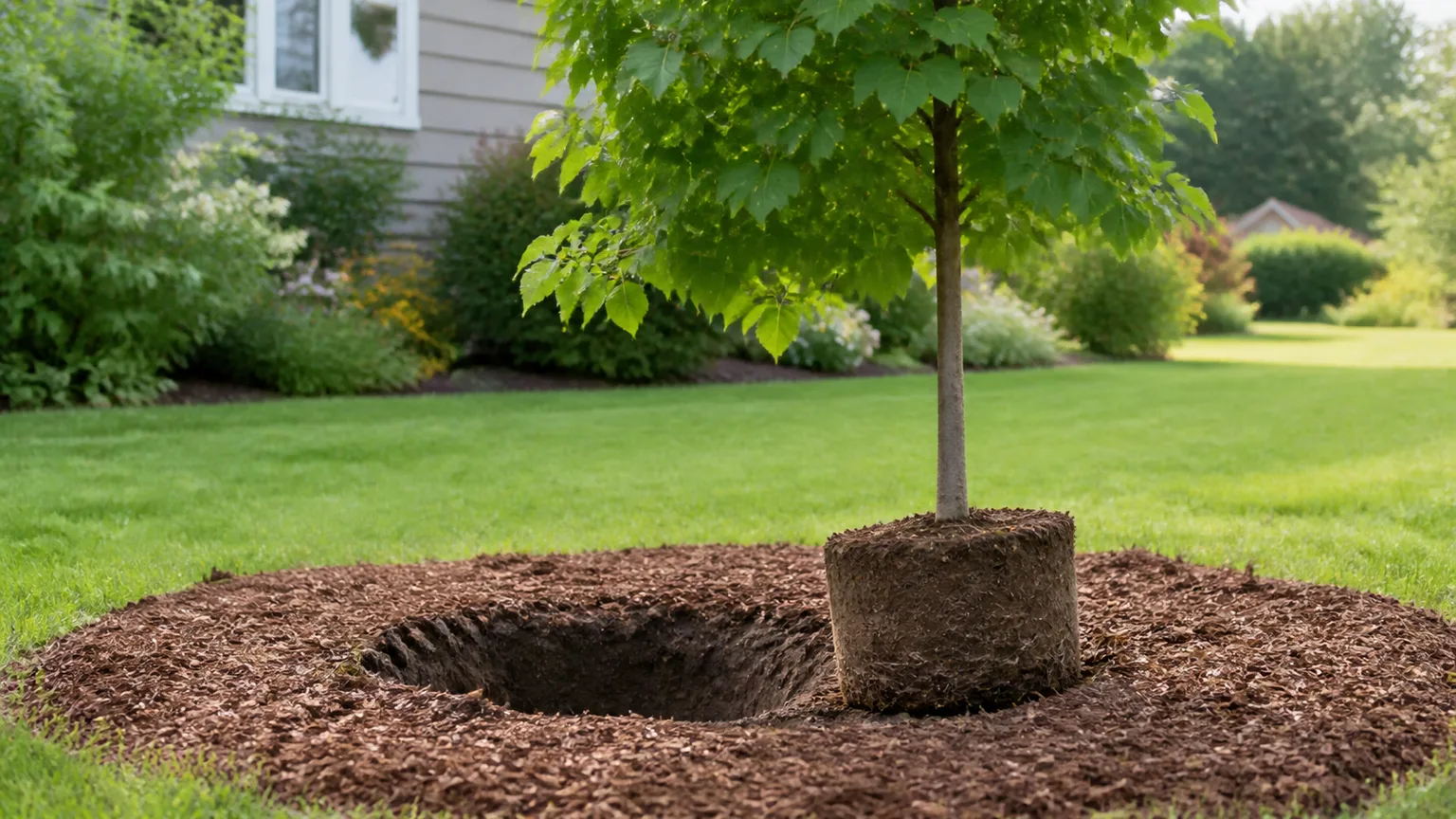
Water a newly planted tree deeply enough to moisten the root ball and surrounding soil, then adjust the interval to rainfall, temperature, and drainage. Check below the mulch before watering again. A tree can wilt in wet soil when roots lack oxygen, so a limp canopy is not automatic proof that it needs more water. Keep a broad, shallow mulch layer over the root zone, leave space around the trunk, and avoid piling soil against the bark.
Pruning can reduce next year’s fragrance if it removes flower-bearing wood. Japanese flowering apricot should be pruned immediately after flowering if shaping is needed; tea olive flowers on older growth, so repeated late-season shearing can remove buds. For other trees, remove dead, crossing, or hazardous branches and avoid topping the canopy. A slow-growing natural form is usually easier to keep healthy than a tree forced into an artificial size by annual severe cuts.
Fragrant trees that need a second look
Two strongly scented choices deserve extra caution before they are planted. Mimosa (Albizia julibrissin) has showy summer fragrance, but NC State Extension lists it as invasive in North Carolina and other parts of the Southeast, with self-seeding and disease problems; check your local invasive-plant list and choose a regionally appropriate alternative. Golden chain (Laburnum species) has scented yellow flowers, yet its seeds and pods are poisonous and NC State Extension describes serious toxicity concerns. A fragrance benefit does not cancel a plant’s ecological or safety costs. NC State Extension: mimosa NC State Extension: golden chain tree
Also be skeptical of a list that calls every fragrant plant a tree. Wisteria is a vine, and training a vine onto a standard creates a tree-like shape but does not give it the structure or maintenance needs of a true tree. That approach may work in a pot or formal design, but it needs permanent support and regular pruning; choose a species recommended for your region rather than buying a plant just because its flowers smell good.
Conclusion
The best fragrant tree for your landscape is the one whose scent, bloom season, mature scale, and site needs line up with the way you use the yard. Choose Japanese flowering apricot or star magnolia for early spring, tree lilac or fringe tree for later spring, tea olive for a potent close-range fall scent, and linden for a large summer canopy. Chaste tree adds aromatic leaves and warm-season blooms, while sweetbay magnolia brings a lemon note to moist ground.
Before buying, check a cultivar’s mature dimensions and regional hardiness, smell it in bloom if possible, and confirm any invasive or toxicity concerns with your local extension service. Place it where flowers are within reach and the mature canopy has room; then let the species’ natural form guide pruning. That simple match between nose, season, and site is what turns a fragrant tree from a label into a feature you will notice every year.