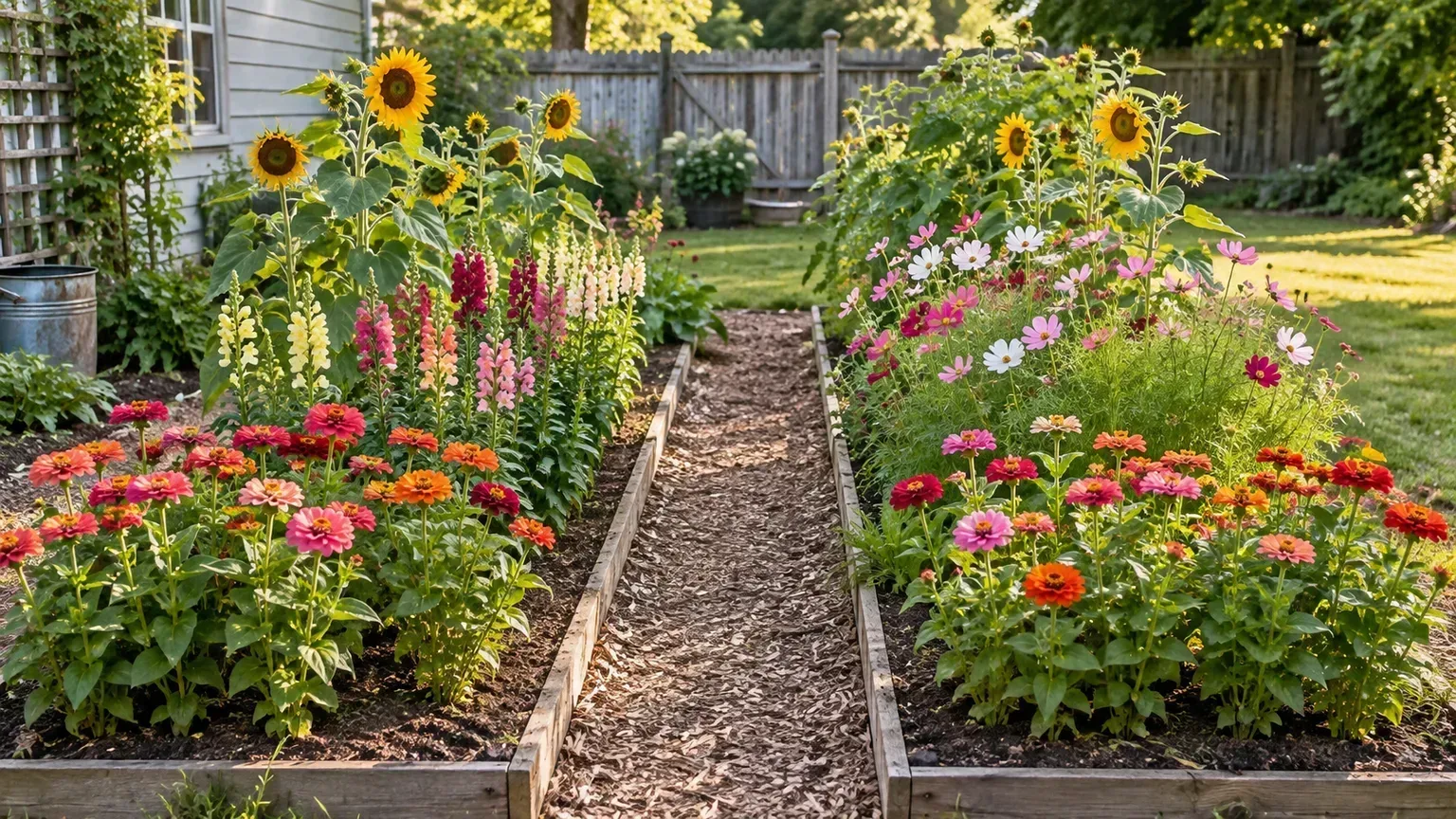
27 Garden Path Ideas for a Beautiful Backyard
Explore 27 garden path ideas, from flagstone and brick to gravel, stepping stones, lawn, and wood. Match the look to your yard, traffic, and upkeep.
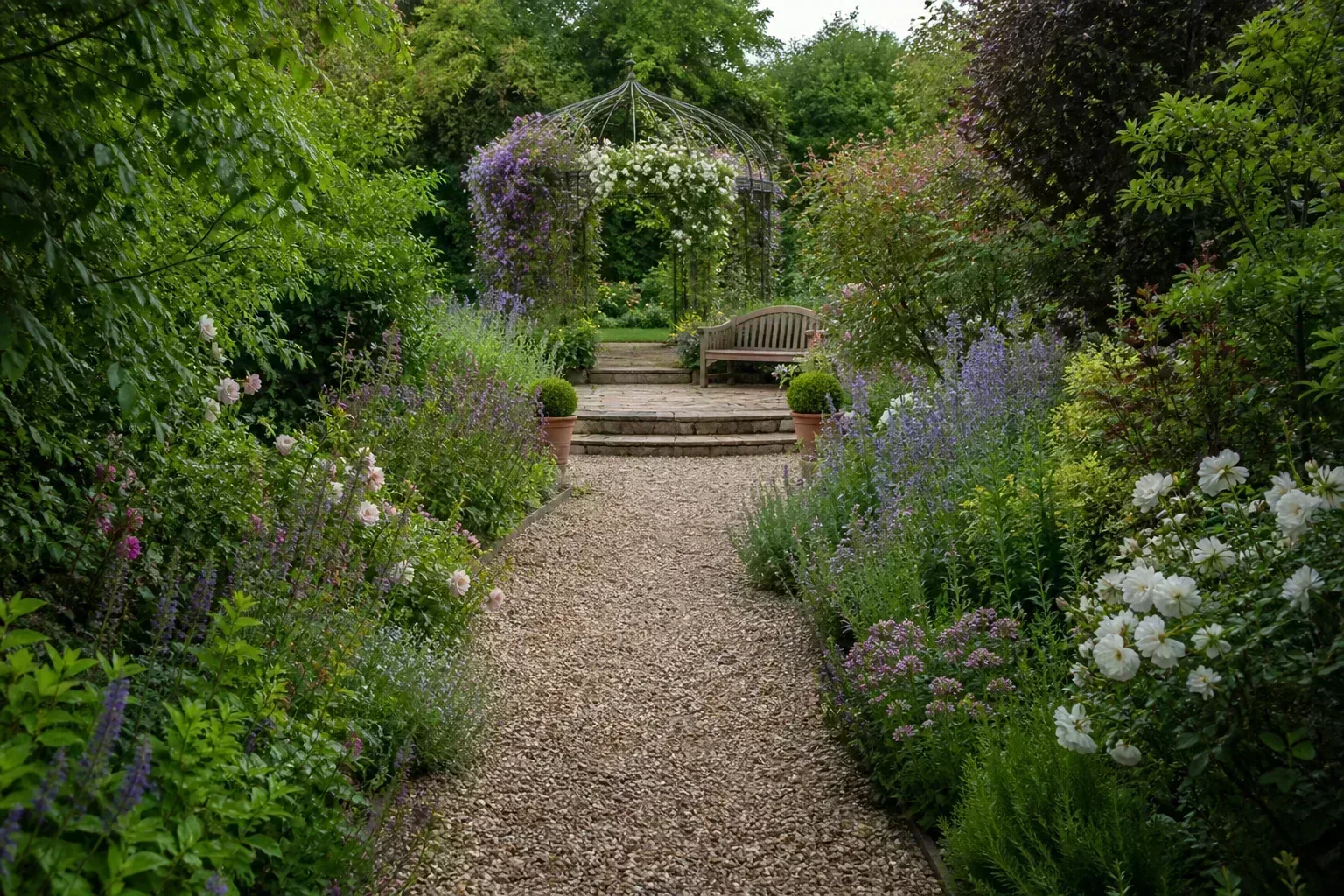
A well-placed garden path makes the yard easier to move through and gives the eye a reason to travel past the patio or lawn. It can be a quiet line of stepping stones through planting, a durable walk to the shed, or a broad paver route between outdoor rooms. The best-looking option is the one that fits how you use the yard, the ground beneath it, and the amount of upkeep you want.
Plan the route before choosing a path style
Start by watching where you already walk. A path that follows the natural route from a back door to a vegetable bed will get used; a decorative curve that adds distance to a daily task may simply be cut across the lawn. University of Florida IFAS Extension describes walkways as both circulation and garden organization, with a role in connecting spaces and giving maintenance access. (University of Florida IFAS Extension)
Start with its job, users, and width
Decide whether the route is a main walkway or a secondary garden stroll. A front-to-back route, daily trip to a shed, or path used with a wheelbarrow benefits from continuous, steady footing and enough width for its traffic, while a quiet trail to a bench can be narrower and more informal. UF/IFAS recommends a width of at least 3 feet for walkways intended for more than one person at a time; plan wider if you need to pass with a cart, stroller, or mobility aid. (University of Florida IFAS Extension)
Consider who will use the path and how they move through it in every season. Loose pea gravel and widely spaced stones can be charming but harder to cross with wheels or an unsteady gait, while uneven slabs can catch a toe or mower blade. For the main route, choose a stable surface with gentle transitions; use looser or more delicate finishes on secondary paths where they will be easier to maintain.
Read the slope, soil, drainage, and planting
Walk the proposed route after rain and notice where water collects, where soil stays muddy, and whether runoff already moves toward a building or neighboring property. A permeable surface such as gravel or open-joint pavers can help water pass through, but compacted soil, clay, a high water table, or a poorly prepared base can still leave puddles. NC State Extension recommends considering permeable paving to improve infiltration and limit runoff, while UF/IFAS suggests a slight cross-slope to encourage drainage. (NC State Extension: Landscape Design) (UF/IFAS Extension)
Also locate tree roots, irrigation lines, gates, hose bibs, and plants that will spread over the edge. A straight path may simplify mowing and snow clearing, while a curve can preserve a mature tree or avoid a wet low spot. If the route crosses a steep slope, directs water toward a foundation, or needs substantial steps or retaining work, get local design or construction advice before digging.
27 garden path ideas for different yards
Use these ideas as starting points rather than exact templates. You can change the material, line, and planting around the edges to match a small courtyard, cottage border, woodland, or contemporary backyard.
Stone and paver paths
Stone and manufactured pavers create a durable visual line and can handle regular traffic when the base and transitions are stable. Natural shapes feel relaxed; repeated rectangles or brick patterns make the route read as more formal.
1. A straight flagstone entry walk. Set broad, flat stones in a clear line from a gate or back door to the patio, then soften the edges with low planting. The direct geometry suits formal gardens and makes the destination obvious, but use a stable, even surface if it is the route people cross every day.
2. Irregular flagstone through a cottage border. Fit uneven natural slabs through a mixed bed so the path looks like it belongs among flowers and shrubs. Keep each stone large enough to take a comfortable step and set it securely; decorative gaps can be filled with gravel or ground cover only where they will not make the walking line unstable.
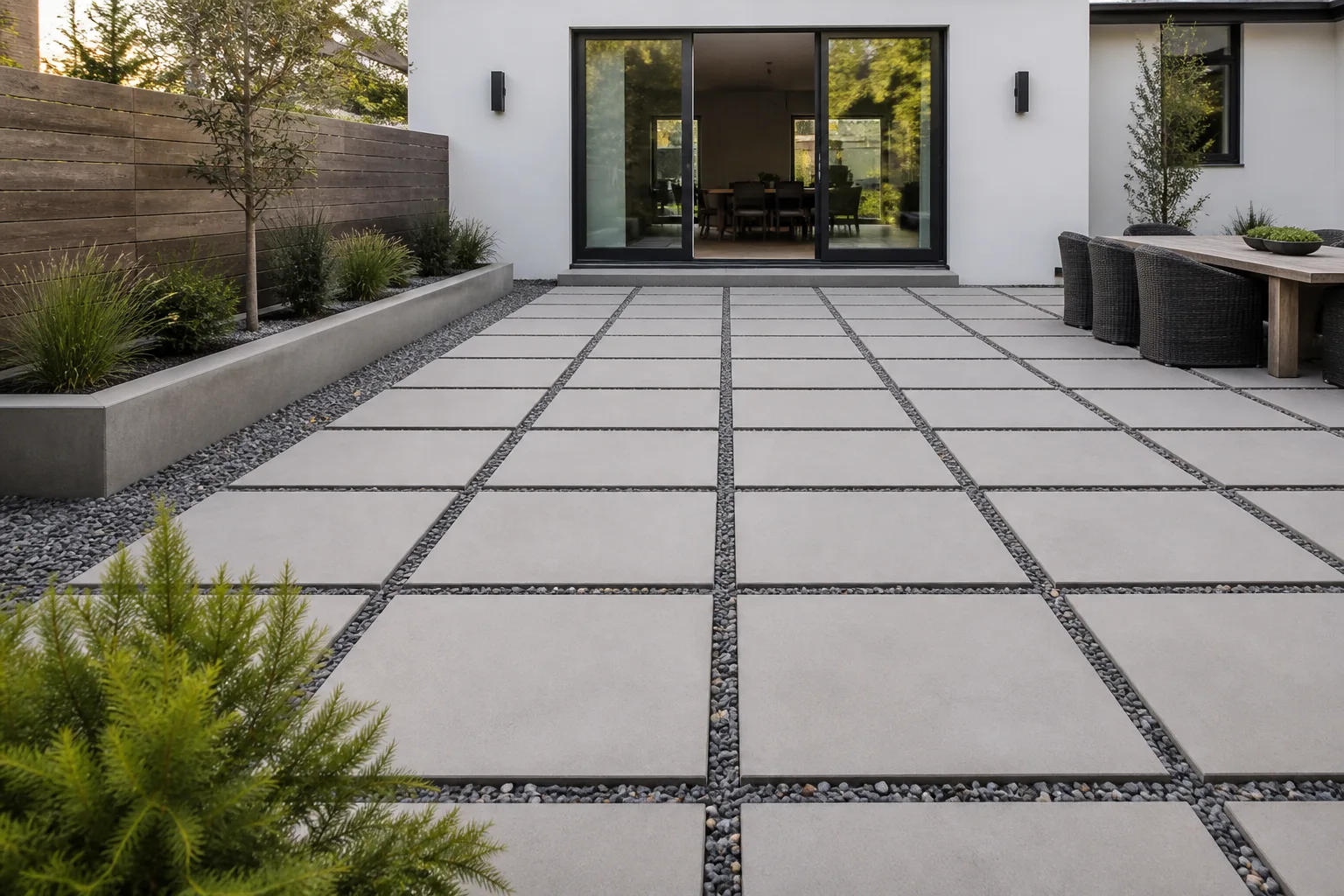
3. Oversized square pavers in a grid. Repeat large concrete or stone squares with narrow gravel joints for a calm, modern walkway. The regular pattern works well between a house and seating area, and the simple geometry can make a small yard feel organized without filling it with many different materials.
4. Pavers turned on the diagonal. Rotate square slabs so they point toward a gate, a specimen tree, or a view instead of lining them up with the house. The angle adds movement without requiring a complicated material mix; repeat the same paver size so the pattern still feels intentional.
5. A brick herringbone path. Lay brick in a herringbone or basket-weave pattern for a traditional look that pairs naturally with clipped borders and older homes. A defined edge helps the pattern stay tidy, and a properly prepared base matters because loose or uneven bricks can shift with weather and foot traffic.
6. A patchwork of reclaimed stone and brick. Combine leftover pavers, old bricks, or broken flagstone in a controlled pattern, such as a brick border around larger stone centers. Reuse can lower material costs and create a one-off look, but keep the walking surface flush and consistent instead of leaving abrupt height changes.
Gravel and mixed-surface paths
Loose or compacted aggregates can be less expensive than a full stone walk and allow water to infiltrate when the underlying site also drains. The stone size and shape make a major difference to comfort: UC Agriculture and Natural Resources notes that rounded pea gravel shifts underfoot, while angular crushed stone compacts into a firmer surface for frequent walking. (UC Agriculture and Natural Resources: Gravel Pathways in the Garden)
7. A compacted decomposed-granite trail. Use fine, angular decomposed granite for a warm-toned path that feels softer than concrete yet firmer than loose pea gravel. It suits informal gardens and gentle curves, though it may need edging or periodic top-ups where rain or foot traffic moves material.
8. A crushed-stone path with a cobble edge. Contain angular gravel with a low border of cobbles, brick, or metal so it stays out of beds and turf. The edge creates a finished line and keeps loose aggregate in place; use locally available stone to tie the path to other hardscape and reduce hauling.
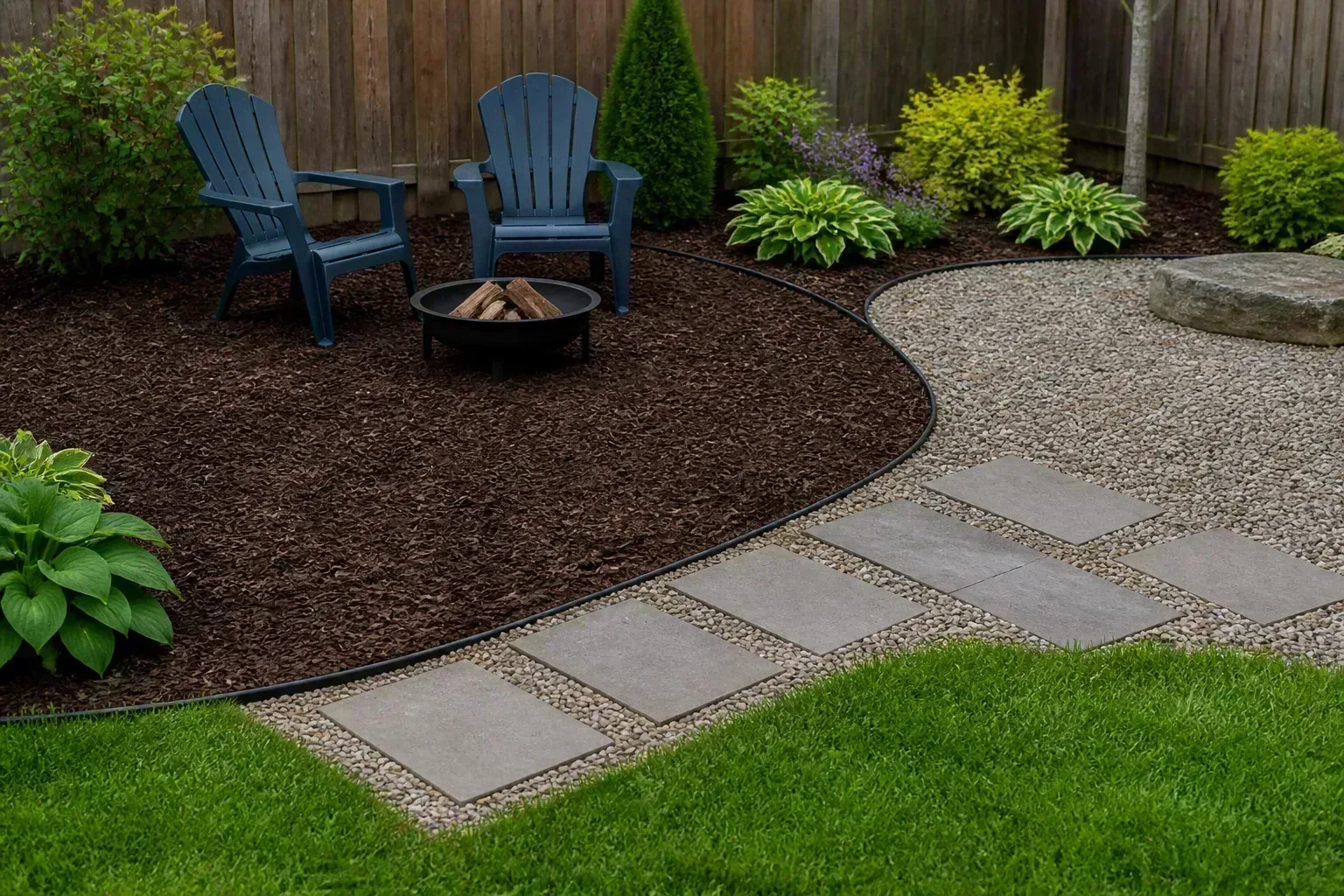
9. Large slabs set in gravel. Place concrete or stone slabs at regular intervals in a bed of fine gravel to combine stable footfalls with a softer, permeable field. This mix looks clean in contemporary landscapes, and it can be less costly than paving the full width with stone; keep joints easy to sweep and low enough to avoid catching a shoe.
10. Pea gravel with a firm stepping strip. Use rounded gravel as a quiet, informal ground plane, but add broad pavers or flat stones along the line people actually walk. Pea gravel can roll underfoot, so the hard stepping line makes the route more comfortable while the loose material fills the visual space between.
11. A crushed-shell coastal path. Pale shell can reflect light and suit a coastal or warm-climate garden, especially when paired with grasses and weathered timber. Source shell from a landscape supplier and check local availability and rules; avoid using it where a loose, uneven surface would be difficult to walk on or maintain.
12. Gravel and flagstone with a planted margin. Lay irregular stones through a narrow gravel bed, then use a low, restrained edge planting to connect the path to the surrounding garden. This is a flexible design for a cottage or naturalistic yard, but leave enough clear tread that foliage does not become slippery or conceal the edges.
Lawn, ground cover, and woodland paths
Living or organic surfaces blend into planting, but they are not maintenance-free. Reserve them for traffic levels and light conditions they can tolerate, and use a firmer route for daily trips or anyone who needs stable footing.
13. A mown ribbon through the lawn. Keep a simple path as a slightly shorter strip of turf that curves around beds or leads to a garden feature. It is easy to change as the layout evolves, but it needs regular mowing and may become muddy or worn where people repeatedly cross wet or shaded ground.
14. Broad stones with moss seams. Set broad, stable flagstones into a cool, shaded part of the yard and allow moss to soften the joints. This has a quiet woodland feel, but moss prefers reliably moist shade and can become slick; do not use a mossy finish on steps or a high-traffic route that needs sure footing.
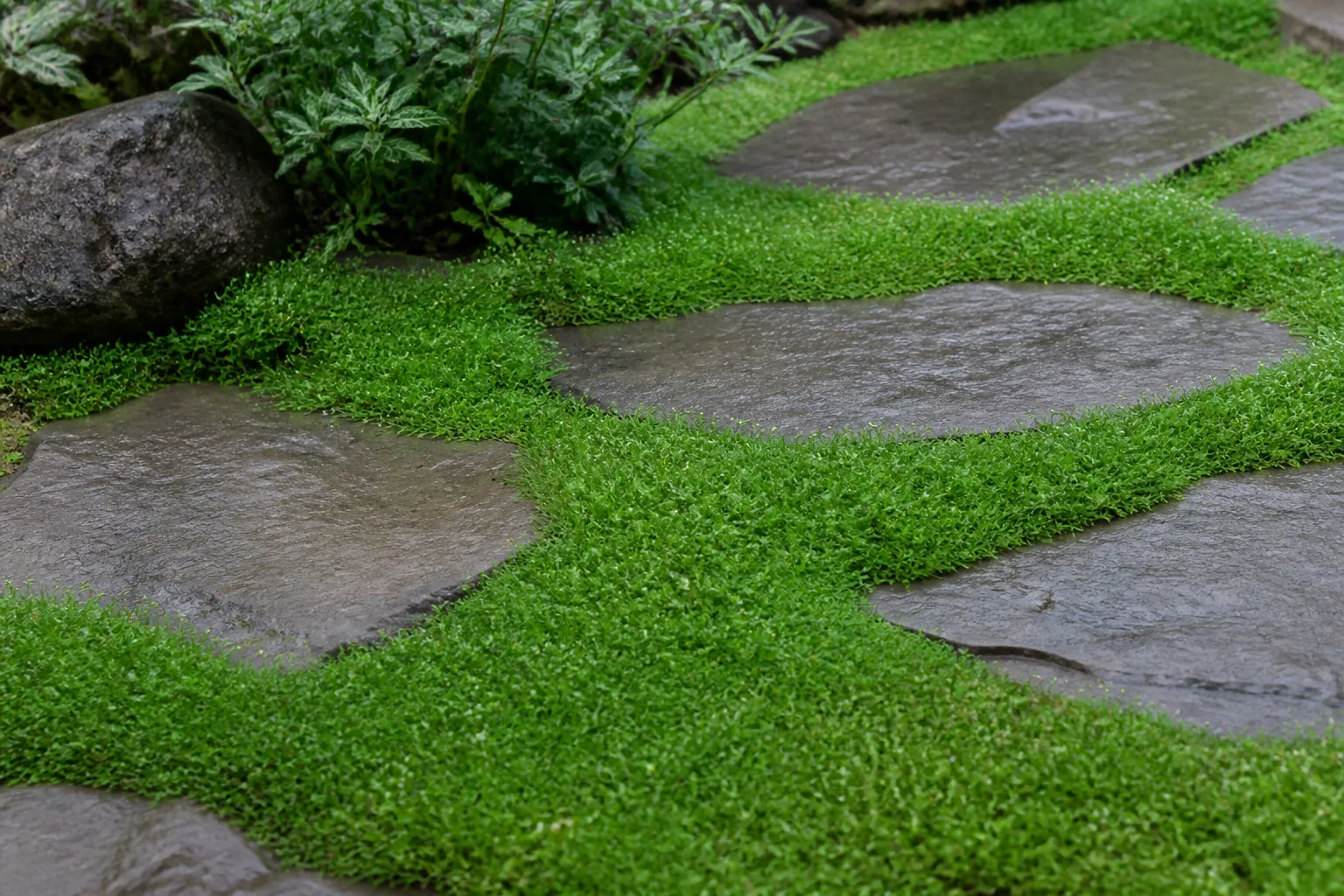
15. Low ground cover between large slabs. Leave generous planting pockets between broad pavers and grow a low, spreading ground cover suited to the local light and climate. It softens hard edges and gives a path a planted look, but select a species that tolerates occasional foot traffic and keep it trimmed back from the actual tread.
16. A simple bark or wood-chip trail. Spread an organic surface to lead through a woodland border or toward a tucked-away bench. Wood chips are relatively easy to install and can be replenished, but they decompose, scatter, and may shift in heavy rain, so they work best on secondary routes rather than as a permanent, firm entry path.
17. A natural soil path through a meadow. Keep a narrow track in an informal garden and let the surrounding planting define its edges. This low-cost option suits light use and a dry, stable site; in heavy rain or soft soil it can turn muddy, so add stepping stones or a more durable section at worn spots.
Curves, destinations, and garden rooms
A path can make the garden feel larger by revealing a view gradually, or it can organize separate areas into a clear sequence. Garden Design recommends using path shape, repeated elements, and a focal point to guide the eye and make a route feel connected to the surrounding landscape. (Garden Design: Garden Pathways)
18. A gentle curve that reveals the garden in stages. Let the path bend around a bed or shrub so a seat, sculpture, or flowering area appears only after the visitor follows the turn. A curve adds discovery in an informal landscape, but keep it broad enough to walk easily and avoid bends that make a utility route unnecessarily long.
19. A straight axis with a view at the end. Aim a direct path toward a framed tree, water feature, sculpture, or doorway to create a formal focal line. The destination gives the route a reason to exist, and repeated pots or lights can reinforce the axis without crowding the walkway.
20. A circular loop around a central feature. Wrap a walk around a small tree, birdbath, or garden bed so people can approach it from more than one direction. A loop works well in a lawn or courtyard where the feature can be seen from the house, and the continuous route avoids a dead-end trail.
21. A pause point along the path. Widen one section into a small sitting pad or standing area with a bench, chair, or container garden. This creates a destination within the route and gives visitors somewhere to stop without blocking the walking line; use the same paving or gravel tone to make the widened spot feel integrated.
22. An arbor or pergola-framed walkway. Add a simple arbor at the entrance or repeat pergola posts along the path to create a sense of passage. Climbing plants soften the structure and add seasonal interest, but leave headroom and maintain enough clearance so vines, ties, or overhanging branches do not catch people using the path.
Paths for special sites and personal touches
Site-specific details often turn a generic walkway into a useful garden feature. Match the construction to the challenge—wet ground, narrow access, slope, or a need for a personal detail—rather than asking a decorative finish to solve a drainage or stability problem.
23. A practical side-yard service path. Connect a side gate with bins, a shed, or the backyard using a straight, easy-to-sweep strip of pavers or compacted gravel. Keep plantings from narrowing the route, and choose a surface that tolerates wheelbarrows or regular trips instead of a delicate stepping-stone pattern.
24. A poolside walk with sure footing. Use textured, well-drained pavers or stone to link a pool with seating and the house, and keep the route clear of trailing plants. Smooth surfaces may become slippery when wet, while dark stone can become hot in strong sun, so check the actual material and exposure before installing it around bare feet.
25. A switchback path for a sloped yard. Let the route cross the hillside in broad turns rather than running straight downhill, then use stable steps or level landings where the grade changes. A winding line can feel gentler and reduce direct runoff, but steep or eroding slopes may need professional grading, drainage, or railing design. (Garden Design: Garden Pathways)
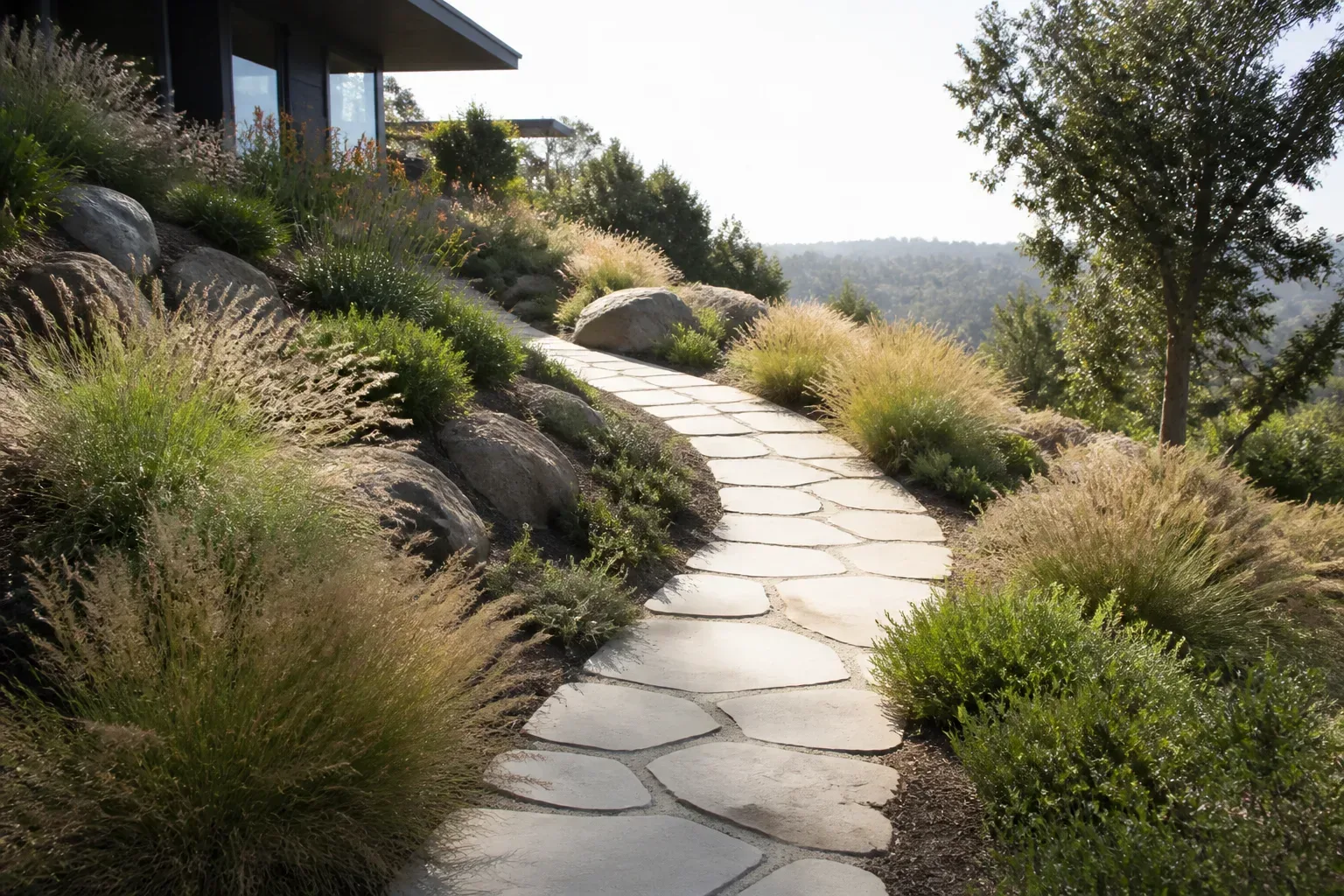
26. A raised timber boardwalk across a damp patch. A short raised walk can keep feet out of a muddy low spot or protect a planted area from repeated trampling. Build it with stable supports and a slip-resistant surface, and do not block the way water naturally moves through the site; use a drainable path design if standing water is a recurring problem.
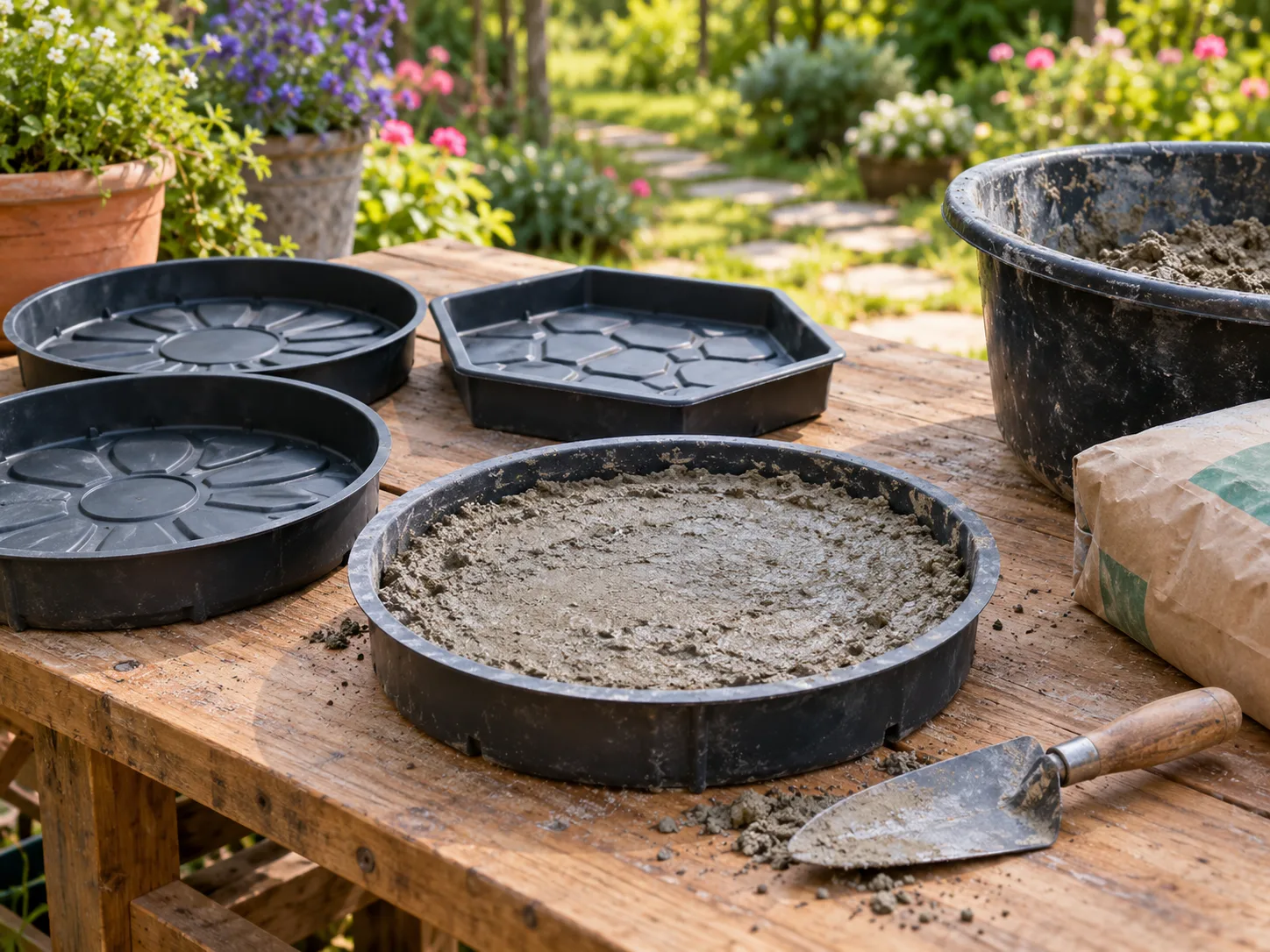
27. Handmade pebble-mosaic stepping stones. Decorate a few cast stepping stones with pebbles, shells, or a simple color pattern, then set them flush into lawn or gravel along a secondary route. The handmade detail adds personality without requiring a fully paved path; BBC Gardeners’ World demonstrates using mosaic stones in well-trodden grass, where they can help protect the lawn. (BBC Gardeners’ World Magazine)
Choose a material for footing, upkeep, and budget
Compare surfaces by how they feel after rain, how much work they need, and how permanent they should be. Fine Gardening notes that path width, shape, upkeep, and traffic should help guide the material choice, while garden-design advice emphasizes safety and drainage as well as appearance. (Fine Gardening: Picture-Perfect Garden Pathways) (Garden Design: Garden Pathways)
Compare firm, loose, and living surfaces
| Surface | Best fit | Keep in mind |
|---|---|---|
| Flagstone, brick, or concrete pavers | Main routes, patios, and formal or modern designs | Needs a stable, level base; joints and edges need maintenance |
| Angular crushed stone or compacted fines | Curving paths, utility routes, and permeable surfaces | Choose the right gradation and stabilize the surface where traffic is frequent |
| Pea gravel or rounded pebbles | Decorative secondary routes and planted areas | Shifts underfoot; edging and firm stepping stones improve comfort |
| Bark or wood chips | Informal woodland trails and low-use paths | Breaks down, scatters, and needs refreshing |
| Lawn or ground cover | A soft look between large stepping stones | Needs suitable light, mowing or trimming, and protection from repeated wear |
For a primary route that people use daily, prioritize a continuous, steady tread over a complex pattern. A casual garden stroll can use varied textures, but wide gaps, loose stones, moss, or soft mulch should not become the only route to a place someone must reach reliably. If a path needs to serve someone using wheels or a mobility aid, use a firm, stable surface and check applicable local accessibility requirements.
Cost is more than the price of the top layer. Gravel may be inexpensive by volume, but edging, excavation, delivery, and replenishment add effort; reclaimed bricks can save money but may need sorting and leveling. Flagstone and pavers usually cost more upfront, while they can reduce routine raking and top-ups; choose a material you can source and maintain locally.
Use edging and drainage to keep the route working
Edging contains gravel and mulch, keeps a lawn from creeping into a stone walk, and gives the path a crisp line. Options include brick, stone, metal, or a simple trench edge; choose one that suits the style and can be kept level with the walking surface. UC ANR notes that gravel pathways often use a border to prevent aggregate from migrating into surrounding soil. (UCANR: Gravel Pathways in the Garden)
A gravel or open-joint path can accept rain better than a solid slab, but it still needs a route for runoff. Avoid channeling water toward a foundation, neighbor, or erosion-prone bed; inspect the surface after a storm and correct low spots before they turn into puddles. On steep grades, wet sites, and paths with steps, get local guidance on drainage, base preparation, and safe transitions rather than using a generic depth from an online plan.
Test and lay out your route before building
A garden hose, rope, or flexible timber lath lets you preview curves and widths before buying material. Walk the line in both directions, carry the wheelbarrow or garden basket you expect to use, and imagine mowing, carrying chairs, or walking after dark. Fine Gardening recommends marking the route on the ground and checking drainage while it is still easy to make changes. (Fine Gardening: 5 Steps to a Successful Gravel Path)
Mark the line and check each step
Start at the real departure and destination points, then mark both edges rather than drawing only a centerline. A path meant for two people should be wider than a solo stepping-stone trail; UF/IFAS gives 3 feet or more as a guide for a walkway designed for multiple people. For individual stepping stones, Garden Design suggests about 18 to 24 inches between stone centers as a starting point, but set a few temporarily and test your natural stride before placing the full run. (UF/IFAS Extension) (Garden Design)
Check every bend, threshold, and change in height. Keep the stones low enough to mow over where turf borders the path, create landings where people may stop or turn, and add lighting where the route will be used at night. If the route feels awkward with hose or chalk outlines, it will not feel more natural after the hardscape is installed.
Prepare the surface for its material
Remove turf and loose organic debris where needed, then prepare a stable base appropriate to the path material, soil, climate, and expected load. Gravel, individual stepping stones, and mortar-set pavers do not use identical layers, so follow a locally suitable installation guide for the selected surface instead of treating one recipe as universal. For gravel, Fine Gardening highlights drainage, edging, a sufficient surface layer, and stabilization as key to a path that does not become loose and uneven. (Fine Gardening: 5 Steps to a Successful Gravel Path)
Keep finished stones level and secure, and correct drainage before adding decorative gravel or ground cover. If excavation reveals large roots, buried utilities, unexpected water, or unstable soil, pause and get appropriate local advice before changing the grade. A little extra planning protects both the path and the plants around it.
Conclusion
A useful garden path can be a straight brick walk, irregular flagstone, a gravel curve, or just a few stable stepping stones through the lawn. Choose its line and material around the way you move through the yard, then account for traffic, slope, drainage, and upkeep before building. The right path will connect the garden’s spaces while making the journey between them feel like part of the design.