15 Feng Shui Plants for Positive Energy in Your Home
Choose feng shui plants by room light, plant shape, care needs, and pet safety. Compare 15 options and learn how to place them without overpromising luck.
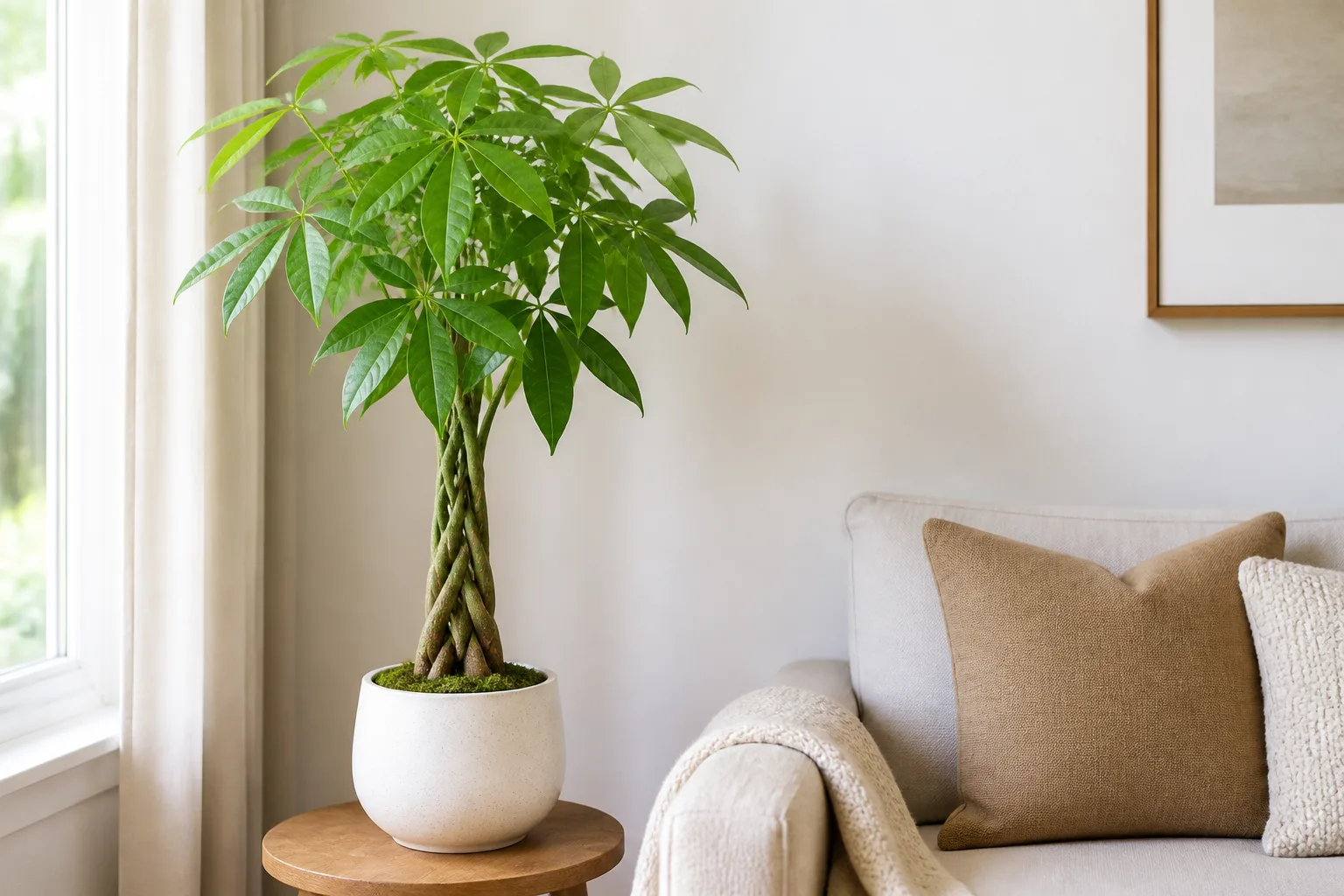
A feng shui plant is not a magic fix for a room or a guarantee of money, health, or a better relationship. It is a living element chosen with attention to form, placement, and the way a space feels; the best choice is one that also suits your light, household, and care routine. Feng shui has a long history as a Chinese practice of arranging and evaluating environments, but today’s houseplant lists often mix traditional ideas with modern interior styling (research on feng shui and Chinese environmental planning; International Feng Shui Guild glossary).
That distinction makes choosing easier. Start with a healthy plant whose shape and symbolism you enjoy, place it where it can grow and where people can move comfortably, and treat the meaning as an intention or cultural framework—not a horticultural result. If you have a cat, dog, or young child, check the exact botanical name before you buy: “money plant” and “rubber plant” can refer to very different species.
What feng shui can—and cannot—promise from a plant
In feng shui, living plants are commonly associated with the Wood phase, often interpreted through growth, vitality, and renewal. Practitioners may favor rounded or heart-shaped leaves for a softer visual impression, upright growth for momentum, or a plant in a particular bagua area to support an intention. Those are symbolic and design interpretations; there is no dependable plant-placement formula that guarantees financial prosperity or changes someone’s health or relationships. Contemporary garden-design coverage also describes plants as symbolic anchors for intentions, rather than a substitute for practical decisions (Homes & Gardens; Gardening Know How).
There is no single universal blacklist of “bad feng shui plants.” Some guidance treats pointed leaves, thorns, or cactus spines as visually sharp forms that may feel uncomfortable close to a seat, bed, or desk. That does not make every spiky plant harmful in every room: if you follow that interpretation, place one where its shape is not aimed at a person or choose a softer-leaved plant for a restful corner. A neglected, pest-ridden plant is a more practical problem than a healthy cactus; choose what you can actually maintain.
Artificial plants can serve as a visual symbol if a room cannot support a live one, but they do not provide the same living greenery that many feng shui approaches associate with Wood. Choose a realistic, clean, undamaged piece and treat it as decor; do not let symbolism push a failing live plant into a dark corner where it will deteriorate. For a space with no usable daylight, a good-quality artificial plant or a plant light is more honest than pretending a living plant can thrive without light.
Choose a plant that fits your room before its symbolism
Before you think about a wealth corner or lucky stalk count, look at the site. Observe the brightest window through the day, note how far the plant would sit from it, and check for hot afternoon sun, cold drafts, heating vents, or a spot where a doorway needs to swing open. “Low light” means less light than many houseplants prefer—not no light at all—and a plant that tolerates shade may grow slowly or lose its compact shape if it is too far from a window.
Next, be honest about your routine. Succulents such as jade prefer strong light and a drying interval; ferns need more consistent moisture and humidity; pothos tolerates a wider range but still grows better in brighter indirect light. If you travel often, choose a plant that tolerates some drying rather than one that droops as soon as its mix dries. Extension services recommend matching plants to room light and watering needs, not relying on a generic “easy-care” label (Iowa State Extension’s low-maintenance houseplant guide; University of Maryland Extension on selecting indoor plants).
Finally, decide where the plant can sit without blocking a path, obscuring a window, or becoming a tipping hazard. A small, healthy plant on a stable stand may feel more welcoming than an oversized specimen crowded into a narrow entry. If a feng shui recommendation conflicts with light, safety, or daily movement, adjust the location or choose another plant; a map should help organize a room, not make it less livable.
Quick comparison: 15 feng shui plants by light and care
The symbolic associations below are common contemporary interpretations, not universal rules. Light descriptions refer to indoor placement; pet notes are a first screen, not permission to let an animal chew a plant. “Bright indirect” means a bright room without harsh direct sun on foliage; always confirm the botanical name because common names overlap.
| Plant | Why people choose it | Indoor fit | Pet note |
|---|---|---|---|
| Jade (Crassula ovata) | Coinlike leaves; abundance symbolism | Bright light; dry between waterings | Toxic to cats and dogs |
| Money tree (Pachira aquatica) | Braided trunk; steady-growth symbolism | Bright indirect light; moderate moisture | ASPCA lists as non-toxic |
| Chinese money plant (Pilea peperomioides) | Round leaves; sharing and renewal | Bright indirect light | NC State describes as pet-safe |
| Lucky bamboo (Dracaena sanderiana) | Upright stems; flexible growth | Bright indirect light; water or soil culture | Toxic to cats and dogs |
| Golden pothos (Epipremnum aureum) | Heart-shaped trailing foliage | Indirect light; forgiving but not light-free | Toxic to pets |
| Heartleaf philodendron (Philodendron hederaceum) | Heart leaves and climbing form | Medium to bright indirect light | Toxic to cats and dogs |
| Rubber plant (Ficus elastica) | Large, glossy leaves; strong focal form | Bright indirect light; let mix partly dry | Sap can irritate; keep from pets |
| Peace lily (Spathiphyllum) | White spathes; calm visual presence | Low to medium indirect light; evenly moist | Toxic to cats and dogs |
| Areca palm (Dypsis lutescens) | Arching fronds; softens a room | Bright indirect light; appreciates humidity | ASPCA lists as non-toxic |
| Parlor palm (Chamaedorea elegans) | Compact palm shape; gentle texture | Low to medium indirect light | ASPCA lists as non-toxic |
| Boston fern (Nephrolepis exaltata) | Fine, cascading foliage | Bright indirect light; moist mix and humidity | Verify species; do not assume all ferns are alike |
| Spider plant (Chlorophytum comosum) | Arching leaves and plantlets | Medium indirect light; adaptable | ASPCA lists as non-toxic |
| Baby rubber plant (Peperomia obtusifolia) | Thick, rounded leaves; compact habit | Bright indirect light; avoid soggy soil | ASPCA lists as non-toxic |
| Cast iron plant (Aspidistra elatior) | Broad leaves; tolerance of dimmer rooms | Low to medium indirect light | ASPCA lists as non-toxic |
| African violet (Streptocarpus ionanthus) | Flowers and soft, rounded leaves | Bright indirect light; careful watering | ASPCA lists as non-toxic |
15 feng shui plants for different intentions and homes
Choose from this list by the plant’s real shape and care needs first. Symbolic meanings vary across teachers and traditions, and a plant’s nickname—especially “money plant”—is not a reliable identification label.
Round leaves and prosperity symbols
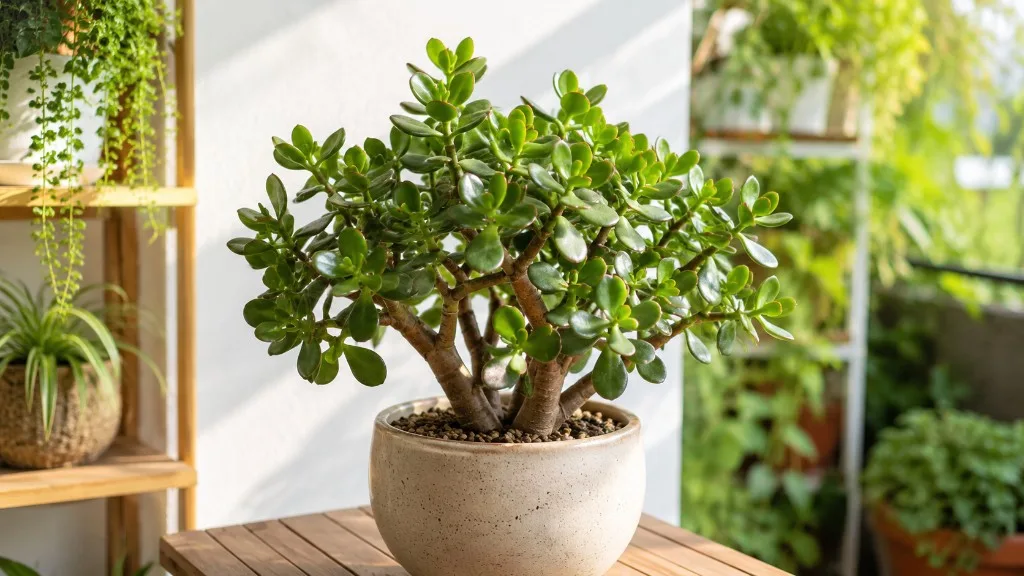
1. Jade plant (Crassula ovata). Its fleshy oval leaves resemble coins, and a mature jade can become a sturdy, tree-like focal point. Give it a bright window, drainage, and fast-drying succulent mix; let the soil dry before watering, especially in winter. ASPCA lists jade as toxic to cats and dogs, so avoid it where pets can reach the leaves (NC State Extension; ASPCA).
2. Money tree (Pachira aquatica). A braided trunk and palmate leaves make this a focal plant for an entry or living room with bright, filtered light. NC State notes its rise as a feng shui prosperity symbol in Taiwan in the 1980s, when braiding was associated with locking in fortune. Keep it warm, in a well-drained mix, and water as the upper soil begins to dry. ASPCA lists it as non-toxic to cats and dogs, though eating any plant can upset an animal’s stomach (NC State Extension; ASPCA).
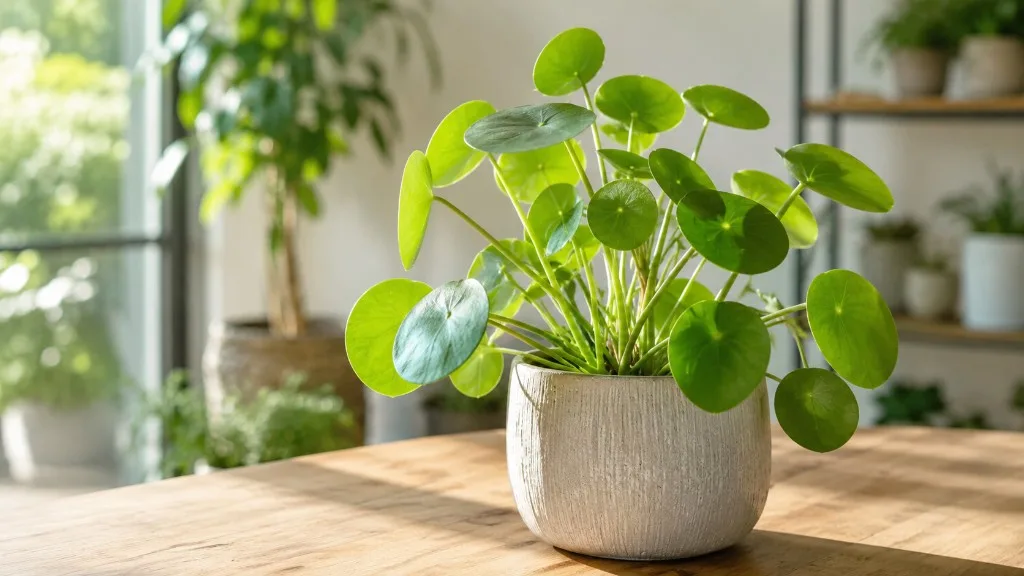
3. Chinese money plant (Pilea peperomioides). Flat, round leaves bring coin symbolism to a compact shelf or desk plant. Give it bright indirect light and moist, free-draining mix, and turn the pot so growth stays even. Its offsets are easy to share, fitting its name “friendship plant”; NC State describes the species as safe for pets and children (NC State Extension; RHS growing guide).
Flexible foliage and upward growth
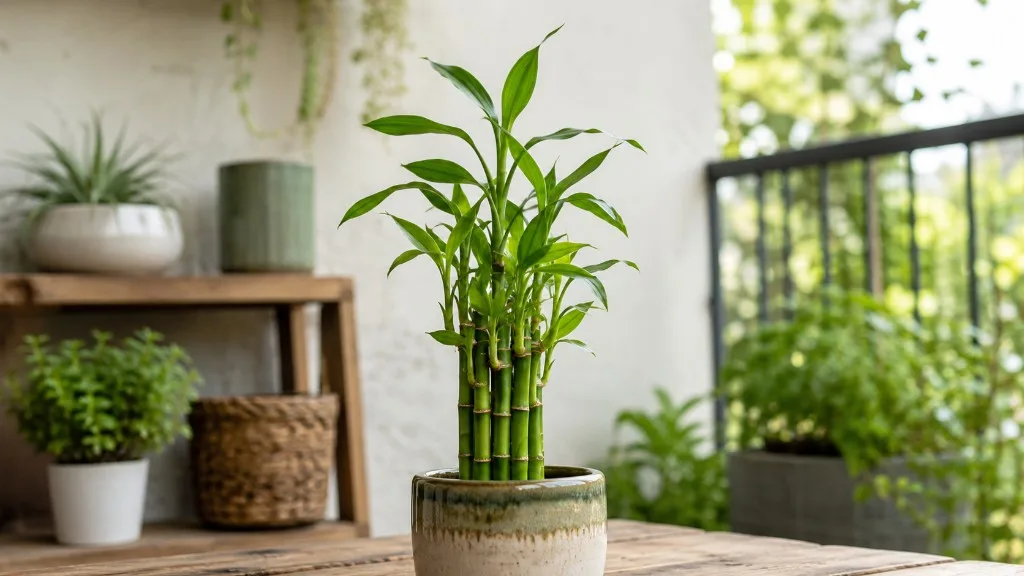
4. Lucky bamboo (Dracaena sanderiana). The upright canes suggest growth, but this tropical African plant is not a true bamboo. Give it bright indirect light and grow it in soil or clean water; change water weekly and submerge the roots, not the whole cane. Stalk-count meanings vary and are not universal feng shui rules. NC State warns that the plant is toxic to cats and dogs (NC State Extension).
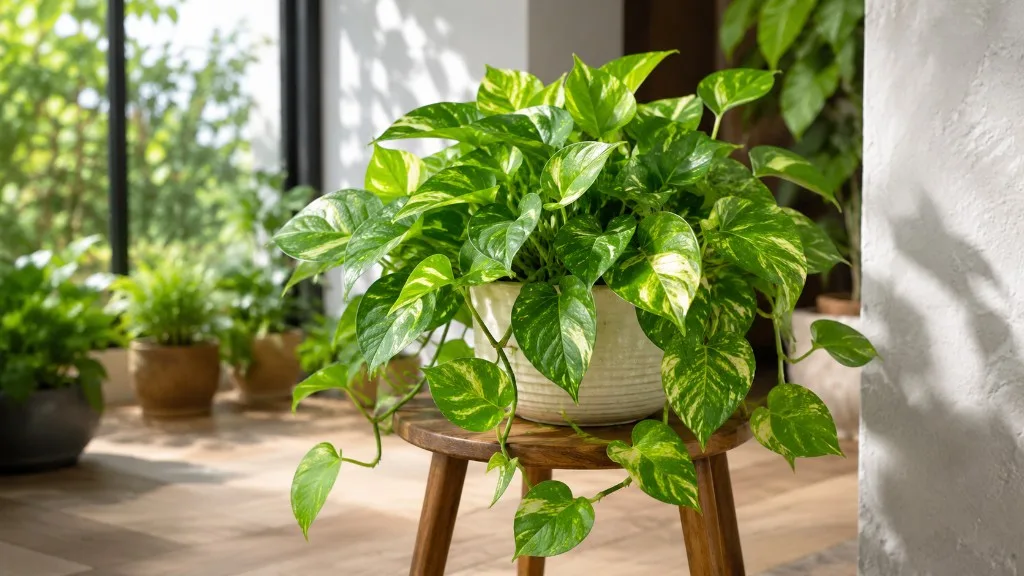
5. Golden pothos (Epipremnum aureum). Heart-shaped leaves and trailing stems soften a shelf, but keep vines clear of paths. It grows best in medium to bright indirect light; water as the mix begins to dry. Dim conditions thin growth and fade variegation. Pothos is toxic to pets because it contains insoluble calcium oxalate crystals, so choose a verified safe species where animals can reach it (NC State Extension; ASPCA).
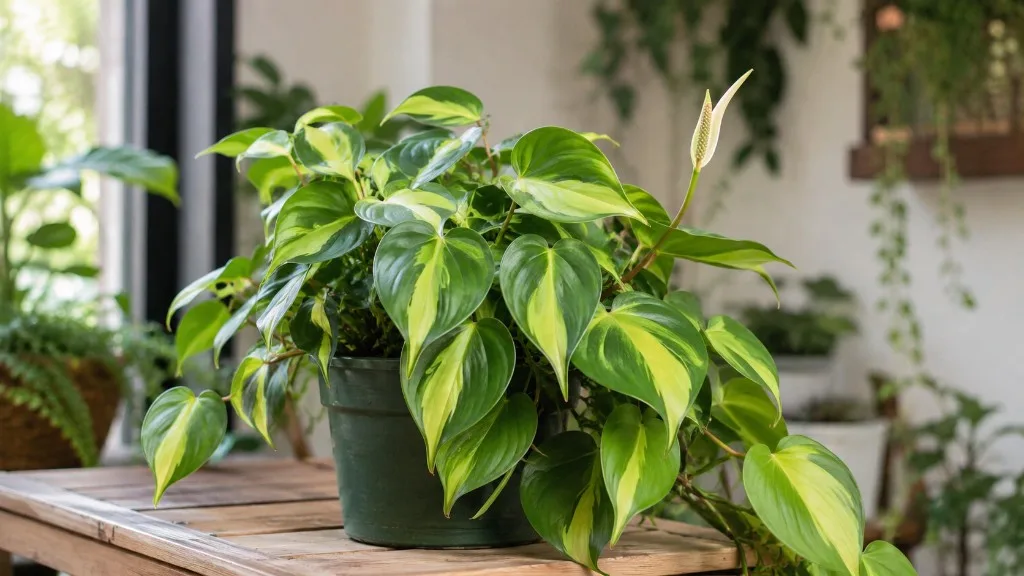
6. Heartleaf philodendron (Philodendron hederaceum). Its slender heart-shaped leaves can climb a support or trail from a high shelf. Give it medium or bright indirect light, let the upper mix dry between waterings, and trim stems before they crowd a path. It is toxic to cats and dogs, so avoid it in accessible pet areas (NC State Extension; ASPCA).
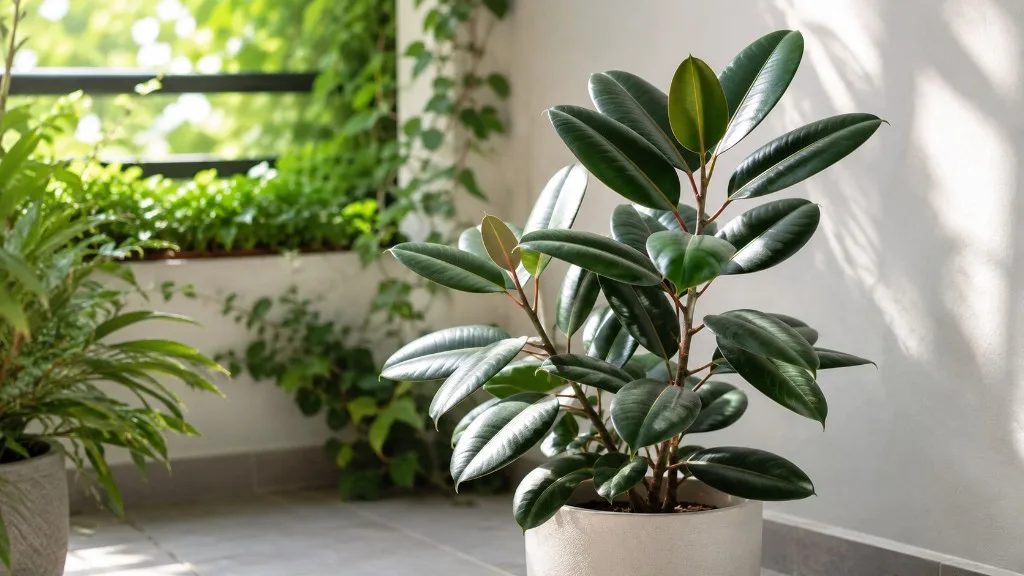
7. Rubber plant (Ficus elastica). Broad, glossy leaves give a room a strong focal point. Provide bright indirect light, water after the upper mix dries, and rotate it if growth leans toward the window. Its milky sap can irritate skin and pets; wear gloves when pruning and keep it away from animals that chew leaves (NC State Extension; Pet Poison Helpline).
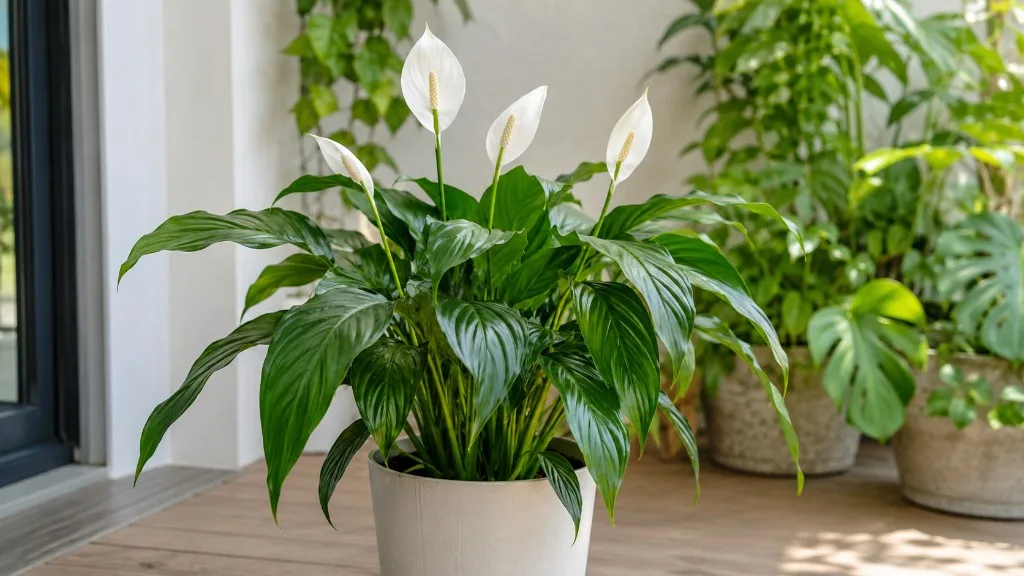
8. Peace lily (Spathiphyllum). Dark foliage and white spathes make a calm focal point in a room without direct sun. Keep the mix evenly moist, not soggy; brighter indirect light supports more blooms than a dark corner. Despite its common name, this is not a true lily, but it is toxic to pets and can irritate the mouth, so do not use it in an accessible pet area (NC State Extension; ASPCA).
Soft shapes for welcoming shared rooms
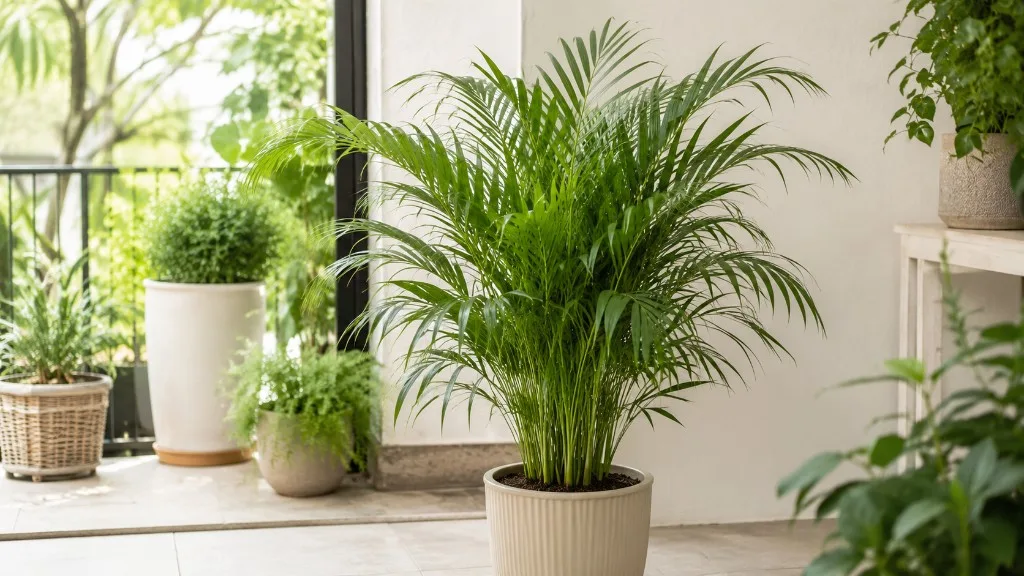
9. Areca palm (Dypsis lutescens, also Chrysalidocarpus lutescens). Arching fronds soften a bright living room or entry, but the plant needs warmth, indirect light, and more humidity than a succulent. Keep its mix moist without waterlogging, and allow room for a broad canopy. ASPCA lists areca palm as non-toxic to cats and dogs (NC State Extension; ASPCA).
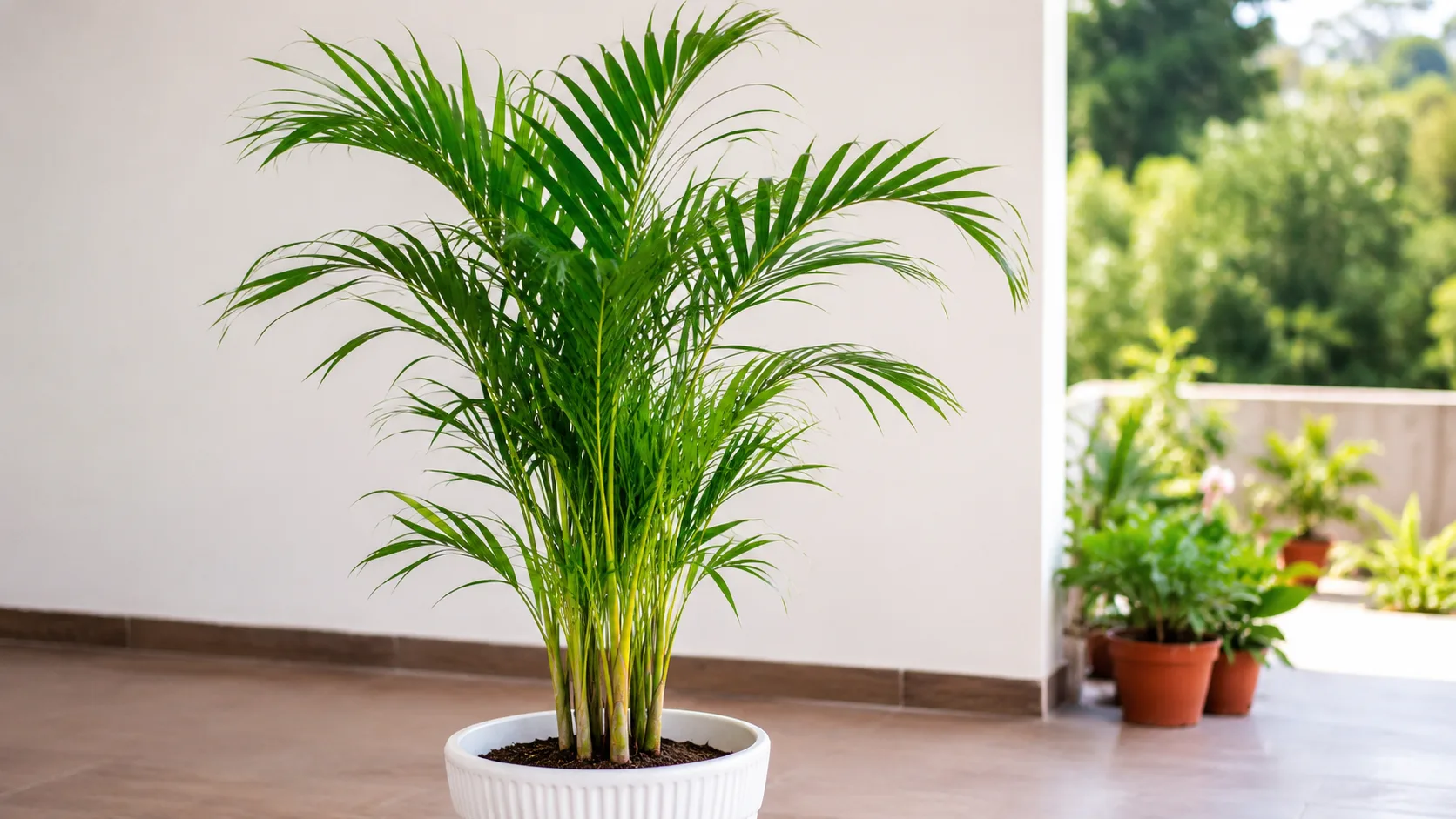
10. Parlor palm (Chamaedorea elegans). This slow-growing palm suits smaller rooms and tolerates lower light, though bright filtered light keeps it fuller. Let the mix dry slightly between waterings and protect it from drafts. NC State describes it as pet-safe, and ASPCA lists the species as non-toxic (NC State Extension; ASPCA plant list).
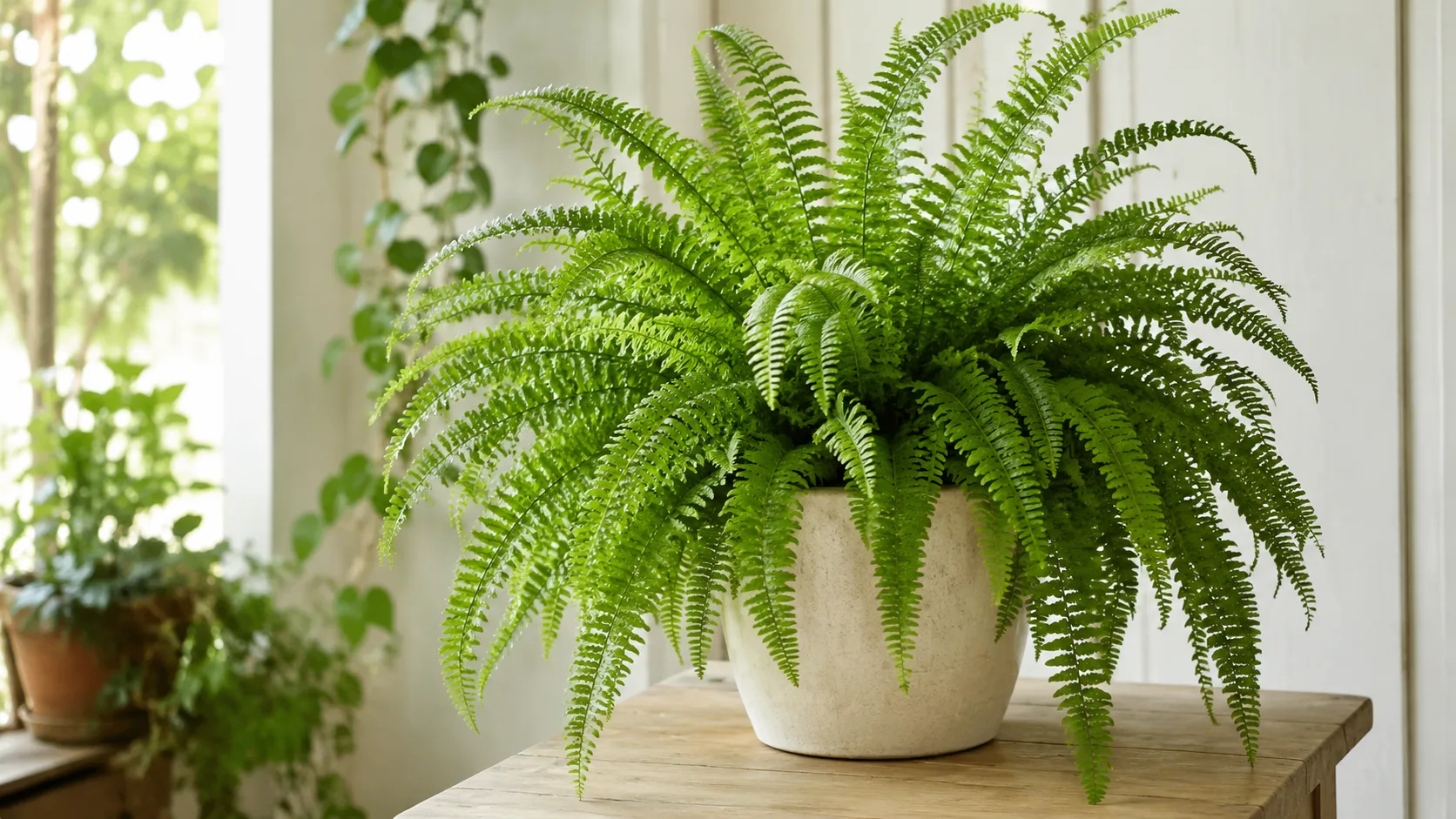
11. Boston fern (Nephrolepis exaltata). Fine, arching fronds add a soft shape on a stable stand. This fern needs bright indirect light, moist soil, and higher humidity, so it is a poor fit for a hot, dry shelf or a room that is rarely checked. Reduce watering in winter as growth slows, and confirm the species before buying around pets (NC State Extension).
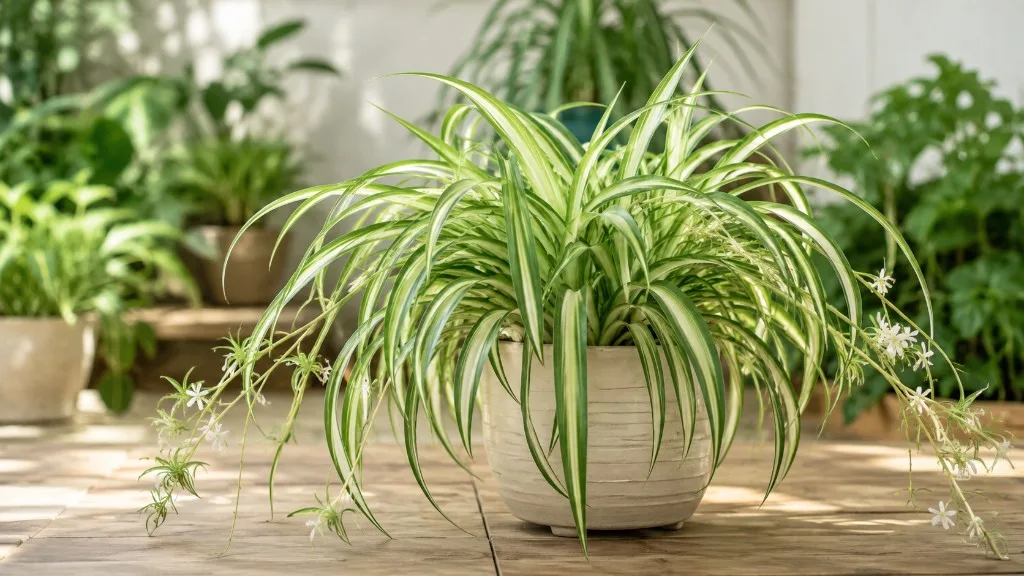
12. Spider plant (Chlorophytum comosum). Arching leaves and dangling plantlets bring movement to a shelf or hanging basket. Grow it in medium indirect light and moist, well-drained soil; strong direct sun can scorch foliage. ASPCA lists spider plant as non-toxic to cats and dogs, though eating any plant can cause stomach upset (NC State Extension; RHS; ASPCA).
Compact plants for desks and smaller rooms
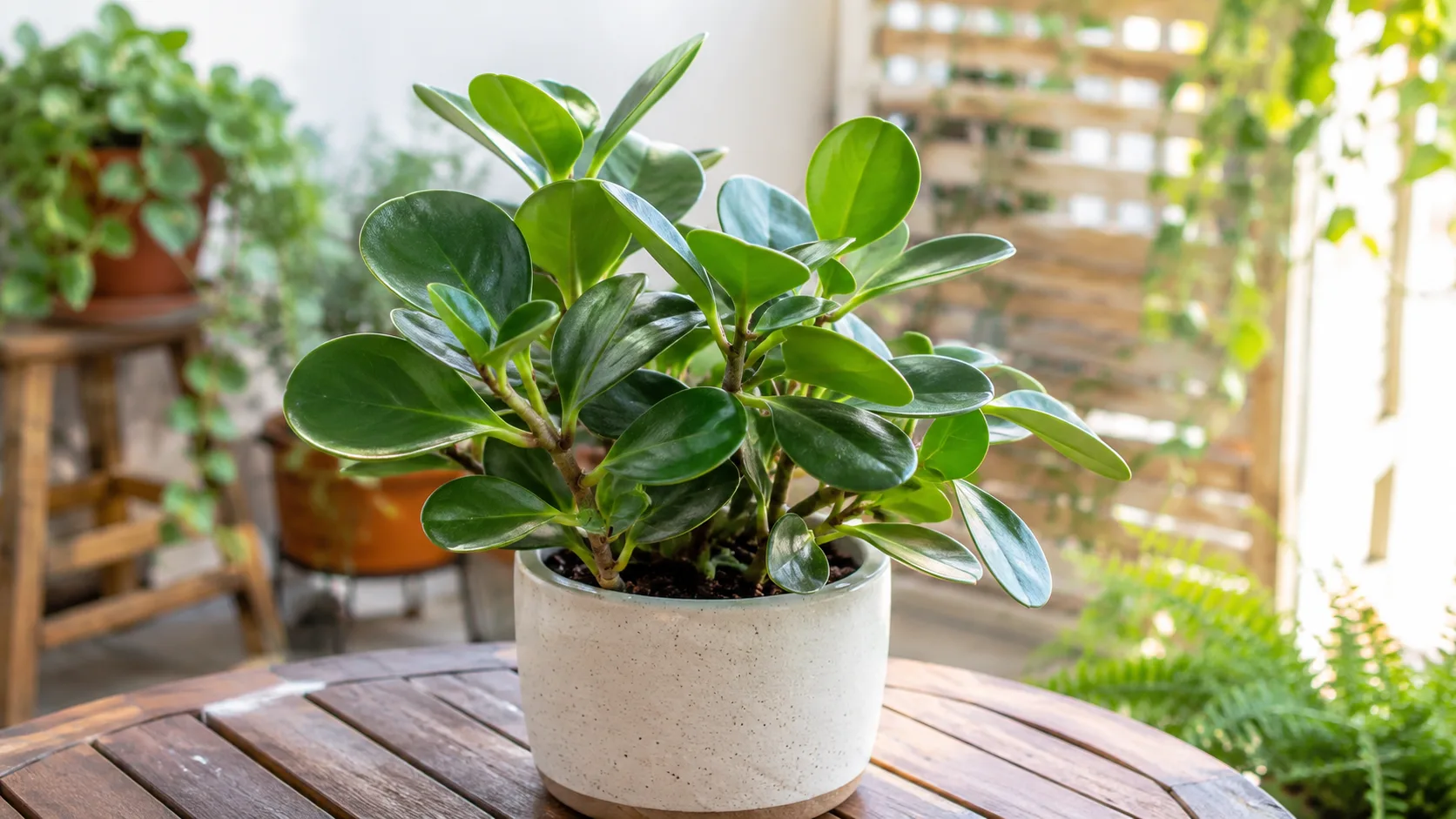
13. Baby rubber plant (Peperomia obtusifolia). Thick, rounded leaves make this a compact desk or side-table choice. Give it bright indirect light and a well-drained mix, letting the surface dry before watering; soggy soil can rot its fleshy roots. Despite the nickname, it is not a rubber tree, and ASPCA lists it as non-toxic to cats and dogs (NC State Extension; ASPCA).
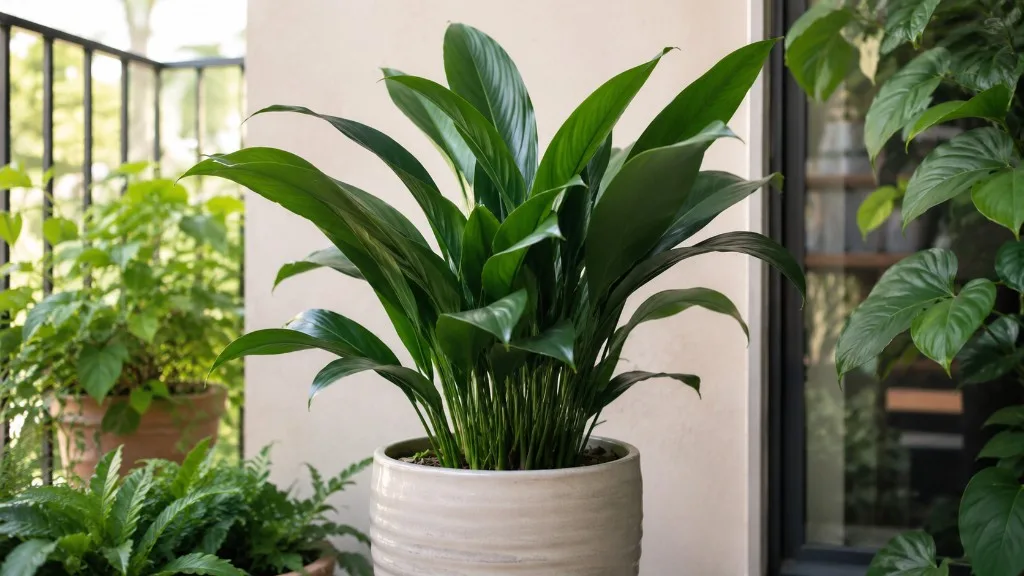
14. Cast iron plant (Aspidistra elatior). Broad leaves suit a dimmer corner, but this plant still needs ambient daylight; use a grow light in a windowless room. Water after the upper mix starts to dry, not while the pot is wet. ASPCA lists cast iron plant as non-toxic to cats and dogs, making it a useful choice for accessible spaces (Iowa State Extension; ASPCA).
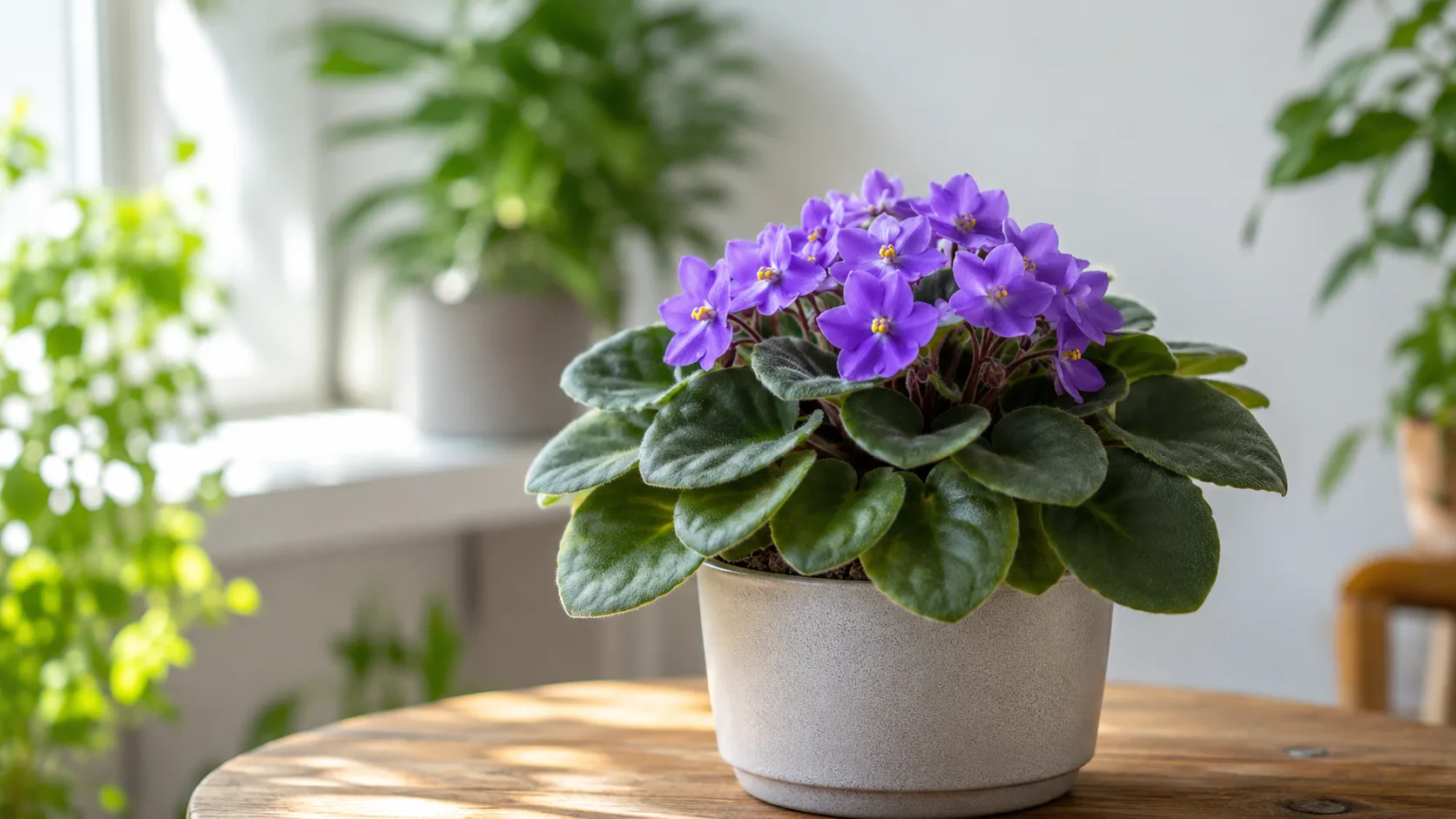
15. African violet (Streptocarpus ionanthus, formerly Saintpaulia ionantha). Rounded leaves and recurring flowers add color to a small shelf. Give it warmth and bright indirect light, and avoid keeping its crown wet; if bottom-watering, empty the saucer once the mix has absorbed water. ASPCA lists African violet as non-toxic to cats and dogs (ASPCA plant list; Iowa State Extension).
Place plants with a bagua map without mixing systems
A bagua is a map used in some feng shui approaches to connect parts of a space with themes such as wealth, family, knowledge, or career. The placement method depends on the school: some modern BTB or front-door approaches align the map to the entrance wall, while compass-based approaches orient it to actual directions. The International Feng Shui Guild glossary distinguishes terms used by different lineages; before assigning a “wealth corner,” decide which method you are following rather than overlaying both maps at once (International Feng Shui Guild glossary).
Front-door alignment and compass directions are different methods
In a front-door-aligned method, stand at the main entrance facing into the home and orient the map with its knowledge, career, and helpful-people areas along the entrance side. In a compass method, the map is aligned to measured directions instead, so the wealth area’s southeast association depends on the actual orientation of the home. A room-level map may be used in some practices too, but do not assume it is identical to a whole-home map.
You do not need to map every room to use the idea thoughtfully. If you want a plant to mark a wealth intention, you might choose a money tree or Chinese money plant and use the corner indicated by the method you follow; if you want a calmer reading spot, a softer, compact plant may better serve the room’s everyday function. The symbol gives the placement meaning for you, while the window determines whether the plant can live there.
Match plants to rooms, pathways, and available light
An entry should feel open and be easy to use. A parlor palm, money tree, or cast iron plant can work if the spot has the appropriate light and the pot does not narrow the route; avoid a heavy planter where it can tip or a thorny specimen near a handrail. If the entrance is truly dim, consider a cast iron plant closer to the brightest practical point, or use an artificial plant as decor rather than asking a live plant to survive without light.
For a living room, choose a size that suits both the room and the windows. An areca palm can soften a wide corner, while a pilea or peperomia works on a shelf; keep broad fronds and long vines out of walking paths. If using a bagua, use one coherent map method and let the plant’s actual care needs set the final position. A healthy, well-placed specimen is a stronger design choice than a “lucky” plant with yellow leaves in a dark corner.
Bedrooms do not require a special feng shui species. Choose a plant that fits the light, does not crowd circulation or a bedside surface, and is safe for anyone who shares the room. Avoid fragrance-sensitive flowering plants if scent bothers you, and skip toxic plants if a pet sleeps or plays nearby; a spider plant, parlor palm, or compact peperomia offers foliage without the same pet-toxicity concerns. Do not rely on houseplants to purify bedroom air or treat a health problem; use normal ventilation and follow professional guidance for indoor air concerns.
At a desk, a small peperomia or pilea is easier to live with than a wide palm. Keep it away from electronics where watering spills could cause damage, allow enough elbow room, and do not let trailing stems tangle around lamps or cords. In a dim office, move the plant near a window or add a plant-appropriate grow light instead of compensating with extra water or fertilizer.
Keep the plant healthy with simple care checks
A feng shui plant’s most reliable contribution is the living color, shape, and routine it brings to a room. The practical way to keep that presence healthy is to check light and soil rather than water on a rigid calendar. Insert a finger into the top inch or two of mix, lift the pot if you know its normal weight, and confirm that excess water can drain out; a saucer should not keep roots sitting in runoff.
Match watering to plant type. Jade and other succulents need a bright spot and time for the mix to dry, whereas Boston fern and peace lily prefer more consistent moisture. Pothos and many palms sit between those extremes: check the mix and the plant’s recent growth, then water thoroughly when it has begun to dry rather than giving frequent sips. A change in season, room temperature, pot size, or light can shift the interval, so use the plant as a signal instead of assuming every houseplant needs weekly water.
Dust broad leaves gently with a damp cloth so they can receive available light, remove dead or badly damaged material with clean scissors, and check leaf undersides when a plant looks dull or sticky. Do not prune healthy growth simply because a leaf shape seems symbolically “wrong.” If a plant declines, first check light, drainage, root health, drafts, and pests; moving it, watering more, or fertilizing all at once makes the cause harder to identify. For detailed species care, extension and horticultural society profiles are more reliable than a broad luck label.
Choose pet-safe plants and manage risky ones carefully
Several popular feng shui plants are unsafe for animals to chew. ASPCA identifies jade, pothos, heartleaf philodendron, peace lily, snake plant, and many Dracaena species as toxic to cats or dogs; lucky bamboo is a Dracaena, not a safe true bamboo. Pet Poison Helpline also warns that the sap of the rubber tree (Ficus elastica) can irritate the mouth, skin, or eyes. The same common name can point to different plants—“baby rubber plant” is a Peperomia, while the rubber tree is a Ficus—so verify the botanical name on the label (ASPCA’s houseplant safety overview; ASPCA plant database; Pet Poison Helpline on rubber tree).
If a pet can reach a plant, safer options on this list include spider plant, parlor palm, areca palm, money tree, Chinese money plant, baby rubber plant, and cast iron plant, which are listed as non-toxic by ASPCA or described as pet-safe by NC State. That classification does not make foliage food: chewing even non-toxic plant material can cause stomach upset, and a reachable pot can still spill soil or water. If you have a plant-chewing pet, the reliable choice is to select a species with a verified safety profile and place it where the animal cannot get to it—not to assume a high shelf is unreachable.
For children, keep small pots, fertilizer, pruning tools, and toxic foliage out of reach, and teach them not to taste houseplants. If someone or an animal may have eaten a toxic plant, identify the species and contact a veterinarian, poison-control service, or local emergency service promptly; do not wait for symptoms or try a home remedy. ASPCA’s listings are species-specific and not exhaustive, so when the label is uncertain, use the botanical name and ask a qualified professional (ASPCA plant database guidance).
Conclusion
The best feng shui plant for your home is a plant you can keep healthy in the light you actually have, that fits the room’s movement, and that is safe for the people and animals who share it. Jade, pilea, and money tree are common prosperity symbols; palms, ferns, and softer-leaved plants can create a different visual feeling, but no species guarantees a particular outcome. Choose the plant first, apply one bagua method if it matters to your practice, and let care and household safety guide the final placement.



