40 Greenhouse Ideas for a More Useful Growing Space
Make a greenhouse easier to grow in and spend time in. Browse 40 ideas for layouts, shelving, potting, paths, shade, storage, and seasonal comfort today.

A greenhouse can be a bright place to raise seedlings, protect tender plants, or simply spend time among greenery. The best design choices help with those jobs: they make plants easier to reach, give heat and moisture somewhere to go, and keep routine tasks from turning into a daily obstacle course.
That means a beautiful sofa or a chandelier is not automatically a good greenhouse idea. A greenhouse is warmer, brighter, wetter, and more changeable than a typical room. Start with the plants and the work you actually do, then add style around the conditions your structure can handle.
The 40 ideas below cover the interior, the path to the door, and the practical details that make a greenhouse enjoyable over time. Choose a few that solve a real problem first; you can always layer in decorative details later.
Start With the Greenhouse’s Job, Not Its Decor
Before you buy shelves or paint a door, decide what the greenhouse is for. Seed starting needs accessible benches, a clean work surface, and light that reaches young plants; overwintering containers needs enough floor space to move large pots and open vents; a warm-season vegetable house needs a path that lets you prune, water, and harvest without brushing wet foliage. One structure can serve several jobs, but trying to make every square foot do everything at once usually creates clutter.
Walk through the space with the tools you plan to use. Bring the largest tray, watering can, hose nozzle, or cart you expect to carry inside, and check whether you can turn, kneel, open doors, and reach the back of each bench. Penn State Extension’s greenhouse production guidance describes water, temperature, and ventilation as conditions growers manage inside a greenhouse; layout decisions affect how easily you can manage them. Treat each idea as a design option, not a universal prescription for every plant or climate.
Ideas 1–4: Plan a Floor Plan You Can Work In
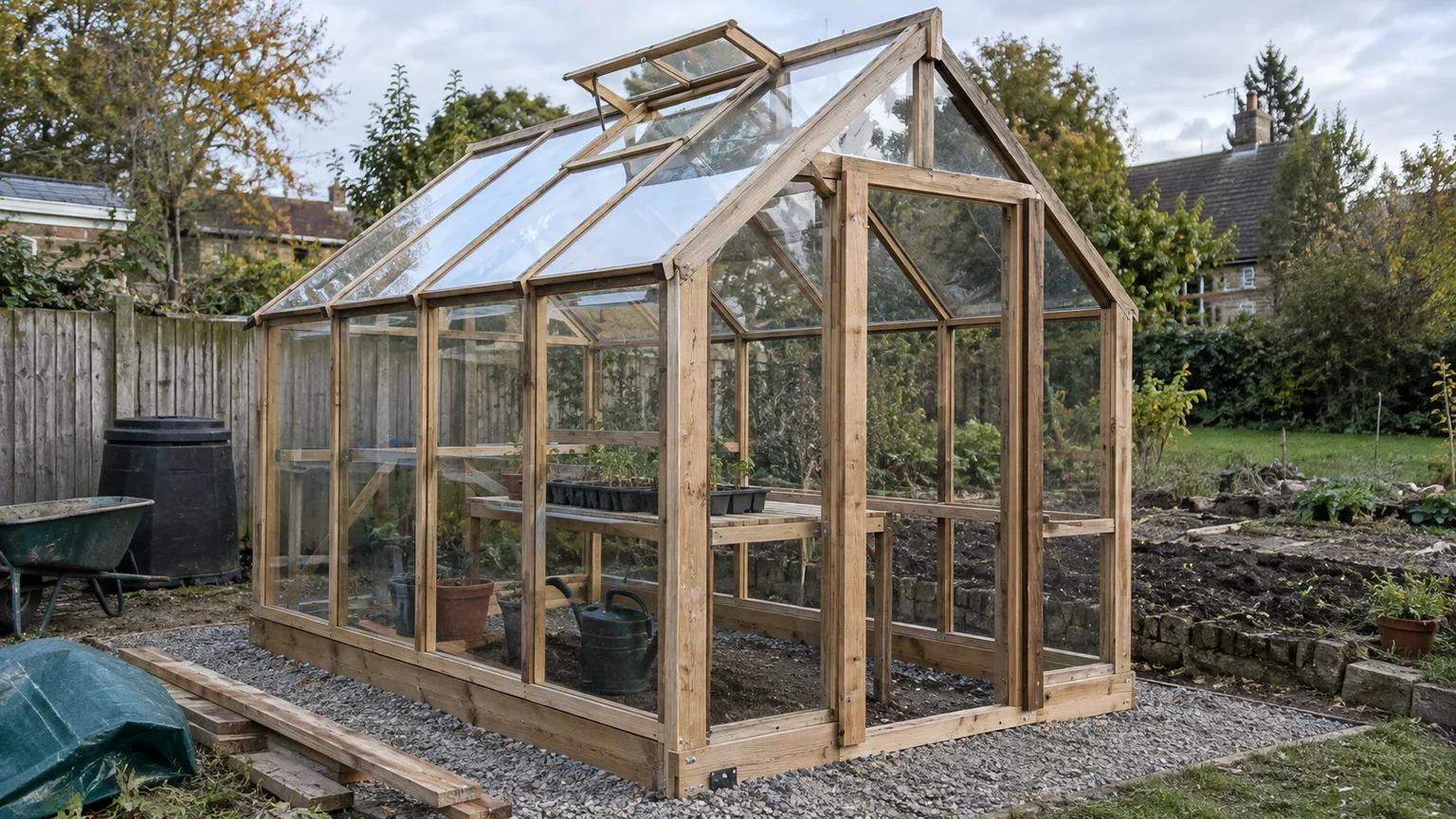
A visible aisle and reachable benches make the growing space easier to tend than a greenhouse filled edge to edge.
-
Keep one route clear from the door to the back wall. A straight central path makes it easier to carry trays, empty a bucket, and reach plants without twisting between furniture. If a center aisle would waste space in a narrow structure, use a side path and keep the opposite bench shallow enough to reach across.
-
Separate growing, potting, and resting zones. Put plants that need regular attention near the entry or water source, keep loose soil and tools at a defined workbench, and reserve any chair for the least crowded end. Even a small greenhouse feels more organized when each activity has a home.
-
Choose an L-shaped bench only when the corner stays reachable. Two connected benches can increase display and staging space, but deep corners become dead zones where pots are hard to turn and leaves receive uneven care. Leave room to reach the back row, or use a movable tray for plants you need to rotate.
-
Mock up the layout before committing. Mark the bench footprint and path with cardboard, painter’s tape, or garden hose, then walk the route while carrying a full tray. Test the door swing and the space needed to crouch; a floor plan that looks generous on paper can feel tight once a mature tomato or citrus tree occupies the corner.
Ideas 5–8: Make Light and Airflow Easier to Manage
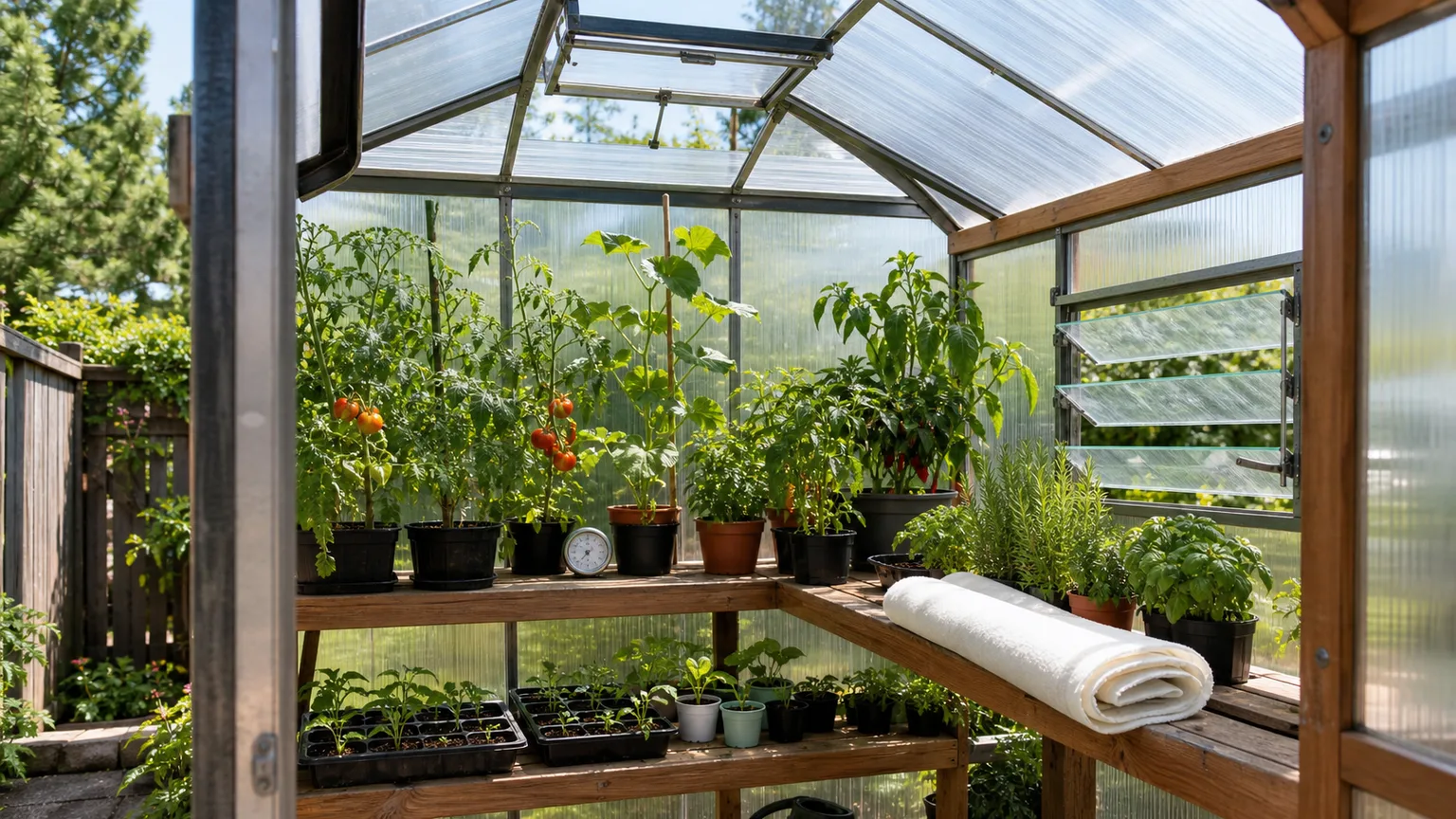
Roof vents and open bench space support airflow; a thermometer helps you notice when the interior is changing quickly.
-
Leave the vent path open. Keep the area below roof vents and beside doors clear enough that warm air can move out and replacement air can enter. Tall hanging baskets or a high shelf can look dramatic, but they should not obstruct the vents or prevent you from reaching their controls.
-
Add a circulation fan where air tends to stall. A small fan can reduce stagnant pockets around dense foliage, but it does not replace an exhaust fan or open vents when the structure needs heat removed. Aim for gentle movement across the space rather than blasting one plant at close range, and use outdoor-rated equipment installed for a damp environment.
-
Place a thermometer at plant height, away from the door and direct sun. A sensor tucked in a shaded corner or pressed against a wall may not reflect the conditions where plants are growing. A greenhouse research case study describes location-specific microclimate pockets, a useful reminder that one reading may miss differences across corners and heights.
-
Use adjustable shade instead of permanent darkness. Removable shade cloth or a thermal screen can help during intense sun, while still letting you open the greenhouse to more light when the season changes. Oklahoma State University Extension notes that shade selection should reflect the crops and the desired reduction in solar radiation; begin conservatively and watch plant response rather than choosing a percentage by appearance alone.
Ideas 9–12: Build a Better Potting and Work Zone
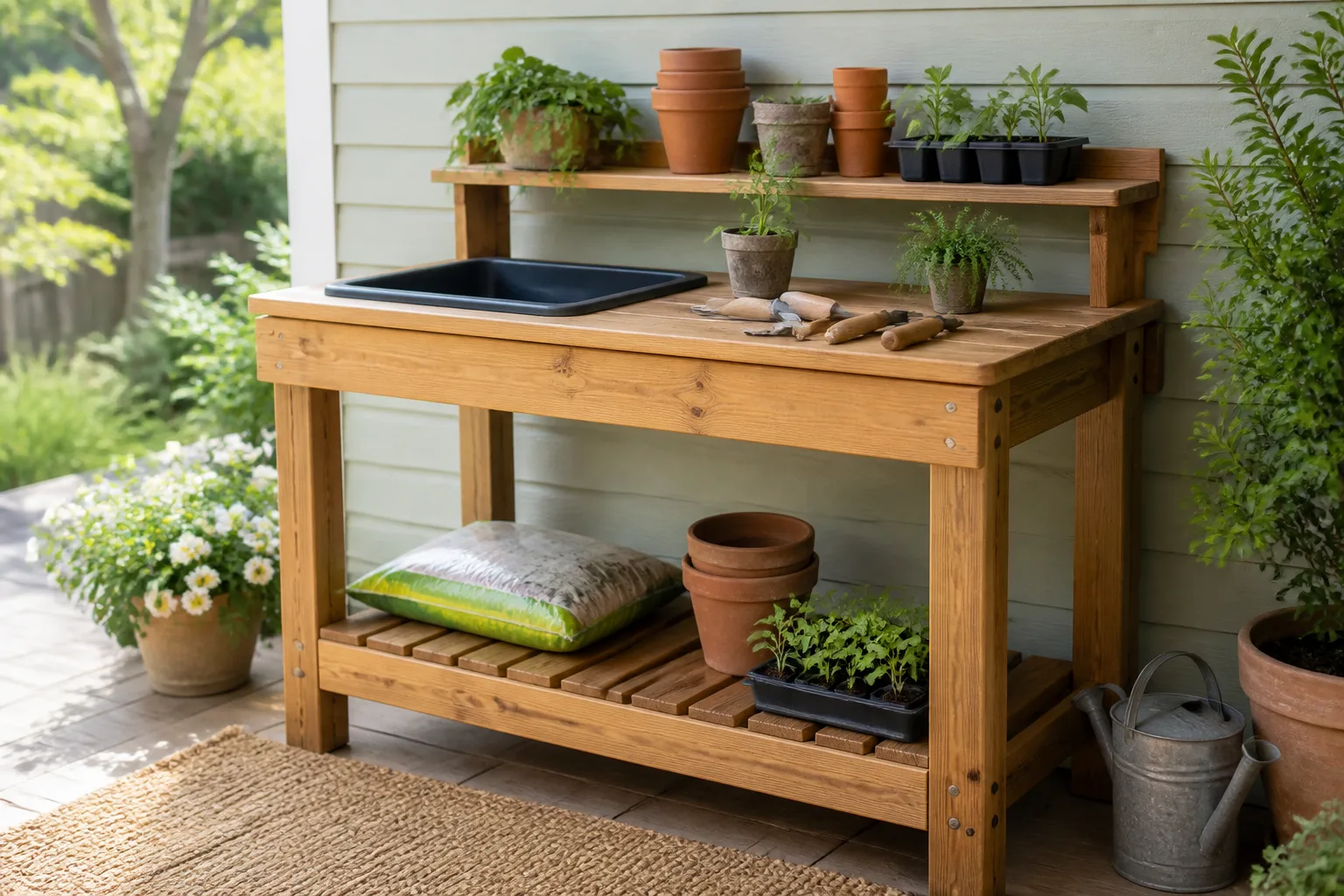
A contained potting bench keeps tools close and loose mix off the main greenhouse path.
-
Put the potting bench beside, not in front of, the water source. You want to fill a watering can or rinse a basin without dragging wet soil through the main aisle. Leave the tap, hose, sink, or water barrel accessible, and avoid placing a workbench where it blocks a door, vent, or the strongest light needed for seedlings.
-
Choose a bench with a removable basin or washable worktop. A lipped tray contains spilled mix and lets you return unused material to its bag instead of sweeping it into the floor. Homes & Gardens highlights a potting bench with a cleanable basin, hooks, and shelves; those features matter more in daily use than decorative trim.
-
Hang only the tools you use often at arm’s reach. A short rail or hooks for pruners, dibbers, labels, and a hand brush keeps the work surface available for trays. Store sharp tools with their blades protected and keep fertilizers, cleaners, and other products in labeled, closed containers away from children and pets.
-
Add a washable planning board. A small whiteboard or laminated card can hold sowing dates, transplant notes, or a list of plants to check without putting paper in a damp potting mix pile. Keep records practical: date, variety, location, and what you observed are more useful than a decorative quote board.
Ideas 13–16: Use Vertical Space Without Shading Plants
-
Use narrow upper shelves for light, small pots and seed trays. A shallow shelf mounted where it does not shade lower plants makes use of wall height without consuming the aisle. Check the shadow at several times of day before fastening it in place, especially if the greenhouse relies on low winter sun.
-
Put tall crops on the north side when the structure and light path allow it. In many Northern Hemisphere sites, placing the tallest plants on the north side reduces the chance that they shade shorter crops to the south. This is a starting point rather than a rule: local sun angle, roof shape, neighboring trees, and the greenhouse’s orientation can change the result.
-
Hang baskets where watering and pruning remain easy. Trailing plants soften the roofline, but a basket that requires a ladder for every watering becomes a chore and can drip onto plants below. Choose a secure hanging point rated for the load when wet, and keep baskets clear of vents, heaters, lights, and your head.
-
Train one climber on a dedicated trellis or support. A vertical cucumber, bean, or ornamental vine can use wall space and keep fruit or leaves off the floor. Provide support that is anchored to the frame rather than a fragile panel, and leave enough clearance to prune and inspect the back of the foliage.
Ideas 17–20: Make Watering and Cleanup Simpler
-
Route the hose along one wall with a reel or hook. A hose stretched across the aisle is an easy tripping hazard and can knock over small pots when you pull it. Keep a clear return path for the hose and make sure it can reach every bench without dragging across delicate seedlings.
-
Use drip lines for groups of thirsty containers. Drip irrigation can deliver water near the root zone without wetting leaves, which Penn State Extension notes can help conserve water and reduce disease pressure in greenhouse production. Check emitters regularly; clogs or shifted lines can leave one pot dry while the rest look fine.
-
Give a watering can a stable refill spot. A shallow tray or low stand by the tap keeps the can upright and catches drips. Store it where the handle is easy to grab, but not under a shelf where you have to move pots every time you water.
-
Add a gutter and a covered rain barrel only if overflow has a safe route. Capturing roof runoff can provide a handy source of water, but the barrel needs a stable base and a screened, covered top. Direct overflow away from the foundation and do not assume stored rainwater is suitable for every crop or local watering restriction.
Ideas 21–24: Choose Floors and Paths for Wet Work
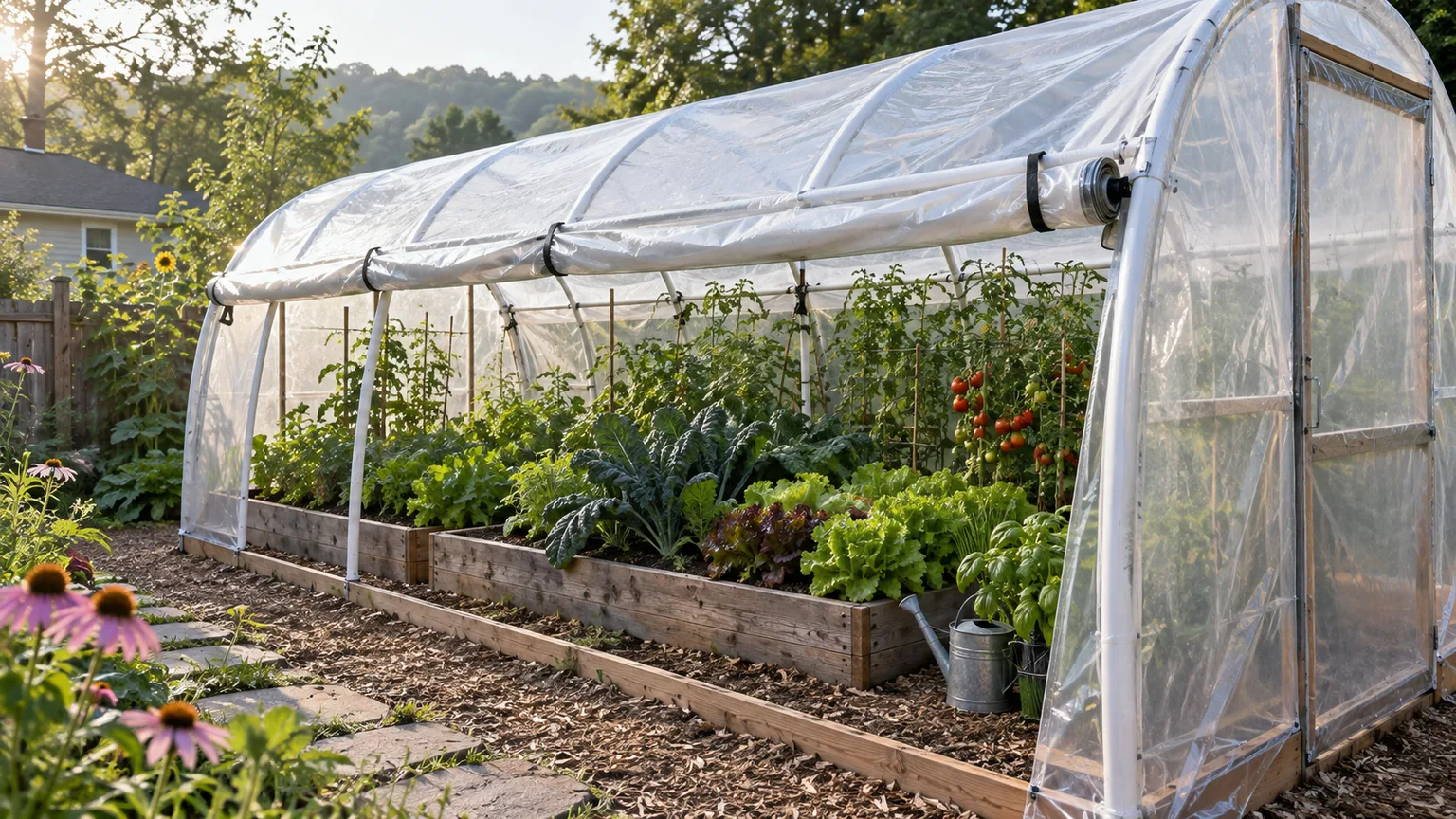
A defined approach and a durable floor edge help separate muddy outdoor traffic from greenhouse work.
-
Use gravel when drainage and low cost matter most. A compacted gravel floor lets water drain and tolerates soil spills, but loose stones can be hard to roll a cart across and may migrate into beds. Choose a suitable base layer and edging if you want a stable surface rather than dumping stone onto bare soil.
-
Lay pavers or stepping stones along the main route. Firm stepping surfaces give you a stable place to stand while watering and make a muddy crossing less likely. Leave joints that can drain, set the pieces level, and avoid slick surfaces that become hazardous when algae or wet soil builds up.
-
Keep the work zone and the growing floor easy to sweep. A small mat or removable tray beneath the potting bench can catch mix where it is used, while the rest of the floor stays open. Do not rely on indoor carpet or a thick outdoor rug in a humid greenhouse; trapped moisture and grit make it harder to clean and can conceal pests or rot.
-
Make the path wide enough for your actual routine. The right width depends on the door, greenhouse frame, and equipment you carry; measure the widest cart or tray, then leave room to pass without brushing leaves. If the aisle feels pinched during the cardboard test, remove one shelf before adding another decorative feature.
Ideas 25–28: Add a Place to Pause or Do More Than Grow
-
Tuck a weather-resistant stool beneath the bench. A small seat is useful for potting, pruning at low level, or taking a short break, and it can disappear under the work surface when you need floor space. Choose a stool that is stable on the greenhouse floor and easy to wipe clean.
-
Use a folding table for occasional jobs. A folding surface can expand the potting zone during seed starting and disappear for the rest of the season. Keep it out of the circulation route and check that its material tolerates damp air before leaving it inside full-time.
-
Make a compact observation nook at the end of the aisle. One chair facing the plants can turn a purely utilitarian greenhouse into a place you want to visit. Keep it away from heater exhaust, sharp tool storage, wet work, and the door swing; comfort should not take priority over a safe, usable route.
-
Give a small desk a single purpose. A narrow writing shelf can hold a notebook, labels, or a tablet while you record what is happening in the greenhouse. Avoid storing electronics or paper in a spot exposed to leaks, condensation, or direct spray, and do not leave the surface crowded with supplies you could store elsewhere.
Ideas 29–32: Add Style Without Making Care Harder
-
Paint a door or exterior trim instead of coating every surface. A restrained color can make a greenhouse feel intentional without reducing the light that reaches plants. Use a coating suitable for the frame material and outdoor exposure, and keep it off vents, moving parts, and transparent panels.
-
Let plant color do most of the decorating. Green foliage, ripening tomatoes, flowering annuals, and terracotta pots create natural variety without adding objects that compete with the growing space. Group containers by their light and watering needs first, then repeat a pot color or material if you want a calmer visual rhythm.
-
Bring in vintage or reclaimed furniture only after checking its condition. A sturdy metal table, sealed wooden stool, or old bench can give a greenhouse character, but flaking paint, rust, wobbling legs, and untreated wood can become maintenance problems in humid air. Stabilize the piece and keep it away from direct irrigation before displaying plants on it.
-
Choose washable, weather-tolerant accessories. A metal watering can, ceramic pot, or outdoor-rated storage box can add color without demanding dry indoor conditions. Skip soft upholstery, fragile framed art, and delicate finishes unless the greenhouse has a genuinely dry, temperature-stable corner and you are willing to bring them inside when conditions change.
Ideas 33–36: Make the Entrance and Exterior Useful
-
Build a simple path from the house or garden gate. Stone, brick, or compacted gravel can make the greenhouse easier to reach after rain and keep muddy shoes from tracking through the growing area. Set the route around the doors and gutter outlet, not across the spot where runoff naturally drains.
-
Create a small landing for trays and tools just outside the door. A stable bench or shelf lets you set down what you are carrying before opening the door. Keep it narrow enough not to block the entrance and secure lightweight items so wind cannot push them against glazing.
-
Use a boot brush and a washable doormat at the threshold. This is a low-cost way to limit the amount of soil, mulch, and debris carried onto a smooth floor. Let the mat dry between wet spells and move it if it starts holding water or becoming slippery.
-
Make the greenhouse visible from a useful vantage point. A window view from the kitchen or a direct sightline from the back door makes it easier to notice a door left open, a vent that needs attention, or plants that need watering. This is a practical design choice, not just a landscaping trick.
Ideas 37–40: Plan Lighting and Seasonal Storage
-
Separate task lighting from plant lighting. A bright, shielded fixture over the potting bench helps you read labels and handle seedlings after dark; a grow light is selected for plant needs and placement. A string of decorative lights is not a substitute for a grow light, and any electrical installation should be suitable for a damp location and local code.
-
Put extension cords and switches where water cannot reach them. Keep plug connections off the floor and away from sinks, hoses, and condensation paths. If you need permanent power for fans, lighting, or a heater, ask a qualified electrician to plan it for the wet environment rather than running a household cord through the greenhouse indefinitely.
-
Store seasonal decor in a closed tote outside the growing zone. A wreath or a few autumn pumpkins can make the entrance feel festive, but loose decorations should not cover vents, rest on plants, or remain where they obstruct winter access. A labeled tote in a shed makes it easy to keep the greenhouse clear when the growing season changes.
-
Keep one empty shelf for the next transition. Seed trays, frost cloth, newly potted plants, or a plant recovering from a move may need temporary space. Leaving a little capacity unused is more useful than filling every shelf with ornaments; a greenhouse that can adapt is easier to manage year-round.
Small Greenhouse Ideas That Earn Their Space
In a compact greenhouse, the most effective idea is often to remove something. A single narrow bench with a clear route may hold fewer pots than shelves on every wall, but you will be able to water evenly, check for insects, turn a tray, and bring a plant back out without dismantling the room. Use vertical space only where the upper tier will not shade the lower one or block vents.
Choose items that fold, roll, or serve more than one job: a folding potting table, a stool that becomes a side table, or a bench with a removable tray. Mount only what you need; overloading a small frame with hooks, shelves, and heavy hanging baskets adds clutter and may create structural stress. If your greenhouse is a lightweight portable model, check the manufacturer’s limits and anchor it as directed before adding any weight or attachments.
Adapt Greenhouse Ideas to Your Climate and Structure
A greenhouse design that works in a cool, cloudy region may be uncomfortable in a hot, sunny yard. In warm climates, prioritize ventilation, shade you can adjust, and a route for checking plants during heat waves. In cold climates, consider draft control and a thermal screen, but do not block the vents you need when the sun heats the interior. Penn State Extension’s energy-efficiency guidance notes that a greenhouse can lose heat through gaps and that movable screens may serve both shading and insulation functions; the payback depends on the structure and conditions. A CFGET greenhouse-design article focused on blueberry production makes a related planning point: design around crop stages and local weather events instead of relying on annual averages. The crop-specific recommendations do not automatically transfer to a home greenhouse, but the planning principle does.
The covering also changes the design choices. Oklahoma State University Extension describes glass, polyethylene, fiberglass, and polycarbonate as options with different trade-offs in light transmission, strength, insulation, cost, and maintenance. Avoid attaching shelves or hooks to a panel that is not designed to carry a load, and confirm what the frame can support before suspending lights, baskets, or a shade system.
Think about sun and shade before choosing where the bench goes. A greenhouse is not one uniform environment: orientation, an outside tree, a neighboring wall, and the structure itself can create different pockets of light and temperature. Research on greenhouse sensor placement discusses how conditions can vary by position, including near doors, windows, walls, and shaded corners. A simple thermometer placed near the plants you care about—and moved occasionally to compare locations—can reveal whether a pretty arrangement is also a suitable growing spot.
Greenhouse Design Mistakes That Make Work Harder
The most common mistake is treating every surface as display space. Too many shelves reduce access and may shade plants; too much furniture can trap moisture, block air movement, and make cleaning difficult. A greenhouse needs some open floor and an unobstructed route as much as it needs benches and storage.
Another mistake is assuming that more heat or humidity is always better. Enclosing a greenhouse can intensify heat on sunny days and hold moisture around leaves. Plan for ventilation before you add seating or hanging decor, watch the temperature during the hottest part of the day, and do not leave delicate plants in a closed greenhouse because it feels comfortable to you.
Finally, do not choose a floor, bench, or outlet as if the greenhouse were a dry living room. Water spills are routine, soil gets tracked around, and wood or fabric may stay damp. Use surfaces that can be cleaned, keep electrical components out of splash paths, and follow local electrical and building requirements for fixed installations.
Choose a Few High-Value Changes First
You do not need to install all 40 ideas to make a greenhouse better. Start with a route that is easy to walk, one work surface, a way to monitor temperature, and a plan for handling water and shade. Those changes improve daily use and reveal what the space still needs before you spend money on decor.
Then add the details that fit your routine: a folding table if you sow lots of seeds, a stool if you prune at bench level, or a quiet seating spot if you truly spend time there. Test each addition through a hot day and a wet cleanup. If the new feature blocks light, makes watering awkward, or needs more care than it provides, move or remove it.
Conclusion
A greenhouse can feel welcoming and still function as a growing space when every design choice earns its footprint. Protect the light and airflow, make water and cleanup easy, and keep the main route clear before adding seating, color, or seasonal details.
The most successful greenhouse ideas are the ones that match your plants, climate, structure, and habits. Sketch the layout, test it with the tools you already use, and add features in stages. A thoughtful bench, a clear path, and a little room to adapt will outlast a room full of pretty objects that are hard to live with.