4 Types of Hand Pruners and How to Choose
Compare bypass, anvil, ratchet, and straight-blade hand pruners. Learn what each cuts well, how to check fit and capacity, and when to switch tools.
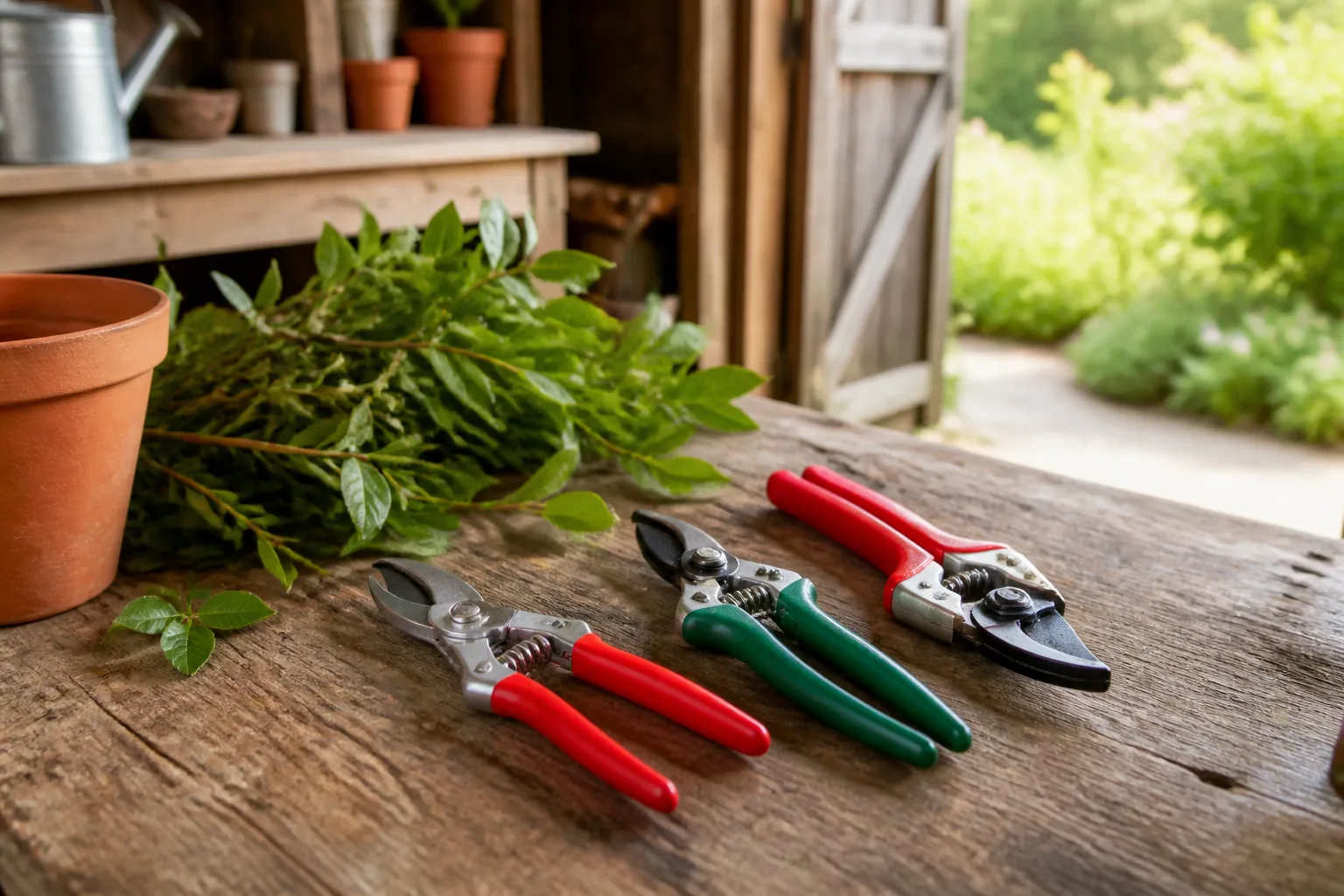
If you only want one pair of garden pruners, start with a comfortable bypass model. It is the most versatile hand tool for precise cuts on roses, herbs, flowers, and living shrub stems. Choose a ratchet design if the repeated grip motion is difficult, an anvil model for work that is mostly dry or dead wood, and straight-blade snips for flowers and close-detail trimming.
That short answer needs one qualification: pruner labels describe two different things. “Bypass” and “anvil” identify how the cutting blade meets its support; “ratchet” describes a leverage mechanism that can be added to either style; “straight-blade” usually describes a narrow blade shape suited to detail work. The labels overlap, so compare how the blades actually close before you buy.
Quick Answer: Which Hand Pruners Should You Buy?
For a mixed home garden, a sharp bypass pruner that fits your hand is the best first purchase. Its scissor-like action makes controlled cuts on live stems, and its narrow head can reach into a shrub or rose without removing nearby growth. A small bypass model can also handle many herbaceous stems and harvesting tasks, as long as its rated capacity matches the work.
Buy for the job you repeat most often, not for the thickest branch you might encounter once. If you cut mostly dry, brittle material, test an anvil model. If your grip tires or you need several squeezes to finish a cut, a ratchet pruner may help. For flower stems, herbs, and thin soft shoots, a slim scissor-style snip may be faster and more precise than a heavier pruner.
Why “Type” Can Mean Two Different Things
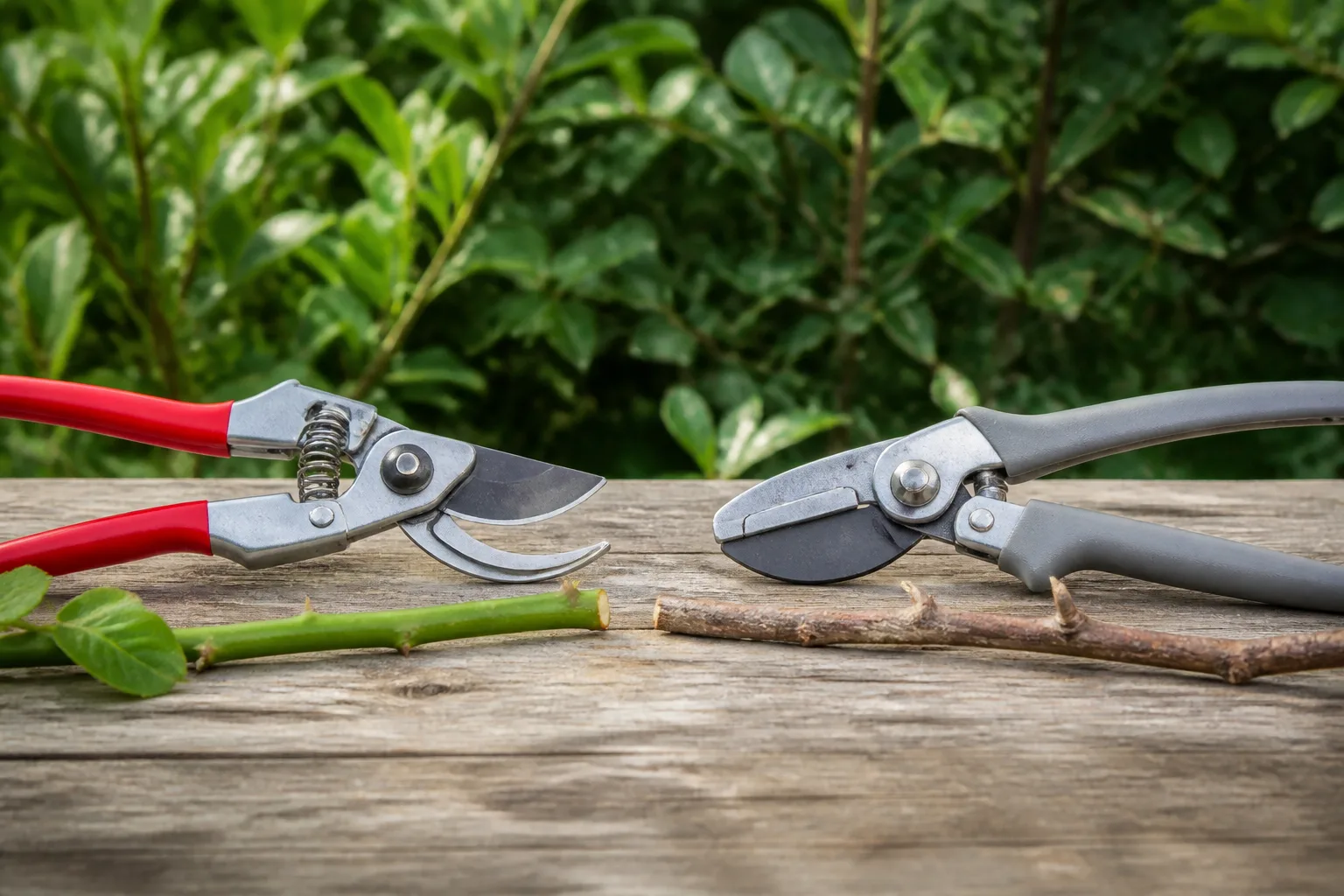
A hand pruner has a handle, spring, pivot, locking catch, and cutting head. The blade geometry is what most affects the cut: in a bypass pruner the sharp blade slides past a hook; in an anvil pruner it closes against a flat or curved block. Those are the two main cutting mechanisms. A straight, narrow blade or scissor-style snip is a head shape, not necessarily a separate mechanism, because the blades may still pass each other.
Ratchet is a second axis. Instead of finishing the cut in one squeeze, the mechanism catches and advances in stages as you squeeze and release. Some ratchet tools use an anvil head; other designs can use a bypass head. That makes “ratchet” a useful buyer category, but not a mutually exclusive blade type.
This distinction matters when shopping online. A product headline may call a pair “straight,” “professional,” “compound,” or “ratchet” without making the blade action clear. Look for a close-up of the head, inspect whether the cutting edge crosses a hook or presses into an anvil, and read the product description for the intended material. NC State Extension describes bypass and anvil as the two basic pruner styles and notes that scissor and bonsai shears use different shapes for special jobs (NC State Extension’s guide to pruning tools).
1. Bypass Pruners: The Everyday Choice for Live Growth
A bypass pruner works much like a pair of scissors: a sharpened blade travels past a thicker counterblade or hook. The sliding action can make a neat, controlled cut on a living stem, and the narrow cutting head is convenient when branches cross or when a cut must land near a bud or side branch. This is why bypass pruners are the usual first choice for roses, fruiting shrubs, young shoots, herbs, and routine shaping.
The blade has to be sharp and aligned to work as intended. If the blade is dull, loose at the pivot, or forced through wood that is too thick, it can fold a stem, snag bark, or leave a ragged edge. Keep the branch seated deep enough in the cutting head to prevent it sliding toward the tip, and close the handles fully in one smooth motion. If that requires twisting or leaning your body weight into it, stop and switch tools.
Bypass pruners can also cut small woody shoots if the branch fits the tool’s capacity and the blade is sharp. Gardeners’ World describes bypass secateurs as suited to greener growth; NC State also notes their clean cuts and access to tight branch angles (BBC Gardeners’ World Magazine; NC State Extension).
2. Anvil Pruners: A Useful Option for Dry, Brittle Wood
An anvil pruner has one sharpened blade that closes against a flat or curved support. Because the stem is pressed into that support, this style can feel stable on dry twigs, dead stems, and brittle material that does not need to remain pristine. Its broad closing surface can also make it easier to keep a dry stem from shifting during the cut.
Anvil pruners are often discouraged for live stems because a poorly matched or dull blade can compress tissue rather than slice past it. That is a reasonable caution for delicate green growth, but it is too sweeping to treat every anvil cut as damaging. Head shape, blade sharpness, branch size, species, and cut placement all matter. NC State notes that newer curved anvil designs can produce cleaner cuts than a flat anvil, which is a good reason to judge the actual tool rather than the category name alone (NC State Extension).
A 2026 UF/IFAS Extension field study is another useful qualification. Researchers made 60 small cuts on live oak branches up to one-half inch, comparing small and large bypass and anvil pruners; after monitoring through a growing season, they found no clear difference by pruner type in wound discoloration or visible severity. The result does not prove that all anvil tools suit all plants: it covered one resilient species, a limited range of branch sizes, and one year, and the researchers call for more studies. It does show why recommendations should not turn “anvil” into a synonym for “damaging” (UF/IFAS Extension’s study summary).
Use anvil pruners when your regular work is dry, woody, or dead growth and the tool closes without crushing or forcing the material. For a living branch where appearance and precision matter, bypass remains the safer default. If you use anvil pruners on a live shoot, check the cut on a small, noncritical stem first; if the tissue is visibly mashed, the edge is dull, the head is poorly shaped, or the cut needs excessive pressure, choose a sharp bypass tool instead.
3. Ratchet Pruners: More Leverage in Repeated Squeezes
A ratchet pruner divides a cut into short stages. You squeeze until the mechanism catches, ease your grip, then squeeze again as the blade advances. This can make a tough cut more manageable for someone who cannot comfortably close a standard pair in one motion, or during a job with many woody stems.
The trade-off is speed and feel. Repeated squeeze-and-release cycles take longer than a single clean bypass cut, and a wide handle opening or stiff spring can still be uncomfortable. The ratchet does not make an oversized branch safe to cut; it only changes how force is applied. Some models pair a ratchet with an anvil head, so inspect both the blade action and the mechanism. Gardeners’ World describes ratchets as useful for gardeners with less hand strength, and NC State explains how the incremental latching action reduces the force demanded in any one squeeze (BBC Gardeners’ World Magazine; NC State Extension).
Try a ratchet before choosing it if possible. Some gardeners like the measured progress; others find the repeated motion awkward or the cut too slow for pruning many small shoots. If a pair of ratchet pruners still hurts, stop rather than completing the job through pain. A longer-handled lopper, a different grip design, shorter work sessions, or help with the job may be a better answer than adding more force.
4. Straight-Blade Pruners and Garden Snips: Detail Work
Slim, straight-blade pruners and garden snips are made for access and precision. Their pointed heads can reach between leaves and buds, and their lighter action is useful for deadheading, harvesting flowers, trimming herbs, cutting soft perennials, or removing a small spent stem without nicking the growth beside it. Depending on the model, they may have two scissor-like edges or a bypass edge that passes a hook.
They are not a stronger substitute for bypass pruners. The thin blades and narrow handles on many snips are optimized for small stems, not forcing through a woody branch. Using them beyond their capacity may bend the blades, spread the pivot, or leave an untidy cut. Keep a dedicated pair for flower arranging or clean harvest work if sap, soil, or diseased tissue from garden pruning would otherwise make them dirty.
Check whether you need a locking catch and whether it is easy to use with one hand. A lock that is difficult to release can slow a job, while a tool that cannot be secured is inconvenient to carry. For work among prickly stems, prioritize control and safe storage over the narrowest possible tip.
Match the Cutting Mechanism to the Material
Live, green stems and precise cuts
For living shoots, flowers, and small green branches, begin with a sharp bypass pruner or a pair of garden snips if the stems are very slender. Aim for a single controlled cut rather than squeezing repeatedly while the branch twists. The blade should pass through, not drag the bark along with it. When pruning a shrub, the narrow head is especially useful because it lets you see the point of contact and avoid cutting an adjacent stem by mistake.
The familiar rule that bypass is for live wood and anvil is for dead wood works as a starting point, not a guarantee about every cut. In a UF/IFAS trial on one kind of live oak, the tested anvil tools did not result in more visible or internal discoloration than the bypass tools. The broader advice still favors a cleanly slicing blade for delicate living tissue, but cut size and condition remain important; a sharp, well-shaped tool and a correct cut matter more than the label by itself (UF/IFAS Extension).
Dead, dry, and woody stems
Dry and brittle stems may be easier to hold against an anvil, especially if they split or shift under a bypass hook. Anvil is a practical choice for removing last year’s flower stems, dead herbaceous stalks, or small dead twigs, provided the stem fits well in the head. For a live woody shoot, use bypass when the cut must be clean and close to the branch collar or bud; use whichever sharp tool you can control without crushing or tearing.
A stem’s condition can matter as much as its diameter. A half-inch soft shoot and a half-inch dense, dry hardwood branch do not put the same load on a blade. If the branch is unusually hard, angled, or under tension, do not test a pruner’s advertised maximum on a plant you care about. Move to loppers or a pruning saw and make a deliberate cut.
Check Capacity Before You Cut
Hand-pruner capacity is not one universal number. NC State Extension describes pruning shears as typically suited to small limbs under one-half inch, while a University of Minnesota Extension fruit-production guide says hand shears may handle branches roughly three-quarters to one inch depending on the tool. Gardeners’ World’s current comparison includes models with different stated capacities, including a bypass pair suited to roughly 10–15 millimeter stems. These figures vary because the tools, branches, and intended use differ (NC State Extension; University of Minnesota Extension; BBC Gardeners’ World Magazine).
Read the capacity listed for the exact model, then use a more conservative limit for hard, dry, or awkwardly positioned wood. If the branch does not sit fully inside the cutting head, if you have to twist the pruner, or if the handles will not close in a controlled movement, it is too large for that cut—even if the diameter seems close to the product rating. NC State warns that forcing an oversized stem can damage both plant tissue and the tool.
When in doubt, use the next tool up. Loppers provide longer handles and more leverage for larger reachable branches; a pruning saw is often cleaner and more controllable for wood that is too large for loppers. One crisp cut with the right tool is preferable to several strained squeezes that leave bark torn and a blade out of alignment.
Test the Fit in Your Own Hand
The hand should guide the purchase as much as the blade. Hand size, finger length, grip strength, arthritis, left- or right-handed use, and the angle at which you hold a plant all change how a pruner feels. A model that works for a neighbor can be awkward for you, even when both tools have the same cutting capacity.
NC State Extension recommends checking the feel of several styles because handle designs vary. BBC Gardeners’ World’s 2026 review also includes a compact design for smaller hands and a dedicated left-handed model, illustrating that fit and orientation are real design differences, not cosmetic extras (NC State Extension; BBC Gardeners’ World Magazine).
A five-cut fit check at the store
If a shop allows you to handle a sample, open and close the pruner several times, then make a few test cuts on a branch of the kind you actually prune. Watch for five things: your fingers reach the handles without stretching; your palm can close them without pinching; the spring opens them easily; the head stays aligned while cutting; and the lock can be operated without putting your fingers near the blade. If any step feels forced in a short test, it will feel worse over a full session.
Try both a standard and a compact model if your hand is small. A smaller pruner may reduce handle spread, but it can also have a shorter blade and lower capacity; compare the actual dimensions and rating instead of assuming “small” means easier in every respect. For larger hands, check that the handles do not bottom out against your palm before the blade closes completely.
For left-handed gardeners, a genuinely left-handed bypass tool may place the blade where you can see and control it, especially when making precise cuts. Some pruners are marketed as ambidextrous, but the direction of the blade bevel and the hand that operates the lock may still favor one side. Test the exact model in your dominant hand before ordering if returns are difficult.
Choose Helpful Features, Not a Long Feature List
A rotating handle can reduce rubbing during repeated closure, while a shock-absorbing stop can soften the end of a cut. A non-slip grip is useful when hands are damp or when you wear gloves. These features are worthwhile only if they let you hold the tool naturally; bulky grips, too-wide openings, or heavy springs can make an otherwise well-designed pair harder to operate.
Check the head shape as well as handle comfort. A slim head can reach into dense shrubs; a wider jaw may hold thicker material securely but block your view of a small bud. If you often work near thorns, spines, or eye-level branches, the safer choice may be a longer tool or different work method rather than reaching farther with a small pruner. The Royal Horticultural Society recommends assessing the task and your capabilities, using gloves for prickly plants, and protecting the eyes when work puts you inside a canopy or around sharp foliage (RHS guidance on gardening safely).
A secure lock should engage and release deliberately. It should keep the blades closed while the tool is carried, but it should not be so stiff that you need to put a thumb or finger across the open blade to move it. Check the spring, pivot fastener, and blade alignment before purchase; the handles should return smoothly and the blades should meet consistently along their length.
Pay for the features your work needs. A lightweight pair suits occasional flower and herb trimming; frequent shrub pruning can justify replaceable blades and springs, a comfortable grip, and a serviceable pivot.
Carbon Steel, Stainless Steel, and Replaceable Parts
Carbon steel can take a keen edge and is straightforward to sharpen, but it needs to be cleaned, dried, and protected from rust. Stainless steel resists corrosion better, which may suit a damp climate or a gardener who wants easier cleanup, but the particular alloy and heat treatment matter; “stainless” is not a promise that the edge never needs sharpening. Coatings can reduce sticking or slow corrosion, but they can wear, and the cutting edge itself still needs care.
The University of Minnesota Extension’s pruning-tool guide distinguishes these trade-offs: carbon steel performs well but is susceptible to corrosion, while stainless steel is more rust-resistant but may need sharpening more often; it also notes that coatings can wear over time. Use those as general material tendencies, not a blanket ranking of every blade, since steel grade, sharpening, storage, and use all affect performance (University of Minnesota Extension).
For a frequently used pruner, check whether the blade, spring, and pivot parts are available as replacements and whether the tool can be disassembled for cleaning. A replaceable blade can extend a tool’s useful life, but only if parts remain available and you are willing to service it. An inexpensive pair that fits and stays sharp may be a better buy than a premium model with parts you cannot source locally.
Avoid judging quality by blade material alone. Hold the handles, check whether the head stays aligned, look for a firm pivot with no sideways wobble, and see if the lock works smoothly. A blade made of excellent steel cannot compensate for a spring that slips out or a handle shape that makes every cut uncomfortable.
One-Pair Choices for Common Garden Jobs
| Your usual work | Good starting choice | What to check |
|---|---|---|
| Roses, live shrubs, young fruit shoots | Bypass pruners | Slim head, sharp replaceable blade, capacity for the stems you cut most |
| Dead flower stems and dry brittle twigs | Anvil pruners | Curved or well-shaped anvil, clean closure, no splitting beyond the cut |
| Many tough cuts or a tiring grip | Ratchet model | How many squeeze cycles it takes, handle spread, and whether the ratchet locks reliably |
| Flowers, herbs, thin perennials, close detail | Straight-blade snips | Fine point, comfortable spring, a lock that is easy to use |
| Mixed garden with occasional thicker wood | Bypass hand pruners plus loppers | Do not force hand pruners to cover the lopper job |
If you are buying one tool for a mixed garden, buy bypass first and add specialty styles only when a recurring job justifies them. If you rarely prune dry wood, an anvil pair may gather dust; if your only work is harvesting flowers, a heavy bypass head may be clumsy. Spend on fit and maintainability before decorative options.
For very occasional use, you may prefer a simple model that opens easily, locks securely, and can be sharpened. For frequent work, compare replacement blades and springs and whether the fastener can be serviced. Price can correlate with steel, serviceability, and construction, but it does not tell you whether the handle suits your hand.
When Hand Pruners Are the Wrong Tool
The point at which you should change tools is not a universal branch diameter. It is the point where the selected pruner stops making a controlled cut. If you need to squeeze with both hands, bend the branch against the blade, rock the tool back and forth, or twist your wrist, stop. The blade may be undersized, dull, misaligned, or simply the wrong design for that wood.
Use loppers for reachable branches that exceed your hand pruner’s capacity, and a pruning saw for thicker limbs or crowded branch unions where a saw can make a more controlled cut. Avoid using one tool to compensate for a poor position: move around the plant, support the branch, or choose a tool that reaches it without awkward leverage. For high branches, electrical-line conflicts, or heavy limbs under tension, hand pruners are not a safe solution; get the proper training or hire a qualified tree professional.
Cutting beyond rated capacity can damage the plant and the tool. A deformed blade may no longer meet its counterblade correctly, and a forced cut can tear bark below the intended point. Switch before you reach that failure point, not after the handles have jammed.
Keep the Blades Clean, Sharp, and Safe
After each session, wipe sap and moisture from the blades and dry the pivot and spring before storing the pruner locked in a dry place. A clean blade moves with less friction; lubricant on the pivot helps the mechanism open smoothly, but remove excess oil so it does not trap grit. The University of Minnesota Extension recommends routine cleaning, drying, light lubrication, and sharpening that follows the existing blade bevel (UMN Extension’s winter pruning-tool guide). Epic Gardening’s horticulture-reviewed tool-care guide likewise recommends drying metal tools thoroughly and applying a small amount of lubricant to moving parts (Epic Gardening’s garden-tool care guide).
If you have been cutting visibly diseased material, clean and disinfect the cutting surfaces before moving to a healthy plant, using an appropriate method for the situation. Iowa State University Extension notes that sanitation is part of preventing pathogen movement through pruning tools; ordinary cleaning removes sap and debris, while disinfection is useful when a disease risk warrants it (Iowa State University Extension’s pruning-shear sanitation FAQ). Do not leave a disinfectant on the blade longer than its directions allow, especially if corrosion is a concern.
Sharpen the cutting bevel with a suitable stone or file rather than grinding away metal indiscriminately. A bypass blade typically has a single bevel; anvil designs can differ, so follow the tool’s maintenance instructions. If the blade has chips, the pivot is loose, or the tool no longer closes evenly after adjustment, replace the damaged part or stop using it.
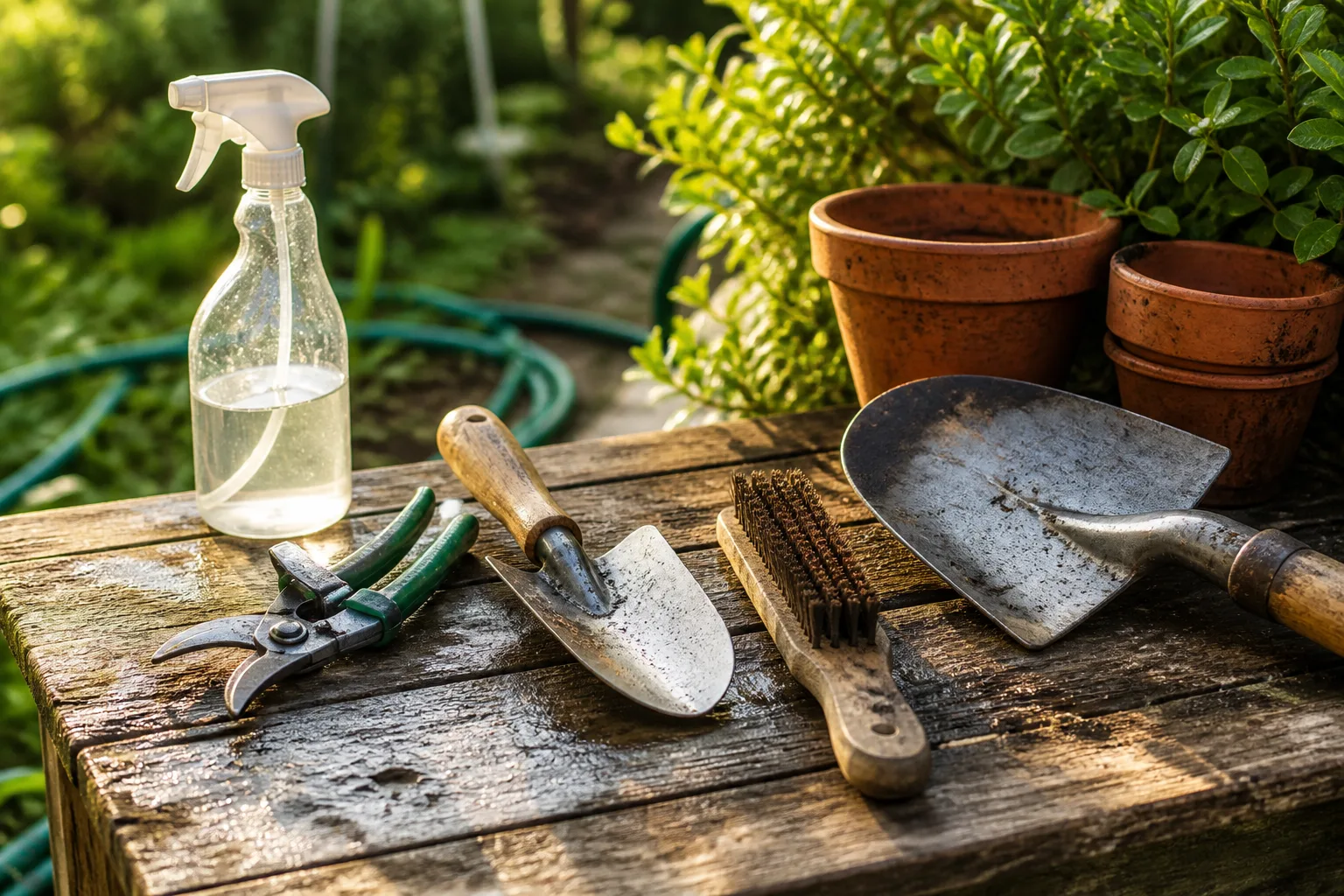
Keep the blades closed when carrying pruners, and do not leave an unlocked pair in mulch, a pocket, or a bucket where someone may reach in. Use gloves when handling thorny or prickly plants, and pause if your hand begins to ache or lose control of the grip. A short break is cheaper than finishing a cut with a slipping blade.
Conclusion
For most gardeners, comfortable bypass pruners are the best first pair because they handle many precise cuts on living stems. Anvil pruners can make sense for dry or dead growth, ratchet pruners can make repeated cuts easier to stage, and slim straight-blade snips suit flowers and fine work. Those categories overlap, so look at the actual blade action rather than trusting a product label alone.
Choose the tool around the work you do most, test its fit, check its stated capacity, and switch to loppers or a saw as soon as a cut feels forced. A sharp, maintained pruner that works with your hand will outperform a more expensive tool that you cannot close comfortably.



