7 Grass-Free Front Yard Ideas for Curb Appeal
Explore 7 grass-free front yard ideas, from native groundcovers to gravel gardens, plus a practical way to choose plants, paths, mulch, and upkeep.
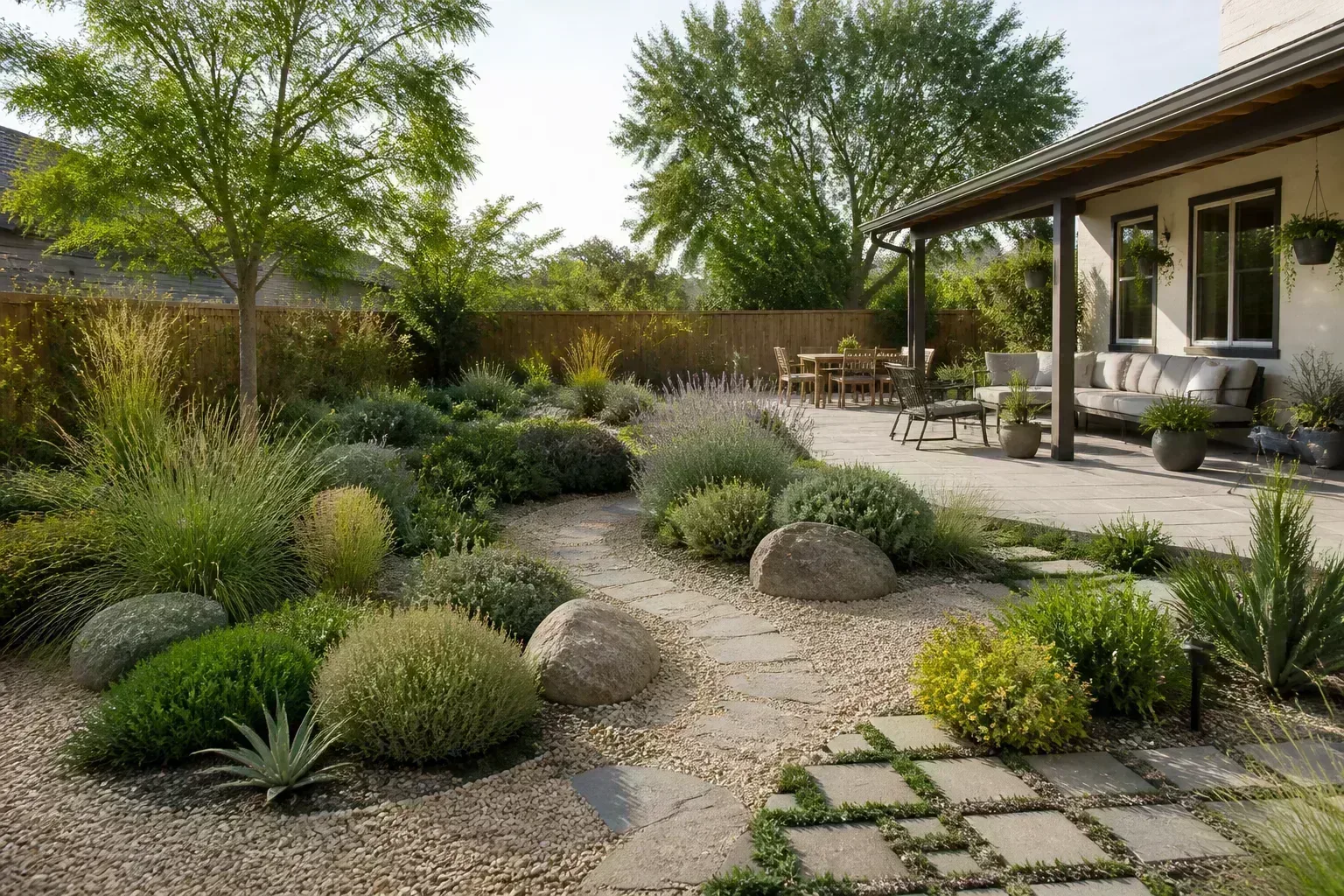
A front yard without grass should feel designed, not unfinished. The most convincing examples do not simply replace a green rectangle with one material; they divide the space into jobs: a welcoming path, a planted frame for the house, a low layer that covers soil, and a few open areas that make the whole composition easy to read.
The right choice depends on more than whether you live in a dry climate. Sun, soil, slope, winter temperatures, foot traffic, pets, local rules, and the amount of seasonal tidying you will tolerate all matter. Use the seven ideas below as design patterns, then choose plants from your own region’s native and adapted plant lists. A plant that is effortless in one neighborhood can be thirsty, short-lived, or overly vigorous in another.
Start with a site audit, not a plant list
Before removing turf, watch the yard for a full day and make a rough map. Mark the hours of direct sun, places where roof runoff lands, compacted routes people actually use, low spots that stay wet, and the areas that bake beside pavement or south-facing walls. Also mark windows, steps, utility covers, hose access, sightlines at the driveway, and the mature spread of existing trees.
This five-minute sketch prevents the most expensive grass-free-yard mistake: buying plants for a fantasy site. EPA WaterSense guidance recommends recognizing differences in soil, exposure, wind, evaporation, and moisture across the same property, then grouping plants with similar water needs into hydrozones. Rutgers’ water-efficient landscaping guidance makes the same point in practical terms: use native or adapted plants, limit turf, start with healthy soil, group plants by watering needs, and maintain the landscape rather than expecting it to run unattended (EPA WaterSense; Rutgers Green Building Manual).
Match the idea to sun, soil, and traffic
Treat these three conditions as non-negotiable filters. A sunny, sandy strip beside the sidewalk wants a different planting than a damp, shaded lawn beneath a mature maple. A walkway that children, delivery workers, and dogs use every day needs a firm surface, even if the surrounding planting is soft and low.
Use this quick match-up before you shop:
- Sunny and dry: groundcovers, ornamental grasses, gravel with widely spaced plants, or drought-tolerant perennials.
- Part shade or woodland shade: native sedges, violets, ferns, woodland groundcovers, and shrubs that tolerate root competition.
- Seasonally wet: moisture-loving natives, a rain-garden-style planting, or a deliberately open basin rather than plants that demand fast drainage.
- Sloped: deep-rooted groundcovers, shrubs, terraces, and stone that slow water instead of a loose blanket of mulch that can wash away.
- High traffic: pavers, brick, concrete, or a defined path with planting kept outside the walking line. Most “walkable” groundcovers mean light, occasional steps—not a daily shortcut.
Soil deserves a separate check. Dig a small hole, fill it with water, and watch whether it drains promptly or remains saturated. If construction compaction is the problem, adding more plants will not solve it; loosen the planting area, improve organic matter where appropriate, and choose plants that tolerate the soil you actually have. A soil test is a better investment than a cart full of amendments that may move the pH in the wrong direction.
Make paths and service access explicit
Grass hides poor circulation because people can walk anywhere. A grass-free yard needs to say where feet belong. Connect the sidewalk to the front steps with a path wide enough for two people to pass, and use a second stepping route only if it solves a real access problem. Set pavers level, leave enough room to roll a bin, and keep low plants from spilling into the walking surface.
The same rule applies to maintenance. Leave access around hose bibs, meters, cleanouts, and downspouts. Give shrubs enough room to reach their mature width without leaning across the path, and use a clear edge between planting and stone. These small decisions make a naturalistic planting look deliberate while saving you from trimming, stepping, and reworking the layout later.
1. Low-water groundcover carpet
For a soft, green look without weekly mowing, build a carpet from groundcovers matched to the site. This works especially well in the front strip between the sidewalk and house, beneath open-canopy trees, or on a gentle slope where bare soil would erode. Repeat one or two species in generous drifts rather than dotting a dozen unrelated plants across the yard.
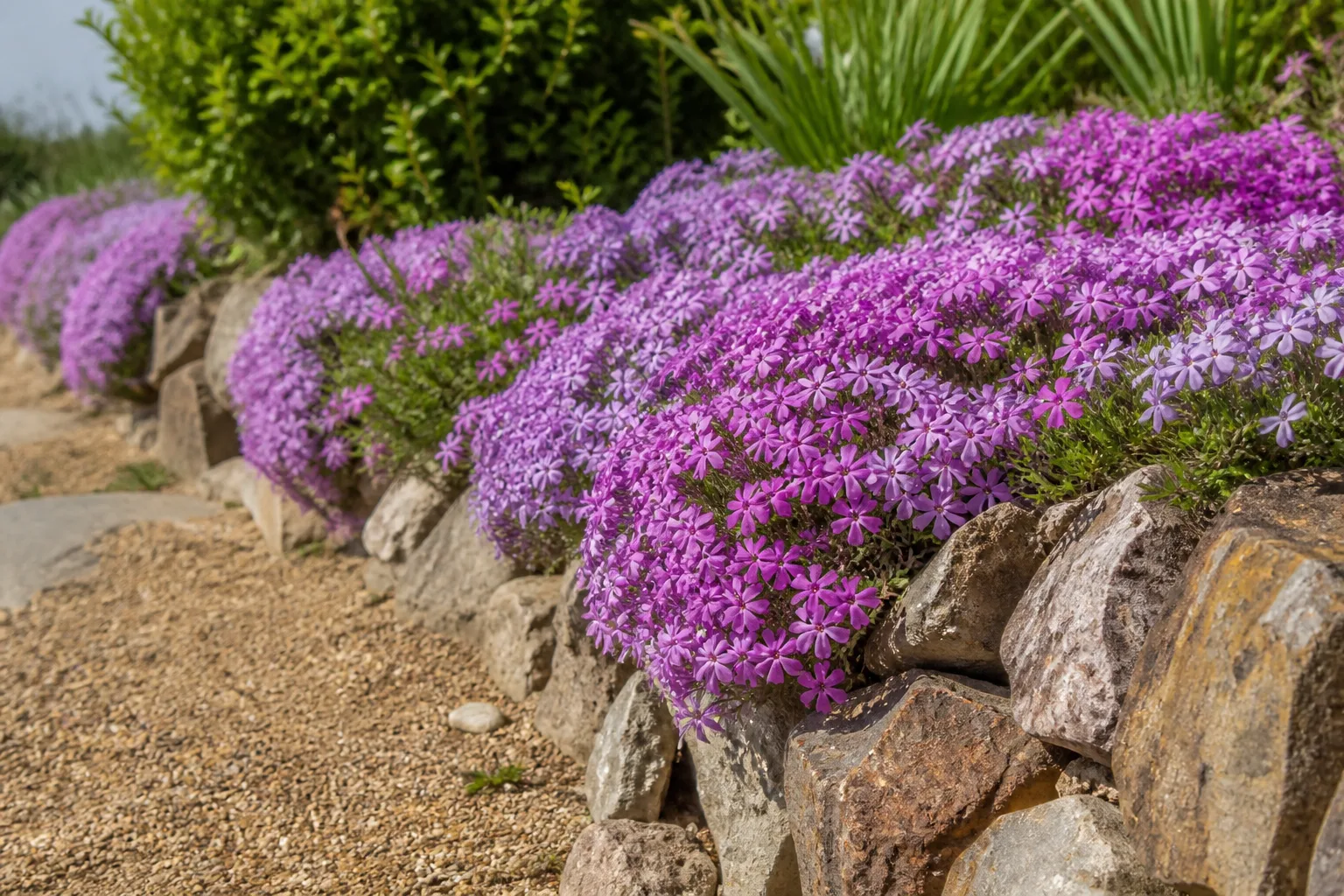
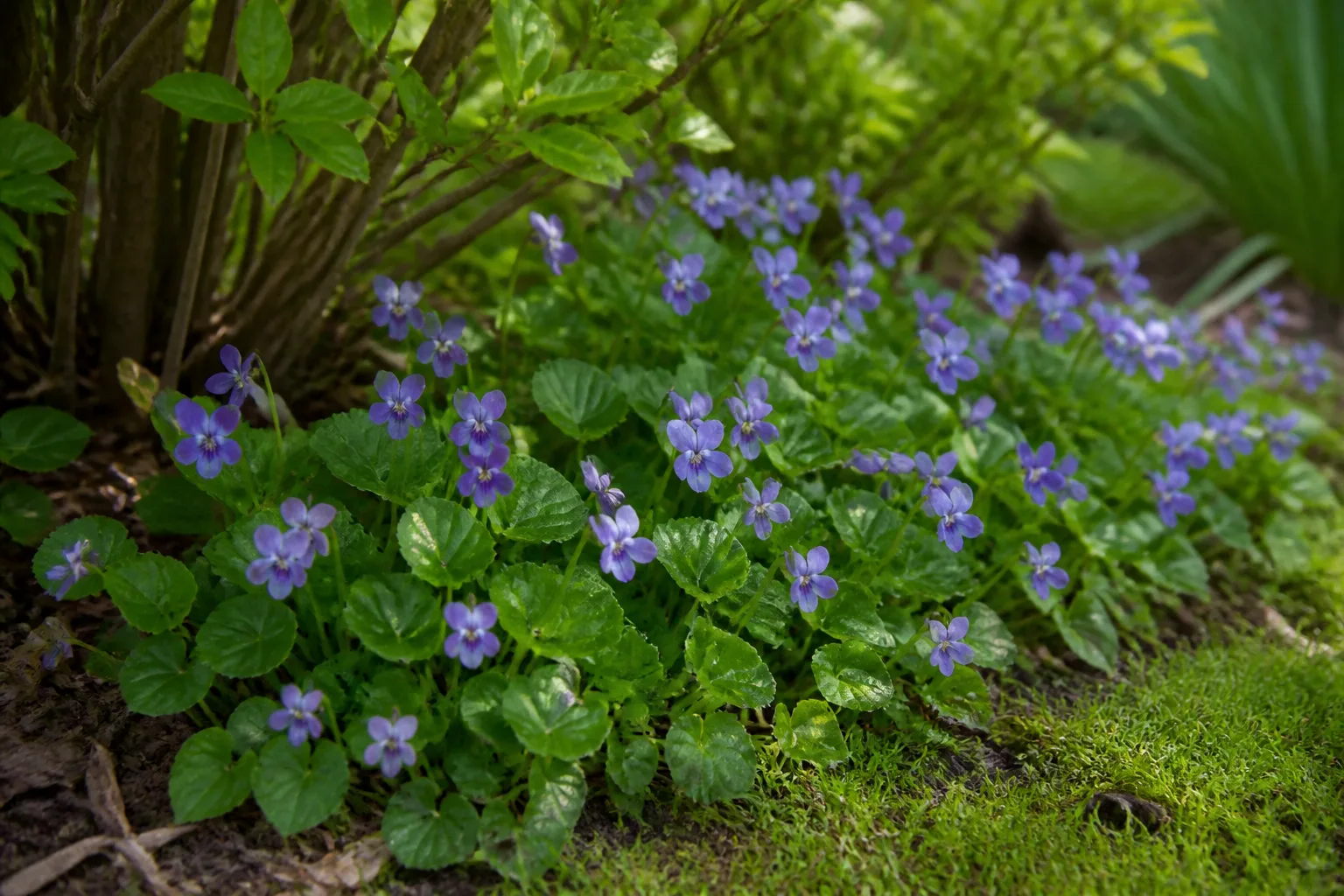
Good candidates vary by region. In sunny, well-drained areas, investigate creeping thyme or creeping phlox; in cooler or partly shaded settings, ask about native sedges, common blue violet, wild ginger, or other local woodland groundcovers. Epic Gardening’s useful distinction is that a plant can spread and cover soil without being a walking surface: its native-lawn-alternative list flags plants such as American alumroot, Pennsylvania sedge, and wild ginger as poor choices for regular foot traffic, while separating those from lighter-traffic options such as frogfruit in warm climates (Epic Gardening).
The design payoff comes from a low, continuous base layer. Add stepping stones only where you need access, then place taller accents—perhaps a small shrub, a clump-forming grass, or spring bulbs—at intervals. Keep the edge crisp for the first year; a clean line beside the sidewalk tells passersby that the planting is intentional, even while the groundcover is still filling in.
The trade-off is patience. Many groundcovers spread slowly when planted from small plugs, and fast spreaders can move beyond the bed. Space plants according to their mature width, mulch the gaps while they establish, and inspect the border during the growing season. “Low maintenance” should mean fewer recurring chores, not no boundaries or decisions.
2. Ornamental grasses in sculptural drifts
If you love the movement of a lawn but want more height, texture, and seasonal change, use ornamental grasses as the main rhythm of the front yard. Arrange repeated clumps along the walk, in a broad crescent around a tree, or in bands that echo the roofline. A few evergreen or semi-evergreen forms can carry structure through winter; warm-season grasses can provide seedheads and tan texture after frost.
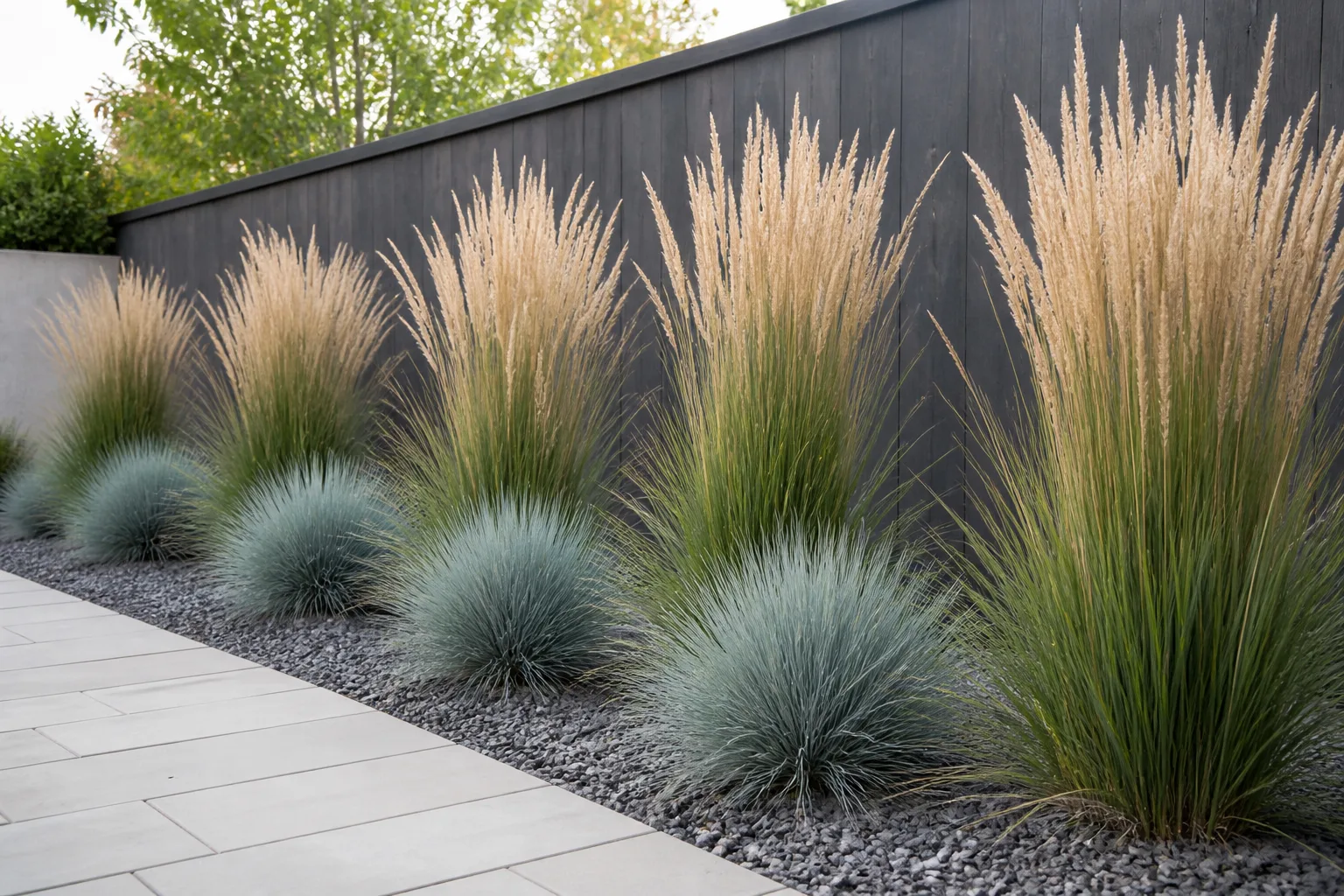
Choose native or well-adapted species for your region, not whichever cultivar looks best in a nursery pot. Little bluestem, blue grama, prairie dropseed, and several native sedges can be excellent starting points in the right parts of North America, but moisture and hardiness still need checking. In shade, Pennsylvania sedge may give a soft woodland effect; in full sun, a prairie-style mix can handle heat better than a shade plant forced into an exposed bed.
Use three layers: a low edge plant, medium grass clumps, and one or two taller accents. Leave gaps between clumps so the planting does not become a solid wall, and keep the tallest forms away from windows, signs, and driveway corners. Repeat the same grass at least three times; repetition creates visual order even when the planting is informal.
The maintenance is seasonal rather than weekly. Remove damaged foliage when appropriate, cut back deciduous grasses at the end of winter or according to local wildlife guidance, and divide only when clumps become crowded. Many grasses need less supplemental water after establishment, but new plants still need consistent moisture while roots expand. Do not treat a newly planted drift as drought-proof just because the mature species is drought-tolerant.
3. Succulent and gravel xeriscape
In a hot, dry climate with fast-draining soil, a gravel garden can be a sharp, colorful alternative to turf. Use a restrained palette of gravel, boulders, architectural plants, and open space. Agaves, yuccas, hardy sedums, ice plants, and regional succulents can supply strong silhouettes, while a few low shrubs soften the transition to the house.
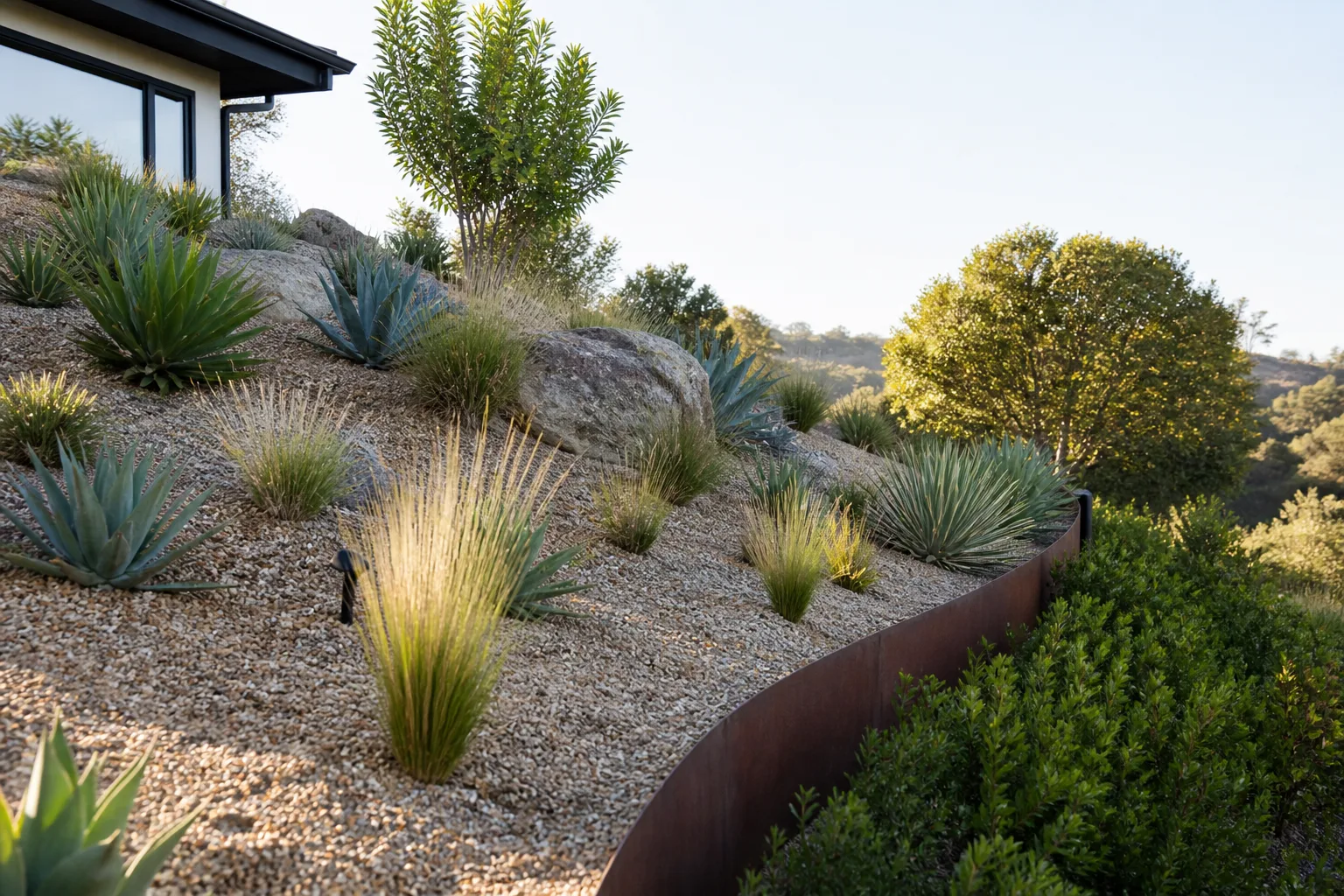
The best xeriscape yards are not plant-free. They use rock where it solves a design or access problem and reserve planting pockets for species that can live on the site’s rainfall after establishment. Vary stone size and texture, tuck larger rocks partly into the soil so they look settled, and repeat a few colors rather than scattering every available stone across the yard.
Where gravel works—and where it fails
Gravel is useful beneath a downspout outlet when drainage is designed correctly, beside a path, around plants that resent wet crowns, or in a narrow strip where mowing is awkward. It is a poor blanket over compacted soil that already sheds water toward the sidewalk. It can also become uncomfortably hot beside walls, reflect heat onto windows, migrate onto pavement, and create a weeding problem once windblown soil accumulates.
Growing in the Garden’s hot-climate guidance makes a valuable cooling distinction: living groundcovers can cover and cool soil, while rock and artificial turf do not provide the same living layer; it also recommends combining low plants with shrubs and trees rather than expecting groundcover alone to cool a yard (Growing in the Garden). That is the better rule for a front yard: use gravel as a deliberate accent or path, then keep enough vegetation to reduce glare and heat.
Check winter conditions before planting succulents. A plant that handles summer drought may fail in cold, wet soil. Protect drainage, avoid burying crowns, and do not add frequent irrigation simply because the gravel surface looks dry; water below the surface can remain longer than you think.
4. Native wildflower meadow with a crisp edge
A meadow is the most expressive option on this list, and it can be a strong fit for a sunny, open front yard. Combine regionally native annuals, perennials, and grasses for a succession of bloom, then frame the planting with a path, low border, or mown strip. The contrast between a loose interior and a clear edge is what makes a meadow read as a garden rather than an abandoned lawn.
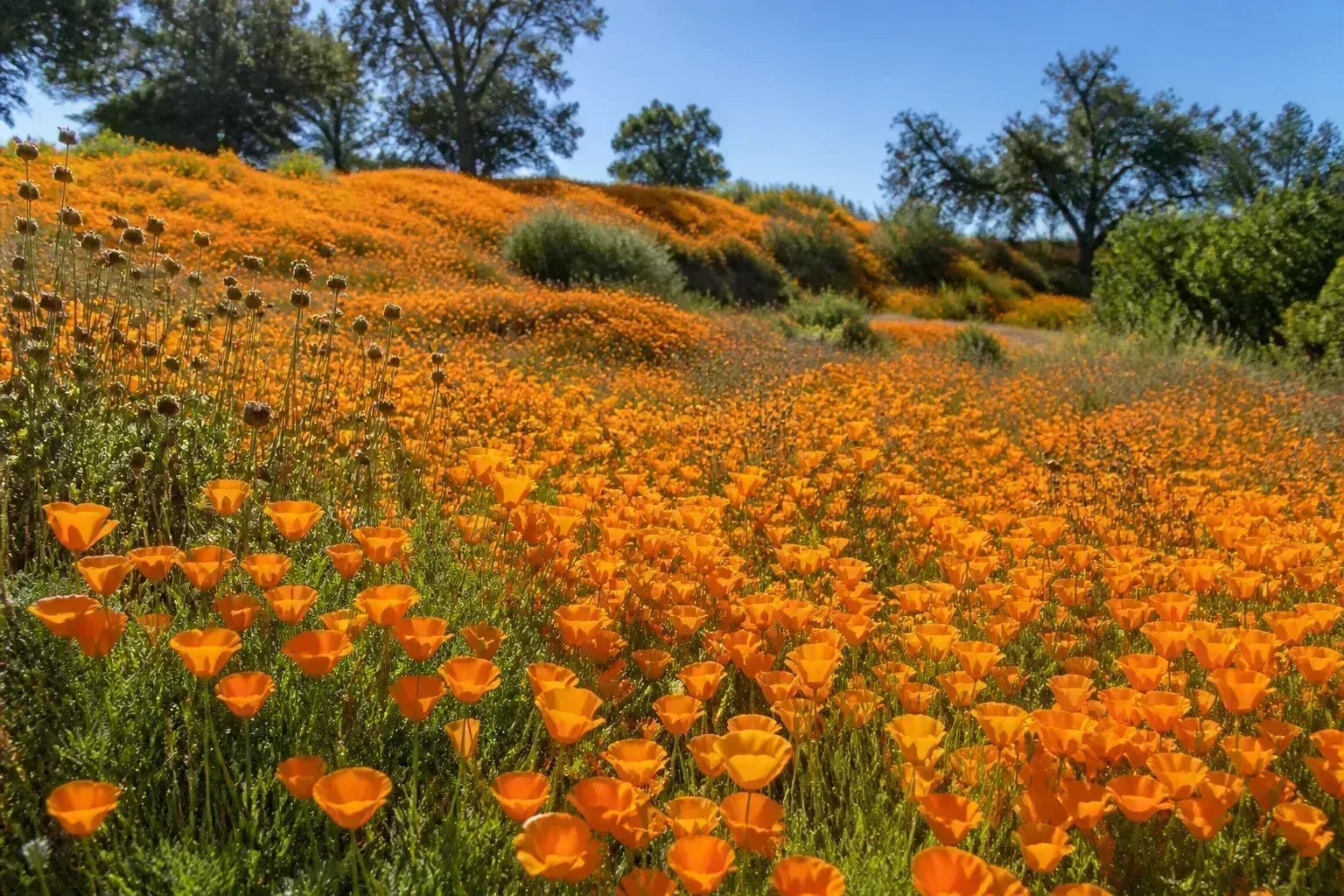
Choose plants for more than peak bloom. Coneflowers, black-eyed Susans, asters, goldenrods, coreopsis, bee balm, milkweed, and native grasses can create different heights and seasons, but the right mix depends on your region and soil. Penn State Extension’s pollinator-gardening guidance emphasizes planning, site preparation, design, and the food and shelter needs of pollinators; apply that same sequence at front-yard scale instead of scattering a generic seed blend and hoping for a meadow (Penn State Extension).
Expect a transition period. The first year may look sparse, weedy, or uneven while perennials build roots. Mark desirable seedlings, keep aggressive weeds from seeding, and judge the planting after at least one complete growing season rather than after the first month. Watering needs are usually highest while the plants establish; once mature, the planting may need only weather-driven help, though “native” does not guarantee survival through an unusual drought.
Make a meadow look deliberate
Start with a strong shape that can be seen from the street. A broad oval, a ribbon along the sidewalk, or two connected beds usually looks more intentional than a few random islands. Repeat colors and plant forms, place taller species toward the back or center, and keep the front edge lower so the house remains visible.
Maintain the edge several times each season with a string trimmer, edging tool, or hand pruners. Leave seedheads standing when they add winter structure or food, and cut back on a schedule that suits your local wildlife and fire-safety needs. If your community has front-yard height or visibility rules, design the meadow to comply rather than treating regulations as an afterthought.
5. Evergreen shrub matrix with low fillers
For year-round structure and a calmer, more architectural look, replace the lawn with a matrix of evergreen shrubs, low mounds, and mulch or groundcover. This is especially effective around a porch or foundation because shrubs frame the house in winter, while low fillers keep the bed from becoming a row of isolated green balls.
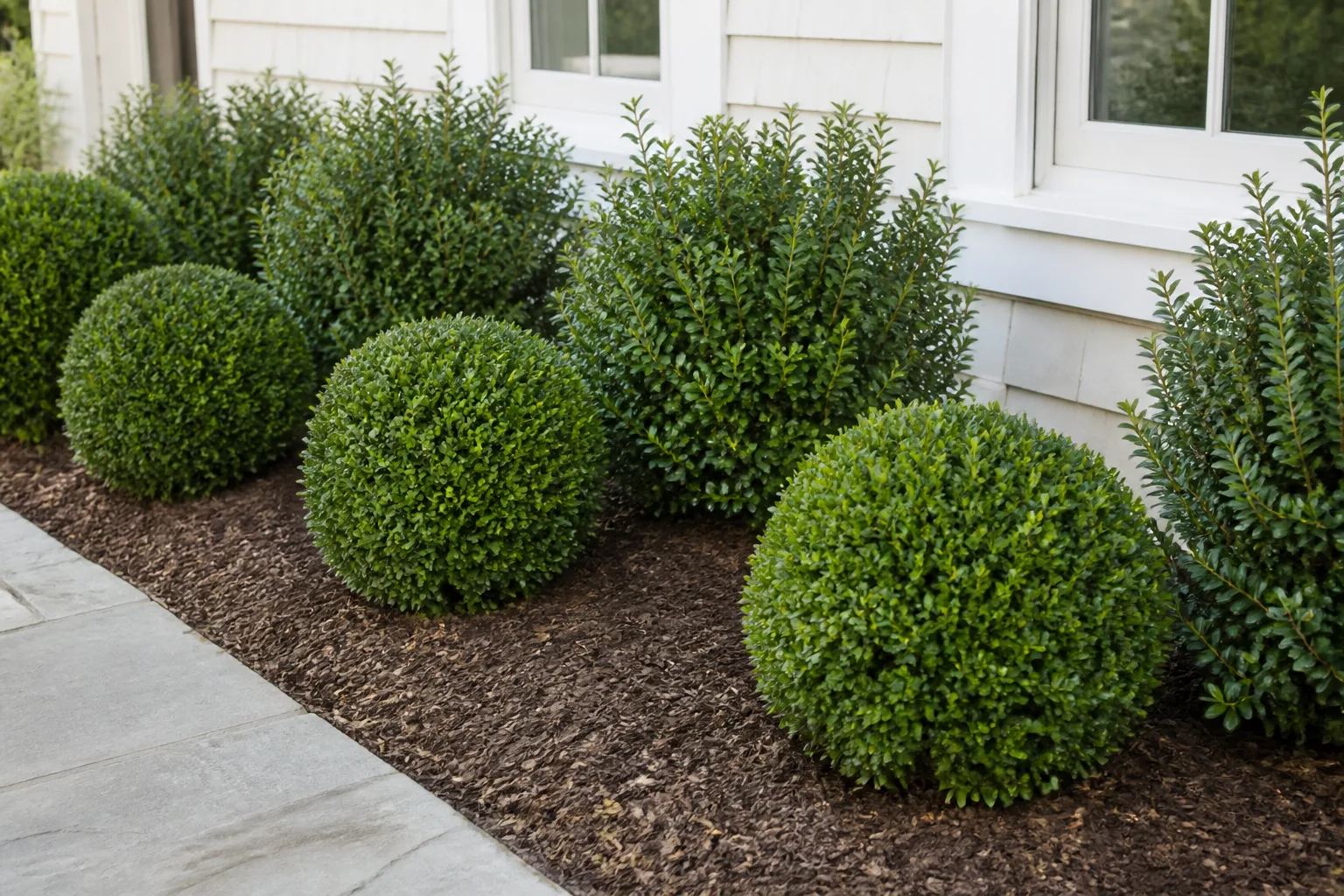
Think in masses, not specimens. Use a few repeated shrubs at the back, medium perennials in front, and a low living or organic mulch layer at the edge. Regional choices might include inkberry in parts of the East, kinnikinnick in suitable cool, dry sites, or dwarf yaupon holly in warmer areas; elsewhere, your extension service may point you toward evergreen shrubs that tolerate local winters, soils, and summer stress.
Measure mature width before planting. A one-gallon shrub can become a five-foot problem beside a walkway, window, or utility box. Space plants so air can move between them, keep mulch away from woody stems, and resist the urge to fill every gap immediately. A little breathing room looks better than a bed that needs constant shearing.
Evergreens are not automatically low-water. A plant that stays green may still need irrigation, especially in the first two summers or during a dry winter. Group shrubs by water needs, use mulch to slow evaporation, and install or adjust drip irrigation so it does not spray the pavement or water plants with different requirements on the same schedule.
6. Drought-tolerant perennial tapestry
If you want flowers rather than a uniform carpet, build a perennial tapestry with repeating color blocks and different bloom times. A sunny bed might combine yarrow, penstemon, salvia, blanket flower, catmint, lavender, or locally native equivalents. In a cooler or moister region, use native perennials that can handle your rainfall rather than importing a desert palette that needs constant rescue.
The professional-looking trick is repetition and restraint. Pick a short list of anchor plants, repeat each in groups of three or more, then add a few seasonal accents. Place low plants along the walk, medium plants near the middle, and taller flower stems where they will not block windows or sightlines. Keep a simple color story—warm flowers against blue-gray foliage, for example—so the yard feels composed even when different plants are blooming at different times.
Perennial beds trade mowing for observation. You will still weed during establishment, deadhead selectively, cut stems back at the right season, and replace plants that fail. That is often a better trade for gardeners who enjoy detail work, but it is not the same maintenance profile as gravel or a shrub matrix. Write down the bloom sequence and the watering zones so the bed remains manageable when summer gets busy.
7. Mixed native garden with edible accents
A grass-free front yard can be useful as well as beautiful. Combine native shrubs and flowers with a small herb bed, berry-producing shrub, dwarf fruit tree, or raised vegetable bed where local rules, sunlight, and access make it practical. This pattern works well when you want the front yard to support pollinators, provide food, and make the property feel more connected to the street.
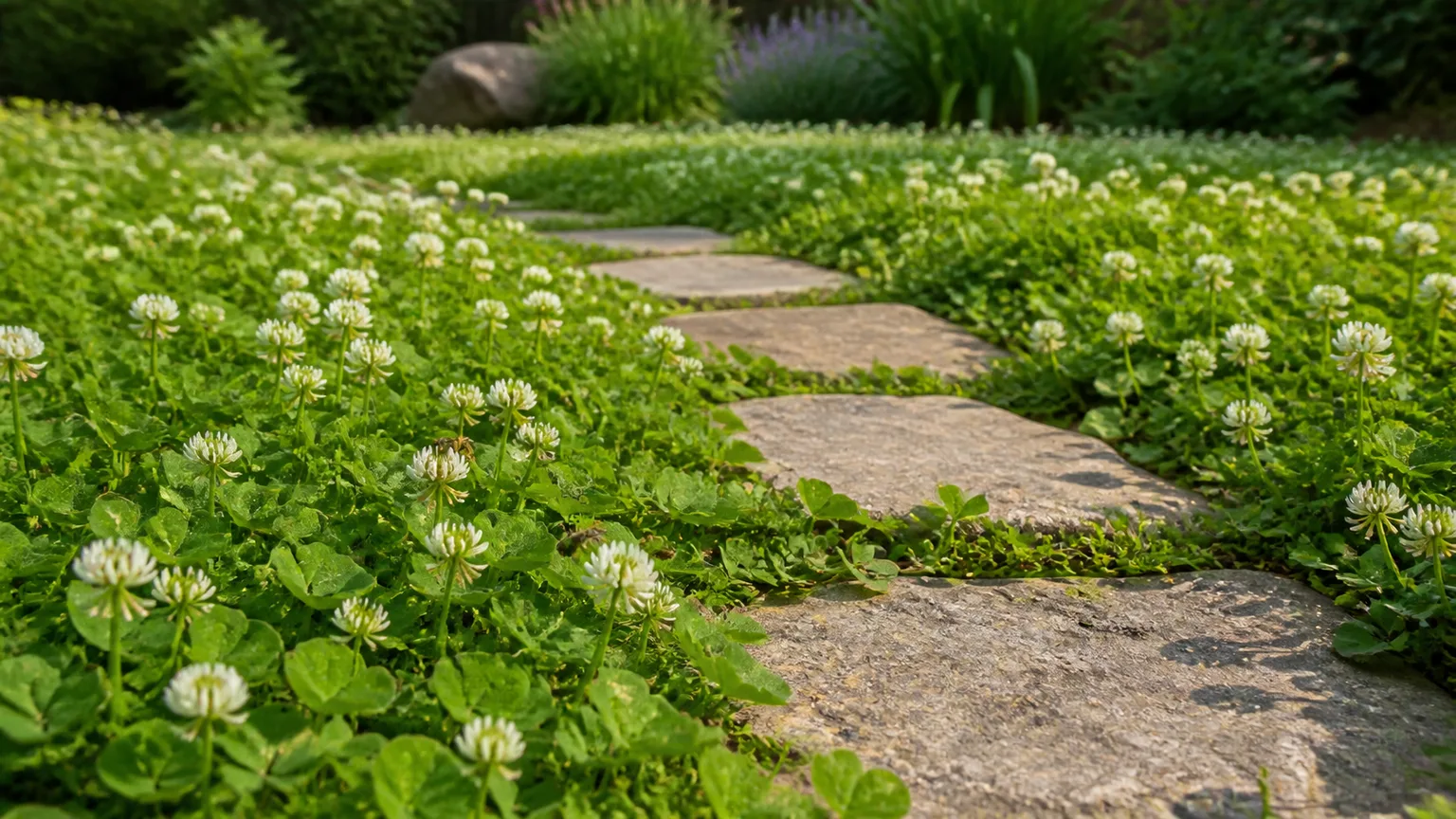
Keep the structure clear. Put the largest tree or shrub where it will not hide the front door, then use lower flowers and herbs near the path. Repeat edible plants in a defined bed, add a visible edge, and leave enough room to harvest without stepping into neighboring plants. Raised beds can give a small front yard a clean shape, but they do not remove the need for watering, compost, pest checks, or seasonal crop changes.
Native plants are not a purity test. A locally appropriate non-native plant that is well behaved and suited to the site may perform better than a native that requires constant irrigation, while a plant sold as “wildlife friendly” may still spread aggressively in your region. Check state or county invasive-plant lists and buy from a nursery that can identify the plant’s mature size and behavior.
Place edibles away from traffic
Avoid putting food crops where dogs relieve themselves, road splash reaches the leaves, or salt and de-icing grit collect. Keep thorny or sprawling berries away from narrow paths, and place herbs where you can reach them without brushing through taller flowers. If children harvest from the front yard, choose sturdy edges and avoid plants with irritating sap or toxic berries in accessible areas.
How to remove lawn and establish the new planting
Do not start by scalping the yard and buying whatever is in bloom. First, choose one test zone—perhaps 100 to 300 square feet—and use it to learn how the soil drains, how weeds return, and how much first-year watering your chosen plants actually need. A smaller successful conversion is more useful than a whole-yard installation that leaves bare soil and a maintenance crisis.
Remove irrigation that no longer serves the new design, but do not assume every sprinkler should disappear. A converted yard may still need temporary irrigation for new plants or a permanent drip zone for shrubs and edibles. EPA WaterSense recommends watering when plants need it, avoiding midday evaporation, stopping when water pools, and grouping similar plants so the irrigation schedule fits the landscape rather than the old lawn (EPA WaterSense watering tips).
Smother, strip, or sheet-mulch?
Use smothering when you have time and a relatively flat site. Mow the grass short, cover it with overlapping light-blocking material, and wait long enough for the turf and shallow weeds to weaken before planting through the cover. This reduces digging but requires attention to edges, perennial weeds, and the timing of the next planting season.
Use sod stripping when you need a clean grade, the existing lawn is heavily infested with persistent weeds, or you are installing a path or drainage feature. Remove the shallow turf layer without lowering the yard enough to create a new drainage problem. A sod cutter is fast, but it will not remove every deep root or solve compacted subsoil.
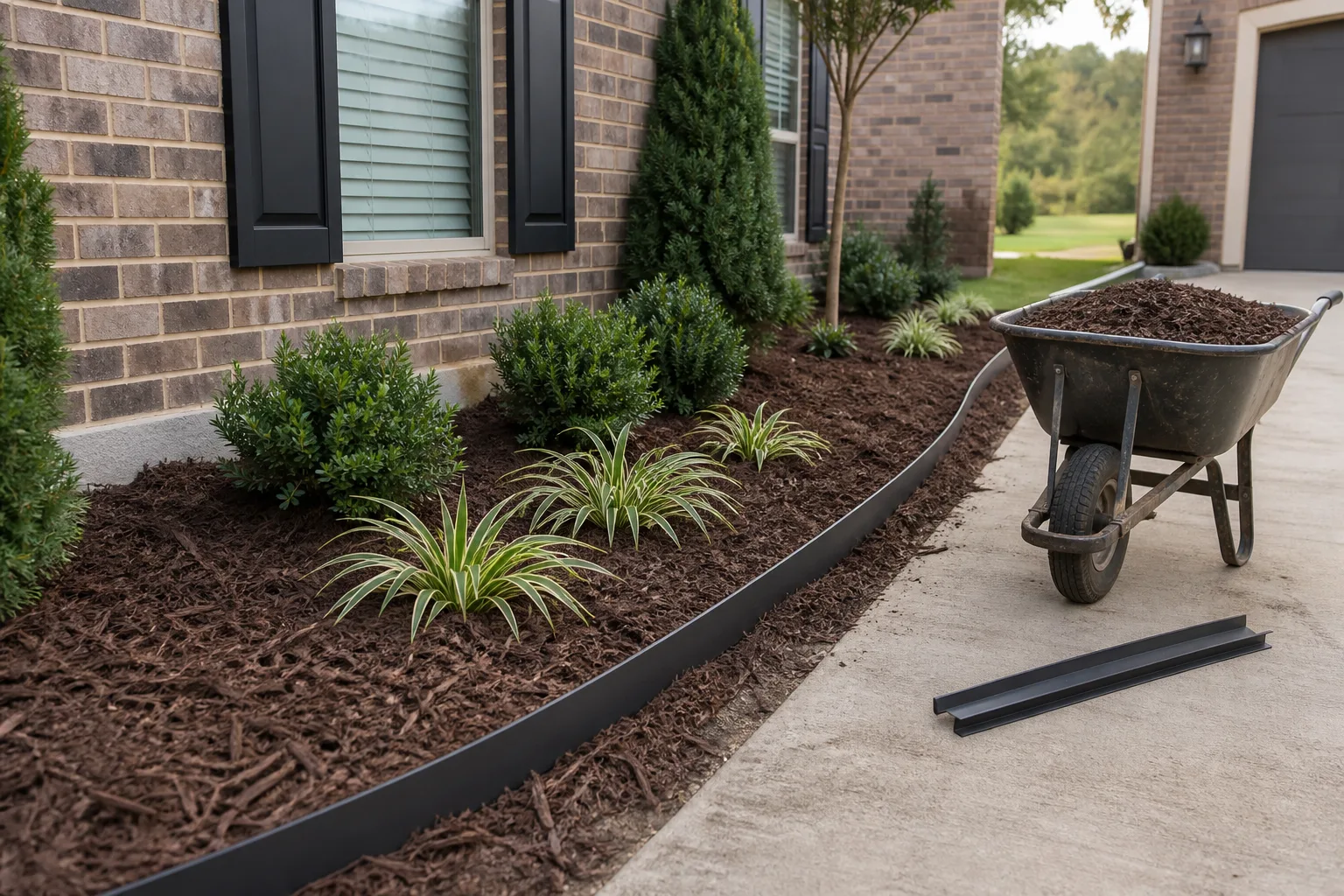
Use sheet mulch when organic matter is available and you can build a defined bed. Lay overlapping cardboard or another appropriate weed-suppressing layer, wet it, add several inches of compost-rich mulch, and keep the material off trunks and crowns. Sheet mulch is not a magic eraser: bindweed, nutsedge, bermudagrass, and other persistent weeds may push through or around it, so inspect the perimeter and remove escapes before they seed.
Whichever method you choose, finish the soil surface before planting. Grade water away from foundations without sending it onto the sidewalk, break up compacted planting zones, and leave the final soil level low enough to accept mulch without burying stems. Avoid creating a perched wet layer by dumping rich soil over dense clay without improving drainage.
Water the establishment phase, then taper
New plants need a different schedule from established plants. Water deeply enough to moisten the root zone, then check the soil before watering again. Small plugs and one-gallon shrubs can dry quickly in sun and wind even when mature specimens of the same species are drought-tolerant.
For a large bed, use drip or low-volume irrigation where appropriate, apply water in the morning, and watch for pooling, runoff, wilt, and soil that remains saturated. EPA WaterSense notes that a typical landscape may use roughly one inch of water per week including rainfall, but the need varies with location, weather, plant type, and season; treat that as a broad lawn benchmark, not a universal prescription for every shrub or groundcover (EPA WaterSense watering tips).
Taper frequency as roots move outward and new growth becomes steady. The goal is not to force a dry-climate look with drought stress; it is to help plants become functional members of a community that fits the site. Keep temporary irrigation available through the first hot spell, because a planting that looks established at the surface may still have a small root system below.
Maintenance rules that keep a grass-free yard beautiful
Grass-free does not mean chore-free. It changes the chore calendar from mowing and fertilizing to edging, weeding, pruning, seasonal cutback, irrigation checks, and occasional replacement. The work is usually easier when the design leaves access and groups plants by growth habit.
Use these rules as your maintenance baseline:
- Protect the edge. Keep sidewalks, curbs, driveways, and steps clean. A sharp border makes even a loose planting look intentional.
- Weed early. Pull or hoe small weeds before they flower. Do not wait for the new groundcover to hide them.
- Mulch deliberately. Organic mulch reduces evaporation, moderates soil temperature, and suppresses weeds, while gravel helps in different situations. Keep either material out of trunks, crowns, drains, and walking surfaces.
- Prune for clearance, not a default shape. Remove branches that block the path, window, or driveway before reaching for the hedge trimmer.
- Audit irrigation monthly. Look for leaks, clogged emitters, broken heads, and water hitting pavement. Adjust by season and rainfall.
- Leave useful structure. Seedheads and hollow stems can provide winter interest and habitat; remove diseased material and anything that creates a safety or visibility problem.
Budget for an establishment year and a refinement year. Plants will not fill their mature footprint immediately, and some will prove to be wrong for the site despite careful planning. Moving a failing shrub or narrowing a bed early is cheaper than defending a bad layout for a decade.
Common grass-free-yard mistakes
The first mistake is treating “native,” “drought-tolerant,” and “low maintenance” as synonyms. Native plants are adapted to particular regions, not to every soil and exposure within those regions. Drought-tolerant plants still need water while establishing, and low-maintenance plants can spread, shed, reseed, or need annual cutback.
The second is replacing lawn with a wall-to-wall layer of rock. Gravel may reduce irrigation in one zone, but a bare hardscape can increase reflected heat, glare, runoff, and weed cleanup. Use rock to define paths, drainage, or planting pockets, then keep living plants where cooling, habitat, or soil cover matters.
The third is buying for the mature photograph instead of the mature plant. A tiny shrub, grass, or groundcover plug can look harmless in a nursery, then block windows or cross a path. Read the label, measure from the center of the plant, and leave the spacing the plant needs even if the first year looks sparse.
The fourth is expecting every groundcover to tolerate feet. Most do not. If people need to walk there, install a path and let the plants frame it. Even a light-traffic mat needs a recovery period after establishment and may fail under repeated shortcuts, wet soil, or pet traffic.
The fifth is removing all seasonal texture in the name of tidiness. A meadow or native perennial bed may look rough after frost, but cutting everything to the ground can remove winter structure and habitat. Decide what must be cleared for safety, disease, or visibility, and what can remain until late winter.
Finally, do not convert the whole yard during the hottest, driest part of the year unless you can provide reliable establishment irrigation. Start in the season that gives roots time to settle, or stage the work in manageable sections. A grass-free front yard succeeds when the plants, hardscape, and maintenance plan all agree with the place.
Conclusion
The best grass-free front yard is not a single substitute for turf. It is a small landscape system: groundcovers for soil cover, grasses or perennials for movement, shrubs for structure, stone or pavers for feet, and mulch or gravel where each material genuinely helps.
Start with a site audit, choose one pattern that fits your sun, soil, water, and traffic, and convert a test zone before committing the entire property. Verify local plant lists, mature sizes, invasive status, visibility rules, and establishment needs. When the design is matched to the site, the payoff is more than lower mowing: the front yard becomes easier to read, more resilient through the seasons, and far more personal than a uniform green rectangle.



