How to Grow and Care for Smoke Bush Plant
Grow smoke bush (Cotinus coggygria) for purple foliage and smoky pink summer plumes. Complete guide to sun, soil, pruning trade-offs, propagation, and verticillium wilt.
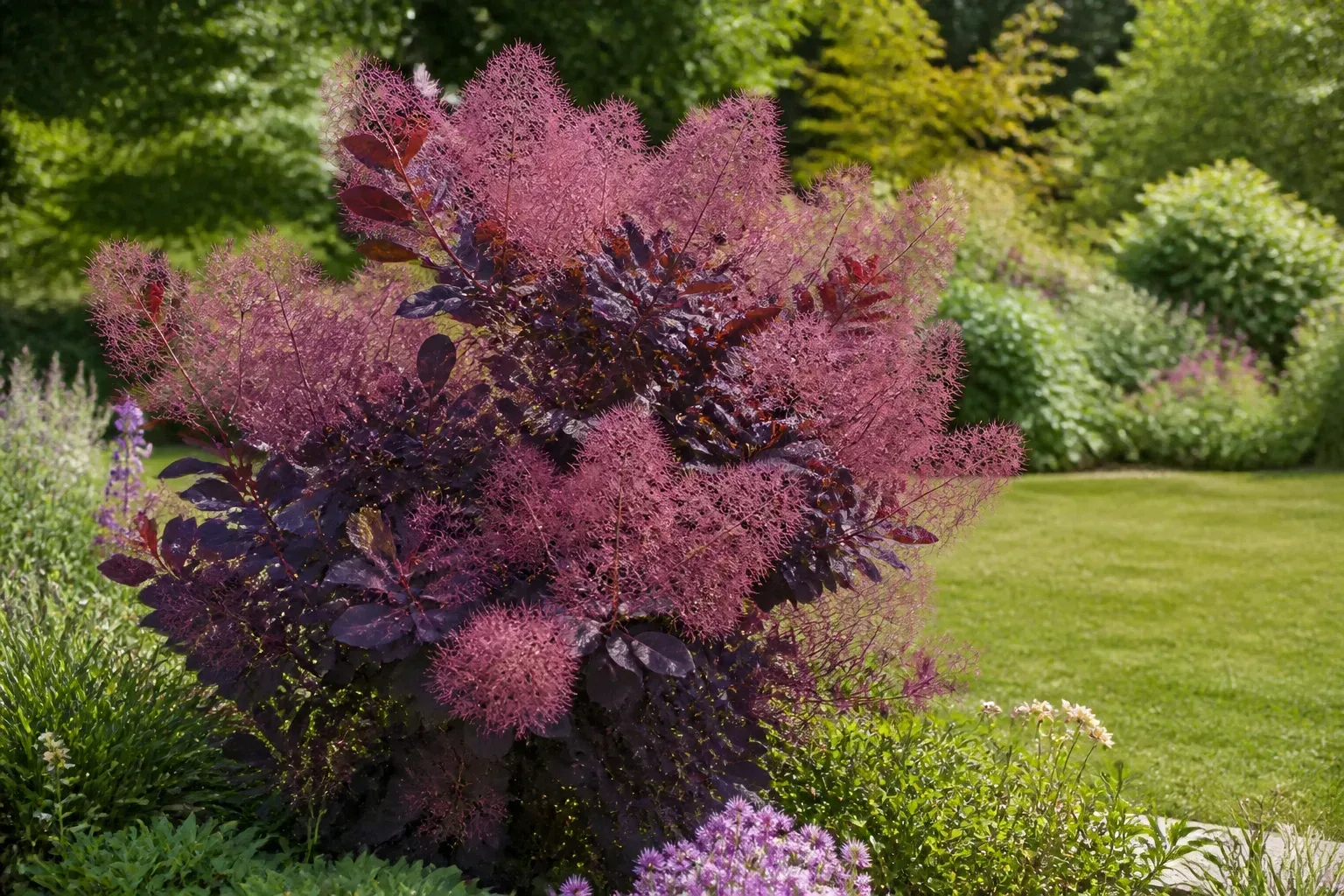
Smoke bush—also called smoke tree or smoketree—is the kind of shrub that stops traffic in June. The actual flowers are tiny and easy to miss; what you remember are the billowy pink-purple panicles that look like puffs of smoke drifting above deep burgundy or green leaves. Botanically, most purple-leaved garden plants are Cotinus coggygria, a deciduous shrub or small tree native from southern central Europe into central China.
That show comes with a few non-negotiables. Smoke bush wants full sun, sharp drainage, and enough room to reach 10 to 15 feet tall and wide without fighting your foundation or your neighbor’s fence. It is drought-tolerant once established, deer-resistant in many gardens, and forgiving about soil pH—but it punishes wet feet, heavy shade, and late-summer pruning with the same enthusiasm.
This guide covers species ID, cultivar choice, planting spacing, the pruning paths that actually match how you want the plant to look (and whether you care about blooms that year), propagation from cuttings, container limits, and how to tell verticillium wilt from simple drought stress.
What Is Smoke Bush (Smoke Tree)?
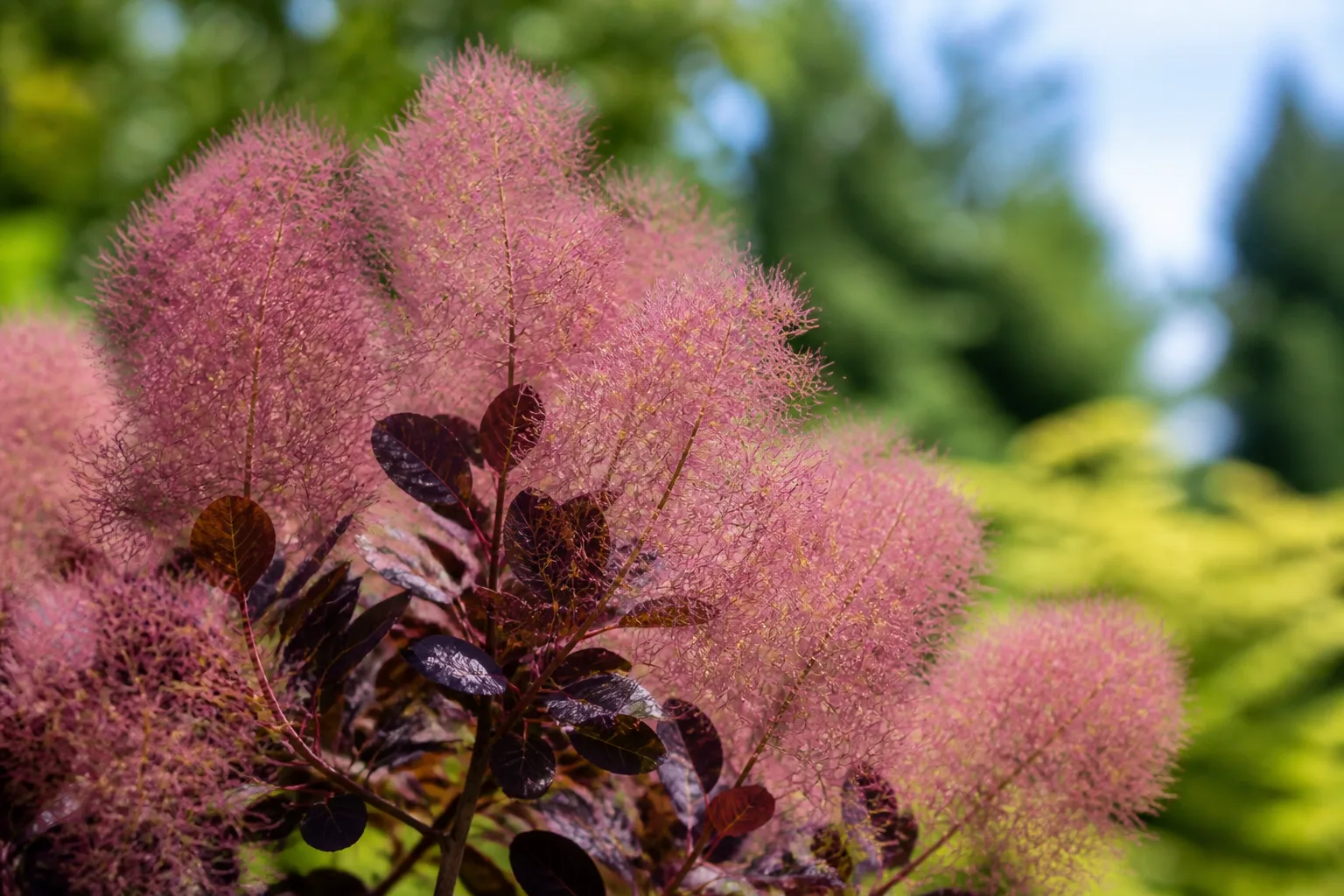
Smoke bush belongs to the genus Cotinus in the Anacardiaceae family—the same plant family as cashew, mango, and poison ivy. Mature plants form an upright, open, spreading habit with alternate simple leaves and panicles of smoky color in late spring through summer. NC State Extension describes the inflorescence as 6 to 8 inches long, built from many fine filaments on the current season’s growth, with inconspicuous yellow flowers hidden inside the haze. (NC State Extension)
Fall is the second act. Leaves turn gold, red, burgundy, or purple, and crushed foliage can smell faintly radish-like—a quirky ID clue if you are learning woody plants in the field.
European smoke bush vs American smoke tree
Garden centers blur the names, but two species matter:
| Species | Common names | Typical look | Native range |
|---|---|---|---|
| Cotinus coggygria | European smoke bush, purple smoke bush | Purple or green leaves; compact to 15 ft | S. central Europe to China |
| Cotinus obovatus | American smoke tree | Bluish-green leaves; often taller (to ~30 ft in ideal sites) | Southeastern U.S. |
Most ‘Royal Purple’ and other purple-leaved nursery stock is C. coggygria. American smoke tree is a separate native with its own looser habit and bluer summer foliage. Care overlaps—full sun, drainage, late-winter pruning—but do not assume a tag that says “smoke tree” tells you which species you own. Check the botanical name on the label.
What creates the smoky pink “flowers”
The smoke is not petal color. Each panicle carries small yellow flowers plus long sterile flower stalks covered in hair-like filaments. Those stalks expand after bloom and turn smoky pink to purplish pink, lingering most of the summer. That is the effect you are buying the plant for—and why hard pruning that removes last year’s framework can change how much “smoke” you see the following year.
Blooms form on new wood of the current growing season, which matters when you choose between a light shape-up and a hard coppice.
Smoke Bush Quick Reference
Use this table before you dig the hole or pick a pot.
| Factor | Target |
|---|---|
| Botanical name | Cotinus coggygria (most purple cultivars) |
| Common names | Smoke bush, smoke tree, smoketree, royal purple smoke bush |
| USDA zones | 4a–8b (NC State Extension) |
| Mature size | 10–15 ft tall × 10–15 ft wide |
| Growth rate | Rapid |
| Light | Full sun (6+ hours direct sun daily) |
| Soil | Well-drained loam, sand, or rocky soil; tolerates clay if drainage is good |
| Soil pH | Acidic to alkaline |
| Water | Deep, regular water while young; drought-tolerant when established |
| Bloom time | Late spring through summer |
| Fall color | Gold, red, burgundy, purple |
| Maintenance | Low to medium (pruning choice drives labor) |
| Deer | Often left alone; not guaranteed in heavy pressure |
| Key risk | Wet soil → verticillium wilt; sap → contact dermatitis in sensitive people |
Light Requirements for Purple Foliage and Strong Blooms
Plant smoke bush in full sun. NC State Extension lists full sun as six or more hours of direct light per day, and that is the baseline for dense habit, strongest fall color, and the fullest smoky panicles.
Full sun rules and what happens in shade
Purple-leaved cultivars are the most sensitive to shade. In part shade, leaves often revert toward green, the plant grows leggy, and the airy smoke effect thins out. If your only bed is along a north foundation or under mature trees, smoke bush is the wrong anchor—choose a shade-tolerant shrub instead.
Morning sun with harsh afternoon shade is still shade for this plant’s purposes. Aim for an open south or west exposure, a parking strip with no overhang, or the sunny end of a border where nothing taller will creep overhead in five years.
Soil, Drainage, and pH
Smoke bush adapts to a wide pH range—acidic, neutral, and alkaline soils all work if drainage is honest. It tolerates clay, loam, sand, and shallow rocky soil per NC State’s profile, but it will not survive waterlogged beds or low spots that stay soggy after rain.
Before planting, fix drainage first: raise the bed, mix in compost on heavy clay, or plant on a slight mound so the root crown sits at or slightly above grade. Soggy soil is not just a growth issue—it is the main trigger for verticillium wilt, the disease that kills more smoke bushes than any insect.
Watering Smoke Bush From Establishment to Drought Tolerance
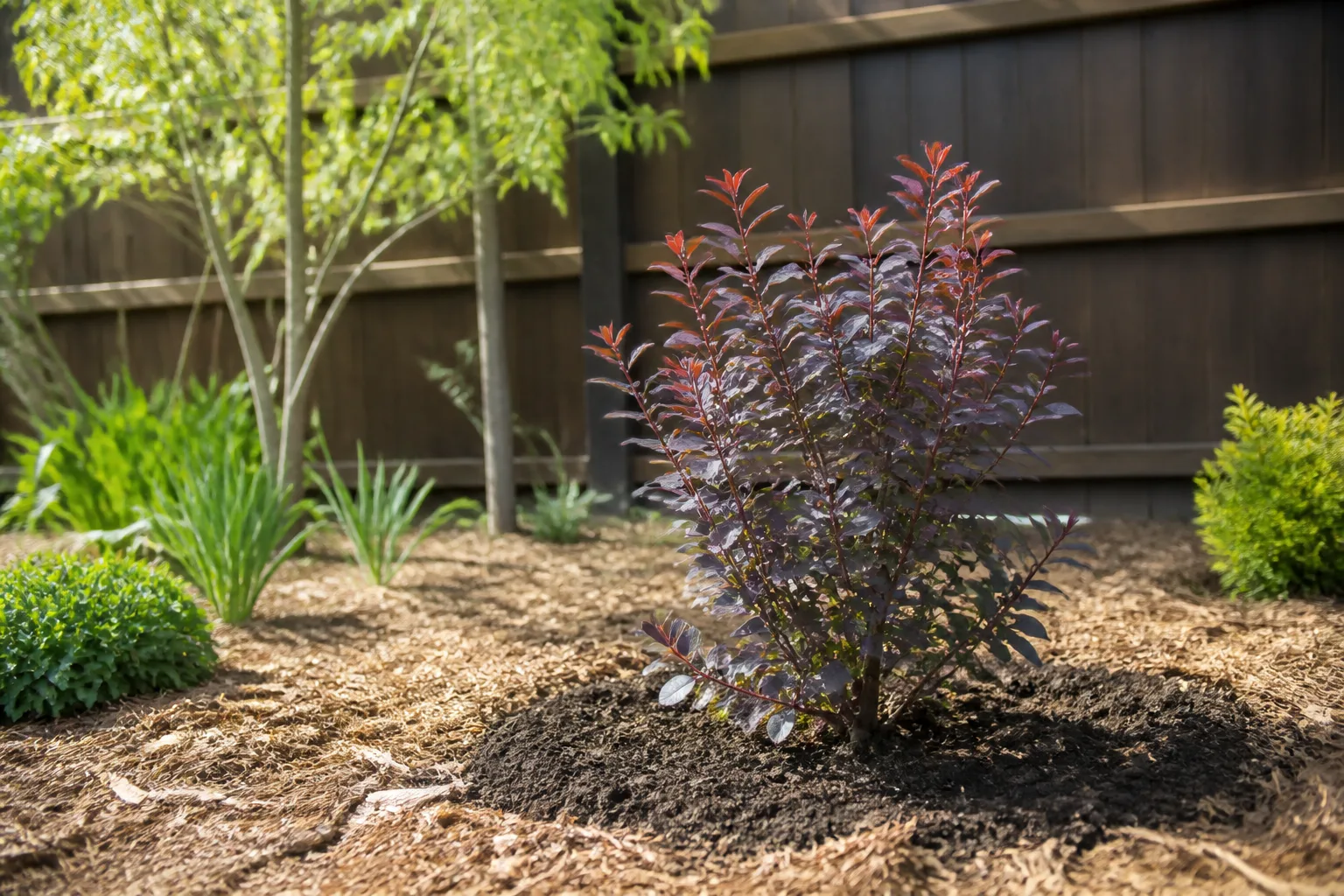
Year one and two: Water deeply twice a week during dry spells so roots push into the surrounding soil. A 2- to 3-inch organic mulch ring (kept 2 inches away from the trunk) reduces evaporation and temperature swings.
After establishment: Smoke bush is drought tolerant. In most climates, a deep soak every 10 to 14 days during active summer growth is enough unless you are in extreme heat or sandy soil. Overwatering established plants is a common mistake—it keeps roots cool and wet, which invites root diseases without improving the smoke show.
In containers, the schedule flips: pots dry faster, so check the top 2 inches of mix and water when dry, always until water exits the drainage holes.
Temperature, Hardiness Zones, and Winter Wind Protection
Smoke bush is hardy in USDA zones 4a through 8b, which covers most of the continental U.S. outside the Deep South’s wettest, hottest pockets and the coldest fringe of zone 3.
In cold, windy winters, exposed plants can suffer dieback on twigs even when the roots survive. Plant in a sheltered south or west exposure in zone 4 and 5, or wrap young shrubs with burlap the first winter if you are on an open hilltop. Avoid planting in a tunnel between buildings where winter wind accelerates.
In humid, hot zone 8 summers, give extra air space—do not cram smoke bush against a wall with no airflow. Fungal leaf spots show up faster in stagnant, muggy microclimates.
Fertilizer: When Smoke Bush Needs Feeding (and When It Does Not)
Smoke bush is not a heavy feeder. In average garden soil, a shovel of compost in early spring at the drip line is enough most years.
Fertilize only when growth is clearly weak—pale new leaves, short shoots, a plant that has not added noticeable size in two seasons. Use a balanced slow-release shrub fertilizer or a light application of organic all-purpose feed in spring, not late summer. Late nitrogen pushes soft growth that will not harden off before frost.
Skip fertilizer entirely in fall and winter. You want the plant to harden, not push tender shoots into cold weather.
Best Smoke Bush Cultivars to Know
Nurseries trade dozens of names, but these are the ones you will see most often—and the traits that should drive your choice:
| Cultivar | Foliage | Smoke / flowers | Notes |
|---|---|---|---|
| ’Royal Purple’ | Deep purple, nearly black in sun | Purple-red smoke | The classic purple anchor; needs full sun to hold color |
| ’Velvet Cloak’ | Dark purple | Similar to Royal Purple | Strong orange-red fall color |
| ’Golden Spirit’ (‘Ancot’) | Chartreuse-yellow | Pink smoke | Needs afternoon shade only in hottest climates; sun elsewhere |
| ’Daydream’ | Green | Creamy, dense blooms | Smaller (~10 ft); grown more for flowers than leaf color |
| ’Young Lady’ | Green | Extremely heavy bloom at small size | Compact; good when you want smoke on a smaller footprint |
| ’Nordine’ | Purple | Standard smoke | Very hardy purple-leaf option; orange fall tones |
If flowers matter more than leaf color, lean green-leaved bloom-heavy cultivars like ‘Daydream’ or ‘Young Lady’. If you are designing a dark foliage backdrop, ‘Royal Purple’ or ‘Velvet Cloak’ in full sun are the usual picks—just budget space for mature width.
Where and How to Plant Smoke Bush in the Landscape
Smoke bush works as a specimen, informal hedge, mass planting, or slope stabilizer thanks to fibrous roots and drought tolerance once settled. (NC State Extension)
Spacing: Allow 10 to 15 feet between plants—or between the shrub and your house, driveway, and fence. The root system is fibrous and transplant-friendly, but a 12-foot-wide shrub against a foundation becomes a yearly pruning battle you will lose aesthetically.
Timing: Plant bare-root or container stock in early spring or fall when soil is workable. Summer planting is possible with vigilant watering, not preferable.
Planting steps:
- Dig a hole twice as wide as the root ball and no deeper than the root flare.
- Loosen circling roots on container plants; cut girdling roots cleanly.
- Set the plant so the root flare is visible at soil level.
- Backfill with native soil—no need for a special mix in ground.
- Water deeply, mulch, and stake only if the site is extremely windy and the plant is tall and leggy from the nursery.
Pruning Smoke Bush: Tree Form, Shrub, or Coppiced Stool
Pruning is the highest-stakes decision with smoke bush because it controls size, density, bloom quantity, and whether you want a tree silhouette or a mounded shrub. The safe window is late winter to very early spring, while the plant is still dormant and before flower buds swell on the wood you intend to keep. (Gardening Know How)
Never prune in late summer or fall if you can avoid it—new shoots will not harden off and die back in winter.
Rejuvenation pruning and bloom trade-offs
Pick your goal first:
| Goal | What to do | Bloom impact |
|---|---|---|
| Compact, leafy bush | Cut all stems to 6–8 inches above ground in late winter (coppice) | No smoke that year; spectacular foliage framework next year |
| Preserve smoky panicles | Remove only dead wood; thin crowded stems; leave two-thirds of old wood | Best flower show; plant may stay leggy |
| Single-trunk tree | Select one straight leader young; remove competing stems at the base yearly | Blooms on retained branches; exposes trunk architecture |
| Light shape-up | Cut back to outward-facing buds; remove crossing branches | Moderate bloom; cleaner habit |
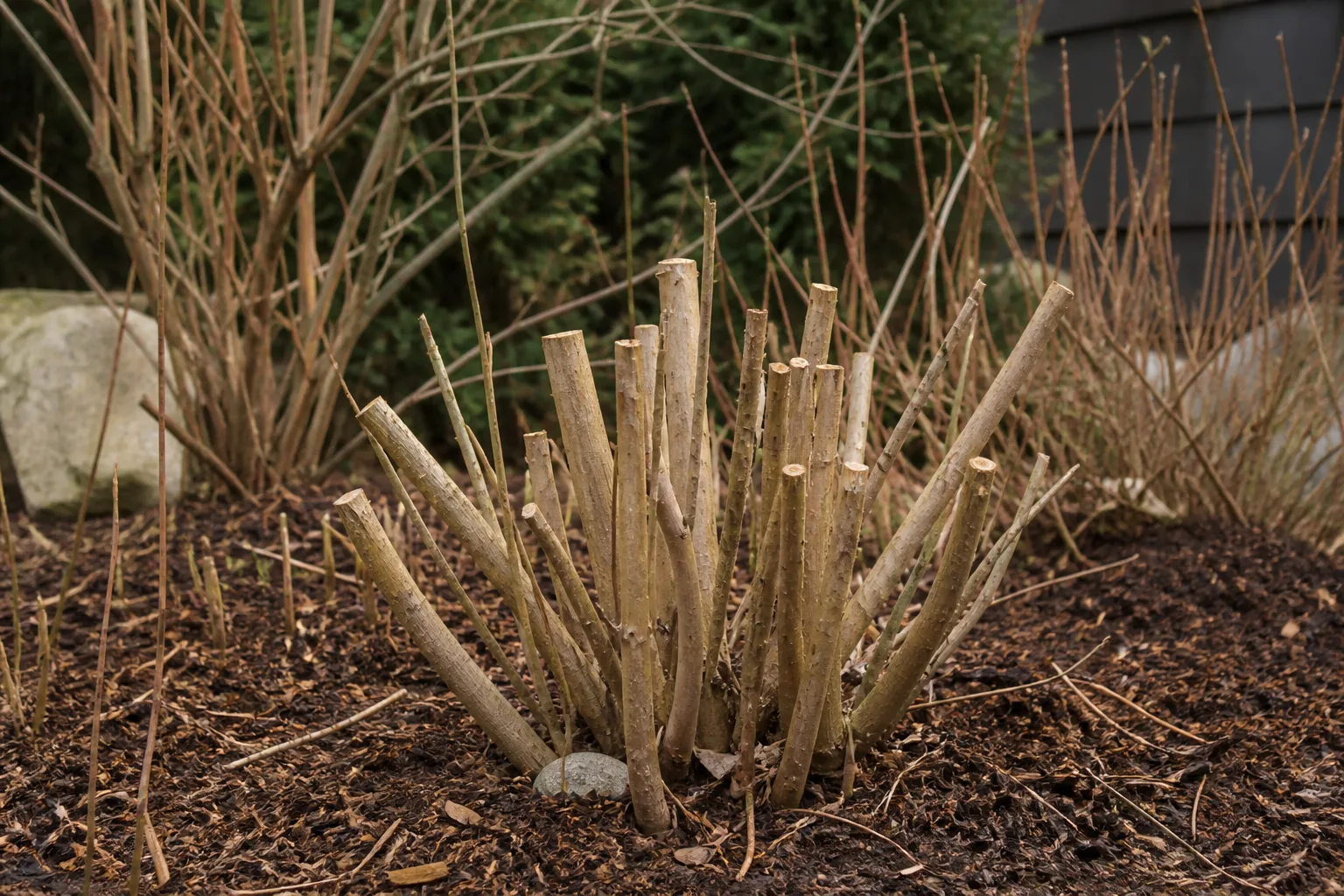
NC State Extension notes that cutting back to 6 to 8 inches rejuvenates shape but sacrifices flowering for that year, while leaving one-third of old stems helps preserve blooms. (NC State Extension) That is the trade-off in plain language: coppicing buys bold foliage at the cost of smoke, while minimal pruning buys smoke at the cost of a looser, larger plant.
Use sharp, clean pruners or loppers. Cut just outside the branch collar at a slight angle—never flush with the trunk. Sterilize tools between cuts if you suspect verticillium.
If your plant is healthy but smokeless, run this bloom checklist before assuming something is wrong: Did you coppice this year? Hard late-winter cuts remove the blooming framework—wait until next summer. Is it in full sun? Shade reduces panicle count and fades purple leaves. Is the plant still young? New installs sometimes flower lightly the first summer while roots establish. Are you overfeeding nitrogen? Lush leaves at the expense of flowers—back off fertilizer. Did you prune after spring bud set? Late pruning removes the wood that would have carried panicles.
Propagating Smoke Bush from Cuttings
Stem cuttings beat seeds for purple cultivars. Seed-grown plants vary wildly and often disappoint compared to the parent clone.
When: Take semi-hardwood cuttings in early to mid-summer when stems are firm enough to snap cleanly but not yet woody. (Gardening Know How)
How:
- Cut 4- to 6-inch sections from healthy tips in the morning.
- Strip leaves from the lower half; wound the base slightly and dip in rooting hormone.
- Insert into a well-draining mix (perlite and peat, or sand and compost).
- Cover with a loose plastic bag or humidity dome; keep medium moist but not soggy in bright indirect light.
- Tug-test after 4 to 8 weeks; pot up rooted cuttings before fall frost.
Seed propagation is possible but slow—germination can take up to two years before you see meaningful growth, and seedlings will not match named purple cultivars.
Growing Smoke Bush in Containers
Smoke bush can live in a pot for several seasons thanks to its fibrous, transplant-friendly root system, but it is not a permanent balcony shrub unless you commit to upsizing and root pruning.
Pot choice: Use a tall, wide, frost-proof container (terracotta, ceramic, or thick plastic) with large drainage holes. A 24-inch pot is a minimum starting point for a young nursery plant; mature smoke bush wants a half-whiskey barrel scale or larger.
Soil: Quality potting mix blended with 20 percent coarse sand or fine gravel for drainage. Do not use garden soil alone—it compacts in pots.
Root-prune before a major downsize or bonsai attempt: In early spring, slice 12 to 24 inches around the root ball and 14 inches deep, then replant the same season or move into a container. This reduces transplant shock when you lift the plant.
Expect to repot one size up every 2 to 3 years, or root-prune and refresh soil. In zones 4–6, sink pots in a protected spot or move them to an unheated garage after leaves drop—roots are more exposed to cold than in-ground plants.
Overwintering and Seasonal Care
Fall: Let the plant harden off naturally. Rake heavy fallen panicle debris if it mats against the crown—mostly cosmetic, not mandatory.
Winter: Do not fertilize. Water only if soil is bone-dry during a warm dry spell and the ground is not frozen. Maintain 2 to 3 inches of mulch without piling it on the trunk.
Spring: Pull mulch back slightly from the crown, apply compost if growth was weak last year, and prune before bud break according to your chosen form.
Pests, Diseases, and Smoke Bush Problems
Smoke bush is usually pest-resistant, but a few issues recur:
- Oblique-banded leafroller — caterpillars roll leaves; hand-pick or use Bt on small plants if damage is heavy.
- Leaf spot and rust — fungal speckling in wet summers; improve airflow; avoid overhead irrigation.
- Stem canker — more common in eastern U.S. humid regions; prune out infected wood below the lesion; sterilize tools.
Verticillium wilt vs drought stress
Verticillium wilt is the serious one. It enters through roots in poorly drained soil and blocks water flow inside the plant. Symptoms mimic drought: yellowing, browning leaf margins, wilting on one side, sometimes branch-by-branch dieback. Unlike simple dryness, wilted leaves may stay attached at first, and staining in the sapwood is a tell—slice a thin branch and look for dark streaking in the xylem.
Drought stress on an established smoke bush usually clears after one or two deep soakings. Verticillium does not—branches continue to die through the season.
If verticillium is confirmed: Remove the entire plant, do not compost it, and avoid replanting verticillium-susceptible species (maple, redbud, smoke bush again) in that hole for several years. Prevention beats cure: drainage first.
Sap safety: Smoke bush is in the same family as poison ivy. NC State Extension warns that resinous sap can cause contact dermatitis, especially in people already sensitive to poison ivy. (NC State Extension) Wear gloves and long sleeves when pruning hard or handling fresh cuts. Wash tools and skin after contact. The plant is mildly toxic if ingested—not a common exposure, but do not treat it as edible around curious children or chewing pets.
Conclusion
Smoke bush earns its place as a drought-tolerant anchor when you give it sun, space, and drainage—and when you pick a pruning style on purpose. Choose purple cultivars like ‘Royal Purple’ for foliage drama in full sun, or ‘Young Lady’ and ‘Daydream’ if smoky panicles matter more than leaf color. Water deeply while young, then back off. Prune in late winter, knowing that a hard coppice rebuilds the plant at the cost of that year’s smoke.
Watch wet soil more than pests: verticillium wilt is the killer, while yellow leaves on an otherwise sound plant often mean dry roots, not disease. Propagate the clone you love with summer semi-hardwood cuttings, wear gloves around the sap, and plant 10 to 15 feet from structures so the billowy summer show has room to breathe.



