How to Grow and Care for Brunfelsia Pauciflora
Learn how to grow Brunfelsia pauciflora in a warm garden or pot, manage light and moisture, protect it from frost, and troubleshoot yellowing leaves early.
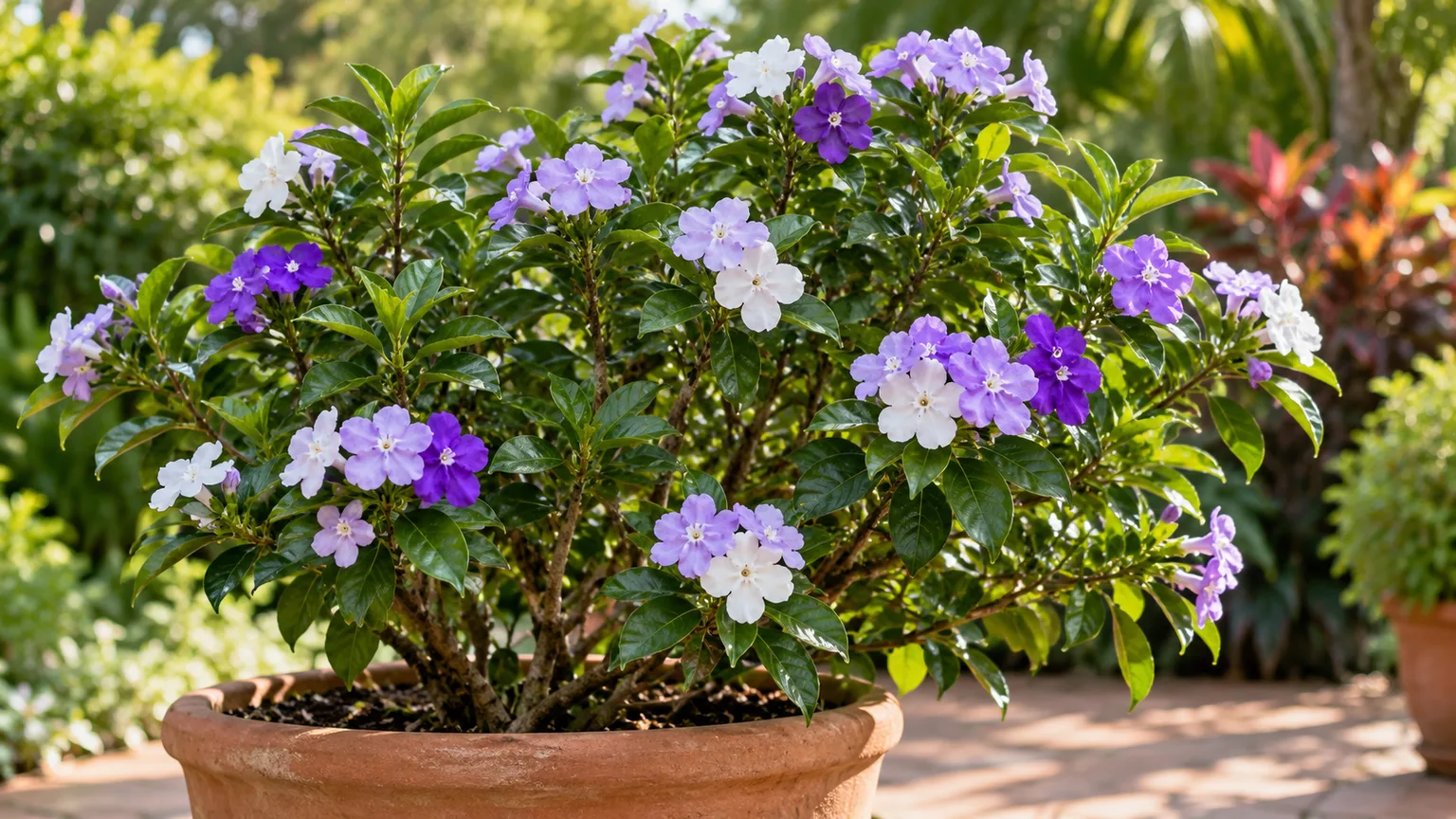
Brunfelsia pauciflora, often called yesterday-today-and-tomorrow, is a tropical evergreen shrub whose flowers open purple, fade through lavender, and finish nearly white. It is a rewarding garden plant where winters stay mild, and it can live in a container where you can move it under cover before cold weather. The main care challenge is matching its need for steady moisture and bright light with well-drained soil and frost protection.
The name is also used for other Brunfelsia species, so confirm the botanical label before relying on a size or hardiness figure. B. pauciflora is a shrub in the nightshade family, not a cold-hardy perennial that can be left out anywhere the common name is familiar.
What Brunfelsia Pauciflora Needs at a Glance
| Need | Practical starting point |
|---|---|
| Plant type | Evergreen, woody tropical shrub |
| Mature size | About 3–8 feet tall and 4–6 feet wide, depending on growing conditions |
| Light | Bright light; full sun to partial shade outdoors |
| Soil | Organic, consistently moist, and freely draining |
| Winter | Best outdoors in warm regions; protect from frost or grow in a movable pot |
| Safety | Treat every part as poisonous if eaten; berries are especially concerning |
The plant is easiest to grow when you have a warm outdoor site or a bright place to overwinter a container. NC State Extension describes a shrub that can reach several feet in both height and width, so leave enough space for its mature outline instead of planting it where it will need repeated hard pruning. Its flowering display is best thought of as a sequence of blooms aging over a few days, not a single flower that changes at a precise time on a three-day clock.
There is a useful difference between information about the species and general Brunfelsia advice: the genus includes several related shrubs, and sources do not always distinguish them in common-name guides. The University of Florida IFAS explains that B. australis, B. grandiflora, and B. pauciflora differ in size and cold hardiness, while the RHS profile lists Brunfelsia calycina as a synonym for B. pauciflora. Keep the label if you buy a named plant, especially when cold tolerance or final size will determine where you plant it.
Decide Whether to Plant It Outdoors or Keep It Potted
Choose a permanent garden spot only if your winters are reliably mild and you can protect the shrub from occasional cold snaps. NC State Extension lists B. pauciflora for USDA zones 9 through 11; that is a useful broad guide, not a promise that a plant in a low pocket, exposed yard, or unusually cold winter will escape damage. The USDA Plant Hardiness Zone Map is based on average annual extreme minimum winter temperatures, so it does not describe every cold event, wind exposure, or warm spell followed by a freeze.
A container is the more flexible choice in a climate with frost, in a rental garden, or where alkaline soil makes it difficult to maintain a suitable root zone. Use a pot with drainage holes and enough volume to support a woody shrub, but avoid choosing a huge pot just to delay repotting; a much larger mass of wet mix can stay damp long after the root ball has used its water. Decide where the plant will go indoors before buying it, because a mature Brunfelsia can be awkward to carry and needs a bright winter position.
In a warm landscape, use it as a specimen shrub, informal screen, or flowering accent where there is room for the branches to spread. Keep it away from children’s play areas and pet routes because the plant is poisonous if eaten. In a cool climate, a sunny patio from late spring into early fall can work, provided the pot comes inside before frost threatens.
Give It Bright Light and Afternoon Protection in Hot Climates
Brunfelsia grows in full sun to partial shade, but the best balance depends on the heat and intensity of your local sun. In a mild or coastal garden, several hours of direct sun can support denser growth and better flowering; in a hot inland site, morning sun with light shade during the strongest afternoon heat is a safer starting point. UF/IFAS specifically recommends morning sun and afternoon shade for the related yesterday-today-and-tomorrow shrubs it describes, while NC State lists both full sun and partial shade for B. pauciflora.
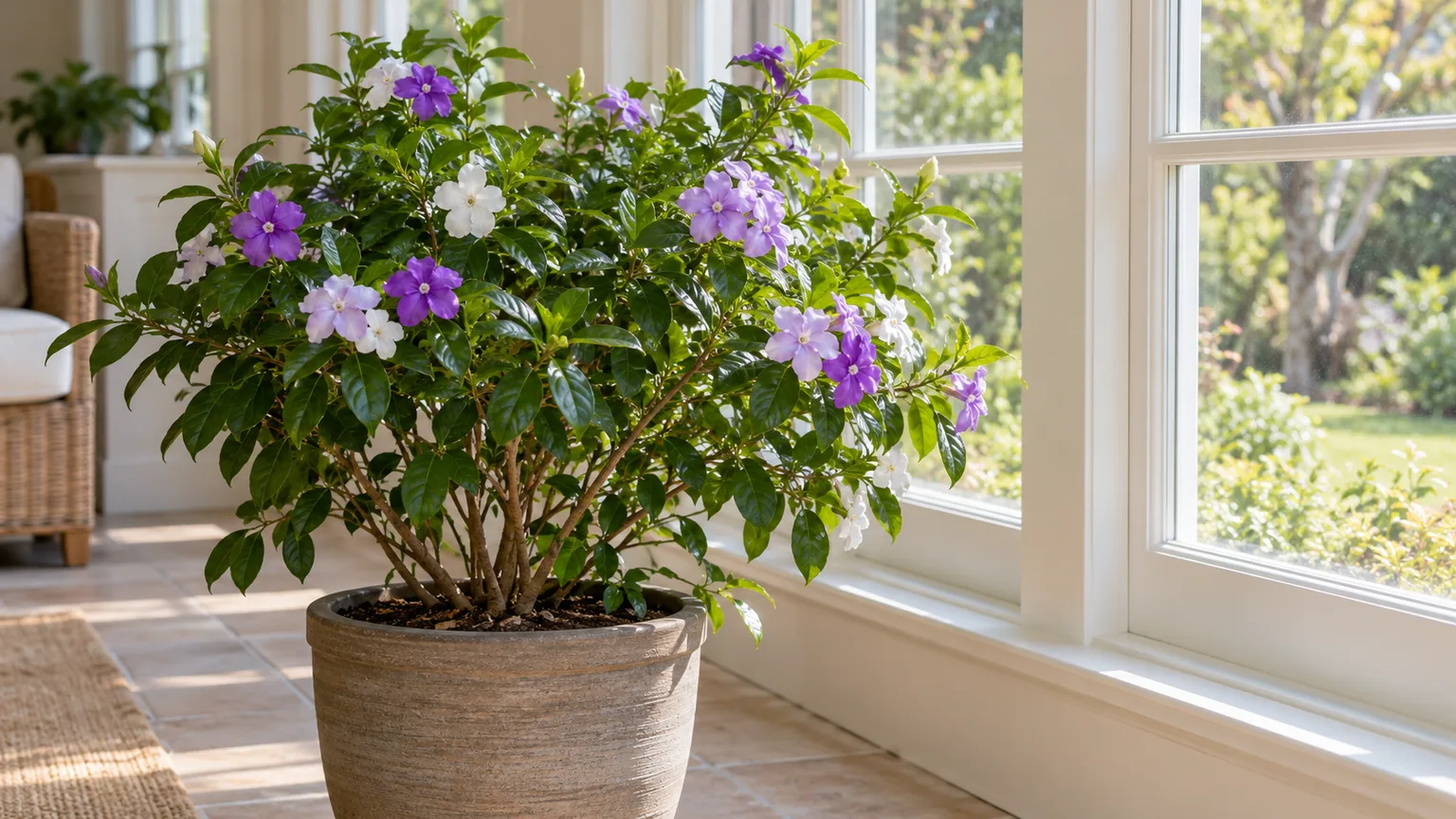
Indoors, place a potted shrub near the brightest available window and give it several hours of direct or very bright light if possible. NC State Extension advises about three hours of sun daily for an indoor plant; if the only available room is dim, expect weaker growth and fewer flowers rather than trying to compensate with extra fertilizer. Turn the pot occasionally if one side leans toward the window, but avoid repeatedly moving a plant carrying buds between very different light conditions.
Use the leaves and stems as feedback. Scorched patches after a sudden move outdoors suggest the plant needs gradual acclimation or protection from intense midday sun, while long bare stems and few blooms point first to insufficient light or a plant that is still recovering from winter. NC State Extension lists both full sun and partial shade and recommends about three hours of sun for an indoor plant. Move it in stages over a week or two when shifting from indoor light to outdoor sun, and reverse that process when bringing it inside.
Use Rich Soil That Holds Moisture but Drains Freely
The target is not dry soil and not a permanently saturated root ball. Brunfelsia prefers soil with organic matter that stays evenly moist while excess water drains away; in a garden, improve compacted ground before planting rather than trying to fix persistent puddling with frequent feeding. A slight slope or raised planting area is safer than a hole that collects runoff.
Sources vary on how narrowly to define the preferred pH. NC State Extension describes the soil as acidic, University of Florida IFAS lists tolerance for acidic to slightly alkaline soil, and the RHS profile lists a broad range of soil types and pH conditions for B. pauciflora. A mildly acidic, humus-rich mix is a sensible target, but a healthy plant in ordinary loam does not need a soil acidifier simply because another care sheet gives a lower pH number.
For a pot, choose a quality loam-based or all-purpose container mix that drains well, then add a modest amount of perlite or fine bark if the mix stays heavy and wet after watering. Do not use dense garden soil in a container, and do not try to create drainage by putting gravel at the bottom; the potting mix itself needs to be porous from top to bottom. If foliage is yellowing, test the soil and check drainage before adding sulfur, iron, or fertilizer.
Water by Checking the Root Zone
Keep the root zone moist during active growth, but let the upper layer begin to dry slightly before watering again. For a potted shrub, push a finger into the mix or use a clean wooden skewer to check moisture below the surface; a dry crust does not always mean the root ball is dry, especially in a tall pot. Water thoroughly until it runs from the drainage holes, then empty any saucer so the pot is not left standing in water.
The check matters more than a weekly schedule because the plant uses water at different rates in hot sun, humid weather, and a dim winter room. A small pot in summer may need checking every day without needing a drink every day; a large container in a cool room may stay wet for much longer. Virginia Cooperative Extension’s container-watering guide also recommends checking moisture in the root zone rather than watering by habit.
If the leaves droop, look at the soil before you reach for the hose. A light pot with dry mix may need a deep watering, but a heavy pot with persistently wet soil can signal damaged roots, and adding more water will make recovery harder. University of Maryland Extension explains that excess water deprives roots of oxygen, so a plant can wilt even while its soil feels wet.
Make Container Care Easy to Adjust
Container growing makes winter protection possible, but it also makes watering and temperature changes more abrupt. A pot warms and dries faster than a garden bed in summer, and its roots are more exposed to cold in winter. Choose a stable pot with drainage, set it where runoff can escape, and leave enough room around the shrub to move it without dragging branches through a doorway.
After a new plant settles in, check whether roots have begun filling the mix before increasing the pot size. A root-bound plant dries unusually fast, but a pot that is too large holds more moisture than a small root system can use. The right next pot is only modestly wider than the old one, with fresh mix around the root ball and the original planting depth maintained.
Container plants also need a dependable transition plan. Keep a clear path from the patio to the winter location, and move the shrub before cold weather is urgent; do not wait until frost is already on the forecast if the container is heavy or the indoor space needs preparation. A wheeled plant stand can make the seasonal move manageable, but remove standing water after rain so the root zone does not stay saturated.
Fertilize Moderately During Active Growth
Feed only when Brunfelsia is actively growing, using a complete fertilizer appropriate for flowering shrubs or container plants and following the product label. A fresh potting mix may already contain nutrients, and a plant that has slowed in a cool, dim room cannot use fertilizer as quickly as one making spring growth. Pause or reduce feeding through winter dormancy and restart as new growth resumes.
Avoid increasing fertilizer concentration just because the plant has not flowered. Blooming depends on light, warmth, maturity, pruning timing, and general root health as well as nutrition; excess fertilizer can add salt to a container or push soft leafy growth without fixing the real limitation. A high-phosphorus “bloom” product is not a universal switch, so use a soil test for an in-ground plant when you suspect a nutrient imbalance rather than applying nutrients by guesswork. Penn State Extension’s soil-testing guidance explains how a test measures pH and available nutrients to guide fertilizer choices.
If new leaves are pale or yellow, check moisture, drainage, and pH before feeding. In a container, old fertilizer salts can accumulate when the mix is repeatedly fed but not flushed; a thorough watering that drains freely can help clear excess salts, but do not do that while the pot is already waterlogged. Healthy growth is a better signal to continue a modest feeding routine than a calendar reminder alone.
Read the Flower Cycle Before You Worry About Blooming
Each flower opens purple or violet, fades through lavender, and becomes pale or nearly white as it ages. Because new flowers open while older ones fade, a shrub can show several colors at once; this is normal aging, not a sign that the flowers are changing because of soil pH. The University of Florida IFAS describes the color shift as pigment breaking down in the petals, with the flower changing over the next day or two.
The main bloom period depends on the species, climate, and growing conditions. NC State notes especially heavy flowering in spring and early summer for B. pauciflora, while UF/IFAS reports that warm-region flowering can extend into other parts of the year and shifts seasonally across the plant’s range. Treat the first spring flush as typical, not as a guarantee that every plant will rebloom on a fixed schedule.
If a mature plant is leafy but not flowering, check whether it receives enough bright light, whether it was recently moved or repotted, and whether pruning removed developing shoots. Also consider cold damage or a winter indoors with too little light. Remove spent blooms only if you want a tidier plant; deadheading is not a reliable substitute for suitable light and growing conditions.
Prune Lightly After a Main Flush
Routine pruning is optional when the shrub already fits its space. Remove dead, broken, or crossing stems with clean shears, then shorten only the shoots that make the plant lopsided or too large for its position. For a compact shape, pinching or lightly trimming soft new growth is less disruptive than cutting the whole plant back by half.
Pruning timing advice varies: NC State Extension recommends pruning to encourage blooms on new growth and says heavier pruning, if needed, can be done in fall, while the RHS profile says no pruning is required. For a plant in a frost-prone area that must come indoors, make only the cuts needed to move it safely, then do more shaping after the main flowering flush when active growth can replace what you remove.
Avoid a hard haircut just before a cold season or while buds are forming. A severe cut can leave the shrub sparse for a while and remove potential flowering shoots; it also creates tender regrowth that may not be useful if the plant is about to slow down. If the shrub has outgrown its location, a gradual size reduction over more than one season is usually easier on it than removing most of its canopy at once.
Overwinter It Before the First Frost
Brunfelsia is a tropical shrub and should not be left exposed to a freeze. If it grows in a pot, bring it indoors before frost is forecast and choose the brightest available location; NC State advises indoor plants receive around three hours of daily sun. A cool, bright room is generally easier to manage than a warm, dark corner, where the plant may stretch and keep using water despite weak light.
Prepare the plant before moving it: inspect leaf undersides and stems for pests, remove fallen leaves from the pot, and rinse dusty foliage if needed. Acclimate it to indoor conditions gradually when weather allows, because the drop in light and airflow can trigger some leaf loss even when the plant is healthy. After the move, water less often as growth slows, but do not let the root ball dry out completely.
Keep the plant away from heating vents and cold window glass, and check it weekly for spider mites, whiteflies, or scale-like insects. Do not fertilize heavily in winter unless the plant is clearly producing new growth under strong light. In the spring, move it outdoors only after frost risk has passed and increase its exposure to direct sun gradually.
Propagate With Softwood Cuttings
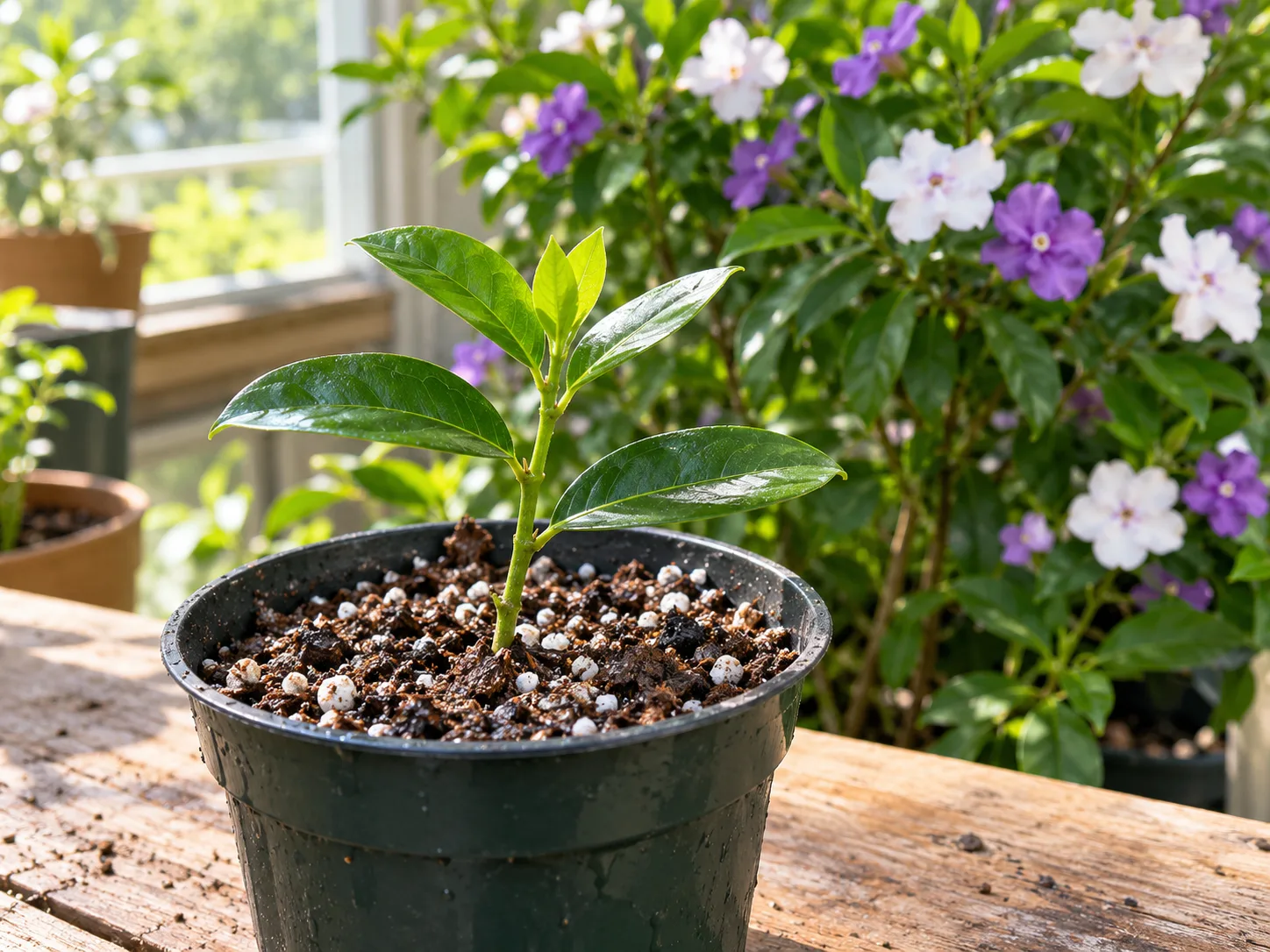
Softwood cuttings taken from healthy new growth in late spring or early summer are the most practical way to make another plant that resembles the parent. The Royal Horticultural Society lists softwood cuttings as a propagation method for B. pauciflora, and a Gardening Know How propagation guide gives a species-specific cutting approach. Work carefully and keep the plant’s clippings away from children and pets.
- Choose a firm, healthy shoot tip from the current season that has not just flowered, and use clean pruning shears to take a cutting about 8–12 inches long.
- Remove leaves from the lower part of the stem, leaving a few leaves near the tip; if the remaining leaves are very large, trim their surface area to reduce moisture loss.
- Dip the cut end in rooting hormone if you have it, then set the cutting into a small pot filled with fresh, damp, free-draining propagation mix.
- Cover the pot loosely with a clear bag or propagator to hold humidity, keeping plastic from touching the leaves; place it in warm, bright indirect light away from strong sun.
- Keep the mix lightly moist, not saturated, and ventilate the cover if condensation stays heavy. New growth is a better sign of rooting than tugging on the stem, which can damage tender roots.
Once the cutting is rooted and begins growing steadily, gradually remove the cover and pot it up only when roots hold the mix together. Seed propagation is possible, but seedlings may not match a named cultivar exactly and the seeds and other plant parts are not safe to eat. For a dependable clone of a favorite flower color, a cutting is the more direct route.
Repot Only When Roots Need More Space
Inspect a container plant in spring, when you can see fresh growth and have time to help it recover. Roots circling tightly around the root ball, mix that dries much faster than it used to, or roots emerging from drainage holes can indicate the plant needs more room. A few roots at the bottom alone do not always mean the shrub is severely root-bound.
Move it into a pot only one size larger, with drainage holes and fresh, well-drained mix. Loosen only the outermost circling roots if they form a dense mat; avoid tearing the whole root ball apart, since a woody shrub may take time to recover from root disturbance. Set the plant at the same depth as before and water thoroughly so the fresh mix settles around the roots.
If the plant is already at a size you can manage, you can refresh the top layer of mix instead of continually upsizing the pot. Do not repot a stressed plant simply because leaves are yellow; diagnose drainage, pests, and light first unless the mix has collapsed or roots are clearly compromised. After repotting, give it bright indirect light for a short recovery period and resume normal sun gradually.
Diagnose Yellow Leaves Before Changing the Soil
Yellow leaves are a symptom, not a diagnosis. Start with where the yellowing appears, how quickly it is spreading, and whether the mix is wet or dry; older leaves yellowing slowly can be ordinary turnover, while multiple yellow leaves with a persistently wet pot point toward a root-zone problem. Check leaf undersides for fine webbing or insects before assuming the plant needs a nutrient.
Use this order of checks:
- Soil stays wet for days: Confirm that water drains from the pot and that no saucer remains full; inspect roots if wilting continues in wet mix.
- Mix is dry and the pot is unusually light: Water slowly and thoroughly, then check whether water runs down the sides without soaking the root ball.
- New leaves are pale despite good watering: Test pH and review the fertilizer history before applying iron or acidifier.
- Leaves have stippling, webbing, or sticky residue: Look for spider mites, whiteflies, aphids, or other sap-feeders.
- Damage followed a move outdoors: Consider sun scorch or temperature stress and return the plant to gentler conditions while it adjusts.
For an in-ground shrub, use a soil test before changing pH or adding a specific nutrient. For a container plant, check the mix and roots, then adjust watering or repot only when those checks support it. Virginia Cooperative Extension notes that water stress in container plants can look similar above the soil even when the causes differ, which is why checking the root zone is more useful than treating leaf color alone.
Monitor for Pests, Especially Indoors
Brunfelsia is not usually described as a pest-prone landscape shrub, but indoor overwintering can create conditions for sap-feeding insects. NC State Extension notes spider mites, whiteflies, thrips, mealybugs, and aphids as potential issues, particularly under glass. Check the undersides of leaves and the tender shoot tips for fine webbing, tiny pale speckles, sticky honeydew, or cottony clusters; isolate a container plant from other houseplants if you find an infestation.
For a small population, rinse foliage and stems with a steady but gentle stream of water, including the undersides of leaves, then inspect again after several days. Repeat only as needed and avoid flooding the potting mix or leaving the plant in cold, wet conditions after rinsing. If you use an insecticidal soap or other pesticide, choose a product labeled for the pest and plant setting, follow its label exactly, and test a small leaf area first.
Do not apply pesticide on a fixed schedule or use home mixtures just because the shrub is indoors. A weekly inspection and an early rinse can prevent a small problem from becoming a widespread one, while good light and reasonable airflow help the plant stay vigorous. If damage continues after pests are gone, return to the watering and light checks rather than escalating treatments automatically.
Protect Pets and Children From the Plant
Treat all parts of Brunfelsia as poisonous if eaten, with berries posing a particular risk. NC State Extension warns that the leaves, flowers, berries, and seeds are toxic to people and animals, and the ASPCA lists Brunfelsia as toxic to dogs, cats, and horses. Do not allow children or pets to play with fallen fruit, and do not use any part of the shrub in food, tea, or homemade remedies.
Choose a location that makes access difficult, or skip the plant if a curious pet or young child can reach it. Wear gloves when pruning if you have sensitive skin, wash hands and tools afterward, and bag clippings so animals cannot chew them. Good placement is more reliable than hoping an animal will avoid an attractive berry.
If a person or animal may have eaten any part of the plant, do not wait for symptoms or attempt a home treatment. Contact a veterinarian or poison-control service promptly and provide the plant’s botanical name, which part may have been eaten, and the approximate time. The ASPCA lists vomiting, diarrhea, excessive salivation, lethargy, incoordination, tremors, and seizures among possible signs in pets.
Conclusion: Build Around Warmth, Light, and Drainage
Brunfelsia pauciflora is a manageable shrub when its climate and placement are right: give it bright light, soil that stays lightly moist but drains freely, and protection from frost. In a cool region, growing it in a container makes winter care possible, but only if you can offer a bright indoor spot and adjust watering when growth slows.
Start by confirming the species and choosing a site with enough room. Then water from the condition of the root zone, prune only when the shape needs it, and investigate yellowing before changing soil or fertilizer. Keep the plant and its fallen berries away from people and pets, and the color-changing flowers can be enjoyed without turning routine care into guesswork.



