How to Grow and Care for Japanese Sedge in Your Garden
Get practical Japanese sedge care advice for light, watering, drainage, containers, cultivar choices, winter cleanup, and the leaf problems gardeners see.
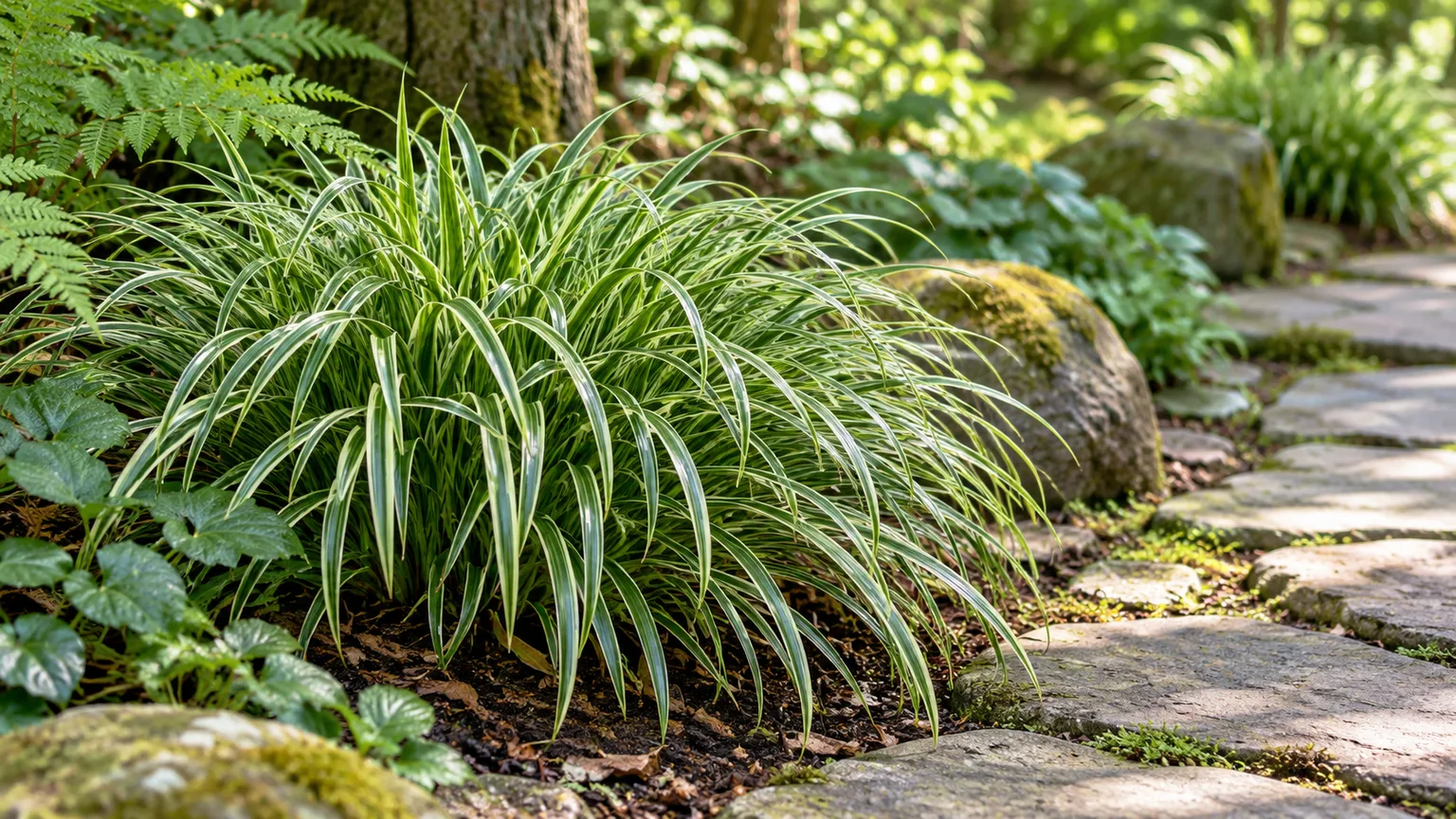
Japanese sedge (Carex morrowii) is a compact, grasslike perennial for the parts of a garden where many ornamental grasses lose color or need more sun. It forms a rounded clump of narrow leaves, often with cream or white margins, and works as a low border, woodland groundcover, or container accent. The NC State Extension plant profile describes it as an easy, clumping perennial for moist soil. Its best-looking growth usually comes from a simple match: bright or partial shade, soil that stays evenly moist, and drainage that lets extra water leave.
The phrase “evergreen sedge” needs a climate note. Japanese sedge can keep much of its foliage through winter in mild regions, but it may brown back in colder parts of its range. It is listed for USDA zones 5 through 9, yet a zone rating does not guarantee the same winter appearance in every garden. The Missouri Botanical Garden profile notes that foliage persists in the deep South but is not reliably evergreen near the northern edge of the range. Soil that dries beneath trees, hot afternoon exposure, winter saturation, and the exact cultivar all influence how it performs.
Japanese Sedge at a Glance
| Feature | What to expect |
|---|---|
| Botanical name | Carex morrowii |
| Common names | Japanese sedge, Morrow’s sedge |
| Family | Cyperaceae |
| Origin | Central and southern Japan |
| Habit | Dense, mounding, usually clumping perennial |
| Typical size | About 12 to 18 inches tall; often 12 to 24 inches wide, depending on cultivar |
| Light | Partial shade to deep shade; more sun is possible with reliable moisture |
| Soil | Rich, moist, and draining; can tolerate wetter sites, but avoid assuming every cultivar suits standing water |
| Hardiness | Commonly listed for zones 5–9; winter foliage varies by region |
| Best uses | Shady border, woodland edge, underplanting, groundcover, or container |
Plant references vary slightly on mature width and moisture tolerance because cultivar, climate, and site matter. North Carolina State Extension describes C. morrowii as a low-maintenance, clumping perennial that grows in moist soil and can handle a range of light; the Missouri Botanical Garden recommends moist to wet soil for ‘Variegata’ and notes that foliage color is richer in shade. For planning, use the width on the nursery label for the named cultivar you are buying, then leave enough room for its mature clump rather than spacing by the small pot in front of you.
Identify the Sedge Before You Buy
Japanese sedge is a member of Carex, a large genus in the sedge family, Cyperaceae. It is not a true grass, though its narrow leaves and mounding form can fill a similar design role. Mature plants produce small, inconspicuous flower spikes; foliage, rather than a showy bloom, is the reason to grow it. North Carolina State Extension describes the species as native to Japan and suitable for shady borders, mass plantings, rock gardens, and containers.
A nursery tag that says only “sedge” does not tell you whether the plant wants shade, wet ground, a sunny gravel bed, or room to spread. The genus includes thousands of species, and sedges differ in habit and conditions; Fine Gardening’s Carex overview notes that care varies by species. Confirm the botanical name before following advice for a plant sold under a similar common name.
Japanese Sedge Is a Carex, Not a True Grass
The common name can create a second identity problem: “Japanese sedge,” “Morrow’s sedge,” and “Evergold sedge” may appear together in retail listings, but Evergold is generally identified as Carex oshimensis ‘Evergold,’ a related species rather than C. morrowii. NC State lists Evergold among common names for C. oshimensis, which is native to Oshima Island in Japan. It is sensible to treat the full botanical and cultivar name on the label as the care reference, especially if you are comparing mature size or sun tolerance.
This distinction matters because a plant profile may combine facts from several sedges that share a landscape role. A light recommendation or winter habit attributed to one species may not describe another. When buying, look for Carex morrowii followed by a cultivar name; if the tag says C. oshimensis, use the care needs for that plant instead. NC State Extension lists Evergold among the common names for C. oshimensis. For a side-by-side look at other garden sedges, see our ornamental sedge guide.
Choose a Cultivar for Its Foliage and Habit
The species is often sold in variegated forms. The difference is easiest to read from the leaf pattern and growth shape, not from the plant’s common name alone.
| Cultivar | Foliage or form | A useful place for it |
|---|---|---|
| ‘Ice Dance’ | Dark green leaves with cream-white margins; spreads gradually into a low mass | Shady border or woodland edge where you want a repeated groundcover look |
| ‘Variegata’ | Green margins with a white central stripe | Front of a border or small shade bed where the central stripe is visible |
| ‘Gold Band’ | Dark green foliage edged in pale gold or cream | A shaded spot that needs a warmer foliage accent |
| ‘Silk Tassel’ | Fine, narrow leaves with light margins | A small-scale container or close-up spot where the finer texture can be seen |
| ‘Fischer’s Form’ | Upright habit with creamy-white edging | A tighter grouping or vertical contrast among low, spreading foliage |
The NC State Extension profile lists these forms, and Fine Gardening’s ‘Ice Dance’ profile describes that cultivar as a slow-spreading foliage groundcover. Names and descriptions can vary among sellers. Check the label and compare photographs from the nursery before choosing; a misidentified or differently named plant may have a different look or growth habit. Plant two or more of the same form when you want a calm, continuous line, and use a single clump when you want a bright accent without making the bed feel striped.
Choose a Site That Matches Its Moisture Needs
Japanese sedge is a good choice for a shaded bed that is consistently moist, but it is not a magic solution for every dark corner. Soil under a mature tree can be surprisingly dry because tree roots intercept rain, while a low pocket near a downspout can stay wet long after a storm. Observe the site before planting: note direct sun at midday, check how quickly water drains after rain, and feel the soil several inches below the surface during a dry week.
In a bed that becomes dry between rains, plan to irrigate during establishment and heat. If the soil remains saturated for days, choose a plant suited to persistent wet conditions or improve the site before planting. The goal is a root zone that has moisture available without keeping the crown buried in stagnant water.
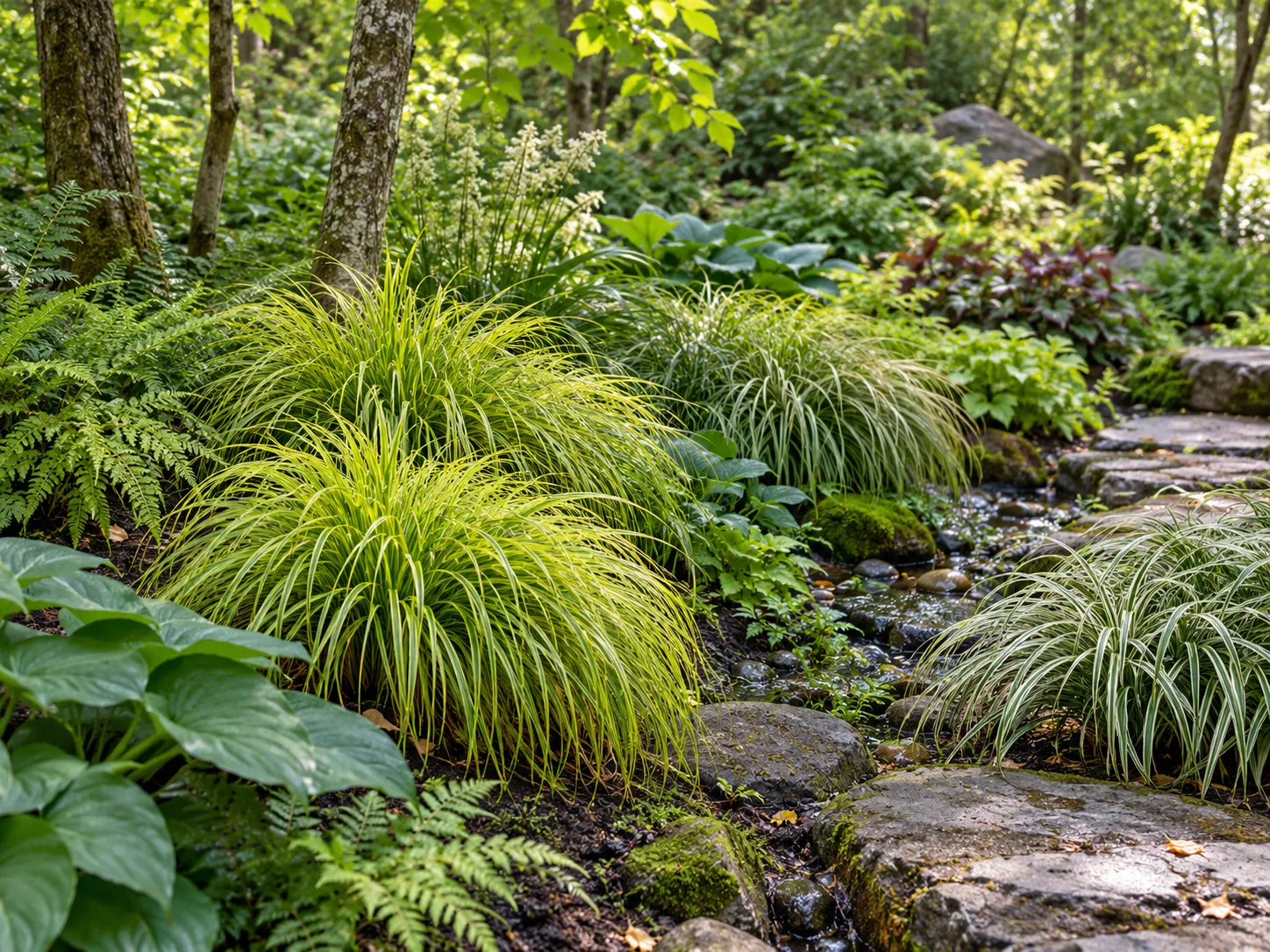
Light: Shade Is Reliable, Sun Needs Water
Partial shade is the safest starting point, especially in regions with hot summers. Japanese sedge also tolerates deeper shade, though plants under dense tree canopy may need extra water because of root competition. A site with morning sun and afternoon shade is often easier to manage than one with long, exposed afternoon sun.
The species can grow in sun if soil moisture stays dependable, but full sun is not automatically an improvement. Illinois Extension notes that foliage can bleach to unattractive yellow in full sun and hot locations. If the plant is already in a sunny bed, test moisture before moving it: water stress and heat may be the cause, and a shift to afternoon shade plus more consistent watering may be enough. If new leaves still look washed out through a moist growing season, relocate it to a shadier position.
Soil: Moisture and Drainage Must Work Together
Choose soil with organic matter that holds moisture but does not become a sealed, airless mass. NC State Extension describes Japanese sedge as growing in moist, acidic soil; Illinois Extension gives moist, well-drained soil as the preferred condition. The Missouri Botanical Garden allows a medium-to-wet site for ‘Variegata’ but warns that the soil should not dry out. Taken together, these profiles support a practical middle ground: keep the root zone from drying hard, while avoiding a planting hole that stays stagnant.
Do not try to fix heavy clay by filling only the planting hole with loose potting mix or a layer of gravel. That creates a small pocket with different drainage from the surrounding soil, which can collect water rather than move it away. If the entire bed is waterlogged, raise the planting area or choose a different plant. If the problem is dry shade, spread compost across the bed before planting and water the root zone through summer rather than expecting one planting amendment to solve tree-root competition.
Plant Japanese Sedge Without Burying the Crown
Plant in spring or early fall while temperatures are moderate and the soil is workable. BBC Gardeners’ World Magazine’s ornamental-grass guide recommends spring or autumn planting for ornamental grasses and advises planting at the original depth; this is useful general timing guidance, while the local climate still determines the best window for Japanese sedge. Spring planting gives a plant more time to establish before winter in cold regions; early fall can be comfortable in areas with hot summers if the plant still has time to root before hard freezes. Avoid planting during a heat wave unless you can keep the root ball consistently moist while it settles in.
Water the nursery pot before planting, then dig a hole about as deep as the root ball and roughly twice as wide. Ease circling roots outward and set the crown level with the surrounding soil. Backfill with the original soil, firm gently, and water slowly so the root ball and adjacent ground are both wetted. Keep the crown at grade: burying the center can trap moisture against emerging leaves, while setting the root ball too high can make it dry faster than the bed around it.
Use the mature width on the cultivar label to space plants. Many profiles place Japanese sedge around 12 to 18 inches tall and roughly 12 to 24 inches wide, but named selections may differ. For separate mounds, leave room for each plant’s full width. For a continuous edge, closer spacing fills faster but costs more and can crowd the clumps; a little patience often yields a more resilient planting than packing nursery pots tightly together.
After planting, apply a thin layer of organic mulch across the root zone to slow moisture loss. Keep mulch a few inches away from the center of the plant, and do not heap it over the crown. A ring of mulch that touches the foliage can hold damp debris against the base and make it harder to see whether the plant is settling at the right depth.
Water by Checking the Soil
There is no dependable “every seven days” rule for Japanese sedge. A plant in shade-rich garden soil, one under a thirsty tree, and one in a container can dry at very different speeds. Water newly planted sedge when the upper couple of inches of soil begin to dry, then soak the root ball and nearby soil rather than giving a brief surface sprinkle. The NC State profile specifically notes that full-sun plants need consistent moisture while shadier plants can tolerate occasional dry spells.
Check more often during the first growing season, hot weather, and dry winds. Once established in shade, Japanese sedge may tolerate an occasional short dry spell, but that is not the same as a drought-tolerant groundcover. If the leaves curl, lose gloss, or develop dry tips while the soil is dry below the mulch, water deeply and adjust the interval. If the ground is still wet, do not add more water simply because the foliage looks stressed; inspect drainage and the crown.
A useful routine is to check moisture with a finger or narrow trowel in two spots: near the clump and a few inches outside the root ball. If only the surface is wet, water more slowly so moisture reaches the active roots. If both spots remain soggy for days, reduce irrigation or address the drainage problem. Directing water to the soil instead of repeatedly soaking the center of the clump also helps keep old foliage from matting against the crown.
Fertilizer and Mulch: Keep Them Modest
Japanese sedge usually needs little fertilizer in ordinary garden soil. The Missouri Botanical Garden describes maintenance as low, and NC State Extension calls the species easy to grow. BBC Gardeners’ World Magazine also notes that ornamental grasses generally do not need regular feeding. If the foliage is pale or growth is weak, investigate the site before reaching for a high-nitrogen lawn product. Too much fertilizer can create soft growth, and it cannot make a dry, root-filled bed suitable for a moisture-loving plant.
If a soil test or clear deficiency points to a need, follow the product label and use a measured, modest amount during active spring growth. Do not fertilize late in the season in an effort to force fresh leaves before winter. A thin annual compost top-dressing is often enough in a garden bed, provided it does not cover the crown. Container-grown plants lose nutrients as water drains through the pot, so refresh the potting mix when repotting rather than repeatedly adding fertilizer to tired, compacted soil.
Mulch helps conserve moisture and keeps the soil cooler, but thick layers can hide the crown or hold excessive wetness against it. Keep a small open collar around the base. If the site stays damp naturally, use less mulch and avoid organic material that mats into a dense wet layer.
Grow Japanese Sedge in a Container
A container makes it easier to control the soil mix, place the plant in bright shade, and keep it away from dry tree roots. Choose a pot with unobstructed drainage holes and enough space for the root ball to expand. A wider planter can show off the fountain-like leaves, but a very large pot filled with wet mix can stay cold and saturated longer than the roots need.
Use a high-quality potting mix that holds some water while remaining porous. Do not use garden soil by itself in a container; it can compact and drain poorly in a confined space. Set the root ball at its original depth, water until excess drains from the bottom, and empty any saucer that remains full after watering. In summer, feel the mix below the surface rather than watering by the calendar, because a small pot may dry much faster than the same plant in a garden bed.
If you combine Japanese sedge with other plants, pair it with companions that tolerate similar shade and moisture. A plant that prefers dry soil can make the container hard to manage: water enough for the sedge and the dry-site companion may stay too wet. Repot when roots circle the pot, water runs straight through without soaking the mix, or the clump has visibly outgrown its space. Move container plants to a sheltered position during severe cold if the pot is exposed; roots in containers experience colder swings than roots insulated by garden soil.
Prune and Prepare It for Winter
Japanese sedge is not a plant that needs routine shaping. Remove dead, torn, or badly browned blades when they appear, using clean snips and gloves. The leaf edges on many sedges can be sharp enough to irritate skin, so avoid dragging bare hands through a mature clump. For a small plant, trimming individual damaged leaves preserves healthy foliage and avoids the bare, flattened look that can follow a close haircut.
In late winter or early spring, comb out loose dead leaves with gloved fingers or cut only the damaged foliage near the base. Do not shear the whole plant to the ground by default. Fine Gardening recommends removing tattered leaves from ‘Ice Dance’ in early spring, while the Missouri Botanical Garden recommends ground-level removal where the plant is not evergreen near the northern edge of its range. The difference is not a contradiction; it reflects how much living foliage remains in different climates.
Evergreen Leaves Depend on Your Climate
Japanese sedge is often described as evergreen, but it is better thought of as evergreen to semi-evergreen depending on winter conditions and cultivar. The Missouri Botanical Garden notes that it stays evergreen in the deep South but is not evergreen near the northern limit of its range, where some leaf color may persist through mild winters. In colder gardens, expect older leaves to brown and plan a careful cleanup before new growth pushes through.
Leave healthy leaves in place through winter when they still look good; they provide texture and protect the clump from exposure. If most foliage has turned brown, wait until late winter or the start of spring, then cut it back before fresh leaves emerge. Do not cut hard in autumn merely to make the bed look tidy, since this removes winter interest and can leave the crown more exposed. Container sedges need more protection from repeated freeze-thaw cycles; move them beside a sheltered wall or insulate the pot if temperatures regularly fall below the cultivar’s reliable range.
Divide a Clump When It Needs More Room
Japanese sedge grows as a dense clump that gradually increases, so division is useful when the plant outgrows its space, the center becomes thin, or you want additional plants. A fixed division schedule is unnecessary. If the clump is healthy and still fits the bed, leave it alone; disturbing a plant that is growing well adds work without improving the planting.
Divide in spring as new growth begins or in early fall while the soil is still warm enough for roots to settle. NC State Extension lists autumn or spring as division windows for related C. oshimensis, and Fine Gardening gives spring to early summer for ‘Ice Dance’; choose the milder window that fits your climate. Water the plant the day before if the soil is dry. Dig around the clump far enough out to lift roots rather than slicing through the center, then lever it up with a spade. Shake or rinse away enough soil to see the root mass, and split the plant with a sharp spade or knife into sections that each have several healthy shoots and roots.
Replant each section at the same depth as the original, firm soil around the roots, and water thoroughly. Keep divisions evenly moist while they re-establish, especially if you divide in warm weather. Discard any dead or soft center material rather than planting it again. Wear gloves during the work and clean the tool afterward, particularly if the clump had unexplained rot or leaf spotting.
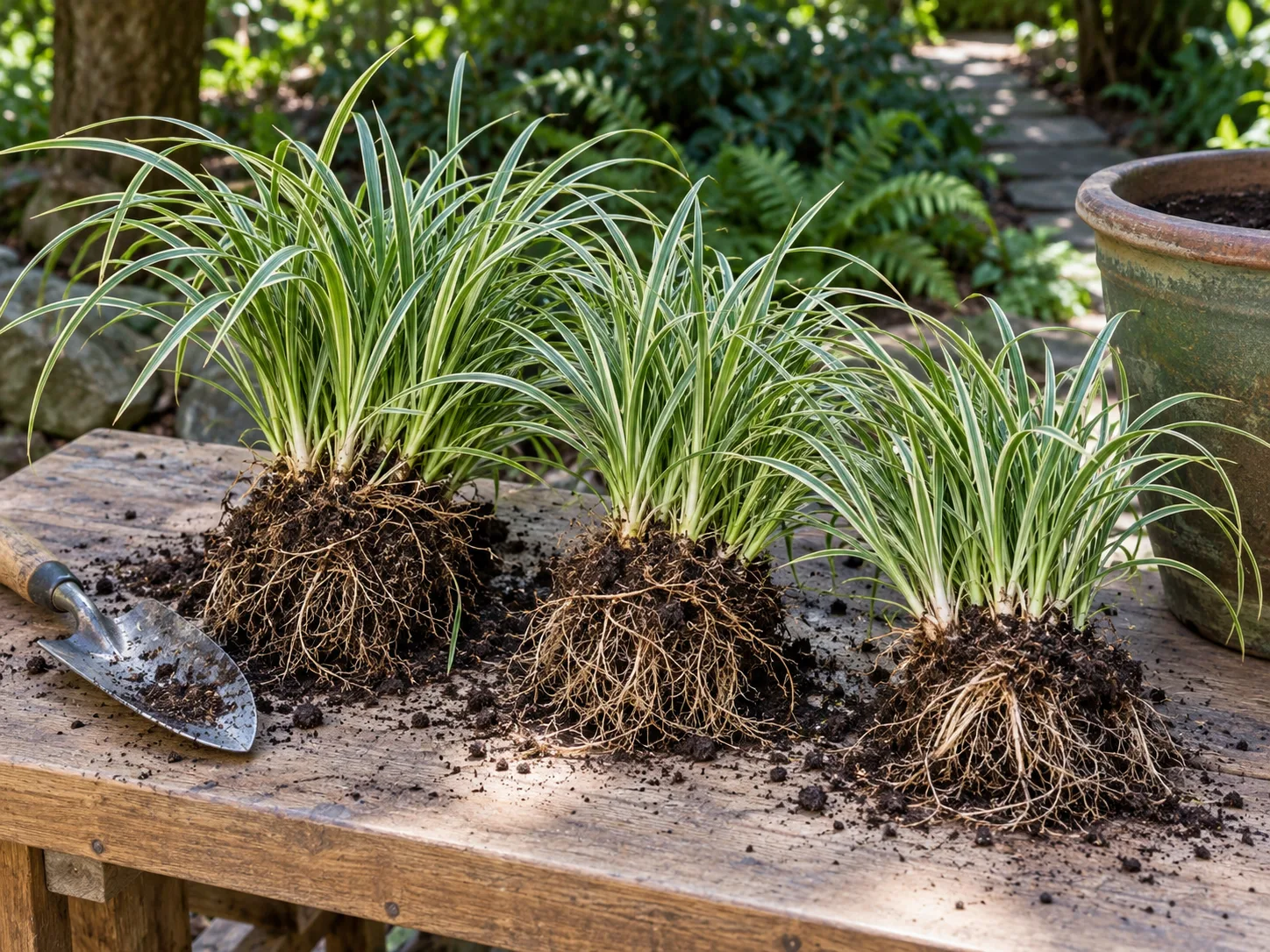
Division is usually the most dependable way to preserve a named cultivar’s foliage pattern. Seed-grown plants may not come true to the selected parent, and seed may be difficult to obtain. If you want another plant that looks like ‘Ice Dance’ or ‘Variegata,’ divide a healthy clump or buy a labeled plant rather than relying on seedlings.
Grow from Seed Only if You Can Accept Variation
Seed is an option if you want to experiment with the species rather than reproduce an identical named selection. Fine Gardening’s ‘Ice Dance’ profile describes sowing seed in containers and overwintering it in a cold frame; it also lists division as the more direct propagation route. Label every seed lot, keep the medium evenly moist rather than waterlogged, and expect germination and seedling appearance to vary. If preserving a precise leaf pattern matters, do not use seed as a substitute for dividing the parent clump.
Troubleshoot Yellowing, Browning, and Sparse Growth
Start by looking at where the damage appears and checking the soil before changing care. A few brown outer leaves on an otherwise healthy clump can be ordinary aging or winter wear. Widespread yellowing after planting in a hot site points toward excess sun, while limp foliage over wet soil calls for a drainage check rather than another watering.
| What you see | Likely cause to check first | What to do |
|---|---|---|
| Pale or bleached leaves on the sunny side | Hot, direct sun or dry soil | Check moisture below the surface; water if dry, then provide afternoon shade if bleaching continues |
| Dry tips and leaves that look crispy | Root ball drying, especially in a pot or under trees | Soak the root zone slowly and adjust checks during hot spells |
| Yellowing across the clump in wet soil | Poor drainage or a crown kept saturated | Pause irrigation, clear mulch from the crown, and improve drainage if the bed remains waterlogged |
| Brown outer leaves after winter | Cold damage or normal replacement of older foliage | Remove individual dead leaves; cut the whole clump only if most foliage is dead and new growth is about to start |
| Sparse center or a clump spreading beyond its place | Aging growth or gradual expansion | Divide healthy sections and replant at the original depth |
| Small insects clustered on new shoots | Aphids | Rinse them off with water and monitor; avoid treating a minor infestation before confirming it is causing damage |
NC State Extension reports no serious insect or disease problems, though it notes aphids and rhizoctonia can occur. Illinois Extension lists drought and drowning or edema among environmental problems. Both NC State and the Missouri Botanical Garden mark Japanese sedge as resistant or tolerant of deer browsing, but no ornamental is deer-proof in every yard; check new plantings and protect them if local deer test the foliage. A short symptom checklist can guide a first response, but do not diagnose a root disease from leaf color alone. If the crown is soft, smells sour, or remains wet despite reducing irrigation, improve drainage and remove only clearly dead tissue; replacing the plant may be more practical than repeatedly treating a site that cannot meet its needs.
Japanese sedge is also not a perfect answer to dry shade. Under a mature maple or conifer, rain may be intercepted and fine roots compete for the same water. Water the sedge during establishment, keep mulch light, and reassess after a hot spell. If you cannot keep the root zone moist without frequent irrigation, a locally adapted shade plant with lower water needs will be a better long-term choice than forcing this sedge into the wrong site.
Conclusion
Grow Japanese sedge where shade and dependable soil moisture are realistic, and it can provide a low, textured edge for years with little routine care. Give it partial shade when possible, water by checking the root zone instead of following a weekly schedule, and let the cultivar label guide spacing and appearance. In hot sun, dry tree-root shade, or chronically waterlogged ground, change the site or choose another plant before assuming the sedge needs more fertilizer.
Its winter leaves may persist in mild regions and brown back in colder ones, so groom the plant according to what is actually alive rather than cutting every clump on a calendar. Divide only when the center thins, the plant is too large, or you want to propagate a named selection. Accurate identification, sensible moisture, and selective cleanup are the decisions that make Carex morrowii an easy-care garden plant.



