How to Grow and Care for Orange Jasmine
Grow orange jasmine for fragrant white flowers and glossy evergreen foliage. Match its site, soil, water, pruning, and winter care to your climate.
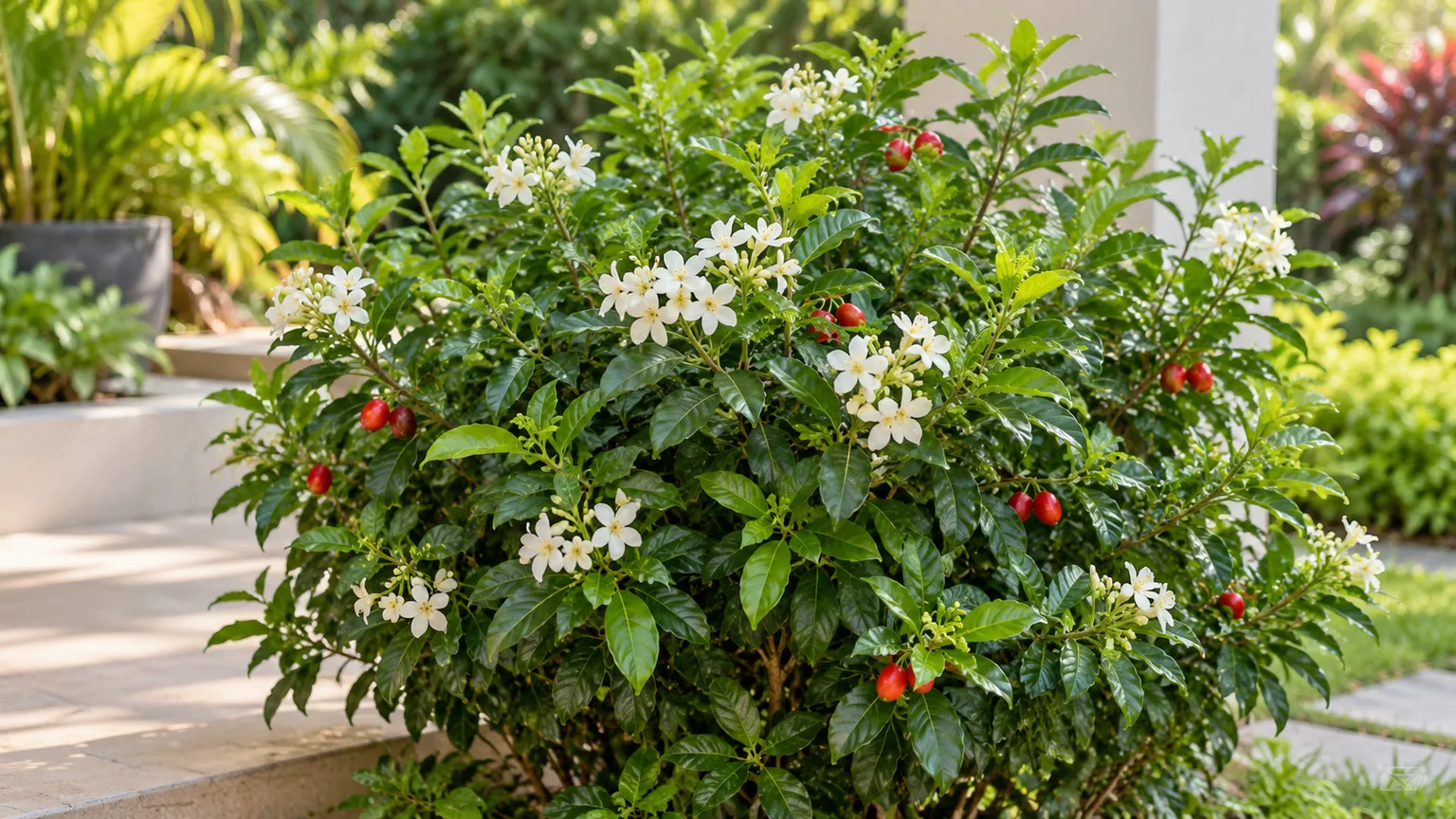
Orange jasmine (Murraya paniculata) is an evergreen tropical shrub grown for glossy compound leaves, small white flowers with a strong orange-blossom scent, and red fruit. In warm climates it can become a screen or hedge; in colder regions, a pot lets you enjoy it outdoors in summer and shelter it before frost. The core of orange jasmine care is simple: give it bright light, well-drained soil, water when the root zone begins to dry, and protect it from prolonged cold.
Its common name can mislead new growers. Orange jasmine is in the citrus family, not the genus Jasminum, and it is not reliably frost-hardy just because one garden can tolerate a cold snap. Start by deciding whether your climate, available winter shelter, and local plant-risk rules fit the shrub before you choose a permanent spot.
What orange jasmine is—and what it is not
Orange jasmine is a dense, rounded shrub or small tree in the Rutaceae family, the same family as citrus. Its evergreen leaves are pinnate: each leaf is made of several glossy leaflets arranged along a central stalk. The plant can be trained as a hedge, a specimen shrub, or a small single- or multi-trunked tree, and container-grown plants are sometimes kept as bonsai.
Clusters of small white flowers may open repeatedly in warm conditions and are intensely fragrant, often strongest in the evening. Flowers can be followed by fleshy red berries. The plant’s common names—orange jessamine, mock orange, and China box—are applied to other plants too, so check for the botanical name Murraya paniculata on a nursery label before buying. The University of North Florida Botanical Garden describes its evergreen compound foliage, scented flowers, red fruit, and citrus-family relationship in its plant profile.
The distinction from true jasmine matters for siting and winter care. Many true jasmines are vines or temperate shrubs; Murraya is a warm-climate woody shrub that can reach roughly 8 to 12 feet in both height and spread when not kept clipped. Plan for its mature width even if the nursery plant is compact.
Check your climate and local planting risks
Treat orange jasmine as a tropical-to-subtropical shrub. Published cold guidance varies: some horticulture profiles place it in zones 9 to 11 or 10 to 12, Gardenia.net estimates hardiness near 45°F, and the University of North Florida notes a report of survival down to 25°F for a protected plant in Jacksonville. That low-temperature observation is not a promise that a young shrub will tolerate repeated freezes, cold wind, wet soil, or a long spell below freezing. If your winters bring hard frost, grow it in a movable container rather than relying on a borderline zone estimate.
Florida gardeners should also check local guidance before planting. The Florida Invasive Species Council’s current list includes orange jessamine as a Category II plant in South Florida, while the current UF/IFAS assessment labels it “not a problem species at this time” by zone. These assessments use different frameworks and are not a simple statewide planting permit; check your county extension office and local rules, especially near natural areas.
There is a separate citrus-health issue. Orange jasmine is a reproductive host of the Asian citrus psyllid, the insect vector associated with huanglongbing (citrus greening). The UF/IFAS Florida Citrus Production Guide identifies Murraya paniculata as an alternate host and says host shrubs near commercial groves can contribute to psyllid pressure. If you live near a citrus-growing area, ask your county extension office whether planting or moving the shrub is advisable; do not assume that an ornamental plant is exempt from local host-plant guidance.
Choose a bright site with some afternoon protection
Orange jasmine flowers best with abundant light, but it can also grow in partial shade. A site with morning sun and filtered shade during the hottest afternoon hours is a useful starting point in hot inland climates. Coastal, cooler, or humid locations may support more direct sun, while a plant that receives deep shade often grows leafy but sparse and blooms less.
Look at the quality of the light, not just the number of sun hours. A young nursery plant moved abruptly from shade into intense midday sun can scorch while it adjusts, so acclimate it over a week or two. If leaves bleach or develop dry brown patches on the sun-facing side, provide temporary afternoon shade and check that the root ball is not drying too fast. A hedge beside a wall may also receive reflected heat, so the most exposed section may need more water than the rest.
Shelter the shrub from persistent cold wind and salt exposure where possible. Give it enough room for air to move through the canopy, which helps foliage dry after rain and makes it easier to inspect for pests. For a fragrant entrance planting, place the shrub near a path or patio where evening scent can be noticed, but not so close that routine hedge trimming becomes difficult.
Prepare the soil and plant at the right depth
The key soil requirement is drainage. Orange jasmine tolerates a range of soil textures and pH, but roots decline in persistently waterlogged ground. The UF/IFAS landscape plant profile describes moderate moisture and well-drained soil as a good fit, while the University of North Florida profile also notes its adaptability to soil types. If water stands in the planting area after rain, choose a raised bed or another site instead of trying to fix a chronic drainage problem with a small amount of compost.
Dig a hole no deeper than the root ball and about twice as wide. Set the shrub with the top of the root ball level with, or slightly above, the surrounding soil; burying the stem base invites rot. Backfill with the native soil you removed, gently firm it to eliminate large air pockets, and water slowly to settle the root zone. Avoid placing concentrated fertilizer in the planting hole.
For a screen, space plants according to the mature width and the shape you want, not the size of the starter pots. A close planting fills faster but increases competition and creates a dense interior that is harder to prune and inspect. A light layer of organic mulch helps reduce evaporation, but keep it a few inches away from the stems so the crown is not held wet.
Water by soil condition, not by a weekly rule
A newly planted shrub needs consistent moisture while roots grow into the surrounding soil. Water deeply enough to wet the root ball and nearby soil, then check before watering again. During establishment, inspect more often in hot, windy weather and less often after rain; a fixed “one inch per week” schedule can overwater heavy soil or under-water a small pot in summer.
Once established in the ground, orange jasmine can tolerate some dry periods, but prolonged drought can reduce new growth and flowering. Push a finger into the soil several inches from the stem: if the root zone is still cool and damp, wait; if it is dry at the depth of the active roots, water slowly and deeply. A plant in sandy soil may need a shorter interval than one in loam, and a shrub under a roof overhang may receive little rain even when the rest of the garden is wet.
Container plants dry faster because their roots occupy a limited volume. Check the mix more frequently in warm weather and water thoroughly until excess runs from the drainage holes. Empty any saucer or cachepot so the roots are not left standing in water. In winter, slower growth and cooler conditions usually mean a longer interval between waterings, but do not let the entire root ball become bone-dry for an extended period.
Feed lightly and avoid chasing flowers with phosphorus
If the plant is growing well in fertile garden soil, routine heavy feeding is unnecessary. In a poor soil or a container, use a balanced, complete fertilizer during active spring and summer growth, following the product label for amount and interval. Reduce or stop feeding as growth slows in cool weather; applying fertilizer when roots are cold or dry adds salts without solving the underlying stress.
Too much nitrogen can produce a lush canopy at the expense of flowers and can trigger tender growth that needs more water. If the shrub is green and vigorous but rarely blooms, first check light, pruning timing, and cold exposure before adding any nutrient. Do not automatically switch to a high-phosphorus “bloom booster”: phosphorus is not a universal flowering fix, and unnecessary applications can build up in soil. A soil test is a better guide if the plant shows persistent nutrient symptoms.
Prune for flowers, a hedge, or a small tree
Decide what you want the plant to be before you make repeated cuts. Orange jasmine can be kept as a formal hedge, left as a rounded flowering shrub, or trained into a small ornamental tree by selecting a few strong trunks and removing competing basal shoots over time. The more often you shear the outer surface, the more compact the hedge becomes—but each cut can remove developing flower tips and leave a dense shell around a shaded interior.
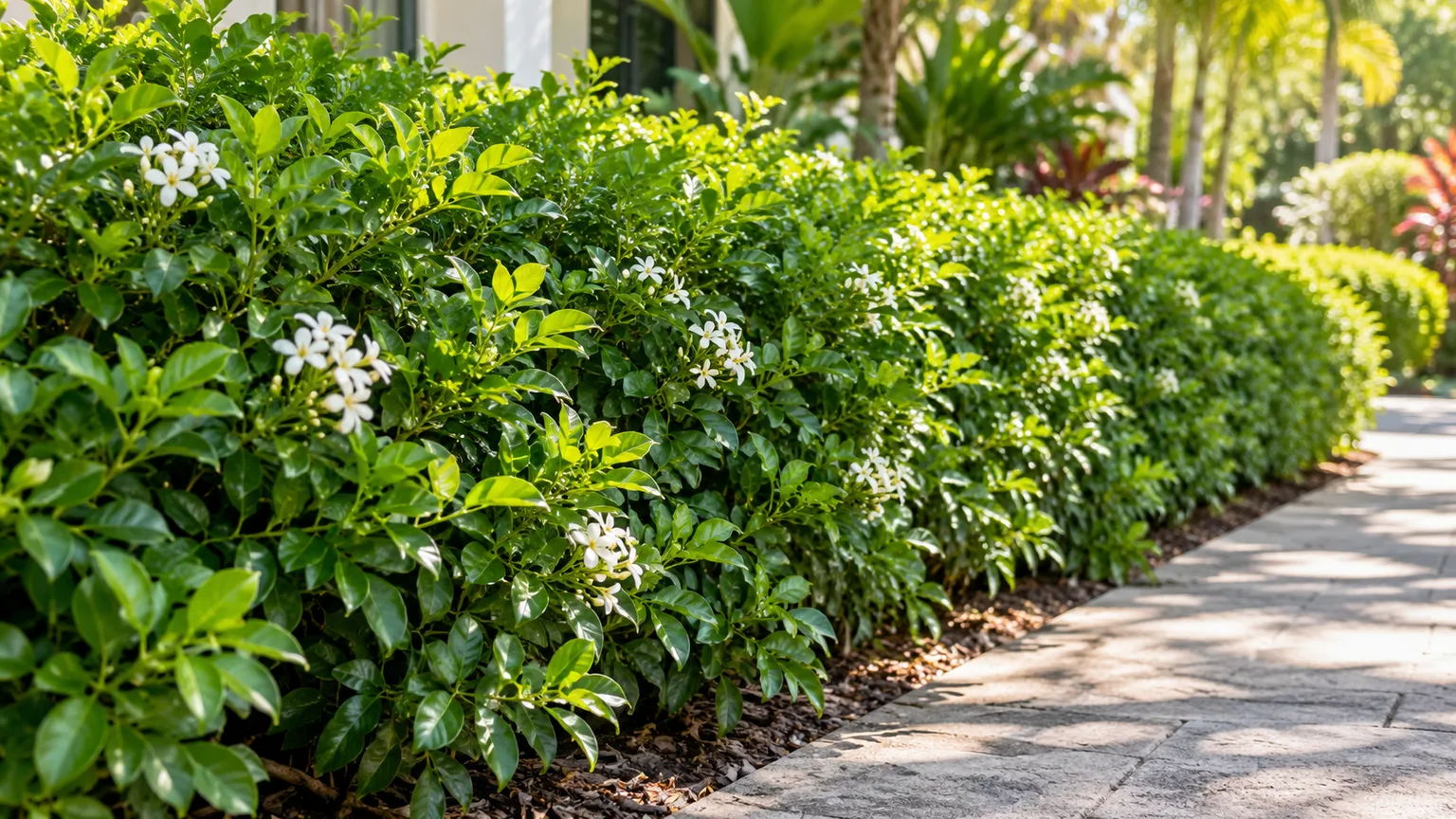
For a hedge, use light, regular trims after the main flowering flush rather than shearing automatically every few weeks. Keep the base slightly wider than the top so light reaches lower foliage; a hedge that is wider at the top tends to thin near the ground. Make a few selective cuts into older branches when the interior becomes crowded instead of only clipping the outermost leaves. The Gardenia.net plant profile lists pruning in spring and fall, but local flowering and climate should determine the timing: avoid a major trim just before the flush you hope to enjoy.
Remove dead, broken, crossing, or frost-damaged branches back to a healthy lateral branch. If a neglected plant needs substantial reduction, stage the work over more than one growing period rather than stripping most of the canopy at once. Use clean, sharp pruners and disinfect them between plants if you are removing diseased tissue. In Florida citrus-growing areas, remember that major pruning produces tender new flush, which is attractive to psyllids; check local recommendations before creating a large flush near a commercial grove.
Grow orange jasmine in a container
A pot is the practical choice when winter temperatures are too low for dependable outdoor survival, when soil drainage is poor, or when you want a patio shrub you can move. Choose a container with drainage holes only modestly larger than the root ball; an oversized pot holds wet mix around roots the plant has not yet reached. Use a high-quality, well-draining container mix rather than dense garden soil, and set the pot where it gets bright light and some shelter from hot afternoon sun.
Container plants need closer observation than in-ground shrubs. Check moisture by touch rather than by the surface color alone, because the top can dry while the root ball remains wet. Turn the pot occasionally if one side is getting all the light, and inspect leaf undersides when you water. Orange jasmine can be grown indoors, but a dim room often produces a leggy plant with few flowers; a bright window or supplemental grow light gives it a better chance.
For a bonsai-sized orange jasmine in a shallow pot, check the mix more often because the small root volume can dry quickly; a specialist Murraya bonsai care guide recommends a bright position and an airy, free-draining medium. These container principles apply to bonsai culture, while an ordinary shrub in a large pot may dry at a different rate.
Move it before cold nights and adjust winter care
Bring a potted plant under cover before frost is forecast and before a cold spell settles in; do not wait until leaves are blackened. Guidance differs on the exact threshold, so use a conservative cue: move it when nights are expected to approach the mid-40s°F (about 7°C), particularly if the plant is young, recently repotted, or exposed to wind. Acclimate it to indoor conditions over several days if the weather allows, and check leaf axils and the soil surface for insects before bringing it near other plants.
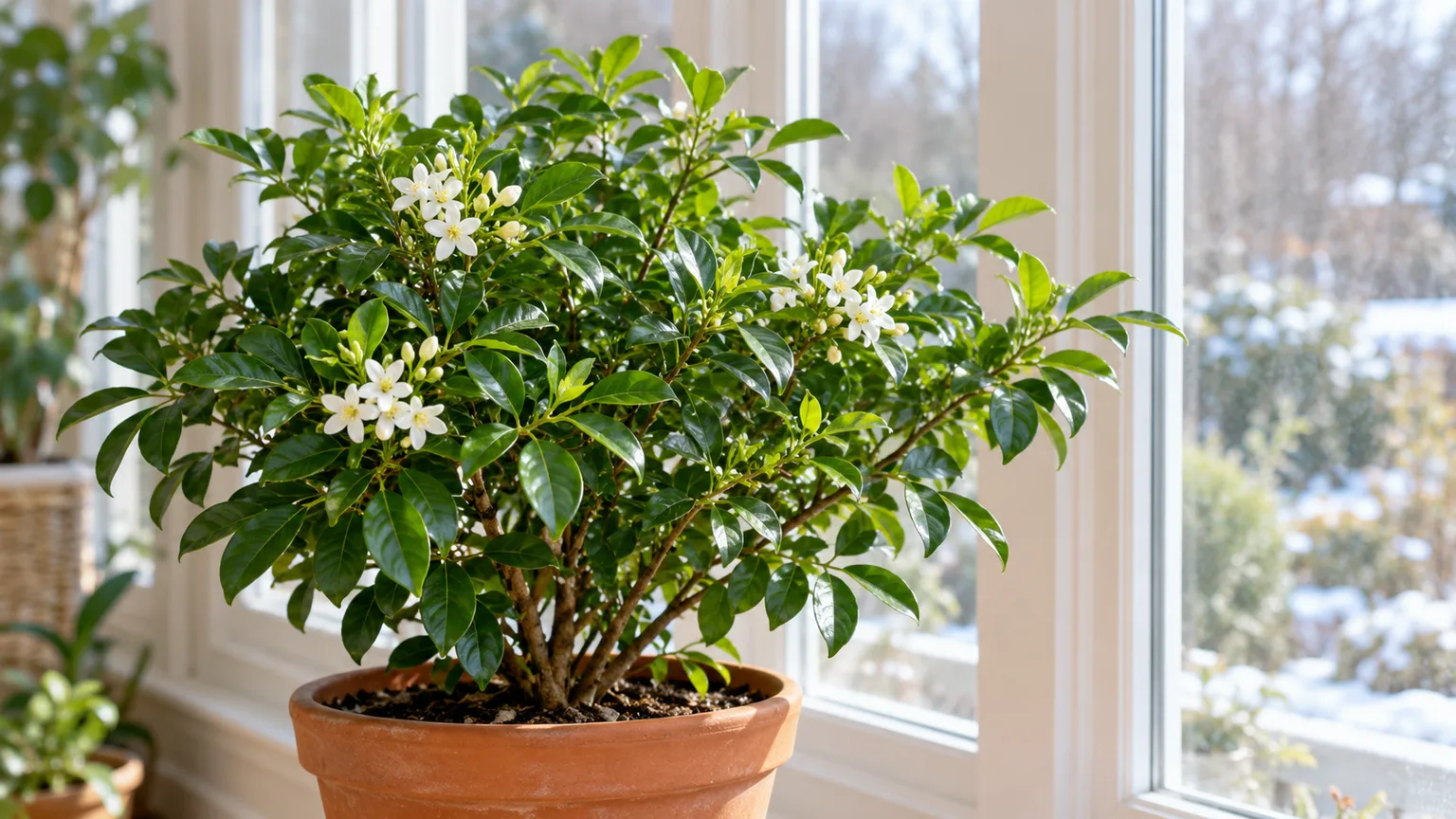
Place the shrub in the brightest available location, away from heating vents and cold drafts. Water less often when growth slows, but continue checking the root ball rather than following a monthly calendar. Avoid feeding a cool, dim plant into weak growth; resume light fertilizing when days lengthen and fresh growth begins. If it drops leaves after the move, stabilize light and watering first instead of immediately pruning or fertilizing it.
Repot only when the root zone needs more room
Repot when roots crowd the drainage holes, the mix breaks down and stays wet, or water runs straight through without moistening the root ball. Move up one pot size—usually only a couple of inches wider—and use fresh, free-draining mix. The best time is the start of active growth, after the coldest part of the year has passed in your climate.
Orange jasmine roots can be sensitive to rough handling. Slide the plant out with the root ball mostly intact, tease only loose circling roots, and avoid aggressively combing or cutting healthy roots unless you are following a specific bonsai technique. Set the plant at the same depth, water to settle the mix, and keep it in bright indirect light for a short adjustment period if the root ball was disturbed. Do not combine a severe root prune, hard top prune, and fertilizer dose in one session; each adds stress and makes it harder to identify the cause of decline.
Propagate with seed or stem cuttings
Seed and cuttings serve different purposes. Seed is a reasonable option when you have ripe berries and want additional plants, while a cutting is the better choice when you want a plant genetically like the parent. The UF/IFAS profile says propagation is easy by seed and less predictable by softwood cuttings; Gardenia.net lists both methods. Neither route gives an instant hedge, and young plants need warm conditions and steady moisture without saturated media.
Before collecting fruit or distributing seed, consider local plant-risk guidance. Where orange jasmine is discouraged or restricted, do not start seedlings for outdoor planting or move fruit between areas. Keep propagation material labeled so it is not confused with true jasmine or another plant sold under the common name “mock orange.”
Start with fresh seed when you want more plants
Collect fully colored, ripe berries and remove the fleshy pulp before sowing. Plant clean seed in a small pot of sterile, airy seed-starting mix, just below the surface, and keep it warm and evenly moist in bright indirect light. Germination timing varies with seed freshness and conditions; check regularly, ventilate a covered pot, and remove the cover once seedlings emerge so the young stems do not stay wet and stagnant.
Wait until seedlings have several true leaves and a stable root plug before potting them on. Keep them out of harsh midday sun while they establish, then acclimate gradually to outdoor light. Seed-grown plants may not match the parent exactly in vigor or flowering, so choose a vegetative cutting if a particular flower or growth habit is important.
Use cuttings when you want a copy of the parent
Take a 4- to 6-inch tip cutting from healthy, nonflowering growth during warm active weather. Remove lower leaflets, leaving a small amount of foliage at the tip, and place the cut end into a lightly moist, airy propagation mix. Rooting hormone can be used according to its label, but warmth, clean tools, and good moisture balance matter more than keeping the pot soggy.
Cover the cutting loosely with a clear bag or propagator to slow moisture loss, but keep leaves from touching wet plastic and open the cover periodically for fresh air. Set it in bright indirect light, not direct sun, which can overheat a covered cutting. New growth is encouraging but not proof of roots; wait until the cutting resists a gentle tug or has visible roots at the drainage holes before moving it into a larger pot. If the cutting blackens at the base, discard it and start with a cleaner, less saturated setup.
Get more flowers by correcting the limiting factor
Orange jasmine can flower repeatedly in warm conditions, but bloom frequency is not identical in every climate. A plant that grows leaves but not flowers is often getting too little bright light, too much nitrogen, or frequent shearing that removes the tips where flowers form. Cold spells, a recent move or repot, and the first year after planting can also redirect growth toward recovery rather than flowering.
Use this order before changing fertilizer: first confirm the plant gets several hours of bright light or equivalent strong filtered light; next look at whether hedge trims are removing each flush before buds develop; then check that roots are not staying wet or becoming severely dry. If growth is healthy but flowering remains sparse, review the plant’s exposure through the whole day and the timing of pruning. Do not apply high-phosphorus fertilizer unless a soil test or qualified local advice indicates a need.
Flowers are short-lived individually, but new clusters may open over a long warm season. This is why a hedge cut for a perfectly uniform outline can smell less fragrant than a looser shrub allowed to flower between trims. Choose the result you value most and prune accordingly rather than trying to maximize both dense clipping and continuous bloom at the same time.
Troubleshoot yellow leaves, wilt, and leaf drop
Read the soil before treating the foliage. Yellow leaves can follow waterlogged roots, drought, cold exposure, a sudden light change, nutrient unavailability, or transplant stress; the same symptom does not point to one universal fix. Check whether the problem is limited to a few older leaves or is spreading across new growth, and note whether the root ball is wet, dry, or sour-smelling.
Yellowing, wilting, or dropping leaves
If leaves yellow while the soil remains wet, pause watering and inspect drainage. A pot without open drainage holes, a plugged saucer, or a planting site that stays saturated can deprive roots of oxygen; fertilizer will not correct that condition. If the soil is dry through the root ball and leaves are limp, water thoroughly and then adjust the interval so the roots do not repeatedly swing from very dry to waterlogged.
Yellow leaves with green veins may indicate a nutrient-availability problem, but do not add iron or acidifier based on appearance alone. Soil pH and root condition affect what the plant can use, so test the soil or ask a local extension service before applying a corrective product. Sudden leaf drop after moving a container indoors often follows a sharp change in light, temperature, or moisture; keep conditions steady for several weeks and watch the next flush before making multiple changes.
Sticky leaves, scale, whiteflies, and sooty mold
Inspect leaf undersides, stems, and new shoots for small scale insects, whiteflies, or other sap-feeding pests. Sticky honeydew and black sooty growth can occur when sap feeders are present; wiping the leaves may remove the residue, but it does not remove the insects producing it. Gardenia.net lists scale, whiteflies, and mealybugs among pests to watch for on this shrub.
Start with a close inspection and remove a small infested branch if that will not ruin the plant’s shape. On a potted plant, isolate it while you identify the pest and monitor new growth. If you consider insecticidal soap or horticultural oil, use only a product labeled for the plant and pest, follow the label, and test a small area first; avoid spraying during heat or when flowers are being visited by pollinators. In citrus-growing regions, distorted tender shoots deserve a closer look because psyllid feeding can deform new growth; ask extension staff for identification before treating.
Follow a seasonal care rhythm
Spring: Check for winter damage, remove dead tips, assess the root zone, and begin feeding only when active growth resumes. Plant or repot after frost danger has passed in your area. If you are shaping a hedge, make structural cuts before repeated light trims create a dense outer shell.
Summer: Watch containers closely in hot, windy weather, water deeply when the mix begins to dry, and use temporary afternoon shade if foliage scorches. Let at least some new growth mature between hedge trims so flowers can form. Check underneath leaves while watering, especially after a warm, humid spell.
Fall: Finish major shaping after the main flowering flush and allow new shoots time to harden before cold weather. Reduce fertilizer as growth slows. In areas with frost, move containers under cover before the first cold night rather than waiting for visible damage.
Winter: Keep the plant in the brightest protected spot available, water according to slower dry-down, and avoid feeding unless it remains warm and actively growing. Do not interpret a few dropped leaves as a reason to saturate the pot; inspect roots and soil first. Return it outdoors gradually after cold risk has passed.
Conclusion
Orange jasmine rewards a warm, bright, well-drained site with evergreen foliage and fragrant white flowers, but it is not a fit for every climate or every Florida planting area. Choose the ground or container route based on real winter exposure and local guidance, then adjust watering and pruning to what the soil and plant are doing. With measured feeding, light shaping, and early cold protection, Murraya paniculata can be a fragrant patio shrub, a carefully maintained hedge, or a small specimen tree.



