How to Grow Pomegranates Indoors: Light and Care
Grow pomegranates indoors with the right cultivar, strong light, seasonal care, check-based watering, hand pollination, and realistic fruiting expectations.
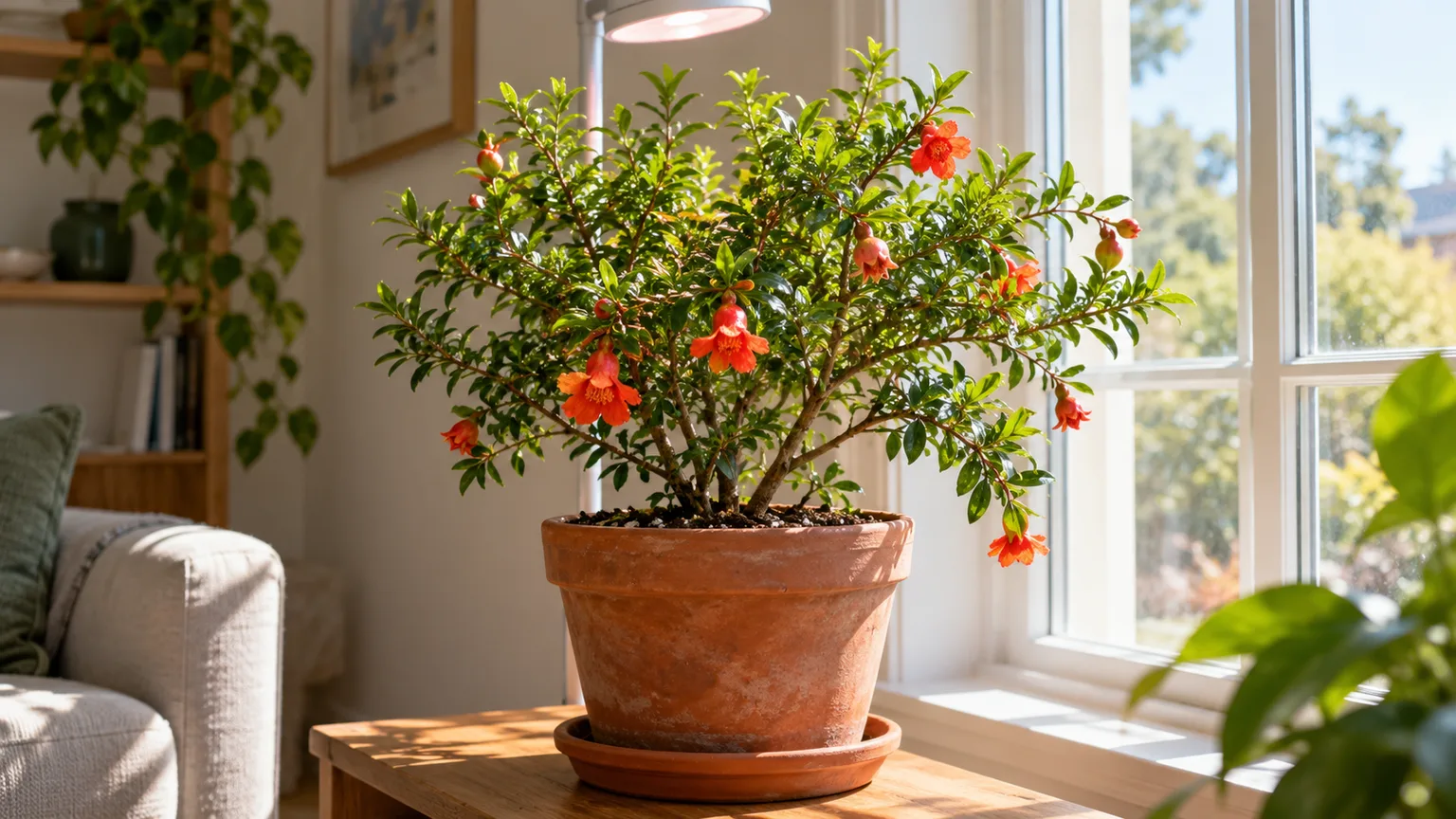
You can grow a pomegranate indoors, but it is more demanding than keeping a foliage houseplant. Punica granatum is a sun-loving, deciduous fruit shrub; a bright room can keep it alive, while dependable flowering and ripe fruit require much stronger light, a suitable cultivar, and a seasonal routine. If your only available spot is several feet from a window, choose the plant for its leaves and flowers rather than expecting a harvest.
Think of success in three stages: the tree survives indoors, it flowers, and it holds fruit long enough to ripen. Each step needs more energy than the one before it. This guide focuses on the choices that change the outcome: cultivar, light, pot and mix, water, pruning, winter behavior, and what to do when flowers or young fruit drop.
What Indoor Growing Can—and Cannot—Deliver
A pomegranate can live in a container inside a home, but the word “indoors” covers very different conditions. A compact plant kept near a sunny window is not equivalent to a pomegranate growing outside in full sun and being moved into shelter for winter. The second arrangement gives the tree a brighter growing season and uses the home mainly as frost protection; it is usually the more realistic route to fruit in a climate with cold winters.
Decide first whether you want an ornamental shrub or an edible crop. For foliage and vivid flowers, a small pomegranate can be rewarding even if it never makes a ripe fruit. For harvest, expect to manage a large, heavy container, strong direct light or supplemental lighting, seasonal leaf loss, hand pollination when insects cannot visit, and patience while a young plant matures.
Pomegranates are deciduous in climates with a cool season. A plant may lose most or all of its leaves as growth slows; that does not automatically mean it is dying. Utah State University Extension describes pomegranates as adapted to hot summers and mild winters and notes that they grow as bushy shrubs unless trained differently. That habit is a useful reality check: this is a woody fruit plant with an annual cycle, not a tropical evergreen that naturally stays compact on a shelf. (Utah State University Extension; NC State Extension Plant Toolbox)
Choose a Pomegranate That Matches Your Goal
Read the plant tag before buying. “Dwarf pomegranate” describes a compact growth habit, but it does not automatically mean the plant will produce a large, sweet crop under indoor conditions. The label should identify Punica granatum and, ideally, the cultivar; ask the nursery whether it is sold primarily for ornamental flowers or for edible fruit.
For an indoor container, a naturally compact cultivar is easier to move, prune, and fit near a window. A standard fruiting selection can also grow in a pot, but it will need more root volume and more frequent shaping. A smaller canopy is easier to manage, yet it cannot compensate for weak light. Choose the plant whose mature size fits the brightest place you can offer, not the plant that looks smallest in the nursery pot.
Ornamental Dwarf or Fruiting Cultivar?
The dwarf cultivar ‘Nana’ is commonly grown for its compact form and showy flowers. NC State’s Plant Toolbox lists ‘Nana’ as a compact or dwarf form that can reach about 3 feet; actual size varies with pruning, pot size, and growing conditions. It is an excellent option if your main goal is an attractive potted shrub, but do not assume that “dwarf” promises fruit with the size or flavor of a commercial pomegranate.
If eating the arils matters, buy a named fruiting cultivar from a nursery that can confirm its intended use. Ask whether the plant is grafted or propagated from a cutting and how large it is expected to grow. Online listings sometimes use “dwarf” loosely, so a cultivar name and a clear description are more useful than a marketing photo. (NC State Extension Plant Toolbox)
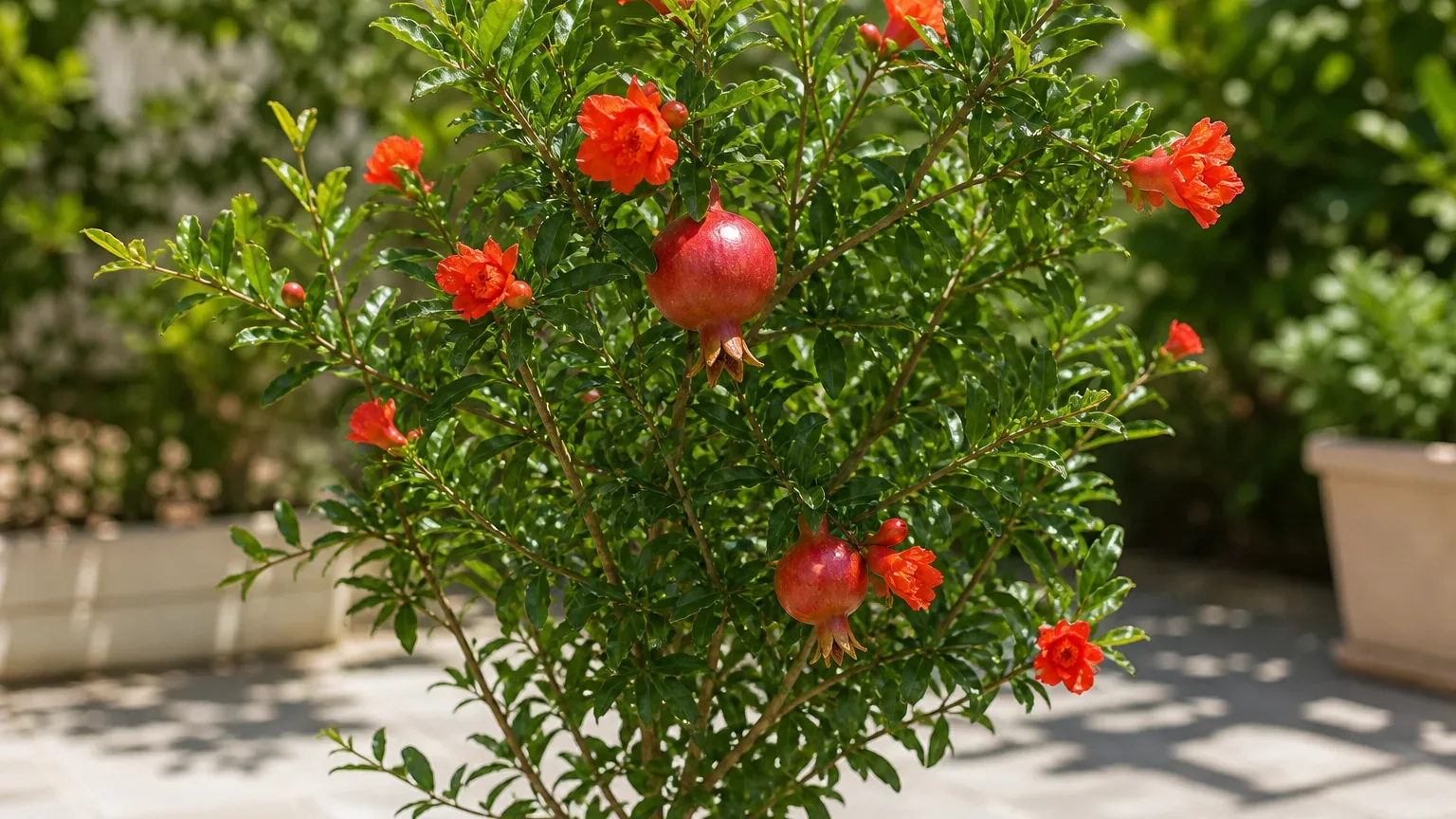 This mature shrub illustrates the species’ eventual scale; a compact cultivar still needs the brightest spot you can provide.
Start With a Named Plant, Not a Grocery-Store Seed
A seed from a supermarket fruit may germinate, but the new plant is not a copy of the parent. Seedlings can differ in vigor, fruit quality, and the number of years before they flower; a seedling may also take up more room than a named dwarf cultivar. Utah State University Extension notes that pomegranates grown from seed do not stay true to type, which is why a named nursery plant is the safer choice for a known crop. (Utah State University Extension)
A cutting or grafted plant preserves the cultivar identity more reliably, but it still needs time to build a sturdy root system and branches. Do not treat the first flower as proof that the tree is ready to carry fruit. A very young or recently repotted plant may drop blossoms or small fruit because it has limited energy; removing a few early fruits can help it establish structure instead of straining to ripen a crop.
Set Up Light Before You Choose a Spot
Light is the hardest indoor requirement to replace. Pomegranates grow in partial shade, but full sun supports fruit flavor and productive growth; that is the recommendation from Utah State University Extension. Indoors, set the plant directly beside the brightest unobstructed window you have, preferably one that receives strong direct sun for several hours. A south-facing window is often a good starting point in the Northern Hemisphere, but nearby buildings, trees, deep overhangs, and seasonal sun angle matter more than the compass direction alone.
Keep the plant close to the glass without letting leaves press against cold panes in winter. If the window is shaded for most of the day, expect slower growth and fewer flowers. Long, weak shoots that lean toward the glass, widely spaced leaves, and a plant that never forms flower buds are useful clues that the light is not meeting the tree’s needs. Rotate the container a quarter turn every week or two so one side does not grow disproportionately toward the window.
The amount of direct sun entering a room changes by latitude, season, and window exposure, so a fixed number of hours can mislead. Practical indoor guides, including Epic Gardening and Gardening Know How, also emphasize placing pomegranates in the brightest available location; treat their general light advice as a starting point, then judge your own plant by the strength and compactness of new growth. (Epic Gardening; Gardening Know How)
When a Grow Light Is Worth Adding
Add a grow light when your brightest window still produces pale, stretched growth or when the plant must spend winter in a dim room. A full-spectrum LED fixture placed above the canopy can extend the useful day, but the fixture’s distance, intensity, and coverage all matter. Follow its manufacturer’s recommendations; a small decorative bulb several feet away may look bright to you without delivering useful light to the leaves.
Use a timer so the tree gets a predictable daytime period and a dark night. Do not put the light so close that leaves heat, bleach, or curl, and do not use long lighting as a substitute for a seasonal rest if the plant is naturally dropping leaves. If the tree flowers but fails to keep fruit, correct light first before escalating fertilizer or hand-pollination effort. A plant cannot ripen fruit it does not have the energy to support.
Choose a Stable Container With Open Drainage
Pomegranates have a woody, spreading root system and can become top-heavy as branches lengthen. Choose a sturdy pot with several unobstructed drainage holes and enough weight that the plant will not tip when it is moved. A broad container is often easier to stabilize than a tall, narrow pot; include a saucer to protect the floor, but empty it after watering instead of leaving the root ball in standing water.
Do not jump a small nursery plant into an enormous tub. In a container much larger than its root system, unused mix stays wet longer, so the roots can lose oxygen before they colonize the new space. Move up gradually when roots circle the pot, emerge from the drainage holes, or the mix dries unusually fast even when light and temperature are stable. Choose the next pot only a little wider than the root ball and keep the trunk base at its former soil level.
Think about the route from the plant’s future home to its winter shelter before choosing a heavy planter. If you will take it outdoors in summer, use a pot with a stable base and consider a plant caddy rated for the filled weight. The best indoor pomegranate is not simply the one that fits beside the window; it is one you can safely water, rotate, prune, and move without damaging branches or spilling wet soil.
Build a Potting Mix That Drains and Holds Some Moisture
Use a high-quality container mix that drains freely but does not dry into dust a few hours after watering. A standard potting mix amended with a coarse ingredient such as perlite, pumice, or fine bark can improve air space. Avoid digging garden soil from the yard into the pot: it can compact indoors, drain poorly, and bring weed seeds or soil-borne pests into the home.
There is no single pomegranate recipe that fits every home. A warm, dry room may call for a mix with more water-holding capacity, while a cool, humid room or a pot that dries slowly benefits from a coarser blend. The test is straightforward: when watered thoroughly, excess water should run from the drainage holes; after draining, the mix should remain lightly moist through the root ball rather than turning into a saturated mass.
Do not add a layer of gravel to the pot’s bottom as a drainage shortcut. It reduces the depth available to roots and does not fix a dense mix or blocked holes. If the plant repeatedly stays wet, check the actual holes, the saucer, and the mix structure before changing the container size or watering routine. Pomegranates tolerate a range of soils outdoors, but container success depends on air reaching the roots after each watering. (NC State Extension Plant Toolbox; Utah State University Extension)
Water by Checking the Root Ball
Water according to what the soil is doing, not a fixed weekly schedule. Push a finger into the mix or use a wooden skewer to check below the surface; when the top inch or two has dried during active growth, water slowly until excess runs through the pot. Empty the saucer, then wait for the mix to dry back to that point before watering again.
A shallow surface check can be misleading in a large pot. If the top feels dry but the skewer comes out cool and damp several inches down, wait; if water runs straight through a dry root ball and leaves the center powdery, water in two or three passes with a short pause between them. After a few cycles, note how many days the container takes to dry under the current temperature and light. That observation gives you a useful range, not a calendar rule.
During flowering and fruit development, avoid cycling from bone-dry soil to a heavy soak. Pomegranate fruit can crack when water availability changes sharply, especially as fruit nears maturity; Utah State University Extension links fruit splitting with rapid water uptake after dry periods and recommends regular irrigation for quality fruit. Indoors, the same principle means checking more often as days warm and watering deeply before the root ball dries completely, while still letting excess drain away. (Utah State University Extension)
When the plant is leafless and dormant, it uses less water. Keep the root ball from becoming completely desiccated, but let the upper mix dry farther between drinks and never water simply because a certain number of days has passed. A cool room, a large pot, and a leafless canopy can make the soil dry much more slowly than an actively growing plant beside a warm window.
Feed Lightly During Active Growth
A container tree has a finite supply of nutrients, but fertilizer cannot make up for poor light or weak roots. Feed only after the plant is actively producing new leaves, using a balanced fertilizer labeled for container plants and following the label’s dilution and frequency. If the potting mix already contains slow-release fertilizer, wait until its stated feeding period has passed before adding more.
Use a lighter hand when the plant is indoors or not growing vigorously. Excess nitrogen can produce soft leafy shoots at the expense of flowering and can leave soluble salts in a container, especially when the pot is watered only lightly. Do not combine a full dose of slow-release granules with frequent liquid feeding unless the product labels specifically support that combination.
Stop routine feeding when growth slows for winter or the plant has shed its leaves. Resume gradually when new growth appears in spring rather than applying a large dose to a resting root system. If leaves yellow, check light, water, and root health before assuming the plant needs more fertilizer; a wet, oxygen-starved root zone cannot use nutrients normally, and extra feeding can make the problem worse.
Prune for Shape Without Removing Fruiting Wood
Decide whether you want a shrub with several stems or a small tree with one main trunk. A multi-stem shape is natural for pomegranate and may be easier to keep balanced in a wide pot; a single trunk can make the canopy easier to move around but requires more deliberate selection of shoots. Remove dead, crossing, or very weak branches first, then thin only enough to let light and air into the center.
Basal shoots, called suckers, are new stems emerging from the base or roots. Remove them when you are maintaining a single-trunk tree, but keep selected shoots if you prefer a multi-stem shrub or need to replace an old, damaged stem. Cut with clean bypass pruners just above the point where the shoot joins the plant, and avoid leaving short stubs that can die back.
Pruning affects harvest because flowers and fruit are borne on branch tips and short spurs on older wood. Utah State University Extension recommends light annual pruning and warns that severe pruning reduces yield; its guidance also notes that productive short spurs occur on two- to three-year-old wood. Shape the plant selectively during dormancy or just before growth restarts, and avoid shearing every branch back to the same outline. A compact silhouette is not worth removing the very wood that could flower. (Utah State University Extension)
Work With the Seasonal Growth and Dormancy Cycle
A pomegranate’s seasonal cycle is part of its care, even when it grows in a living room. In cool conditions, it may slow down and lose many leaves; in a warm home it may retain some foliage, but it can still show reduced growth or scattered leaf drop as daylight changes. Do not try to keep it lush year-round with extra fertilizer and water if the plant is clearly resting.
If you live where summers are warm, moving the tree outdoors can provide stronger light and better air movement. Wait until frost risk has passed, then acclimate it over a week or more: start in bright shade, increase morning sun gradually, and protect tender leaves from a sudden jump into intense midday exposure. Bring it back inside before cold nights threaten the plant, and inspect the undersides of leaves and branch joints for pests before it rejoins houseplants.
A cool, bright, frost-free place is usually easier for a naturally dormant plant than a dark, heated corner. Keep the pot away from radiators, heating vents, and cold drafts, and water less as leaf area and growth decline. Do not place a dormant container in a sealed, unheated garage if it can freeze solid; a potted root system is more exposed to cold than a shrub planted in the ground. The goal is a calm rest, not an abrupt freeze or forced growth in low light.
Help Flowers Set Fruit Indoors
Pomegranates can self-pollinate, so you do not need a second tree just to obtain pollen. In a room with no bees or other visiting insects, however, flowers may receive less pollen movement than they would outdoors. Utah State University Extension notes that pomegranates are self-pollinating and that insects visit blossoms and likely assist pollen transfer; gently moving pollen by hand is a reasonable way to help when the plant flowers inside. (Utah State University Extension)
Do not expect every blossom to become a pomegranate. Some flowers drop without setting fruit, and a young or light-starved plant may shed more because it cannot support the cost of a crop. Watch for a flower that remains attached and begins to swell at its base after petals fade; if the whole flower dries and falls, the attempt did not set fruit. Keep the tree evenly moist, avoid moving it during bloom, and do not suddenly increase fertilizer to force more flowers.
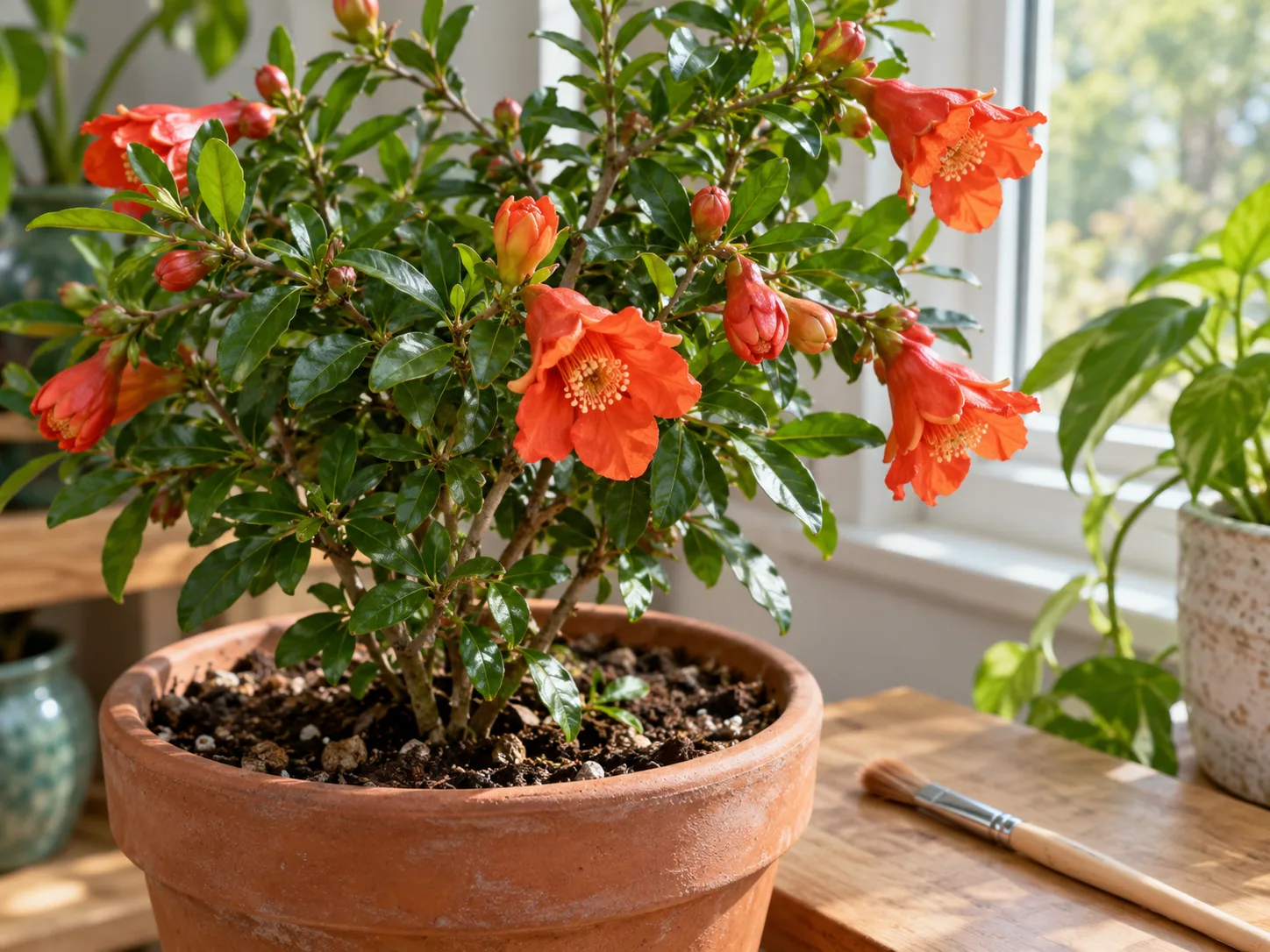
Hand-Pollinate Open Flowers With a Soft Brush
Use a small, clean, dry, soft-bristled artist’s brush when a flower has fully opened. Gently touch the brush to the pollen-bearing parts inside one blossom, then dab it inside another open flower; moving between several flowers helps distribute pollen without tearing delicate petals. Repeat on newly opened flowers during the bloom period, preferably when the blossoms are dry.
A cotton swab can work, but a soft brush is easier to maneuver around a narrow flower opening. Avoid brushing buds that have not opened, wet flowers, or blossoms that are already shriveling. Hand pollination improves the opportunity for pollen transfer; it cannot overcome inadequate light, a plant that is too young, or a flower that is not capable of setting fruit.
Mark the date of the first pollination if you are curious about your plant’s timing. If the base begins to enlarge after the petals fall, leave it in place and maintain steady moisture; if it yellows and drops, return to the basics before trying a stronger fertilizer. One or two fruits are a successful first indoor crop for a small container plant, and carrying fewer fruits can produce a better result than asking a young tree to support every bloom.
Diagnose Leaf Drop, Flower Drop, and Splitting Fruit
Start troubleshooting with the timing and the pot, not with a spray bottle. A pomegranate that loses leaves as days shorten may be entering dormancy; one that drops leaves soon after a move may be reacting to a sudden change in light, temperature, or watering. A plant with yellow leaves and soil that stays wet for days points more strongly to root-zone stress than to a need for extra fertilizer.
| What you see | Check first | Practical next step |
|---|---|---|
| Long, weak shoots and few flowers | Direct sun and distance from the window | Move closer to the brightest window or add a suitable grow light |
| Yellow leaves with a persistently wet pot | Drainage holes, saucer, and root-zone moisture | Let the mix dry appropriately; improve drainage before feeding |
| Flower buds open, then drop | Light, recent moves, and moisture swings | Stabilize the spot and water consistently through bloom |
| Young fruit shrivels and falls | Whether the flower set, plus light and plant age | Keep a light crop and correct the limiting condition |
| Developing fruit cracks | Dry spells followed by a large watering | Check moisture more often and keep it more even as fruit enlarges |
A single symptom rarely identifies a single cause. If the plant is yellow and the soil is wet, do not both repot and fertilize on the same day; inspect drainage first, let the root ball recover, and then decide whether a repot is actually needed. If the leaves are healthy but the tree never flowers, light and cultivar are more likely bottlenecks than a shortage of humidity.
Separate Pest Damage From Water and Root Stress
Indoor pomegranates can host common sap-feeding pests such as scale, aphids, mealybugs, and whiteflies. Inspect the undersides of leaves, tender shoot tips, and the joints where branches meet; sticky residue, cottony clusters, small bumps, or tiny flying insects are stronger evidence of pests than general yellowing alone. Isolate a suspect plant from nearby houseplants while you identify the issue.
For a small infestation, remove visible insects and wash the plant where practical, then recheck new growth over the following week. If you use a pesticide, choose one labeled for the pest and the plant’s indoor setting, follow its label exactly, and keep it away from open flowers and any fruit you plan to eat unless the label permits that use. Pesticide labels are the authority on application and harvest intervals; do not improvise a concentration or use a garden-only product in a home.
Root problems need a different response. A sour smell, continually wet mix, and soft roots suggest poor drainage or overwatering; crisp edges and a very light pot can point to a dried root ball. Correct the condition that the evidence supports, then give the tree time to respond—new leaves, not old damaged leaves, are the best signal that the correction is working.
Harvest After the Fruit Ripens on the Plant
Pomegranate fruit can vary in color by cultivar, so do not wait for every fruit to become deep red. Utah State University Extension notes that the rind changes from green toward pink as fruit matures, but only some varieties turn deep red; that is why color alone is a poor test. Use the cultivar description, fruit fullness, rind development, and the plant’s normal season together. (Utah State University Extension)
A ripe fruit feels heavy for its size and may become less perfectly round as the seeds fill out. A light tap can sound more metallic than the dull sound of an immature fruit, but treat the sound as one clue rather than a guarantee. If the rind begins to crack, harvest promptly; Utah State Extension warns that overripe fruit and sudden water uptake can make splitting worse. Epic Gardening’s practical indoor guide also recommends leaving fruit on the plant to ripen rather than picking it early. (Epic Gardening)
Cut the stem with clean pruners instead of pulling or twisting the fruit off, which can tear a branch or damage a spur. If the plant repeatedly produces undersized or bland fruit, review the growing conditions and cultivar before changing the fertilizer. More light, steady moisture, and preserving productive wood are more likely to improve the next crop than frequent heavy feeding.
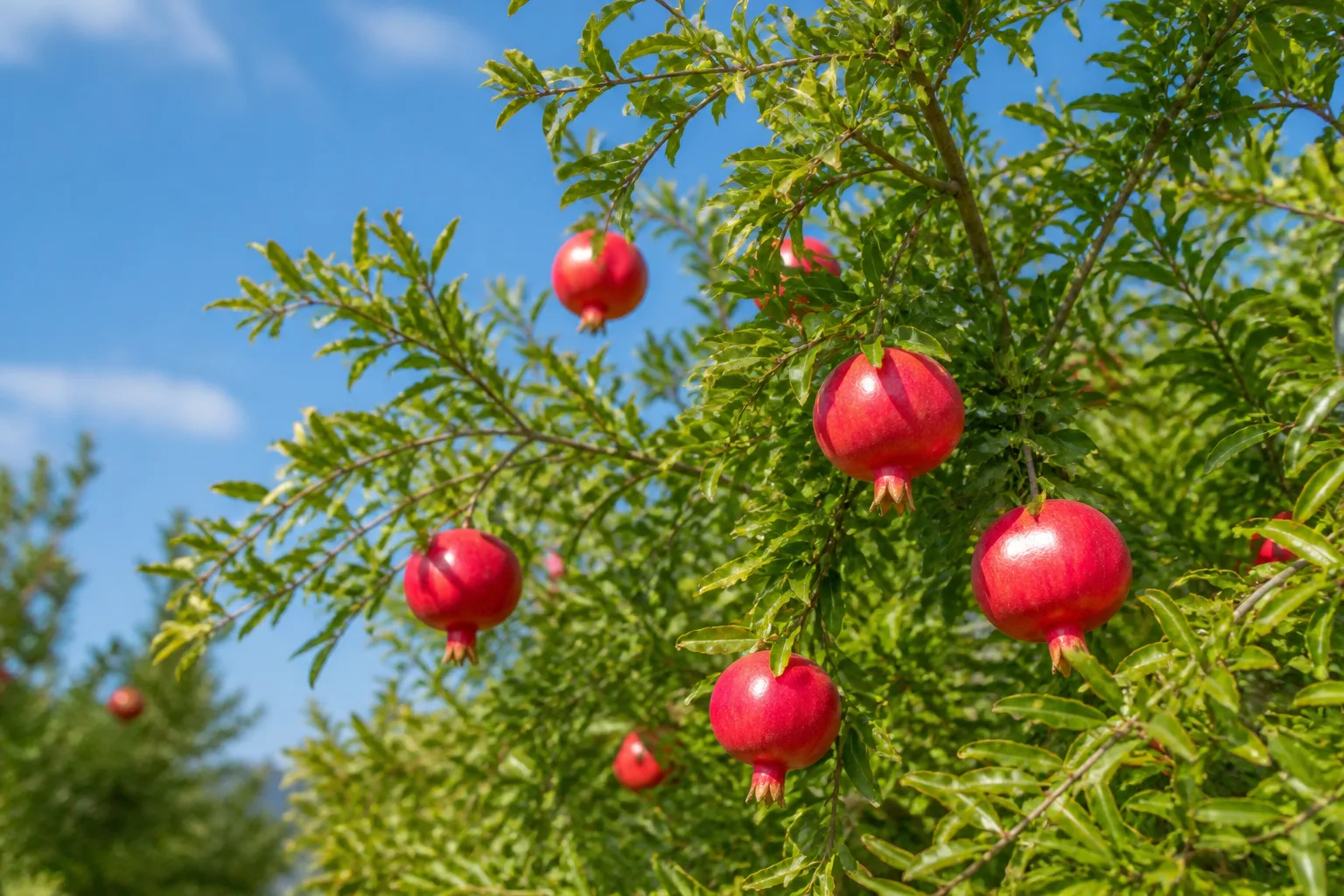 Harvest indicators vary by cultivar, so use color with fruit fullness, weight, and the plant’s usual ripening season.
Conclusion
Grow pomegranates indoors when you can offer a bright, stable place and are willing to work with the plant’s seasonal cycle. Choose an ornamental dwarf for a compact flowering shrub or a named fruiting cultivar if harvest is the goal, then match the pot and pruning plan to its mature size.
Keep the root zone freely drained, water by checking the mix, and protect fruiting wood with selective pruning. With direct light, a calm winter rest, and some help moving pollen, an indoor pomegranate can flower and sometimes fruit; without those conditions, it can still be a striking container plant, but a generous harvest is not a promise.



