How to Grow and Care for Spider Lilies (Lycoris)
Learn spider lily care by identifying the Lycoris species, planting bulbs at the right depth, managing dormancy, and fixing common flowering problems.
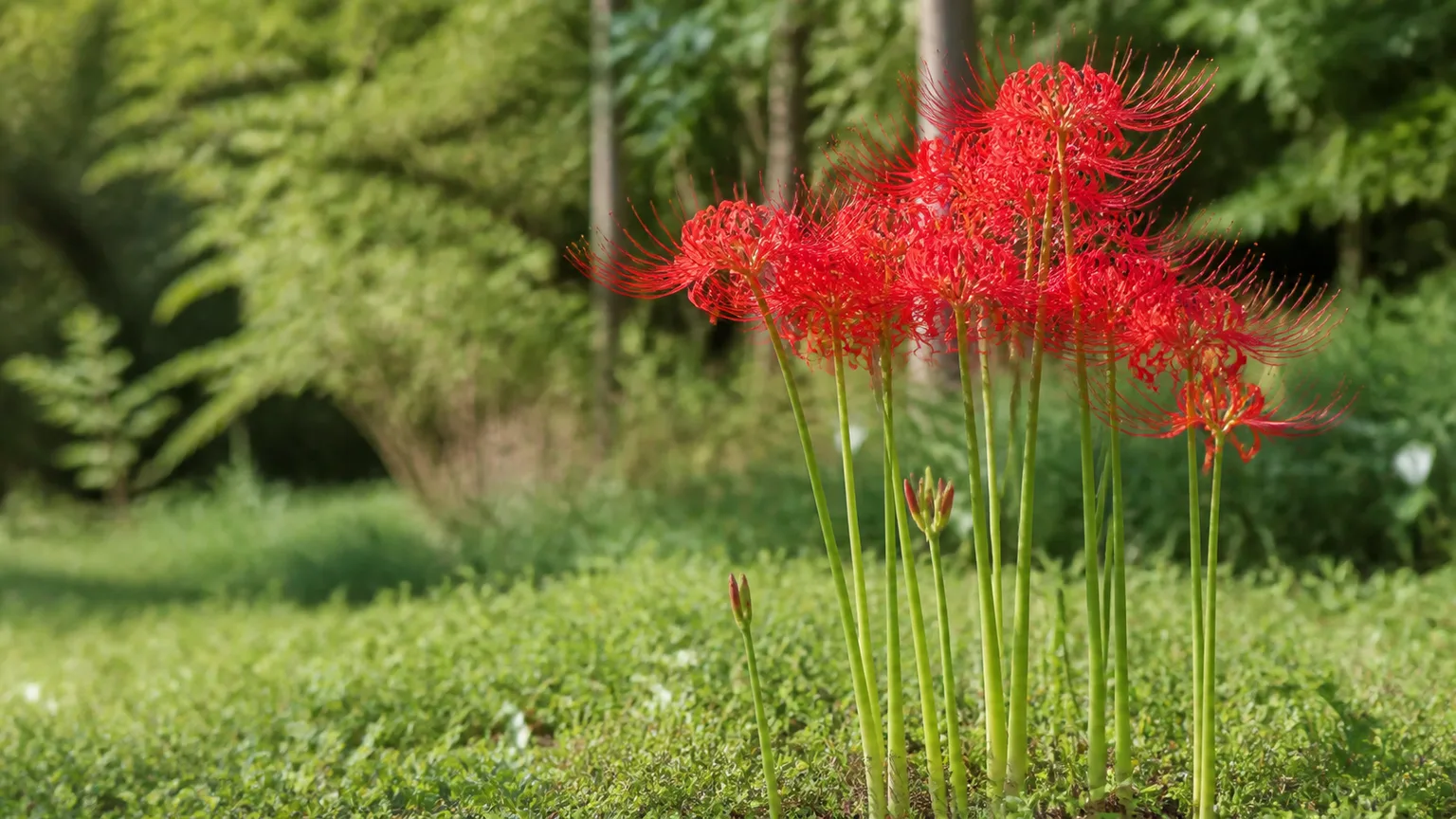
Spider lilies are easiest to grow when you follow the bulb’s season instead of a weekly watering or feeding schedule. The catch is that “spider lily” can mean several Lycoris species, and those species do not all emerge, flower, or tolerate cold in exactly the same way.
Start by checking the botanical name on the bulb label. Then give the plant a draining site, plant it at the depth recommended for that species, keep its active foliage intact, and avoid summer wetness while it is dormant. Those choices solve more problems than a fixed fertilizer routine.
Confirm Which Spider Lily You Have
This guide covers Lycoris, a genus of bulbous perennials in the Amaryllidaceae family, related to amaryllis. Its naked flower stems and curling tepals have earned it names such as surprise lily, hurricane lily, resurrection lily, and spider lily. The names overlap, so use the botanical name—not the common name alone—to decide how to plant and protect a bulb. North Carolina State Extension describes roughly 25 species in the genus and notes that authorities do not all recognize the same number (NC State Extension).
The label matters because the plant’s color is only part of the difference. Lycoris radiata is the familiar red spider lily; L. squamigera is the pink-flowered resurrection lily; L. aurea bears yellow flowers; L. albiflora is white; and L. sprengeri has pink flowers often marked with blue at the tips. The same common name is also used for plants outside Lycoris, including Hymenocallis, so verify the genus before applying this advice.
| Species commonly sold as a spider lily | What to expect | Care detail to check |
|---|---|---|
| Lycoris radiata | Red flowers on bare stems in late summer or early fall; foliage follows and can persist through winter | Often grown in Zones 6–10; shelter winter foliage at the colder edge |
| L. squamigera | Pink flowers after its spring leaves have died back; often called resurrection lily | Usually the most cold-hardy Lycoris; verify local zone guidance |
| L. aurea | Golden-yellow flowers | Confirm hardiness and planting depth for the supplied bulb |
| L. albiflora | White flowers, usually sold for warmer gardens | Follow species-specific cold and depth instructions |
| L. sprengeri | Pink flowers with blue-tipped tepals | Check the cultivar or supplier’s regional guidance |
The table is a starting point, not a substitute for the nursery tag. Sources differ in their summaries because they may describe a particular species, a cultivar, or local growing conditions; a broad zone range should not be treated as a guarantee that every bulb will flower reliably at its cold edge. NC State Extension identifies L. squamigera as the hardiest species in the genus, while Better Homes & Gardens likewise distinguishes its Zone 5 tolerance from the warmer preferences of other spider lilies (NC State Extension; Better Homes & Gardens).
Learn the Plant’s Seasonal Rhythm
Many Lycoris flowers appear on leafless stems, which makes the plant seem to bloom “out of nowhere.” That is normal. The stem, flower, and foliage may arrive in a different order than a gardener expects from an ordinary leafy perennial, and the schedule depends on species and climate.
For L. radiata, Missouri Botanical Garden describes late-summer or early-fall flowers followed by strap-shaped leaves that appear in fall, stay through winter, and fade in late spring. L. squamigera follows another visible sequence: leaves emerge in spring, die back during summer, and flowers rise later. The genus can also include species whose leaves appear in spring, so never assume that every bare patch is dead or that every leafless flower stem indicates damage (Missouri Botanical Garden; NC State Extension).
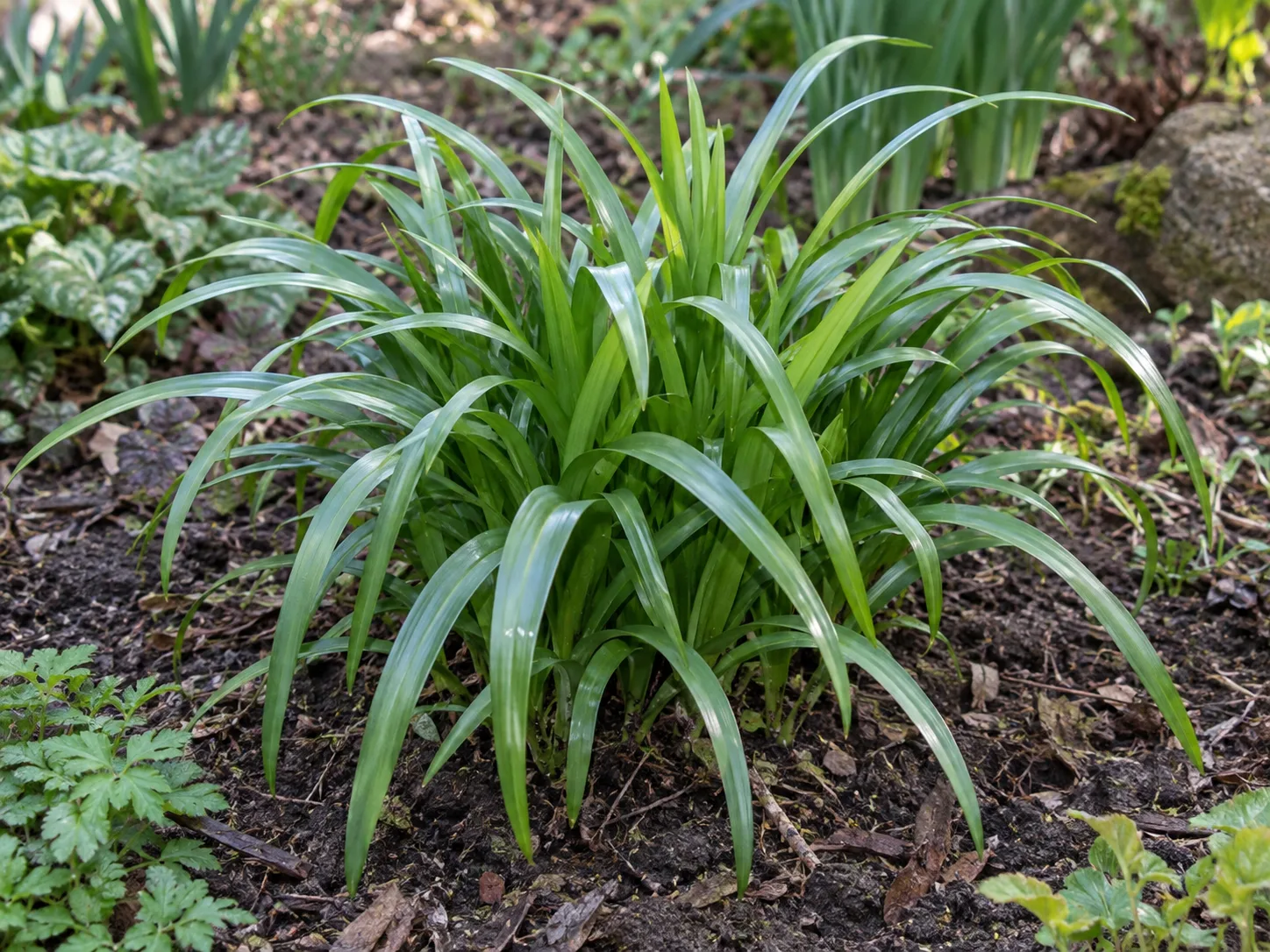
Think in phases rather than calendar dates: active leaf growth, flowering, foliage dieback, and dormancy. Rainfall and temperature can shift the dates, but a plant with green leaves is not dormant simply because it is summer where you live. This distinction tells you when to water and when to stop, and it prevents a normal seasonal pause from being mistaken for a failed bulb.
Choose a Site with Light, Drainage, and Room
Choose a place where the bulbs can remain for years. Lycoris forms offsets and spreads gradually into clumps; it is easier to establish a planting correctly once than to keep lifting and moving it. A border edge, open woodland margin, or space among perennials can work, provided surrounding roots do not make the soil permanently wet or the bulbs impossible to find.
Most species tolerate full sun to partial shade, and several references favor part sun or afternoon shade for reliable flowering, especially in hot climates. Use the local afternoon heat as the deciding factor: a bright site with shade from the harshest late-day sun is a reasonable starting point in a hot-summer garden, while a cooler region may allow more direct light. Avoid deep shade beneath dense evergreens, where flowering can weaken and soil may stay damp.
Drainage is more important than a perfect soil pH. A fertile loam or sandy loam that lets excess water escape is suitable; heavy soil can be improved across a broad planting area with organic matter or a raised bed, but do not create a small compost-filled pocket that holds water around the bulb. The Missouri Botanical Garden and RHS both emphasize well-drained soil and a relatively dry summer rest for L. radiata (Missouri Botanical Garden; RHS).
Before planting, observe the spot after a substantial rain. If water still pools there hours later, choose another location or raise the bed; a bulb that remains saturated through dormancy is vulnerable to rot. Keep the bed away from a downspout, low lawn pocket, or irrigation zone that runs through the hottest part of summer unless you can adjust that watering independently.
Plant the Bulbs at the Right Time and Depth
Autumn is a common planting window for Lycoris, and several horticultural references recommend planting in fall. Plant promptly once you receive sound bulbs rather than storing them for months. If a supplier specifies a different window for a particular species or region, follow that direction, because the genus does not have one universal schedule.
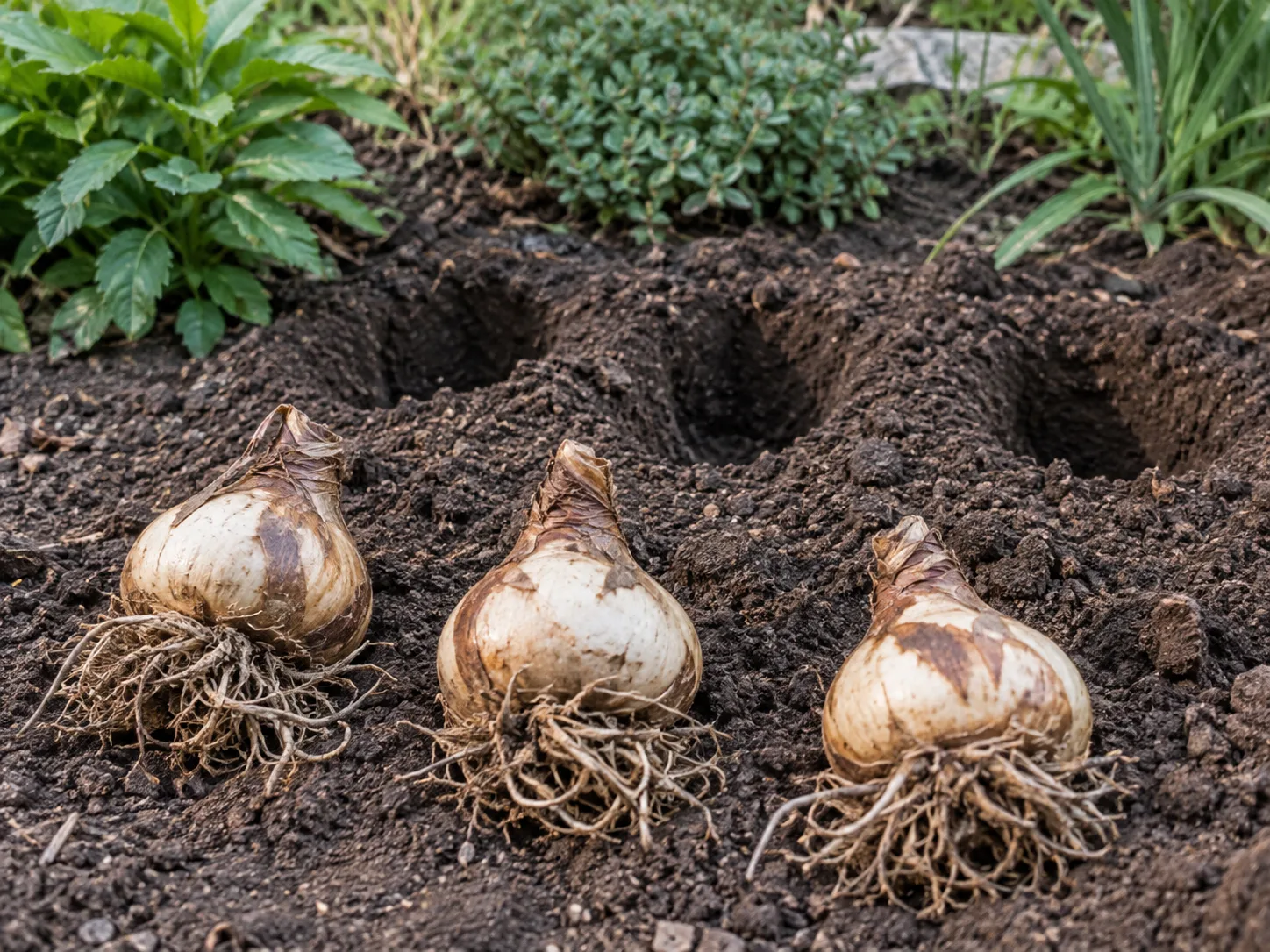
Planting depth is one of the few details where guessing can directly undermine flowering. A bulb placed too deep may produce leaves but delay or suppress bloom, and bulbs need enough space for their roots. Before digging, confirm the species, identify the pointed growing end and neck, and read the seller’s depth instructions; do not use tulip-bulb rules for a Lycoris bulb.
Match Planting Depth to the Species
For L. radiata, Missouri Botanical Garden recommends keeping the top quarter-inch of the bulb neck exposed and planting bulbs about 9 inches apart. Other sources give a spacing range of 6 to 12 inches for red spider lily. NC State Extension cautions that bulb size and planting depth depend on species, so do not turn the radiata measurement into a rule for every spider lily (Missouri Botanical Garden; NC State Extension).
If the bulb arrived without a useful label, identify it before planting or ask the nursery for the species name and mature size. A source that says only “spider lily” may be describing another plant entirely. It is better to pause and verify than to bury an expensive bulb at an arbitrary depth and then wonder why it grows leaves without flowers.
Follow a Simple Planting Sequence
- Choose a well-drained site with light suited to your region and enough room to leave the clump undisturbed. Mark the location discreetly, because the bulbs may have no visible leaves during their summer rest.
- Loosen the soil wider than the bulb’s root zone rather than digging a narrow, water-catching hole. Amend the bed only as needed to improve structure, and avoid fresh manure or a concentrated fertilizer pocket.
- Set the bulb upright according to its species-specific depth, then space it according to the expected mature clump. For L. radiata, leave the neck slightly exposed and allow roughly 6 to 12 inches between bulbs; use the tag’s directions for other species.
- Backfill with the native amended soil and water once to settle it. After that, let rainfall and the plant’s growth phase guide further watering instead of keeping the bed continually wet.
A newly planted bulb may not flower in its first year. NC State Extension notes that a bulb commonly skips bloom after planting, and Better Homes & Gardens says the plants can take a couple of years to establish. Keep the site conditions steady and avoid digging the bulb up to check whether it is growing; repeated disturbance can extend the settling-in period (NC State Extension; Better Homes & Gardens).
Water According to Active Growth and Dormancy
There is no useful weekly watering schedule for a garden bulb whose active period moves with local weather. During leaf growth, water deeply when the root zone is drying and rain has not supplied enough moisture. The soil should be evenly moist while the plant is actively growing, not swampy; once the foliage dies and the bulb enters its dry-season rest, stop routine irrigation.
Do not interpret “summer dry” as a command to keep every bulb bone-dry in all climates. It means that a dormant bulb should not sit in persistently wet soil or under automatic irrigation. NC State Extension says the genus flourishes with regular water but needs dry soil during summer dormancy, while the Missouri Botanical Garden similarly recommends medium moisture during growth and a relatively dry summer rest for L. radiata (NC State Extension; Missouri Botanical Garden).
Use the plant as your cue. Green leaves or emerging buds mean the bulb is active; a bare bed in summer usually means rest. In a dry autumn, check the soil several inches down and water if it is dry; in a rainy autumn, supplemental watering may be unnecessary. This moisture check is especially useful in a mixed border where neighboring flowers have different needs.
Fertilize Only When Soil or Growth Calls for It
Spider lilies do not need a complicated feeding calendar. North Carolina State Extension says Lycoris does not require fertilizer, and an established clump in reasonably fertile soil may bloom without regular feeding. If the soil is poor or growth is weak, first rule out deep planting, waterlogging, low light, or recently disturbed roots; fertilizer cannot correct those physical problems (NC State Extension).
If you do feed, use a modest amount of a balanced bulb fertilizer or compost at the start of active growth, and follow the product label. Avoid high-nitrogen applications as a bloom fix: lush foliage does not guarantee flowers, and excess salts or fertilizer granules against the bulb neck can stress roots. A soil test is more useful than applying separate high-nitrogen and high-phosphorus products by season without evidence that the soil needs them.
A light, dry mulch can help protect the planting in a cold winter, but keep it loose and do not pile wet material over the bulb neck. Remove or thin it as growth resumes so that the bulb is not trapped in a damp, compacted layer. Compost used to improve soil structure belongs across the bed, not as a wet mound directly around the bulb.
Protect Spider Lilies Through Winter
Cold tolerance varies by species and by what the cold damages. A bulb may survive in the ground while its winter foliage is injured enough to reduce next season’s bloom. Missouri Botanical Garden reports that L. radiata can be grown in Zone 6b at its St. Louis garden, but notes that harsh winters can diminish flowering; the RHS recommends protection in colder areas. Treat those sources as regional guidance, not a promise for every cultivar or exposed garden (Missouri Botanical Garden; RHS).
At the colder edge of a species’ range, choose a sheltered site near a wall or under a deciduous tree, where the bulb gets useful seasonal light but is buffered from severe wind. After the soil cools, a loose layer of dry leaves or straw can insulate the bed; keep the material airy and avoid waterlogged mulch. In spring, pull it back enough for leaves to receive light and for the soil surface to dry.
If your winters are colder than the species can handle reliably, choose a hardier Lycoris such as L. squamigera or use a large container that can be protected in a cool, frost-free place. Do not bring a dormant outdoor bulb into a warm living room and expect the same cycle: warmth and low winter light can disrupt its seasonal growth. Match the species to your climate before buying, instead of relying on winter rescue as the plan.
Care for Leaves and Flowers After Bloom
Once a flower stalk fades, cut it near the base if you want to tidy the bed, or leave it until it yellows. Removing the spent scape does not force a second flush of flowers, but it also does not replace the job of the later leaves. Keep the green foliage, which replenishes the bulb’s reserves for future growth.
Do not braid, tie, mow, or cut leaves simply because they look floppy or untidy. Let them yellow and release naturally; only then remove them. If foliage appears in fall or winter, remember that it may be the plant’s main active season, not dead material waiting to be cleaned up in spring. That single habit—allowing a complete green-leaf period—can matter more to the next bloom than extra feeding.
Grow Lycoris in Containers with Realistic Expectations
A pot is an option when garden soil stays wet, when you want to overwinter a tender species under cover, or when you lack a suitable bed. It is not the easiest way to grow Lycoris: the roots can be extensive, and small, shallow pots may restrict them enough to weaken growth or prevent flowering. The Missouri Botanical Garden advises unusually large, deep containers if you choose pot culture (Missouri Botanical Garden).
Choose a heavy container with several unobstructed drainage holes and enough depth for the mature root system. Use a free-draining potting mix, set the bulb at the depth specified for its species, and avoid a saucer that holds standing water. One bulb can be a sensible start; a crowded pot of many bulbs may look full early but leave too little room for roots and offsets later.
Follow the same growth cycle as an in-ground planting. Water as the leaves grow, then reduce or stop routine watering during dormancy; do not keep a dormant pot sitting outside in prolonged rain. In cold regions, protect the whole root ball in a cool, frost-free space when needed. If you cannot provide a genuinely deep pot and a suitable winter location, an in-ground planting of a climate-compatible species is usually the better choice.
Divide Clumps Only When There Is a Good Reason
Established Lycoris often forms offsets and gradually makes a colony. That spread is useful when you want a larger display, but division is not an annual maintenance task; the plants generally flower best when left in place. Lift them only if the clump is crowding its allotted space, you need to relocate it, or you want to share healthy offsets.
Plan division for the bulb’s dormant period after the foliage has died back, commonly in early summer for many garden-grown bulbs. Loosen the soil around the clump rather than pulling on the stalks, separate offsets gently, and replant each firm bulb promptly at the depth appropriate to its species. Keep roots attached where possible, mark the new planting site, and water it in once.
Expect a moved or divided bulb to take time to re-establish. It may produce leaves but no flowers for a cycle, especially if its roots were shortened or the bulb was planted too deep. If your goal is simply to keep a healthy bed flowering, leave offsets alone until there is visible crowding instead of lifting the clump just to inspect it.
Troubleshoot Spider Lilies That Do Not Flower
A bulb that produces leaves but no flower stalk is giving you useful information: it is alive, but something may be limiting its ability to flower. Start with depth, disturbance, and the previous season’s foliage before changing fertilizer. One missed season after shipping, planting, division, or a severe winter does not necessarily mean the bulb is dead.
| What you see | Likely explanation | First action |
|---|---|---|
| Leaves appear, but there are no flowers | Bulb is newly planted, too deep, or still establishing | Confirm species-specific depth after dormancy; then leave it undisturbed for a full cycle |
| A settled clump flowers sparsely | Too much shade, crowded offsets, or foliage removed early | Improve light if practical; preserve leaves until they yellow; divide only if crowded |
| No growth after planting | Planting time, bulb condition, soil temperature, or dormant timing may be involved | Check the bulb gently only if there is evidence of rot; otherwise wait through the expected emergence window |
| Flowers disappear after a harsh winter | Cold damaged active foliage or flower buds | Use a sheltered site or species with better local hardiness |
| Bulb feels soft and soil stays wet | Rot from poor drainage or prolonged irrigation | Stop watering, improve drainage, and remove clearly rotted tissue |
For red spider lily, check the neck first: the Missouri Botanical Garden warns that burying the neck below soil discourages floral bud development. For other species, consult that bulb’s label or an extension profile rather than copying L. radiata measurements. Then ask whether the plant had a full foliage season; leaves cut green cannot contribute the same stored energy as leaves allowed to mature (Missouri Botanical Garden).
Change one clear condition at a time. Digging, transplanting, fertilizing, and changing water all in the same season makes it impossible to tell what limited flowering, and each disturbance can delay recovery. Correct the most likely physical issue, mark the site, and give the bulb an undisturbed growth cycle before deciding that a healthy plant has failed.
Tell Normal Yellowing from Stress and Rot
Yellow leaves are normal when they appear at the end of the species’ foliage season. For L. radiata, leaves commonly fade in late spring; for L. squamigera, leaves may finish before the later flowers appear. The timing and order are more diagnostic than the color alone, so compare what you see with the botanical name and expected seasonal cycle.
Yellowing while foliage should be growing can point to waterlogged soil, root disturbance, or insufficient light. Feel the soil below the surface and check how long it remains wet after rain. If it is soggy for days, improve drainage and stop frequent irrigation; if the soil is dry and the bulb is actively leafing, give it a deep watering and monitor the response.
Soft or collapsing bulbs are a stronger warning than yellow leaves. Remove only bulbs that are clearly rotted, and do not replant sound offsets into the same wet pocket. NC State Extension lists narcissus bulb fly as an occasional pest of Lycoris, but the genus is otherwise generally pest-light; inspect for damage before treating, since unnecessary pesticide use will not fix a drainage or planting-depth problem (NC State Extension).
Design Around the Bare-Stem Flowers and Seasonal Leaves
Use the unusual timing as a design feature. Plant a small group of bulbs where their late-season stems will be visible above neighboring plants, then let lower groundcover or perennials hide the empty patch during dormancy. The vivid red of L. radiata reads especially clearly against green foliage, while pink, white, and yellow forms can soften a mixed border.
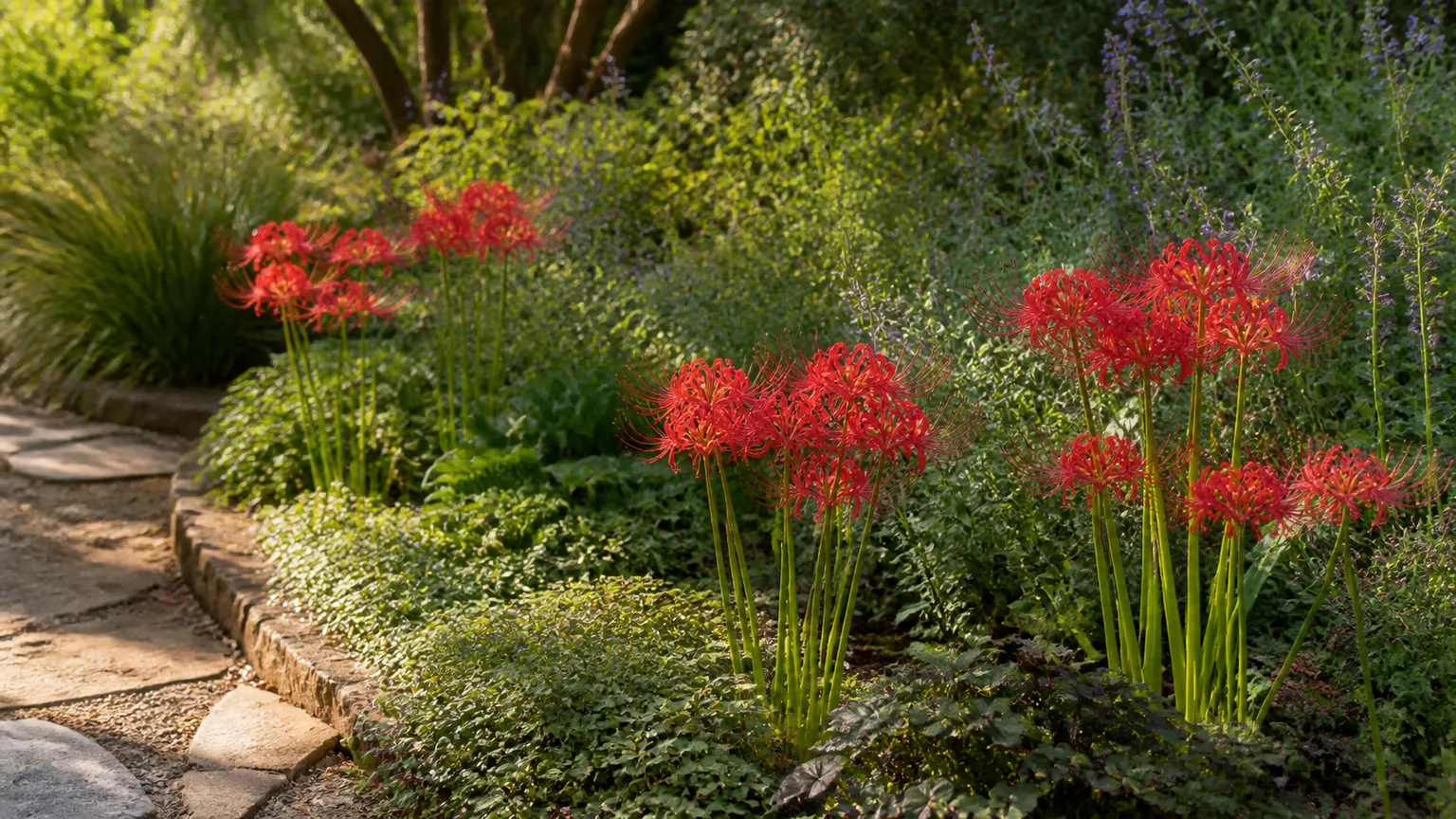
Plan for the leafy phase, too. Winter- or spring-growing leaves can look like a loose tuft after the flowers are gone, so position them among plants that tolerate seasonal overlap rather than in the middle of a tightly mowed lawn. Leave enough open soil around the bulbs for drainage and occasional inspection, and avoid planting them where annual digging or edging will sever their roots.
Gardenia recommends planting L. radiata in groups for a stronger display and notes that it naturalizes through offsets; that is a useful design principle when you have room for the colony to expand. If a compact border matters more, leave a clear margin around the group or grow a suitable species in a large container. Think of the plant as a seasonal bulb planting, not a year-round groundcover (Gardenia).
Handle Bulbs Safely
Treat spider lily bulbs and other plant parts as ornamental, not edible. North Carolina State Extension identifies poisonous characteristics in Lycoris, and RHS guidance says ornamental bulbs should not be eaten and recommends protective handling. Wear gloves when dividing or handling bulbs, wash your hands afterward, and store lifted bulbs away from children and pets until they are planted (NC State Extension; RHS).
Choose a planting spot where a child or pet is unlikely to dig up and chew a bulb. If anyone may have eaten any part of the plant, contact a local poison-control service or veterinarian promptly and identify the plant from its label or a clear photograph. Do not rely on a common name to assess risk, because “spider lily” can refer to different plants.
Conclusion
Spider lilies reward gardeners who match the care to the species. Confirm that the label says Lycoris, choose a spot with good drainage and enough light, follow the bulb’s depth directions, and water only while the plant is actively growing rather than keeping dormant soil wet.
Then leave the clump in place, let its leaves finish naturally, and protect winter foliage where the species sits near its cold limit. If a plant does not bloom, check depth, disturbance, shade, and the previous leaf cycle before reaching for more fertilizer. With those basics in place, a spider lily can return as a dependable late-season flower instead of a bulb you have to keep rescuing.



