Desert Spoon Care: Grow Dasylirion wheeleri Well
Learn how to grow desert spoon with the right light, fast-draining soil, careful watering, safe placement, and climate-aware container and winter care.
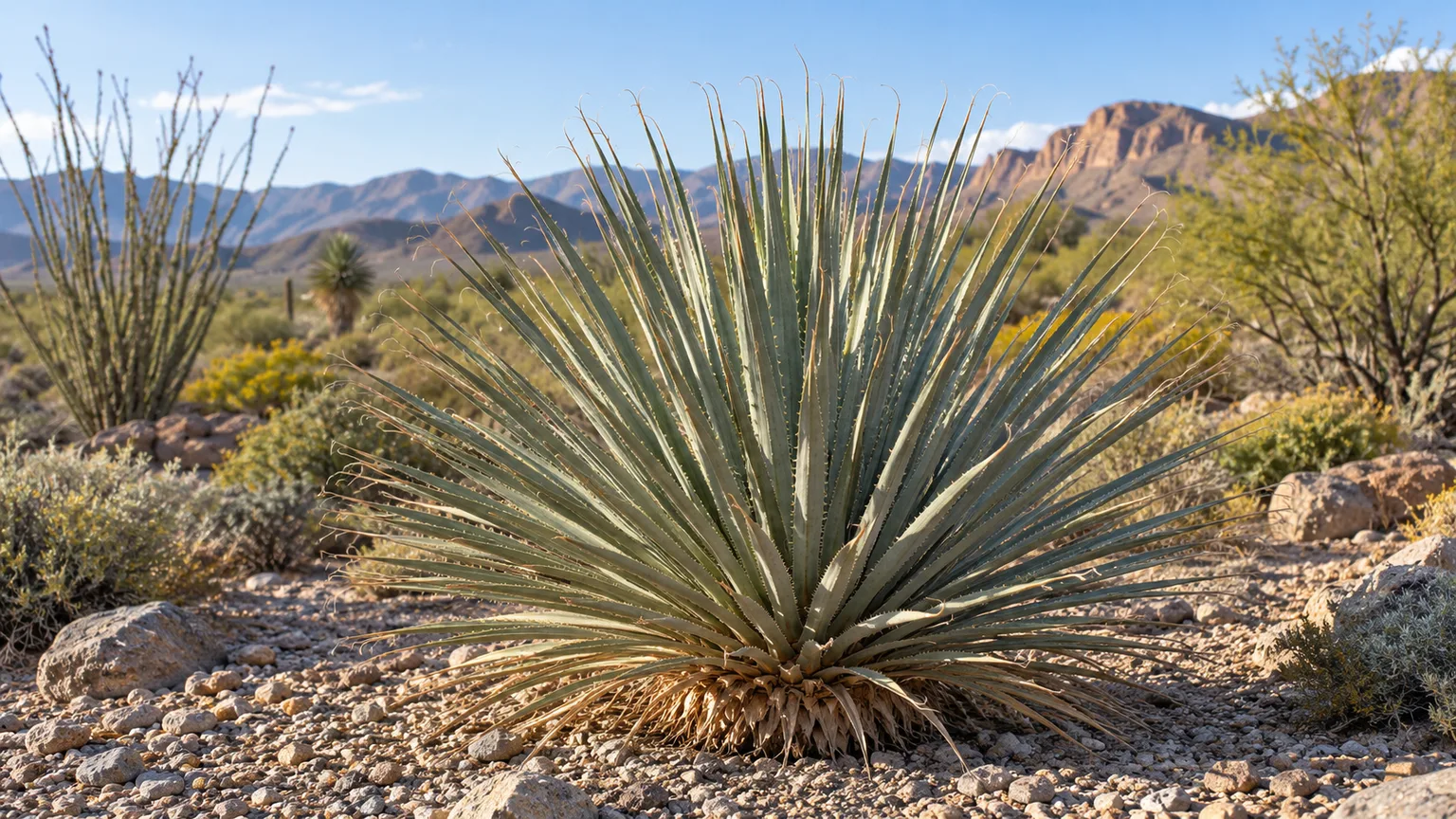
Desert spoon grows best when its site matches its dryland habits: full sun, fast drainage, and room for the rosette. It suits an open Southwestern-style garden, but not a damp bed, narrow path, or dim living room.
The common name usually refers to Dasylirion wheeleri, also called common sotol or spoon flower. Before buying one, check the climate, drainage, and the routes people use around the planting spot; its sharp leaves and dislike of persistently wet roots are the main constraints.
Is Desert Spoon a Good Fit for Your Garden?
Desert spoon suits a sunny, open landscape with low to moderate rainfall and soil that does not remain soggy. In its native Southwestern range, it grows in dry country and rocky uplands; the Arizona Native Plant Society describes it as a full-sun, low-water plant associated with desert elevations above 3,000 feet. That background explains why a hot afternoon is usually easier for an established plant than a cool week with saturated soil. (Arizona Native Plant Society)
Use this quick screen before you plant:
| Your garden condition | Fit for desert spoon |
|---|---|
| Full sun, open air, gravelly or sandy soil, and dry summers | Strong fit |
| Heavy soil that drains slowly but can be raised or graded | Possible after correcting the whole site, not just the planting hole |
| Frequent rain, humid summers, or water collecting at the crown | Poor fit unless you can keep the root zone dry |
| A narrow walkway, play area, gate, or crowded patio | Poor fit because the leaf teeth snag skin and clothing |
| Cold winters with repeated freezes and wet soil | Risky; consider a locally adapted alternative or a movable container |
Hardiness-zone labels are useful for screening, but they do not capture winter rain, humidity, soil drainage, exposure, or the difference between a young nursery plant and an established specimen. Published estimates vary: some horticulture guides place the plant in warm zones, while the RHS classifies it as tender in its UK context and the Arizona Native Plant Society rates freeze tolerance as poor. Treat a low-temperature number as a clue, not a promise that the plant will survive the same temperature in every garden. (RHS; Epic Gardening)
It is not a houseplant: it needs strong light and eventually grows too wide and sharp-edged for most rooms.
Recognize the Plant and Its Growth Pattern
Desert spoon is a slow-growing, evergreen shrub in the asparagus family, Asparagaceae. It is not an agave or a yucca, although all three can make bold, sword-leaved rosettes. The leaves of D. wheeleri are narrow and blue-green to gray-green, curve outward from a short central trunk, and have small hooked teeth along their margins. At the base, old leaves form a loose skirt as they dry; that skirt is part of the plant’s natural silhouette, not a sign that it needs a haircut. The USDA PLANTS Database records the species under the common name common sotol. (USDA PLANTS Database; RHS)
Expect the rosette to take years to reach its mature form. Depending on growing conditions, a landscape specimen may spread roughly 4 to 6 feet, while a mature flower stalk can rise well above the leaves; use the plant’s expected width, not the size of a nursery pot, when spacing it. Garden references differ on final measurements, so give it several feet of open space and avoid a location where even a modest size underestimate would put the leaves over a path. (Arizona Native Plant Society; Southwest Gardener)
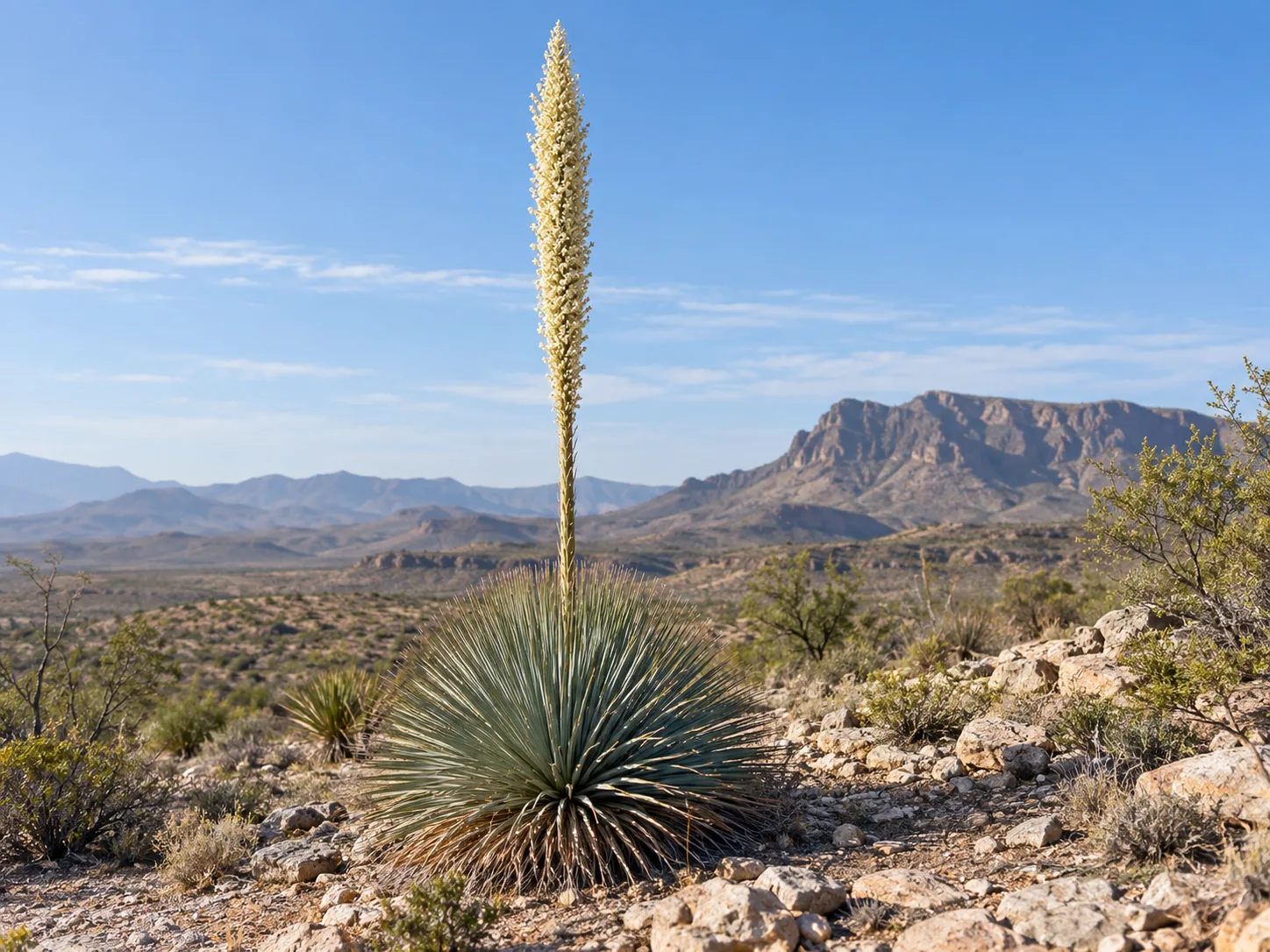
The plant is dioecious: individual plants are male or female, and you cannot reliably identify sex from a young rosette. Mature plants send up a tall, narrow stalk with many small flowers, but flowering is intermittent rather than an annual performance. A plant can remain healthy for years without blooming, and a lack of flowers is not evidence that it needs extra feed or water. (RHS; Gardening Know How)
Choose a Sunny Site With Safe Clearance
Give desert spoon full sun for compact, sturdy growth. A site with six or more hours of direct light is a practical starting point, especially where winters are cloudy; light shade may be tolerated in very hot regions, but dense shade can loosen the rosette and keep foliage or soil damp longer. If the nursery plant was grown under shade cloth, move it into direct sun gradually over one to two weeks instead of placing it straight into reflective afternoon heat. (RHS; Epic Gardening)
The site needs more than sunlight. Stand where the plant will go and picture the mature leaves at shoulder height: they are narrow, tough, and serrated, and can catch a sleeve or skin as someone walks past. Keep the rosette away from paths, gates, doorways, driveways, children’s play spaces, and pet routes. The Arizona Native Plant Society flags the leaf spines, and Southwest Gardener specifically cautions against planting this deceptively sharp plant where people will brush past it. (Arizona Native Plant Society; Southwest Gardener)
Keep it away from roof runoff, stormwater channels, and lawn sprinklers. A gravel bed can frame the rosette, but leave open mineral soil around the crown so it dries after rain.
Make Drainage the First Soil Decision
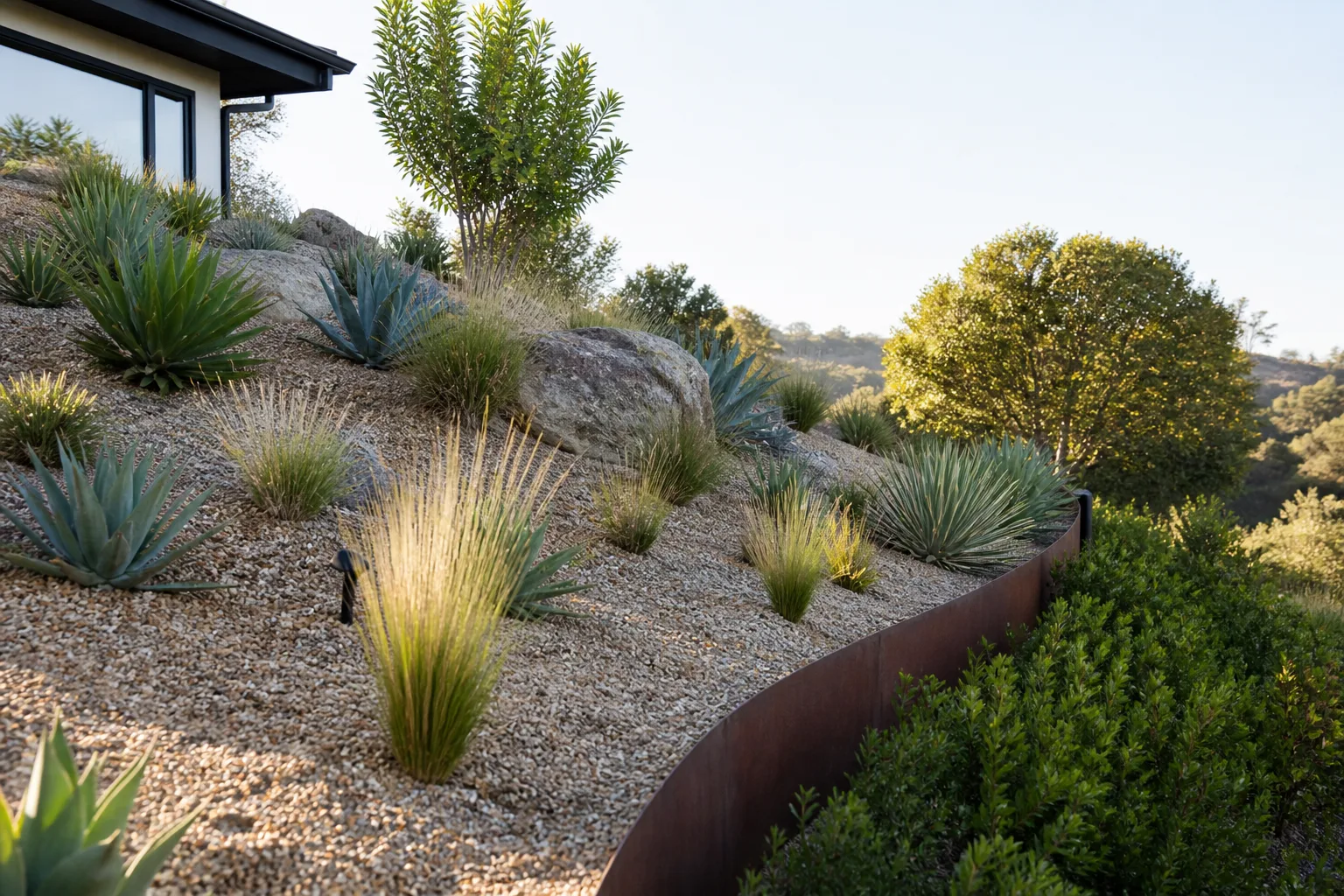
The best soil is not defined by a perfect pH number; it is soil that lets water pass through rather than pooling around the crown. Desert spoon accepts several soil textures when they drain well, but compacted clay, organic-rich planting pockets, and wet winter beds are difficult combinations. The RHS lists well-drained soil and full sun for D. wheeleri, while practical Southwest growing advice emphasizes that a persistently wet root zone is a common route to rot. (RHS; Southwest Gardener)
Check the site after a normal rain before you commit. If water stands near the proposed position or the soil remains sticky and cold long after nearby ground has dried, move to a naturally higher spot, redirect runoff, or build a broad raised mound with free-draining mineral soil. Do not make a narrow hole in clay, fill its bottom with gravel, and expect that to solve the problem; that can leave the root ball sitting in a pocket that drains no better than a basin.
For a planting bed, use native soil where it is already porous. If the entire bed is heavy, improve the broad planting area or use a raised mineral mound rather than trying to fix only the small hole. Avoid a thick layer of compost or manure around the base because it holds moisture and adds more fertility than this slow-growing plant needs. A light gravel surface can keep the crown visually clear, but do not pile stones against the trunk or bury the basal leaves.
Planting Desert Spoon Without Burying the Crown
Plant in a mild period when roots can settle before extreme heat or repeated freezing weather. In hot desert areas, that often means spring or fall; in colder climates, wait until the soil is workable and a hard freeze is not imminent. Buy nursery-grown stock from a seller that identifies the species, and choose a plant whose mature spread fits the intended location rather than trying to keep an oversized specimen in bounds later.
Because the leaves are sharp, wear thick gloves, long sleeves, and eye protection; keep children and pets away while you work. Dig a hole only as deep as the root ball and wider than it. Set the plant so the crown—the point where leaves meet the base—sits at or slightly above surrounding grade, backfill with the site’s draining soil, and firm it gently without compacting the root zone. (Epic Gardening)
After planting, give the root ball a slow soak to settle soil around the roots, then allow the area to drain fully. Do not mound soil or mulch against the crown, and do not create a permanent watering basin that holds water at the base. If the plant wobbles, stabilize the root ball without pulling the rosette upright by its leaves; remove temporary support once roots hold it in place.
Choose its permanent position carefully: slow growth, sharp leaves, and root disturbance make repeated moves difficult. If it must be sheltered each winter, grow it in a container from the start rather than digging it up later.
Water for Establishment, Then Follow the Soil
Newly planted desert spoon needs more attention than an established plant, but it still should not stay continuously damp. During its first growing season, check moisture near the edge of the root ball: when the soil has dried several inches down, water slowly enough to wet the root zone; when it is still cool or damp, wait. Heat, wind, soil texture, rainfall, and the size of the nursery plant all change the interval, which is why a fixed weekly rule can fail in either direction.
Once roots have spread, rely mostly on rainfall in climates with a dry growing season. During an unusually long hot drought, soak deeply only after the root zone dries, then let it dry again. Water at soil level, not into the dense crown, where trapped moisture and poor airflow can encourage rot. The RHS and Arizona Native Plant Society classify this as a low-water, well-drained-site plant; Epic Gardening’s weekly-water figure shows why any schedule must be adjusted to local soil and weather. (Arizona Native Plant Society; RHS; Epic Gardening)
In winter, a planted specimen in a dry climate usually needs little or no supplemental water. For a covered container, check below the surface and water only when the mix is dry.
Match Winter Care to Your Climate
Cold tolerance is the part of desert spoon care where published guidance is least uniform. Several cultivation guides place it in warm USDA zones, but the Arizona Native Plant Society describes its freeze tolerance as poor, and the RHS labels it tender under British conditions. These descriptions come from different climates, growing setups, and evaluation systems; they do not justify a single guaranteed survival temperature for every garden. (Arizona Native Plant Society; RHS; Gardening Know How)
For outdoor planting, consider how often your site sees hard freezes, how wet the soil is during cold weather, and whether the crown is exposed to cold wind. A brief cold spell in a dry, protected, fast-draining bed is different from recurring freezes in heavy rain-soaked soil. If your winters routinely freeze the root zone, choose a more cold-adapted plant or treat desert spoon as a container specimen that can be moved to a bright, cool, protected location before severe weather.
Keep the plant outdoors in full sun during the growing season; winter shelter is temporary protection, not a way to turn it into an indoor foliage plant. Reduce watering in the cool season and return it outside gradually when conditions stabilize.
Grow Desert Spoon in a Container
A pot makes sense if you need to shelter the plant in winter, want to control drainage, or have only a sunny courtyard. Choose a heavy, stable container with several large drainage holes and enough room for the current root ball; a small lightweight pot can tip as the rosette grows. Do not jump to an enormous decorative planter, because a large volume of unused mix stays wet longer than the roots can draw it down.
Use a coarse cactus or succulent mix, or make a mineral-heavy blend that drains freely while still holding the root ball upright. Place the pot on feet so water can escape, and empty any saucer after watering. Keep the container outside in direct sun during the growing season, then move it to a bright, cool, protected spot if your winter climate is risky. A sunny window may not provide enough light for a mature plant, and the serrated leaves can make narrow indoor spaces awkward.
Water a potted plant only when the mix is dry well below the surface, then water thoroughly until excess flows from the drainage holes. In cool weather, the interval stretches because growth slows and evaporation drops. Repot only when roots have filled the container or drainage has deteriorated, and handle the plant as a hazardous, spiny specimen; avoid frequent repotting that breaks the root ball. Container culture can manage exposure, but it cannot make a humid, rainy climate behave like a desert.
Fertilizer and Mulch: Keep Both Minimal
Established in-ground plants rarely need fertilizer. Desert spoon’s slow pace is part of its shape, and pushing lush growth with rich soil or high-nitrogen feed does not make it a better landscape plant. If growth slows, first review sun, root-zone moisture, drainage, transplant disturbance, and winter injury; fertilizer cannot repair any of those problems.
A potted plant in old mix may benefit from a light, diluted spring feed, but it is optional. The RHS recommends monthly fertilizer for plants grown under glass; that protected regimen is not a reason to feed every landscape specimen. Never fertilize to force a flower stalk, which depends on maturity and seasonal conditions. (RHS)
Mulch is also a site tool, not a default. A thin gravel dressing may match a xeriscape and limit soil splash, but keep it away from the crown. Avoid thick bark mulch or compost packed around the leaves, particularly in rainy regions where it can hold moisture against the stem.
Prune Carefully and Keep the Rosette Natural
Desert spoon needs little pruning. Lower leaves gradually dry and form a skirt around the trunk; remove only leaves that are fully dead, loose, or clearly damaged if you want a tidier outline. Do not shear healthy leaf tips, shave the plant into a ball, or pull green leaves from the center. Heavy pruning can leave an unnatural shape and puts your hands close to sharp teeth. (RHS; Southwest Gardener)
For routine cleanup, use eye protection, thick gloves, and long sleeves, and work from outside the rosette rather than reaching across the leaves. Make clean cuts near the base of a dead leaf without cutting into the trunk. If a leaf is tightly embedded or the plant is large enough that you cannot see the cut, leave it alone or hire a professional familiar with spiny desert plants.
After bloom, the tall stalk can be left in place for its architectural effect or removed once it has dried. Do not climb the plant or attempt to cut a stalk that could swing into a person, window, roofline, or overhead wire; use a qualified landscape professional when safe reach is not possible. Pruning a spent stalk does not trigger another bloom, and there is no need to cut the plant back to the ground.
Understand the Flower Stalk and Bloom Cycle
A mature desert spoon may send up a dramatic stalk that rises several times higher than the rosette. Small flowers cluster along the stalk, typically in late spring or summer, and colors can vary with the plant’s sex and source. The RHS describes the genus as dioecious, while regional horticultural references note cream to greenish flowers and occasional pink or purple tones; garden appearance can vary, so color alone is not a reliable way to identify a plant. (RHS; Gardening Know How)
The flower stalk is an event, not a routine you can schedule. Desert spoon needs to mature before flowering, and it may bloom only occasionally rather than each year. Do not try to accelerate it with extra fertilizer, heavy watering, or stress; those actions can damage the roots without making flowering more predictable. Like other Dasylirion species, D. wheeleri survives flowering rather than dying as the rosette afterward. (Epic Gardening; Southwest Gardener)
If seed is your goal, leave the dried stalk until fruits develop and mature, and check that you have a female plant with a pollination partner nearby. If you do not want seedlings or a tall dry stalk, remove it after flowering when it is safe to reach. Bees and other pollinators visit the flowers, so keeping a bloom for part of the season can add wildlife value before cleanup. (Southwest Gardener)
Propagate From Seed With Realistic Expectations
Seed is the clearest home propagation route, but it takes patience. Young plants grow slowly, and germination can be uneven; the RHS recommends sowing at about 21°C (70°F) in spring, while Gardening Know How describes germination as erratic. Start with fresh seed from a reputable cultivated source, use a clean pot with drainage and a gritty seed mix, and keep it warm and lightly moist rather than saturated. (RHS; Gardening Know How)
Cover seed lightly according to the supplier’s directions and keep the container in bright, indirect light until seedlings appear. Ventilate a cover so condensation does not keep the mix wet, then introduce seedlings to stronger light gradually. A tiny seedling is not yet as drought tolerant as a mature plant: check its pot more often than you would the landscape specimen, but let excess water drain freely after each irrigation.
Do not treat root cuttings or leaf cuttings as a simple shortcut. Guidance for vegetative propagation is inconsistent, and removing a chunk from an established sotol can damage a plant that took years to grow. Unlike many agaves, desert spoon is not commonly propagated by a reliable stream of basal pups; if a nursery offers a division, ask how it was produced and whether it is rooted before buying it.
Diagnose Yellowing, Rot, and Slow Growth
The most useful diagnostic is the soil, not the color of one old leaf. A few dry lower leaves can be normal as the rosette grows. Widespread yellowing paired with soil that stays wet, a soft crown, or a sour smell points to excessive moisture or poor drainage; pause irrigation, check that container holes are open, and make sure runoff is not pooling around the base. A severely rotted crown may not recover, so prevention is more reliable than trying to cut the plant apart. (Epic Gardening)
If leaves bleach or develop crisp pale patches after a plant was moved into intense sun, suspect sun scorch and acclimate it more gradually. If the plant looks loose after planting, check whether the root ball has shifted rather than repeatedly watering to “settle” it. Cold damage can discolor exposed leaves after a freeze; wait until new growth resumes before removing tissue that is not clearly dead.
Scale insects are listed as an occasional pest by the RHS, but serious problems are uncommon when the plant has sun and airflow. Inspect the undersides and bases of leaves before treating anything. A plant that grows slowly in otherwise suitable conditions may simply be behaving normally; check that it is firm, receives strong light, and drains well before adding fertilizer or escalating care. (RHS)
Desert Spoon Compared With Yucca and Agave
The resemblance to yucca and agave can confuse plant labels, but the distinction matters for expectations. Desert spoon belongs to Dasylirion; yuccas belong to Yucca and agaves to Agave. All are in or near the broader Asparagaceae family, but they differ in leaf form, mature size, flowering, and how they reproduce. The Arizona Native Plant Society describes desert spoon’s hooked teeth and spoon-like rosette, while the RHS separates Dasylirion as a dioecious evergreen genus. (Arizona Native Plant Society; RHS)
One useful distinction: many agaves are monocarpic, meaning the flowering rosette dies after bloom, while desert spoon survives and can flower again later. A plant sold as “sotol” may also belong to another species in the genus, such as D. texanum or D. leiophyllum. Check the botanical label if you need a particular size or cold tolerance rather than assuming every plant called sotol has identical care needs. (Epic Gardening; Gardening Know How)
A Seasonal Care Rhythm for Sotol
| Season | What to do |
|---|---|
| Spring | Check drainage, remove only dead leaves, and plant or repot when weather is mild. Start seed in warmth if propagating. |
| Summer | Keep young plants from drying out completely while roots establish; water mature plants only after the root zone dries during a long drought. |
| Fall | Reduce supplemental irrigation as nights cool. Confirm containers drain and move vulnerable pots before severe cold. |
| Winter | Keep the crown and root zone as dry as practical. Avoid routine watering during cool weather and protect container plants in a bright, sheltered place when needed. |
Use the table as a reminder to observe the plant, not as a set of dates. Rain, soil, pot size, and local temperature should determine the next action. If you remember only one routine, check for standing water after rain, keep the sharp leaves out of traffic, and water only when the root zone has actually dried.
Conclusion
Desert spoon is a durable landscape plant when its site matches its dryland habits: full sun, fast drainage, and enough clear space for a broad rosette of sharp leaves. Water a new planting according to root-zone moisture while it establishes, then rely mainly on rainfall in a suitable climate and use occasional deep irrigation only when an extended dry spell leaves the soil dry. Keep winter care cautious because freeze tolerance varies with exposure and wetness, and use a container only when you can provide outdoor sun and seasonal shelter.
Leave healthy leaves in place, skip routine fertilizer, and treat the tall flower stalk as an occasional bonus rather than a deadline. If your yard stays wet, freezes repeatedly, or cannot keep people away from the spines, choose a better-matched plant. When those constraints fit, desert spoon rewards patience with a sculptural rosette that asks for little ongoing care.



