How to Grow Tomatoes Indoors: Light, Water & Care
Learn how to grow tomatoes indoors with a compact variety, strong light, a roomy pot, steady watering and simple hand pollination for reliable fruit.
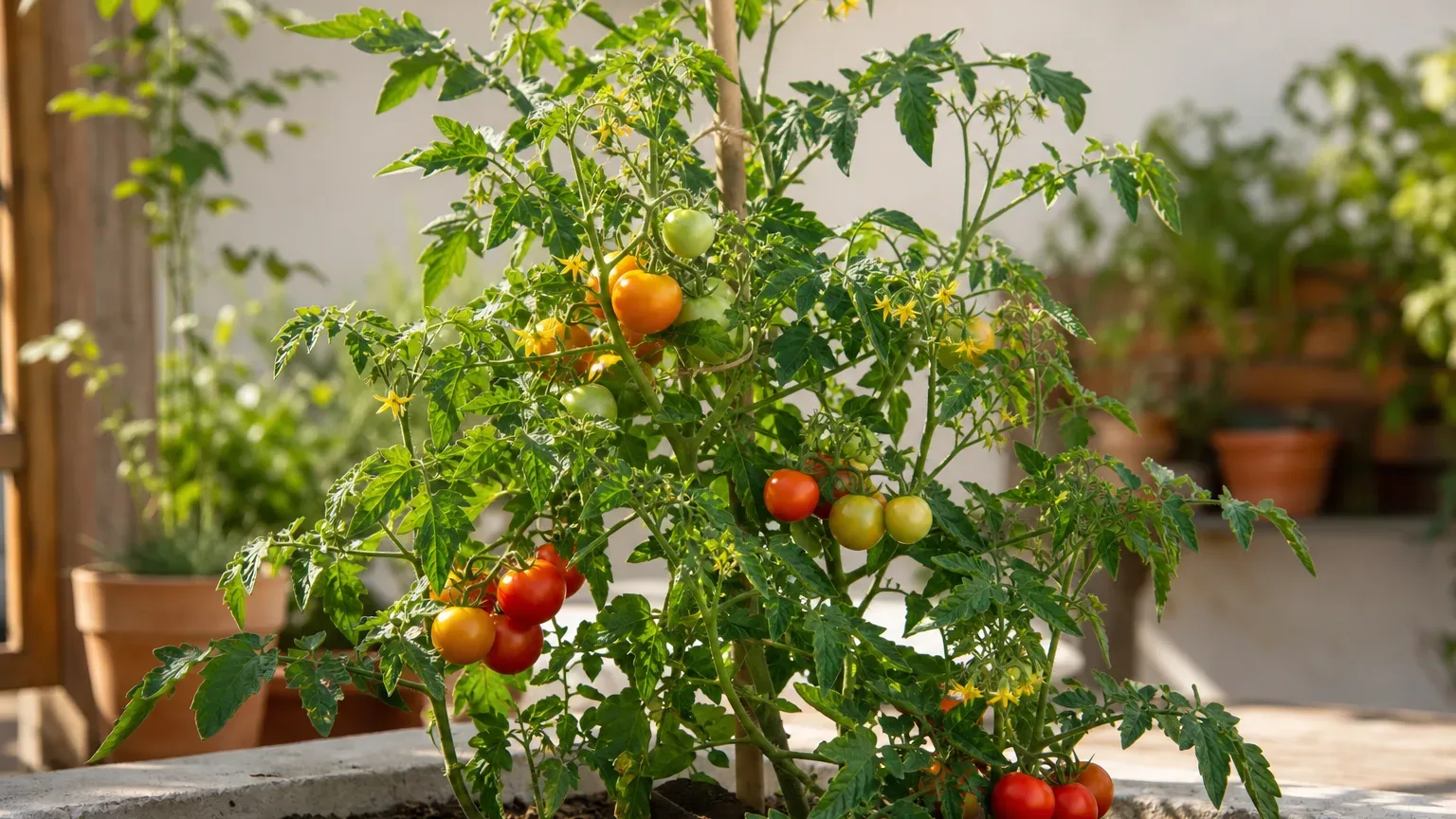
Yes, a tomato plant can flower and fruit inside a home, but a bright-looking room is not automatically a bright enough growing space. The reliable indoor setup is one compact plant, a fruiting-strength light source, a deep pot with drainage, steady root-zone moisture, and a little help moving pollen when flowers open. If any one of those pieces is missing, a tomato may stay alive and leafy without giving you much to harvest.
Indoor growing suits people who have room for a light or a genuinely sunny window, can keep a pot from drying out, and are happy with a small, gradual crop. It is less suitable if you want a large harvest from a tiny windowsill or do not want to manage a light and plant support. Decide on the space and light first; then select the variety that fits them.
Can You Get a Real Harvest Indoors?
Tomatoes are self-pollinating, and the fruit forms from flowers, so pollinating insects are not a requirement. Outdoors, moving air and vibration usually shake pollen loose. Indoors, you need to recreate that movement and provide enough light and warmth for the plant to keep producing viable flowers. The University of Alaska Fairbanks Cooperative Extension explains that temperature, light, humidity, nutrition, and pollen transfer can all affect fruit set. (UAF Cooperative Extension)
The honest expectation is a compact houseplant-sized crop rather than an outdoor tomato bed in miniature. A dwarf cherry plant can give you fruit in small batches over time, while a larger standard tomato takes more vertical space, a bigger container, and stronger support. A light that keeps foliage green may still fail to supply what is needed for repeated flowering and fruit development.
Plan the equipment around the plant’s mature size, not its appearance in a seed tray. Give yourself room to reach all sides of the pot, turn it, prune or tie it, and catch drainage water. If you have space for only one small plant, choose a true dwarf cultivar and keep the root zone and light generous relative to its size.
Choose a Tomato That Fits the Room
Compact cherry tomatoes are usually the easiest entry point because their vines and fruit take up less room than a large slicing type. ‘Tiny Tim’ and ‘Micro Tom’ are examples of small cultivars often selected for indoor containers; ‘Red Robin’ is another compact choice. A variety name is only a starting point: seed catalogs can use “patio” loosely, and plants sold under the same broad label may differ in final height and habit. Epic Gardening’s indoor tomato guide also points readers toward dwarf tomatoes such as ‘Tiny Tim’. (Epic Gardening)
A dwarf plant has shorter growth, but it is not always a determinate plant. Determinate tomatoes grow to a more limited size and tend to set much of their crop over a shorter window; indeterminate tomatoes continue extending and flowering while conditions allow. Some dwarf tomatoes are indeterminate, so a compact plant may still need a stake and occasional shaping. Colorado State University Extension describes these growth habits and their different harvest patterns. (Colorado State University Extension)
Read the Variety Label, Not Just the Name
Look for three details on the packet or nursery tag: mature height, determinate versus indeterminate habit, and whether the variety is recommended for containers. “Dwarf” or “micro” is a strong clue for tight spaces, while “bush” or “determinate” often means less vine to train. A plant labeled “patio” but expected to reach several feet may still need a large pot and a cage, so do not buy by the marketing word alone.
For a first indoor crop, a dwarf cherry cultivar is usually the best compromise: it stays manageable, and small fruit tends to mature before a large beefsteak tomato. If flavor or fruit size matters more than a compact footprint, choose a larger variety only if you can support it with a bigger pot and a grow light that covers the whole canopy. You can grow a standard tomato indoors, but the room, light, and watering demands rise with the plant.
Build the Light Setup Before You Plant
Light is the main bottleneck in winter and in rooms with shaded windows. Tomato plants need strong direct light to stay compact and flower well; a plant can appear healthy under ordinary room lighting while still stretching toward the window and setting few fruits. Epic Gardening notes that a bright window may work when it provides several hours of direct sun, while a grow light can supplement or replace inadequate window exposure. (Epic Gardening)
A south-facing window in the Northern Hemisphere or north-facing window in the Southern Hemisphere is often the best starting point, but direction alone does not prove that the spot is bright enough. Trees, buildings, screens, a deep roof overhang, winter sun angle, and the distance from glass all change the light that actually reaches the leaves. Watch the plant: long gaps between leaves, thin stems leaning toward glass, and little flower production are practical signs that the setup is too dim.
Window, Grow Light, or Both?
Use a window alone only if direct sun reaches the plant for much of the day and the tomato remains stocky as it grows. Rotate the pot a quarter turn every few days so growth does not lean in one direction, but do not expect rotation to replace missing light. In winter, a window may be brightest at midday yet still provide too few hours or too little intensity for fruiting.
A dedicated LED grow light is usually the more dependable choice for a winter crop. Pick a fixture intended for fruiting vegetables rather than a decorative plant bulb, and follow its recommended distance and daily run time; the right distance changes with fixture strength and coverage. Position it so the top leaves and side branches receive even light, then raise it as the plant grows. If new growth bleaches, curls, or feels hot, move the fixture farther away; if the plant stretches, bring it closer within the manufacturer’s safe range or use a stronger light.
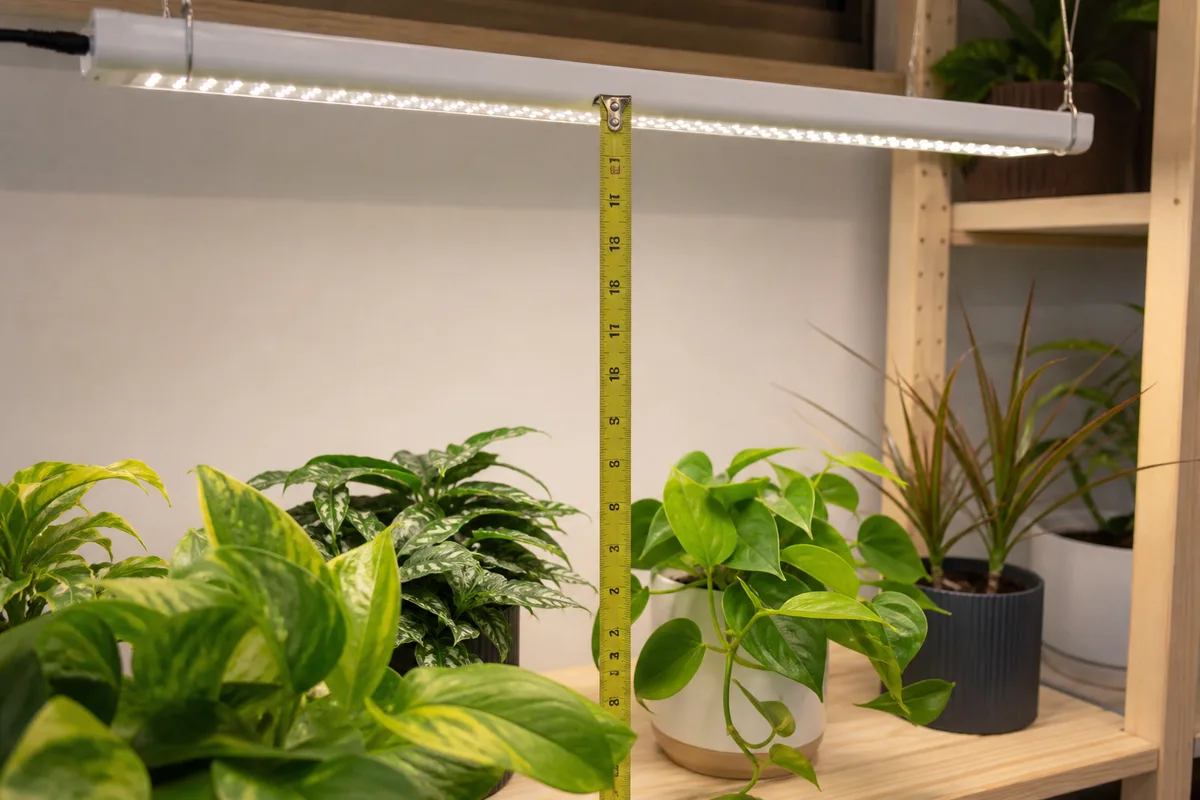
A simple timer turns lighting into a stable daily routine and prevents the lamp from staying on all night. Leave a dark period, keep light exposure consistent from day to day, and check the canopy rather than judging by how bright the lamp looks to you. The goal is short, sturdy growth with regular flowers, not a plant reaching toward a bright spot across the room.
Choose the Final Pot and Growing Mix Once
A tomato’s root system needs more depth and volume than a decorative windowsill pot usually provides. For a dwarf tomato, a five-gallon container is a practical starting point; standard tomatoes need more room, with ten gallons a reasonable minimum for a full-size plant. These are useful planning sizes, not rigid thresholds: follow the cultivar’s mature size and any growing instructions from its breeder. Epic Gardening’s container and indoor guides use the same five-gallon baseline for dwarf tomatoes and a larger pot for standard varieties. (Epic Gardening)
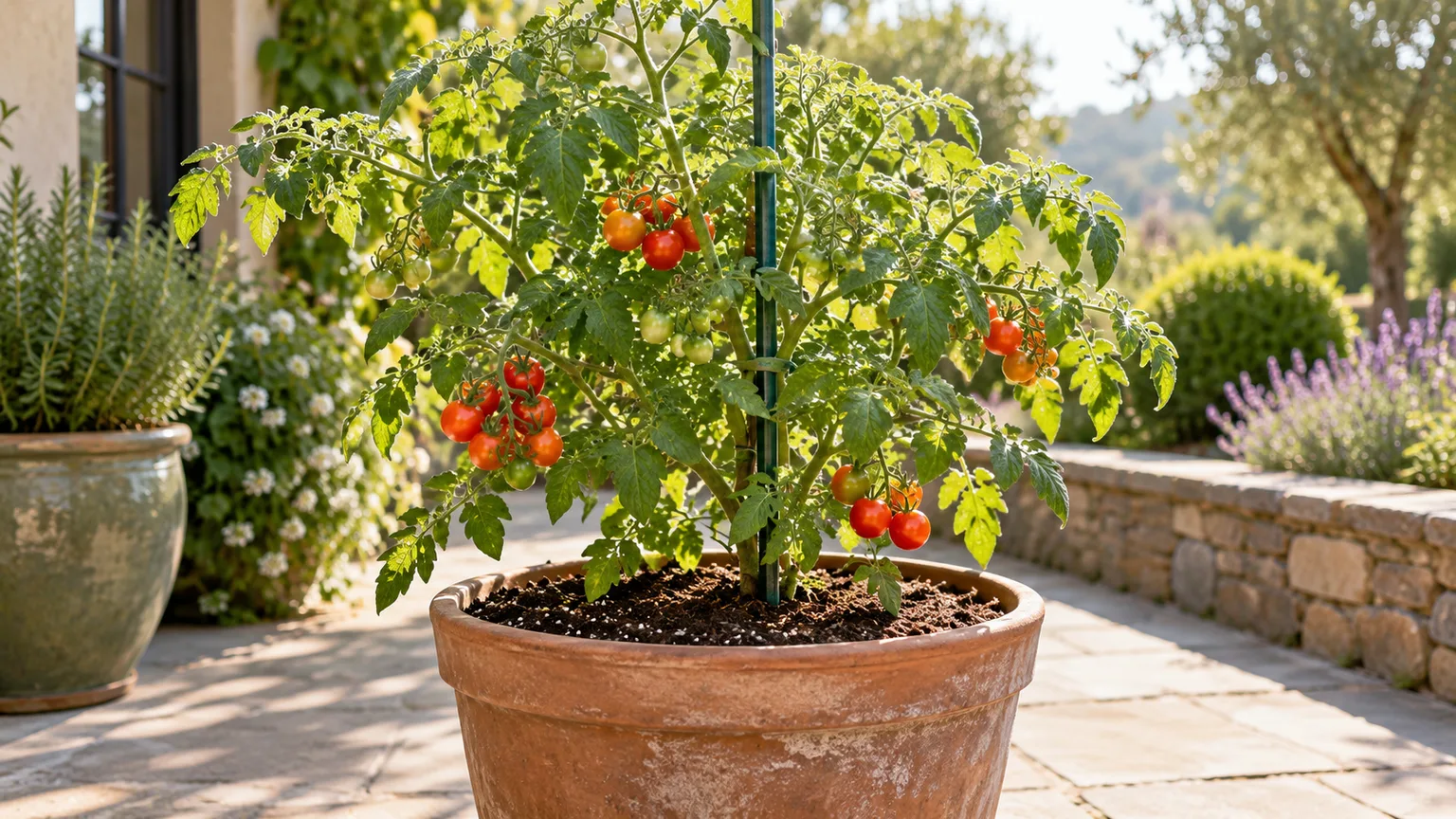
The container must have several open drainage holes. Set it on a waterproof saucer or tray, but empty standing runoff after watering so the lower roots are not left in water. A lightweight plastic pot is easier to move; an unglazed clay pot dries faster and may need more frequent checks. Pick a stable pot that will not tip when the plant is tied to a stake.
Use a quality potting mix made for containers, not garden soil dug from outdoors. Container mix drains and holds air differently from dense garden soil; garden soil can pack down in a pot and make watering unpredictable. Oklahoma State University Extension describes tomatoes as favoring fertile, well-drained, slightly acidic growing conditions, around pH 6.5. In a pot, a fresh commercial mix is usually a better way to provide that structure than trying to amend heavy soil yourself. (Oklahoma State University Extension)
Start from Seed or Transplant a Compact Plant
Starting from seed gives you a wider choice of dwarf varieties, but it adds a few weeks of care before the plant reaches its final container. Sow into a clean seed-starting mix and keep it evenly moist until seedlings emerge. Once the first true leaves appear, give seedlings strong light immediately; leaving them in a dim room for a few days is a common way to get long, weak stems before they ever reach the big pot.
If you buy a transplant, choose a compact, sturdy plant with healthy green leaves and no visible pests on the undersides. A plant with flowers already open can be transplanted, but it may pause while it adjusts; remove damaged foliage and keep its moisture even rather than adding extra fertilizer to force growth. Inspect nursery plants carefully and keep them apart from houseplants for several days in case aphids or whiteflies arrive on the leaves.
Move the seedling to a small pot if its roots fill the starter cell, then transplant it into the final container before it becomes root-bound. When you set a leggy tomato into its final pot, burying a little more stem can encourage roots along the buried portion; remove leaves that would sit below the mix. Support the stem while it is still young so you do not have to force a rigid stake through a dense root ball later.
Keep the Indoor Climate Steady Through Flowering
Tomatoes grow best when temperatures and light are steady. A plant next to a cold window, a heat register, or an air-conditioning vent can experience sharp swings even when the room thermostat looks comfortable. Keep the leaves from touching cold glass, and leave enough space around the plant for gentle air movement without a strong, drying draft.
A Simple Temperature Check
A normal, comfortable room is often suitable for vegetative growth, but fruit set is more sensitive than leaf growth. UAF Cooperative Extension advises keeping greenhouse conditions during pollination from falling below about 60°F at night or exceeding about 85°F in the day; it notes that low light and humidity extremes can also reduce pollen transfer. Treat those as useful warning points for a home setup, not as a promise that fruit will set whenever the thermometer stays between them. (UAF Cooperative Extension)
Use a small thermometer near flower height if the room is especially cold at night or warm under a lamp. If blossoms drop during a hot spell, turn off or raise a light that adds heat, move the plant away from sunny glass in the hottest hours, and improve gentle room circulation. If nights fall too cool, move the pot away from the window after sunset rather than placing it directly beside a heater.
Water Deeply, Then Let Drainage Do Its Job
Water when the top inch of mix begins to feel dry, then pour slowly until water runs from the bottom holes. This wets the full root ball, while the drainage holes carry away excess. Check the pot again later rather than watering on a fixed weekday: a small plant in a cool room uses less water than a fruiting plant under a warm grow light.
The aim is even moisture, not permanently wet mix. A pot that stays saturated has too little air around roots and invites root decline and fungus gnats; a root ball that dries hard and then gets soaked can stress flowers and fruit. In a small space, put the pot on a tray, empty the tray, and avoid splashing leaves when watering.
Pay special attention once fruit begins to swell. A large dry-to-wet swing can contribute to fruit cracking and blossom-end rot, so increase checks during warm, bright periods instead of responding to wilt by flooding the container. UAF Cooperative Extension identifies even soil moisture as the best prevention for blossom-end rot and warns that sudden changes in moisture can contribute to cracking. (UAF Cooperative Extension)
Feed for Flowers and Fruit Without Overdoing It
A fresh potting mix may contain starter fertilizer, so read its label before adding another product at planting. After that initial charge is used, feed according to the fertilizer label for container-grown edible crops. A diluted liquid tomato fertilizer is easier to dose in a pot than a handful of garden fertilizer, and a slow-release product can work if its label matches your mix and watering routine.
More fertilizer is not a shortcut to more tomatoes. Too much nitrogen often drives leafy growth at the expense of flowers, while repeated heavy feeding can leave salts in a container that has little soil volume to buffer them. If leaves are dark green and the plant keeps producing shoots but few flowers, check light first and review the fertilizer rate before adding anything else. Colorado State University Extension also cautions that high nitrogen can produce excessive vine growth rather than fruit. (Colorado State University Extension)
Avoid treating a fruit problem with a random supplement. Blossom-end rot can occur even when calcium is present if moisture swings or damaged roots interrupt calcium movement into developing fruit. Correct the watering pattern and drainage first; only change your fertilizer or growing mix after checking its label and the likely cause.
Pollinate Open Flowers by Vibrating the Truss
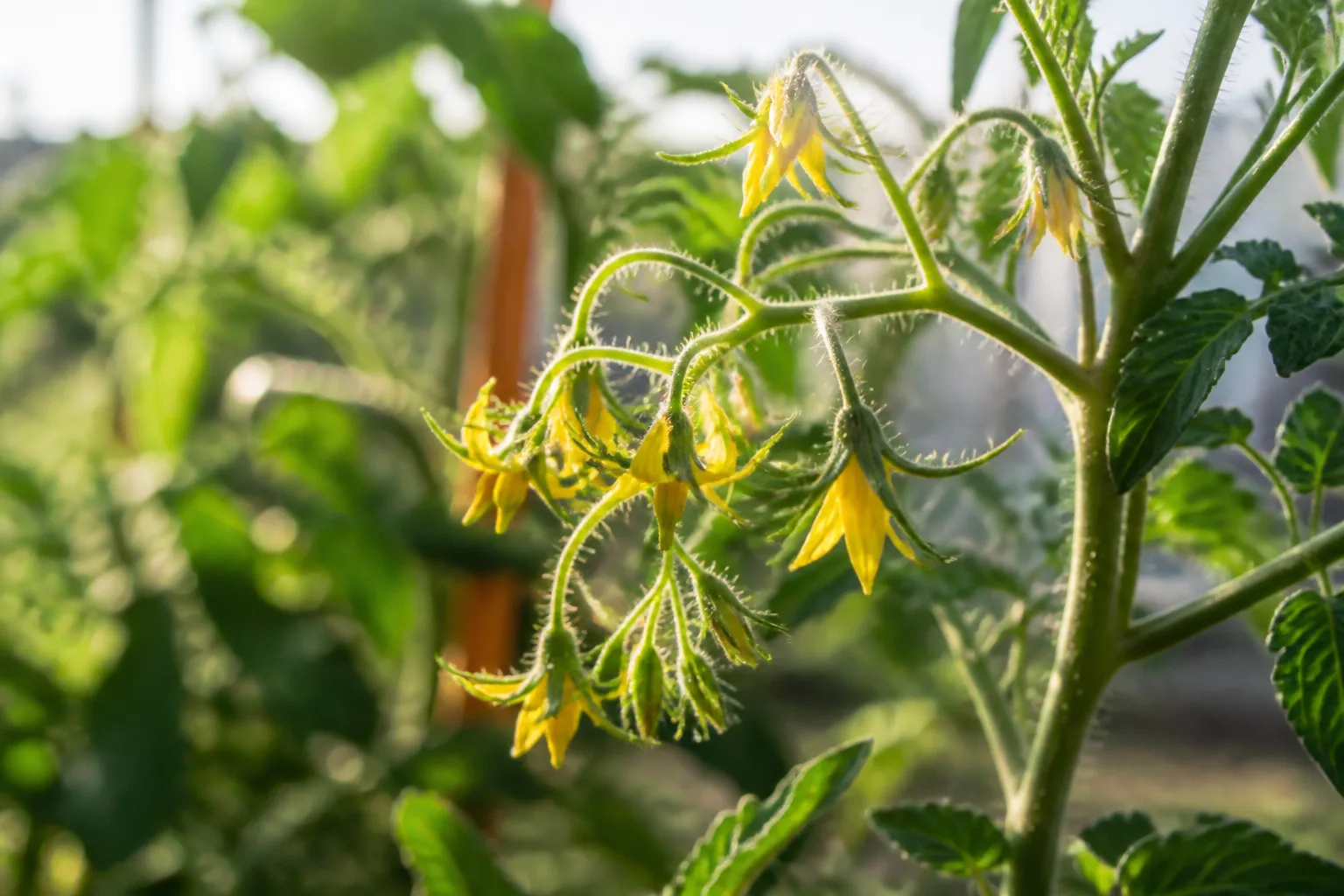
Each tomato flower contains the parts needed for self-pollination, but pollen still has to move inside the flower. Outdoors, wind and insects shake the flower cluster. In a still room, flowers may open and then drop without forming fruit unless you provide that vibration. UAF Cooperative Extension describes mechanical vibration as a practical way to help pollen move in greenhouse tomatoes. (UAF Cooperative Extension)
When several flowers on a cluster are open, hold the stem just behind that cluster and give it a gentle tap, or briefly touch the cluster stem with the bristles of an electric toothbrush switched on. Do not press on the petals or shake the entire plant hard. Repeat every other day while fresh flowers open; the small movement should release pollen without bruising the blossom.
A fan can help circulate air and may shake the plant, but a distant oscillating fan is less precise than vibrating the flower truss directly. A fan also dries the pot faster, so check moisture if you add one. If flowers remain open but fruit does not start swelling after you have vibrated them, check light and temperature next rather than increasing fertilizer.
Train and Prune Only to Control the Plant
Put a small cage or stake into the final pot before the roots spread, or tie the main stem loosely to a support as it grows. Use soft ties and leave room for the stem to thicken. Indoors, a support keeps branches and fruit away from the lamp, glass, and floor, and it makes ripe fruit easier to reach.
Pruning is optional for most compact tomatoes. Do not strip leaves to make the plant look tidy: leaves power fruit growth and shade developing tomatoes from heat. For a vigorous indeterminate dwarf, pinch a sucker only if a branch is crowding the light or growing beyond the support. Determinate plants usually need little pruning beyond removing yellow or damaged leaves. Colorado State University Extension notes that determinate tomatoes are more compact and tend to produce a more concentrated crop, while indeterminate types keep growing and fruiting. (Colorado State University Extension)
Remove fallen leaves and ripe or split fruit promptly, and wipe pruning shears between plants if you have more than one. A compact plant with open airflow is easier to inspect for pests, but pruning more heavily does not fix a weak light or a root problem. If branches are constantly in the way, the variety may be too large for the space.
Troubleshoot Leaves, Flowers, and Fruit
Start with the part of the plant that changed and when it happened. Leggy stems and pale new growth point first to inadequate light; a sudden wilt while the mix is wet suggests a root or drainage problem rather than a need for more water. A few lower leaves aging on a large plant are less concerning than yellowing that spreads quickly through new growth.
Check leaf undersides for aphids, whiteflies, or mites when you bring in a plant or notice stippling, sticky residue, or fine webbing. For fungus gnats, check whether the mix stays wet and whether the saucer holds water; adults around the pot often signal persistently moist media. Isolate a new or affected plant, remove visible pests, and improve the growing conditions before reaching for a spray. Use only a product labeled for the edible plant and indoor setting if treatment is still necessary.
| What you notice | Check first | Useful first move |
|---|---|---|
| Long, thin stems leaning to a window | Light duration and distance | Add or strengthen a grow light; rotate the pot |
| Many leaves but few flowers | Light, then fertilizer label | Improve canopy light before feeding more |
| Open flowers fall without fruit | Temperature and pollen movement | Vibrate fresh flower clusters and check room conditions |
| Dark, sunken patch at fruit bottom | Moisture swings and drainage | Stabilize watering; do not automatically add calcium |
| Splits near the stem | Dry spells followed by heavy watering | Keep root-zone moisture more even and harvest ripe fruit promptly |
| Tiny flies around the pot | Wet mix or standing water | Empty saucer and allow surface to begin drying |
Why Flowers Drop Without Fruit
A flower that opens and falls without a swelling fruit usually points to failed fruit set, not a need to prune or feed. Verify that the light reaches the whole canopy, temperatures are not too cold at night or hot during the day, and that you are vibrating freshly opened flower clusters every other day. UAF Cooperative Extension identifies temperature, light, humidity, nutrition, and pollen transfer as factors in fruit set. (UAF Cooperative Extension)
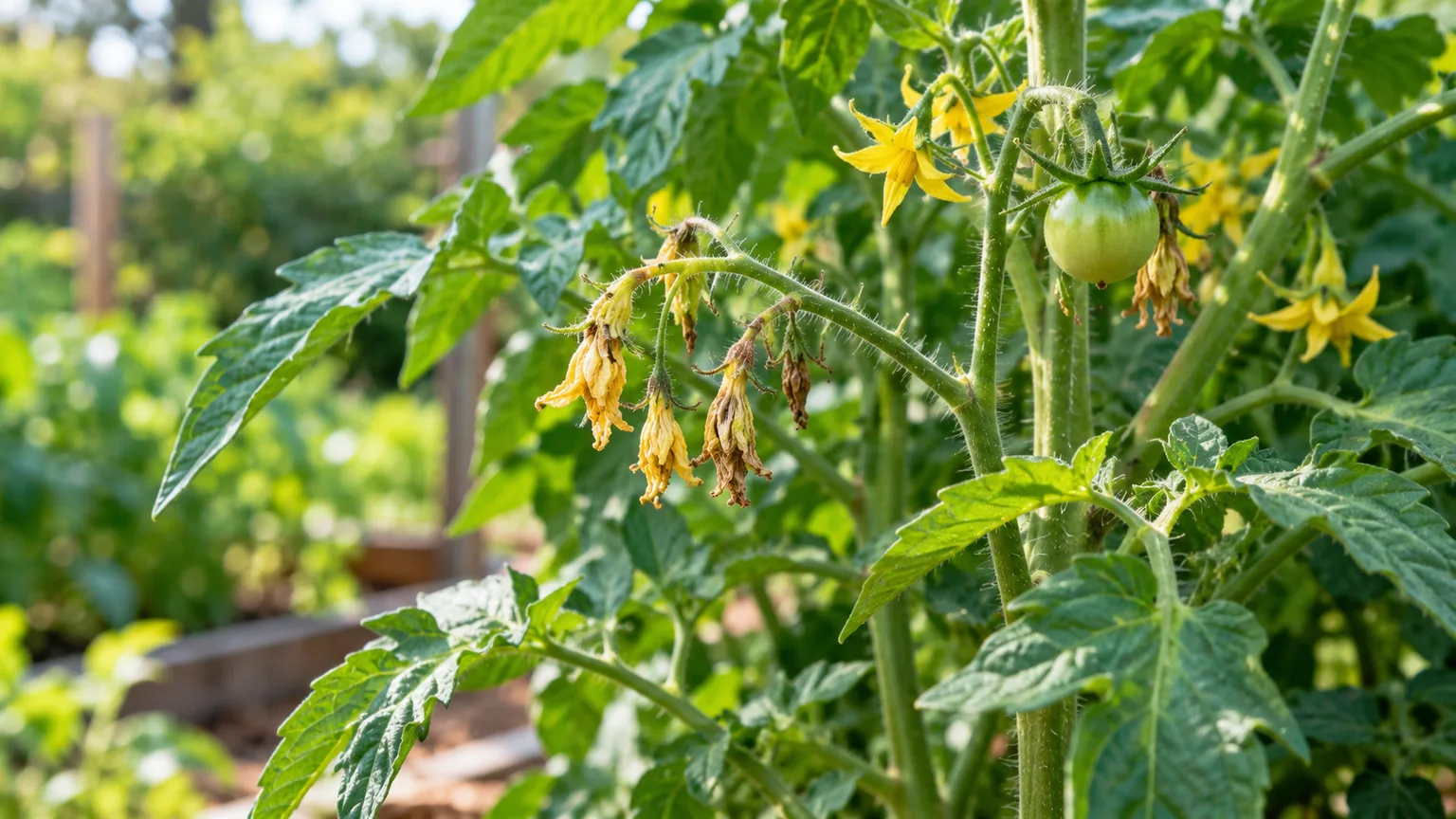
If a little green tomato begins growing before it stalls, look at moisture and root health next. A pot that alternates between bone-dry and soggy can stress developing fruit; a plugged drainage hole can keep roots unhealthy even if the top of the mix looks dry. Change one variable at a time and note whether the next flower clusters set better, so you can tell which correction helped.
Blossom-End Rot, Cracks, and Gnats
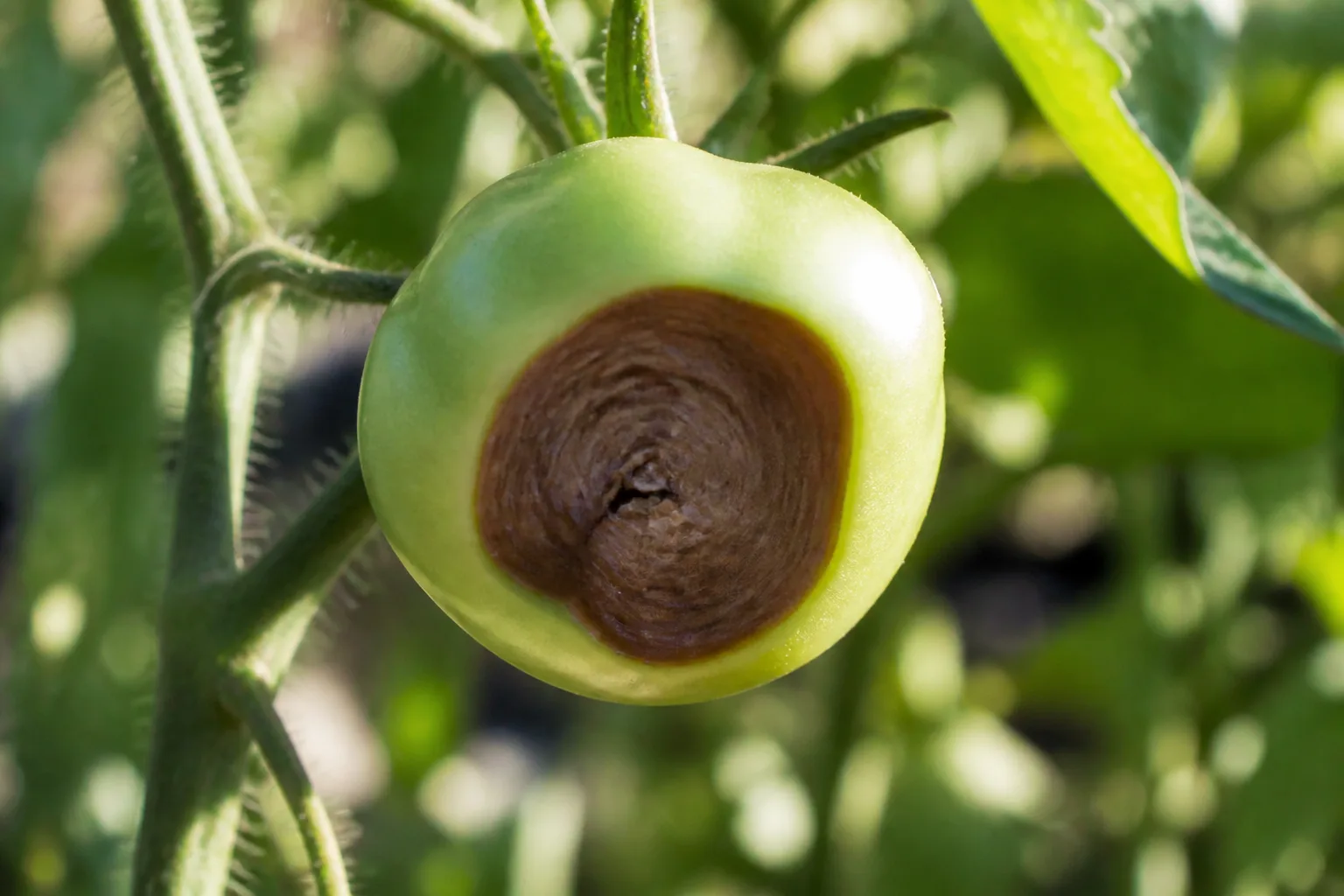
Blossom-end rot appears as a dark, sunken patch at the bottom of an enlarging fruit. It is a physiological disorder associated with inadequate calcium reaching that fruit, often alongside moisture stress; it does not automatically mean the potting mix contains no calcium. Keep moisture even, check that water drains freely, and avoid excessive fertilizer. UAF Cooperative Extension identifies a steady soil-moisture supply as the best preventive step. (UAF Cooperative Extension)
Cracks usually appear as splits near the stem on ripening fruit. Remove fruit that has cracked deeply or begun to decay, then prevent the next split by avoiding a long dry spell followed by heavy watering and by keeping the plant’s foliage intact. If the plant’s pot is too small to buffer moisture changes, moving to a larger container may help if the plant is still young enough to transplant safely.
Fungus gnats are more often a signal about the potting mix than a tomato disease. Let the surface begin to dry before watering again, empty standing water, and make sure the container is not sitting inside a sealed decorative cachepot. If the plant wilts while the mix remains wet, let the root ball drain and inspect whether the drainage holes are blocked.
Harvest Ripe Fruit and Plan the Next Crop
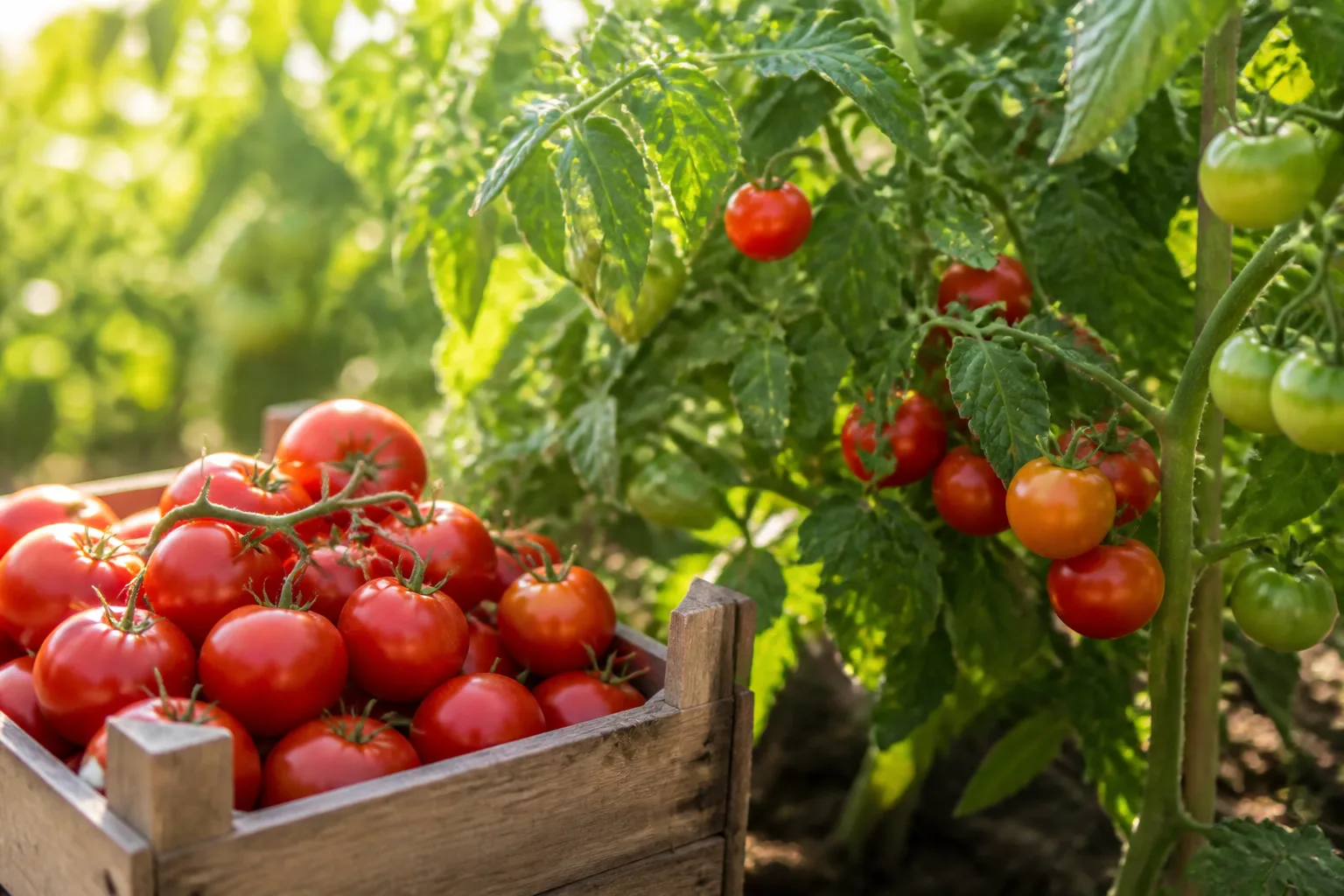
Pick tomatoes when they have reached their mature color and yield slightly to a gentle touch. Hold the fruit rather than pulling on the branch; if the stem does not release easily, use clean snips. Fruit may ripen at different speeds indoors because flowers open in batches, so harvest regularly and keep checking new clusters.
Indoor growing can extend the season, but a tomato plant is not an endless producer. As a plant ages, its lower leaves may decline, pest pressure can build, and a compact variety may finish its main flush of fruit. Starting a second seedling a few weeks later than the first can stagger harvests, but only do this if you have light and pot space for both.
If you are bringing a container plant in from outdoors, inspect every leaf and the soil surface for pests before it joins indoor plants. Give it a gradual transition over several days, then place it under the strongest available light and continue with the same watering checks. Outdoor vines can be much larger than a room can comfortably support, so taking a healthy cutting or starting a new compact plant can be more manageable than moving an entire sprawling tomato indoors.
Keep Pets Away from Green Tomato Parts
Tomato fruit is a food crop, but the leaves and stems are not household snacks. The ASPCA lists tomato plants as toxic to dogs and cats while identifying ripe fruit as non-toxic; keep the plant, pruning debris, and green fruit beyond reach if a pet chews foliage. (ASPCA: Tomato Plant)
Sweep up clipped leaves and fallen fruit rather than leaving them in an open potting area. If an animal chews the plant or shows signs of illness, contact a veterinarian or animal poison-control service promptly. A hanging basket is not automatically safe: cats can reach trailing vines, and a support that tips can expose the whole plant.
Conclusion
To grow tomatoes indoors successfully, choose a compact cultivar that fits the room, provide strong and consistent light, give its roots a roomy draining pot, and keep moisture steady. When flowers open, gently vibrate each new cluster every other day; if fruit still fails to set, check light and temperature before feeding or pruning. Expect a small, ongoing harvest rather than a windowsill full of fruit, and keep the green plant parts away from pets.



