Growing Lettuce Indoors: From Seed to Harvest
Learn how to grow lettuce indoors from seed in soil or hydroponics, set up reliable light and temperature, water well, and harvest leaves for repeat picks.
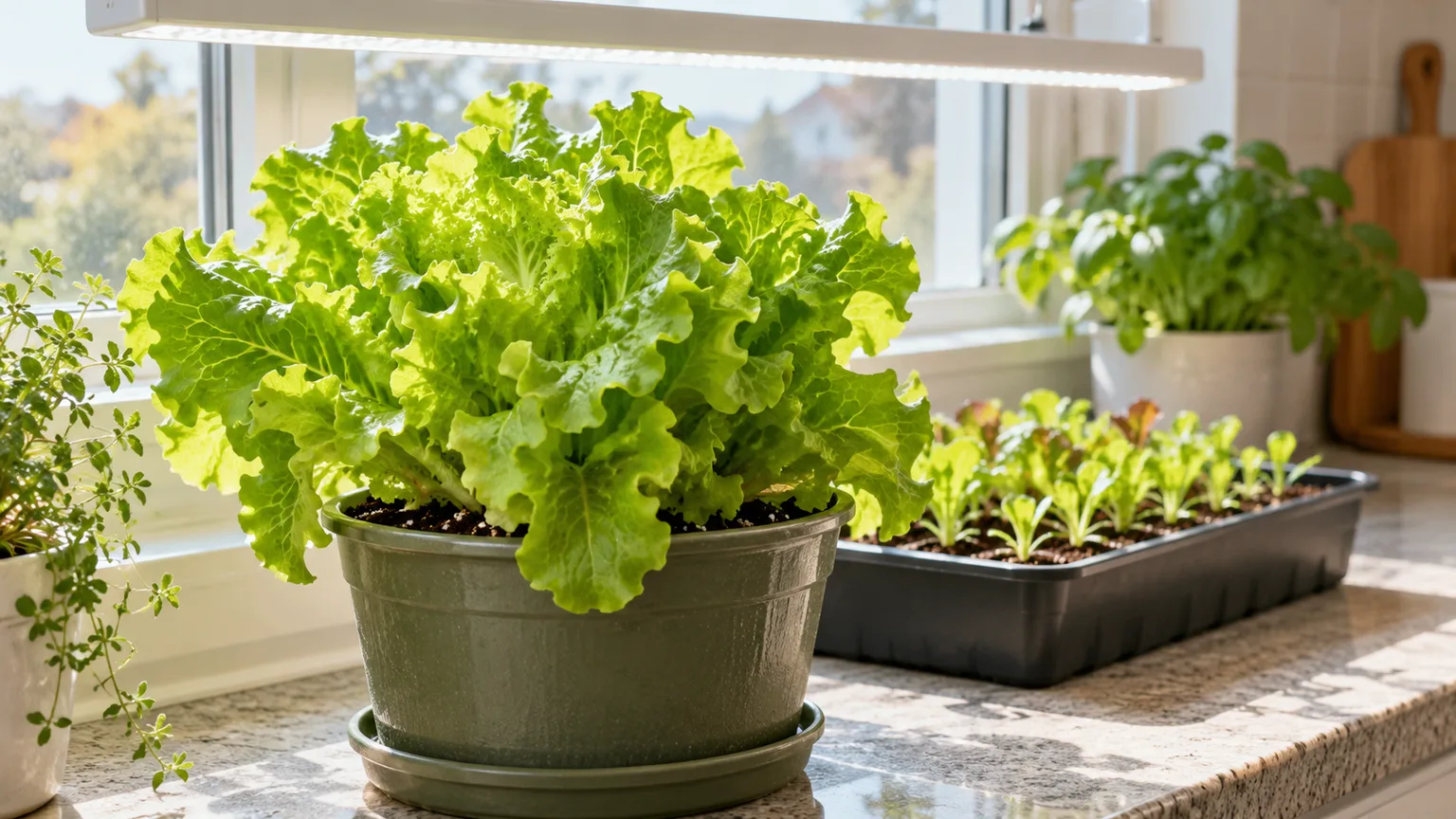
You can grow lettuce indoors in potting mix or a small hydroponic system, but the most reliable crop starts with seed, enough light, and a cool spot. Loose-leaf lettuce gives you the quickest, most forgiving harvest; full heads need more room and usually take longer. A bright window may be enough in some homes, but if seedlings stretch or mature plants stay thin, a grow light on a timer is the practical fix.
One expectation matters before you begin: indoor lettuce is a fresh-leaf project, not a guaranteed grocery replacement. A container can supply occasional salads or sandwich leaves, while a larger shelf or hydroponic setup can produce more. Plan around the light and space you have, then sow small batches so the crop does not all mature at once.
What to expect from an indoor lettuce crop
Lettuce is a cool-season annual that can be grown inside in any season if its roots stay moist, its air stays reasonably cool, and its leaves receive useful light. Indoors, the weather stops being the main limit; the window’s direction, nearby buildings, room temperature, and light intensity become the variables. The same plant may grow compactly on a bright shelf in one home and turn thin and floppy on a dim kitchen sill in another.
Loose-leaf lettuce is the best starting point for most indoor growers because you can pick outer leaves while the center keeps making new ones. Baby-leaf trays give a faster first taste but are harvested young and usually resown for another batch rather than kept as long-lived plants. A heading type such as romaine or butterhead can grow indoors too, but it needs space to form a larger rosette and will not make a full head quickly in weak light.
Use outdoor maturity dates as a rough calendar, not a promise. NC State Extension gives about 40 to 50 days from seed for leaf lettuce and 70 to 85 days for head lettuce under its regional growing conditions; indoor light and temperature can lengthen those ranges. NC State Extension’s lettuce guidance is useful for comparing crop types, while the indoor setup determines how close your plants come to those timings.
| Goal | Best starting choice | What to expect |
|---|---|---|
| First indoor crop | Loose-leaf lettuce from seed | Pick a few outer leaves as the plant grows |
| Small, quick harvest | Baby-leaf mix | Sow densely and harvest the tray young |
| Larger individual plants | Compact romaine or butterhead | Give each plant its own space and stronger light |
| Countertop system | Leaf lettuce suited to containers | Follow the system’s nutrient and spacing instructions |
Choose a variety for the crop you want
Seed packets usually group lettuce into loose-leaf, romaine or cos, butterhead, and crisphead types. For a first indoor pot, choose a loose-leaf or oakleaf variety: it grows as an open rosette, tolerates repeated outer-leaf picking, and does not have to form a dense head before you can use it. A mixed packet can bring different colors and leaf shapes, but check that the varieties have similar growth habits if you plan to grow them together.
Romaine is a good choice when you want upright leaves and a more substantial plant. Compact or mini-romaine types suit a shelf better than large varieties, but still need enough light and root room to form a sturdy center. Butterhead produces tender leaves in a loose head; treat it more like a small whole plant than an endless cut-and-come-again crop.
Crisphead or iceberg lettuce is possible indoors, but it is the least forgiving choice for a casual windowsill. It must build a compact, layered head, so it needs steadier light, more growing time, and enough space around each plant. If the goal is a first homegrown salad, loose-leaf lettuce is a more useful experiment than waiting for a full iceberg head that may never tighten under the available light.
For a compact shelf, look for words such as “leaf,” “baby leaf,” “oakleaf,” or “mini” on a seed packet. Variety descriptions may also mention slow bolting or suitability for containers. Those traits do not remove the need for light or cool conditions, but they help you choose plants that match a small indoor setup rather than a garden bed.
Choose your growing setup
There are three workable routes: a bright window with pots, pots under a grow light, or a hydroponic system. The choice is mostly a tradeoff among setup cost, control, and how often you want to check the plants. Epic Gardening’s indoor lettuce guide covers all three; the simplest option is not always the most productive if a window is dim.
A bright window: simplest, but least predictable
A sunny, unobstructed window is the cheapest place to start. Put the pot as close to the glass as practical, rotate it every few days if the leaves lean, and watch the newest growth. If stems lengthen and leaves stay small, the plant is telling you the available light is not enough for compact growth. A windowsill that works in late spring may be much dimmer in winter because the sun is lower and the day is shorter.
Window light also changes with the room. A tree, porch roof, neighboring building, insect screen, or sheer curtain can reduce the light reaching the leaves. A warm south- or west-facing window may give more light but can heat the pot; a bright east-facing window can be gentler. If the plant is consistently leggy, adding a light is more dependable than moving it from one dim corner to another.
Grow lights: the most controllable option
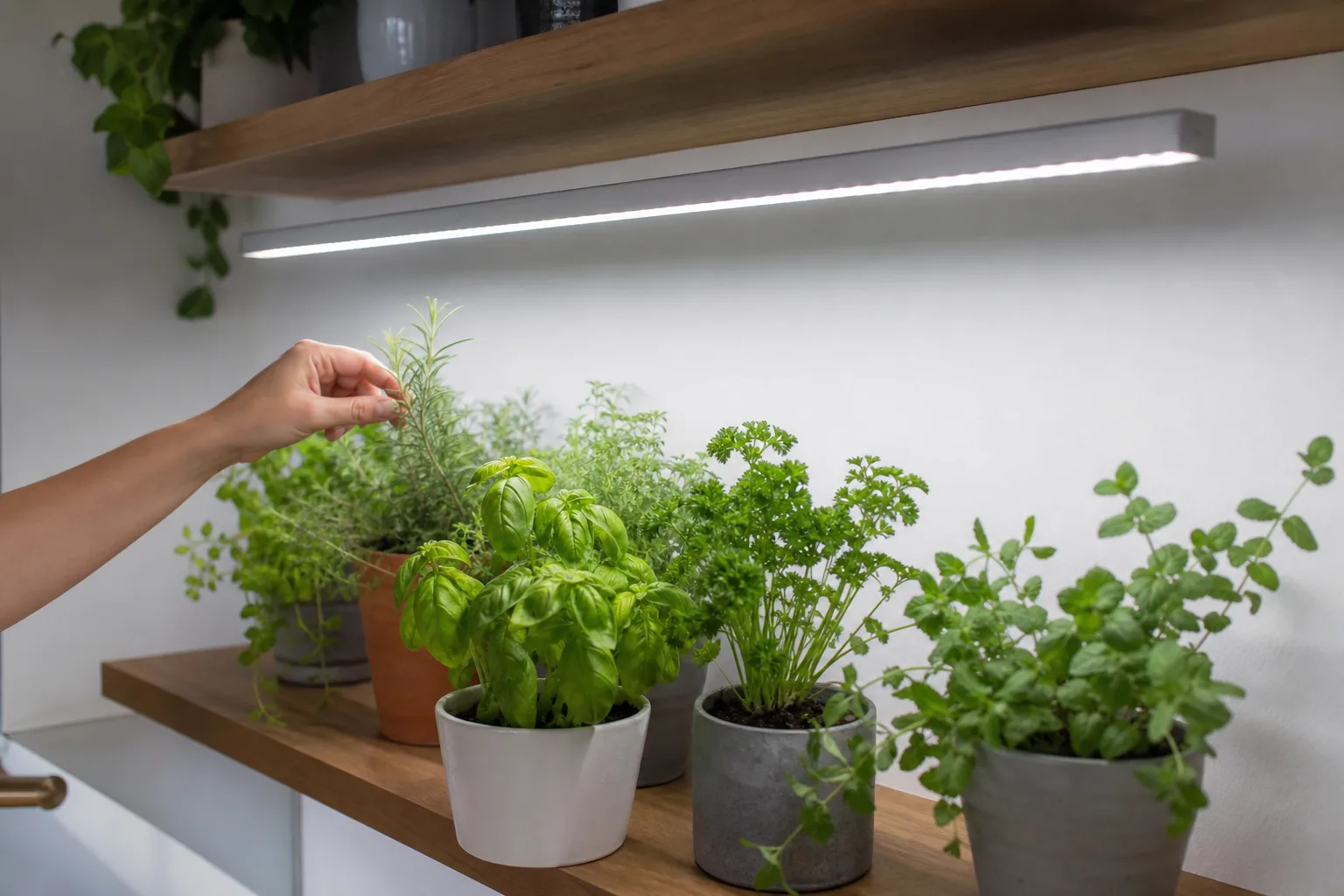
A basic full-spectrum LED bar or panel gives you more control over the crop than a windowsill alone. Place it according to the manufacturer’s distance instructions and run it on a timer so the plants receive a consistent day. A practical starting schedule for established lettuce is about 12 to 14 hours of light, with a dark period overnight; seedlings can use a longer day while they establish. Epic Gardening recommends around 12 hours for growing plants and 14 to 16 hours for seedlings, though the lamp’s strength and distance determine whether those hours are enough.
Do not judge a grow light by its color or wattage alone. A bright-looking strip may illuminate a counter without delivering enough light across the leaves. Keep the fixture over the whole planting area, not off to one side, and raise it as the plants grow so the tallest leaves do not touch it. If the edges bleach or leaves feel hot, increase the distance; if seedlings stretch, improve intensity or bring the light closer within the maker’s safe range.
Hydroponics: compact, with more monitoring
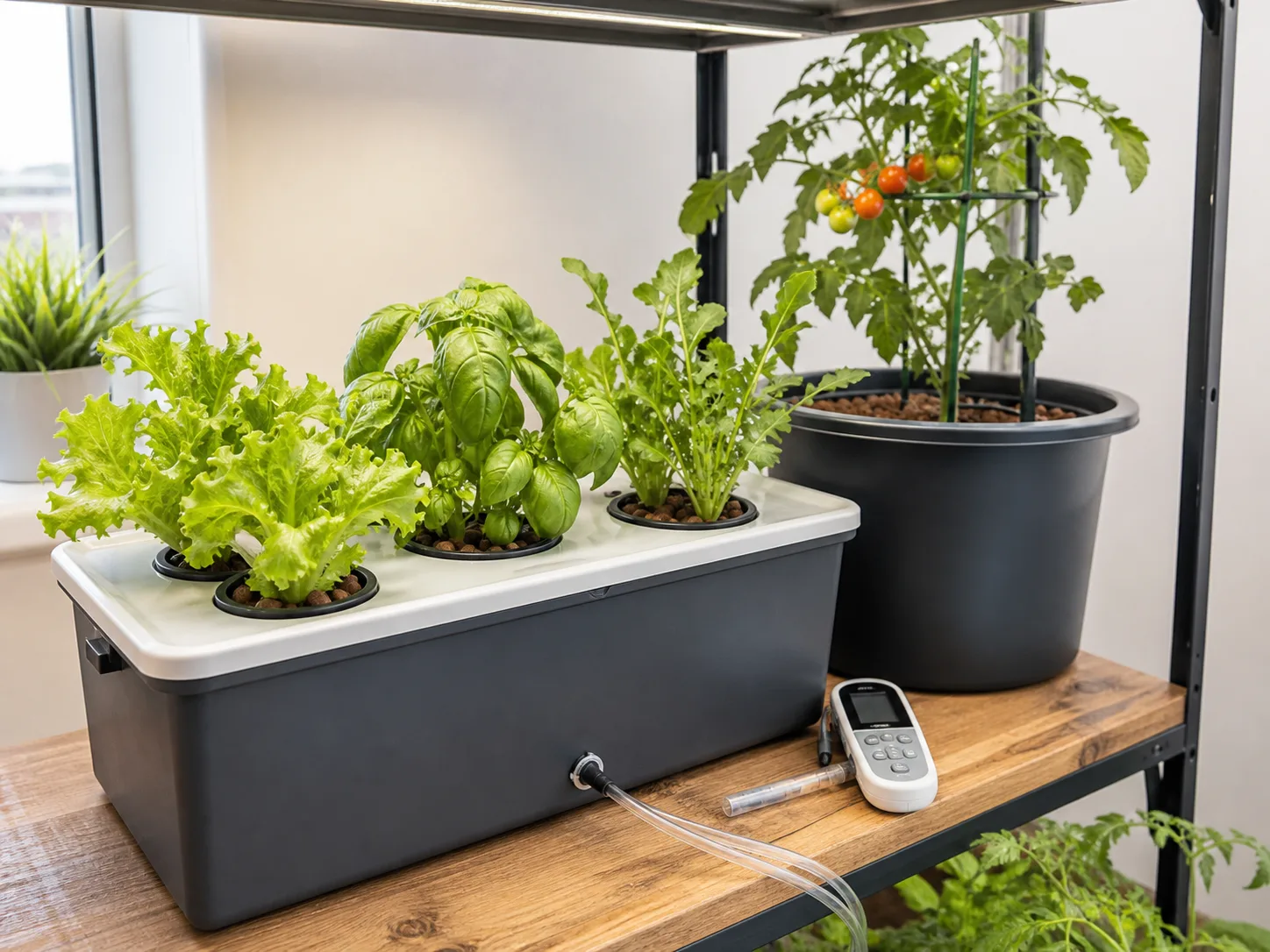
Hydroponics grows lettuce with roots supplied by a nutrient solution instead of ordinary potting mix. A countertop unit can save space and may include a light, reservoir, and net cups; a simple passive setup needs careful attention to water level, oxygen, and nutrients. The convenience is real, but equipment cost and system upkeep make hydroponics a poor first choice if you only want one small pot of salad greens.
Choose a system with enough space between planting sites for mature leaves, and use a lettuce or leafy-green nutrient product at the label rate. Keep the solution level and replacement schedule within the system maker’s instructions. Roots submerged in stagnant, warm water can decline quickly, and a pump or light failure can disrupt the crop, so check a powered setup daily. A soil pot is less equipment-heavy and easier to understand; hydroponics makes more sense when you want a compact, repeatable shelf crop.
Set up a container and growing medium
Use a container with drainage holes and a tray that catches runoff without leaving the bottom of the pot submerged. A pot around 6 to 8 inches deep gives ordinary leaf lettuce room for roots while still fitting on a shelf; a wider box can hold several plants. Follow the seed packet’s mature spacing where possible. As a practical starting point, keep individual plants several inches apart for baby leaves and give full-size rosettes roughly 6 to 10 inches, adjusting for the variety and the container.
Use a clean, lightweight potting mix rather than dense garden soil. Garden soil compacts in containers, drains unevenly, and can carry weed seeds or pests indoors. A standard indoor potting mix is suitable if water moves through it freely; if it packs down, blend in a small amount of perlite. Avoid filling a very large pot for one tiny seedling: excess wet mix around a small root system takes longer to dry and makes overwatering easier.
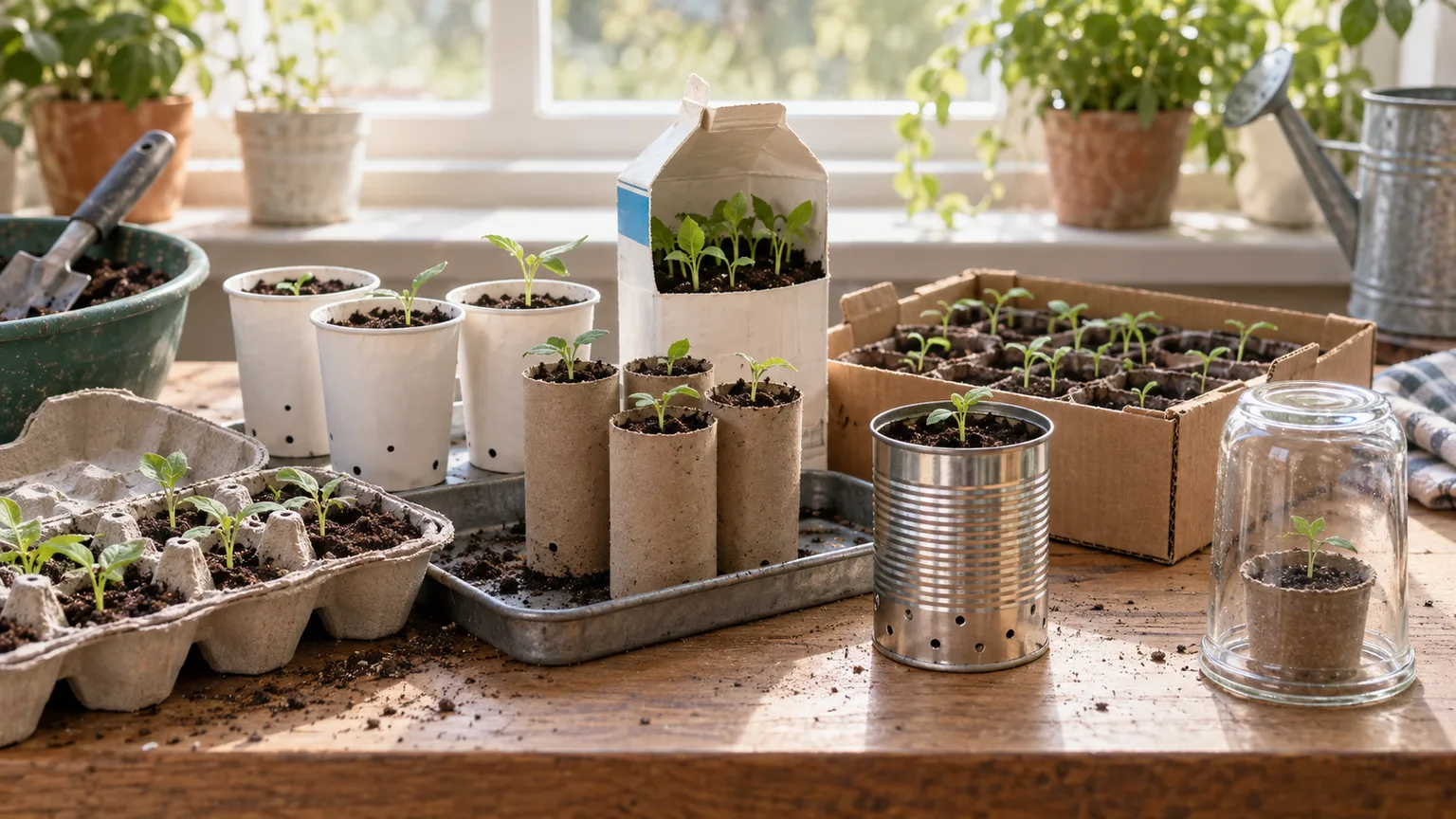
For starting seeds, use a fine seed-starting mix or sifted potting mix that holds moisture without turning muddy. A shallow seed tray is convenient, but ordinary small pots work too if they drain. Rinse reused containers and trays with soap and water, let them dry, and label each sowing with its variety and date. That simple record helps you compare how long different varieties take in your light and room.
Start lettuce indoors from seed
Seeds are the most reliable route to a sustained indoor crop. Buy a loose-leaf or baby-leaf variety for the first pot, then start a second variety after you have seen how much space and light the first one needs. The packet gives the variety’s spacing and maturity range; record your sowing date because “ready” depends on whether you want tender baby leaves or a full rosette.
Sow shallowly and keep the mix damp
Moisten the seed-starting mix before filling the tray so water is spread evenly. Sow a few seeds in each cell or small pot and cover them lightly; lettuce seed should not be buried deeply. Keep the surface moist until germination, using a mister only during this early stage if a stream of water would dislodge seeds. Once seedlings emerge, move them under strong light rather than leaving them on a warm counter or in a covered tray.
Temperature matters at germination. Utah State University Extension says lettuce seed germinates best around 55 to 65°F and that temperatures above 80°F can reduce germination; those figures are a useful reminder not to put trays on a hot appliance or in a sun-baked window. Utah State University Extension’s lettuce guide also gives a 7-to-10-day emergence range under suitable conditions. A cooler, steady spot is often better than a heating mat for lettuce, especially in a warm home.
Thin and transplant before plants crowd
When seedlings have their first true leaves, keep the strongest one in each small cell or pot. Snip extras at the soil line rather than tugging them out if their roots are tangled. If you sowed into a shared tray, transplant sturdy seedlings while they are still small, lifting them gently by a leaf and keeping the roots covered. Do not hold a seedling by its tender stem; crushing the stem can end the plant even when its leaves look fine.
Move each plant into its final container before its leaves overlap heavily. Set the root plug at the same depth it grew before, firm mix lightly around it, and water until excess drains from the holes. Keep the container under the light and give the leaves a little airflow; tightly packed foliage stays damp and makes it harder to see early problems. If you are growing baby greens, sow them directly into the final shallow tray and plan to harvest the group young instead of transplanting each seedling.
Manage light and temperature after germination
Good indoor lettuce depends on light and temperature working together. A long day under a weak lamp does not necessarily make sturdy plants, and intense light over a hot pot can push the crop toward stress. Place the lamp close enough to serve the full canopy, use a timer, and keep the growing area away from radiators, ovens, and heating vents.
Lettuce is a cool-season crop. Utah State Extension says it grows best when temperatures do not exceed about 75°F; prolonged warmth can reduce quality and contribute to bitter flavor. The exact response varies by variety, but a room that sits near 80°F during the day is a harder place to grow lettuce than a cooler room. Utah State Extension and Savvy Gardening’s lettuce planting guide both emphasize cool conditions for germination and growth.
If you see long, pale stems, small leaves, or plants leaning sharply, check light first. Move the tray closer to the lamp within the safe range, extend the timer modestly, or reduce the number of plants sharing the fixture. If the newest leaves are firm and compact but the outer leaves are pale on the window side, rotate the pot and check whether a nearby curtain or building blocks the sun.
Watch for a central stem that suddenly rises above the leaves. That is bolting: the plant is shifting from leaf growth toward flowering, often after heat, age, or stress. The leaves may become more bitter, so harvest what still tastes good and start a fresh sowing in a cooler spot rather than trying to force the old plant back into leaf production.
Water for steady growth
Lettuce has shallow roots and tender leaves, so let the mix dry only slightly between waterings. Check the top half-inch to inch with a finger; if it feels dry, water the soil evenly until a little drains into the tray. Empty the tray after the pot has drained. The calendar is a poor guide because a small pot under a lamp can dry in a day or two while a larger pot in a cool room may stay moist much longer.
Try to avoid the wet-dry swings that leave a plant wilted in the afternoon and soaked the next morning. Utah State Extension notes that inconsistent moisture can toughen leaves, slow head development, and contribute to tipburn. Indoors, the useful adjustment is to check the root zone often and water thoroughly when it begins to dry, not to keep adding a splash every time the surface looks pale. A saucer that holds water is a drainage tool, not a reservoir unless the pot is specifically designed for bottom watering.
If the whole pot dries and the mix pulls away from the sides, water slowly in two passes so it can re-wet instead of sending water straight down the gap. If the pot stays heavy and wet for days, make sure the holes are open, remove standing water, and check that the container is not too large for the roots. Wilting can come from either dry mix or damaged roots, so feel the soil before watering again.
Feed soil-grown and hydroponic lettuce differently
Container mix may contain enough nutrients for the first part of the crop. Read its label and the fertilizer label before feeding; lettuce is eaten young, so more fertilizer is not automatically better. Once plants have several true leaves or you begin harvesting, use a balanced water-soluble fertilizer at the rate on the package if the mix is not already enriched. Apply it to damp soil and keep concentrated fertilizer off the leaves.
Do not use a strong houseplant feeding schedule by default. Excess fertilizer can build up in a small pot, damage roots, and leave an unpleasant residue, while weak indoor light can make growth slow even when nutrients are available. If the plant is pale and slow, check light, root health, and moisture first. Feeding will not correct stretched stems caused by dim conditions or yellowing caused by a pot that never drains.
In hydroponics, use a nutrient formulation made for leafy crops and follow its instructions for dilution and replacement. Do not substitute plain water indefinitely: lettuce needs nutrients as it builds leaves. If the system measures pH or electrical conductivity, use the manual’s target range; beginners should not add concentrated nutrient or pH products by guesswork. Epic Gardening also distinguishes soil-grown feeding from periodic nutrient replacement in hydroponic units in its indoor lettuce guide.
Stagger sowings for a steady supply
One large sowing creates a flush of leaves, then a gap while the next crop grows. For a more even supply, sow a small tray or a few pots every 10 to 14 days. Start the next batch before the first one is ready to harvest; after you learn your room’s pace, adjust the interval so the plants mature at different times instead of all at once.
The plan works best if you keep notes on variety, sowing date, germination, and first harvest. If a tray is still tiny after several weeks, the likely issue is light, temperature, or crowding—not a need to sow twice as much. If the first batch grows too quickly for your household, lengthen the gap between sowings or plant fewer cells next time. Savvy Gardening describes sowing small amounts every few weeks as a way to keep harvests manageable; that same pacing works indoors when you account for the slower growth of a dim room.
Keep a mix of ages if you have room: one small tray just germinating, one group building leaves, and one plant ready for picking. That spreads the work and helps you notice a problem before every container is affected. If space is tight, prioritize one or two healthy pots rather than crowding many seedlings into a single narrow box.
Harvest leaves or a whole head
For loose-leaf lettuce, start picking when the outer leaves are large enough to use, often several inches long. Use clean scissors and remove the outer leaves one at a time, leaving the inner leaves and central growing point intact. Take no more than about a third of the plant at one harvest; it needs a healthy center and enough leaf area to continue growing. Epic Gardening’s harvest notes likewise recommend cutting baby leaves above the growing medium or taking outer leaves from a larger plant.
If you want a full romaine or butterhead plant, wait until it has a substantial rosette or head and cut it at the base with a clean knife. A whole-head cut is a one-time harvest; any small side growth afterward is unpredictable and should be treated as a bonus, not a second head. NC State Extension notes that leaf lettuce can be picked as leaves form, while head types should be harvested at their appropriate stage. Its lettuce overview helps set that distinction.
Harvest before a flower stalk stretches through the center. Once the plant bolts, taste a leaf before picking a large quantity because flavor may have turned bitter. Rinse leaves under clean running water, dry them, and refrigerate promptly in a clean container; harvest only what you expect to use soon because tender leaves lose crispness faster than mature heads.
Treat grocery-store scraps as a short experiment
A lettuce base can sometimes push out a few small leaves when placed in shallow water, but it is not a dependable way to grow a full new plant. The cut base has limited stored energy and usually does not produce the root system or broad leaf area needed for repeated, substantial harvests. Use this method as a brief kitchen experiment, not as the core plan for an indoor salad garden.
If you want to try it, keep the bottom inch of a fresh base in a shallow dish with water below the cut surface, change the water every day or two, and give it bright light. Do not submerge the leaves or let the water turn cloudy. Harvest the small new leaves while they are fresh; if roots form and you want to continue, move the base into moist potting mix with the crown above the surface, then see whether it resumes growth.
For food you can count on, start seed. Seeds give you a complete plant with a living root system, a wider choice of varieties, and a much better chance of producing usable leaves. Store-bought lettuce scraps can show regrowth, but their small output should not be confused with a crop that keeps supplying salads.
Fix common indoor lettuce problems
Long, floppy seedlings usually point to insufficient light, especially when the stems stretch toward a window. Move them under a brighter or closer grow light, reduce crowding, and keep the fixture at the recommended distance. If the stem is already weak, the plant may not recover its shape; sow a fresh batch with better light from the start.
Bitter leaves or a rising center stalk suggest the plant is old, warm, or stressed. Harvest usable leaves, lower the temperature if possible, and sow a new batch in a cooler spot. Slow growth can follow low light, crowded roots, overwatering, or a cool draft; check each condition before adding fertilizer.
Yellow leaves are not one diagnosis. If the mix is wet and the pot stays heavy, improve drainage and let the root zone dry slightly. If the lower leaves yellow while the plant is otherwise growing and the potting mix is old, a light feeding may help; if several leaves pale and growth stalls, check the lamp and root health first.
Brown edges or tipburn can follow uneven moisture or rapid growth that the plant cannot support evenly. Keep moisture steadier, avoid a small pot drying completely, and do not compensate with extra fertilizer unless the mix is depleted. Mold on the mix often signals persistently damp surfaces and poor airflow: let the top layer dry between waterings, space plants, and remove decaying leaves. Fungus gnats are also more likely in constantly wet mix; yellow sticky cards can help monitor adults while the watering issue is corrected.
Conclusion
Start with loose-leaf seed, a draining container, and the brightest cool spot you can provide. If the window produces thin growth, use an LED light on a timer; if you choose hydroponics, follow the system’s nutrient and cleaning instructions closely. Keep the mix evenly moist, harvest outer leaves without cutting the center, and sow a small new batch every couple of weeks. That approach makes indoor lettuce a manageable source of fresh leaves—and sets realistic limits on what a windowsill or grocery-store scrap can produce.



