Blue Spur Flower Care Guide: Light, Water, and Pruning
Get practical blue spur flower care for garden beds and pots, including how to manage its size, root cuttings, encourage flowers, and protect it from cold.
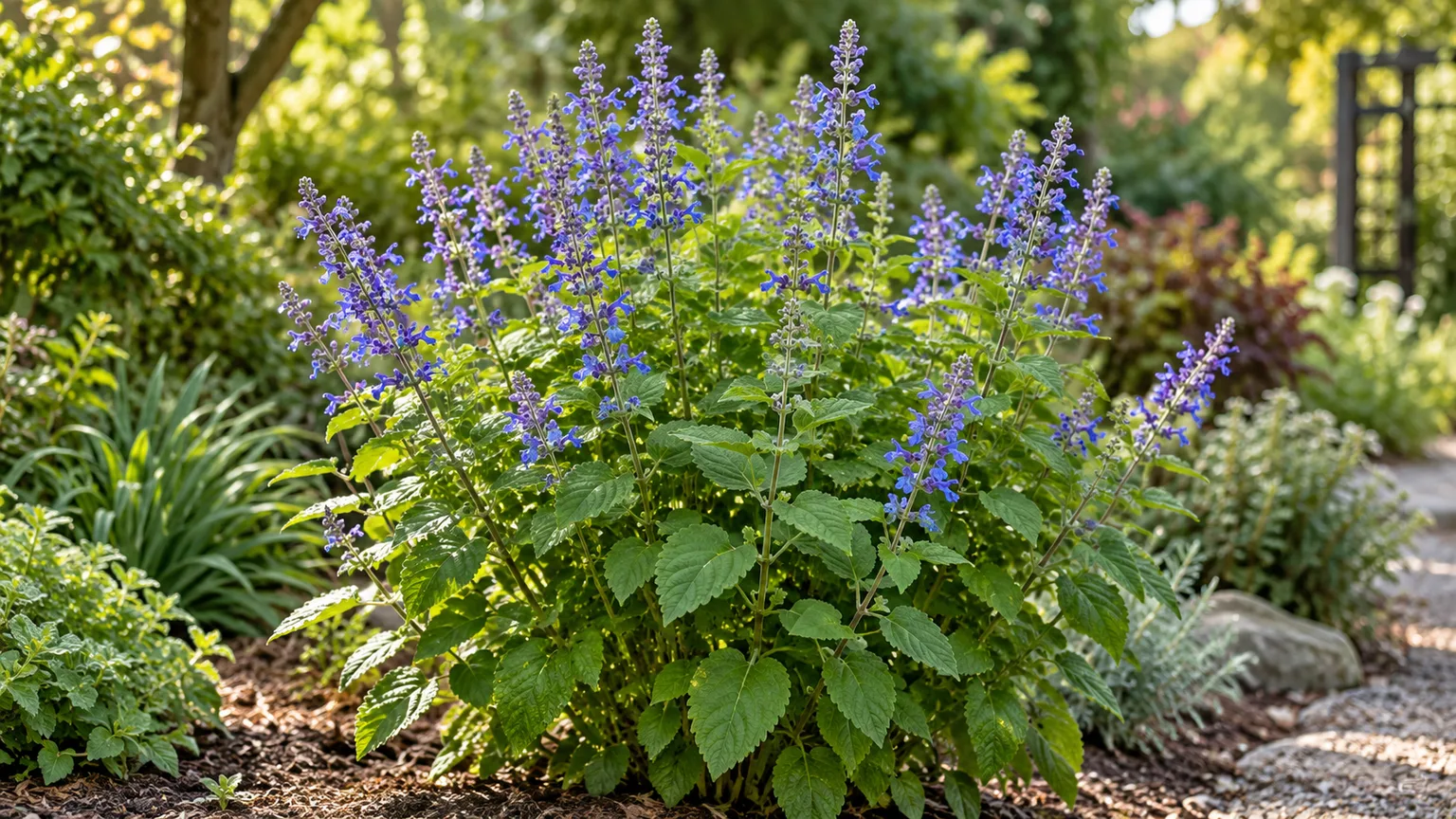
Blue spur flower is a substantial warm-climate perennial shrub, not a compact bedding plant. Give it bright light with some relief from punishing afternoon heat, soil that drains after rain, and enough room to branch; in a freezing climate, grow it in a movable pot or treat it as a seasonal plant. The most common avoidable failures are planting it where mature growth blocks a path, keeping its roots constantly wet, and waiting until frost is forecast before deciding what to do with it.
You may see it sold as blue spur flower, candlestick plant, or under either Coleus barbatus or Plectranthus barbatus. Those names can describe the same species, but they do not refer to the compact ornamental sometimes sold as Mona Lavender. Confirm the plant label before applying care advice written for another member of this large and varied group.
Blue spur flower at a glance
| Growing factor | Practical starting point |
|---|---|
| Botanical name | Coleus barbatus; Plectranthus barbatus is a widely used synonym |
| Growth habit | Upright, branching subshrub or shrub; allow several feet for mature growth |
| Light | Bright light; partial shade is a reliable starting point in hot climates |
| Soil | Fertile, amended soil that drains freely but does not dry instantly |
| Water | Water thoroughly, then let the surface begin to dry before watering again |
| Climate | Best as a perennial in frost-free or nearly frost-free locations; protect from freezes |
| Propagation | Stem cuttings or division where an established plant produces separable shoots |
| Main watch-outs | Oversize growth, saturated soil, frost damage, leaf spot, and sap-feeding pests |
Use this as a decision guide, not a rigid calendar. A plant in a shaded, humid bed will use water more slowly than a container on a hot patio, and the same species can behave differently in a long growing season than it does near its cold limit.
Identify the plant and plan for its size
Kew’s Plants of the World Online currently accepts the name Coleus barbatus and lists Plectranthus barbatus among its synonyms. That matters because nurseries, older references, and online labels may use either name; the synonym does not automatically mean you have a different plant. Kew describes it as a semisucculent subshrub or shrub native across parts of eastern Africa, the Arabian Peninsula, the Indian subcontinent, and south-central China. (Kew’s Plants of the World Online)
The plant’s upright stems carry broad, green, toothed leaves and branching spikes of small blue to violet flowers. Its outline can become wide as well as tall, and published mature dimensions vary by source and growing conditions. Treat figures such as 5 to 8 feet as a planning range, not a promise: climate, pruning, cultivar or local form, soil moisture, and age all affect the final size. Leave enough access to reach the base, remove spent stems, and inspect the root zone.
There is also a naming trap within the genus. NC State Extension’s overview describes Plectranthus broadly as a group of annuals, evergreen perennials, semi-succulents, and shrubs, with varied habits and different cultural needs; its recommendations for the genus should not be mistaken for a detailed profile of every species. UF/IFAS Extension’s article, for example, discusses the compact cultivar ‘Mona Lavender,’ a different ornamental with its own size and seasonal behavior. (NC State Extension; UF/IFAS Extension Charlotte County)
Choose the right light for your climate
Start with a site that receives several hours of bright light but is not trapped against a heat-reflecting wall. In a mild coastal garden, blue spur flower may tolerate more direct sun once established. In a hot inland summer, morning sun followed by open shade is a safer arrangement: the plant still gets energy for sturdy growth and flowering, while its leaves and root zone avoid the most intense afternoon heat.
NC State Extension describes the genus as generally suited to part sun through shade and amended, well-drained soil. That is useful context, but the species may tolerate a brighter position than some shade-grown relatives. Introduce a container gradually to stronger sun over a week or two rather than moving a nursery-grown plant from filtered light to a full day of direct exposure at once.
Full sun versus afternoon shade
Use the leaves as feedback. Long gaps between leaf pairs, leaning stems, and sparse flowering point toward insufficient light; move the plant brighter a little at a time or thin nearby shade. Pale, scorched, or crispy patches on the side facing the sun suggest the opposite problem, especially after a sudden move or during hot, dry weather. Give the plant afternoon shade and check moisture before assuming it needs more fertilizer.
Do not choose deep shade just to avoid scorch. A plant that survives there may grow weakly and flower poorly. If a bed has only a dark corner, a large pot that can be shifted to brighter morning light gives you more control.
Build soil that drains without drying fast
Blue spur flower needs two things that can sound contradictory: moisture available to roots and air in the root zone. Improve heavy or compacted garden soil with mature compost and, where water lingers, correct the drainage before planting. A raised bed or a broad container may be easier than trying to make a persistently wet low spot suitable.
For a pot, choose a container with several open drainage holes and use a fresh, free-draining potting mix. A little compost can help hold nutrients and moisture, but do not fill the pot with dense garden soil or pure compost; both can settle into a wet mass. If water takes a long time to drain through the mix, repot into a looser blend rather than trying to solve the problem by watering less while the root ball remains saturated.
A mulch layer over garden soil can reduce rapid drying, but leave a small clear gap around the stems. Mulch piled against stems holds dampness where the plant needs air circulation and makes early rot harder to spot. In a container, use a thin top dressing only if it does not obscure the soil surface you need to check before watering.
Water by soil condition, not calendar
Water a newly planted specimen when the upper layer begins to dry, then soak the root area deeply enough to settle soil around the roots. During its first growing season, check more often than you would for an established shrub because its root system has not yet spread through the bed. Once established, it may tolerate short dry spells better, but drought tolerance is not a reason to leave a container root ball bone dry for long periods.
The simplest repeatable method is to check the soil with a finger or a narrow wooden stick. If the top inch or two is dry and the soil beneath is only lightly moist, water slowly until excess begins to leave the pot or the bed is moist through the root zone. If the surface is damp and the stick comes out wet, wait and check again. Adjust the interval after heat waves, rain, windy weather, and seasonal changes rather than keeping a fixed weekly schedule.
Tell drought stress from waterlogged roots
A dry plant often has limp or curling leaves and dry soil that pulls away from the pot edge; it should regain firmness after a thorough drink if the roots are healthy. A plant with wet soil and persistent wilt has a different problem. Check that the drainage holes are open, empty any saucer, and inspect roots if the mix stays wet for days. Brown, mushy roots or a sour smell point toward rot, not thirst.
Water at the soil line in the morning when possible. Wet foliage is not automatically harmful, but leaves that remain damp overnight in crowded, still air have more opportunity to develop fungal spotting. Avoid frequent shallow splashes that wet the surface without rehydrating the root zone.
Plant in a bed or a container
Choose a garden position with room on all sides, not a narrow strip where the mature shrub will crowd neighboring plants or block a walkway. Set the root ball at the same depth it grew in its nursery pot, backfill with the improved native soil, and water thoroughly. If the plant is top-heavy or the site is exposed, temporary support may help it settle, but remove supports once roots hold it firmly.
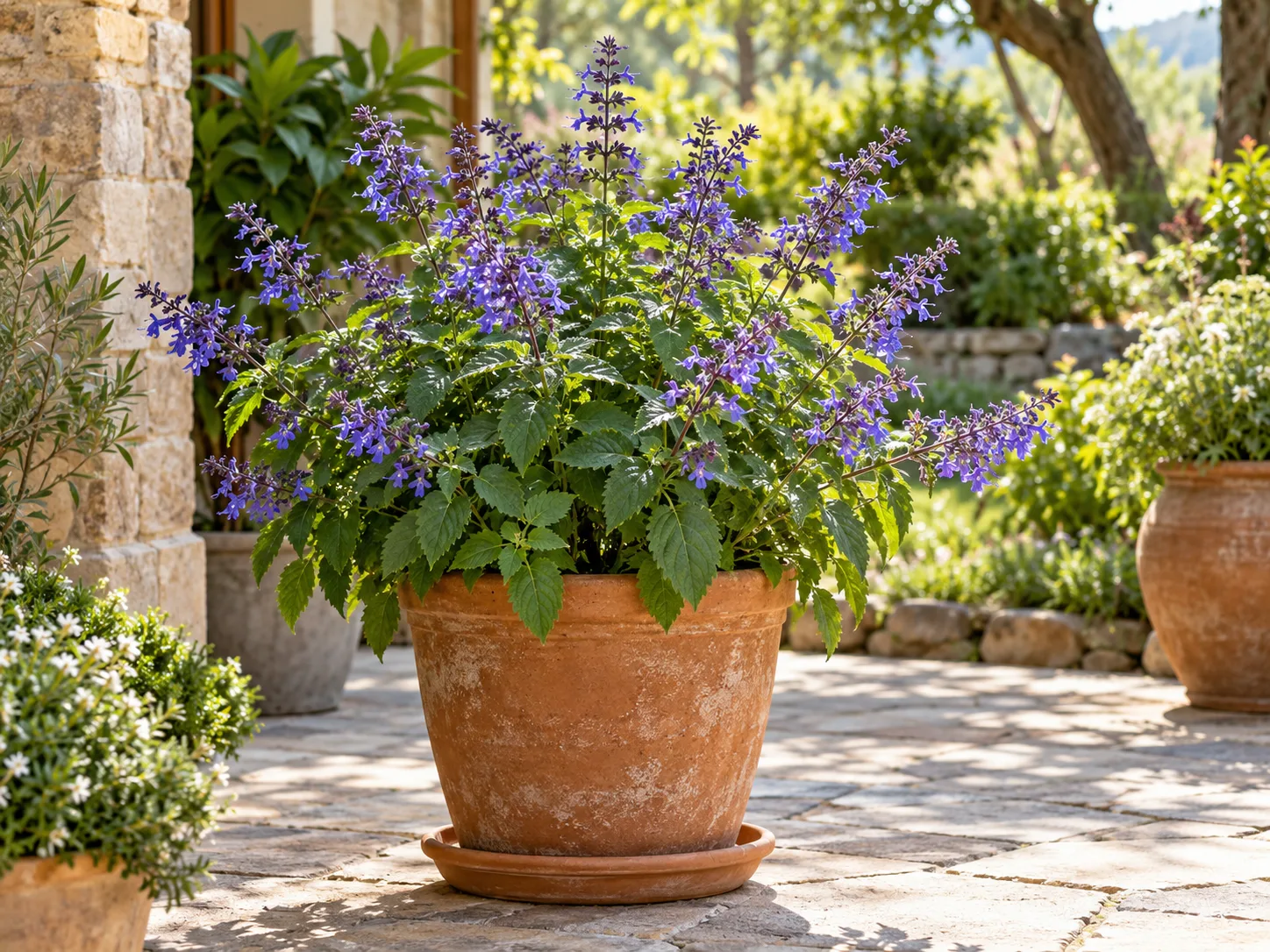
A container is the better choice when winter lows may freeze, when you want to limit size, or when you need to move the plant between sun and shade. Pick a heavy pot wide enough for the root ball and future growth, but avoid jumping to an enormous container: excess wet mix around a small root system dries slowly. Repot when roots crowd the drainage holes or the plant dries unusually quickly after watering, moving up one practical size at a time.
Blue spur flower can become a large shrub, and some established plants send shoots from below ground. If you see the plant spreading beyond its footprint, lift and divide suitable offshoots or use a container; do not assume every plant will spread the same way in every region. Before planting into a shared bed, ask the nursery how the local stock behaves and check whether local rules or climate make it a poor fit.
Feed lightly; do not chase height
Begin with compost incorporated into the planting area or a modest top-dressing around the root zone. If the plant is growing steadily and foliage looks healthy, extra feeding may not be necessary. In a container, nutrients leach out faster, so a balanced fertilizer used at the label rate during active growth can replace what watering carries away. Do not exceed label directions or feed a plant whose roots are waterlogged, damaged, or severely wilted.
Excess fertilizer can produce fast, soft growth that needs more water and may flop or require frequent trimming. If your plant is already tall and leafy but not flowering, do not respond automatically with a bloom booster. First check light, drainage, recent pruning, plant maturity, and whether the local flowering window has arrived. A soil test is more useful than repeated feeding when garden growth remains weak despite reasonable care.
Prune to shape and control spread
Pinch or tip-prune young stems during active growth to encourage branching and a fuller outline. Make each cut just above a leaf pair or node, where side shoots can develop. For a young plant, take only the tender tips; repeated light pinches are easier to recover from than one severe cut that removes most of the plant’s foliage.
Remove damaged stems and spent flower spikes with clean, sharp pruners. This improves the plant’s outline and can make room for fresh growth, but deadheading is not a guarantee of another flush of blooms. If the shrub has outgrown its place, shorten the longest stems in stages and reassess the shape before taking more. Avoid hard pruning immediately before a heat wave or a cold spell, when the plant has less opportunity to replace removed growth.
After pruning, inspect the cut material for signs of pests or disease rather than leaving it packed under the canopy. If you want more plants, healthy non-flowering stem tips can go straight into propagation mix. If you do not, discard diseased material and compost clean trimmings only where your compost system can break them down fully.
Propagate by division or stem cuttings
Division is the quickest option when an established plant has a naturally separate shoot with its own roots. Water the parent plant first, expose the base carefully, and separate a rooted section with a clean spade or knife. Replant the division promptly at the same depth, water it in, and keep the soil evenly moist while it re-establishes. Do not pull off a shoot that has no roots and expect division to work; take it as a stem cutting instead.
Stem cuttings let you make a backup plant before winter or share a plant with someone else. A cutting is not a guarantee that the offspring will mature at the same speed or size as the parent, but it preserves the parent’s growth characteristics more reliably than seed when the plant is a selected form. Practical softwood-cutting guides from Thrive, Notcutts, and Blooming Backyard all emphasize fresh growth, clean cuts, a moist but airy rooting medium, and protection from drying while roots form. (Thrive; Notcutts; Blooming Backyard)
Root softwood cuttings step by step
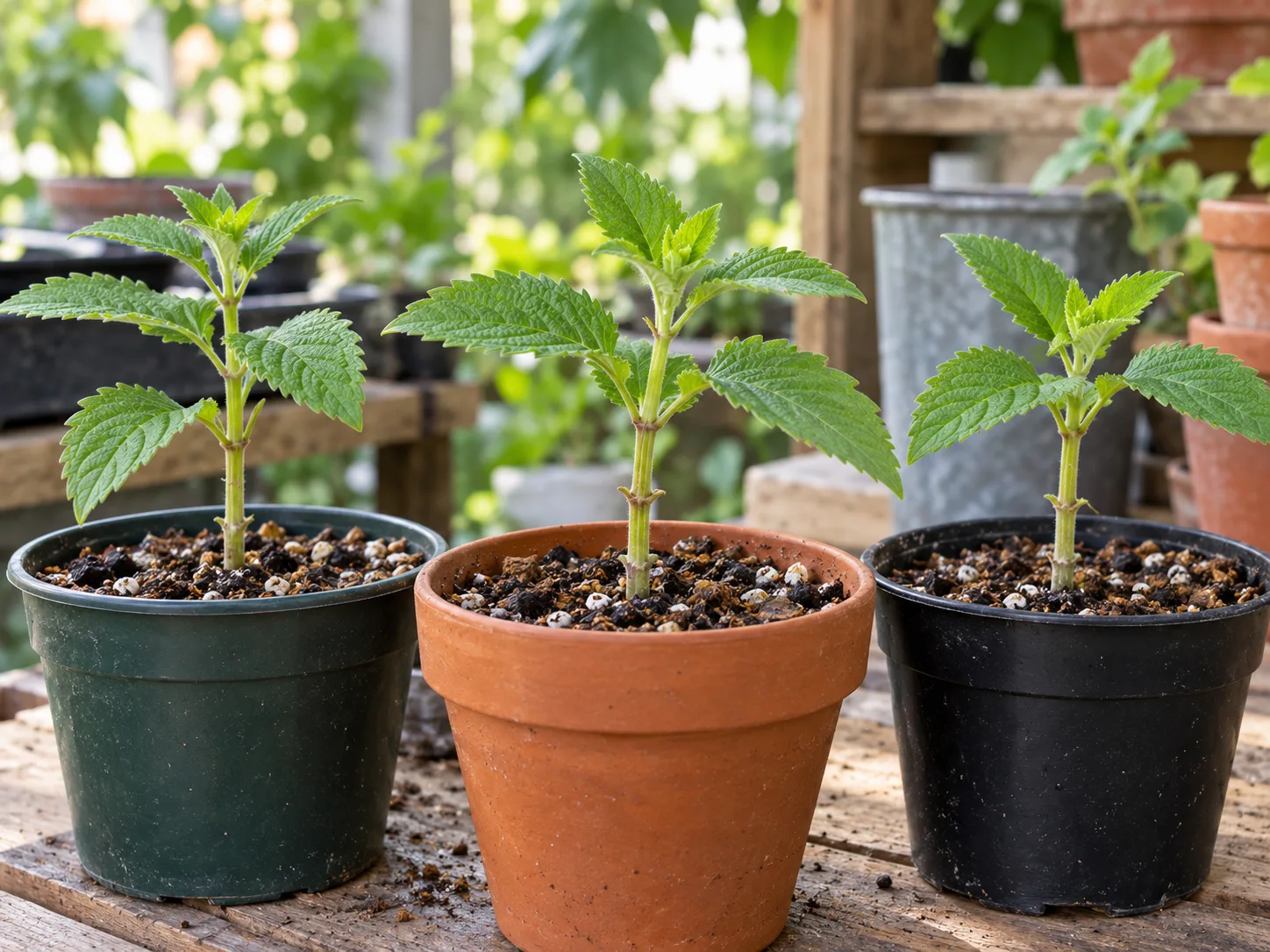
Take cuttings in warm weather while the parent is actively growing, not when it is drought-stressed, pest-ridden, or entering dormancy. Prepare clean pots and a lightly moist, well-drained rooting medium before you cut so the stems do not sit out and lose water. Then follow this sequence:
- Select healthy, non-flowering tips about 4 to 6 inches long, each with several leaf nodes.
- Make a clean cut just below a node and remove leaves from the lower half so none are buried.
- Set the bare nodes into pre-moistened rooting mix; firm it gently around the stem.
- Place the pots in bright indirect light and keep the medium lightly moist, never waterlogged.
- Cover loosely with a clear bag or propagator if the air is very dry, keeping plastic off the leaves and venting it regularly.
- Check for new growth and gentle resistance before potting on; do not tug repeatedly or pull up the cutting to inspect it.
Rooting speed varies with warmth, light, stem maturity, and plant condition. If the leaves blacken or collapse while the mix stays wet, remove the failed cutting and reduce moisture or improve airflow. If they wilt quickly in a dry room, increase humidity around the pot without sealing it in stagnant, dripping air. Rooting hormone is optional; clean tools, suitable stems, and steady aftercare matter more than buying a powder.
Plan for frost before the first cold night
Blue spur flower is best treated as a tender or marginally hardy perennial unless you have local experience confirming that it survives winter outdoors. Some current garden profiles place it in warm USDA zones, often 9 through 11; a recent House Digest profile repeats that range. Treat it as a broad screening estimate, not a promise for a specific yard: zone labels do not account for wind, wet soil, duration of a freeze, exposure, or a protected microclimate. Kew describes the plant as a shrub of seasonally dry tropical regions, which is useful climate context rather than a local cold-hardiness trial. A brief cool night and a hard freeze are not equivalent. (House Digest profile; Kew’s Plants of the World Online)
If your winters include freezing temperatures, decide early whether you will move a potted plant indoors, take cuttings, or grow it as an annual. Bring a container inside before frost threatens; inspect leaves and stems for pests, rinse the pot exterior, and place it in a bright window where it will not touch cold glass. Reduce watering as growth slows, but do not let the root ball become dust-dry. A warm room with bright light is preferable to a cold, dark garage for a leafy plant that is still growing.
An in-ground plant in a marginal climate can be protected with a breathable frost cover for a short cold snap, but this is a risk-reduction measure, not a guarantee. Mulch the root zone after the soil cools, keep the cover from crushing stems, and remove it when temperatures rise. If the plant freezes back, wait until the danger has passed before checking for living tissue; cut away dead material only after you can see where healthy growth resumes.
Encourage flowers without stressing the plant
Blue-purple flowers rise on upright spikes above the foliage. Bloom timing is not identical in every region: warmth, day length, rainfall, age, and the plant’s local form all influence when it flowers. Rather than expect one fixed calendar month, watch the plant’s seasonal pattern for a few months and note whether it blooms after a period of active growth or after a change in day length.
For better flowering, give the plant enough bright light, avoid chronically saturated soil, and do not prune away every developing flower stem. A modest compost dressing supports steady growth, but heavy nitrogen feeding is unnecessary for a plant that already produces plenty of leaves. Remove old spikes when they look tired if you want a tidier plant; leave a few if you want to observe seed formation or allow the flowers to remain available to visiting insects.
If a plant grows well but has no blooms, check the simplest causes in order: is it young or recently divided, growing in deep shade, recovering from a hard prune, or in a short active season? Correct the condition you can observe, then give the plant time. Increasing fertilizer or cutting it back again without identifying the cause can delay rather than improve flowering.
Diagnose pests and leaf problems
NC State Extension lists mealybugs, spider mites, leaf spots, and root rot among problems that can affect members of the Plectranthus genus. That list is a useful inspection prompt, not proof that every yellow leaf or blemish is a pest. Start by looking at the whole pattern: which leaves are affected, whether soil is wet or dry, which side faces the sun, and whether symptoms are spreading.
Read the pattern before treating
- Soft, dark stems and persistent wilt in wet soil: check drainage and roots first; reduce excess water and remove tissue that is clearly rotted.
- Small scattered leaf spots: keep leaves from staying wet, improve airflow, and remove heavily affected foliage with clean pruners. If spots continue to spread, seek a local extension diagnosis before using a treatment.
- Fine stippling or webbing: inspect leaf undersides and stem joints for spider mites. Rinse foliage and repeat checks; use only a product labeled for the plant and pest if a stronger response is needed.
- White cottony clusters: isolate a container and inspect leaf axils for mealybugs. Remove small infestations carefully and monitor new growth.
- Long, bare stems: improve light gradually and pinch new growth; do not add fertilizer until you know the plant is not simply stretching in shade.
- Crisped leaf edges after a move: consider sun scorch, dry wind, or underwatering before blaming a disease.
Do not spray a pesticide or fungicide just because a plant has a spot or wilt. Correct the growing condition first, identify the likely cause, and follow the product label and local rules if treatment is truly necessary. For an uncertain or severe problem, a local extension office can assess the plant and your climate more accurately than a generic symptom chart.
Conclusion: match the plant to your winter
Blue spur flower is easiest to enjoy when you plan for its eventual size and its cold limit before planting. Give it bright light with shade from harsh afternoon heat, soil that drains, and water based on the root zone rather than the calendar. Pinch young stems for shape, propagate healthy tips before a risky winter, and use a container if you need the option to move the plant.
Start by confirming the name on your nursery label—Coleus barbatus and Plectranthus barbatus may be used for the same species—then choose a site you can reach and protect. If your garden freezes, make the overwintering decision in early fall, not on the night frost arrives. That one choice does more for the plant’s long-term success than any special fertilizer or elaborate care schedule.



