How to Make an Apartment Feel More Grown Up
Designers agree that lighting is the fastest apartment upgrade. Learn how to layer lamps, choose bulbs, place rugs, hang art, and avoid rental damage.
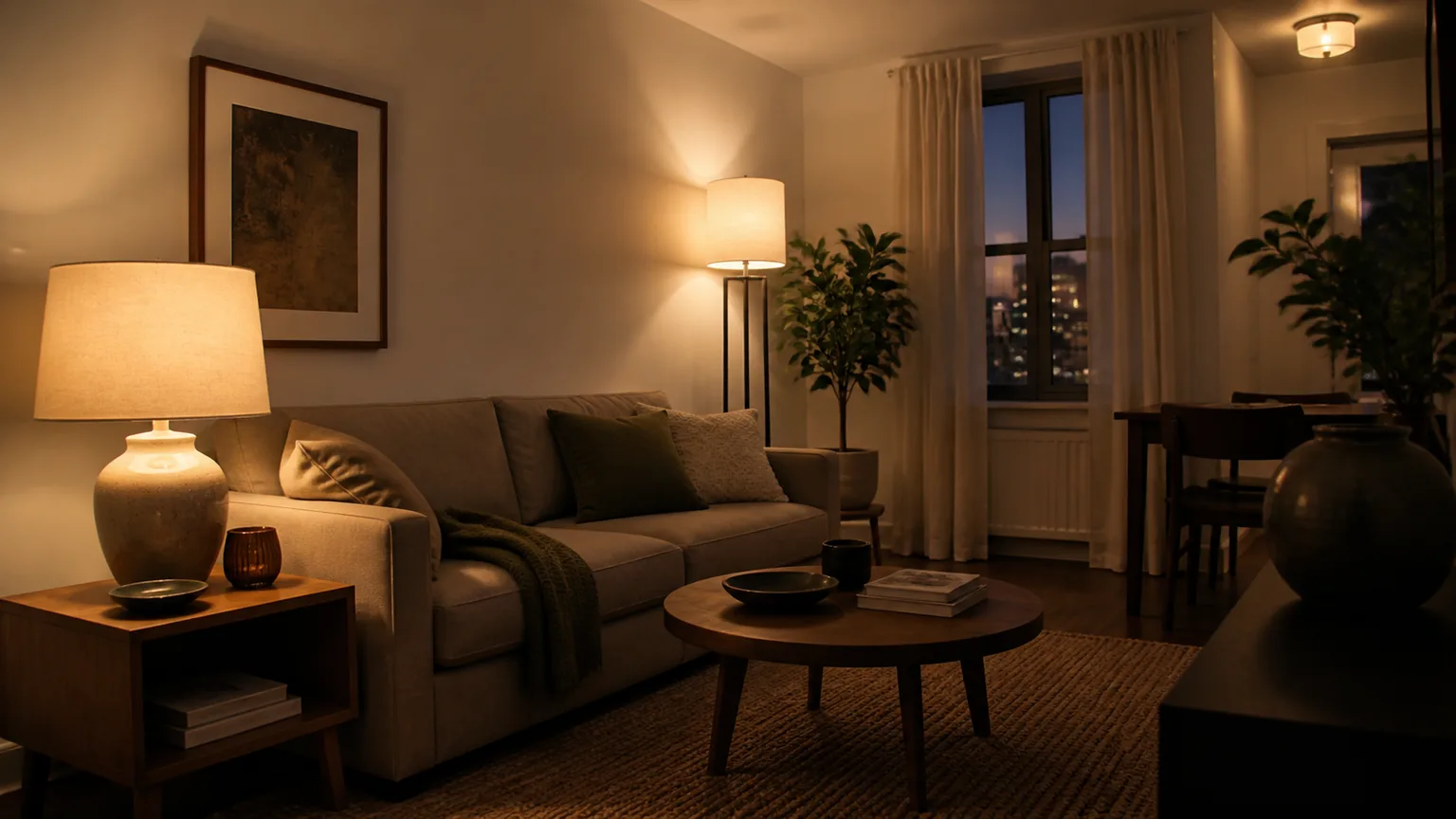
The fastest way to make an apartment feel more grown up is usually not a new sofa, a gallery wall, or a complete kitchen makeover. It is changing the way the room is lit.
Most rentals arrive with one bright ceiling fixture and little else. That single source has to cover cooking, cleaning, relaxing, hosting, and finding the remote, so it ends up doing none of those jobs especially well. Add a few deliberate light sources at different heights and the apartment immediately feels less temporary because the room starts responding to how you actually use it.
The important word is deliberate. A grown-up apartment is not one filled with expensive objects; it is one where the light, furniture, textiles, and personal details look like they belong to the same life. The Illuminating Engineering Society’s residential-lighting guidance treats home lighting as a matter of function and character, not decoration alone. That is a useful standard for renters: make the space easier to use first, then make it more beautiful.
Start with a five-minute apartment audit
Before buying anything, stand in the middle of the room after sunset and turn on every existing light. Look at the room from the doorway, the sofa, the dining table, and the place where you usually read or work. You are looking for shadows, glare, dark corners, and surfaces that disappear—not for a shopping list.
Notice what the room is missing, not what it is wearing
If the ceiling fixture makes the center of the room bright while the walls and corners look flat, the apartment needs light around its perimeter. If the sofa is comfortable but reading feels tiring, it needs a task lamp behind or beside the seating. If the room is functional but visually forgettable, it probably needs a small accent layer aimed at art, a textured wall, a shelf, or a plant.
This distinction keeps you from buying a decorative lamp that solves no problem. A sculptural lamp can be a wonderful object, but if it is placed where nobody sits, reads, or looks, it is just another object competing for space.
Map each activity before buying a lamp
Write down three activities that happen in the room and the light each one needs. A living room might need soft general light for conversation, a focused pool of light for reading, and a low glow for watching television. A studio apartment may need one lamp to serve as both work light and evening accent; that is fine if its shade, brightness, and location can handle both roles.
The IES notes that residential lighting has to support many visual tasks, lifestyles, and age groups. In practice, that means there is no universal “right” lamp count. Start with the activities and the dark spots, then choose the smallest number of fixtures that cover them comfortably.
Build the three layers that make a rental feel intentional
Layered lighting means combining ambient, task, and accent light instead of asking one ceiling fixture to do everything. A practical overview from Lighting.co.za uses the same three-part framework and places lamps near seating so they add usable light at a comfortable height.
How ambient, task, and accent light work together
Ambient light is the room’s general illumination. In a rental, it may come from the existing ceiling fixture, a shaded floor lamp, or several table lamps spread across the room. Keep the ceiling light; it is useful for vacuuming, moving furniture, finding dropped objects, and bright daytime tasks. The grown-up move is to stop treating it as the only setting.
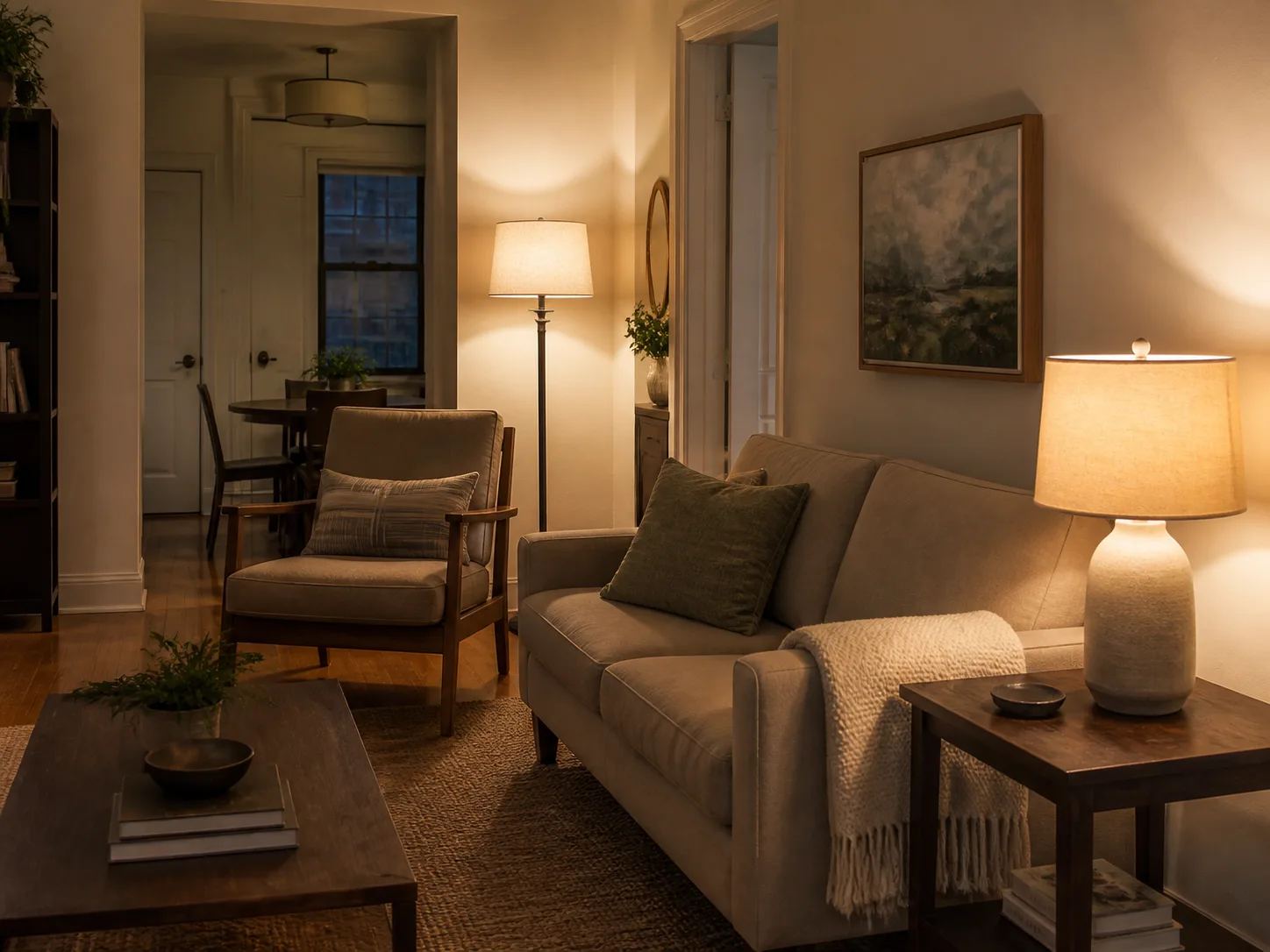
If the fixture is harsh, look for a diffuser, a wider shade, or a compatible lower-glare bulb before deciding it must go. A ceiling fixture with a soft glass or fabric-like diffuser distributes light more comfortably than a bare bulb. If the fixture is controlled by a switch you cannot alter, a smart bulb may give you dimming or scheduling without opening the wall—but check the bulb, fixture, and switch compatibility first.
Task light follows an action: reading, writing, cooking, applying makeup, or playing a board game. It should land where the task happens, not simply add brightness somewhere nearby.
For a reading chair, place the lamp just behind the reader’s shoulder or to the side, with the shade around eye level when seated. For a sofa, a narrow floor lamp can tuck behind one arm; a table lamp can sit on a side table if it does not force the table to become a storage pile. A desk lamp should illuminate the work surface without reflecting directly into a screen.
The goal is enough light to see comfortably without seeing the bulb. If you can see the glowing source from the sofa or it throws a bright stripe across a television, move it, lower it, or choose an opaque or fabric shade.
Accent light is the smallest layer but often the one that makes a room feel designed. Aim it at a framed print, a shelf, a textured wall, a plant with good leaf shape, or a corner that would otherwise vanish after dark.
You do not need a wired picture light. A small lamp on a console, a plug-in sconce, or a rechargeable puck light hidden under a shelf can create the same visual hierarchy with less commitment. The light should support something already worth looking at; do not add an accent fixture just to illuminate an empty wall.
Choose bulbs for comfort, not just brightness
Bulb packaging gives you more useful information than the wattage number alone. Look for lumens, color temperature, dimming compatibility, and—when color matters—color rendering information. The fixture determines the look, but the bulb determines how usable and comfortable that look is at night.
Use color temperature, shades, and placement to control comfort
Color temperature is measured in Kelvin. The U.S. Department of Energy’s lighting guidance says 2700–3600 K is generally recommended for many indoor general and task-lighting applications. For a living room or bedroom, many people prefer the warmer end of that range because it feels softer on walls and textiles; a kitchen work surface may benefit from a more neutral choice.
You do not have to use one Kelvin number everywhere, but avoid accidental patchwork. Three lamps in the same sightline with one amber bulb, one cool white bulb, and one daylight bulb will make the room look less intentional even if every fixture is attractive. Keep the main living-area lamps within a close range, then use a different temperature only when the function clearly changes.
Warm light is not the same as dim light. A warm bulb can still be too bright if it is exposed, pointed at eye level, or reflected off a glossy wall. When choosing between bulbs, solve color and glare separately.
A shade is not just a style choice. It hides the hottest part of the bulb, spreads light, and decides whether the glow points down, up, or out into the room. Fabric and paper-like shades tend to soften a lamp; clear glass shows more of the source and asks for a lower-brightness bulb or a more careful location.
Use the seated-eye test: sit in the spot where you will use the room most and look toward every lamp. If the filament is visible, the shade edge cuts across your eyes, or a shiny surface reflects the bulb, adjust before buying more light. The room should feel brighter in useful places, not more glaring everywhere.
Make renter-safe lighting changes
Lighting is where an apartment upgrade can quietly become an electrical or lease problem. Read the lease and building rules before replacing a hardwired fixture, opening a switch box, or drilling into a ceiling. If the work changes wiring, requires a new junction box, or could affect the next tenant, ask the landlord or use a licensed electrician where local rules require one.
Use plug-in sconces and smart bulbs carefully
Plug-in sconces are the best shortcut when you want light at wall height without hardwiring. Hide the cord along a furniture edge or use a purpose-made cord cover that matches the wall; do not run a loose cable across a walkway. Place the fixture where a real wall light would help—beside a sofa, over a reading chair, or near art—not in a random gap just because the outlet is convenient.
Smart bulbs can add dimming, timers, and scenes to existing fixtures. They are helpful in a rental, but they are not magic: a smart bulb needs a fixture that stays powered, and a wall switch that cuts power will make app controls useless until it is turned back on. If you do not want to manage an app, a simple plug-in dimmer rated for the bulb and lamp may be easier.
Know when a dimmer or fixture change needs permission
A replaceable bulb is usually the least permanent intervention. A dimmer switch is different because it involves the electrical control, and not every dimmer works with every LED bulb. A new fixture may expose wiring, exceed the box’s rating, or leave you responsible for storing the original fitting.
When in doubt, keep the original fixture safely labeled, photograph the connection before any approved change, and ask for written permission. A renter-friendly plan should be reversible without a repair bill. The visual improvement is not worth a lease dispute or a flickering, overheating lamp.
Arrange furniture before adding finishing pieces
Lighting works best after you know where the room’s life happens. Pull the sofa slightly away from the wall if the room allows, define a reading corner, and give the dining table or desk enough clearance to be used. Then place lamps at the edges of those zones so light helps the layout rather than fighting it.
Place lamps beside the action
The most reliable lamp locations are beside seating, behind a sofa corner, on a console, at a desk, and near a bed. A lamp does not need to be centered on a wall; it needs to be close enough to the activity to be useful and far enough from traffic that it is not constantly bumped.
In a small apartment, use vertical space and dual-purpose surfaces. A slim floor lamp can serve a sofa and a nearby reading chair; a wall-mounted plug-in lamp can free a tiny side table; a small lamp on a bookcase can add accent light without taking a new footprint. Choose two or three well-placed sources over five small lamps scattered without a plan.
Let the overhead fixture do the heavy-duty work
The ceiling light is useful for cleaning, moving day, maintenance, and tasks that need broad visibility. It becomes a problem when it is the only light on for every evening activity. Put it on its own switch or scene when possible, then let the lamps carry the lower, warmer, more flattering evening light.
If you cannot dim it, turn it off rather than trying to neutralize it with too many lamps. A room with three gentle pools of light often feels calmer than the same room with the overhead fixture blazing and three decorative lamps added on top.
Add the quiet upgrades that make the room look finished
Once the lighting plan works, use a few large, coherent changes instead of many small decorations. This is where rugs, curtains, art, greenery, and hardware help—but only when they correct proportion or add a clear personal signal.
Scale the rug and curtains to the room
A rug that is too small makes a seating group look like separate islands. If possible, choose a size that lets at least the front legs of the sofa and chairs sit on the rug. In a very small room, placing the rug under the front third of the seating can work; a tiny mat floating in the center usually looks accidental.
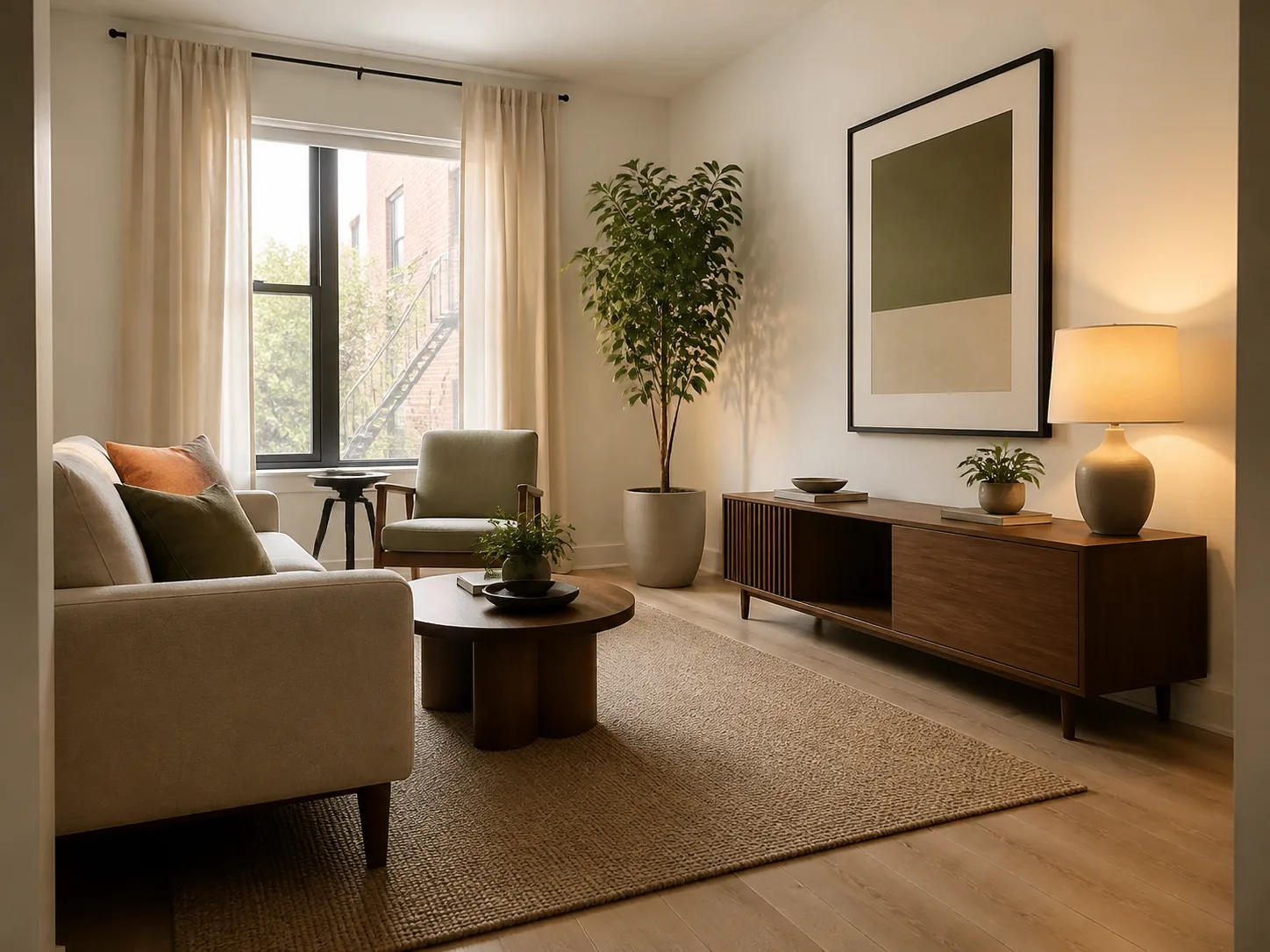
Curtains should frame the window and soften the wall, not stop at the sill unless the room requires it. Mount the rod as high as the lease and window trim allow, extend it beyond the frame, and choose panels that reach the floor or just skim it. If drilling is not allowed, use a tension rod or a removable system designed for the curtain’s weight, and accept that it may not support heavy lined panels.
These changes work because they make the room’s boundaries clearer. A rug connects furniture; a curtain connects the window to the rest of the wall. Neither needs to be expensive, but both need to be the right scale.
Frame art, add greenery, and edit small hardware
Art feels more intentional when it has a real frame, a consistent margin, and a relationship to the furniture below it. You do not need a matching gallery wall. One large print above a console or two related pieces beside a sofa can look more considered than a dozen small unframed canvases spread across every wall.
Greenery adds shape and life, especially in apartments with hard surfaces and limited color. Choose one plant that suits the actual light, then give it a pot that works with the room’s materials. A healthy plant in a simple container is more polished than several stressed plants used as filler.
Hardware is a final detail, not the starting point. If the lease allows it, changing a few cabinet knobs or pulls can make a rental kitchen or bath feel less generic, but save the original hardware and do not create new holes. Matching finishes across a lamp, a frame, and one or two pulls is enough; repeating a metal everywhere can make the room feel staged.
Avoid the apartment styling mistakes that undo the effect
The most common mistake is buying decor before solving the room’s light and layout. A beautiful rug cannot make a dark reading chair usable, and framed art cannot soften an exposed bulb shining directly into your eyes.
Other mistakes are smaller but easy to fix:
- Using only overhead light: Keep it for practical tasks, but build lower layers for evening.
- Mixing unrelated bulb colors: Choose a consistent range for fixtures seen together.
- Buying lamps that are too small: A tiny shade on a large console disappears; scale the lamp to the furniture.
- Putting every object at the same height: Mix floor, tabletop, and wall-level elements to create rhythm.
- Floating a tiny rug: Anchor furniture with a larger size or skip the rug until the budget allows one.
- Hanging art too high: Relate its center to the seated or standing viewing position and the furniture below.
- Overfilling surfaces: Leave some table and shelf space empty so the intentional pieces can register.
- Ignoring cords: Route them along edges, secure them safely, and keep walkways clear.
- Changing electrical hardware without checking: A renter-friendly upgrade should not create a safety or lease problem.
The test is simple: remove one object from a crowded surface and see whether the room looks calmer. Grown-up style is often the result of editing, not adding.
A seven-day, low-waste apartment reset
You can make meaningful progress without shopping for an entire room. Work in this order so every purchase has a job.
- Day 1: Audit after dark. Photograph the room from four angles and note glare, shadows, dark corners, and activities that are hard to do.
- Day 2: Reposition. Move furniture into useful zones, clear the surfaces that will hold lamps, and put the existing overhead light on its practical-only list.
- Day 3: Buy the first light. Choose the fixture that solves the biggest problem—usually a shaded floor lamp or a table lamp beside the main seating.
- Day 4: Match the bulb plan. Check lumens, Kelvin, dimming compatibility, and the lamp’s shade before adding another light source.
- Day 5: Add one accent. Light a piece of art, a shelf, a plant, or a dark corner with a low-commitment fixture.
- Day 6: Correct scale. Measure for a rug and curtains before ordering. If the right size is not in budget, wait rather than buying a placeholder that makes the room feel smaller.
- Day 7: Edit and live in it. Use the room for a full evening. Move any lamp that causes glare, remove decor that blocks function, and keep only the upgrades that make daily life easier.
At the end, you should have a room that works in at least three modes: bright enough for chores, focused enough for tasks, and soft enough for relaxing. That is a better measure of a mature apartment than whether every item matches.
Conclusion: make the room easier to live in
The one swap designers keep returning to is a lighting swap because light changes both the atmosphere and the way a room is used. Replace ceiling-only illumination with a few purposeful sources at different heights, then use bulbs, shades, and placement to control comfort rather than chase maximum brightness.
After that, let proportion do the rest: a rug that connects the furniture, curtains that respect the wall, art with a frame, one healthy plant, and fewer objects on each surface. Those changes are renter-friendly, reversible, and more convincing than trying to make an apartment look grown up through expensive purchases alone.



