How Often Should You Water a Christmas Cactus?
Learn how often to water a Christmas cactus by season, soil moisture, pot size, and bloom stage—plus the signs of underwatering, overwatering, and root rot.
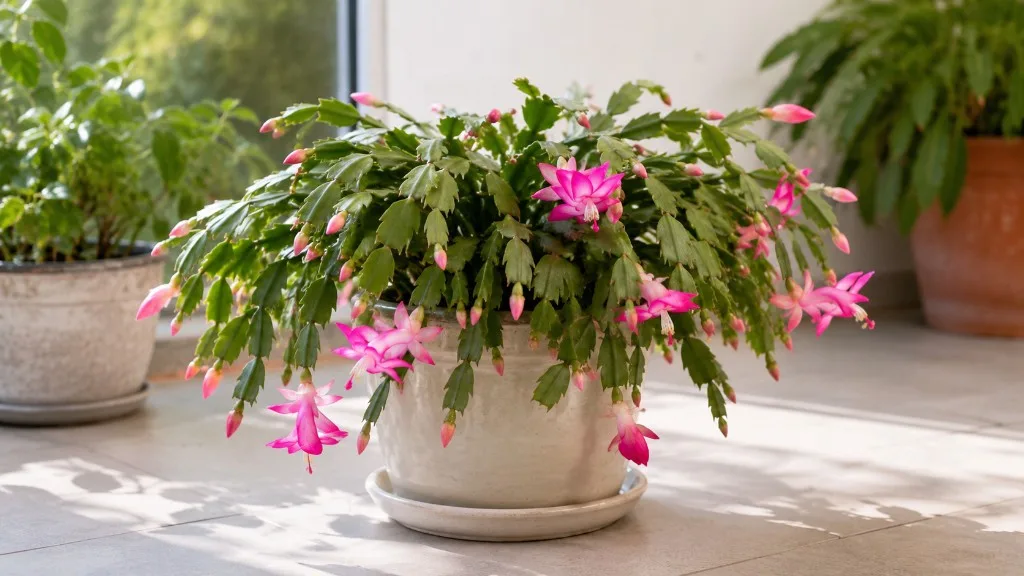
A Christmas cactus should be watered when the upper part of its potting mix has dried, then watered thoroughly so excess runs from the drainage holes. The interval is usually shorter during active growth and flowering, and longer during the post-bloom rest. In an average indoor pot, that can mean checking weekly and watering every one to three weeks, but the plant’s soil—not the calendar—makes the final call.
That flexible answer matters because Schlumbergera is not a desert cactus. Christmas cactus is an epiphytic tropical plant that grows in humid, shaded rainforest habitats, often in organic debris around branches or rock crevices. NC State Extension describes it as an epiphytic cactus that prefers moist, airy, well-drained medium, while Clemson Extension warns against both waterlogged soil and allowing the mix to become completely dry. Your goal is a moist root zone with air still available—not a dry desert cycle and not a permanently wet pot.
The short answer: water by soil moisture, not the calendar
Use a calendar to remind you to check, not to force a watering. A small Christmas cactus in a warm room may dry quickly; a large plant in a cool room, heavy mix, or decorative cachepot may stay wet for much longer. Bright filtered light, moving air, a terracotta pot, a heating vent, and outdoor summer conditions all speed drying. Dim light, cool temperatures, a plastic pot, a large container, or compact soil slow it down.
For a healthy plant, wait until the top inch or so feels dry during normal growth, then water deeply. Better Homes & Gardens recommends checking the surface weekly in spring and summer and watering when that upper layer is dry. During flowering, inspect more often because dry soil can shorten the display and contribute to bud drop. After flowering, reduce both the frequency and the amount of attention while the plant takes its short rest, but do not leave the root ball bone-dry for weeks without checking.
The most useful question is therefore not “Has it been seven days?” It is “Is the mix dry enough for this stage, and will the pot drain freely if I water now?”
Why Christmas cactus watering differs from desert cactus care
The common name creates the first watering mistake. A Christmas cactus stores some water in its flattened stem segments, but its rainforest origin means it is adapted to regular moisture, humidity, and an airy growing space. It can tolerate a little drying between waterings; it does not thrive in a hard, repeated drought followed by a flood.
The roots need both water and oxygen. When fine roots sit in saturated mix, the air spaces fill with water and the root system can deteriorate. Once roots are damaged, adding more water because the stems look limp makes the problem worse. That is why a drooping plant is not automatically thirsty.
Bloom timing changes the balance. The plant benefits from a somewhat drier period as it moves toward bud formation, then needs steadier moisture after buds appear. The Royal Horticultural Society recommends reduced watering in the autumn and after flowering, with regular watering resumed when buds develop and through spring and summer. This is a rhythm of controlled drying and rehydration, not a year-round rule to keep the soil wet.
The 60-second water-now test
Before picking up the watering can, use three quick checks. Together they are more reliable than a single symptom or a moisture-meter number.
Check the mix and the pot’s weight
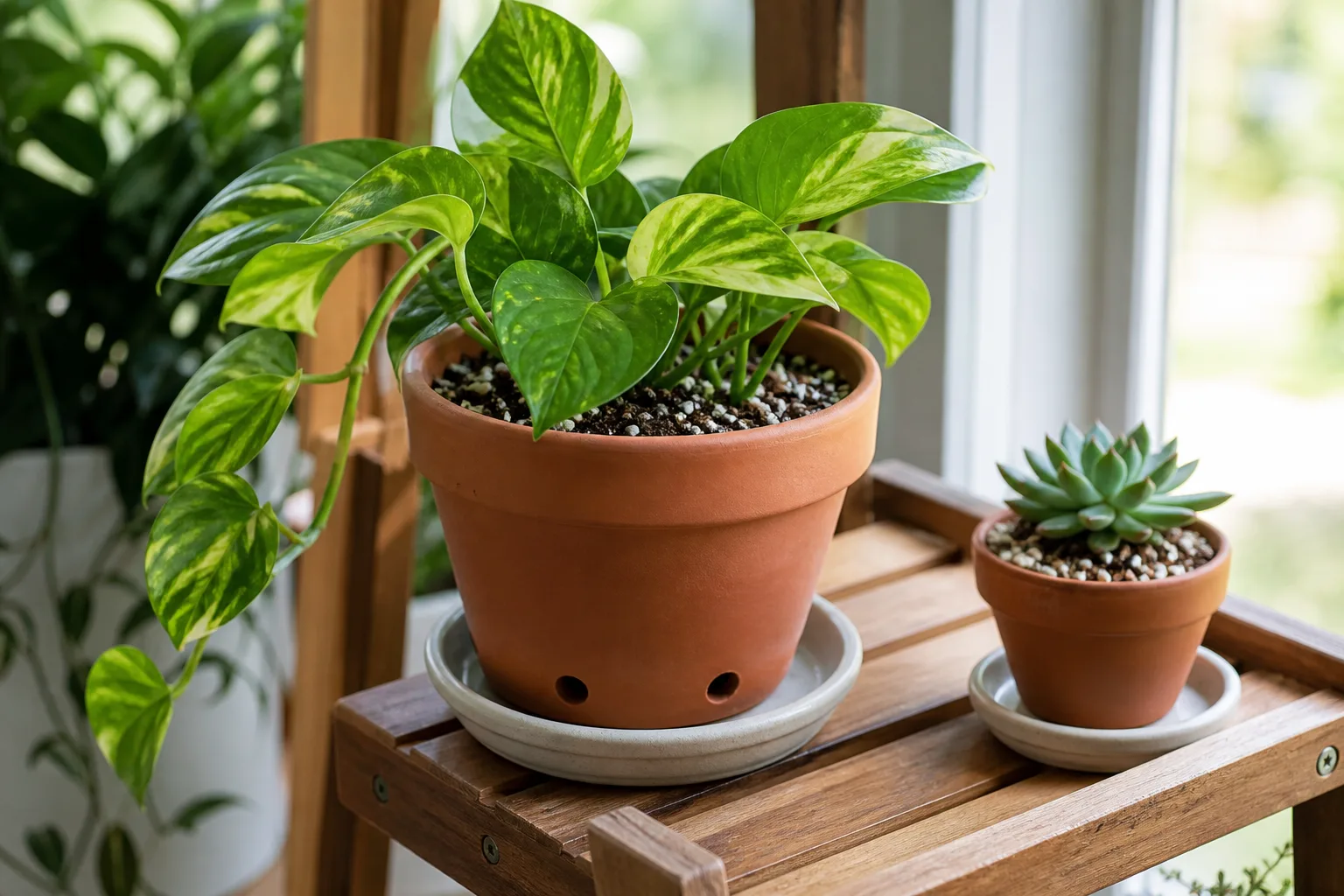
Push a clean finger about an inch into the mix near the edge of the pot, where roots are less dense. If it feels cool and distinctly damp, wait. If it feels dry and crumbly at that depth, the plant is approaching watering time. In a very small pot, use a shallower check; in a deep container, also test farther down because a dry crust can sit over wet lower soil.
Lift the pot before and after watering so you learn its weight cues. A light pot with dry mix is a stronger signal than a limp stem by itself. A heavy pot with drooping segments suggests that the roots may be struggling in wet soil, not that the plant needs another drink.
If the mix has pulled away from the pot wall or water runs straight down the sides without soaking in, it may have become hydrophobic. Do not keep pouring from the top until the saucer floods. That situation calls for a controlled re-wetting described below.
A seasonal watering rhythm that protects blooms
Think in three phases: active growth, bud formation and flowering, and the post-bloom rest. The dates shift by hemisphere, cultivar, and indoor conditions, so use the plant’s growth and buds as the signals.
Spring and summer growth
As new segments appear in spring and growth continues through summer, check the pot about once a week. Many indoor plants will need a thorough watering every one to three weeks, while a plant outdoors in warm, bright shade may dry in less than a week. A sheltered outdoor cactus also loses water to wind, even when the air feels humid.
Let the surface dry slightly between waterings, then soak the whole root ball and empty the saucer. Avoid tiny daily sips: they wet only the upper layer, encourage uneven roots, and make it harder to know whether the lower mix is saturated. In a porous terracotta pot, check sooner; in a plastic nursery pot, wait for the same moisture cue rather than copying the terracotta interval.
Keep the plant in bright, filtered light rather than hot direct afternoon sun. Light drives growth and drying, but excessive sun can bleach or stress the stems, which can look like a watering problem. A stable location makes the watering pattern easier to read.
Fall bud setting and winter flowering
In late summer or early fall, gradually allow more drying between waterings as the plant prepares to set buds. NC State Extension and Missouri Botanical Garden’s Christmas cactus guidance both describe reduced watering as part of the transition into flowering. Do not confuse “drier” with “neglected”: the stems should not stay shriveled and the entire root ball should not become dust-dry.
Once you can see flower buds, return to a steadier routine. Check the mix every few days while buds are developing and flowers are open. Water when the surface is slightly dry, then let the pot drain completely. Both letting the mix dry too far and keeping it saturated can contribute to bud drop, and sudden changes in temperature or light can do the same.
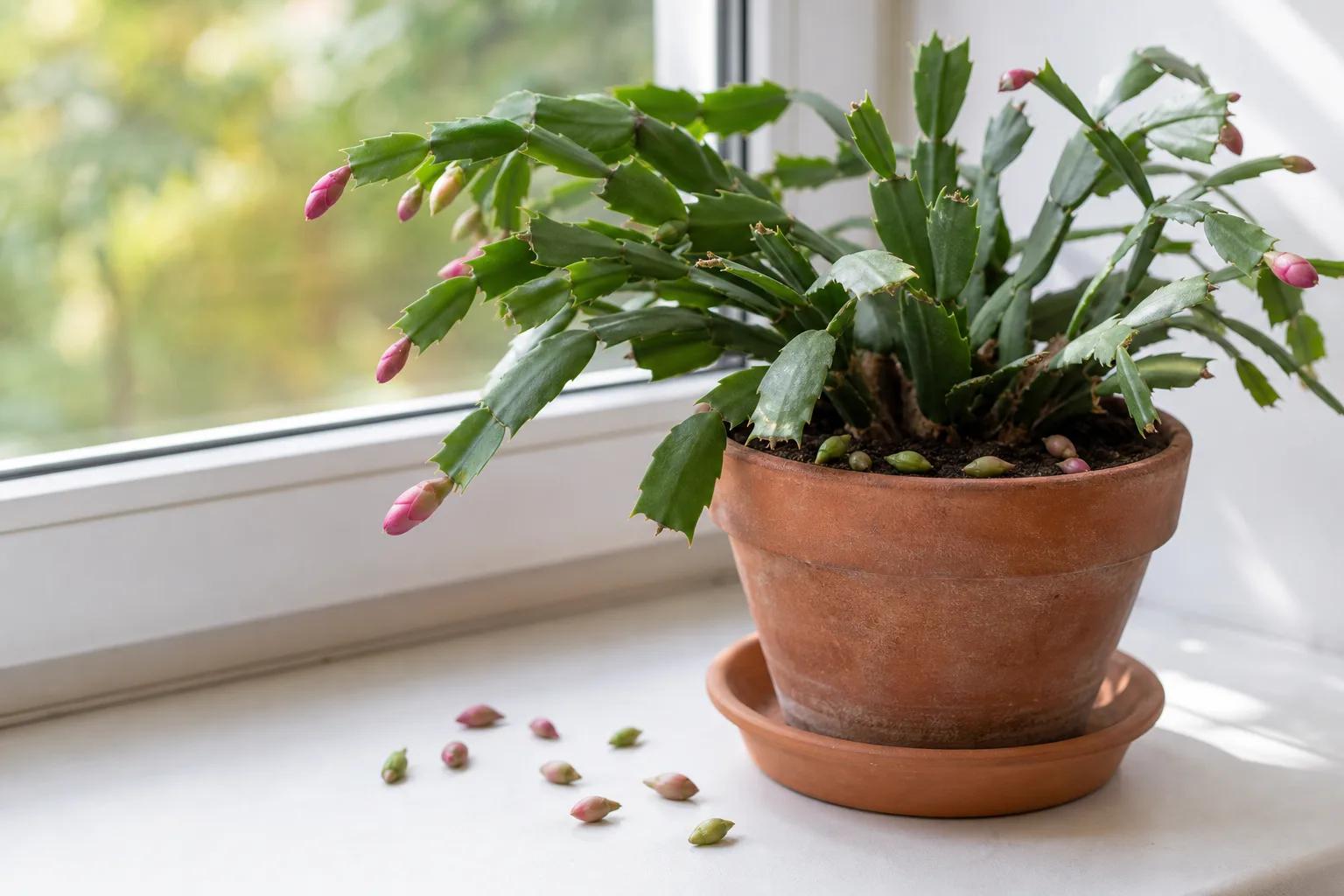
While the plant is flowering, avoid moving it from a stable spot just to water it. Carry it to a sink or tub if needed, but return it to the same light and temperature conditions. A cold draft, hot radiator, or abrupt window change can cause buds to fall even when your watering was reasonable.
After flowering: the rest period
After the flowers fade, reduce watering while the plant rests. Let the upper several centimeters of mix dry before watering again, and check the pot weight. In a typical indoor setting, a check every one to two weeks is sensible; actual watering may land around two to four weeks depending on temperature, light, pot size, and mix. Gardening Know How describes a longer winter interval after bloom, while BHG recommends a roughly biweekly post-flowering rhythm.
The range is not a contradiction—it reflects different homes and different containers. If the plant is cool and dim, it may still be heavy and damp after two weeks. If it is near a heater in a bright room, the surface may dry much sooner. Resume the regular growth-season routine when new segments begin to form.
How to water thoroughly without leaving roots soggy
When the plant is ready, use enough water to wet the entire mix rather than dribbling a fixed number of tablespoons. Place the pot in a sink, shower, or waterproof tray, pour room-temperature water slowly over the soil, and continue until water exits the drainage holes. Wait until the flow slows, then empty any saucer or cachepot before returning the plant.
This flushes dry pockets and reduces the chance that only the surface gets wet. It also tells you whether the drainage system works. If no water emerges, or if it takes many minutes to drain, the pot or mix needs attention before you return to a frequent schedule.
Top watering is the reliable default
Top watering is usually the clearest method for Christmas cactus because you can see the water move through the pot and can confirm that the root ball is fully moistened. Pour around the soil surface rather than into the center where stems meet the mix. Avoid leaving water trapped between segments or in dense foliage, especially in a cool room.
Do not confuse runoff with overwatering. Thoroughly watering a well-drained pot is different from watering again while the lower mix is still wet. The risk comes from frequency, poor drainage, and standing water—not from a single complete watering that drains promptly.
When bottom watering can rescue dry, hydrophobic mix
Bottom watering is useful when severely dry mix repels water and top water runs around the root ball. Set the nursery pot in a shallow dish of water for about 15 to 20 minutes, or until the surface begins to feel evenly damp. Then lift it out, let it drain fully, and empty the dish.
Do not leave the pot sitting in water as a routine. The surface can look dry while the lower roots are saturated, so bottom watering makes it easier to overestimate dryness. If the mix repeatedly becomes hydrophobic, repot into a fresh, airy medium rather than making longer and longer soaking sessions the permanent solution.
How the pot and soil change the interval
A watering schedule belongs to a plant-and-container combination, not a species name alone. A small pot with a crowded root ball can dry faster than a larger pot with fresh mix. A porous clay pot loses water through its sides; a glazed ceramic or plastic pot holds moisture longer. A hanging basket exposed to warm air may need more frequent checks than the same plant on a sheltered shelf.
The mix should hold some moisture while draining excess quickly. Clemson Extension recommends an airy, well-drained medium and gives a potting-soil-and-perlite example. A dense outdoor soil or a peat-heavy mix that stays compressed can create a wet lower layer even when the surface feels dry. Perlite, bark, coarse material, or another appropriate aeration component can help, but simply adding a drainage layer beneath the soil does not fix a waterlogged root zone.
Use a pot with open drainage holes and keep the pot only slightly larger than the root system. An oversized container stores more wet mix than the plant can use, extending the interval and increasing the chance of root problems. Repotting is best done after flowering or during active growth, not while the plant is carrying a full display unless the container is failing.
Read the symptom pattern before watering again
Christmas cactus symptoms overlap. Limp or dropping segments can follow drought, saturated roots, temperature shock, low light, or a sudden move. Check the mix first, then smell the soil and inspect the base of the plant before deciding that more water is the answer.
Signs of underwatering
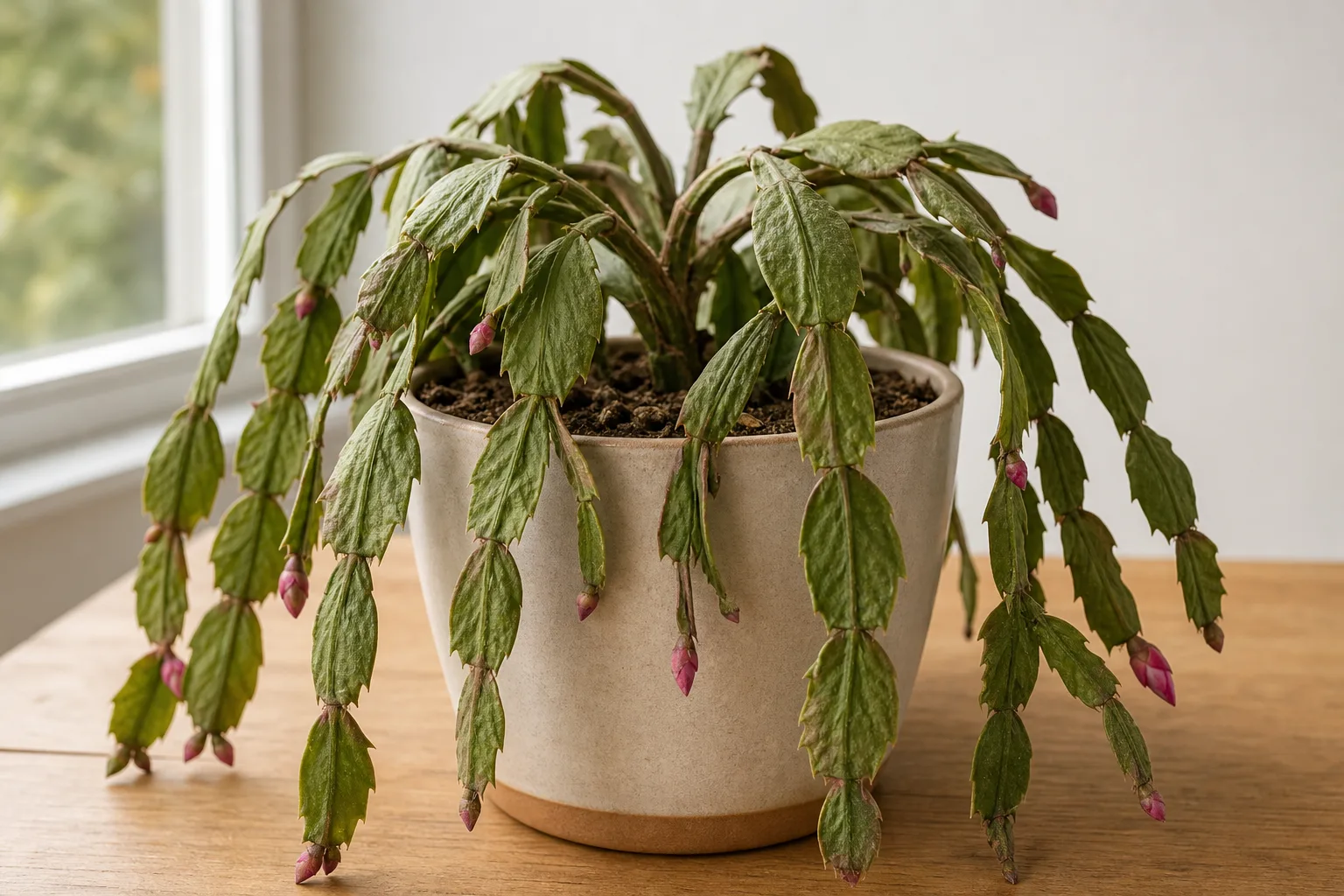
An underwatered plant usually has dry mix at the depth where roots are growing. The segments may look thin, wrinkled, puckered, dull, or limp, and the pot will feel unusually light. Buds can drop when a plant swings from too dry to too dry again, but bud drop alone does not prove thirst.
If the soil is dry and the stems are still firm, water thoroughly and let the pot drain. Check again in two or three days rather than watering repeatedly the same day. The segments may not plump instantly, and damaged tissue will not become perfect again, but new growth should remain firm if the roots are healthy.
If water runs around the inside of the pot, use the controlled bottom-watering rescue above. If the plant dries in a day or two every time despite a reasonable pot and mix, investigate bright sun, hot air, a root-bound root ball, or a container that is too small instead of simply watering several times daily.
Signs of overwatering and root trouble
Overwatering begins with a root-zone problem, so inspect the mix before interpreting the stems. Warning signs include soil that stays soggy, a pot that remains heavy for many days, water standing in the saucer, yellowing or translucent segments, soft stems, a sour smell, and roots that are brown, mushy, or collapsing. Fungus gnats can accompany persistently wet mix, but they are not a watering gauge by themselves.
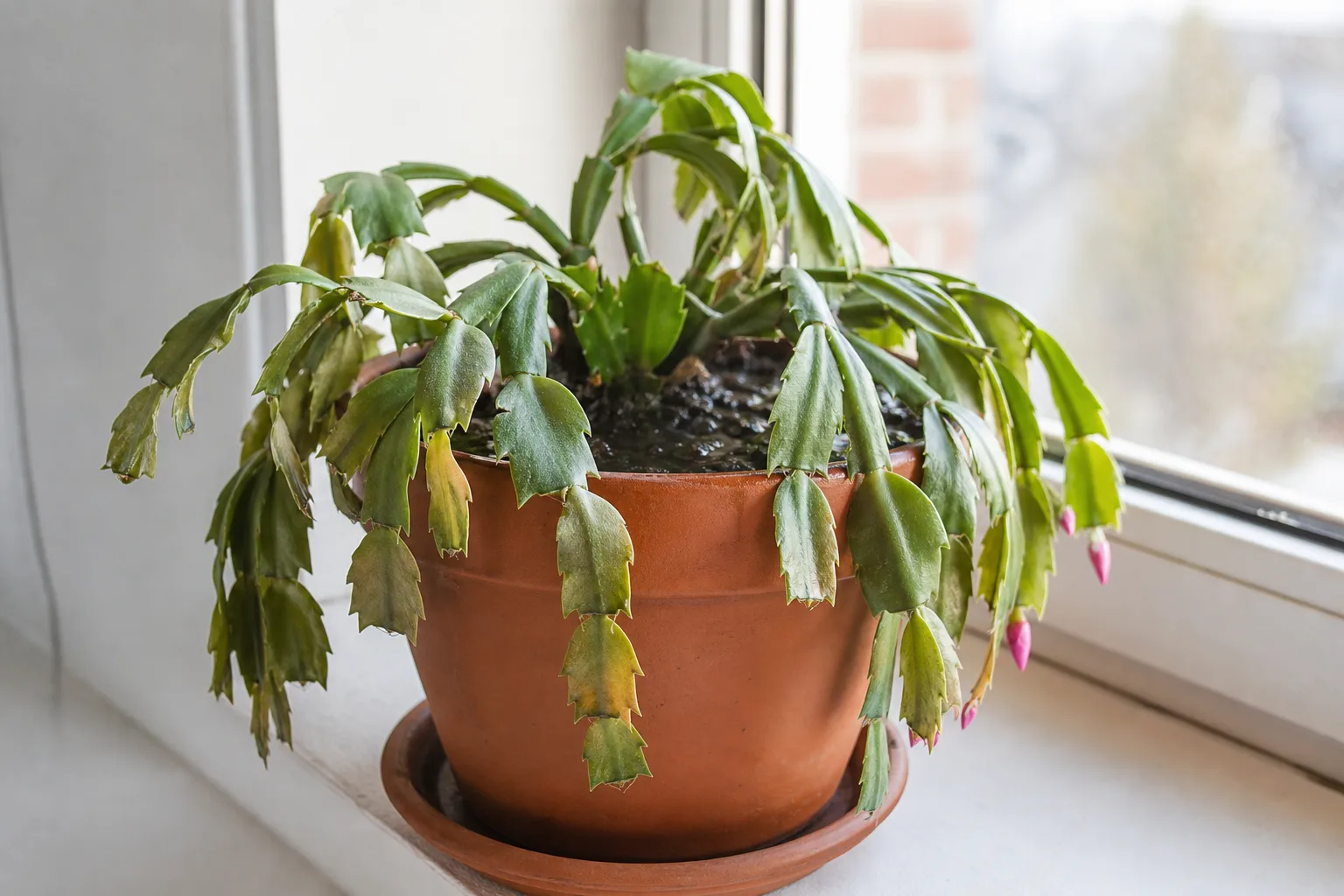
A soft, drooping plant in wet soil should not be watered “to perk it up.” RHS notes that waterlogged compost can displace air around roots and that Christmas cactus roots may rot when left in damp compost. Check for drainage failure, compacted soil, a blocked hole, or a cachepot holding water. If the mix is merely damp and the stems are firm, let it dry to the appropriate stage and correct the container conditions first.
How to recover an overwatered Christmas cactus
Act according to how wet the pot is and how quickly it can dry. If the plant is firm, the mix is only moderately damp, and water drains freely, stop watering, move it to bright filtered light with good air movement, and wait until the upper mix dries. Do not fertilize a stressed plant or try to compensate with misting.
If the soil is saturated, smells sour, stays wet for many days, or the base and roots are soft, unpot the cactus. Gently remove wet mix, trim only clearly dead or mushy roots with clean tools, and repot into fresh airy medium in a clean pot with drainage. Do not move a rotting plant into a much larger pot; excess unused mix will stay wet. After repotting, water only enough to settle the medium and then wait for the new mix to reach the plant’s normal dry point.
Recovery is measured by the next several weeks of growth, not by a single day of firmer stems. Remove fallen or collapsed segments, keep conditions stable, and take cuttings from healthy firm sections only if the base continues to deteriorate. For a fuller diagnostic path, see the Christmas cactus leaf-drop guide.
Watering mistakes that shorten the bloom display
The most common errors are small habits that make the root zone impossible to read:
- Watering on a fixed weekly schedule. Use the week as a reminder to inspect the pot, not as an automatic trigger.
- Giving frequent sips. A few tablespoons can wet the surface while the lower mix remains dry or stale. Water thoroughly when the plant is ready.
- Leaving the saucer full. Empty drainage water soon after watering; a cachepot is not a reservoir unless the container is designed for controlled self-watering.
- Using an oversized decorative pot. A large volume of wet mix can make a small root system stay saturated.
- Treating all limp segments as thirst. Wet soil plus limp growth is a reason to inspect roots, not add water.
- Changing several conditions at once. During bud set and flowering, keep light, temperature, and watering reasonably steady so you can identify the real cause if buds fall.
- Mistaking humidity for root watering. Humid air can support rainforest-style growth, but misting does not replace watering the root zone and does not correct waterlogged soil.
When you adjust the routine, change one variable at a time. First confirm drainage, then set the plant in bright filtered light, then adjust the interval using the moisture test. This turns watering from guesswork into a repeatable observation.
Conclusion: let the plant tell you when to water
Water a Christmas cactus when the upper mix has dried to the appropriate depth for its pot and season, then soak the root ball and let every drop of excess drain away. Water more consistently after buds appear and while flowers are open, reduce watering during the fall setup and post-bloom rest, and never leave the plant in standing water.
The best schedule is the one you can verify: dry enough soil, a lighter pot, firm segments, and a container that drains. If those signals disagree, check the roots and the pot before adding more water. That simple pause protects the plant through the holiday display and gives it the stable conditions it needs to grow again next season.