How to Identify and Control Bugs That Eat Clothes at Home
Bugs that eat clothes leave different clues. Identify the pest, inspect hotspots, treat garments without damage, and keep clean items protected in storage.
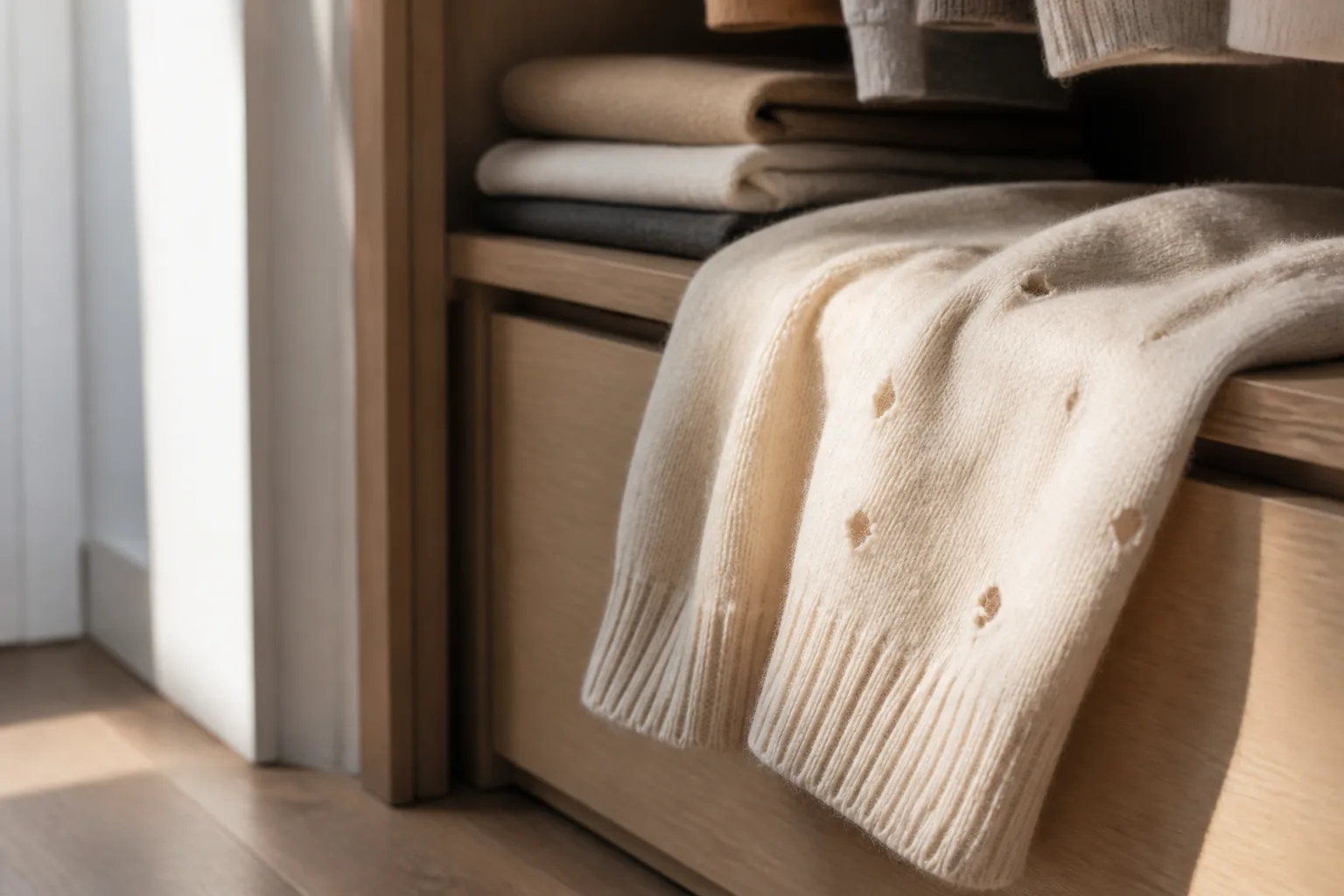
A hole in a sweater does not automatically mean moths are in your closet. Clothes moth larvae and carpet beetle larvae are the main pests to investigate when animal-fiber garments are damaged, but silverfish, firebrats, insects feeding on stains, ordinary wear, and snagging can create different clues and need different responses.
Start by saving any insect or shed skin you find, then inspect the garment’s fiber and the nearby storage area. The larva usually causes the damage, so a moth fluttering near a light or a small beetle on a windowsill is a clue to investigate—not proof that a particular garment is infested. Cornell IPM’s fabric-pest guidance makes the same distinction: adults may be visible, while the feeding stage is tucked into clothing, rugs, or furniture.
First, decide whether an insect caused the damage
Before washing everything or buying a spray, check the textile and the pattern. Clothes moth and carpet beetle larvae favor animal-derived fibers such as wool, fur, feathers, and hair; they may also use a soiled blend or chew through a synthetic fiber to reach a food stain. Silverfish and firebrats are more associated with starch and cellulose in linen, cotton, paper, and fabric finishes. A clean polyester shirt with one sharp hole, by contrast, may have snagged on a zipper, drawer slide, belt buckle, or rough surface.
| Clue | More likely explanation | What to check next |
|---|---|---|
| Fine silk, a tube, or a case on wool or fur | Clothes moth larva | Under collars, folds, cuffs, stored wool, and nearby rug edges |
| Bristly, striped larva or dry shed skins | Carpet beetle larva | Dark corners, lint, pet hair, upholstery seams, and window sills |
| Irregular grazing or holes in starched linen, with scales or stains | Silverfish or firebrat | Damp rooms, paper, cardboard, starch, and crevices around pipes |
| Damage around food, sweat, or urine marks, with roach or cricket evidence | Incidental feeding by another insect | Clean the stain and address the insect’s actual entry or food source |
| A clean cut, a single snag, or wear at a pressure point with no insect signs | Mechanical damage | Inspect seams, buttons, seatbelts, drawer edges, and laundering history |
This table narrows the search; it cannot identify an insect from a hole alone. The Illinois Department of Public Health notes that several insects feed on material contaminating fabric rather than digesting the fiber itself, and that moths and beetles can stay hidden until damage is visible. Treat a specimen, larva, cast skin, webbing, or repeated new damage as stronger evidence than a hole’s shape.
Identify the pest from its clues
The most useful clues are the insect’s shape, the material it is near, and the debris it leaves. If you can, take a clear close-up photo beside a coin or ruler, and collect a larva or shed skin in a sealed container for identification by a local Cooperative Extension office or pest professional.
Clothes moth larvae leave silk and feeding debris
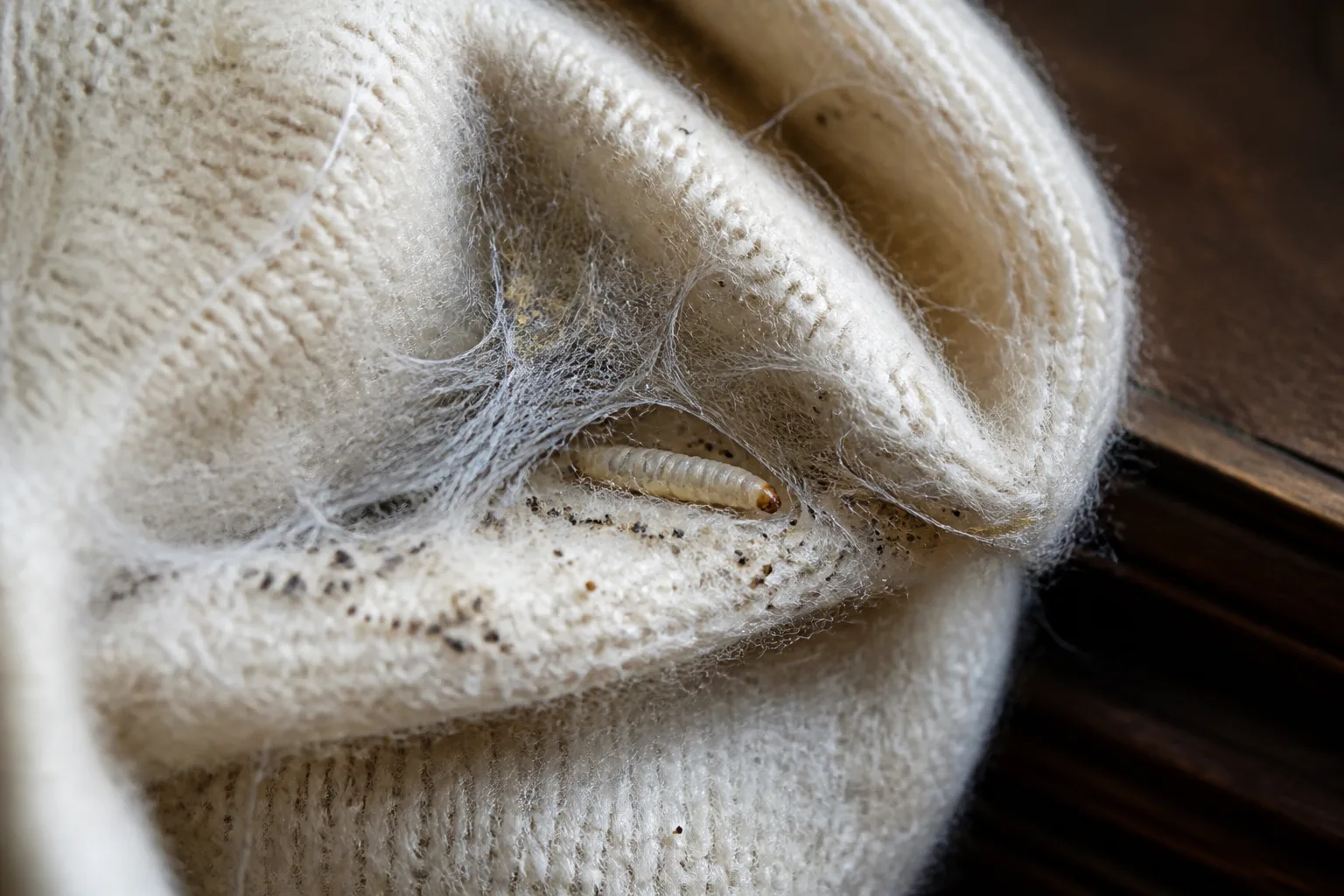
Clothes moth adults are small, pale tan or gold moths that tend to stay near dark storage areas. They do not chew clothes; the larval stage feeds. The two common clothes moth types are webbing clothes moths and case-bearing clothes moths, and their larvae may be creamy white with a darker head. Their small size makes them easy to miss in a fold or seam.
Look for silk tunnels, webbing mats, loose fibers, and tiny granular droppings mixed with the fabric. A case-bearing larva carries a narrow silken case that can incorporate fibers from the garment; a webbing clothes moth larva can leave a silken feeding tube or patch instead. Clothes moth eggs are tiny, pale, pinhead-sized specks laid on or near food for the larvae, so they can be easy to miss in fabric folds. Clemson Extension describes the eggs as small and white; not seeing them does not rule out an infestation. Damage often appears in protected spots such as under collars or cuffs, inside folds, under furniture, or on the hidden edge of a rug. The UC Statewide IPM Program’s clothes-moth guide describes these signs and notes that larvae can keep developing in heated buildings during winter.
A small moth found in a kitchen may be a pantry moth, not a clothes moth. Pantry moths are generally associated with dry foods and are often seen around cupboards; clothes moths are more likely to be found close to woolens or other animal-fiber goods. Check stored pet food, birdseed, flour, and cereal separately if moths are concentrated in the kitchen, and use a trap labeled for the suspected pest rather than assuming all moth traps are interchangeable.
Carpet beetle larvae are bristly and leave cast skins
Carpet beetle larvae are elongated, slow-moving, and covered with short bristles or tufts; many look banded or fuzzy, while the black carpet beetle larva is more tapered and has a tail tuft. The adult beetles are tiny, rounded, and often patterned with light and dark scales. Adults may appear on a windowsill because they seek light, while larvae hide in dark places near food.
Look for brown, bristly cast skins and small fecal pellets near the damaged material. Larvae feed on wool, fur, feathers, hair, leather, silk, and other animal products; they may also live on accumulated pet hair, dead insects, and lint. Carpet beetle feeding can leave a larger patch of damage, while moth damage may show scattered holes, but the patterns overlap and are not conclusive on their own. UC IPM’s carpet beetle guidance explains that cast skins and the absence of moth-like webbing are often more useful clues than the hole pattern.
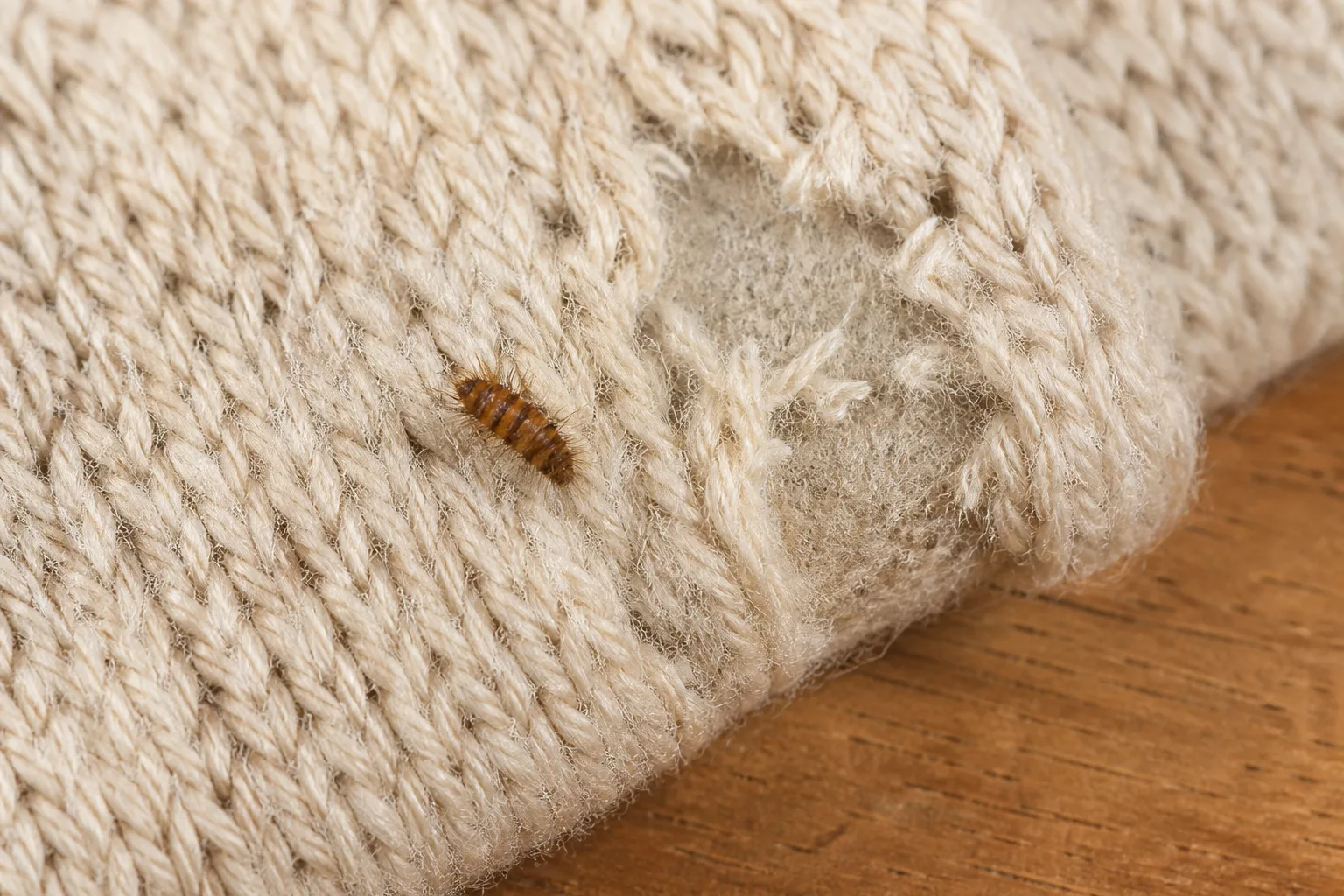
Do not assume the larva must be inside the closet. Carpet beetle larvae may be feeding in the carpet edge, under a bed, inside a stuffed item, behind a baseboard, or in an old bird or rodent nest. Finding an adult at a window is a reason to inspect nearby rooms, not a reason to spray the window or discard every garment in the house.
Silverfish and firebrats target starch-rich fabrics
Silverfish and firebrats are wingless, flat insects with long antennae and three tail-like filaments. A silverfish is usually silvery or pearly gray; a firebrat tends to look mottled gray or brown and is more likely to be near hot pipes, furnaces, or other warm places. Silverfish more often turn up in cool, damp rooms such as basements, bathrooms, or laundry areas.
These insects can feed on starch in clothing, paper, glue, and sizing; silverfish may also damage linen, cotton, rayon, and silk. Their feeding often looks like irregular scraping, grazing, or small holes rather than the silk-lined feeding associated with clothes moths. Scales, fecal specks, and yellowish staining on linen can support the identification. See University of Maryland Extension’s silverfish and firebrat guidance for material and habitat clues.
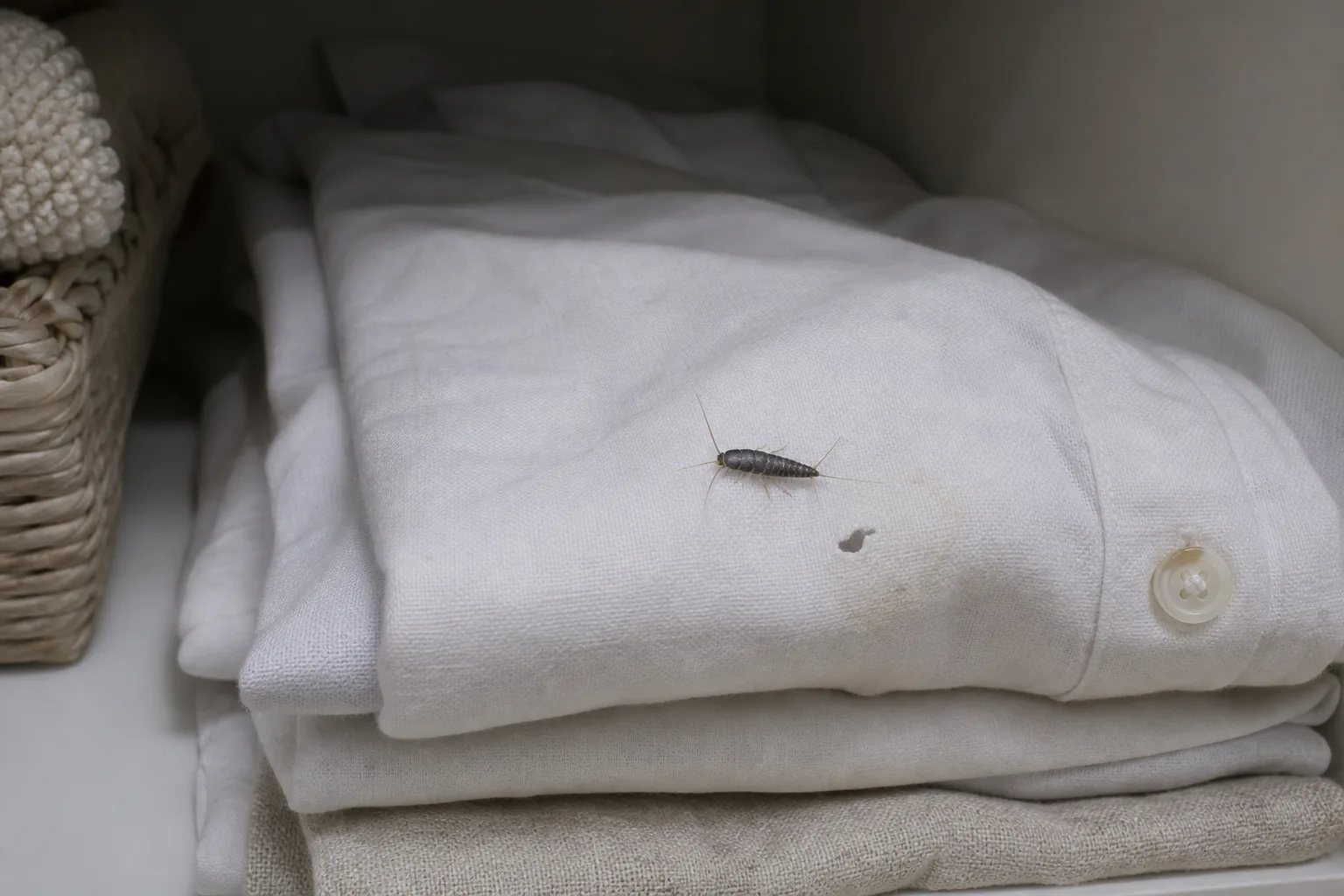
For silverfish or firebrats, a closet treatment alone misses the cause if the room stays damp or has accessible paper, starch, and clutter. Repair leaks, improve ventilation, remove dust and stored cardboard, and seal gaps around pipes. NC State Extension recommends locating the hot spot and reducing excess humidity and food before considering an insecticide.
Other insects and non-insect damage need different responses
Cockroaches, crickets, and earwigs may damage fabric when they feed on sweat, urine, skin secretions, or food residues. They are more likely to be associated with stained cloth, droppings, or a broader household pest problem than with clean wool that has silk tubes or carpet beetle cast skins. Clean the garment according to its care label, then address the roach, cricket, or earwig source rather than treating the whole wardrobe as a moth infestation. The Illinois public-health guidance distinguishes these incidental fabric feeders from insects that digest animal fibers.
Termites are a separate, uncommon possibility around cotton or linen because they feed on cellulose, but a hole in a shirt is not evidence of a termite colony. If you also find mud tubes, damaged wood, or termites emerging from a wall or floor, arrange a structural pest inspection; a clothes-moth trap or garment spray will not address that building issue. University of California Riverside’s entomology reference on fabric pests documents that some termite species attack cellulose fabrics and that others may damage textiles while moving through a structure.
Finally, insects do not explain every hole. Compare the damaged spot with places a bag strap, rough desk, seatbelt buckle, jewelry, or drawer hardware rubs. Holes that appear after laundering can result from an existing weak spot catching during the wash, so look for a repeated location or repeated new damage before blaming a pest.
Inspect the whole source area, not just the damaged garment
Take the likely food source out of the closet and inspect it under bright light. Check wool coats, blankets, felt hats, rugs, feather-filled items, natural-bristle brushes, leather goods, stuffed animals, and textiles kept in storage. Clothes moth larvae and carpet beetle larvae can also feed on hair, lint, pet fur, dead insects, and debris, so a clean garment may not be the only food source nearby.
Inspect the entire path around the item: drawer corners and joints, shelf holes, closet baseboards, under the bed, along carpet edges, below heavy furniture, upholstery seams, vents, and boxes that have not been moved for months. Use a flashlight and crevice tool; pull out drawers and lift folded clothing rather than scanning only the hanging section. Cornell IPM recommends checking closets and drawers, furniture undersides, and wool-carpet edges because larvae often feed in protected areas. Consumer Reports’ practical clothes-moth guide also flags craft drawers, rug edges, and places where hair or lint accumulates as easy-to-miss sources.
If the garment is the only clue, take photos before cleaning and save a sample. A larva, case, or cast skin can help distinguish pests that leave similar holes. If no insect evidence appears, clean the garment and storage area, then photograph the damage and check again in a week or two; fresh damage is more useful than a hole that may have been there for years.
Set one correctly labeled pheromone trap only after you have a reason to suspect clothes moths. Place it in the affected storage area and date it, then check it at the product’s stated interval. A clothes-moth trap generally catches male moths of the species named on its label; it does not catch larvae, eggs, or every textile pest, so a clean trap does not rule out an infestation. Cornell also cautions that some lures can attract non-target moths, which makes species identification important.
Follow a cleanup sequence that protects the fabric
A useful order is: isolate the suspect items, treat or discard infested fabrics, clean the places where larvae feed, seal only clean and fully dry textiles, and monitor the area. Doing the steps in this order prevents cleaned clothing from going back into a closet that still holds larvae or debris.
Isolate and sort vulnerable items
Put suspect garments in a sealed plastic bag or lidded bin before carrying them through the home. Keep them separate from clean laundry, and label the bag with the room and date so you can track which items were treated. Avoid shaking infested fabric indoors; if brushing or beating is appropriate for the item, do it outdoors and collect loose debris for disposal.
Sort by both pest evidence and care label. Washable cotton or synthetic items with a likely stain feeder may need a normal stain treatment and thorough drying, while wool, fur, silk, leather, feather-filled items, and lined coats may need a dry cleaner or textile specialist. Discarding a badly damaged low-value item in a sealed bag can be more sensible than trying to rescue it, but do not throw it loose into an indoor bin where larvae can wander.
Treat everything from the affected storage zone that shows signs or is likely to have been in contact with the source, not every fabric item in the house. If you find multiple larvae, webbing, cast skins, or new damage in several rooms, widen the inspection before returning anything to storage.
Launder, dry-clean, heat, or freeze only as the care label allows
For washable items, the effective combination is cleaning plus enough heat during drying to kill insects, provided the fabric can safely take it. Cornell IPM’s fabric-pest guidance identifies drying—not washing alone—as the lethal part of the routine and describes a dryer temperature of 122°F for at least five minutes, or a lower temperature for longer, where the material allows. Follow the garment’s care label; do not put delicate wool, silk, elastic, or heat-sensitive trim into a hot dryer just to reach a target temperature.
If an item can be washed but not tumble-dried, ask a dry cleaner or textile conservator how to treat it, or use a validated alternative that fits the material. Clothes moth guidance from the National Pesticide Information Center recommends laundering in hot water for 20 to 30 minutes when the fabric can tolerate it, and dry cleaning items that cannot be laundered. Dry cleaning is often the safer choice for structured suits, delicate wool, fur, or items with linings and glued components.
For small non-washable items that can tolerate cold, seal them in a freezer-safe bag and freeze for two weeks. That is the conservative home treatment recommended by NPIC; keep the item sealed while it returns to room temperature so condensation forms on the bag rather than the textile. A small freezer may require treating items in batches, but do not shorten the treatment simply because the outside of the bag feels cold.
After treatment, brush away dead larvae, webbing, and debris outdoors, then inspect the item again before storing it. Freezing or heat can kill insects, but it does not repair holes or remove stains automatically. If the item is valuable or its material is uncertain, get professional advice rather than experimenting with an oven, microwave, steam wand, hot car, or prolonged sun exposure.
Vacuum and remove the hidden food source
Empty the closet or drawer, then vacuum slowly along seams, joints, corners, shelf pin holes, baseboards, carpet edges, and the floor beneath furniture. For carpet beetles, move furniture and vacuum the edges and underside of rugs; larvae often feed where a vacuum does not reach during quick routine cleaning. Vacuum adjacent rooms if you find adults by a window or if the damaged item was stored near upholstered furniture.
Vacuum lint, pet hair, dead insects, and loose webbing; then empty the vacuum canister outside or discard its bag in an outdoor bin. Wipe shelves and hard surfaces with soapy water, let them dry completely, and repair gaps or loose trim that collect lint. Avoid leaving damp clothing or a wet closet after cleaning; moisture is relevant to silverfish and firebrats even though it is not the only factor behind moth or beetle activity.
Do not rely on a room fogger to reach larvae deep inside rugs, stored boxes, or furniture. UC IPM notes that cleaning and removal of food sources may be enough for carpet beetles, while surface sprays and foggers may miss pests inside larger items. If the source remains hidden, a targeted inspection is more useful than applying more product.
Store clean textiles so pests cannot return
Wash or dry-clean seasonal woolens before putting them away, because perspiration, food, and body oils can make garments more attractive to fabric pests. Let everything dry fully, then use a tightly sealed plastic container, garment bag, or quality zip-seal bag. The key protection is the closure: a scented cedar chest or cloth garment bag is not a barrier if larvae can crawl through its gaps.
Keep the most vulnerable materials—wool, cashmere, fur, feathers, and natural-bristle items—in separate sealed storage. Avoid cardboard boxes for long-term storage if carpet beetles or silverfish are a concern; cardboard can provide food or harborage and is not insectproof. Do not vacuum-seal a delicate structured garment unless the textile can safely handle compression, and do not store anything damp, since trapped moisture can cause mildew and damage unrelated to insects.
Before placing secondhand garments, rugs, or upholstered pieces in a closet, inspect seams, folds, and undersides for larvae, cases, cast skins, and webbing. Keep closet floors clear enough to vacuum, remove pet hair and lint regularly, and rotate stored clothes so damage is noticed early. A trap can support monitoring after a confirmed moth issue, but the seal around clean clothing is what blocks reinfestation.
Cedar blocks and lavender sachets can add scent, but do not treat them as a fix for an active infestation or a substitute for cleaning and sealed storage. Their effect varies, and they cannot remove larvae already in a fold or rug. If you use a pesticide-treated cedar product or other scented pest product, follow its exact label instead of assuming that “natural” means effective or harmless.
Know the limits of traps, scents, and pesticides
A pheromone trap is best used as a monitoring tool: it can confirm that a target adult male clothes moth is present and help you notice whether activity continues. It cannot show how many larvae remain in garments, eliminate eggs, or find carpet beetles, silverfish, and firebrats. Choose a trap specifically labeled for clothes moths, put it near the affected storage area, and use the capture pattern alongside inspections and cleaning.
Mothballs are pesticides, not closet fresheners. Their active ingredients release a gas that can harm people or pets if it builds up in a room; use them only in the sealed container or garment bag described on the product label, never scattered in an open closet, attic, or car. NPIC explains the exposure risk and intended airtight use, and Oregon State Extension emphasizes that the label determines where a product may be used and which pest it controls. Never mix different mothball products or use a mothball as a general insect or wildlife repellent.
For other insecticides, read the label for the pest, location, application method, fabric restrictions, and directions for children and pets. Do not spray clothing, bedding, or a closet full of garments unless the label specifically allows that use. If a treatment is justified, a product labeled for the exact pest and location may be used on a crack or crevice after susceptible items are removed, but pesticide is not a substitute for finding and cleaning the source.
Avoid dusting garments with boric acid, silica, or diatomaceous earth. These materials can irritate lungs or eyes, and a layer on clothing can transfer to skin; placement and label instructions matter. The EPA advises consumers to check registration information and follow product labels, while UC IPM recommends source removal and cleaning first for carpet beetles because insecticides may not be necessary.
When a pest professional is worth calling
Bring in a pest professional when damage keeps appearing after you have cleaned and treated the obvious items, when larvae or cast skins show up across multiple rooms, or when the suspected source is inside broadloom carpet, wall voids, upholstery, or an inaccessible storage area. A professional can identify the insect, trace a hidden food source, and choose a treatment that does not unnecessarily expose clothing or people to pesticide.
Get specialist help sooner for a valuable rug, fur, heirloom, taxidermy, or other textile that cannot be safely laundered, frozen, or dry-cleaned. A textile conservator or experienced cleaner can advise on the item itself, while a pest professional addresses the infestation around it. Tell the service what you found, where you found it, what you have already treated, and whether traps caught anything.
If you suspect termites because of mud tubes, damaged wood, or insects emerging from a wall or floor, contact a structural pest professional rather than ordering clothes-moth treatment. For silverfish or firebrats, repeated sightings in a damp basement or laundry area may call for leak repair, ventilation, or targeted control beyond the clothes closet. UC IPM notes that many small clothes-moth problems can be managed by homeowners, but widespread or difficult infestations can require an applicator with suitable equipment and experience.
Conclusion
The fastest useful answer is not “spray for bugs”; it is to match the clue to the pest. Silk and cases point toward clothes moth larvae, bristly larvae and cast skins point toward carpet beetles, and silverfish or firebrats call for attention to starch, paper, moisture, and crevices. Holes by themselves can also come from stains, incidental feeders, or ordinary wear.
Isolate suspect items, treat each fabric in a way its care label allows, vacuum the hidden source areas, and return only clean, fully dry textiles to sealed storage. Monitor the affected zone for fresh evidence, and get professional identification when the activity is widespread, persistent, valuable, or possibly structural.