How Often Should Lawn Fertilizer Be Applied?
Learn how often lawn fertilizer should be applied, when cool- and warm-season grass needs feeding, and how to calculate the rate without overdoing it.
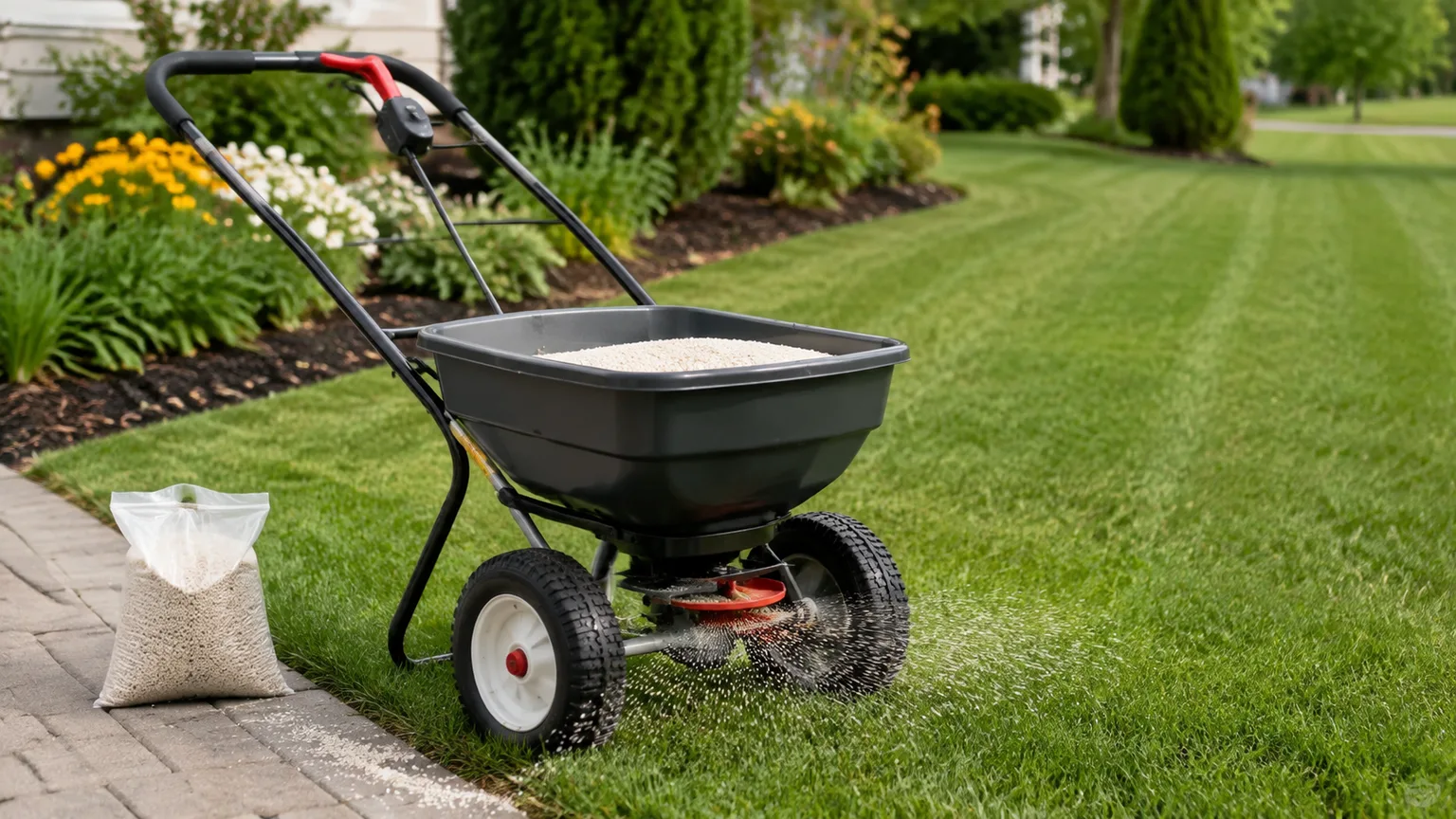
Most established lawns need one to three fertilizer applications a year, but that range is a starting point, not a rule. Cool-season grasses usually take up nutrients in spring and fall, with fall often carrying the larger share; warm-season grasses are fed after they green up and while they are actively growing. Your soil-test results, grass species, local climate, fertilizer label, and how intensively you maintain the lawn should decide the final number.
If you want a simple first plan, identify your grass, test the soil, and use a local extension recommendation to set the annual nitrogen target. Divide that amount among applications the grass can use. Skip a scheduled feeding when the lawn is dormant, drought-stressed, waterlogged, or facing runoff weather. The goal is not to keep fertilizer going onto the lawn; it is to supply only the nutrients the grass can use at the right time.
Start with two or three feedings, then adjust to the lawn
For a typical established yard, one carefully timed fall application for cool-season grass or two to three applications during active growth for warm-season grass can be a reasonable low-to-moderate input framework. A cool-season lawn may also need a modest spring feeding, while a warm-season lawn in a long growing season may be split into several lighter applications. A high-traffic, intensively maintained turf program can use more frequent feedings, but it should still stay within the recommended annual nitrogen rate and the product label.
| Lawn type | Common starting pattern | Main timing cue | When to hold off |
|---|---|---|---|
| Cool-season: fescue, bluegrass, ryegrass | 1–3 applications; emphasize fall | Growth resumes in spring and late summer into fall | Hot, dry summer; dormant or water-stressed turf |
| Warm-season: Bermuda, zoysia, St. Augustine, centipede | 2–3 applications; sometimes more in a long season | Grass is fully green and growing after winter dormancy | Before green-up, during drought or extreme heat, or late in the season |
| Low-input lawn with healthy growth and clippings returned | 0–2, depending on soil test and local advice | Test results or a clear need, not a fixed calendar | If grass is healthy and soil already supplies adequate nutrients |
These are patterns, not prescriptions. North Carolina State Extension’s regional tables, for example, show different yearly nitrogen totals and application windows for tall fescue, centipedegrass, and Bermudagrass even within one state. Its guide also distinguishes the mountain, Piedmont, and coastal regions, a useful reminder that climate and grass variety can matter as much as a broad “North” or “South” label (North Carolina State Extension).
Four things that set a fertilizer schedule
The calendar gives you possible windows; it cannot tell you how much nutrient is already in the soil. Before buying fertilizer, weigh four things: grass type and growth season, soil-test results, local climate and stress, and the fertilizer product’s release pattern. A lawn’s appearance and the owner’s goals help with decisions, but neither replaces the first three.
Identify cool-season, warm-season, or mixed turf
Cool-season grasses include tall fescue, fine fescue, Kentucky bluegrass, and perennial ryegrass. They grow most vigorously in cooler weather, generally in spring and fall, and may slow or go dormant during hot summers. Warm-season grasses such as Bermuda, zoysia, St. Augustine, centipede, and bahiagrass do their main growth in warm weather, then slow or turn brown as cold weather arrives.
If you are unsure, check a seed label, sod invoice, extension turf guide, or local lawn service records. The time of year a lawn is green can be a clue, not proof: overseeding a warm-season lawn with ryegrass can produce a temporary winter mix, and shady parts of a yard may contain a different grass from a sunny section. If the yard has two grass types, do not assume one date or one fertilizer rate fits both; treat each area according to the grass growing there.
Soil, climate, goals, and product all count
The soil may already contain enough phosphorus or potassium, while nitrogen is often the nutrient most likely to need replenishing. Climate changes when roots can use the nitrogen: two yards in the same USDA hardiness zone can have different rainfall, shade, irrigation, soil, and growing seasons. Goals matter too. A low-input lawn that tolerates seasonal color changes has a different nutrient demand from closely mowed turf expected to stay dense under heavy use.
Finally, the same nutrient target can be delivered with products that release it at different speeds. A controlled-release granular product is not automatically a “feed every month” product, and a quick-release liquid does not mean more nutrients are needed overall. Read the label’s application interval, maximum annual use, watering instructions, and any seasonal or grass restrictions before deciding how often to repeat it.
Use a soil test before choosing a yearly target
A soil test is the best way to replace guesswork about pH, phosphorus, and potassium with local recommendations. North Carolina State Extension advises testing established lawns every two to three years, then choosing nutrient amounts and timing according to the grass being grown. The same guide warns that a fertilizer ratio is a poor substitute for test results (North Carolina State Extension). Check with your county extension office or state soil-testing laboratory for its sampling depth and mailing instructions.
For a basic sample, separate areas that differ noticeably—such as a front lawn and a heavily shaded side yard—then collect small cores from several spots in each area and combine them into a representative sample. Avoid sampling directly in a fertilizer spill, compost pile, or unusual bare patch. A laboratory report can tell you whether the area needs lime or additional phosphorus or potassium; a visual guess cannot reliably distinguish nutrient deficiency from compacted soil, poor drainage, heat, disease, or irrigation problems.
For nitrogen, follow a turf recommendation for your species and region, then divide the annual target across the number of feedings appropriate for the grass and fertilizer. Do not apply phosphorus just because it is part of a familiar “complete” N-P-K blend. Some states restrict phosphorus use on established lawns except when a soil test identifies a need or when a new lawn is being established; local rules can be stricter than a general label. Test results and local regulations should determine the nutrient mix.
Cool-season grass: prioritize late summer and fall
For cool-season lawns, fall is often the most useful feeding period because the grass can grow roots and leaves in cooler weather before winter dormancy. A second application in spring may be appropriate if the local extension schedule, soil test, or a specific recovery need calls for it. Do not translate “fertilize in fall” into a fixed date: use active growth and your local recommendation to choose the window.
Make fall the anchor application
In many northern and transition-region programs, late summer through early or mid-fall is the primary window for fescue, bluegrass, and ryegrass. Wisconsin Extension identifies early September as an ideal nitrogen application time for Wisconsin lawns and recommends selecting a quality product with controlled-release nitrogen. It gives one pound of actual nitrogen per 1,000 square feet as a regional example, not a universal rate for every lawn or every product (Wisconsin Extension).
Apply while the lawn is actively growing and has enough time before hard frost to use the nutrients. If a local turf schedule calls for a second fall feeding, the interval and amount should come from that schedule and your product label; do not simply repeat the bag’s full application rate. In warmer areas where cool-season grass is grown in shade or mixed with warm-season turf, local timing may differ from the Midwest or Northeast.
Use spring sparingly and avoid summer stress
A cool-season lawn may benefit from a light spring feeding, especially if a soil test or local guide recommends it, but a large dose can push rapid leaf growth just as the lawn is heading toward heat stress. Extra spring growth means more mowing and can leave the grass more demanding to water. If the lawn looks pale, first check drainage, mowing height, irrigation, and soil pH instead of treating color as a fertilizer diagnosis.
Summer is usually the wrong time to fertilize cool-season turf that has stopped growing or is struggling in heat and drought. Fertilizer cannot compensate for a lack of water; it can raise stress and leave soluble nutrients unused or vulnerable to runoff. Wait until cooler weather returns and the lawn is growing again, unless a local extension recommendation specifically addresses a small corrective application for your conditions.
Warm-season grass: wait for full green-up
Warm-season grasses should not receive their first routine feeding just because the calendar says spring. Wait until the lawn has turned green and is actively growing; local extension programs often use a period after green-up or several mowings as a practical sign that roots and shoots have resumed activity. Applications made while the grass is still dormant do little for the lawn and can feed weeds or expose nutrients to loss.
Southern Living’s interview with a turfgrass industry specialist also places the first warm-season application after spring green-up and advises pausing during excessive heat or drought; the exact window still depends on local guidance and grass type (Southern Living).
Adjust for species, region, and lawn ambition
Bermuda and St. Augustine can have greater nitrogen needs under intensive care than a low-input centipedegrass lawn. Zoysia often grows more slowly than Bermuda. Those differences make a single “feed every six weeks” rule unreliable. In North Carolina State Extension’s basic-maintenance examples, centipedegrass receives a much lower annual nitrogen total than many Bermuda programs, and the schedule changes across regions within the state (North Carolina State Extension). Use that as an illustration of variation, not as a rate to copy outside the Carolinas.
For many warm-season lawns, the applications fall from late spring into summer while growth is active, with a final feeding only if the local program, grass, and remaining growing season support it. Avoid nitrogen too late in fall or winter; North Carolina State Extension specifically cautions against late-season nitrogen for warm-season turf because it can increase winter injury risk (North Carolina State Extension). If summer is unusually hot or the lawn is drought-stressed, wait for active growth and adequate water rather than trying to force color.
Fertilizer type changes the interval
“Granular,” “liquid,” “organic,” and “synthetic” describe different product qualities, not fixed schedules. The label and nutrient release rate determine how quickly nutrients become available and when an application may be repeated. If the package says a product feeds for a certain number of weeks, do not add another fertilizer on top of that timeline unless the label and your annual nutrient target allow it.
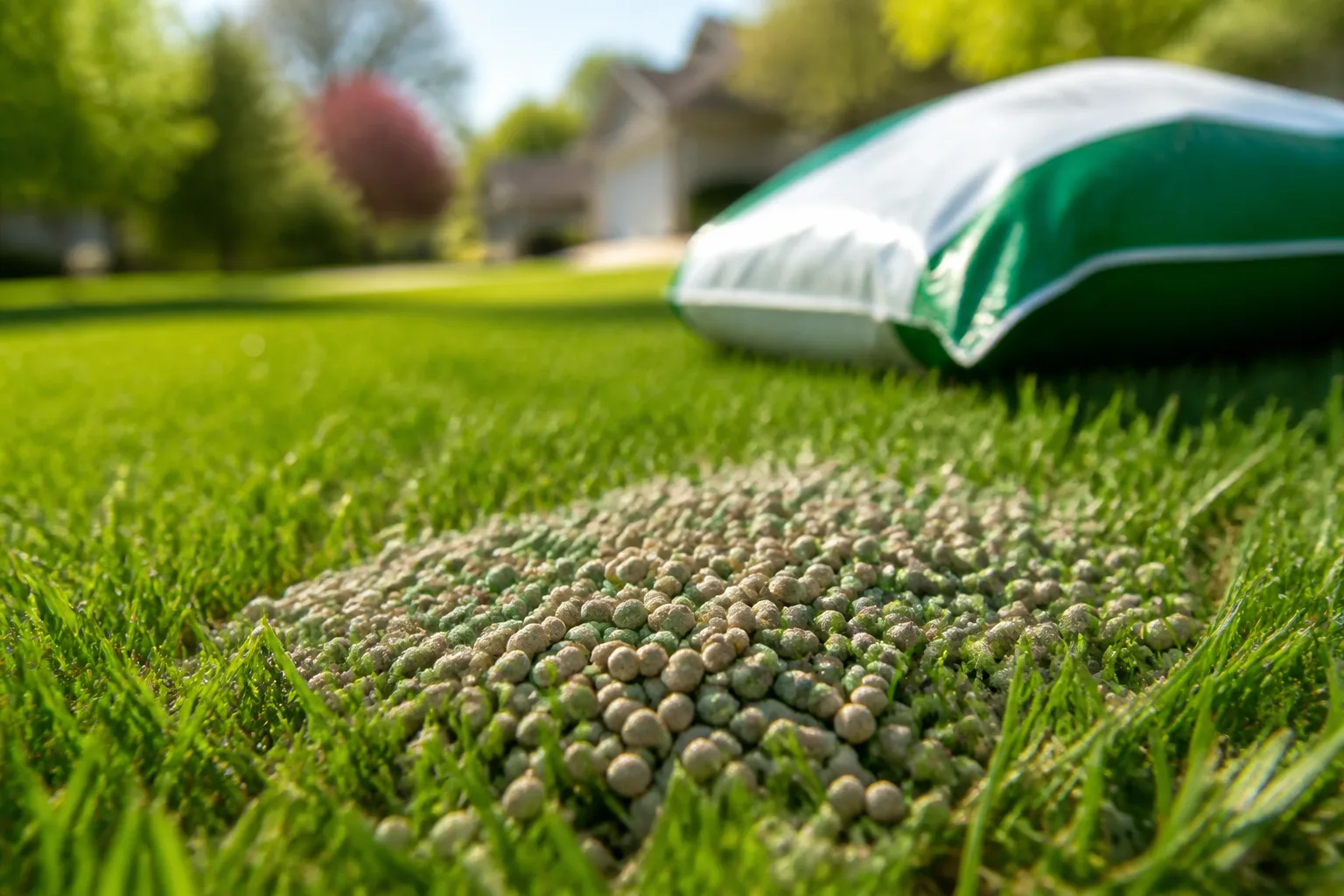
Slow-release granules versus quick-release liquid
Controlled-release or slow-release granular fertilizers deliver nitrogen over a longer period than highly soluble products. Wisconsin Extension recommends looking for controlled-release nitrogen sources to support steadier growth; the label may use terms such as “controlled release,” “slow release,” “extended feeding,” or “water-insoluble nitrogen” (Wisconsin Extension). A longer release period can reduce the need for frequent applications, but it does not make the product safe to overapply or appropriate for dormant grass.
Liquid fertilizers can deliver nutrients quickly and evenly when mixed and applied correctly. Some products are intended for repeated lighter applications; others are not. Do not assume a liquid product should be used weekly or that a granular product needs only one annual treatment. Compare the percentage of nitrogen, directions per area, reapplication interval, and maximum yearly amount, and count every lawn product that adds nitrogen toward the same annual total.
Organic products, clippings, starter fertilizer, and weed-and-feed
Organic lawn fertilizers often release nutrients as soil microbes break them down, so temperature, moisture, and product ingredients affect the timing. “Organic” does not mean nitrogen-free, runoff-proof, or harmless at any amount; read its guaranteed analysis and application directions just as you would for a synthetic product. Compost or an organic granular feed may support soil improvement, but if the lawn needs a specific nutrient correction, a soil-test recommendation is more useful than the product’s marketing description.
Leaving fine grass clippings on the lawn returns some nutrients as they decompose and can reduce fertilizer demand. North Carolina State Extension estimates that grasscycling may reduce fertilizer use by 20 to 30 percent under its guidance; it does not mean every lawn can eliminate fertilizer regardless of soil or grass needs (North Carolina State Extension). If clippings are long enough to cover and smother the grass, collect them, then return nutrients through composting where appropriate.
Starter fertilizer is for establishing new turf, not a routine extra feeding for an established lawn. Use it only when the seed or sod guidance and soil test support it, and follow any phosphorus restrictions. Weed-and-feed combines fertilizer with an herbicide, so the product’s weed target, temperature range, grass tolerance, watering directions, and seeding restrictions all matter. A lawn can be due for nitrogen when it is the wrong time for a particular herbicide; choose a plain fertilizer or wait rather than applying a combined product on an unsuitable schedule.
Calculate the amount before each application
Use the label to calculate product from the area you will actually treat. The first number in an N-P-K analysis is the nitrogen percentage by weight. A bag labeled 20-0-5 contains 20% nitrogen, so each pound of product contains 0.20 pound of nitrogen. Actual nitrogen is the amount of nitrogen delivered; it is not the total weight of the fertilizer bag.
The basic math is: fertilizer product needed = target pounds of nitrogen per 1,000 square feet ÷ nitrogen fraction × lawn area in thousands of square feet. First measure the turf area—length times width for a rectangle, or divide an irregular yard into smaller shapes—and subtract beds, paths, patios, and driveways. Then use a target rate from local turf guidance and the product label; the calculation does not supply that target for you.
A worked example for 2,500 square feet
Suppose local guidance and the product label allow a target of 0.5 pound of nitrogen per 1,000 square feet for a particular application, and the bag contains 25% nitrogen. For a 2,500-square-foot lawn, the arithmetic is 0.5 ÷ 0.25 × 2.5 = 5 pounds of product. That amount supplies 1.25 pounds of nitrogen across the entire lawn, or 0.5 pound per 1,000 square feet.
That is a math example, not a recommendation that every lawn should receive 0.5 pound. Local guidance may call for a different rate, and the product may have a lower maximum or a different schedule. Wisconsin Extension’s one-pound-per-1,000-square-foot example is specific to its regional guidance; a lower per-application rate can be appropriate for other grasses, regions, or product types (Wisconsin Extension). If the bag provides a coverage chart, use it as a check, not as permission to exceed a soil-test or regional annual limit.
If you use more than one fertilizer in a season—such as a starter product followed by a regular lawn feed—add the nitrogen from all applications. For each one, multiply product weight by its nitrogen fraction, then divide by treated square footage and multiply by 1,000. Keeping a simple note of date, product, area, and pounds applied prevents the common mistake of treating each bag as an independent schedule.
Choose a safe weather window and prevent runoff
Apply fertilizer when grass is actively growing, the ground can absorb water, and the forecast gives the product time to settle in. Avoid frozen or saturated soil, a lawn under drought stress, strong wind, and a forecast of heavy rain. A light, steady shower may help move some granular products off the blades, but rain is not a substitute for reading the package directions; a downpour can move fertilizer off the lawn and into storm drains or waterways.
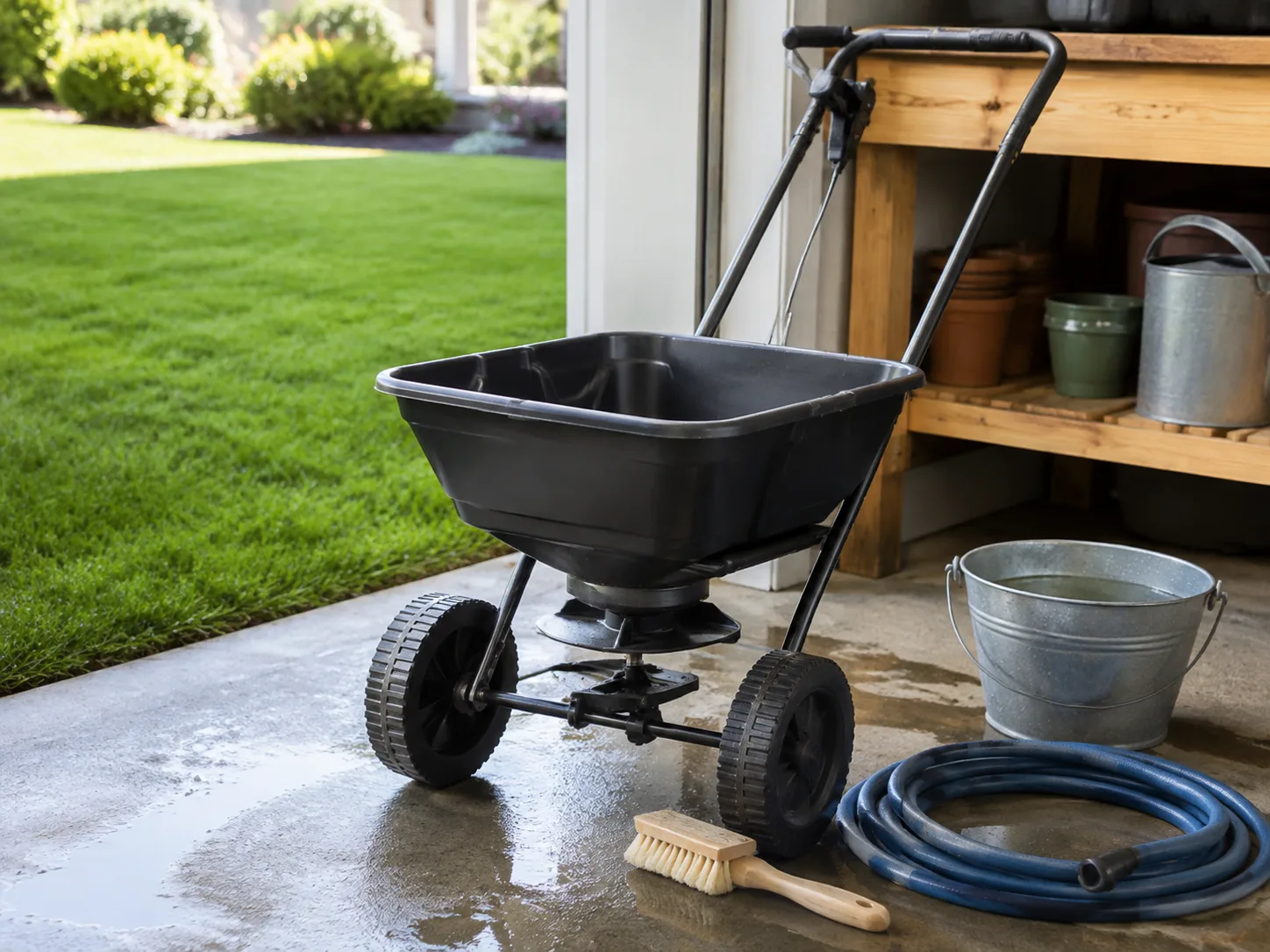
Wisconsin Extension warns against letting fertilizer land on impervious surfaces because nutrients can wash into storm drains and waterways; it also notes that turf can hold nutrients effectively when they are applied directly and correctly (Wisconsin Extension). Use a spreader with a setting suited to the product, slow down near edges, and close the hopper when turning or crossing a driveway. If granules land on a sidewalk or patio, sweep them back onto the lawn rather than rinsing them into the street.
Watering, mowing, and label directions
Check the label for whether and when to water after applying. Some fertilizers should be watered in promptly; products combined with herbicides can require the grass to stay dry for a specified period so the weed-control ingredient can work. Do not follow a generic watering rule when the product label says otherwise. If there is no appropriate way to water and no gentle rainfall is expected, postpone the application rather than leaving granules to sit through heat or wind.
Mowing first can make even application easier if the lawn is overgrown, but it is not a requirement for every product. The important conditions are that the foliage is dry enough for granules to fall toward the soil, the spreader can move steadily, and you can keep fertilizer off hard surfaces. Keep people and pets away during application and follow the label’s reentry directions; those directions differ by product and should not be replaced by a blanket number of hours.
Mistakes that make a schedule fail
- Feeding by date alone. Calendar dates shift with latitude, elevation, unusual weather, and irrigation. Use active growth and a local turf schedule as cues.
- Treating brown grass as hungry grass. Dormancy, heat, drought, poor drainage, disease, and mowing too short can all change color. Diagnose water and site conditions before adding nutrients.
- Counting bags instead of nitrogen. A concentrated product delivers more nitrogen per pound than a dilute one. Calculate using the first N-P-K number and the treated area.
- Repeating a feeding because the lawn did not green up immediately. Slow-release products take time, and pale color can have causes fertilizer cannot fix. Respect the label interval and test the soil.
- Stacking a regular fertilizer with weed-and-feed. Both may add nitrogen, while the herbicide portion may be ill-timed for weeds, grass, or new seed. Count the nitrogen and follow all label restrictions.
- Fertilizing before a storm or onto pavement. Nutrient runoff wastes product and can pollute water. Reschedule or sweep misplaced granules back onto the lawn.
- Using a high-input calendar on a low-input lawn. More feeding can mean faster mowing, more thatch in some grasses, extra water demand, and avoidable nutrient loss. Set the schedule to the lawn you want and the soil it has.
When the lawn is healthy and the test shows adequate nutrients, skipping a planned application can be the right call. That is especially true for a low-maintenance yard where you leave fine clippings in place. BBC Gardeners’ World notes that many lawns recover after summer without extra feeding, a useful reminder that a product should solve a diagnosed need rather than serve as a seasonal ritual (BBC Gardeners’ World Magazine).
Conclusion
Most established lawns do not need a fixed monthly fertilizer routine. Start with the grass: give cool-season lawns priority during fall growth and use spring fertilizer only when the soil, local program, or lawn condition calls for it; feed warm-season lawns after green-up and during active growth, then stop before the grass slows for cold weather. A low-input lawn may need only one or two carefully chosen applications, while an intensive program may divide the annual target into more frequent, lighter feeds.
Before each application, check the soil-test recommendation, product label, area, and weather. Calculate actual nitrogen rather than guessing by bag size, include every fertilizer product in the yearly total, and keep nutrients on the lawn instead of the pavement. If those checks do not support another feeding, wait—the best schedule is the one the grass can use without wasting fertilizer or increasing stress.



