How to Edge a Lawn for Crisp, Lasting Lines
How to edge a lawn for a polished landscape: compare edgers and trimmers, mark the line, protect irrigation, and keep grass out of garden beds.
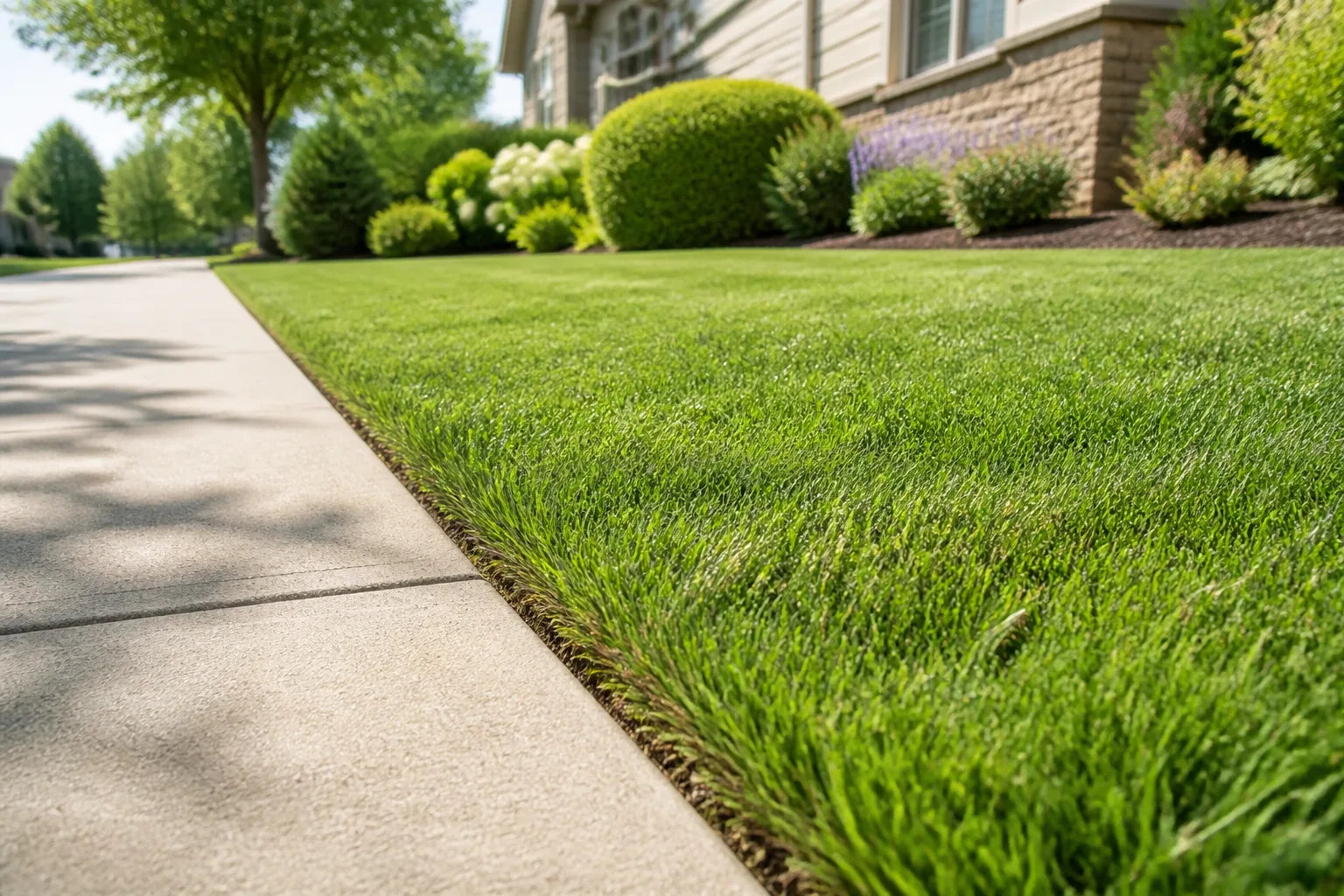
The short answer: mow, edge, then clean up
For a maintained lawn, the cleanest routine is clear debris, mow, edge, and blow or sweep. Mowing first lowers the turf to an even height, which makes the true boundary easier to see. Edging afterward leaves a fresh vertical line as the final detail instead of running mower wheels across it and blurring the cut.
There are two useful exceptions. If grass has spread well onto a sidewalk or driveway, make a shallow restoration cut first so you can reclaim the original boundary; then mow and touch up the line. If you do not have a blower and use a bagging mower, edging before mowing can let the deck collect loose clippings and soil. On a normal weekly maintenance visit, though, mow first and edge last is the simplest rule.
Edging is not the same as trimming. Trimming cuts the tops of grass horizontally around fences, posts, trees, and other places a mower cannot reach. Edging cuts down along a boundary so the lawn ends in a visible line beside concrete, asphalt, pavers, gravel, or a planting bed. You may use the same string trimmer for both jobs, but the tool head and the motion are different.
Why lawn edging makes such a difference
It defines the boundary and controls encroachment
A crisp edge frames the lawn the way a narrow border frames a picture. It makes a yard look finished even when the turf is not perfectly uniform, and it stops grass from hanging over a sidewalk where it catches shoes, blocks the pavement line, or makes a driveway look narrower.
At a bed, the edge also creates a small physical separation between turf and mulch or bare soil. Grass spreads by seed, but some turf types also send runners above or below ground. A cut edge interrupts those runners for a while; it does not create a permanent root barrier. Ask Extension notes that borders generally need to be cut or installed several inches deep to slow encroachment, and that even a good border still needs seasonal cleanup (Ask Extension).
An edge can also help mulch and soil stay in the bed during ordinary rain. The effect is modest: a shallow cut will not hold a raised bed on a slope or solve erosion from a downspout. If mulch repeatedly washes across the lawn, fix the grade or drainage first and treat the edge as a finishing detail rather than a retaining wall.
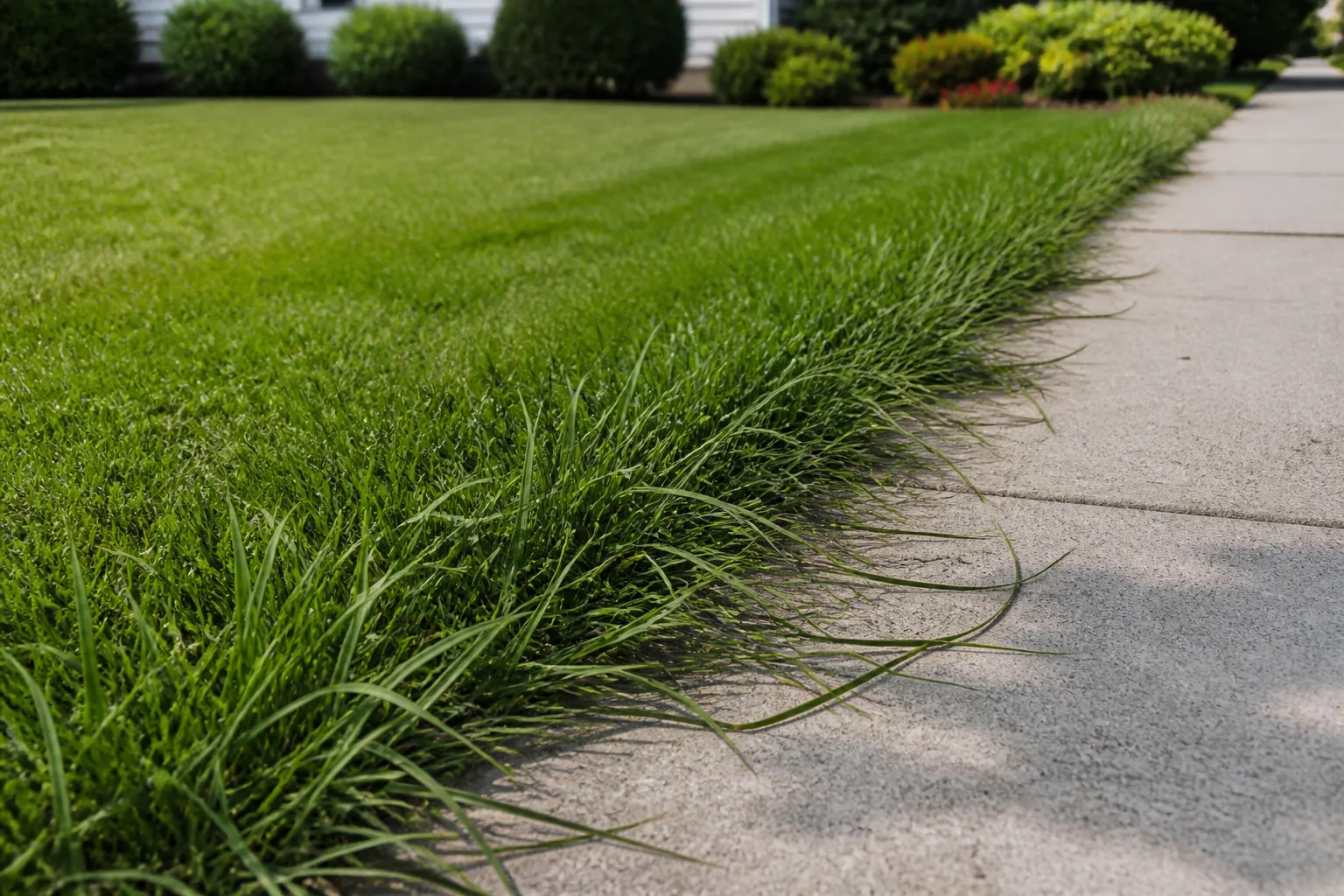
The visual payoff comes from consistency. A single deep gouge followed by months of neglect looks worse than a modest edge refreshed at the right interval. Broad, sweeping curves are usually easier to mow and maintain than a series of tight bends; the RHS makes the same point in its lawn-edge guidance (Royal Horticultural Society).
Choose the right lawn-edging tool
Match the tool to the edge, not just the size of the yard
A wheeled blade edger or stick edger is the easiest choice for a long, straight boundary beside a sidewalk or driveway. Its wheel helps keep the blade at a consistent distance, while the blade cuts a more defined groove than loose trimmer line. Choose a model with a guard, a stable wheel, and a depth adjustment you can read without leaning over a running machine.
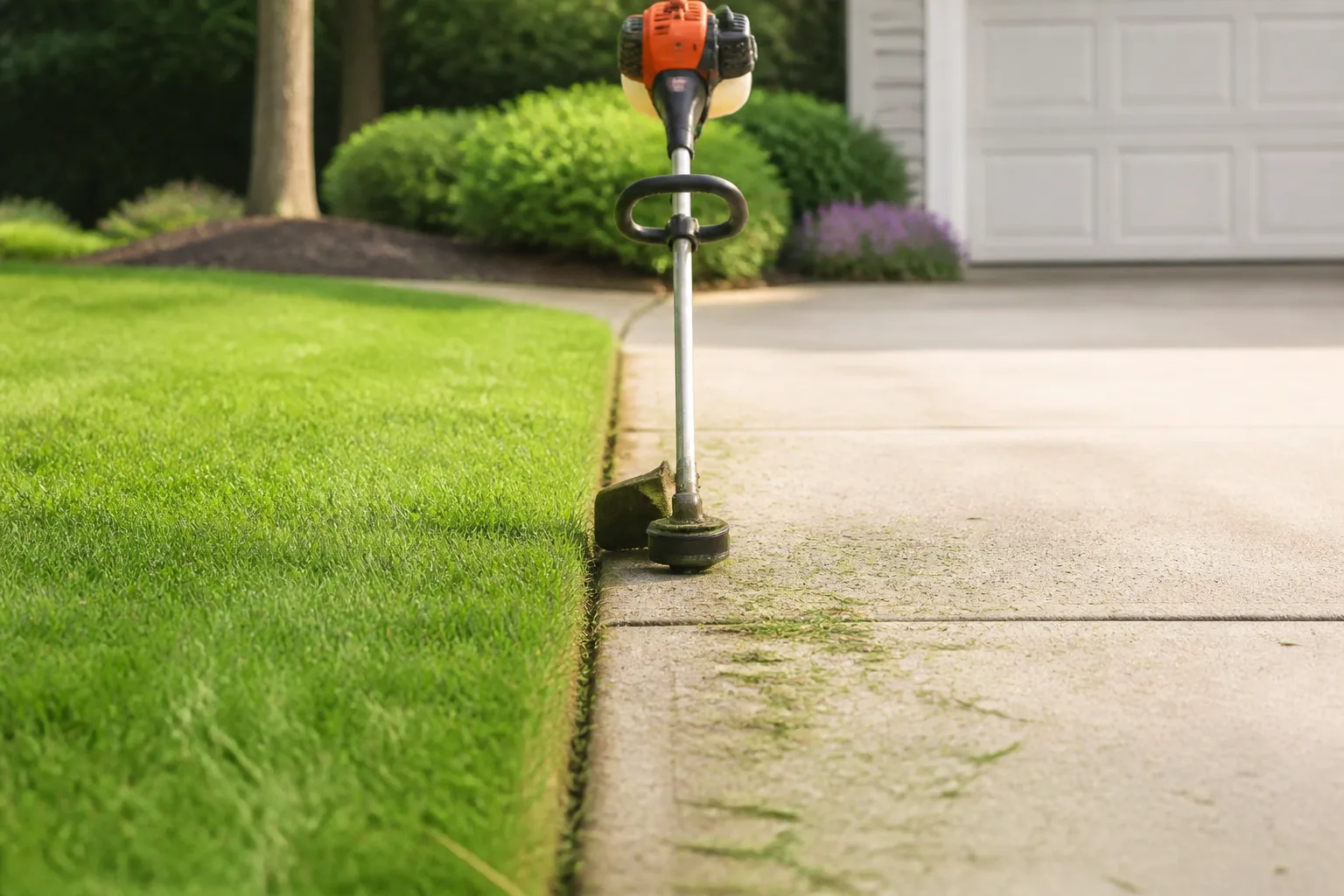
A string trimmer is useful for irregular edges, fence lines, tree rings, and places where a wheeled edger cannot travel. For a hardscape edge, rotate the head so the line cuts vertically against the grass wall, then move slowly with the head supported by the pavement or its edging guide. A trimmer is versatile but easier to tilt, so it takes more practice to keep the line straight. Use it horizontally for ordinary trimming around obstacles, not as a substitute for every vertical bed edge.
A half-moon edger or sharp flat spade is often best for an overgrown flower bed. It lets you see exactly what you are cutting and lift out a narrow strip of turf without throwing debris toward windows or cars. Long-handled edging shears are useful for a light touch-up where the lawn meets a wall, fence, or delicate planting.
Do not choose a powered edger simply because the lawn is large. A half-moon tool may be safer and more accurate around exposed tree roots, irrigation heads, low-voltage lighting, and fragile groundcovers. Conversely, do not expect a string trimmer to make a perfect bed line if the boundary has disappeared under several inches of turf; restore the edge with a spade first, then maintain it with the faster tool.
Pick the right day and mark the line
Work on dry ground and preview curves first
Edge when the grass is dry and the soil is workable. Wet blades wrap around mower parts and trimmer heads, while wet soil smears onto pavement and collapses under wheels. The RHS advises waiting when ground is frozen or very wet, and recommends avoiding work that compacts saturated soil (RHS lawn-edge advice). Morning dew is enough to make a neat job messy, so let the surface dry before starting.
Dry does not mean rock-hard. If a hand edger cannot enter clay without extreme force, a light watering the day before can make a clean cut possible. Do not turn the bed into mud immediately before edging. You want a blade to slice the turf, not a wheel to sink into a soft margin.
First identify the boundary you actually want. For a sidewalk or driveway, the hard edge is already there. For a new bed or an open lawn-to-mulch transition, lay a garden hose or rope on the ground and view it from the street, porch, and the windows people use most. Adjust awkward bulges before cutting. For a straight formal line, use a string line and stakes; for a relaxed landscape, use one broad curve rather than many small scallops.
Look for buried hazards before a powered tool starts. Irrigation pipes, sprinkler heads, landscape-light wires, edging stakes, and shallow tree roots may not be visible from above. If you know an irrigation line crosses the area, mark it and switch to a hand tool for that section. Never assume that a narrow blade will pass harmlessly through an unseen line.
How to edge a lawn step by step
Clear hazards and set a shallow maintenance depth
Start by removing sticks, stones, toys, loose mulch, and other hard objects from the cut path. Wear safety glasses or goggles, closed-toe shoes, long pants, and hearing protection when the tool requires it. Powered edging can throw pebbles and metal fragments; OSHA landscaping safety material specifically recommends eye protection and sturdy footwear around mowing and trimming equipment (OSHA mowing and trimming safety). Keep children and pets away until the blade has stopped and the area is clear.
On an existing hardscape edge, begin with the lightest depth that separates the turf from the surface. A shallow maintenance pass is usually enough to cut overhanging blades and runners; it should not excavate a deep trench along an otherwise healthy lawn. For a bed that has merged with the turf, a half-moon edger or spade can redefine a vertical face several inches deep, but remove only the strip needed to restore the intended shape.
Set the powered tool according to its manual, not a generic number. The correct setting depends on blade diameter, soil, turf thickness, and whether you are cutting against concrete or loose mulch. When a machine bogs down, stop and inspect rather than forcing it. A hidden stone, root, or edging strip can damage the blade and turn a simple lawn job into a repair.
Make the cut, then remove and clean the debris
Place the edger wheel or guide against the hardscape and start at one end of the line. Keep your shoulders square to the path, walk at a steady pace, and let the blade do the cutting. On curves, make several short controlled passes instead of twisting the tool sharply; gradual curves keep the wheel stable and reduce scalped bites into the lawn.
For a string trimmer, keep the head vertical and move forward slowly. Let the pavement guide the lower edge, but do not grind the line against concrete. A slight tilt can throw soil into the bed or shave a crescent out of the turf. If the line is uneven, stop, inspect it from a distance, and make a second light pass rather than trying to correct the whole curve while moving quickly.
At an open bed edge, direct the cut slightly toward the bed so the removed turf and soil fall inward. Lift the cut strip with a spade, shake loose soil back into the bed, and add the healthy sod to compost or repair another bare patch if it is free of invasive weeds. Do not leave a ribbon of detached grass under the mulch; it can re-root and rebuild the problem you just removed.
When the line is complete, rake or blow loose grass toward the lawn or bed as appropriate. Clean pavement last so you do not walk clippings back across it. A blower is fast, but a stiff broom is quieter and avoids moving dust into open windows or neighboring beds.
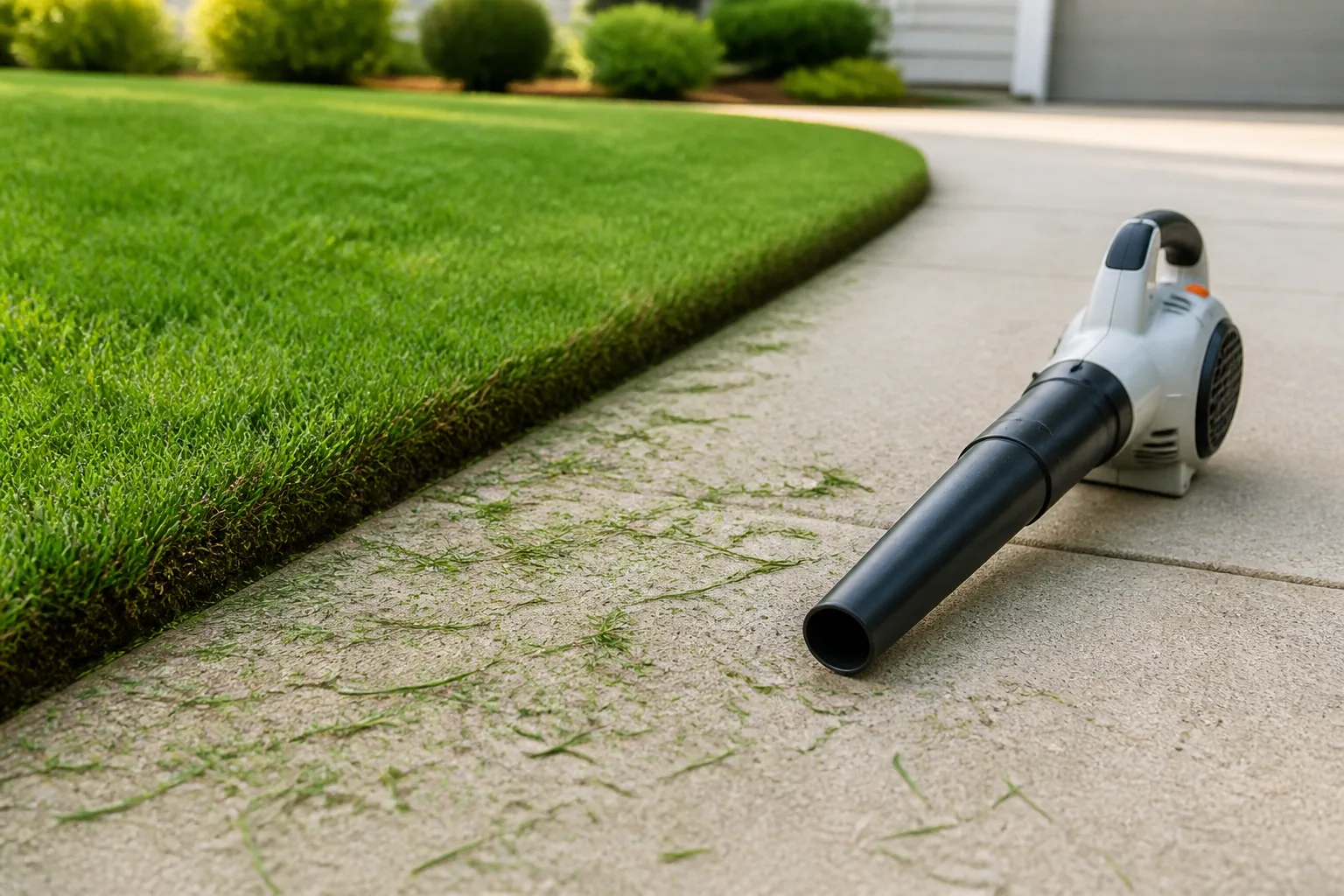
If you are mowing in the same session, keep the sequence in mind. On a routine visit, mow before this step so the line is easy to see, then edge and clean. On a severely overgrown boundary, make a first hand or powered restoration cut, mow, and return for a light finishing pass. The goal is a clean edge with minimal backtracking, not loyalty to a single order in every yard.
Keep the edge crisp through the growing season
Adjust the routine for open edges and installed borders
An open edge is a cut boundary with no material installed between lawn and bed. It is inexpensive, easy to reshape, and friendly to a mower when the bed is nearly level with the grass. It also needs to be recut periodically because rain, mulch movement, and runners soften the line.
An installed border can be metal, plastic, brick, stone, or another material. A border can make mowing easier and hold mulch in place, but its performance depends on installation. If the top sits high, the mower may not pass over it and you will still need to trim along the outside. If the top is flush, soil and weeds can collect in joints, and frost or settling can make sections uneven.
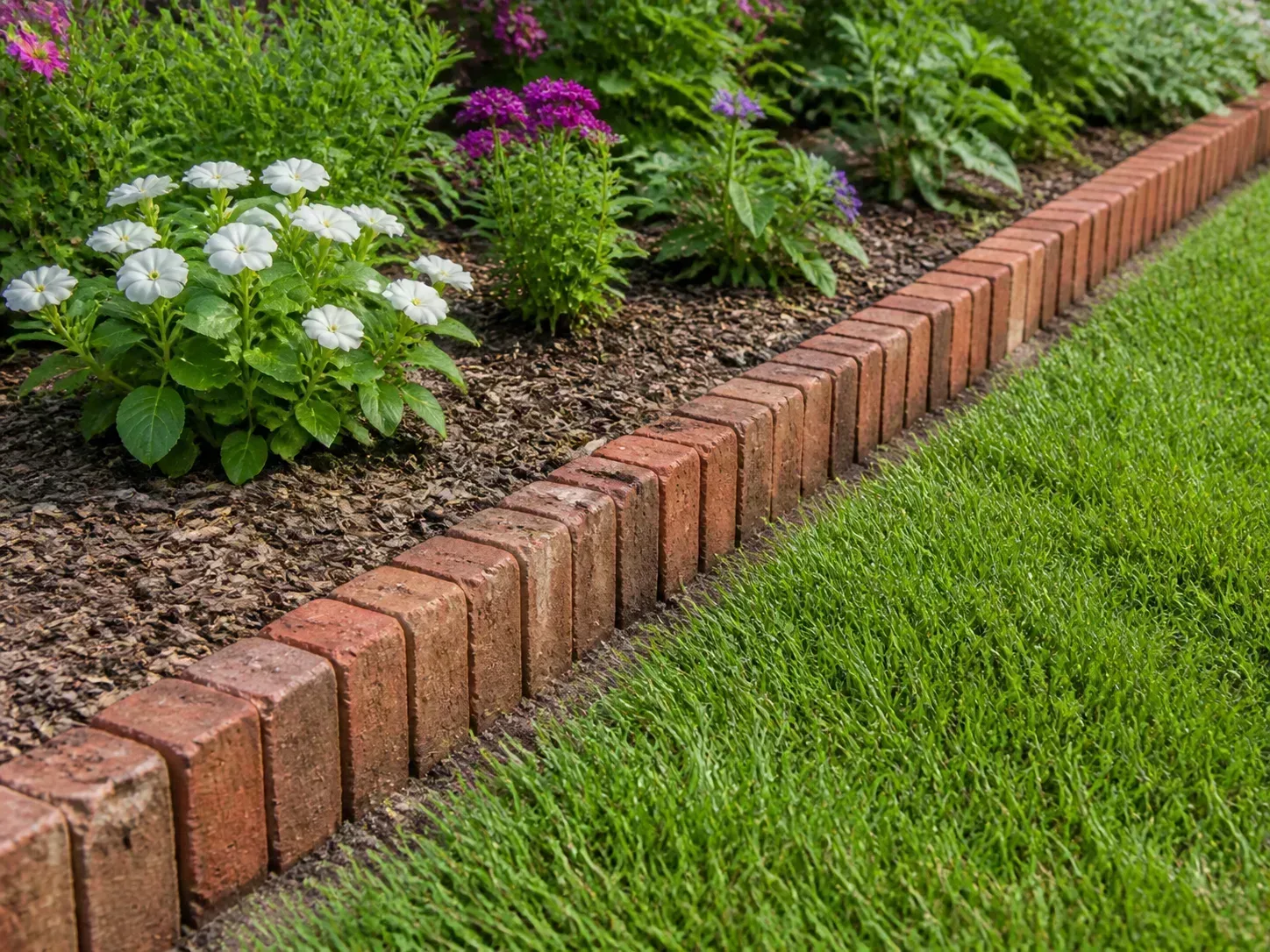
Use a permanent barrier when the edge has a structural job: retaining a defined mulch layer, protecting a path, or separating aggressive running turf from a high-maintenance bed. University Extension guidance compares steel, plastic, wood, pavers, and a simple cut edge, noting that each has maintenance trade-offs and that some materials still require trimming or weed removal (University of Illinois Extension). A barrier is not a reason to pile mulch against plant crowns or house siding.
During active growth, inspect the edge whenever you mow. Many lawns need a touch-up every two to four weeks, but growth rate is a better guide than the calendar. If the grass still meets the line cleanly after mowing, leave it alone. If blades overhang the pavement or runners appear in mulch, make a light pass before the edge becomes a restoration project.
Newly seeded or newly laid turf deserves extra restraint. Wait until roots are established and the sod cannot be lifted as a strip. Near young trees, keep the tool away from exposed roots and maintain a broad, mower-friendly bed rather than cutting into the root flare.
Common lawn-edging mistakes to avoid
Cutting too deep on every visit. A deep trench can expose dry soil, collect leaves, and weaken the narrow strip of grass at the margin. Reserve deeper cuts for redefining a lost bed edge, then maintain that shape with shallow touch-ups.
Confusing trimming with edging. Shaving the tops of grass along a sidewalk makes the blades shorter but does not cut the vertical wall. Rotate the trimmer or use a blade edger when you need to reclaim the boundary.
Edging through wet soil. Mud smears, wheels rut the lawn, and a tidy line collapses as soon as the soil dries. Wait for a firm surface, especially on clay or slopes.
Starting without clearing the path. A small stone can become a projectile or chip a blade. Walk the entire route first and remove anything the tool could strike.
Ignoring irrigation and lighting. A visible sprinkler head is not the only hazard; tubing and wires may run just below the surface. Hand-edge uncertain spots and keep powered blades away from known crossings.
Expecting edging to stop every weed. Seed can land in mulch, and some plants can cross a shallow barrier. Keep the bed mulched at an appropriate depth, pull volunteer grass early, and repair gaps or lifted sections in physical edging.
Riding a mower onto the fresh cut. Heavy tires can crush a new edge and push soil onto concrete. Plan the mowing route so the machine stays on the lawn side, or do the final edge after the mower is parked.
Skipping the final cleanup. Grass on a sidewalk looks like a failed edge even when the cut is straight. Blow or sweep hardscape, steps, and driveway joints, and collect large clumps from the lawn so they do not mat the turf.
A quick decision guide for your yard
Use this table before you start. It assumes dry grass and a tool in safe working order.
| Yard condition | Best approach | Why |
|---|---|---|
| Straight sidewalk or driveway, edge maintained | Mow, edge, then blow or sweep | The mower reveals the line and the final cut stays crisp |
| Grass has spread well onto pavement | Restore the edge, mow, then touch up | You need to reclaim the boundary before judging height |
| No blower, dry lawn, bagging mower | Edge, mow, then inspect | The mower can collect loose edging debris |
| Small bed with exposed roots or irrigation | Use a half-moon edger or spade | Hand control is more important than speed |
| Irregular fence, post, or tree line | Trim horizontally, then edge only where a boundary exists | Not every obstacle needs a vertical trench |
| Brick or metal border already installed | Check for gaps, lift, and mulch spill; trim the outside | The material defines the line, but it still needs maintenance |
| Wet from rain or heavy dew | Wait | Prevents clumping, rutting, slipping, and muddy edges |
| New sod or seed at the margin | Delay deep edging until established | Young roots and loose sod tear easily |
If you are unsure, take a slow walk around the yard and identify the job before starting the machine. A clean edge usually comes from a clear line, a suitable tool, a steady pace, and the discipline to stop when the cut is good enough. More depth or more passes will not automatically make it more professional.
Conclusion
Learning how to edge a lawn is mostly a matter of making the boundary visible, choosing the right tool, and cutting only what needs to be removed. On a maintained lawn, clear the path, mow, edge vertically, and clean the hardscape. Use a half-moon edger for beds that have disappeared, a wheeled blade edger for long straight runs, and a string trimmer where flexibility matters more than absolute uniformity.
Work on dry, workable ground, wear eye and foot protection, and treat buried irrigation, lighting, roots, and stones as real hazards. Refresh the line when grass begins to overhang instead of waiting until you need to excavate a new border. That modest routine keeps the landscape looking intentional while protecting the turf, mulch, and hardscape that meet at the edge.



