How Often Should You Water Ferns? Check Soil, Not Dates
Learn how often to water ferns indoors and outdoors, how to check root-zone moisture, and how to tell thirst from overwatering or dry air.
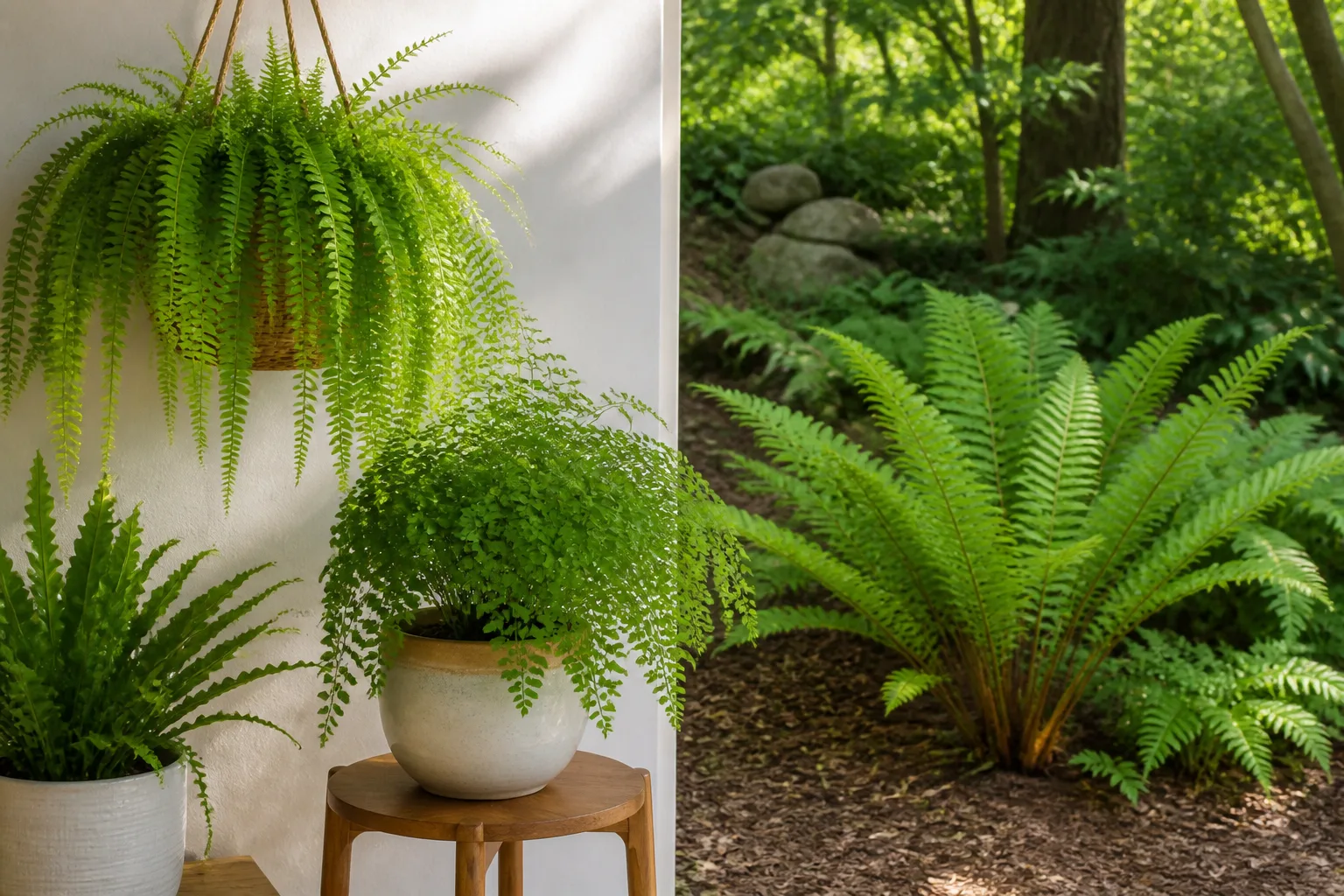
The most useful answer to “how often should I water my fern?” is not once a week, twice a week, or every morning. Check the root zone on a routine, then water when the mix has started to dry but before the plant becomes bone-dry. That usually means an indoor potted fern is checked every few days and watered anywhere from twice a week to about once a week during active growth, while a shaded outdoor fern may need water daily in a hot, windy spell or almost none after reliable rain.
The interval changes because a fern’s pot, light, temperature, humidity, soil, size, and species change. A small Boston fern in a terracotta pot beside a sunny window can dry much faster than a large bird’s nest fern in a plastic pot in a humid bathroom. The calendar is useful for remembering to look; it is a poor substitute for looking.
The short answer: check moisture often, but water only when the root zone begins to dry
Ferns generally prefer evenly moist, well-aerated soil. “Moist” means the mix still contains water but also has air spaces for roots; it does not mean muddy, saturated, or permanently wet. University of New Hampshire Extension describes the broad fern target as consistently moist soil without sogginess, while Purdue Extension notes that even this rule has species-level exceptions: some ferns can become slightly dry at the surface, while maidenhair and button ferns need a more continuously moist root ball.
For a typical indoor fern, start by checking the top 1 to 2 inches of mix every two or three days. Water when that layer feels just dry or noticeably lighter than the soil below, then soak the pot until water runs from the drainage hole. In a stable home, that may settle into a weekly rhythm. In winter, it may stretch longer because growth and light are lower; near a heater, a grow light, or a dry draft, the surface can dry sooner.
For outdoor ferns, check the soil at the root zone rather than assuming rain reached it. A fern planted in deep shade under a tree may be sheltered from rain by the canopy and competing with tree roots. A container fern on a hot patio can dry rapidly even when the surrounding garden looks damp. Newly planted garden ferns need more regular supplemental water while roots establish; established plants usually need extra water during prolonged heat or drought.
Why a fixed fern watering schedule fails
A schedule fails when it mistakes elapsed time for water use. Plants lose water through transpiration, and that loss speeds up with warmth, moving air, stronger light, and low humidity. The same fern can need water every three days in July and every ten days in a cool, dim room in January, even if the pot and plant have not changed.
The five conditions that change the interval
Light: Filtered brightness can increase growth and water use, but direct afternoon sun can scorch fronds and heat the pot. A fern in deep shade may use less water, yet its soil can stay wet too long if the pot is large or the mix is dense.
Temperature and airflow: Warm rooms, heating vents, air conditioners, fans, and outdoor wind all alter how quickly moisture leaves the plant and pot. A draft can cause crispy tips without proving that the root ball is dry.
Pot and potting mix: Terracotta absorbs and loses water through its walls faster than plastic. A hanging basket has more exposed mix and may dry from the sides. Dense, old, compacted mix can remain wet in the center while the surface looks dry; a loose, bark-heavy mix can drain quickly but may not hold enough moisture for a maidenhair.
Plant size and root fill: A fern with a full root ball can use the available water efficiently. A small plant in a much-too-large pot may sit in a large reservoir of wet mix, raising root-rot risk. Purdue Extension specifically warns that overpotting holds excess water around a small plant’s roots.
Species and growth stage: Boston ferns tolerate a little more surface dry-down than maidenhair ferns, while staghorn ferns may be mounted in moss or grown as epiphytes rather than in ordinary soil. During active growth, most container ferns use more water. In a cool, low-light rest period, they use less and should not be kept on a summer schedule.
How to check whether a fern needs water
Use several clues together. The best first test is physical moisture in the root zone, not a frond that happens to look limp.
- Feel the mix. Push a clean finger into the soil near the edge of the pot, avoiding the crown. If the upper inch is dry but the soil below is cool and damp, wait and check again soon. If the mix is dry several inches down and the pot feels unusually light, water thoroughly.
- Lift the pot. After a few checks, you will learn the difference between a freshly watered pot and a dry one. This is especially useful for a fern whose dense fronds hide the soil surface.
- Look at the drainage. A pot with a blocked hole, a tight decorative cachepot, or a saucer full of old water is not giving you a fair watering test. Fix drainage before adjusting frequency.
- Use a moisture meter as a second opinion. A meter can help you compare the upper and lower mix, but its reading depends on the medium, salt buildup, probe placement, and calibration. Do not let one number overrule a wet root ball, a pot that never dries, or a plant that is declining in saturated soil.
- Read the foliage last. Wilting, curling, grey-green color, crispy edges, or leaflet drop can support a diagnosis, but they are not a watering schedule by themselves. Low humidity, root damage, excessive light, cold, pests, and salt buildup can create overlapping symptoms.
How to water a fern thoroughly without drowning the roots
When the root zone is ready, water slowly across the surface so the whole mix becomes wet. Pouring a few tablespoons into the center can leave dry pockets around the sides, especially if the soil has pulled away from the pot wall. Keep the stream directed at the soil, not the crown or a tight central rosette.
Continue until a steady amount drains from the bottom. That flushes the full root ball and tells you the drainage path is open. Let the pot finish draining before returning it to a decorative cover, and empty the saucer rather than allowing the container to sit in water. UNH Extension and the Missouri Botanical Garden both emphasize that ferns want plentiful moisture but should never stand in drainage water for prolonged periods.
Use lukewarm or room-temperature water when possible. Very cold water is unnecessary stress for a tropical indoor fern, but water temperature is usually less important than delivering an even soak and allowing excess to escape. If your water leaves heavy mineral deposits or persistent tip burn, test your water or use rainwater or filtered water where practical; do not assume every brown tip is thirst.
Drainage is part of the watering method
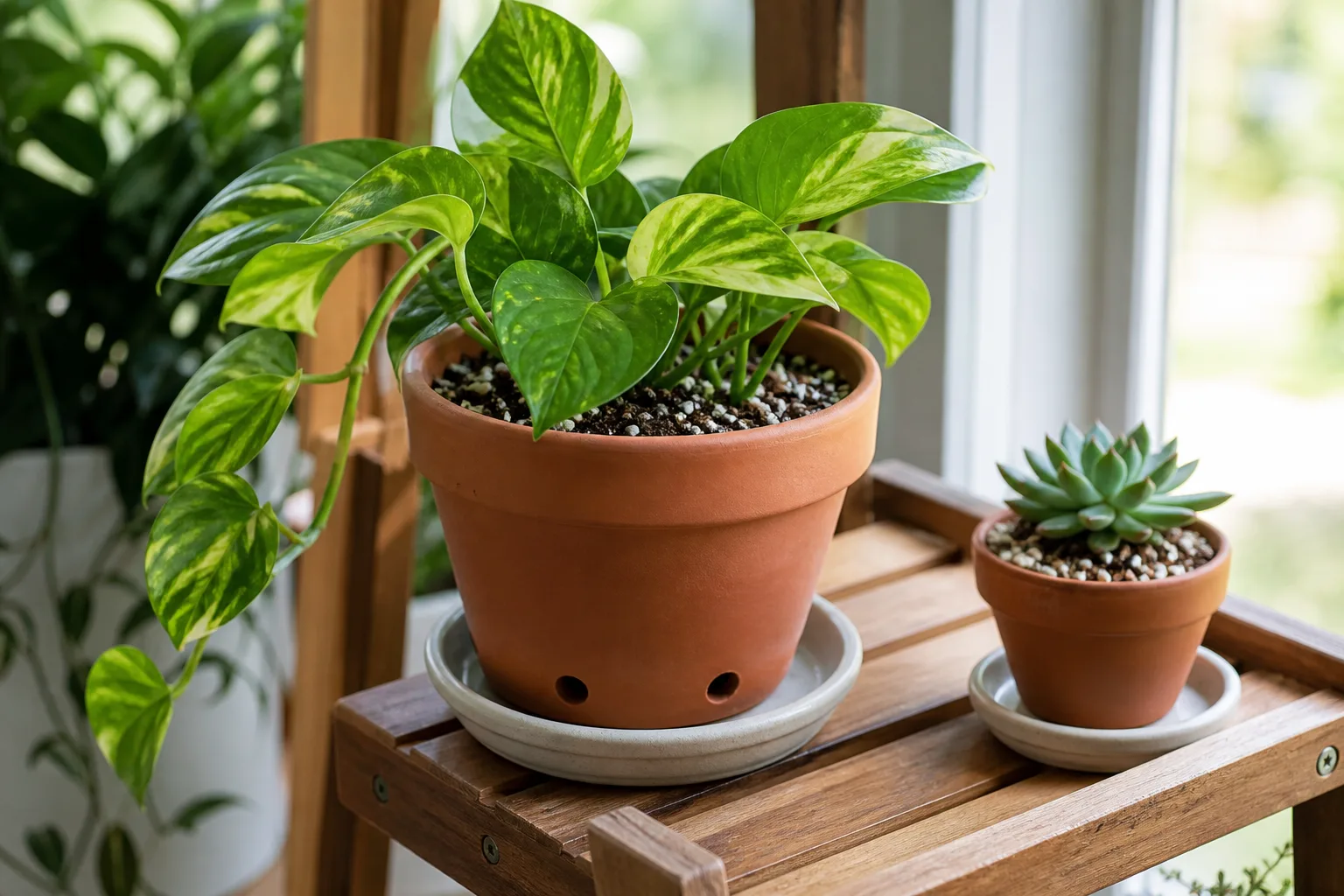
The phrase “water more often” is unsafe advice when the pot cannot drain. Start with a container that has a real opening at the base, a mix that holds moisture without collapsing into sludge, and a pot only slightly larger than the root ball. A decorative pot without a hole can work as an outer cover, but the fern should remain in a draining nursery pot inside it, and the cover should be emptied after watering.
Do not add a layer of gravel to the bottom of a pot as a cure for poor drainage. It does not create a raised water table that keeps roots dry; it simply reduces the depth of usable mix. If water is staying in the pot for many days, inspect the hole, the root mass, and the mix. A sour smell, mushy roots, a persistently wet center, or widespread yellowing calls for a root inspection rather than another watering.
Indoor fern watering: a starting rhythm, not a rule
Indoor ferns usually need a more predictable routine than outdoor ones, but “once or twice a week” should be treated as a starting observation window. Check a new fern every two or three days for the first couple of weeks and write down how long the upper root zone takes to lose its surface moisture. That short record quickly reveals whether your room is drying the pot in three days, seven days, or not at all.
Place most tropical ferns in bright, indirect light rather than direct midday sun. A north- or east-facing window, or a spot set back from a brighter window behind a sheer curtain, is often easier to manage. Direct sun can overheat the fronds and pot, while very low light slows water use and makes the same weekly watering suddenly excessive. The RHS guide to tender ferns summarizes the useful middle ground: indirect light, moist but not waterlogged compost, and protection from dry compost and cold drafts.
The easiest indoor routine is a two-step loop: check on a schedule, water by evidence. If the upper root zone is slightly dry and the lower mix is only damp, soak the pot. If the mix is still wet, do not water because the calendar says it is Tuesday; improve light, airflow, pot size, or drainage if it never dries.
Outdoor fern watering: read weather, soil, and establishment
Outdoor ferns in the ground often need less frequent watering than container ferns because garden soil provides a larger, more stable reservoir. Newly planted ferns are the exception: water them regularly through their first growing season so roots can move into the surrounding soil. After establishment, supplement during long hot or dry periods, particularly beneath dense tree canopies, beside foundations, or in raised beds that drain quickly.
Containers dry faster because their sides are exposed and their root volume is limited. Check them at least once daily during hot, windy weather, especially hanging baskets. Water in the morning when possible so the root zone is hydrated before the hottest part of the day and wet foliage has more time to dry. The RHS recommends directing water to the roots rather than the fronds or crown, which reduces the chance of rot in tight growth points.
Mulch around an outdoor fern can slow evaporation and moderate soil temperature, but keep mulch away from the crown. A mulch layer is a water-saving aid, not permission to water on autopilot. If rain has fallen, push a finger below the surface; tree leaves can intercept rainfall, and compacted soil can shed water away from the roots.
Fern type matters more than most schedules admit
“Fern” describes a large group with different habits. Use the plant’s growth form and species label to refine the general rule rather than forcing every fern into the same moisture range.
Boston fern
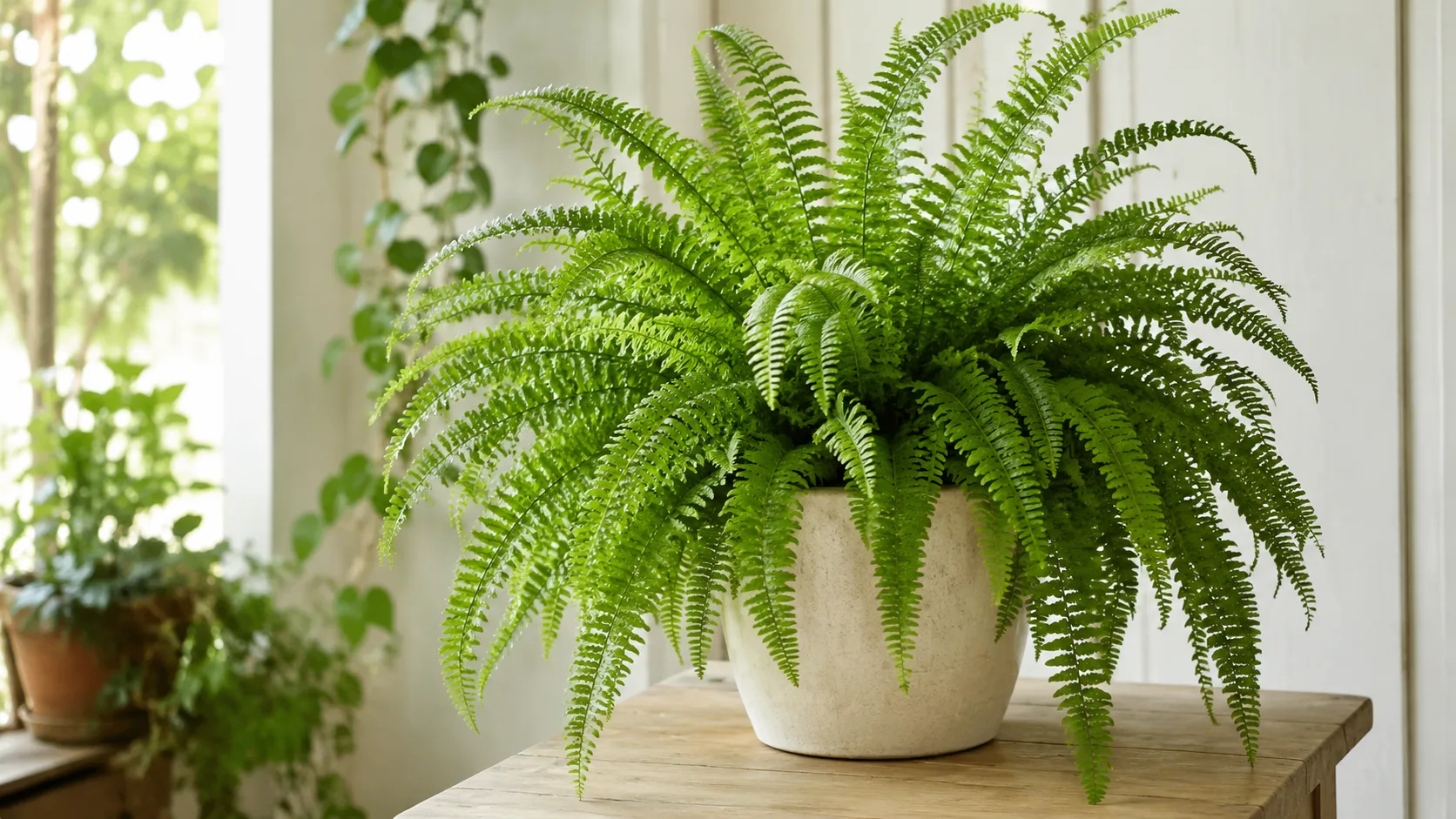
Boston fern is the familiar arching, feathery indoor fern and a useful baseline for watering advice. Let the surface begin to dry, but do not allow the root ball to become fully dry and hard. When the mix dries too far, fronds can become grey-green, brittle, and prone to drop; when the pot stays saturated, the plant may wilt even though the soil is wet because damaged roots cannot supply the canopy.
Maidenhair fern
Maidenhair fern has delicate fronds and a narrower margin for dry soil. Check it more often and aim for a consistently moist mix with reliable drainage. If your home is dry, the plant may lose water through its fine foliage faster than a tougher fern, so solve the air problem with placement, a measured humidifier, or a naturally humid room rather than repeatedly flooding the pot.
Bird’s nest, staghorn, and other exceptions
Bird’s nest fern grows as a central rosette. Water the surrounding soil and avoid repeatedly pouring into the crown, where stagnant moisture can encourage rot. Staghorn fern is often mounted or grown in moss because it is epiphytic; its watering method is a soak-and-drain routine for the moss or root ball, not a standard soil-pot calendar.
Asparagus fern is also not a true fern botanically and can handle a somewhat different routine. Outdoor woodland ferns vary too: some prefer damp shade, while others tolerate seasonal dry conditions once established. When a label names a species, use it to adjust the general “moist but not soggy” rule.
Diagnose the plant before adding more water
Watering symptoms overlap, so inspect the soil first. A drooping fern with dry mix needs hydration; a drooping fern with wet, sour-smelling mix may have root damage, poor drainage, cold stress, or low light. Adding water to both situations produces opposite results.
Signs of underwatering
Underwatering usually comes with a genuinely dry root ball. The pot feels light, the mix may pull from the sides, fronds lose firmness, and the oldest or most exposed foliage becomes crisp before it drops. Boston fern fronds can look grey or dull after repeated dry-down. If the plant perks up after a thorough soak and the pot drains normally, thirst was probably part of the problem.
Rehydrate slowly if the mix has become water-repellent. Water once, wait several minutes, and water again so the dry medium can absorb rather than channeling water down the sides. For a small nursery pot, setting it in a shallow basin of water briefly can help re-wet the root ball, but remove it as soon as the mix is evenly damp and let it drain completely.
Signs of overwatering or root trouble
Overwatering is not simply “too much water in one session.” It is a root-zone condition in which wet mix remains wet too long, oxygen falls, and roots begin to fail. Yellowing or mushy fronds, a pot that stays heavy for many days, a sour smell, fungus gnats, and persistent wilt despite wet soil are warning signs. The Missouri Botanical Garden describes excessive water during slow-growth periods as a route to root rot and decline.
Stop watering while you confirm the diagnosis. Check the drainage hole and outer cover, move the plant away from cold or dim conditions, and feel the root ball. If roots are brown, mushy, or foul-smelling, unpot the fern, trim only clearly rotted tissue with clean tools, and repot into fresh, appropriately sized, well-draining mix. Do not “balance” an overwatered pot by misting the leaves; the damaged root system needs air and a corrected container.
Humidity is not the same as watering
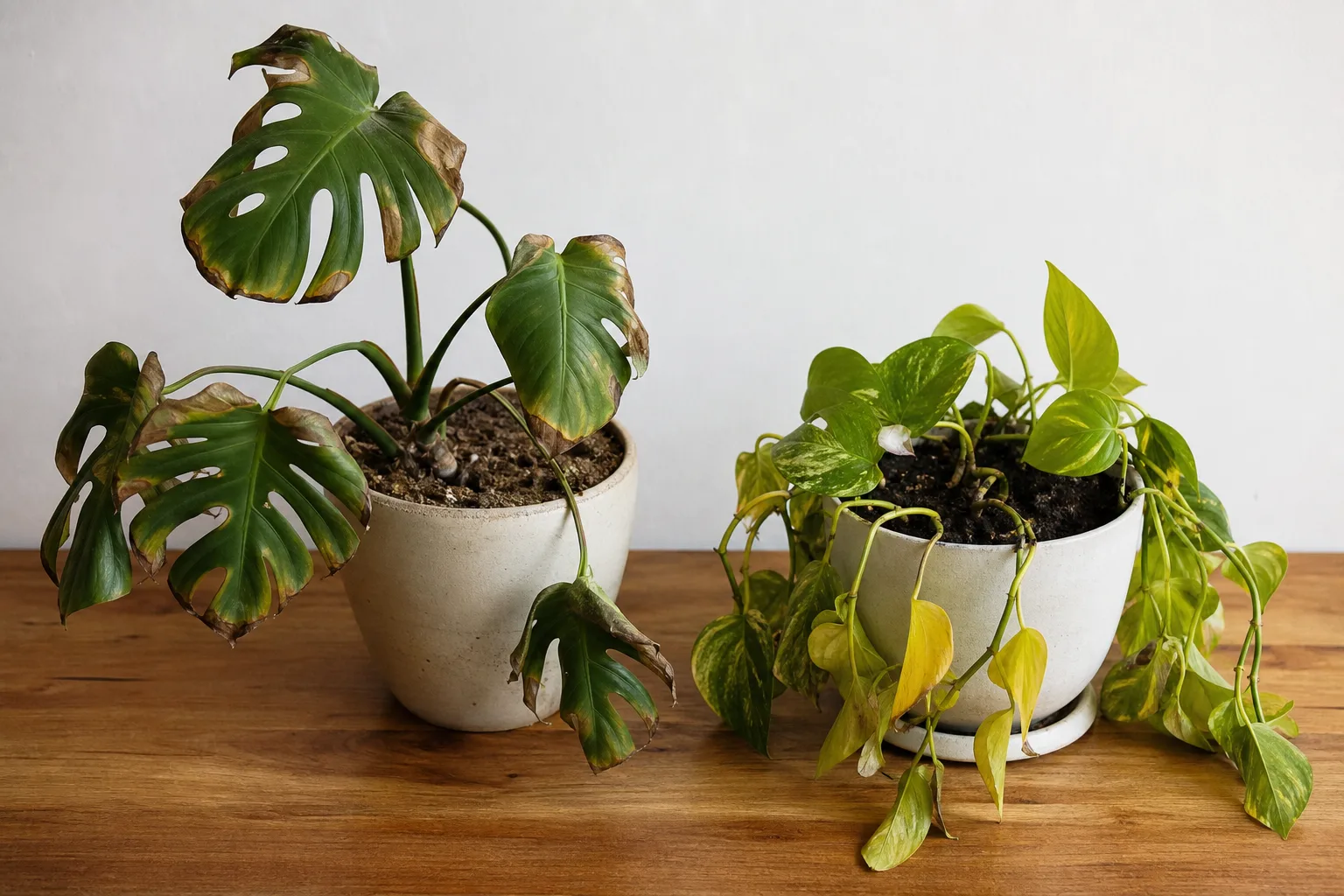
Ferns can have wet soil and dry-air damage at the same time. Low humidity increases water loss from fronds, causing crispy tips, brown margins, leaflet drop, or stalled new growth even when the root ball is not dry. Purdue Extension identifies roughly 40 to 50 percent relative humidity as a more desirable indoor range for many ferns and notes that very low indoor humidity is a common problem.
Measure humidity near the plant with a small hygrometer before buying a solution. A humidifier is the most consistent option for a collection, but keep the room ventilated and clean the unit as directed. Grouping plants can help modestly, and a pebble tray can create a small humid microzone if the pot sits above the water on stones. The water must not touch the pot base.
Misting is not a replacement for root watering. It may temporarily wet foliage or raise humidity right around the leaves, but it does not rehydrate dry potting mix. Frequent wet foliage in a cool, poorly ventilated room can also prolong leaf wetness. Use misting only as a minor, situation-dependent supplement, not as the main care plan.
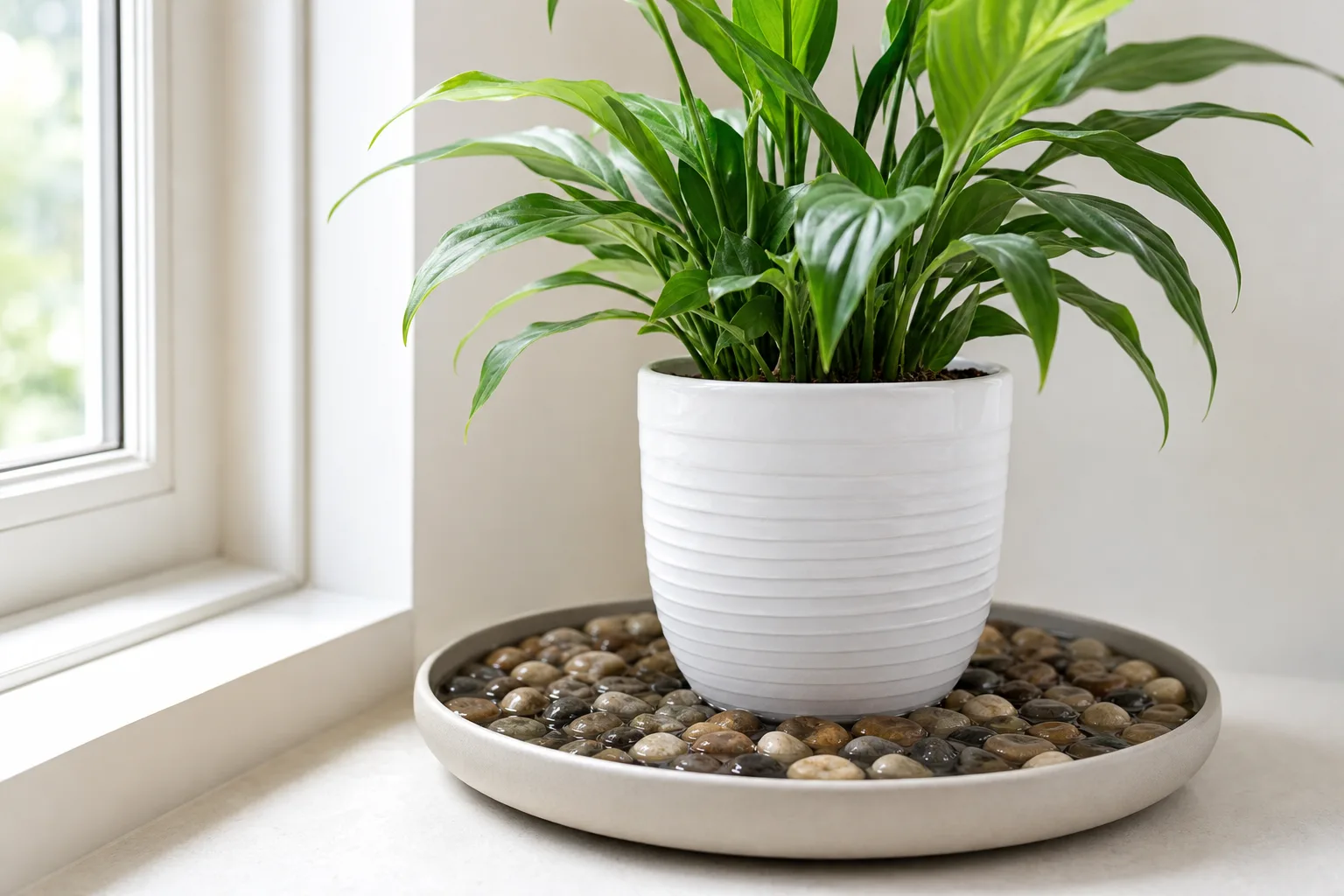
Pot, soil, and placement changes that make watering easier
If a fern needs watering every day indoors, look for a setup problem before accepting that schedule. A very small hanging basket, direct sun, hot air, a root-bound plant, or a loose mix may explain rapid drying. If it stays wet for ten days, the opposite problem may be present: an oversized pot, dense mix, blocked hole, cool room, or insufficient light.
Choose a container only modestly larger than the root mass and use a mix that combines organic moisture retention with air space and drainage. Keep a nursery pot inside a decorative cover if you want easier inspection. For a bird’s nest fern, keep water out of the crown; for creeping or rhizomatous ferns, do not bury surface rhizomes that are meant to remain exposed.
Placement is part of watering. Keep ferns away from radiators, heating vents, air-conditioning blasts, and cold drafts. Filtered light supports steadier growth than a dark corner, while shade outdoors protects fronds but does not guarantee moist soil. Small changes in light or airflow can shift the watering interval within days.
Seasonal adjustments and a simple weekly routine
In spring and summer, growth, warmth, and outdoor wind usually increase water use. Check more frequently and water deeply when the root zone is ready. In autumn and winter, reduce the frequency if light and temperature fall, but continue checking; heated indoor air can still dry a small pot quickly even while the plant grows slowly. Epic Gardening’s current Boston fern winter guidance makes the same practical distinction: less water in slower growth does not mean abandoning moisture checks.
Use this routine once a week, with extra checks during weather or room changes:
- Feel the mix several inches down near the pot edge.
- Lift the pot or compare its weight with a recently watered one.
- Look for a blocked hole, standing water, or a cover pot holding drainage.
- Check fronds for crisp dryness, yellowing, mushiness, pests, or direct-sun damage.
- Water thoroughly only if the root zone has begun to dry.
- Drain fully, empty the saucer, and record how long the pot takes to dry.
Avoid the common resets that make ferns harder to read: changing light, pot, soil, fertilizer, and watering all at once; watering a wet plant because it is drooping; and increasing misting when the real problem is root rot. Make one or two targeted changes, then watch new growth. Old brown tissue will not turn green again, so judge recovery by firm new fronds and a more stable moisture pattern.
Conclusion: build a rhythm around the root ball
Most ferns do best when their soil stays consistently moist but never waterlogged, yet that target cannot be translated into one universal number of days. Check indoor ferns every few days while learning their pattern, inspect outdoor ferns after weather changes, water the full root ball when the upper zone begins to dry, and always let excess water drain away.
If a fern is brown and crispy, confirm dry soil and humidity before pouring on more water. If it is yellow, limp, and sitting in wet mix, pause and inspect the roots. A reliable fern routine is less about remembering a calendar date than noticing what the pot, soil, fronds, and season are telling you.